 Write to the booksellers
1941 books for « m a bloch »Edit
-
Type
Autograph (1)
Book (1891)
Magazine (10)
Music sheets (39)
-
Latest
Last 24h (1)
Last 3 days (4)
Last month (114)
Last week (1)
-
Language
English (1)
French (1929)
Russian (11)
-
Century
18th (2)
19th (60)
20th (984)
21st (166)
-
Countries
Belgium (84)
Brazil (1)
Canada (12)
Côte d'Ivoire (3)
Denmark (34)
France (1668)
Netherlands (15)
Switzerland (112)
United States of America (12)
-
Syndicate
ALAC (12)
CLAM (4)
CLAQ (2)
ILAB (826)
NVVA (13)
SLACES (13)
SLAM (755)
SNCAO (1)
Topics
- 1900 (5)
- Abraham (6)
- Age (5)
- Archaeology (31)
- Architecture (7)
- Autographs (9)
- Bibliophilism (8)
- Biography (17)
- Bloch - laine françois (52)
- Bloch - michel jean (15)
- Bloch camille (6)
- Bloch jean richard (62)
- Bloch marc (26)
- Bloch morhange jacques (28)
- Bloch pierre (6)
- Bloch robert (85)
- Cendrars blaise (5)
- Children’s books (83)
- Civilisation (13)
- Cocteau jean (5)
- Comic strip (7)
- Dedication (10)
- Detective novels (9)
- Dictionaries (5)
- Economics (26)
- Education (20)
- Education - morals (13)
- Eluard paul (5)
- English (40)
- Ethic (6)
- Ethnology (8)
- Etymology (6)
- Europe (6)
- Exhibition (8)
- Fantastic (8)
- Fine arts (12)
- First edition (32)
- Flowers (5)
- Gallimard (10)
- Games toys (8)
- Geography (24)
- Geometry (5)
- Germanic languages (20)
- Germany (9)
- Glasswork (6)
- Grammar (6)
- Hebraic literature (5)
- Helvética (5)
- History (135)
- Industrial arts & crafts - fine arts (10)
- Interior (5)
- Isaac (6)
- Italy (15)
- Judaism (judaica) (7)
- Laurencin marie (5)
- Law (9)
- Literature (160)
- Lorrain (5)
- Magazine (11)
- Medicine (13)
- Middle ages (8)
- Military arts (5)
- Music (5)
- Newspapers press (15)
- Painting (6)
- Paris (16)
- Philology (6)
- Philosophy (57)
- Photography (18)
- Physics (12)
- Picasso (12)
- Poetry (16)
- Policy (31)
- Psychology (25)
- Reading vocabulary (6)
- Religions (11)
- Review (24)
- Reviews (22)
- Rome (19)
- Science fiction (9)
- Sciences (7)
- Scores (33)
- Social sciences (9)
- Sociology (9)
- Songs (32)
- Spencer emile (7)
- Steinlen (5)
- Switzerland (5)
- Teaching (5)
- Theatre (10)
- Translation (5)
- Various (15)
- War (28)
- Weil simone (5)
- Youth (8)
Geist der Utopie. - [THE MAIN WORK OF GERMAN EXPRESSIONISM]
München und Leipzig, Duncker & Humblot, 1918. Lex 8vo. Uncut in the orig. dark grey-brown wrappers, printed in gold on front wrapper and spine. Spine and lettering thereupon faded. Some smaller nicks, creases and loss of paper to extremities. Minor loss to capitals and two smaller holes w. a bit of loss to hinges. Overall an excellent copy in the fragile wrappers, rarely seen in such fine condition. Internally some minor brownspotting throughout, due to the paper-quality. With the ownership signature of J.B. Dumont deted ""Sept. '21"" to title-page and his stamp on half-title. 445 pp.
The rare first edition of Bloch's first major work, ""The Spirit of Utopia"", an expressionalist main work, which attempts to unite Marxism with Jewish-Christian messianism.The hugely influential German philosopher Ernst Bloch (1885-1977) was born as the son of Jewish parents in Ludwigshafen. He studied philosophy, physics, German and music in Munich and Würzburg and later became a main figure in Neomarxism. His first book, ""Geist der Utopie"" was written while Bloch was in exile in Switzerland during the First World War, and in this seminal work we find the cornerstones of his later so influential philosophy. In the ""Spirit of Utopia"", Bloch unites Marxism Jewish-Christian messianism by the common utopian element of both views: Hope, and faith in the fact that the world will and can become a better place. Bloch here set out to defend the attempts of humankind throughout history to create a humane world order, against the determinist socialism that viewed socialism as the inevitable result of history. With Marx and with the love and morality of religion, Bloch places man (that thinks of the common good) at the centre of his thinking as well as the metaphysical ideas of that which is not yet, but which can become. And thus he creates the spirit of utopia, due to which man can make the world a better place. This massive work of art begins with the powerful words: ""What now? It is enough. Now we have to begin. Life has been put in our hands. In itself it has already become empty long ago. It staggers senselessly around, but we stand firm, and thus we want to be its Faustus and its ends."" (""Wie nun? Es ist genug. Nun haben wir zu beginnen. In unsere Hände ist das Leben gegeben. Für sich selber ist es längst schon leer geworden. Es taumelt sinnlos hin und her, aber wir stehen fest, und so wollen wir ihm seine Faust und seine Ziele werden."") (P.9).The work was viewed as attacking the traditional Marxism of the time, and thus it was very controversial but also became hugely influential in the development of social liberation. Bloch is now considered one of the most undogmatic Marxists of the past century, and he influenced later political and philosophical thinkers enormously. Adorno himself cited this text of Bloch as having been transformative for his intellectual life, and as stated on the wrapper of the English translation, ""When this work was first published, it had a profound effect on major thinkers and artists in Weimar Germany. A poetical philosophical treatise with unusual insights into culture and political commentary, Bloch' s book laid the groundwork for thinkers like Adorno and Benjamin."" (Jack Zipes, University of Minnesota).This rare highly expressionist work consists of 445 pages of non-dogmatic strongly expressionistic and very influential recipes on and analyses of how man does and should behave in the humane world. ""But in return, we paint like savages again, in the best sense, in the sense of the primordial, the restless, unconcerned, concerned. For this is more or less how the dancing-mask was carved. This is more or less how primitive man shaped his fetishes, if only the simple need to express oneself should again be the same"" (""Aber dafür malen wir auch wieder wie die Wilden, im besten Sinn des Frühen, Unruhigen und Barbarischen genommen. So ungefähr wurde auch die Tanzmaske geschnitzt, so ungefähr baute sich der primitive Mensch seinen Fetisch zurecht, sollte auch nichts als die Not des Aussprechenmüssens wieder dieselbe geworden sein.""). (P. 19).The work was much re-written, and the first editions differs from all later editions.

Geist der Utopie. - [THE MAIN WORK OF GERMAN EXPRESSIONISM]
München und Leipzig, Duncker & Humblot, 1918. Lex 8vo. Original dark grey-brown paper binding, printed in gold on front wrapper and spine. A tear across spine, crudely repaired with tape, also to front hinge. Apart from the spine, a fine and fresh copy. Old owner's name to title-page. 445 pp.
![Geist der Utopie. - [THE MAIN WORK OF GERMAN EXPRESSIONISM]. "BLOCH, ERNST.](https://static.livre-rare-book.com/pictures/LLX/49061_1_thumb.jpg)
![Geist der Utopie. - [THE MAIN WORK OF GERMAN EXPRESSIONISM]. "BLOCH, ERNST.](https://static.livre-rare-book.com/pictures/LLX/49061_2_thumb.jpg)
The rare first edition of Bloch's first major work, ""The Spirit of Utopia"", an expressionalist main work, which attempts to unite Marxism with Jewish-Christian messianism.The hugely influential German philosopher Ernst Bloch (1885-1977) was born as the son of Jewish parents in Ludwigshafen. He studied philosophy, physics, German and music in Munich and Würzburg and later became a main figure in Neomarxism. His first book, ""Geist der Utopie"" was written while Bloch was in exile in Switzerland during the First World War, and in this seminal work we find the cornerstones of his later so influential philosophy. In the ""Spirit of Utopia"", Bloch unites Marxism Jewish-Christian messianism by the common utopian element of both views: Hope, and faith in the fact that the world will and can become a better place. Bloch here set out to defend the attempts of humankind throughout history to create a humane world order, against the determinist socialism that viewed socialism as the inevitable result of history. With Marx and with the love and morality of religion, Bloch places man (that thinks of the common good) at the centre of his thinking as well as the metaphysical ideas of that which is not yet, but which can become. And thus he creates the spirit of utopia, due to which man can make the world a better place. This massive work of art begins with the powerful words: ""What now? It is enough. Now we have to begin. Life has been put in our hands. In itself it has already become empty long ago. It staggers senselessly around, but we stand firm, and thus we want to be its Faustus and its ends."" (""Wie nun? Es ist genug. Nun haben wir zu beginnen. In unsere Hände ist das Leben gegeben. Für sich selber ist es längst schon leer geworden. Es taumelt sinnlos hin und her, aber wir stehen fest, und so wollen wir ihm seine Faust und seine Ziele werden."") (P.9).The work was viewed as attacking the traditional Marxism of the time, and thus it was very controversial but also became hugely influential in the development of social liberation. Bloch is now considered one of the most undogmatic Marxists of the past century, and he influenced later political and philosophical thinkers enormously. Adorno himself cited this text of Bloch as having been transformative for his intellectual life, and as stated on the wrapper of the English translation, ""When this work was first published, it had a profound effect on major thinkers and artists in Weimar Germany. A poetical philosophical treatise with unusual insights into culture and political commentary, Bloch' s book laid the groundwork for thinkers like Adorno and Benjamin."" (Jack Zipes, University of Minnesota).This rare highly expressionist work consists of 445 pages of non-dogmatic strongly expressionistic and very influential recipes on and analyses of how man does and should behave in the humane world. ""But in return, we paint like savages again, in the best sense, in the sense of the primordial, the restless, unconcerned, concerned. For this is more or less how the dancing-mask was carved. This is more or less how primitive man shaped his fetishes, if only the simple need to express oneself should again be the same"" (""Aber dafür malen wir auch wieder wie die Wilden, im besten Sinn des Frühen, Unruhigen und Barbarischen genommen. So ungefähr wurde auch die Tanzmaske geschnitzt, so ungefähr baute sich der primitive Mensch seinen Fetisch zurecht, sollte auch nichts als die Not des Aussprechenmüssens wieder dieselbe geworden sein.""). (P. 19).The work was much re-written, and the first editions differs from all later editions.
Geist der Utopie. - [THE MAIN WORK OF GERMAN EXPRESSIONISM]
München und Leipzig, Duncker & Humblot, 1918. Lex 8vo. A bit later, nice, dark blue half cloth with gilt lettering to spine. Half-title mounted with a few marginal repairs, otherwise a very nice and clean copy. Owner's signature to totle-page. 445 pp.
![Geist der Utopie. - [THE MAIN WORK OF GERMAN EXPRESSIONISM]. "BLOCH, ERNST.](https://static.livre-rare-book.com/pictures/LLX/49149_1_thumb.jpg)
![Geist der Utopie. - [THE MAIN WORK OF GERMAN EXPRESSIONISM]. "BLOCH, ERNST.](https://static.livre-rare-book.com/pictures/LLX/49149_2_thumb.jpg)
The rare first edition of Bloch's first major work, ""The Spirit of Utopia"", an expressionalist main work, which attempts to unite Marxism with Jewish-Christian messianism.The hugely influential German philosopher Ernst Bloch (1885-1977) was born as the son of Jewish parents in Ludwigshafen. He studied philosophy, physics, German and music in Munich and Würzburg and later became a main figure in Neomarxism. His first book, ""Geist der Utopie"" was written while Bloch was in exile in Switzerland during the First World War, and in this seminal work we find the cornerstones of his later so influential philosophy. In the ""Spirit of Utopia"", Bloch unites Marxism Jewish-Christian messianism by the common utopian element of both views: Hope, and faith in the fact that the world will and can become a better place. Bloch here set out to defend the attempts of humankind throughout history to create a humane world order, against the determinist socialism that viewed socialism as the inevitable result of history. With Marx and with the love and morality of religion, Bloch places man (that thinks of the common good) at the centre of his thinking as well as the metaphysical ideas of that which is not yet, but which can become. And thus he creates the spirit of utopia, due to which man can make the world a better place. This massive work of art begins with the powerful words: ""What now? It is enough. Now we have to begin. Life has been put in our hands. In itself it has already become empty long ago. It staggers senselessly around, but we stand firm, and thus we want to be its Faustus and its ends."" (""Wie nun? Es ist genug. Nun haben wir zu beginnen. In unsere Hände ist das Leben gegeben. Für sich selber ist es längst schon leer geworden. Es taumelt sinnlos hin und her, aber wir stehen fest, und so wollen wir ihm seine Faust und seine Ziele werden."") (P.9).The work was viewed as attacking the traditional Marxism of the time, and thus it was very controversial but also became hugely influential in the development of social liberation. Bloch is now considered one of the most undogmatic Marxists of the past century, and he influenced later political and philosophical thinkers enormously. Adorno himself cited this text of Bloch as having been transformative for his intellectual life, and as stated on the wrapper of the English translation, ""When this work was first published, it had a profound effect on major thinkers and artists in Weimar Germany. A poetical philosophical treatise with unusual insights into culture and political commentary, Bloch' s book laid the groundwork for thinkers like Adorno and Benjamin."" (Jack Zipes, University of Minnesota).This rare highly expressionist work consists of 445 pages of non-dogmatic strongly expressionistic and very influential recipes on and analyses of how man does and should behave in the humane world. ""But in return, we paint like savages again, in the best sense, in the sense of the primordial, the restless, unconcerned, concerned. For this is more or less how the dancing-mask was carved. This is more or less how primitive man shaped his fetishes, if only the simple need to express oneself should again be the same"" (""Aber dafür malen wir auch wieder wie die Wilden, im besten Sinn des Frühen, Unruhigen und Barbarischen genommen. So ungefähr wurde auch die Tanzmaske geschnitzt, so ungefähr baute sich der primitive Mensch seinen Fetisch zurecht, sollte auch nichts als die Not des Aussprechenmüssens wieder dieselbe geworden sein.""). (P. 19).The work was much re-written, and the first editions differs from all later editions.
Das Prinzip Hoffnung. 3 Bde. - [THE PRINCIPLE OF HOPE - PRESENTATION-COPY]
Berlin, 1954-59. Lex 8vo. All three in the original blue full cloth bindings, in excellent condition, in- as well as ex-ternally. Some light pencil-underlinings. 477, (3) 512, (1)" 518, (1) pp. + Errata for vols. I+II laid loose in vol. With a five-line presentation-inscription to front free end-paper of volume 1, signed in full: ""Herrn Gehrke/ in freundlicher Gesinnung/ mit besten Wünschen/ 30.VIII.54/ Ernst Bloch"".
![Das Prinzip Hoffnung. 3 Bde. - [THE PRINCIPLE OF HOPE - PRESENTATION-COPY]. BLOCH, ERNST.](https://static.livre-rare-book.com/pictures/LLX/49060_1_thumb.jpg)
![Das Prinzip Hoffnung. 3 Bde. - [THE PRINCIPLE OF HOPE - PRESENTATION-COPY]. BLOCH, ERNST.](https://static.livre-rare-book.com/pictures/LLX/49060_2_thumb.jpg)
The scarce first edition of all three volumes, with signed and dated presentation-inscription (in the year of appearance), of Bloch's magnum opus, his seminal ""The Principle of Hope"", which constitutes his philosophy of concrete utopia. The hugely influential German philosopher Ernst Bloch (1885-1977) was born as the son of Jewish parents in Ludwigshafen. He studied philosophy, physics, German and music in Munich and Würzburg and later became a main figure in Neomarxism. As his first book, ""Geist der Utopie"" was written while in exile in Switzerland during the First World War, this his main work was written while in exile in America during the Second World War, between 1938 and 1947, and it appeared for the first time in the DDR between 1954 and 1959. ""The Principle of Hope"" is considered a philosophical-political piece of art, which consideres in both philosophical-scientific and humanistic ways the possibilities for a utopia, at the same time as it traces throughout history man's strivings for utopia. The world is presented as open to man - open for man to make it the place that enables us to live like proper human beings. ""Ernst Bloch's Principle of Hope is one of the key books of our century. Part philosophic speculation, part political treatise, part lyric vision, it is exercising a deepening influence on thought and on literature. . . . No political or theological appropriations of Bloch's leviathan can exhaust its visionary breadth."" (editorial review by George Steiner, the 1986 English language edition). As his ""Geist der Utopie"" begins with the powerful words: ""What now? It is enough. Now we have to begin. Life has been put in our hands. In itself it has already become empty long ago. It staggers senselessly around, but we stand firm, and thus we want to be its Faustus and its ends."", so his ""Das Prinzip Hoffnung"" begins with the equally powerful words: ""Who are we? Where do we come from? Where are we going? What do we expect? What awaits us? Many feel as nothing but confused. The ground rocks, they do not know why and from what. This their state is fear, if it becomes more defined, it is fear. Once, someone set out to learn fear."" (""""Wer sind wir? Wo kommen wir her? Wohin gehen wir? Was erwarten wir? Was erwartet uns? Viele fühlen sich nur als verwirrt. Der Boden wankt, sie wissen nicht warum und von was. Dieser ihr Zustand ist Angst, wird er bestimmter, so ist er Furcht. Einmal zog einer aus, das Fürchten zu lernen.""The conception of ""Prinzip Hoffnung"" has now, due to this work, become a frequently used saying, not only in Germany, but also in America and large parts of Europe, where ""The Pronciple of Hope"" is used in numerous political and economical discussions, most actually for instance in the climate debate. The influence of the work has been immense, and it has done much to re-create modern man's belief in the world today and our ability to do good.
Ichthyologie ou Histoire Naturelle des Poissons. En Six Parties avec 216 Planches dessinées et enluminées d'après Nature. - [FIRST 8VO-EDITION OF BLOCH'S MAGNIFICENT ICHTHYOLOGY]
Berlin, Chez l'auteur, 1796. 8vo. 6 later half morocco with five raised bands and gilt titles on backs. XXXII,1291 pp. with 216 beautifully hand-coloured plates. 4 vols. text and 2 vols. plates. 6 title-pages and 6 half-titles. All vols. uncut, last three text vols. unopend. Text and plates are completely clean throughout.
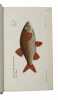
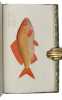
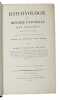
The rare first octavo edition (being the second edition, in 8vo) of Bloch's Ichthyologie - arguably the most magnificent work on fish ever. This particular edition is not in Nissen, Wood nor BMC and is very uncommon.The second edition, printed 1793-95, was published in 6 folio volumes and contained 216 plates, i.e., half the number of plates as in the first edition (Nissen 416). Another, different octavo-edition was published in Paris in 1796, in 5 volumes and with only 108 plates. The present edition constitutes the 8vo-version of the second edition and the first 8vo edition in general.
Les Origines de Rome.
Paris, Le Club Français du Livre, 1959. Portraits de l'Histoire. 17. Un volume de format in 8° de 176 pp.; Illustrations en noir; plans... Reliure de l'éditeur en pleine toile brique, décorée.Titre doré.
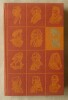
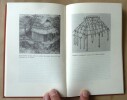
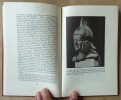
Bel état. Tirage limité, édition numérotée.
Systema Ichthyologiae iconibus CX illustratum. Post obitum auctoris opus inchoatum absolvit, correxit, interpolavit Jo. Gottlob Schneider, Saxo. - [ALL THE FISH OF THE WORLD]
Berolini, Sander, 1801. 8vo. Bound in two contemporary diced calf, rebacked preserving old spines. LX, 584 pp. with 110 plates by J. F. Hennig, all but 18 handcoloured, 2 folding, a few printed in red or brown ink. Engraved and handcoloured frontispice by J. F. Hennig in second volume. The part of the text, which was unillustrated by the 110 plates, is in this copy supplemnted by the corresponding plates taken from Shaw and Nodder's ""Naturalist's Miscellany"" (in all 59 handcoloured plates). A few plates with annotations in pencil. Text with slight browning. Plates are in fine condition and excellent handcolouring.
First and only edition. Scarce. Published with additions and corrections by Schneider after Bloch's death in 1799. The 110 plates were engraved by Johann Friedrich Hennig, who was one of the engravers on the ""Ichthyologie, au histoire ... 1785-97"". Nissen 419, BMC I: 176, not in Wood. Nissen & BMC do not mention the engraved frontispiece.
Zur Theorie des Ferromagnetismus. - [THE INTRODUCTION OF MAGNONS]
Berlin, Springer, 1930. 8vo. In contemporary half cloth with gilt lettering to spine. In ""Zeitschrift für Physik"", Bd. 61, 1930. Entire volume offered. Stamp to title page and light wear to extremities, otherwise fine and clean. VIII, 878 pp.
First appearance of Bloch's seminal paper in which he introduced the concept of magnons as the elementary excitations in ferromagnetic crystals. The concept of Magnon was introduced in order to explain the reduction of the spontaneous magnetization in a ferromagnet. At absolute zero temperature, a ferromagnet reaches the state of lowest energy, in which all of the atomic spins (and hence magnetic moments) point in the same direction. As the temperature increases, more and more spins deviate randomly from the common direction, thus increasing the internal energy and reducing the net magnetization. If one views the perfectly magnetized state at zero temperature as the vacuum state of the ferromagnet, the low-temperature state with a few spins out of alignment can be viewed as a gas of quasiparticles, in this case magnons.
Zur Theorie des Ferromagnetismus. - [THE INTRODUCTION OF MAGNONS]
Berlin, Springer, 1930. 8vo. In contemporary half cloth with gilt lettering to spine. In ""Zeitschrift für Physik"", Bd. 61, 1930. Entire volume offered. Stamp to title page, otherwise fine and clean. VIII, 878 pp.
First appearance of Bloch's seminal paper in which he introduced the concept of magnons as the elementary excitations in ferromagnetic crystals. The concept of Magnon was introduced in order to explain the reduction of the spontaneous magnetization in a ferromagnet. At absolute zero temperature, a ferromagnet reaches the state of lowest energy, in which all of the atomic spins (and hence magnetic moments) point in the same direction. As the temperature increases, more and more spins deviate randomly from the common direction, thus increasing the internal energy and reducing the net magnetization. If one views the perfectly magnetized state at zero temperature as the vacuum state of the ferromagnet, the low-temperature state with a few spins out of alignment can be viewed as a gas of quasiparticles, in this case magnons.
Le Mystère étrusque.
Paris, Club Français du Livre, 1956. Portraits de l'histoire, 6. Un volume de format in 8° de 246 pp.; une carte dépliante. Reliure de l'éditeur en pleine toile brique, plats ornés. Dos légèrement passé.
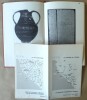
Bon état.
BLOCH (Etienne), avec la collaboration d'Alfredo Cruz-Ramirez.
Reference : 24302
(1997)
ISBN : 9782911167119
Marc Bloch, 1886-1944. Une biographie impossible / An Impossible Biography.
Limoges, Culture et Patrimoine en Limousin, 1997, in-4°, 152 pp, préface de Jacques Le Goff, abondamment illustré de près de 150 photos, gravures et fac-similés, broché, couv. illustrée à rabats, bon état. Texte bilingue en français et en anglais
Préface ; Repères chronologiques ; Généalogie de Marc Bloch et de Simonne Vidal ; L'enfance de Marc Bloch ; Les années de formation ; La guerre de 1914-1918 ; Strasbourg ; Paris ; La guerre de 1939-1940 ; Les années noires ; Fougères ; Marc Bloch et Simonne Vidal, un couple indissoluble ; L'œuvre ; Les archives de Marc Bloch ; Hommages à Marc Bloch ; Bibliographie. / Preface. Milestones. Genealogy of Marc Bloch and Simonne Vidal. Childhood. The formative years. World War I - 1914-1918. Strasbourg. Paris. World War II - 1939-1940. The dark years. Fougères. Marc Bloch and Simonne Vidal, an unseparable couple. Marc Bloch's writings. The Archives of Marc Bloch. Tributes to Marc Bloch. Bibliography of Marc Bloch. Désormais les frais d'envoi sont de 6 € seulement pour les livres jusqu'à 1 kg (colissimo suivi), pour la France métropolitaine.
Nogle Grammaticalske Bemærkninger om den Vestjydske Dialect, oplyste ved ethnographiske og geographiske Billeder, af en jydsk Philolog.
Horsens, 1837. Orig. blankt omslag. Brunplettet. IV,73 pp.
Med fornem proveniens: P. Thorsen, Marius Kristensen, Poul Andersen, alle fremtrædende danske sprogforskere.
L'Ancienne et Nouvelle Théorie des Quanta.
Paris, Hermann et Cie, 1930. Royal8vo. Orig. printed wrappers. Part of backstrip lacks. Frontwrapper loose and a little worn. (4),418 pp.
Israel und die Völker. Nach jüdischer Lehre.
Berlin, Wien, Benjamin Harz, (1922). Orig. full cloth. Spine a bit soiled. LII,830 pp. Internalyy fine and clean.
Om forskellige Metoder for Anlæggelse af Bandager. For Læger og Studerende. Med 233 Billeder.
København, Høst, 1883. Samtidigt hldrbd. med rygforgyldning. Ryg med brugsspor. XIII,310 pp. ed 233 tekstillustr. i træsnit.
Les Caractères originaux de l'Histoire rurale française.
Oslo, 1931. Small 4to. With orig. printed wrappers in a solid hcloth. The first leaves with 2 small tears repaired. XVII,261 pp., 18 plates. A small paperlabel pasted to lower part of spine.
Forsøg til en Theorie for det udvortes Foredrag i veltalenheden. Efter et Afsnit i Mass's Grundriss der Retorik frit bearbejdet.
Odense, Hempel, 1805. Lille 8vo. Samtidigt hldrbd. med rygforgyldning. En blækklat på forpermen. VIII,80 pp. Indvendig ren, trykt på skrivepapir.
La Philosophie de Newton.
Paris, Felix Alcan, 1908. (Reprint Nabu Public Domain Reprints). 4to. Orig. wrappers. 642,(2) pp.
Die Sexualleben underer Zeit in seinen Beziehungen zur modernen Kultur. 10.bis 12., verb. Aufl.
Berlin, 1919. Lex8vo. Orig. hcloth. Back slightly rubbed. XVI,816 pp.
Das Sexualleben unserer Zeit in seinen Beziehungen zur modernen Kultur.
10..-12.verb.Aufl. Bln., 1919. Lex8vo. Orig.hcloth.
Marc Bloch (1886-1944) - Une biographie impossible
Culture & Patrimoine en Limousin (1997) - In-4 broché de 152 pages - Couverture illustrée à rabats - Abondamment illustré de près de 150 photos en noir et blanc, gravures et fac-similés - Texte bilingue en français et en anglais - Préface de Jacques Le Goff - Exemplaire en très bon état
Préface - Repères chronologiques - Généalogie de Marc Bloch et de Simonne Vidal - L'enfance de Marc Bloch - Les années de formation - La guerre de 1914-1918 - Strasbourg - Paris - La guerre de 1939-1940 - Les années noires - Fougères Marc Bloch et Simonne Vidal, un couple indissoluble - L'oeuvre - Les archives de Marc Bloch - Hommages à Marc Bloch - Bibliographie.
Still life of mushroom and fruit - Chez Mario
Paris Bloch-Laine 1992 Première édition. Une grande photographie en noir et blanc du célèbre photographe Jean-Louis Bloch-Lainé. Il s'agit peut-être d'une de ses épreuves originales pour l'un de ses livres culinaires, mais nous n'avons pas été en mesure de la localiser si c'est le cas. Elle est signée au dos, avec la mention "Chez Mario", qui pourrait être un restaurant ? L'image elle-même est propre et nette, mais le cadre blanc présente quelques taches. Ces taches pourraient être cachées par un montage. L'image est maintenant présentée sous un passe partout temporaire. L'image mesure 20 cm x 30 cm. La feuille mesure 30 cm x 41 cm. Jean-Louis Bloch-Lainé est un éminent photographe français célèbre pour ses photographies éditoriales, artistiques et documentaires. Sa longue carrière, qui s'étend du début des années 1960 à aujourd'hui, a influencé la culture visuelle française, tant dans le domaine de la mode que dans celui des beaux-arts. Il a commencé à travailler pour le magazine Elle en 1963. Il est particulièrement connu pour ses photographies culinaires.
First edition. A large black and white photograph by the celebrated photographer Jean-Louis Bloch-Lainé. This may be one of his original proofs for one of his culinary books, but we haven't been able to locate it if so. It is signed to the rear, with the note "Chez Mario" which may be a restaurant ? The image itself is clean and neat, but the white surround has some staining to it. This could be hidden with mounting. Now presented under a temporary passe partout. Image is 20cm x 30cm. Sheet is 30cm x 41cm. Jean-Louis Bloch-Lainé is a distinguished French photographer celebrated for his editorial, artistic, and documentary photography. His extensive career, spanning from the early 1960s onward, has influenced French visual culture in both fashion and fine art contexts. He began his work with Elle magazine in 1963. He is particularly known for his culinary photographs. .

