 Write to the booksellers
80 books for « lysias »Edit
-
Century
18th (3)
19th (7)
20th (15)
-
Countries
Belgium (2)
Canada (1)
Denmark (1)
France (45)
Netherlands (28)
Switzerland (3)
-
Syndicate
ALAC (1)
ILAB (25)
SLAM (23)
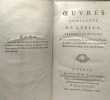
The orations of Lysias and Isocrates, translated from the Greek; with some account of their lives; and a discourse on the history, manners, and character of the Greeks, from the conclusion of the Peloponnesian war, to the battle of Chaeronea, by John Gillies, LL.D.
London, Edinburgh, Printed for J. Murray, and J. Bell, 1778.
4to. (XXXVI),CXXXV,(1 blank),498,(1 errata)(1 blank) p.; a portrait of Lysias & of Isocrates. Calf 28 cm (Ref: ESTC Citation No. T106138; Hoffmann 2,490 & 2,575: 'eine gute Übersetzung'; Ebert 10628 & 12573; Moss 2,119: 'faithful and masterly'; Brunet 3,1258: 'Traduction fidèle, et comme telle fort estimée; Graesse 4,315; Ebert 12573; Dict. of British Classicists 2,370/2) (Details: Back ruled gilt and with 5 raised bands. Red morocco shield with gold lettering in the second compartment. Small and fading gilt coat of arms on the boards, within a surrounding banner, on which: 'The Society of writers to the Signet'. (This is a society of Scottish lawyers) Wide margins. Both engravings were made 'ex marmore antiquo in Museo Capitolino'. Edges dyed red) (Condition: Binding scuffed & scratched. Extremities chafed, corners bumped. Joints split but strong. Front hinge cracking. Some insignificant foxing. Old ink inscription on the title reading: 'The Society of Clerks to the Signet') (Note: The speeches of the Athenian orators Lysias (c. 459-380 B.C.) and Isocrates (436-338 B.C.) are of great importance for the understanding of the great political issues of the 4th century. Their speeches provide us with a most valuable insight in, and commentary on the social and political events in Athens. 'Taken separately, their writings are imperfect; when combined, they afford a system of information equally extensive and satisfactory'. (Preface p. pi3 recto). The English translation of 18 speeches of Lysias and 6 of Isocrates by the Scottish classical scholar and ancient historian John Gillies, 1747-1836, is mentioned one of his major contributions to classical scholarship. 'In the long preliminary discourse on the history and private lives and manners of the Greeks during the period 404 to 338 B.C., Gillies specifically adopted Isocrates as his source, partly no doubt because it suited his own strongly monarchist views to do so'. (DBC 2,371) During the conference 'Revolutions and Classics' of the UCL, held in 2016, where scholars examined the manner in which classical texts have been deployed in societies undergoing rapid and radical social change, it was argued by the young independent scholar Sebastian Robins, that it was Gillies' intention to make available to his contemporaries classical texts that he believed bore immediately on the most pressing political questions of the day: the American Revolutionary War, a war which had just begun. This armed conflict between Great Britain and its 13 North American colonies raged from 1775 till 1783, during which the colonies declared in July 1776 independence as the United States of America. The authority of the two Athenian orators, Robins says, overrules and rectifies that of the contemporary Athenian orator Demosthenes, and that of the late antique historian/philosopher Plutarch and others 'on the basis of which some of the most ingenious eighteenth-century writers had raised flattering accounts of Greek virtue and glory. Their speeches, moreover, contain compelling evidence of the violence, prejudice, and corruption of the ancient Greeks and of the shortcomings of ancient republican institutions. Champions of the nascent American republic on both sides of the Atlantic, Gillies declares', ought, on the authority of the speeches he translates, to reassess their faith in the relationship between democracy and virtue, which he assumed, underpinned the Congressional declarion (of 1776). Gillies is best known for his 'History of Ancient Greece' (1786), the first substantial complete survey in English of the whole Greek history to the time of August. It became popular, and was quickly translated into German and French) (Provenance: Stamp of the Scottish 'Society of the writers to the Signet' on the boards) (Collation: pi4, A-C4, D2, a-3r4; B-3R4, 3S2 (portrait after leaf L1 and T3) (Photographs on request) (Heavy book, may require extra shipping costs)
Lysias. Discours : . Tome II. XVI-XXXV et fragments. Texte établi et traduit par Louis Gernet,... et Marcel Bizos,... 2e édition [Unknown Binding] Lysias; Bizos, Marcel and Gernet, Louis
PHOTOS SUR DEMANDE
Merci de nous contacter à l'avance si vous souhaitez consulter une référence dans notre boutique à Authon-du-Perche.
Oeuvres choisies de Lysias Moutardier, ancien professeur au Lycée d'Angoulême [ Avec un ex-dono de Madame Veuve Moutardier ]
1 vol. in-8 reliure de l'époque demi-chagrin noir, dos à 5 nerfs, toutes tranches dorées, Imprimerie Simon Raçon et Cie, Paris, 1864, XVIII-339 pp.
![Oeuvres choisies de Lysias Moutardier, ancien professeur au Lycée d'Angoulême [ Avec un ex-dono de Madame Veuve Moutardier ]. MOUTARDIER, Lysias](https://static.livre-rare-book.com/pictures/CDL/69188_thumb.jpg)
![Oeuvres choisies de Lysias Moutardier, ancien professeur au Lycée d'Angoulême [ Avec un ex-dono de Madame Veuve Moutardier ]. MOUTARDIER, Lysias](https://static.livre-rare-book.com/pictures/CDL/69188_2_thumb.jpg)
![Oeuvres choisies de Lysias Moutardier, ancien professeur au Lycée d'Angoulême [ Avec un ex-dono de Madame Veuve Moutardier ]. MOUTARDIER, Lysias](https://static.livre-rare-book.com/pictures/CDL/69188_3_thumb.jpg)
Lysias-Pierre Moutardier est né à Lesparre en 1795, et rejoint la Charente en 1812. "Il est mort à Angoulême le 25 août 1858 dans une retraite laborieuse, après avoir été pendant 34 ans le plus dévoué, le plus infatigable, le meilleur des maîtres du collège de la ville". Bon état
Oeuvres Completes de Lysias, traduites en Francois. Par M. l'Abbé Auger.
Paris, De Bure, fils ainé, 1783. Contemp. full sprinckled calf. Top of spine with tears. Spine with some wear. Gilt and gilt borders to covers. Corners bumped. (4),LXXIII,(3),488 pp. Internally clean. Printed on good paper.
First French edition of Lysias. Brunet III: 1258.
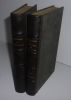
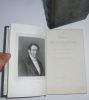
Oeuvres choisies de M. Lysias Moutardier. Premier et second recueil. Paris. Simon Raçon et Cie. 1864 -1866.
2 volumes in-8° reliés demi-chagrin noir, dos à nerfs, titre doré, plats de toile chagrinée noire, tranches dorées, gardes de papier blanc moiré, XVIII + 339 p. - VIII + 320. Gravure frontispice portrait de l'auteur. Quelques petites rousseurs éparses sans gravité sinon très bel état. Très rare réunion des oeuvres de Lysias Moutardier professeur de rhétorique au collége royal d'angoulême. Chaque volume a été tiré à seulement à 102 exemplaires.
Phone number : 06.31.29.75.65
Lysias. Discours : . Tome II. XVI-XXXV et fragments. Texte établi et traduit par Louis Gernet,... et Marcel Bizos,... 2e édition
Photos sur demande. relie demi toile titre dore
Merci de nous contacter à l'avance si vous souhaitez consulter une référence dans notre boutique à Authon-du-Perche.
DISCOURS.TOME 2.(XVI-XXXV ET FRAGMENTS).TEXTE TRADUIT PAR LOUIS GERNET ET MARCEL BIZOS. [Paperback] LYSIAS
PHOTOS SUR DEMANDE
Merci de nous contacter à l'avance si vous souhaitez consulter une référence dans notre boutique à Authon-du-Perche.
Ausgewählte Reden des Lysias. Nach Text und Kommentar getrennte Ausgabe (...) von W. Kocks. 4.,3.,2 & 4. Auflage von R. Schnee.
Gotha, Friedrich Andreas Perthes, 1909.
4 volumes in 1: 56,47;76,76 p. Half cloth. 21 cm (Or. 7, 12, 13, 16, 19, 21/ 25, 28, 30/33) ) (Greek text and commentary in German)
Lysias and the Corpus Lysiacum.
Berkeley, Univ. of Cal. Press, 1968.
IX,200 p. Cl. 23 cm (Sather Class. Lect.; incl. dustjacket)
Die Dokimasiereden des Lysias (orr. 16,25,26,31).
Frankfurt, Athenäum, (1987).
XI,276 Hardb. 23 cm (Beitr. zur Klass. Philologie, 182)(Rev. ed. of the diss. of 1986/7, Düsseldorf)
DISCOURS.TOME 2.(XVI-XXXV ET FRAGMENTS).TEXTE TRADUIT PAR LOUIS GERNET ET MARCEL BIZOS. [Paperback] LYSIAS
Broché état correct.Annotations au crayon de papier. .Contenu propre .Dernières pages tâchées . 301 pages . 1962. DISCOURS.TOME 2.(XVI-XXXV ET FRAGMENTS). PHOTOS SUR DEMANDE
Merci de nous contacter à l'avance si vous souhaitez consulter une référence dans notre boutique à Authon-du-Perche.
Discours Tome II. XVI-XXXV et Fragments. Texte et traduction
Les belles Lettres 1989 In-12 reliure éditeur 20 cm sur 13,2. 301 pages. Coins très légèrement écornés. Bon état d’occasion.
Édition reliée 1989. Texte établi et traduit par Louis Gernet et Marcel Bizos. Cinquième tirage revu et corrigé. Bon état d’occasion
Oeuvres complètes de Lysias traduites en françois par M. l'Abbé Auguer
De Bure / Théophile Barrois / Alexandre Jombert 1783 in8. 1783. Relié.
bords frottés coins émoussés charnières fragilisées présence de rousseurs et ternissures à l'intérieur sur une partie de l'ouvrage
LYSIAS AUSGEWÄHLTE REDEN, 4 BÄNDEN
Langenscheidtsche Verlags Buchhandlung, Berlin. Non daté. In-12. Broché. Etat d'usage, Tâchée, Dos satisfaisant, Non coupé. 3 plaquettes d'une 30e de pages chacune et 84 pages pour le 4e vol. Texte en allemand et en caractères gothiques. Etiquettes de code sur les couvertures. Quelques tampons de bibliothèque. Quelques rousseurs.. . . . Classification Dewey : 430-Langues germaniques. Allemand
Langenscheidtsche Bibliothek. Classification Dewey : 430-Langues germaniques. Allemand
ANALYSE ET EXTRAITS DES HARANGUES DE DEMOSTHENE, ESCHINE, LYSIAS ET ISOCRATE
Librairie Classique de L. Hachette, Paris. 1829. In-12. Relié. Etat d'usage, Coins frottés, Dos fané, Rousseurs. 343 pages. Texte en grec ancien et en français. Pièce de titre (abîmée) et étiquette de code sur le dos. Tranche mouchetée bleue. Fortes rousseurs.. . . . Classification Dewey : 880-Littératures helléniques. Littérature grecque
2e édition. Par F. Ragon (Collège Royal de Bourbon). Adopté par le Conseil Royal de l'Univ. de France. Classification Dewey : 880-Littératures helléniques. Littérature grecque
AUSGEWÄHLTE REDEN DES LYSIAS, 2 BÄNDEN
Weidmannsche Buchhandlung, Berlin. 1889-1897. In-8. Broché. Bon état, Couv. convenable, Dos fané, Quelques rousseurs. 167 pages pour le tome I et 138 pages pour le tome II. Texte en grec ancien et Notes en allemand (sur 2 colonnes). Dos du tome I consolidé. Etiquettes de code sur les couvertures.. . . . Classification Dewey : 480-Langues helléniques. Grec
Sammlung Griechischer und Lateinischer Schriftsteller mit Deustchen Anmerkungen, Begründet von M. Haupt und H. Sauppe. Erklärt von Rudolf Rauchenstein. Zehnte AUflage Besorgt von Karl Fuhr. Classification Dewey : 480-Langues helléniques. Grec
ISABELLE DE TAILLEFER - POEME HISTORIQUE EN DIX CHANT - ART POETIQUE D HORACE
IMPRIMERIE SIMON RACON ET CIE. 1866. In-8. Relié. Bon état, Couv. convenable, Dos satisfaisant, Intérieur frais. 320 pages . Portrait de Lysias Moutardier en frontispice en noir et blanc sous serpente . Auteur, titre, sous titre et filet dorés au dos . Tranches et gouttiere dorées .. . . . Classification Dewey : 841-Poésie
Classification Dewey : 841-Poésie
OEUVRES CHOISIES DE M. LYSIAS MOUTARDIER
IMPRIMERIE SIMON RACON ET CIE. 1864. In-8. Relié. Bon état, Couv. convenable, Dos satisfaisant, Intérieur frais. XVIII + 339 pages . Auteur , titre et filet dorés au dos .. . . . Classification Dewey : 841-Poésie
Classification Dewey : 841-Poésie
OEUVRES COMPLETES DE LYSIAS
1783 reliure plein veau blond raciné in-octavo (binding full calfskin in-octavo), dos long (spine without raised band) - pièce de titre sur fond grenat avec filet or (label of title with gilt line) - compartiments à fers spéciaux (compartment with specials blocking stamps) - grecques or en place des nerfs et en tête et en pied (gilt greeks on the place of raised bands and top and at the foot of spine), coiffes supérieure et inférieure légèrement défraîchies (head and tail of the spine lightly faded), coins émoussés (corners blunt), filet sur les coupes (gilt line on the cuts) - manque de dorure (blurred gilding), marque-page en tissu rouge (bookmark in red tissue), toutes tranches jaspées rouges et verts (all red and green marbled edges), pages de garde peignées à motif "coquille sur fond caillouté" (painting endpapers), page de faux-titre (half title page), illustrations : orné de bandeaux et de culs-de-lampe (illuminated of headpieces and tailpieces), de naissances de rousseurs à légères rousseurs (of beginning of the redness marks in light redness marks), sans mouillure (without scar of waterstain), LXXVI+488 pages avec Approbation & Privilège du Roi, 1783 à Paris Chez de Bure Fils Aîné - Théophile Barrois quai des Augustins et Chez Alexandre Jombert Jeune rue Dauphine,
traduites en (français) françois par (translated into French by) Athanase Auger - bon état malgré les petits défauts signalés (very good condition in spite of the small defects indicated)
Discours I - XV
Les belles lettres Les Belles Lettres, 1974. In-8 broché. Livres I - XV. Texte établi et traduit par Louis Gernet et Marcel Bizos. Bilingue latin français. Collection des universités de France publiée sous le patronage de Guillaume Budé. Petite tache en couverture, traces de sctoch ancien au verso de celle-ci. Bon état.
Toutes les expéditions sont faites en suivi au-dessus de 25 euros. Expédition quotidienne pour les envois simples, suivis, recommandés ou Colissimo.
DISCOURS.TOME 1.(I-XV).TEXTE TRADUIT PAR LOUIS GERNET ET MARCEL BIZOS.
Photos sur demande. 1924, relie demi toile, titre dore
Merci de nous contacter à l'avance si vous souhaitez consulter une référence dans notre boutique à Authon-du-Perche.
CONTRE ERATOSTHENE
BELLES LETTRES EDITIONS -LES-
LIVRE A L’ETAT DE NEUF. EXPEDIE SOUS 3 JOURS OUVRES. NUMERO DE SUIVI COMMUNIQUE AVANT ENVOI, EMBALLAGE RENFORCE. EAN:9782251800134
Oeuvres complètes... traduites en françois par M. l'Abbé Auger...
A Paris, chez De Bure, Barrois, Jombert, 1783. In-8 pleine basane havane mouchetée légèrement post., dos lisse et orné, pièce de titre basane vert bronze, tranches jaspées bleues, [2] ff., LXXV-487 pp.
Coiffe de tête arasée, mors sup. fendu en tête, sans gravité, 2 coins émoussés, rares rousseurs claires, certainsff. brunis, bonne condition. - Frais de port : -France 6,8 € -U.E. 9 € -Monde (z B : 14 €) (z C : 24 €)
LYSIAE ORATIONES, Ad codicem palatinum nunc denuo collatum Recensuit Carolus Scheibe, Accedunt orationum deperditarum fragmenta, Editio altera aucta et emendata
, Lipsiae, Sumptibus et typis B.G. Teubneri 1865, in-12, demi-chagrin grenat, tit. et tom. dorés sur dos lisse orné de filets soulignants dorés, alphabet grec, (rel lég. frottée), bon état, 261p.


Phone number : 01 43 29 46 77
Discours. Tome I (1) : I-XV (1-15). Tome II (2) : XVI-XXXV (16-35). 2 Volumes
Les Belles Lettres Couverture souple Paris 1955
Très bon 2 volumes in-8. Paginations diverses. Ouvrage bilingue.

