 Write to the booksellers
151 books for « livius »Edit
-
Type
Book (150)
Old papers (1)
-
Language
French (150)
Latin (1)
-
Century
16th (3)
17th (3)
18th (3)
19th (6)
20th (3)
-
Countries
Belgium (4)
Canada (1)
Denmark (8)
France (16)
Netherlands (109)
Switzerland (13)
-
Syndicate
CLAM (1)
ILAB (27)
NVVA (3)
SLACES (3)
SLAM (10)
Romainsche Historien van Titus Livius, sedert de bouwing van Romen tot aan d'ondergang van 't Macedonische Rijk. Ten meestendeel van nieus vertaalt, en met een tweede decade, voor de gene, die verloren is, verrijkt, en op ontellijke plaatsen vermeerdert. Met een vervolg der Romainsche historien, strekkende van 't einde van T. Livius tot aan de doot van C. Iulius Caesar; beneffens een kort, doch bondig Vertoog van de Staat der oude Romainen. Nieuwelijks uit de Romainsche Historie van M. Scipio Dupleix vertaalt, en met nieuwe Bladwyzers verrijkt.
Amsterdam (t' Amsterdam), Gedrukt by Jacob Lescaille voor Ian Iacobsz. Schipper, 1646.
Folio. 2 parts in 1: (LII, including frontispiece),622 (recte 620), (38 index) (2 blank); 198 (recte 194), (26) p. Vellum. 31.5 cm (Ref: STCN ppn 840918704; Geerebaert 115,3; OiN 242; Schweiger 2,548; Ebert 12138) (Details: Back with 7 raised bands. Brown morocco shield in second compartment. Both boards blind tooled. Blind stamped oval ornament in the center of both boards. The frontispiece depicts Jupiter, sitting on a flying eagle, and brandishing his thunderbolt; Jupiter is accompanied by Hera, Iris and 2 warriors; Iris holds a caduceus in her hand; in the foreground rests near a well Tiburinus, the personification and genius of the river Tiber; at his feet are playing Romulus and Remus, who he is told to have found on the border of his river, and the she-wolf Lupa. Woodcut ornament on the title. Woodcut initials. Numerous charming woodcuts in the text. Printed in 2 columns, and in Gothic type) (Condition: Vellum age tanned and slightly spotted. Some soiling of the frontispiece. Some small spots on the title) (Note: The Roman historian Titus Livius, 59 B.C. - 17 A.D, wrote a huge, and immensely influential history of Rome, 'From the foundation of the City' (Ab Urbe Condita libri) in 142 books. Of this work only 35 books are still extant. Of the rest remain only fragments and summaries. He 'set himself to give Rome a history that in conception and style should be worthy of her imperial rise and greatness' (OCD 2nd ed. p. 615). The later Roman historian Tacitus declared that Livy was 'brilliant for eloquence and credibility'. (Annales 4.43) Livy was the source and model of many classical, medieval and later historians and writers, like Lucan for his 'Civil War', for Einhard's biography of Charlemagne, for Petrarch's 'Africa', for Shakespeare's 'Rape of Lucretia' etc. Other humanist historians wrote the history of their state to equal what Livy had done for Rome. The English philosopher 'Francis Bacon declared Livy the best historian, who provided models for behavior (Advancement of Learning, 1605)' (The Classical Tradition, Cambr. Mass., 2010, p. 537) The Dutch translator of this Livius of 1646 is Jan Hendriksz. Glazemaker, 1619/20-1682, who was a professional translator ánd glazier. (Glazemaker means glazier) If there were no texts to translate, Glazemaker worked as a glazier in the firm of his stepfather. He started his career translating popular literature, later he specialized in philosophy. He translated e.g. Descartes and Spinoza for the Dutch market. He mainly translated from Latin and French. His knowledge of Greek seems to have been insufficient to translate properly. So he must have used also Latin and French examples for his Greek authors. Choosing words to translate he was a purist, and always chose pure Dutch terms, so enriching the Dutch vocabulary. He was not a scholar, nor a humanist virtuoso. To make some money he had to translate a lot, and fast. His hastiness was the cause of some sloppiness. 'In vertalingen uit het Latijn valt op dat Glazemaker nogal eens mistast bij pronominale verwijzingen. Ook moet men niet veel precisie verwachten bij zijn vertaling van tempus, modus en genus van werkwoordsvormen. Kleine woordjes als adverbia, partikels, coniuncties worden op de gis vertaald of weggelaten. (...) Meestal is zijn globale tekstbegrip zo groot dat geen verduistering van de strekking het gevolg is'. Glazemaker's style seems unvarying. He aims at keeping the structure of the sentences as clear and simple as possible, which is said to be benificial to the reading pleasure, and to be good for global and rational clarity. (Glazemaker, 1682-1982, Catalogus bij een tentoonstelling over de vertaler Jan Hendriksz. Glazemaker, Amst., 1982, p. IX-XIII) The translation is preceded by a 44 p. richly illustrated survey of the buildings of Rome, and of Roman customs and traditions. After the translation of the first ten books of Livy's 'Ab Urbe Condita' Glazemaker has added, as replacement of the lost second decade (which cover 293-218 B.C.) a translation of the relevant part of the historical work of the French historian Scipion Dupleix (1569-1661). (S. Dupleix, 'Histoire Romaine depuis la fondation de Rome', 3 volumes, Paris, 1638-1643) At the end of Livy's work, after p. 622, Glazemaker has added as continuation again a considerable part of Dupleix' work. This part runs from from 167 B.C., when Livy ends, till the death of Julius Caesar in 44 B.C. The continuation starts on page 170 (chapitre 9, livre 20) in volume two of Dupleix' 'Histoire Romaine'. As a replacement of the the lost second decade Glazemaker offers his translation of the p. 643-717 (chapitre 5, livre 12 - livre XIII) of Dupleix' historical work. Glazemaker is not mentioned on the title-page. His name however occurs on the half title preceding the continuation of Dupleix. As the writer of the preface (Aan de lezer) tells the reader that he supplements lost parts of Livy with Dupleix, he cannot be any other than Glazemaker. ('Doch wy hebben echter, om dit werk tot enige volmaaktheit te brengen, 't geen, dat ons dienstigh was, uit de Romainsche Historie van M. Scipio Dupleix getrokken, te weten dat, 't welk wy hier, in plaats van T. Livius tweede Decade, die door de ramp des tijts verloren is, ingevoegt hebben, en voorts het vervolg op onze schrijver, dat is van d'ondergang van 't Macedonische rijk, tot aan de doot van C. Julius Cesar, door de voorgenoemde Dupleix'. p. *4 recto) (Collation: *4, *- 4*4, 5*6; A-Z6, Aa-Zz6, Aaa-Eee6, Fff-Lll4 (leaf Lll4 blank); A-H6; Aa-Ii6, Kk - Ll4. Irregular pagination in the first part between p. 404 & 407; irregular pagination in the second part between p. 96 and 101) (Photographs on request) (Heavy book, may require extra shipping costs)
LIVIUS, TITUS Livius (+) CILANO, GEORG CHRISTIAN MATERNUS VON (translator)
Reference : 61109
(1779)
Des Titus Livius aus Padua Römische Geschichte. 8 parts.
Hamburg, Bey Carl Ernst Bohn (+) Altona, Christian Julius Bulow, 1778 & 1779. 8vo. Uniformly bound in 4 contemporary half calf bindings with gilt lettering to spine. Paper-label pasted on to top of spines. Wear to extremities. Corner worn off on two of the bindings. Front board on vol. 3/4 bended, but still attached. 2 small worm-tracts in vol. 3/4. Internally nice and clean. XVI, 400, (2), 427 pp. IV, 396, (2), 406 pp. (2), 478, (2), 382 pp. 446, 448 pp.

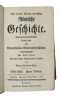
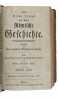
HISTORIAE ROMANAE RES MEMORABILES EX SCRIPTORIBUS ILLUSTRIBUS COLLECTAE LIVIO SCILICET, FLORO, SALLUSTIO & PATERCULO AB URBE CONDITA AB OBITUM USQUE CAESARIS AUGUSTI. (Approx: Evénements mémorables de l’histoire romaine d’après des écrivains célèbres comme LIVIUS, FLORUS, SALLUSTE, PALERCULUS depuis la fondation de Rome jusqu’à César- Auguste).
Apud Colas, Parisiis, 1786
Un volume in-12°, reliure cuir de l’époque, dos lisse avec ornements dorés. Mors partiellement fendus sur le 1er plat, coiffes émoussées, (VI + 400 pages dont un Index des extraits des différents auteurs avec les numéros des pages correspondantes. In fine on trouvera le catalogue des livres que l’on peut trouver chez COLAS (5 pages). Troisième édition, texte intégralement en latin. ETAT ACCEPTABLE

Ex Titus Livius Novus
Fayard PHOTOS SUR DEMANDE
Merci de nous contacter à l'avance si vous souhaitez consulter une référence dans notre boutique à Authon-du-Perche.
Ex Titus Livius Novus
Fayard Fayard, 1992 POCHE EN TRES BON ETAT. PLIURE AU DOS. INTERIEUR IMPECCABLE.
Merci de nous contacter à l'avance si vous souhaitez consulter une référence dans notre boutique à Authon-du-Perche.
Oeuvres de Tite Live. (Histoire romaine). Avec la trad. en français publ. sous la dir. de M. NISARD.
Paris, Dubouchet, 1839.
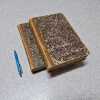
2 vols: 925;911 p. H.calf 27 cm (Backs rubbed; corners bumped; the same as the Didot-Livius)
Wege zu Livius.
Darmstadt, WB, 1967.
VIII,544 p. Cl. 20 cm (WdF 132)(Ex library copy; cover used)
Die neue Livius-Epitome aus Oxyrhynchus. Text und Untersuchungen.
Leipzig, Dieterich, 1904.
131 p. Wrappers. 30 cm (Beiträge zur Alten Geschichte 2. Beiheft)
Tijdschrift voor Nederlandse classici. Jaargang 28 (1995), nr. 5: themanummer Livius.
Muiderberg, Coutinho, 1995.
70 p. Wrappers. 23 cm (Articles by Den Hengst, Ahlheid, Kemper, Zimmerman)
Die Konzessivität bei Livius. Mit besonderer Berücksichtigung der ersten und fünften Dekade. Eine syntaktisch-stilistische Untersuchung.
Helsinki, Wiesbaden, Ak. Kirjakauppa, Harrassowitz, 1957.
181 p. Wrappers 24.5 cm (Author's dedication on title)
Die Konzessivität bei Livius. Mit besonderer Berücksichtigung der ersten und fünften Dekade. Eine syntaktisch-stilistische Untersuchung.
Helsinki, Wiesbaden, Ak. Kirjakauppa, Harrassowitz, 1957.
181 p. Wrappers 24.5 cm (Cover slightly worn)
Die Religiosität des Livius.
Amst., Hakkert, 1964.
XI,215 p. Cloth (Reprint Stuttgart 1941)
Die Religiosität des Livius.
Amst., Hakkert, 1964.
XI,215 p. Cl. (Repr. Stuttgart 1941)(Ex library copy)
[CLASSIQUE LATIN, TITE-LIVE] - TITUS LIVIUS (Patavinus), LEMAIRE (N.E.) -
Reference : 200613076
TITUS LIVIUS PATAVINUS ad codices parisinos recensitus cum varietate lectionum et selectis commentariis.
Paris, Colligebat nicolaus eligius lemaire, 1822 ; in-8, 462-517 pp., demi basane vert passé dos a nerfs. Les 2 volumes. Item supplemta j. Freishemii curante N.E. Lemaire.
Item supplemta j. Freishemii curante N.E. Lemaire.
Titi Livii Historiarum quod extat. Cum perpetuis Gronovii et Variorum Notis.
3 Bände. Amsterdam, Ludwig und Daniel Elzevier (Band 2 und 3: nur Daniel Elzevier). 1665, 1664, 1664. 8°. 23 n.n. Bl., 820 S., 73 n.n. S. Index; 842 S., 67 n.n. S. Index; 997 S., 90 n.n. S. Index. Mit gestochenem Titel in Band 1 und Holzschnittdruckermarke als Titelvignette in den Bänden 2 und 3. Geflammte Kalblederbände der Zeit im Duseuil Stil mit zweifacher doppelter Deckelfiletierung, Eckfleurons, goldgeprägten Rückentiteln und floraler Rückenvergoldung.
Willems 1358. - Erste bei Elzevier erschienene von Gronovius herausgegebene Livius-Ausgabe. Erschien zum Zeitpunkt der Trennung von Ludwig und Daniel Elzevier mit der früheren Datierung (1664) für den 2. und 3. Band. Zur Zeit geschätzt für die Anmerkungen von Gronovius, wurde die Ausgabe 1678 im typischen Elzevierformat neu herausgegeben. - Der erste Band mit Besitzerstempel im Innendeckel und einem handschriftlichen Kommentar zur Ausgabe. Oberes Kapital des 3. Bandes leicht angebrochen. Die ursprüngichen Leinenschliessen nicht mehr vorhanden. - Annähernd Exemplar in dekorativen Einbänden der Zeit.
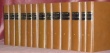
Titus Livius Patavinius ad codices parisinos recentitus, cum varietate lectionum et selectis commentariis, item supplementa J. Freinshemii, curante, N.-E.Lemaire. 13 volumes complets.
Paris, N.E. Lemaire, typis F. Didot 1822-1826, 220x145mm, 7054pages, relié percaline brune, étiquettes de titre au dos en cuir noir, tranches rognées, reliure moderne. Brunet, t. 3, 1109.
Pour un paiement via PayPal, veuillez nous en faire la demande et nous vous enverrons une facture PayPal
Historiarum Libri, qui supersunt omnes et deperditorum fragmenta. Ex recensione Arn. Drakenborchii ad Codicum Bambergensis et Vindobonensis fidem passim reficta a Ioanne Theophilo Kreyssig. Annotationes Crevierii, Strothii, Ruperti, Aliorumque selecta...
Oxford, Talboys, 1840-41. 8vo. 4 beautiful full vellum bindings with richly gilt spines, gilt title- and tome-labels and gilt allegorical centre-peices to front boards. Marbled edges. A very nice and clean set. Front hinge of vol. 1 cracked, but binding still tight. A lovely copy. With a contemporary gift-inscription to front free end-paper of vol. 1. VIII, 616 (4), 548 (4), 484 (4), 521, (1), (160, - Index) pp.
First edition thus of this learned and esteemed edition of Livius' History of Rome.Travers Twiss' carefully revised text is still considered one of the most important versions and the many notes and commentaries in the present edition are considered excellent and valuable.
Historiarum ab urbe condita libri, qui supersunt omnes, cum Notis integris.... curante Arn. Drakenborch. 15 Bde. (in 17 Theile).
Stuttgart, Societatis Wuertembergicae, 1820-28. 8vo. Bound in 17 uniform contemp. hcalf. Spines gilt, titlelabels with gilt lettering. Wear to spine on volume one, especially at upper compartment.
Second, enlarged edition of Drakenborch's noted edition of Livius. ""The labours of Drakenborch have entitled his edition to a superiority over every preceding one. Ernesti, Harles, and the Bipont editors, are unanimous in their approbation of this truly critical production...""(Dibdin II, p. 169 (the 7 vols. edition of 1738).
[CLASSIQUE LATIN, TITE-LIVE] - LIVIUS PATAVINUS (TUTUS), LEMAIRE (N.E.) -
Reference : 200613060
TITUS LIVIUS TATAVINUS ad codices parisinos recensitus et supplementa reinshemii - INDICES DUO novi et absolutissimi.
Paris, Colligeba nicolaus eligius lemaire, 1825 ; in-8, 334 pp., demi bassane vert passé a nerfs. Quorum prior in T. LIVIUM et J. FREINSHEMIUM et ALTER in T. LIVII Epitomas curante N.E. LEMAIRE - VOLUMEN DUODECIMUN pars posterior.
Quorum prior in T. LIVIUM et J. FREINSHEMIUM et ALTER in T. LIVII Epitomas curante N.E. LEMAIRE - VOLUMEN DUODECIMUN pars posterior.
Decas quarta.
Lyon, Gryphius, 1554, in-12°, (12.5x7.5 cm), 702 p. + 15 ff. (4 derniers blanches, mais reglées), nom ms. sur titre, ‘F.F. W. Hüpeden’ cachet héraldique au verso, reliure en veau, richement ornée or et à la cire, style dit ‘de Lyon’. Tranches dorées. (Dos, coins et bords restaurés);
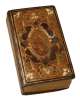


Adams L. 1341; Baudrier VIII, 273; de l’éd. en 5 parties, souvent considéré comme oeuvre unique, exemplaire reglé; cf. Jean Toulet: L’école lyonnaise de reliure (dans ‘Le siècle d’or de l’imprimerie lyonnaise’ 1972). Image disp.

(SLACES, NVVA)
Phone number : 41 (0)26 3223808
Ab Urbe Condita. Tomus I-IV: libri I-XXX. Recognoverunt et adnotatione critica instruxerunt R.S. CONWAY & C.F. WALTERS, S.K. JOHNSON.
Oxford, Clarendon Press, 1939 - 1961.
4 volumes. Cloth 19 cm (OCT) (Heavy set, may require extra shipping costs)

