 Write to the booksellers
780 books for « lange c »Edit
-
Type
Book (753)
Drawings (1)
Engraving (1)
Music sheets (41)
New book (1)
-
Latest
Last month (15)
Last week (1)
-
Language
Dutch (2)
English (13)
French (746)
German (3)
Russian (32)
Spanish (1)
-
Century
17th (4)
18th (16)
19th (83)
20th (321)
21st (42)
-
Countries
Belgium (69)
Côte d'Ivoire (2)
Denmark (34)
France (587)
Germany (1)
Netherlands (8)
Switzerland (63)
United Kingdom (1)
United States of America (32)
-
Syndicate
CLAM (5)
CNE (1)
ILAB (334)
NVVA (26)
SLACES (26)
SLAM (265)
Topics
- Alsace (7)
- Archaeology (10)
- Architecture (8)
- Artists (4)
- Atlas (7)
- Autographs (5)
- Belgium (3)
- Biography (11)
- Botany (6)
- Brittany (3)
- Buffon (12)
- Children’s books (4)
- China (3)
- Cooking (20)
- Culinary art (13)
- Dance & ballet (3)
- Dancing (3)
- Daumier (6)
- Dedication (3)
- Detective novels (8)
- Dictionaries (8)
- Drawings (3)
- Early printed books (4)
- Economics (5)
- Egypt (13)
- English (7)
- Esotericism (3)
- Fantastic (6)
- Fine arts (7)
- First edition (10)
- Gastronomy (4)
- Genealogy (3)
- Geography (7)
- Germanic languages (28)
- Germany (20)
- Gibert (3)
- Greek (4)
- Guide books (4)
- Head edition (3)
- History (44)
- Humour anecdotes (10)
- India (4)
- Italy (4)
- Janet-lange (51)
- Jazz (3)
- Lange jean-marie (3)
- Lange kurt (17)
- Lange monique (36)
- Latin (4)
- Law (16)
- Legislation (3)
- Literature (40)
- Liturgy (3)
- Luzu g (4)
- Magazine (6)
- Medicine (3)
- Mines & miners (3)
- Mushrooms mycology (6)
- Newspapers press (7)
- Normandy (7)
- Painting (5)
- Paris (7)
- Philosophy (21)
- Photography (10)
- Poetry (4)
- Policy (5)
- Psychology (4)
- Regionalism (4)
- Reviews (9)
- Science fiction (3)
- Sciences (5)
- Scores (46)
- Songs (40)
- Sportsmen (4)
- Spying (3)
- Topography (3)
- Translation (3)
- Travel (4)
- Various (4)
- Vedel h (4)
- War (6)
- Zoology (4)
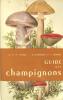
Guide des champignons.
Editions Delachaux et Niestlé, 1967. 251 pages, In-8 cartonnage éditeur sous jaquette illustrée en couleurs, planches couleurs de J. E. Lange, E. Sunesen & P. Dahlstrom. Menus défauts en jaquette.

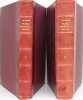
Flora Agaricina Danica
Recatao, Copenhagen, 1935 à 1940. 2 volumes grand in/4 (32 x 25 cm) reliure demi-basane rouge à coins, couvertures conservées, contenant les 5 fascicules et les 200 planches en chromolithographie. Texte en anglais. Dos légèrement insolés et petit manque de cuir en coiffe inférieure du volume 1.
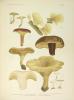
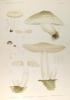
Biblio : Nissen : notice 1132 indique les renseignements suivants sur Jacob Emanuel Lange : né à Flensburg en 1864 et mort à Copenhague en 1941. Il fut le père de Morten Lange également mycologiste.
[ Gustave Barba, Typ. Henri Plon] - ROWCROFT, Ch. ; MAYNE-REID ; PAUQUET ; HARVEY ; DUVAUX, J. ; JANET-LANGE
Reference : 36711
L'Emigrant de Ch. Rowcroft illustré par Pauquet ; Les Forêts Vierges de Mayne-Reid illustré par Harvey et J. Duvaux ; La Baie d'Hudson de Mayne-Reid illustré par Harvey et J. Duvaux ; Les Chasseurs de Bisons de Mayne-Reid illustré par Harvey et J. Duvaux ; Le Désert de Mayne-Reid illustré par Harvey et Janet-Lange ; Les Chasseurs de Chevelures de Mayne-Reid illustré par Janet-Lange
1 vol. in-4 reliure demi-chagrin vert, Gustave Barba, Typ. Henri Plon, Paris, s.d.
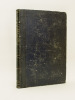
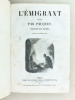
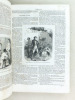
Etat très satisfaisant (rel. lég. frottée, mouill. marginale en deuxième partie de l'ouvrage).
Oeuvres complètes de Buffon avec des extraits de Daubenton et la classification de Cuvier (6 Tomes - Complet) Tome I : Matières générales. Théorie de la Terre ; Tome II : Matières Générales. II Théorie de la terre. Minéraux ; Tome III : Mammifères ; Tome IV : Mammifères ; Tome V : Les Oiseaux ; Tome VI : Les Oiseaux
6 vol. in-4 reliure demi-chagrin marron, dos à 5 nerfs, Chez Furne et Cie, Paris, 1848, Tome I : Matières générales. Théorie de la Terre, 782 pp. avec portrait et 5 cartes hors texte ; Tome II : Matières Générales, II Théorie de la terre. Minéraux, 775 pp. ; Tome III : Mammifères, 726 pp. avec 14 pl. hors texte ; Tome IV : Mammifères, avec 31 planches hors texte ; Tome V : Les Oiseaux, avec 42 planches hors texte ; Tome VI : Les Oiseaux, avec 30 planches hors texte
Etat satisfaisant pour cette série complète, à laquelle manquent qq. rares planches (mouill. en reliure du tome 4, qq. serpentes contrecollées). Les 122 planches couleurs, dessinées par Edouard Traviès et Janet-Lange, sont en général bien fraîches (hormis les qq. défauts signalés). Prix en l'état pour cet ensemble très intéressant.
[Légé, Mihon Frères, Maggi] - SEWRIN, Edmond ; BORDES, Auguste ; LANGE ; CHIRAC, A.
Reference : 54798
(1834)
[ Promenade sur la Garonne devant Bordeaux ] Album de 15 lithographies de Bordeaux : Hospice des Enfants Trouvés - Quai Sainte Croix - Porte de Bourgogne - Porte du Palais - Place Royale - Les Quinconces - Les Chartrons [ Port ] - Les Chartrons [ Quai ] - Moulin de Bacalan - Magasin des Vivres de la Marine - Pont de Bordeaux [Vue prise de la Bastide ] - Colonnes rostrales de Bordeaux - Vue de l'Eglise Saint-André à Bordeaux- Vue du Théâtre Français à Bordeaux - Vue du Grand-Théâtre de Bordeaux - Vue du Grand Hôpital de Bordeaux
1 album grand in-4 (format en marges : 26 x 41 cm) format à l'italienne reliure de l'époque demi-chevrette à petits coins verte, Lith. de Légé, Bordeaux (pour les 15 planches), Michon Frères (1 planche), Maggi ( 3 planches), s.d. [ circa 1834 pour les 10 premières, circa 1837. Rappel du titre complet : [ Promenade sur la Garonne devant Bordeaux ] Album de 15 lithographies de Bordeaux : Hospice des Enfants Trouvés - Quai Sainte Croix - Porte de Bourgogne - Porte du Palais - Place Royale - Les Quinconces - Les Chartrons [ Port ] - Les Chartrons [ Quai ] - Moulin de Bacalan - Magasin des Vivres de la Marine - Pont de Bordeaux [Vue prise de la Bastide ] - Colonnes rostrales de Bordeaux - Vue de l'Eglise Saint-André à Bordeaux- Vue du Théâtre Français à Bordeaux - Vue du Grand-Théâtre de Bordeaux - Vue du Grand Hôpital de Bordeaux
![[ Promenade sur la Garonne devant Bordeaux ] Album de 15 lithographies de Bordeaux : Hospice des Enfants Trouvés - Quai Sainte Croix - Porte de ...](https://static.livre-rare-book.com/pictures/CDL/54798_thumb.jpg)
![[ Promenade sur la Garonne devant Bordeaux ] Album de 15 lithographies de Bordeaux : Hospice des Enfants Trouvés - Quai Sainte Croix - Porte de ...](https://static.livre-rare-book.com/pictures/CDL/54798_2_thumb.jpg)
![[ Promenade sur la Garonne devant Bordeaux ] Album de 15 lithographies de Bordeaux : Hospice des Enfants Trouvés - Quai Sainte Croix - Porte de ...](https://static.livre-rare-book.com/pictures/CDL/54798_3_thumb.jpg)
Album composite réunissant les 10 lithographies de Sewrin (il s'agit manifestement de son très rare album "Promenade sur la Garonne devant Bordeaux", essentiel pour la connaissance des rives de la Garonne à Bordeaux dans la première partie du XIXe siècle), et 5 autres lithographies : Pont de Bordeaux vue prise de la Bastide, par Burgade (lith. de Légé, publié par Michon Frères) et 5 autres planches : Colonnes rostrales par Langé et A. Chirac et 4 planches par Auguste Bordes : Eglise Saint-André ; Vue du Théâtre Français ; Vue du Grand Théâtre et Vue du Grand Hôpital de Bordeaux (les 3 dernières publiées Chez Maggi, Cours du 30 Juillet, Maison Gobineau). Etat très satisfaisant (qq. taches sur 2 planches, rouss.)
[Chez Furne et Cie] - BUFFON ; [ TRAVIES, Edouard ; JANET-LANGE ]
Reference : 69219
(1843)
Oeuvres complètes de Buffon avec des extraits de Daubenton et la classification de Cuvier (6 Tomes - Complet) Tome I : Matières générales. Théorie de la Terre ; Tome II : Matières Générales. II Théorie de la terre. Minéraux ; Tome III : Mammifères ; Tome IV : Mammifères ; Tome V : Les Oiseaux ; Tome VI : Les Oiseaux
6 vol. in-4 reliure demi-basane brune, dos à 5 nerfs orné, Chez Furne et Cie, Paris, 1844-1848, Tome I : Matières générales. Théorie de la Terre, 782 pp. avec portrait et 5 cartes hors texte ; Tome II : Matières Générales, II Théorie de la terre. Minéraux, 775 pp. ; Tome III : Mammifères, 726 pp. avec 17 pl. hors texte ; Tome IV : Mammifères, 784 pp. avec 31 planches hors texte ; Tome V : Les Oiseaux, 653 pp. avec 42 planches hors texte ; Tome VI : Les Oiseaux, 726 pp. avec 30 planches hors texte
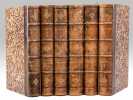
Les 126 planches couleurs, dessinées par Edouard Traviès et Janet-Lange, sont souvent très belles. Prix en l'état pour cet ensemble très intéressant (frott. en dos, erreurs d'impressions dans la table et l'avis au relieur dans le tome 6, frott. en coupes, rouss. parfois fortes dans le texte, mouill. en tête du premier tome, les superbes planches en couleurs sont en générale d'une belle fraîcheur).
[Aubert et Cie, Lavigne] - CLER, Albert ; DAUMIER (ill.) ; GAVARNI (ill.) ; JANET-LANGE (ill.) ; VALENTIN (ill.)
Reference : 67381
(1841)
Physiologie du Musicien [ Edition originale ]
Vignettes de Daumier, Gavarni, Janet-Lange et Valentin, 1 vol. in-32 reliure bradel XXe demi-chagrin orange, tête dorée, Aubert et Cie, Lavigne, Paris, s.d. [ 1841 ], 126 pp. et 1 f. n. ch.
![Physiologie du Musicien [ Edition originale ]. CLER, Albert ; DAUMIER (ill.) ; GAVARNI (ill.) ; JANET-LANGE (ill.) ; VALENTIN (ill.)](https://static.livre-rare-book.com/pictures/CDL/67381_thumb.jpg)
![Physiologie du Musicien [ Edition originale ]. CLER, Albert ; DAUMIER (ill.) ; GAVARNI (ill.) ; JANET-LANGE (ill.) ; VALENTIN (ill.)](https://static.livre-rare-book.com/pictures/CDL/67381_2_thumb.jpg)
![Physiologie du Musicien [ Edition originale ]. CLER, Albert ; DAUMIER (ill.) ; GAVARNI (ill.) ; JANET-LANGE (ill.) ; VALENTIN (ill.)](https://static.livre-rare-book.com/pictures/CDL/67381_3_thumb.jpg)
Les "Physiologies" connurent une grande vogue de 1840 à 1845. Bon exemplaire (qq. rouss., dos passé, bel exemplaire par ailleurs). Vicaire, VI, 608
[Aubert et Cie, Lavigne] - LEMOINE, Edouard ; ALOPHE (ill.) ; JANET-LANGE (ill.)
Reference : 67386
(1841)
Physiologie de l'Homme à Bonnes Fortunes [ Edition originale ]
Vignettes de MM. Alophe et Janet-Lange, 1 vol. in-32 reliure bradel XXe demi-chagrin havane, couvertures conservées, tête dorée, Aubert et Cie, Lavigne, Paris, s.d. [ 1841 ], 127 pp.
![Physiologie de l'Homme à Bonnes Fortunes [ Edition originale ]. LEMOINE, Edouard ; ALOPHE (ill.) ; JANET-LANGE (ill.)](https://static.livre-rare-book.com/pictures/CDL/67386_thumb.jpg)
![Physiologie de l'Homme à Bonnes Fortunes [ Edition originale ]. LEMOINE, Edouard ; ALOPHE (ill.) ; JANET-LANGE (ill.)](https://static.livre-rare-book.com/pictures/CDL/67386_2_thumb.jpg)
![Physiologie de l'Homme à Bonnes Fortunes [ Edition originale ]. LEMOINE, Edouard ; ALOPHE (ill.) ; JANET-LANGE (ill.)](https://static.livre-rare-book.com/pictures/CDL/67386_3_thumb.jpg)
Les "Physiologies" connurent une grande vogue de 1840 à 1845. Bon exemplaire (qq. rouss., dos passé, bel exemplaire par ailleurs). Vicaire, VI, 604
[Aubert et Cie, Lavigne] - ALHOY, Maurice ; DAUMIER (ill.) ; JANET-LANGE (ill.)
Reference : 67390
(1841)
Physiologie du Voyageur [Edition originale ]
Vignettes de Daumier et Janet-Lange, 1 vol. in-32 reliure bradel XXe demi-chagrin maroquiné havane, tête dorée, Aubert et Cie, Lavigne, Paris, s.d. [ 1841 ], 126 pp. et 1 f. n. ch.
![Physiologie du Voyageur [Edition originale ]. ALHOY, Maurice ; DAUMIER (ill.) ; JANET-LANGE (ill.)](https://static.livre-rare-book.com/pictures/CDL/67390_thumb.jpg)
![Physiologie du Voyageur [Edition originale ]. ALHOY, Maurice ; DAUMIER (ill.) ; JANET-LANGE (ill.)](https://static.livre-rare-book.com/pictures/CDL/67390_2_thumb.jpg)
![Physiologie du Voyageur [Edition originale ]. ALHOY, Maurice ; DAUMIER (ill.) ; JANET-LANGE (ill.)](https://static.livre-rare-book.com/pictures/CDL/67390_3_thumb.jpg)
Les "Physiologies" connurent une grande vogue de 1840 à 1845. Bon exemplaire (qq. rouss., bel exemplaire par ailleurs). Vicaire, VI, 596
[Chez Furne et Cie] - BUFFON ; [ TRAVIES, Edouard ; JANET-LANGE ]
Reference : 64322
(1853)
Oeuvres complètes de Buffon avec des extraits de Daubenton et la classification de Cuvier (6 Tomes - Complet) Tome I : Matières générales. Théorie de la Terre ; Tome II : Matières Générales. II Théorie de la terre. Minéraux ; Tome III : Mammifères ; Tome IV : Mammifères ; Tome V : Les Oiseaux ; Tome VI : Les Oiseaux
6 vol. in-4 reliure demi-basane verte, Chez Furne et Cie, Paris, 1853-1858, Tome I : Matières générales. Théorie de la Terre, 782 pp. avec portrait et 5 cartes hors texte ; Tome II : Matières Générales, II Théorie de la terre. Minéraux, 775 pp. ; Tome III : Mammifères, 726 pp. avec 18 pl. hors texte ; Tome IV : Mammifères, 784 pp. avec 31 planches hors texte ; Tome V : Les Oiseaux, 653 pp. avec 44 planches hors texte ; Tome VI : Les Oiseaux, 732 pp. avec 30 planches hors texte
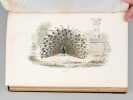
Série bien complète des planches, avec 128 planches en couleurs sur les 127 indiquées dans l'avis au relieur (avec une planche supplémentaire dans le tome 3 : "Le lapin"). Etat satisfaisant(reliures fort. frottées avec manques en coiffes, qq. ressauts de cahiers, rouss.). Les 128 planches couleurs, dessinées par Edouard Traviès et Janet-Lange, sont souvent très belles. Prix en l'état pour cet ensemble très intéressant.
J. St. Mill’s Ansichten über die soziale Frage und die angebliche Umwälzung der Sozialwissenschaft durch Carey. - [PRESENTATION-COPY]
Duisburg, Falk & Lange, 1866. 8vo. Uncut in the original printed wrappers with author's presentation inscription: ""Geschenk des Verfassers / Freitag, d. 13. April 1866."". Spine expertly restored and wrappers reinforced on verso. A few light underlignings in pencil, a fine copy. VIII, 256 pp.
![J. St. Mill’s Ansichten über die soziale Frage und die angebliche Umwälzung der Sozialwissenschaft durch Carey. - [PRESENTATION-COPY]. "LANGE, ...](https://static.livre-rare-book.com/pictures/LLX/56307_1_thumb.jpg)
![J. St. Mill’s Ansichten über die soziale Frage und die angebliche Umwälzung der Sozialwissenschaft durch Carey. - [PRESENTATION-COPY]. "LANGE, ...](https://static.livre-rare-book.com/pictures/LLX/56307_2_thumb.jpg)
![J. St. Mill’s Ansichten über die soziale Frage und die angebliche Umwälzung der Sozialwissenschaft durch Carey. - [PRESENTATION-COPY]. "LANGE, ...](https://static.livre-rare-book.com/pictures/LLX/56307_3_thumb.jpg)
First edition, presentation-copy given by the author shortly after publication, of Lange's highly influential work, which Karl Marx read extensively. The work served served as a great source of inspiration to Marx, especially in regard to rent theory and soil exhaustion (chapter 4 in the present work).Lange was furthermore seminal in the spreading of Darwinism in Germany. It was through Lange that Nietzsche was introduced to Darwin, an introduction which was to become pivotal in the construction of his theory of the Übermensch. ""[Lange], elucidates his critique against the Leibig school in the 1866 book [the present], the title which ironically mocks Dühring's book. Marx made some excerpts from this book in the beginning of 1868 and possessed a copy in his library. These excerpts are important because Marx focused on chapter 4 in which lange criticizes Carey's and Dühring's view on agriculture. Marx documented a passage in which Lange rejects Carey's idea of the harmonious development"" especially the latter's treatment of a ""protective tariff"" as ""panacea"" which should automatically lead to the establishment of an autarchic."" (Karl Marx's Ecosocialism).""Thus in 1868 Marx began reading the work of authors who took a more critical stance toward Liebig's Agricultural Chemistry. He was already familiar with arguments such as Roscher's, which held that the robbery system should be criticized from the point of view of ""natural science"" but could be justified from an ""economic"" standpoint insofar as it was more profitable. According to Roscher, it was only necessary to stop the robbery just before it became too expensive to recover the original fertility of the soil - but market prices would take care of that. Adopting Roscher's arguments, Friedrich Albert Lange, a German philosopher, argued against Dühring's reception of Liebig and Carey in his J. St. Mill's Views of the Social Question [J. St. Mills Ansichten über die sociale Frage] published in 1866. Marx read Lange's book at the beginning of 1868, and it is no coincidence that his notebook focuses on its fourth chapter, where Lange discusses the problems of rent theory and soil exhaustion. Specifically, Marx noted Lange's observation that Carey and Dühring denounced ""trade"" with England as a cause of all evils and regarded a ""protective tariff"" as the ultimate ""panacea,"" without Lange's recognizing that ""industry"" possesses a ""centralizing tendency,"" which creates not only the division of town and country but also economic inequality. Similar to Roscher, Lange argued that ""despite the natural scientific correctness of Liebig's theory,"" robbery cultivation can be justified from a ""national economic"" perspective."" (Saito, Marx's Ecological Notebooks).Lange is a significant figure among the mid-nineteenth century German intellectuals who were concerned to digest the impact of developments in natural science on philosophy, pedagogy, and politics.""Lange was one of the originators of ""physiological neo-Kantianism"" and an important figure in the founding of the Marburg school of neo-Kantianism. He played a significant role in the German labour movement and in the development of social democratic thought. He articulated a socialist Darwinism that was an alternative to early social Darwinism."" (SEP)Die Bibliotheken von Marx und Engels (MEGA IV.32).

J. St. Mill’s Ansichten über die soziale Frage und die angebliche Umwälzung der Sozialwissenschaft durch Carey. - [A MAIN SOURCE OF INSPIRATION FOR MARX]
Duisburg, Falk & Lange, 1866. 8vo. Original publisher's black cloth with gilt lettering to spine and blindstamped borders to boards. Small tears to top capital and a small tear to the top of hinges. Otherwise very clean and fresh, aslo internally. VIII, 256 pp.

Scarce first edition of Lange's highly influential work, which came to serve as a great source of inspiration to Karl Marx, who read it extensively. Especially Lange's theories on rent theory and soil exhaustion (chapter 4 in the present work) influenced Marx profoundly.Apart from his influence through Marx, Lange was seminal in the spreading of Darwinism in Germany. Nietzsche was introduced to Darwin via Lange, which became pivotal in his construction of his theory of the Übermensch. ""[Lange], elucidates his critique against the Leibig school in the 1866 book [the present], the title which ironically mocks Dühring's book. Marx made some excerpts from this book in the beginning of 1868 and possessed a copy in his library. These excerpts are important because Marx focused on chapter 4 in which lange criticizes Carey's and Dühring's view on agriculture. Marx documented a passage in which Lange rejects Carey's idea of the harmonious development"" especially the latter's treatment of a ""protective tariff"" as ""panacea"" which should automatically lead to the establishment of an autarchic. "" (Karl Marx's Ecosocialism).""Thus in 1868 Marx began reading the work of authors who took a more critical stance toward Liebig's Agricultural Chemistry. He was already familiar with arguments such as Roscher's, which held that the robbery system should be criticized from the point of view of ""natural science"" but could be justified from an ""economic"" standpoint insofar as it was more profitable. According to Roscher, it was only necessary to stop the robbery just before it became too expensive to recover the original fertility of the soil-but market prices would take care of that. Adopting Roscher's arguments, Friedrich Albert Lange, a German philosopher, argued against Dühring's reception of Liebig and Carey in his J. St. Mill's Views of the Social Question [J. St. Mills Ansichten über die sociale Frage] published in 1866. Marx read Lange's book at the beginning of 1868, and it is no coincidence that his notebook focuses on its fourth chapter, where Lange discusses the problems of rent theory and soil exhaustion. Specifically, Marx noted Lange's observation that Carey and Dühring denounced ""trade"" with England as a cause of all evils and regarded a ""protective tariff"" as the ultimate ""panacea,"" without Lange's recognizing that ""industry"" possesses a ""centralizing tendency,"" which creates not only the division of town and country but also economic inequality. Similar to Roscher, Lange argued that ""despite the natural scientific correctness of Liebig's theory,"" robbery cultivation can be justified from a ""national economic"" perspective.""( Saito, Marx's Ecological Notebooks)Lange is a significant figure among the mid nineteenth century German intellectuals who were concerned to think through the impact of developments in natural science for philosophy, pedagogy, and politics.""Lange was one of the originators of ""physiological neo-Kantianism"" and an important figure in the founding of the Marburg school of neo-Kantianism. He played a significant role in the German labour movement and in the development of social democratic thought. He articulated a socialist Darwinism that was an alternative to early social Darwinism."" (SEP)Die Bibliotheken von Marx und Engels (MEGA IV.32).
Geschichte des Materialismus und Kritik seiner Bedeutung in der Gegenwart. Achte Auflage. 2 vols. - [""WITHOUT A DOUBT THE MOST SIGNIFICANT PHILOSOPHICAL WORK TO HAVE APPEARED IN THE LAST HUNDRED YEARS"" - NIETZSCHE]
Leipzig, 1908. 8vo. Two volumes, both in publisher's original full cloth binding. Bindings with light wear. Ex-libris to verso of front boards. Hinges a bit weak. Internally fine and clean. XXIII, 535 pp."" XIII, 573, (3) pp.
Eighth edition of Lange's seminal work on materialism which had profound influence on Nietzsche who stated that it ""without a doubt [was] the most significant philosophical work to have appeared in the last hundred years"" (Letter to Muschacke). ""Nietzsche never 'broke' with Lange's thought at any point in his career as he did with other influences"" (Constancio, Nietzsche and the Problem of Subjectivity).""Lange's most famous book, The History of Materialism and Critique of its Contemporary Significance, is in essence a defense of such a return to Kant. It is also a detailed history of materialism (and was read well into the twentieth century for precisely this reason). However, more fundamentally, it was meant to drive home the above mentioned concerns about materialism. Lange accepted materialism as a sensible maxim for the construction of theories within natural science. However, as a comprehensive philosophical system, as both fundamental ontology and epistemology, materialism is self-undermining."" (Stanford)In 'Geschichte des Materialismus' Lange adopted the Kantian standpoint that we can know nothing but phenomena, Lange maintains that neither materialism nor any other metaphysical system has a valid claim to ultimate truth. For empirical phenomenal knowledge, however, which is all that humans can look for, materialism with its exact scientific methods has done most valuable service. Ideal metaphysics, though they fail of the inner truth of things, have a value as the embodiment of high aspirations, in the same way as poetry and religion. Lange replaced the transcendental subject of Kantianism by the organism, although he considered that this substitution validated all the more Kant's philosophy that
Logische Studien: Ein Beitrag Zur Neubegrundung Der Formalen Logik Und Der Erkenntnisstheorie. - [HØFFDING'S COPY]
Iserlohn, 1877. Lex 8vo. Worn half calf. Back hinge very worn and weak and top capital worn off. Internally nice and clean. A few leaves with pencil underlinings and a marginal note on p. 94 (presumably in Høffding's hand). (8),149 + 1 double-page plate.
![Logische Studien: Ein Beitrag Zur Neubegrundung Der Formalen Logik Und Der Erkenntnisstheorie. - [HØFFDING'S COPY]. "LANGE, FRIEDRICH ALBERT.](https://static.livre-rare-book.com/pictures/LLX/62326_1_thumb.jpg)
![Logische Studien: Ein Beitrag Zur Neubegrundung Der Formalen Logik Und Der Erkenntnisstheorie. - [HØFFDING'S COPY]. "LANGE, FRIEDRICH ALBERT.](https://static.livre-rare-book.com/pictures/LLX/62326_2_thumb.jpg)
![Logische Studien: Ein Beitrag Zur Neubegrundung Der Formalen Logik Und Der Erkenntnisstheorie. - [HØFFDING'S COPY]. "LANGE, FRIEDRICH ALBERT.](https://static.livre-rare-book.com/pictures/LLX/62326_3_thumb.jpg)
First edition of Lange's logical magnum opus, Harald Høffding's copy with his ownership signature to half-title. ""Friedrich Albert Lange (1828 - 1875) was a German philosopher, pedagogist, political activist, and journalist. Lange is a significant figure among the mid nineteenth century German intellectuals who were concerned to think through the impact of developments in natural science for politics, philosophy, and pedagogy. Lange played a significant role in the German labour movement and in the development of social democratic thought. He articulated a socialist Darwinism that was an alternative to early social Darwinism. His work The History of Materialism and Critique of its Contemporary Significance was a classic text in materialism and the history of philosophy well into the twentieth century. The “materialism controversy” centered on the impact of materialist science and philosophy on religion and metaphysics. Lange’s response to the materialism controversy had an influence on the neo-Kantian movement and on Friedrich Nietzsche, among others. Lange was one of the originators of “physiological neo-Kantianism” and an important figure in the founding of the Marburg school of neo-Kantianism. His work in logic, culminating in Logical Studies, derived the syllogistic from diagrammatic reasoning, and was admired by Ernst Schröder and John Venn. Lange’s sympathetic critique of materialism, his philosophical naturalism, and his political activism unite his diverse achievements, and distinguish him among nineteenth century philosophers."" (SEP). Harald Høffding (1843-1931) was one of the leading Danish philosophers of the turn of the century. His philosophy is greatly inspired by positivism, which around 1900, mainly due to Avenarius and Mach, came to be synonymous with empiriocriticism.
Geschichte des Materialismus und Kritik seiner Bedeutung in der Gegenwart. - [""WITHOUT A DOUBT THE MOST SIGNIFICANT PHILOSOPHICAL WORK TO HAVE APPEARED IN THE LAST HUNDRED YEARS"" - NIETZSCHE]
Iserlohn, J Baedeker, 1866 [but 1865]. 8vo. In contemporary half cloth with gilt lettering to spine. Extremities with wear and back hindge loose. First 12 pp with light occassional brownspotting. Otherwise a fine copy. XVI, 563, (1) pp.
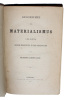
Rare first edition of Lange's seminal work on materialism which had profound influence on Nietzsche who stated that it ""without a doubt [was] the most significant philosophical work to have appeared in the last hundred years"" (Letter to Muschacke). ""Nietzsche never 'broke' with Lange's thought at any point in his career as he did with other influences"" (Constancio, Nietzsche and the Problem of Subjectivity).""Lange's most famous book, The History of Materialism and Critique of its Contemporary Significance, is in essence a defense of such a return to Kant. It is also a detailed history of materialism (and was read well into the twentieth century for precisely this reason). However, more fundamentally, it was meant to drive home the above mentioned concerns about materialism. Lange accepted materialism as a sensible maxim for the construction of theories within natural science. However, as a comprehensive philosophical system, as both fundamental ontology and epistemology, materialism is self-undermining."" (Stanford)In 'Geschichte des Materialismus' Lange adopted the Kantian standpoint that we can know nothing but phenomena, Lange maintains that neither materialism nor any other metaphysical system has a valid claim to ultimate truth. For empirical phenomenal knowledge, however, which is all that humans can look for, materialism with its exact scientific methods has done most valuable service. Ideal metaphysics, though they fail of the inner truth of things, have a value as the embodiment of high aspirations, in the same way as poetry and religion. Lange replaced the transcendental subject of Kantianism by the organism, although he considered that this substitution validated all the more Kant's philosophy that
To egenhændigt breve fra H. O. Lange, det første til H. Olrik, det andet til Kunstakademiets forvalterkontor. - [TO EGENHÆNDIGE OG SIGNEREDE BREVE FRA H. O. LANGE.]
Gjentofte, 17/3, (19)10 + (København), 20/3 1918. 1) Tvær-8vo, 5 linier: ""Kjære Hr. Professor! / Tak for Deres Brev med Anmodningen om en Anmeldelse af Kierkegaards Papirer. Hvis den skal skrives i Løbet af de første to Maaneder, tør jeg ikke love det. Men hvis det maa vente, saa haaber jeg at kunne sende Dem en. / Deres hengivne / H. O. Lange.""2) 8vo, 4 linier, skrevet på brevpapir fra ""Bibliotheca Regia Hafniensis"": ""Beklagende ikke at kunne komme / sender jeg hermed Adgangskortet tilbage. / Ærbødigst / H. O. Lange. / Til / Kunstakademiets Forvalterkontor.""
To håndskrevne og signerede breve fra egyptologen og bibliotekaren H. O. Lange til Hans Olrik.
Histoire de la guerre d’orient
Paris, Gustave Barba libraire éditeur, s.d. (1854). in/4 reliure percaline simili chagrin, plat à ornements dorés, doré trois tranches, nombreuses illustrations in et hors-texte dont 3 portraits sur chine contrecollés et 6 cartes en couleur. Rousseurs éparses.
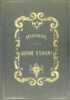
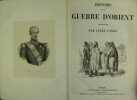
Turcs, Russes...
Le Comte Arthur de Gobineau - Etude biographique et critique
Publications de la Faculté des lettres de l'Université de Strasbourg, 1924. Petit in-4 (25 x 17 cm) broché, couverture imprimée, 291 pages. Exemplaire non coupé.
Le cas de Gobineau est sans doute unique dans l'histoire de la pensée française : son œuvre, absolument méconnue dans son propre pays, a d'abord rayonné en Allemagne grâce à un biographe passionné, L. Schemann, et sous l'impulsion première de Richard Wagner, admirateur de son poème d'Amadis. Personnage remarquable par la multiplicité de ses dons : poète et journaliste, orientaliste, diplomate, romancier, il n'est guère de domaine de l'art et de la pensée où il n'ait déployé une activité un peu brouillonne d'autodidacte. Son abondante correspondance révèle l'observateur attentif de son temps. Les thèses de son Essai sur l'inégalité des races humaines, mal interprétées, accréditant l'idée qu'il fut l'un des inspirateurs du racisme, lui ont valu une réputation de mauvais aloi dont on commence seulement à le décharger.
[Aubert et Cie, La Vigne] - ALHOY, Maurice ; JANET-LANGE (ill.)
Reference : 69293
(1842)
Physiologie du créancier et du débiteur [ édition originale ]
1 vol. in-32 cartonnage bradel d'époque, Aubert et Cie, La Vigne, Paris, s.d. (1842), 116 pp.
Bon état (ancien cachet d'ex libris, bon état par ailleurs)
[Chez Furne et Cie] - BUFFON ; [ TRAVIES ; JANET-LANGE ]
Reference : 64312
(1848)
Oeuvres complètes de Buffon avec des extraits de Daubenton et la classification de Cuvier. Tome 4 : Mammifères
1 vol. grand in-8 reliure de l'époque demi-chagrin rouge, Chez Furne et Cie, Paris, 1848, 784 pp. avec 31 planches hors texte
![Oeuvres complètes de Buffon avec des extraits de Daubenton et la classification de Cuvier. Tome 4 : Mammifères. BUFFON ; [ TRAVIES ; JANET-LANGE ]](https://static.livre-rare-book.com/pictures/CDL/64312_thumb.jpg)
![Oeuvres complètes de Buffon avec des extraits de Daubenton et la classification de Cuvier. Tome 4 : Mammifères. BUFFON ; [ TRAVIES ; JANET-LANGE ]](https://static.livre-rare-book.com/pictures/CDL/64312_2_thumb.jpg)
![Oeuvres complètes de Buffon avec des extraits de Daubenton et la classification de Cuvier. Tome 4 : Mammifères. BUFFON ; [ TRAVIES ; JANET-LANGE ]](https://static.livre-rare-book.com/pictures/CDL/64312_3_thumb.jpg)
Tome 4 seul, bien complet des 31 planches hors texte en couleurs. Etat satisfaisant (coupes et coins frottés, des rouss., dos lég. frotté, bon état par ailleurs).
[ Chez Furne et Cie] - BUFFON ; [ TRAVIES ; JANET-LANGE ]
Reference : 64313
(1848)
Oeuvres complètes de Buffon avec des extraits de Daubenton et la classification de Cuvier (Tomes 5 et 6 : Les Oiseaux )
2 vol. grand in-8 reliure de l'époque demi-chagrin rouge, Chez Furne et Cie, Paris, 1848, Tome V : avec 44 planches hors texte ; Tome VI : 2 ff., 732 pp., avec 30 planches hors texte en couleurs
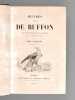
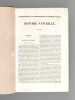
Tomes 5 et 6 seuls, bien complets pour les oiseaux, et complets des 74 planches en couleurs. Etat satisfaisant (coupes et coins frottés, une serpente contrecollée, coiffes sup. frottées, des rouss., bon état par ailleurs)
[Chez Furne et Cie] - BUFFON ; [ TRAVIES ; JANET-LANGE ]
Reference : 64314
(1848)
Oeuvres complètes de Buffon avec des extraits de Daubenton et la classification de Cuvier. (Tomes 1 et 2, sur 6) Tome I : Matières générales. Théorie de la Terre ; Tome II : Matières Générales.
2 vol. grand in-8 reliure de l'époque demi-chagrin rouge, Chez Furne et Cie, Paris, 1848, Tome I : Matières générales. Théorie de la Terre, 782 pp. avec portrait et 5 cartes hors texte ; Tome II : Matières Générales, II Théorie de la terre. Minéraux, 775 pp.
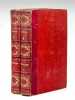
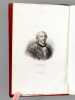
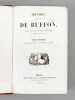
Tomes 1 et 2 seuls. Etat satisfaisant (coupes et coins frottés, reliures un peu frottées, des rouss., bon état par ailleurs)
La Bruyère. Critique des Conditions et des Institutions sociales [ Edition originale ]
1 vol. in-8 rliure postérieure bradel pleine toile bordeaux, couvertures conservées, Librairie Hachette et Cie, Paris, 1909, 424 pp.
![La Bruyère. Critique des Conditions et des Institutions sociales [ Edition originale ]. LANGE, Maurice](https://static.livre-rare-book.com/pictures/CDL/63285_thumb.jpg)
![La Bruyère. Critique des Conditions et des Institutions sociales [ Edition originale ]. LANGE, Maurice](https://static.livre-rare-book.com/pictures/CDL/63285_2_thumb.jpg)
![La Bruyère. Critique des Conditions et des Institutions sociales [ Edition originale ]. LANGE, Maurice](https://static.livre-rare-book.com/pictures/CDL/63285_3_thumb.jpg)
Bon exemplaire bien relié, en très bon état. Agrégé et docteur ès lettres, l'auteur était ancien élève de l'Ecole Normale Supérieure.
Lange N.N. The Mental World. In Russian /Lange N.N. Psikhicheskiy mir.
Lange N.N. The Mental World. In Russian /Lange N.N. Psikhicheskiy mir. Series: The Psychologists of the Fatherland of M. IPSM 1996. You are welcome to reach out to us for a detailed description of the copies currently available. Delivery of this book may take longer than usual including extended processing and pre-shipping time, no expedited shipping is available. Please advise us if you have a set date or a deadline to receive your order. SKUalb2caf90e62197907f
Lange Muller Lange Muller Bostock D. Chamber Philharmonic Of Bohemia Chamber Philharmonic Of Bohemia Bostock D. Lange Muller
Reference : 30490
(2003)
ISBN : 4011222205933
Symphonies n°1 & 2
Scandinavian Classics 2003 14x12x1cm. 2003. CD. Traduit de Sénès Florence - Illustrations de Jankovics györgy
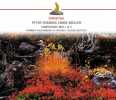
très bon état d'ensemble - envoi rapide et soigné dans une enveloppe à bulle depuis France

