Write to the booksellers
784 books for « lange h o »Edit
-
Type
Book (741)
Drawings (1)
Engraving (1)
Music sheets (40)
New book (1)
-
Latest
Last 3 days (2)
Last month (5)
-
Language
Dutch (2)
English (13)
French (735)
German (3)
Russian (30)
Spanish (1)
-
Century
17th (3)
18th (18)
19th (70)
20th (327)
21st (42)
-
Countries
Belgium (72)
Côte d'Ivoire (2)
Denmark (33)
France (577)
Germany (1)
Netherlands (8)
Switzerland (60)
United Kingdom (1)
United States of America (30)
-
Syndicate
CLAM (5)
CNE (1)
ILAB (335)
NVVA (26)
SLACES (26)
SLAM (267)
Topics
- Alsace (7)
- Archaeology (8)
- Architecture (7)
- Artists (4)
- Atlas (8)
- Autographs (5)
- Belgium (3)
- Biography (11)
- Botany (5)
- Brittany (3)
- Buffon (6)
- Children’s books (3)
- China (3)
- Cooking (20)
- Culinary art (13)
- Dance & ballet (3)
- Dancing (3)
- Daumier (4)
- Dedication (3)
- Detective novels (8)
- Dictionaries (9)
- Drawings (3)
- Early printed books (4)
- Economics (5)
- Egypt (13)
- English (7)
- Esotericism (3)
- Fantastic (6)
- Fine arts (6)
- First edition (10)
- Flora (3)
- Gastronomy (4)
- Genealogy (3)
- Geography (7)
- Germanic languages (28)
- Germany (20)
- Gibert (3)
- Greek (4)
- Guide books (6)
- Head edition (3)
- History (41)
- Humour anecdotes (6)
- India (4)
- Italy (4)
- Janet-lange (38)
- Jazz (3)
- Lange jean-marie (3)
- Lange kurt (16)
- Lange monique (35)
- Latin (4)
- Law (15)
- Legislation (3)
- Literature (41)
- Liturgy (4)
- Luzu g (4)
- Magazine (6)
- Medicine (3)
- Mines & miners (3)
- Mushrooms mycology (6)
- Newspapers press (7)
- Normandy (7)
- Painting (5)
- Paris (7)
- Philology (4)
- Philosophy (20)
- Photography (10)
- Poetry (4)
- Policy (5)
- Psychology (4)
- Regionalism (4)
- Reviews (9)
- Science fiction (3)
- Sciences (5)
- Scores (45)
- Songs (38)
- Sportsmen (4)
- Spying (3)
- Tea (3)
- Topography (3)
- Translation (4)
- Travel (4)
- Various (4)
- Vedel h (4)
- War (6)
- Zoology (4)
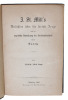
J. St. Mill’s Ansichten über die soziale Frage und die angebliche Umwälzung der Sozialwissenschaft durch Carey. - [A MAIN SOURCE OF INSPIRATION FOR MARX]
Duisburg, Falk & Lange, 1866. 8vo. Original publisher's black cloth with gilt lettering to spine and blindstamped borders to boards. Small tears to top capital and a small tear to the top of hinges. Otherwise very clean and fresh, aslo internally. VIII, 256 pp.

Scarce first edition of Lange's highly influential work, which came to serve as a great source of inspiration to Karl Marx, who read it extensively. Especially Lange's theories on rent theory and soil exhaustion (chapter 4 in the present work) influenced Marx profoundly.Apart from his influence through Marx, Lange was seminal in the spreading of Darwinism in Germany. Nietzsche was introduced to Darwin via Lange, which became pivotal in his construction of his theory of the Übermensch. ""[Lange], elucidates his critique against the Leibig school in the 1866 book [the present], the title which ironically mocks Dühring's book. Marx made some excerpts from this book in the beginning of 1868 and possessed a copy in his library. These excerpts are important because Marx focused on chapter 4 in which lange criticizes Carey's and Dühring's view on agriculture. Marx documented a passage in which Lange rejects Carey's idea of the harmonious development"" especially the latter's treatment of a ""protective tariff"" as ""panacea"" which should automatically lead to the establishment of an autarchic. "" (Karl Marx's Ecosocialism).""Thus in 1868 Marx began reading the work of authors who took a more critical stance toward Liebig's Agricultural Chemistry. He was already familiar with arguments such as Roscher's, which held that the robbery system should be criticized from the point of view of ""natural science"" but could be justified from an ""economic"" standpoint insofar as it was more profitable. According to Roscher, it was only necessary to stop the robbery just before it became too expensive to recover the original fertility of the soil-but market prices would take care of that. Adopting Roscher's arguments, Friedrich Albert Lange, a German philosopher, argued against Dühring's reception of Liebig and Carey in his J. St. Mill's Views of the Social Question [J. St. Mills Ansichten über die sociale Frage] published in 1866. Marx read Lange's book at the beginning of 1868, and it is no coincidence that his notebook focuses on its fourth chapter, where Lange discusses the problems of rent theory and soil exhaustion. Specifically, Marx noted Lange's observation that Carey and Dühring denounced ""trade"" with England as a cause of all evils and regarded a ""protective tariff"" as the ultimate ""panacea,"" without Lange's recognizing that ""industry"" possesses a ""centralizing tendency,"" which creates not only the division of town and country but also economic inequality. Similar to Roscher, Lange argued that ""despite the natural scientific correctness of Liebig's theory,"" robbery cultivation can be justified from a ""national economic"" perspective.""( Saito, Marx's Ecological Notebooks)Lange is a significant figure among the mid nineteenth century German intellectuals who were concerned to think through the impact of developments in natural science for philosophy, pedagogy, and politics.""Lange was one of the originators of ""physiological neo-Kantianism"" and an important figure in the founding of the Marburg school of neo-Kantianism. He played a significant role in the German labour movement and in the development of social democratic thought. He articulated a socialist Darwinism that was an alternative to early social Darwinism."" (SEP)Die Bibliotheken von Marx und Engels (MEGA IV.32).

J. St. Mill’s Ansichten über die soziale Frage und die angebliche Umwälzung der Sozialwissenschaft durch Carey. - [PRESENTATION-COPY]
Duisburg, Falk & Lange, 1866. 8vo. Uncut in the original printed wrappers with author's presentation inscription: ""Geschenk des Verfassers / Freitag, d. 13. April 1866."". Spine expertly restored and wrappers reinforced on verso. A few light underlignings in pencil, a fine copy. VIII, 256 pp.
![J. St. Mill’s Ansichten über die soziale Frage und die angebliche Umwälzung der Sozialwissenschaft durch Carey. - [PRESENTATION-COPY]. "LANGE, ...](https://static.livre-rare-book.com/pictures/LLX/56307_1_thumb.jpg)
![J. St. Mill’s Ansichten über die soziale Frage und die angebliche Umwälzung der Sozialwissenschaft durch Carey. - [PRESENTATION-COPY]. "LANGE, ...](https://static.livre-rare-book.com/pictures/LLX/56307_2_thumb.jpg)
![J. St. Mill’s Ansichten über die soziale Frage und die angebliche Umwälzung der Sozialwissenschaft durch Carey. - [PRESENTATION-COPY]. "LANGE, ...](https://static.livre-rare-book.com/pictures/LLX/56307_3_thumb.jpg)
First edition, presentation-copy given by the author shortly after publication, of Lange's highly influential work, which Karl Marx read extensively. The work served served as a great source of inspiration to Marx, especially in regard to rent theory and soil exhaustion (chapter 4 in the present work).Lange was furthermore seminal in the spreading of Darwinism in Germany. It was through Lange that Nietzsche was introduced to Darwin, an introduction which was to become pivotal in the construction of his theory of the Übermensch. ""[Lange], elucidates his critique against the Leibig school in the 1866 book [the present], the title which ironically mocks Dühring's book. Marx made some excerpts from this book in the beginning of 1868 and possessed a copy in his library. These excerpts are important because Marx focused on chapter 4 in which lange criticizes Carey's and Dühring's view on agriculture. Marx documented a passage in which Lange rejects Carey's idea of the harmonious development"" especially the latter's treatment of a ""protective tariff"" as ""panacea"" which should automatically lead to the establishment of an autarchic."" (Karl Marx's Ecosocialism).""Thus in 1868 Marx began reading the work of authors who took a more critical stance toward Liebig's Agricultural Chemistry. He was already familiar with arguments such as Roscher's, which held that the robbery system should be criticized from the point of view of ""natural science"" but could be justified from an ""economic"" standpoint insofar as it was more profitable. According to Roscher, it was only necessary to stop the robbery just before it became too expensive to recover the original fertility of the soil - but market prices would take care of that. Adopting Roscher's arguments, Friedrich Albert Lange, a German philosopher, argued against Dühring's reception of Liebig and Carey in his J. St. Mill's Views of the Social Question [J. St. Mills Ansichten über die sociale Frage] published in 1866. Marx read Lange's book at the beginning of 1868, and it is no coincidence that his notebook focuses on its fourth chapter, where Lange discusses the problems of rent theory and soil exhaustion. Specifically, Marx noted Lange's observation that Carey and Dühring denounced ""trade"" with England as a cause of all evils and regarded a ""protective tariff"" as the ultimate ""panacea,"" without Lange's recognizing that ""industry"" possesses a ""centralizing tendency,"" which creates not only the division of town and country but also economic inequality. Similar to Roscher, Lange argued that ""despite the natural scientific correctness of Liebig's theory,"" robbery cultivation can be justified from a ""national economic"" perspective."" (Saito, Marx's Ecological Notebooks).Lange is a significant figure among the mid-nineteenth century German intellectuals who were concerned to digest the impact of developments in natural science on philosophy, pedagogy, and politics.""Lange was one of the originators of ""physiological neo-Kantianism"" and an important figure in the founding of the Marburg school of neo-Kantianism. He played a significant role in the German labour movement and in the development of social democratic thought. He articulated a socialist Darwinism that was an alternative to early social Darwinism."" (SEP)Die Bibliotheken von Marx und Engels (MEGA IV.32).
Logische Studien: Ein Beitrag Zur Neubegrundung Der Formalen Logik Und Der Erkenntnisstheorie. - [HØFFDING'S COPY]
Iserlohn, 1877. Lex 8vo. Worn half calf. Back hinge very worn and weak and top capital worn off. Internally nice and clean. A few leaves with pencil underlinings and a marginal note on p. 94 (presumably in Høffding's hand). (8),149 + 1 double-page plate.
![Logische Studien: Ein Beitrag Zur Neubegrundung Der Formalen Logik Und Der Erkenntnisstheorie. - [HØFFDING'S COPY]. "LANGE, FRIEDRICH ALBERT.](https://static.livre-rare-book.com/pictures/LLX/62326_1_thumb.jpg)
![Logische Studien: Ein Beitrag Zur Neubegrundung Der Formalen Logik Und Der Erkenntnisstheorie. - [HØFFDING'S COPY]. "LANGE, FRIEDRICH ALBERT.](https://static.livre-rare-book.com/pictures/LLX/62326_2_thumb.jpg)
![Logische Studien: Ein Beitrag Zur Neubegrundung Der Formalen Logik Und Der Erkenntnisstheorie. - [HØFFDING'S COPY]. "LANGE, FRIEDRICH ALBERT.](https://static.livre-rare-book.com/pictures/LLX/62326_3_thumb.jpg)
First edition of Lange's logical magnum opus, Harald Høffding's copy with his ownership signature to half-title. ""Friedrich Albert Lange (1828 - 1875) was a German philosopher, pedagogist, political activist, and journalist. Lange is a significant figure among the mid nineteenth century German intellectuals who were concerned to think through the impact of developments in natural science for politics, philosophy, and pedagogy. Lange played a significant role in the German labour movement and in the development of social democratic thought. He articulated a socialist Darwinism that was an alternative to early social Darwinism. His work The History of Materialism and Critique of its Contemporary Significance was a classic text in materialism and the history of philosophy well into the twentieth century. The “materialism controversy” centered on the impact of materialist science and philosophy on religion and metaphysics. Lange’s response to the materialism controversy had an influence on the neo-Kantian movement and on Friedrich Nietzsche, among others. Lange was one of the originators of “physiological neo-Kantianism” and an important figure in the founding of the Marburg school of neo-Kantianism. His work in logic, culminating in Logical Studies, derived the syllogistic from diagrammatic reasoning, and was admired by Ernst Schröder and John Venn. Lange’s sympathetic critique of materialism, his philosophical naturalism, and his political activism unite his diverse achievements, and distinguish him among nineteenth century philosophers."" (SEP). Harald Høffding (1843-1931) was one of the leading Danish philosophers of the turn of the century. His philosophy is greatly inspired by positivism, which around 1900, mainly due to Avenarius and Mach, came to be synonymous with empiriocriticism.
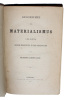
Geschichte des Materialismus und Kritik seiner Bedeutung in der Gegenwart. - [""WITHOUT A DOUBT THE MOST SIGNIFICANT PHILOSOPHICAL WORK TO HAVE APPEARED IN THE LAST HUNDRED YEARS"" - NIETZSCHE]
Iserlohn, J Baedeker, 1866 [but 1865]. 8vo. In contemporary half cloth with gilt lettering to spine. Extremities with wear and back hindge loose. First 12 pp with light occassional brownspotting. Otherwise a fine copy. XVI, 563, (1) pp.
Rare first edition of Lange's seminal work on materialism which had profound influence on Nietzsche who stated that it ""without a doubt [was] the most significant philosophical work to have appeared in the last hundred years"" (Letter to Muschacke). ""Nietzsche never 'broke' with Lange's thought at any point in his career as he did with other influences"" (Constancio, Nietzsche and the Problem of Subjectivity).""Lange's most famous book, The History of Materialism and Critique of its Contemporary Significance, is in essence a defense of such a return to Kant. It is also a detailed history of materialism (and was read well into the twentieth century for precisely this reason). However, more fundamentally, it was meant to drive home the above mentioned concerns about materialism. Lange accepted materialism as a sensible maxim for the construction of theories within natural science. However, as a comprehensive philosophical system, as both fundamental ontology and epistemology, materialism is self-undermining."" (Stanford)In 'Geschichte des Materialismus' Lange adopted the Kantian standpoint that we can know nothing but phenomena, Lange maintains that neither materialism nor any other metaphysical system has a valid claim to ultimate truth. For empirical phenomenal knowledge, however, which is all that humans can look for, materialism with its exact scientific methods has done most valuable service. Ideal metaphysics, though they fail of the inner truth of things, have a value as the embodiment of high aspirations, in the same way as poetry and religion. Lange replaced the transcendental subject of Kantianism by the organism, although he considered that this substitution validated all the more Kant's philosophy that
To egenhændigt breve fra H. O. Lange, det første til H. Olrik, det andet til Kunstakademiets forvalterkontor. - [TO EGENHÆNDIGE OG SIGNEREDE BREVE FRA H. O. LANGE.]
Gjentofte, 17/3, (19)10 + (København), 20/3 1918. 1) Tvær-8vo, 5 linier: ""Kjære Hr. Professor! / Tak for Deres Brev med Anmodningen om en Anmeldelse af Kierkegaards Papirer. Hvis den skal skrives i Løbet af de første to Maaneder, tør jeg ikke love det. Men hvis det maa vente, saa haaber jeg at kunne sende Dem en. / Deres hengivne / H. O. Lange.""2) 8vo, 4 linier, skrevet på brevpapir fra ""Bibliotheca Regia Hafniensis"": ""Beklagende ikke at kunne komme / sender jeg hermed Adgangskortet tilbage. / Ærbødigst / H. O. Lange. / Til / Kunstakademiets Forvalterkontor.""
To håndskrevne og signerede breve fra egyptologen og bibliotekaren H. O. Lange til Hans Olrik.
Lange F. Language of the human face. In Russian /Lange F. Yazyk chelovecheskogo
Lange F. Language of the human face. In Russian /Lange F. Yazyk chelovecheskogo litsa. M.: Profit-Style 2020g. 220chu. We have thousands of titles and often several copies of each title may be available. Please feel free to contact us for a detailed description of the copies available. SKUalbd27f12171cdb3921.
Histoire de Don Quichotte de la Manche par Michel Cervantès. Traduite sur le texte original et d'après les traductions comparées ... par F. de Brotonne. Nouvelle édition.
Paris, Didier, Libraire-Editeur, 1846 ; 2 parties en 1 volume in-8°, pleine toile noire de l'éditeur, décor polychrome aux plats et dos ( motifs floraux de couleur sur de grands fleurons dorés), tranches dorées; étiquette ancienne de la Librairie Salviac à Chateauroux à l' intérieur du 1er plat. ( 4)pp. ( dont le titre orné d'une vignette), XXIVpp. ( notice), 635pp. et 12 planches hors texte; lettrines, entêtes, culs de lampe sur bois dans le texte.
Toile légèrement frottée aux coins, charnières et coiffes, rousseurs parfois fortes ou papier fortement jauni à plusieurs cahiers, affectant le texte, quelques piqûres en marge de certaines gravures qui sont restées fraiches et qui possédent toutes leur serpente. Illustré hors texte de 12 planches lithographiées en deux tons d'après les dessins de Janet Lange. Cf. Vicaire II -158 , pour l' édition de 1845 et qui donne à notre date l'édition en 2 volumes in-12°. (Reu-CO1)

Lange F. Correlation Electronics. In Russian /Lange F. Korrelyatsionnaya elektr
Lange F. Correlation Electronics. In Russian /Lange F. Korrelyatsionnaya elektronika. Fundamentals and Application of Correlation Analysis in Modern Communications, Measurement and Regulation Technology. M. Sudpromgiz. 1963. Contact us for details or to request photos of available books. Delivery of this book could take longer than normal due to additional handling time before shipping, and no rush delivery options are available. Please let us know if you have a specific date by which you need to receive your order. SKUalba69007ab84e2b4a2
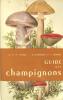
Guide des champignons
Delachaux et niestlé 1967 251 pages in12. 1967. Reliure Editeur avec jaquette. 251 pages. Guide d'identification des champignons illustré de 100 planches en couleurs représentant plus de 600 espèces. L'ouvrage est réalisé par les naturalistes Jacob E. Lange Morten Lange et A. Duperrex et publié par Delachaux et Niestlé
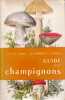
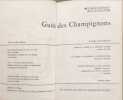
Bon état jaquette légèrement usagée intérieur propre
Monique lange Les cabines de bain
Gallimard Nrf 1982 1982. Monique Lange: Les cabines de bain/ Gallimard-NRF 1982 . Monique Lange: Les cabines de bain/ Gallimard-NRF 1982
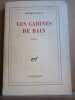
Bon état
Lange Fritz. Language of the human face. Scientific physiognomics and its pract
Lange Fritz. Language of the human face. Scientific physiognomics and its practical application in life and art. In Russian /Lange Frits. Yazyk chelovecheskogo litsa. Nauchnaya fiziognomika i ee prakticheskoe primenenie v zhizni i iskusstve. Translation from German. Nefteyugansk. Gratis. 2020. We have thousands of titles and often several copies of each title may be available. Please feel free to contact us for a detailed description of the copies available. SKUalbeda7803777766167.
Lange F.A. The History of Materialism and Criticism of its Present Meaning. Vol
Lange F.A. The History of Materialism and Criticism of its Present Meaning. Volume One. The History of Materialism Before Kant. In Russian /Lange F. A. Istoriya materializma i kritika ego znacheniya v nastoyashchem. Tom pervyy. Istoriya materializma do Kanta. Under the editorship and with a foreword by Vladimir Solovyov. Kyiv-Kharkiv South Russian Book Publishing House by F. A. Johanson. 1899. We have thousands of titles and often several copies of each title may be available. Please feel free to contact us for a detailed description of the copies available. The delivery of this book might be delayed beyond the usual timeframe due to extended processing and preparation before shipment, and faster shipping opSKUalb585541daa1542a46
Guide des champignons.
Editions Delachaux et Niestlé, 1967. 251 pages, In-8 cartonnage éditeur sous jaquette illustrée en couleurs, planches couleurs de J. E. Lange, E. Sunesen & P. Dahlstrom. Menus défauts en jaquette.

Kovalevsky M.M., Lange N.N. et al. Results of Science in Theory and Practice.
Kovalevsky M.M., Lange N.N. et al. Results of Science in Theory and Practice. Volume I In Russian /Kovalevskiy M.M., Lange N.N. i dr Itogi nauki v teorii i praktike. Tom I M World 1911. We have thousands of titles and often several copies of each title may be available. Please feel free to contact us for a detailed description of the copies available. SKUalbe5ab1b7401ac0efb.
Lange Friedrich Albert. The Working Question. Its Meaning in the Present and t
Lange Friedrich Albert. The Working Question. Its Meaning in the Present and the Future In Russian /Lange Fridrikh Albert. Rabochiy vopros. Ego znachenie v nastoyashchem i budushchem Preface by R.I. Sementkovsky. St. Petersburg Publishing House, F. Pavlenkov, 1892. 4, II, VI, 323 pages. We have thousands of titles and often several copies of each title may be available. Please feel free to contact us for a detailed description of the copies available. SKUalb98aacec3f2608a40.
Lange Friedrich Albert. The working question. Its meaning in the present and th
Lange Friedrich Albert. The working question. Its meaning in the present and the future. Prepared by A.Ozimov. In Russian /Lange Fridrikh Albert. Rabochiy vopros. Ego znachenie v nastoyashchem i budushchem. Pred. A.Ozimova. Translated from the 4th German edition of A.L.Bleka. Publishing House 4. St. Petersburg Publishing House F. Pavlenkova, 1907, XVI, 314 p.We have thousands of titles and often several copies of each title may be available. Please feel free to contact us for a detailed description of the copies available.SKUalb10b8b0ba895d8741.
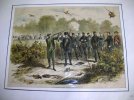
Gravure couleurs. S.M. l'Empereur d'Autriche à Compiègne. Chasse à tir dans la forêt.
Gravure en couleurs. S.M. l'Empereur d'Autriche à Compiègne. Chasse à tir dans la forêt. (1867).Très bon état. Format in-4°(34x26) pour la gravure. Format in-plano(51x35) pour le passe-partout. Livré sans le passe-partout pour des raisons pratiques.
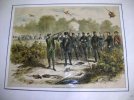
LANGE Janet
Lange Friedrich Albert. Working question: Its meaning in the present and the fu
Lange Friedrich Albert. Working question: Its meaning in the present and the future. In Russian (ask us if in doubt)/Lange Fridrikh Albert. Rabochiy vopros: Ego znachenie v nastoyashchem i budushchem. Translation from the fourth German edition by A.B. Bleck with a foreword by R.I. Sementkovsky St. Petersburg: Edition by F. Pavlenkov Typography by Y.N. Ehrlich 1895. 4 326 2c. We have thousands of titles and often several copies of each title may be available. Please feel free to contact us for a detailed description of the copies available. SKUalba3cb608d9dfbb198
Histoire de ma famille : les Lange, les Astruc, les Sazias, les Mendès , suivie de ma carrière
Imp Saint Louis, Versailles 1979
Bon état Ouvrage broché, des rousseurs sur le premier plat. illustré de documents , photos et de deux arbres généaologiques dépliants . histoire familiale lange astruc sazias mendès avignon bayonne - largeur/hauteur : 21x29,5 cm - poids : 650 g - nombre de pages : 115 et VI p. - langue : Français
Om Sindsbevægelser. Et Psyko-Fysiologisk Studie.
Kjøbenhavn, Jacob Lund, 1885. Orig. bogtrykt omslag. Løs i heftningen og omslaget med rifter og pletter. (4),91 pp. Indvendig pæn.
First edition. The most importent Danish work in psychology. It is a psychophysiological study on vasomotor disturbances and conditioned reflexes during period of emotional stress - known as the James-Lange-theory.
HISTOIRE DU MATERIALISME - TOME II : HISTOIRE DU MATERIALISME DEPUIS KANT.
SCHLEICHER FRERES. 1911. In-8. Broché. Etat d'usage, Couv. légèrement passée, Dos satisfaisant, Intérieur frais. 686 pages- 1 signature non identifiée sur le 1er plat et page de titre.. . . . Classification Dewey : 100-PHILOSOPHIE ET DISCIPLINES CONNEXES
LES CHEFS-D'OEUVRES DES GRANDS PHILOSOPHES. // NOTA : Friedrich-Albert Lange (1828 à Wald (de) près de Solingen - 1875 à Marbourg) historien et philosophe allemand, fils du théologien Johann Peter Lange....On a suggéré que c'est Lange qui, par son Histoire du matérialisme, aura fait connaître à Nietzsche l'idée de l'éternel retour telle que la concevait l'astronome français Auguste Blanqui. Classification Dewey : 100-PHILOSOPHIE ET DISCIPLINES CONNEXES
ALBUM A.THYS, romances avec musique d'A.THYS illustré de lithographies de JANET LANGE
Album romantique in4 reliure cartonnage ,1er plat titré ALBUM A.THYS, 9 romances avec musique gravée sur double page illustrées de 9 lithographies à fond teinté sous serpentes,+page de titre dos muet orné d'une roulette dorée arraché,texte frais,tranches dorées,
tres fines lithographies tres fraiches, Remise de 20% pour toutes commandes supérieures à 200 €
[Bertall Castelli Clerget Delannoy Gerlier Janet-Lange Lix Philippoteaux Thorigny Yundt] - DECEMBRE-ALONNIER - (Nom collectif de Joseph Décembre (né en 1836) et Edmond Alonnier (né en 1828). Ils ont toujours écrit en collaboration, le plus souvent sous ce nom collectif, mais aussi sous d'autres pseudonymes collectifs.Illustrations par Bertall, Castelli, Clerget, Delannoy, Gerlier, Janet-Lange, Lix, Philippoteaux, Thorigny, Yundt, etc
Reference : 24033
Dictionnaire Populaire illustré d'Histoire, de Géographie, de biographie, de technologie, de mythologie, d'antiquité, de droit usuel, de beaux arts et de littérature
PARIS, Duypray de la Mahérie , Sans date (188.) - Complet en 3 Volumes In-4 - 1/2 reliure frottée - 600 illustrations N&B in-texte par Bertall, Castelli, Clerget, Delannoy, Gerlier, Janet-Lange, Lix, Philippoteaux, Thorigny, Yundt, etc, gravées sur bois par Trichon - Reproductions de tableaux et des scènes de moeurs, vues de villes, de ports de mer, de monuments remarquables, de batailles, types, costumes, portraits, etc. - rousseurs - Texte sur 2 colonnes - Pagination continue 2400 pages
Cnformément à nos conditions générales de vente :Les frais de port sont affichés à titre indicatif. Il se peut que nous devions vous contacter pour vous informer du coût de laffranchissement supplémentaire en fonction du poids et du nombre de livres, surtout pour les envois internationaux Cependant vu l'augmentation des tarifs postaux à l'internationale, nous pouvons expédier les ouvrages en point relais MONDIAL RELAY pour les pays suivants : Allemagne, Autriche, Belgique, Espagne, Italie, Luxembourg, Pays-Bas, Pologne, et Portugal. Merci de nous indiquer en retour le point relais choisi ainsi que votre numéro de téléphone mobile & adresse Courriel pour assurer le suivi du colis.N'hésitez pas à nous interroger.In accordance with our general terms and conditions of sale:Shipping costs are displayed for informational purposes only. We may need to contact you to inform you of the additional postage costs depending on the weight and number of books, especially for international shipments.However, given the increase in international postal rates, we can ship books via Mondial Relay to the following countries: Germany, Austria, Belgium, Spain, Italy, Luxembourg, Netherlands, Poland, and Portugal. Please provide us with your chosen Mondial Relay point, as well as your mobile phone number and email address to ensure package tracking.Please feel free to contact us with any questions
L'ÉCOLIER, OU RAOUL ET VICTOR, par Mme Guizot, née Pauline de Meulan,
1852 un volume, pleine percale noire romantique polychrome grand in-octavo Editeur (hard-back romantic percale editor in-8) , à plaques spéciales dorées pour le dos et les plats (with specials covers editor for the spine and the cover), dos long (spine without raised bands) titre frappé or (gilt title) décoration or (gilt decoration) et couleur (rose, vert et bleu-marine), dos et couverture illustrés (spine and cover illustrated) or (gilt decoration) , rose, vert, rouge, blanc et bleu-marine à la "Romantique" dans un encadrement à froid, toutes tranches dorées (all edges gilt) abondamment illustré (plentifully illustrated) d'une lithographie en frontispice et de 11 lithographies hors-texte en camaïeu + des figures en page de titre et in-texte en noir par JANET LANGE , 424 pages, 1852 Paris : Didier Editeur,
10ème Edition.......... Elisabeth-Charlotte-Pauline de Meulan fut la première femme de Guizot. Ses livres pour les enfants, et particulièrement Raoul et Victor, dont le succès a été populaire, peuvent être à bon droit cités comme des modèles du genre. Ce sont, dit M. André (Nos maîtres aujourd'hui, 2 vol.), « des ouvrages pleins de bon sens, d'une gaîté communicative qui se mêle harmonieusement à des récits vifs, quelquefois touchants, sans cette fausse sensibilité qui tend à dénaturer les caractères. Une foule de leçons pratiques y sont données, auxquelles l'enfant se laisse d'autant plus pénétrer qu'il se tient moins en garde contre la prétention de l'écrivain à l'émouvoir et à le sermonner. A ces mérites se joint celui d'un style simple, mais toujours irréprochable. »..................RARE CARTONNAGE ROMANTIQUE POLYCHROME EDITEUR...................en parfait état (as new condition).
Lange, V., Physical Paradoxes and Sophists / Fizicheskie paradoksy i sofizmy
In Russian. Short description: Lange, V., Physical Paradoxes and Sophists [ Fizicheskie paradoksy i sofizmy ] Moscow: Education, 1967. Please feel free to contact us for a detailed description of the copies available. SKU lom-SK000635