 Write to the booksellers
6 books for « kraftner johann »Edit
Oasen der Stille. Die grossen Landschaftsgärten in Mitteleuropa.
Wien, Christian Branstätter Verlag, 2008. In-4 carré broché, couv. rempliée, 165 pp. sur deux colonnes, 247 oeuvres décrites et commentées, reprod. en couleurs dans le texte, la plupart à pleine page, bibliographie.
Wie Neue. - Frais de port : -France 7,15 € -U.E. 9 € -Monde (z B : 14 €) (z C : 24 €)


Vorbild Rubens. Lichtenstein Museum Wien
, PRESTEL, 2005 Paperback, 141 seiten, Deutsch, 280 x 240 mm, in guten zustand,. ISBN 9783791333427.
Liechtenstein Museum Wien Barocker luxus Porzellan : die Manufakturen du Paquier in Wien und Carlo Ginori in Florenz
, Prestel,, 2005 Brochiert, 235 x 280mm., 494S., illustriert. ISBN 9783791335001.
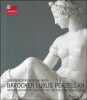
Porzellan galt seit jeher als Zeichen des besonderen Reichtums und Luxus, nicht ohne Grund wird es auch "weisses Gold" genannt. Mit welcher Leidenschaft furstliche Auftraggeber und rege Unternehmer gemeinsam die edelsten Produkte auf dem Gebiet der Skulptur aber auch des Gebrauchsporzellans entwickelten, zeigt diese Publikation, die sich den Manufakturen Du Paquier in Wien und Carlo Ginori in Florenz sowie deren furstlichen Auftraggebern widmet. Neu.
Giovanni Giuliani. 1664-1744.: Band 1: essays ( 236 seiten). Band 2: katalog.( 431 seiten) = 667 seiten
Munchen, Prestel, 2005 Softcover Kassette, 2 volumes, 236 + 431seiten, 290 x 245 x 55 mm,, ills. in col., new. German text. ISBN 9783791333601.
Giovanni Battista Pietro Giuliani wurde am 29. April 1664 in Venedig als Sohn eines Bäckers geboren. Er lernte sein Handwerk bei verschiedensten Meistern in Bologna, Venedig, Tirol und München, wobei der bekannteste Lehrer sicherlich Giuseppe Mazza war. Ab 1690 lebte und wirkte er primär in Österreich und brachte damit die italienische, barocke Plastik in das durch die Zweite Wiener Türkenbelagerung künstlerisch ausgehungerte Wien. Erste Aufmerksamkeit erregte er durch die Ausstattung des von Johann Bernhard Fischer von Erlach errichteten Stadtpalais? für den Prinz Eugen von Savoyen sowie durch seine Arbeiten am Gartenpalais in der Roßau des Fürsten Johann Adam Andreas (heute Liechtenstein-Museum). Finanzielle Probleme bewogen ihn, am 25. Februar 1711 eine lebenslange Bindung als Familiare mit dem Stift Heiligenkreuz einzugehen, im Gegenzug für die Abtretung seiner verbliebenen Geldmittel, Werke und des Verzichtes auf künftige Geldforderungen für die zu schaffenden Werke für das Kloster, stellte der Orden einen kostenlosen Betrieb der Bildhauer-Werkstatt sicher. Der bedeutendste Mitarbeiter und Schüler dieser Werkstatt war Georg Raphael Donner. Bis zu seinem Tod, am 5. September 1744 gestaltete er wesentlich den Umbau des Stiftes Heiligenkreuz sowie des Heiligenkreuzerhofs in Wien. Zu seinen bemerkenswertesten Arbeiten zählt das Chorgestühl in Heiligenkreuz und die Bernhardskapelle im Heiligenkreuzerhof. Aber auch in anderen Kirchen in der Umgebung von Heiligenkreuz, wie in Gaaden findet man seine Spuren,[1] die durch Verkäufe bis in das Stift Admont reichen.[2] Gestorben ist Giuliani in Heiligenkreuz, wo er auch in der Stiftskirche wie Martino Altomonte seine letzte Ruhestätte fand.
Meredith Chilton / Johann Kräftner | Claudia Lehner-Jobst | Ghenete Zelleke | Johanna Lessmann
Reference : 60838
FIRED BY PASSION : Viennese Baroque Porcelain of Claudius Innocentius du Paquier ( German)
, Arnoldsche, 2009 Hardcover, 1432 pages / seiten , Deutsch, 350 x 260 x 120 mm, 3 Teile im stabilen Koffer, Illustrationen in schönes Farben, **wie Neu !!. ISBN 9783897903081.
Du Paquier, an independently operating Viennese porcelain factory, was established in 1718, only eight years after Meissen. Although its heyday was brief, lasting only twenty-five years, Du Paquier produced porcelain of great beauty, notable for an enchantingly graceful style and consummate sophistication of execution. In three sumptuously illustrated volumes, scholars of international standing present the distinctive style and the exciting history of Du Paquier porcelain in the context of Baroque Vienna. The first comprehensive publication on this important porcelain factory, this work has been made possible through a five-year research programme conducted by the Melinda and Paul Sullivan Foundation for the Decorative Arts. The objects shown, many of them for the first time here, are in major public and private collections. The first volume deals with the historical and stylistic background of Du Paquier porcelain: art and architecture in early eighteenth-century Baroque Vienna; furthermore, the history of the porcelain factory, its style and its manifold sources of inspiration as well as Du Paquier?s relationship to Meissen and the role played at Du Paquier by independent porcelain painters and decorators (Hausmaler). The second volume places this Viennese porcelain in its cultural context, providing broad-ranging information on court banquet ceremony as well as private pleasures such as drinking and festive dining. Objects used in aristocratic circles are shown along with choice presents of state made to the Ottoman and Russian courts. In addition, this volume contains a new study on the Dubsky Room, the only room still in existence devoted to Du Paquier porcelain. The contents of the third volume include an annotated catalogue comprising approx. 500 objects, scholarly analysis and a chapter on the history of collecting Du Paquier porcelain, an inventory of the Dubsky Room, a bilingual glossary of terms and a complete bibliography. An enclosed CD-ROM contains transcriptions of original documents that have played an important role in the history of the Du Paquier porcelain factory. The arts in Baroque Vienna represent the cultural background for the magnificent Du Paquier porcelain. These lavishly designed books provide a comprehensive introduction to this courtly society and the distinctive porcelain made by Du Paquier. Essays by distinguished scholars in the field make this publication a standard work, not only for specialists but also for collectors and connoisseurs of porcelain as well as anyone interested in the Baroque era.
collections du prince de Liechtenstein Cranach, Raphaël, Rubens, Van Dyck, Rembrandt, Hubert Robert, Vigée-Le Brun
, mercaterfonds - fondsmercator, 2015 Couverture reliee sous jaquette 160 pages, illustr. 30 x 25 cm bon etat. ISBN 9789462300996.
Grands amateurs d'art depuis le 16e siècle, les Princes de Liechtenstein ont récemment présenté le meilleur de leur collection au Japon (Tokyo, Kochi, Kyoto), à Singapour, en Chine (Pékin, Shanghai) et à Moscou. A l'automne 2015, c'est à Aix-en-Provence, à l'Hôtel de Caumont, que les chefs-d'?uvre de la collection feront une halte. Les collections du Prince de Liechtenstein sont l'une des plus importantes conservées actuellement en mains privées, et c'est aussi l'une des plus vivantes puisque le prince régnant actuel, Hans-Adam II, poursuit une politique d'acquisitions régulières. La sélection présentée à l'Hôtel de Caumont permettra d'appréhender le goût de cette famille princière, avec un ensemble d'?uvres du 14e au 19e siècle.

