Write to the booksellers
231 books for « karol k s »Edit
-
Language
French (230)
Russian (1)
-
Century
19th (5)
20th (133)
21st (6)
-
Countries
Belgium (3)
Denmark (7)
France (209)
Switzerland (11)
United States of America (1)
-
Syndicate
ILAB (119)
SLAM (112)
Topics
- Age (1)
- Archaeology (3)
- Architecture (1)
- Atlantic (1)
- Atlas (1)
- Balkan (1)
- Bibliothèques (1)
- Biography (1)
- Biology (4)
- Bor karol (24)
- Bronze (1)
- Central america (1)
- China (12)
- Churches (2)
- Communism (2)
- Cuba (3)
- Darwin (4)
- Detective novels (2)
- Early printed books (1)
- Egypt (2)
- Egyptology (2)
- English (2)
- Europe (1)
- Exhibition catalogue (1)
- Faith (3)
- Fleuve noir (2)
- Flora (2)
- Geography (1)
- Gothic (1)
- History (8)
- Hoffmann (1)
- Iron (1)
- John-paul ii (9)
- Karol alix (21)
- Legends (4)
- Literature (26)
- Magazine (1)
- Malcuzynski karol (1)
- Marriage (1)
- Marx karl (3)
- Medicine (1)
- Middle ages (1)
- Military arts (1)
- News (1)
- Newspapers press (1)
- Painting (1)
- Philosophy (2)
- Physiology (1)
- Poetry (3)
- Poland (6)
- Policy (4)
- Political economy (1)
- Popular literature (1)
- Prussia (1)
- Religions (3)
- Review (1)
- Reviews (1)
- Russia (1)
- Sexuality (2)
- Sports (1)
- Spying (11)
- Theatre (2)
- Tibet (1)
- Tibet pc (1)
- Travel (2)
- Ussr (8)
- Various (2)
- War (3)
- West indies (1)
Inheritance, Social Networks, Adaptation. Bronze and Early Iron Age Societies North of the Western Carpathians
, Brepols, 2025 Hardback, 820 pages, Size:210 x 297 mm, Illustrations:124 b/w, 277 col., 46 tables b/w., 2 tables col., Language: English. *new ISBN 9782503616773.
Summary How did societies change between the Early Bronze Age and the Early Iron Age? And what was the impetus that led to these changes - social contacts and innovation, intergenerational contacts, or perhaps simply adaptation? Taking these questions as its starting point, this richly detailed volume explores four different regions of southern Poland to compare and contrast the mechanisms that drove socio-cultural change in the region between the second and the first half of the first millennium BC. Drawing on standardized sets of archaeological data, the chapters gathered here examine the interplay of different factors influencing cultural change across five key parameters: environment; settlement patterns; settlement organization; economy; and material culture. The result is a beautifully illustrated volume that offers important insights into Central and Eastern European prehistory, made accessible for an English-speaking audience. TABLE OF CONTENTS Introduction, Marcin S. Przybyla, Karol Dziegielewski Part 1. Analysis of Source Data 1.1. Geographical Location of the Study Region and Test Areas, Karol Dziegielewski, Marta Korczynska-Cappenberg 1.2. Timeline 1.2.1. Bronze and Early Iron Ages Around the Western Carpathians: Civilizational Transformations in Central Europe in the 2nd and 1st Millennia BC, Jan Chochorowski, Karol Dziegielewski, Marcin S. Przybyla 1.2.2. Periodisation of the Bronze and Early Iron Ages on the Upper Vistula River, Karol Dziegielewski 1.2.3. Periodisation of the Bronze and Early Iron Ages in the Dunajec Valley, Marta Korczynska-Cappenberg, Marcin S. Przybyla 1.3. Transformations of Natural Environment 1.3.1. Environmental Changes in the Bronze and Early Iron Ages in Loess Areas of the Upper Vistula Basin (Test Area 1), Michal Wasilewski, Anna Gawlik 1.3.2. Environmental Changes in the Bronze and Early Iron Ages in the Upper Vistula Valley near Krak w (Test Area 2), Karol Dziegielewski, Dorota Nalepka, Maria Litynska-Zajac 1.3.3. Environmental Changes in the Bronze and Early Iron Ages in the Middle Dunajec Basin (Test Area 3), Marta Korczynska-Cappenberg, Katarzyna Korzen, Magdalena Moskal-del Hoyo, Maria Litynska-Zajac 1.3.4. Environmental Changes in the Bronze and Early Iron Ages in the Mountain Section of the Dunajec Valley (Test Area 4), Marcin S. Przybyla, Katarzyna Korzen, Magdalena Moskal-del Hoyo 1.4. Settlement Network 1.4.1. Methodology of Fuzzy Logic Mapping, Geostatistical Analyses and Cartographical issues, Marta Korczynska-Cappenberg, Klaus Cappenberg 1.4.2. Settlement Network in the Bronze and Early Iron Ages in Loess Areas of the Upper Vistula Basin (Test Area 1), Anna Gawlik 1.4.3. Settlement Network in the Bronze and Early Iron Ages in the Upper Vistula Valley near Krak w (Test Area 2), Michal Mazur, Karol Dziegielewski 1.4.4. Settlement Network in the Bronze and Early Iron Ages in the Middle Dunajec Basin (Test Area 3), Marta Korczynska-Cappenberg 1.4.5. Settlement Network in the Bronze and Early Iron Ages in the Mountain Section of the Dunajec Valley (Test Area 4), Marcin S. Przybyla, Joanna A. Markiewicz 1.5. Settlement Structure and Organisation 1.5.1. Organisation of Intra-settlement Space in Bronze and Early Iron Age Settlements from the Upper Vistula Basin (Test Areas 1 and 2), Karol Dziegielewski, Anna Gawlik, Michal Mazur 1.5.2. Organisation of Intra-settlement Space in Bronze and Early Iron Age Settlements from the Middle Dunajec Basin (Test Area 3), Marta Korczynska-Cappenberg, Tobias L. Kienlin 1.5.3. Organisation of Intra-settlement Space in Bronze and Early Iron Age Settlements from the Mountain Section of the Dunajec Valley (Test Area 4), Marcin S. Przybyla 1.6. Subsistence Economy 1.6.1. Late Bronze Age and Early Iron Age Farming and Animal Husbandry in the Loess Areas of the Upper Vistula Basin (Test Area 1), Krystyna Wasylikowa, Magdalena Moskal-del Hoyo, Dalia Pokutta, Anna Gawlik 1.6.2. Bronze Age and Early Iron Age Farming and Animal Husbandry in the Upper Vistula Valley near Krak w (Test Area 2), Karol Dziegielewski, Maria Litynska-Zajac, Ulana Gocman, Michal Mazur 1.6.3. Bronze Age and Early Iron Age Farming in the Middle Dunajec Basin (Test Area 3), Marta Korczynska-Cappenberg, Maria Litynska-Zajac, Magdalena Moskal-del Hoyo, Katarzyna Cywa 1.6.4. Bronze Age and Early Iron Age Farming and Animal Husbandry in the Mountain Section of the Dunajec Valley (Test Area 4), Marcin S. Przybyla, Ulana Gocman, Aldona Mueller-Bieniek 1.7. Pottery Manufacture 1.7.1. Notes on the Method of Classification of Ornaments and Morphological Features of Ceramic Vessels, Marcin S. Przybyla, Karol Dziegielewski, Anna Gawlik, Marta Korczynska-Cappenberg, Michal Mazur 1.7.2. Continuation and Change in Pottery Manufacture in the Upper Vistula Basin (Test Areas 1 and 2), Karol Dziegielewski, Michal Mazur 1.7.3. Continuation and Change in Pottery Manufacture in the Middle Dunajec Basin (Test Area 3), Marta Korczynska-Cappenberg 1.7.4. Continuation and Change in Pottery Manufacture in the Mountain Section of the Dunajec Valley (Test Area 4), Marcin S. Przybyla Part 2. Comparative Analyses 2.1. Interconnectivity: Geographic and Social Space, Marcin S. Przybyla, Marta Korczynska-Cappenberg, Klaus Cappenberg, Joanna A. Markiewicz, Karol Dziegielewski 2.2. Economy: Trends of Diachronic Changes and Local Specificity, Marta Korczynska-Cappenberg, Marcin S. Przybyla, Karol Dziegielewski, Klaus Cappenberg 2.3. Thoughts on Wealth and Social Differentiation, Consumption of Bronze, and Craft Specialisation, Karol Dziegielewski, Marcin S. Przybyla, Marta Korczynska-Cappenberg Part 3. Concluding Remarks 3.1. From Pots and Farmsteads to Demography: Exploring the Interplay of Cultural Transmission Patterns, Marcin S. Przybyla, Karol Dziegielewski Part 4. Specialist Analyses 4.1. Micromorphology and Physico-chemical Properties of Soils and Sediments from Maszkowice and Janowice Sites, Magdalena Makiel, Wojciech Szymanski, Mateusz Stolarczyk 4.2. Analysis of Animal Bone Remains from Trench 9 on Site 6 at Janowice (AZP 106-65/61), Plesna Commune, Ulana Gocman References Appendices: Lists of Bronze Age and Early Iron Age Sites Included in the Project List of Radiocarbon Dates used in the Chronometric Analysis for the Upper Vistula Area (Chapter 1.2.2)
La Deuxième révolution chinoise.
Laffont, 1973, gr. in-8°, 563 pp, annexes, index, broché, couv. illustrée à rabats, état correct
"Le second livre de K.S. Karol sur la Chine était attendu et il ne décevra pas. Après un nouveau séjour et deux années de travail, l’auteur nous offre une riche analyse de la révolution culturelle et de l’affaire Lin Piao. Dans son premier ouvrage, la Chine de Mao, Karol soulignait que les Chinois opposaient à l’expérience russe « non pas une théorie, mais une autre expérience, la leur, dont l’envergure égalait ou dépassait celle de l’URSS ». L’auteur apportait alors une contribution décisive à la connaissance de la Chine Sur ce terrain difficile et nouveau pour lui, il se plaçait d’emblée à un niveau élevé. Toutefois, et comme il l’admet lui-même, il abordait la réalité chinoise avec quelques idées préconçues. Il s’attendait ainsi à ne découvrir en Chine qu’un « stalinisme éclairé ». Depuis, sa vision des problèmes s'est élargie et “la Deuxième révolution chinoise” surclasse de loin tous les livres récemment parus. Le mérite de K.S. Karol est de bien situer l’évolution du régime maoïste dans son cadre propre. Négligeant les références à la Chine « éternelle », aux Tsing et aux Mandchous, il appuie son étude sur sa connaissance du marxisme et des données fondamentales du socialisme contemporain. La composition du livre mérite d’être relevée. Après une présentation rigoureuse des événements-clés de la révolution culturelle, Karol dégage les origines de l’affaire Lin Piao. Sur ce sujet, il apporte le maximum de clarté et son étude fera date. Aux parties historiques correspondent des « contrepoints » où l’auteur retrace les conversations qu’il a eues et les enquêtes qu’il a effectuées sur place. A la page 257, le récit de l’ouvrier Ku permet ainsi de saisir in vivo les manifestations de l’ultra-gauchisme dans une usine. Il s’agit là d’un document tout à fait exceptionnel. Pour retracer la révolution culturelle l’auteur a bénéficié de la vaste documentation disponible depuis deux ans. Il a contrôlé sérieusement ses sources et a su utiliser les récits des étrangers qui vécurent en Chine à l’époque. (...) L’analyse historique du rôle joué par Lin Piao et de sa chute finale est la partie centrale du livre et elle est passionnante en tout point. Karol a réussi le tour de force de démêler les éléments politiques de cette étrange affaire et d’en fournir des explications souvent lumineuses..." (Jean Daubier, Le Monde diplomatique, 1973) Désormais les frais d'envoi sont de 6 € seulement pour les livres jusqu'à 1 kg (colissimo suivi), pour la France métropolitaine.
Oravcova Marianna Ondreicka Karol Ondreicka Karol
Reference : 151751
(1997)
ISBN : 9782700011548
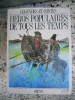
Héros populaires de tous les temps
Grund 1997 212 pages in4. 1997. Relié jaquette. 212 pages.

Bon Etat tranche assez salie aspect jaquette légèrement salie
Evtouchenko Evgenii Aleksandrovitch Karol K. S.
Reference : DVC55JR
ISBN : B0014WMU1U
Eug¿ne Evtouchenko. Autobiographie prcoce : . Traduit du russe et prfac par K. S. Karol
R. Julliard impr. R. Mourral Broch D'occasion bon tat 01/01/1963 175 pages
LES TEMPS MODERNES N° 155 - SLAWOMIR MROZEK. — Écrit dans les ténèbresARLETTE EL KAIM. - Fêtes de nuitTHÉRÈSE CZARNECKI-MILHAUD. - La clef perdue.HENRI LEFEBVRE. - Le Soleil crucifié .LE CAS DE BORIS PASTERNAKK. S. KAROL.
JULLIARD. JANVIER 1959. In-12. Broché. Bon état, Couv. convenable, Dos satisfaisant, Intérieur frais. Paginé de 961 à 1224.. . . . Classification Dewey : 70.49-Presse illustrée, magazines, revues
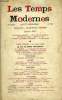
Revue fondée par Jean-Paul Sartre et Simone de Beauvoir. Sommaire : SLAWOMIR MROZEK. — Écrit dans les ténèbresARLETTE EL KAIM. - Fêtes de nuitTHÉRÈSE CZARNECKI-MILHAUD. - La clef perdue.HENRI LEFEBVRE. - Le Soleil crucifié .LE CAS DE BORIS PASTERNAKK. S. KAROL. — Le paradoxe de Pasternak .COLETTE AUDRY Poésie et Révolution.ISAAC DEUTSCHER. — Boris Pasternak et le calendrier de la Révolution TÉMOIGNAGESMAURICE MASCHINO. - En margeEXPOSÉSJAN KOTT. — Shakespeare contemporain .LUCIO LIBERTINI. — La politique du Vatican sous le règne de Pie XII.CHRONIQUESELENA DE LA SOUCHÈRE. — La Hispanidad chasse sescaudillos .RENÉE SAUREL. — Lorca au Théâtre RécamierJEAN-LOUIS FERRIER. — École de Paris 1958 DISCUSSIONSCOLIN WILSON et STUART HOLROYD. - Deux «jeunesgens en colère » répondent à Olivier ToddOLIVIER TODD. — Réponse à Wilson et HolroydNOTESLE THÉÂTRE. — R. S. — Un nouveau théâtre : Le RécamierLE CINÉMA. — RAYMOND BORDE. — « Le miroir à deux faces », d’André Cayatte; «Rêves de femmes»,d’Ingmar Bergman .LE COURS DES CHOSES. — Deux plaintes contre RogerWybot .Danilo Dolci condamné Classification Dewey : 70.49-Presse illustrée, magazines, revues


La chine de mao. l'autre communisme. [Paperback] KAROL, K.S.
Quelques tâches de vieillesse sur la couverture.
Merci de nous contacter à l'avance si vous souhaitez consulter une référence dans notre boutique à Authon-du-Perche.
la chine de mao l autre communisme [Paperback] K.S. Karol
PHOTOS SUR DEMANDE
Merci de nous contacter à l'avance si vous souhaitez consulter une référence dans notre boutique à Authon-du-Perche.
Solik: Tribulations d'un jeune Polonais dans la Russie en guerre Karol, K.S.
Fayard PHOTOS SUR DEMANDE
Merci de nous contacter à l'avance si vous souhaitez consulter une référence dans notre boutique à Authon-du-Perche.
Eugène Evtouchenko. Autobiographie précoce : . Traduit du russe et préfacé par K. S. Karol [Paperback]
BROCHE
Merci de nous contacter à l'avance si vous souhaitez consulter une référence dans notre boutique à Authon-du-Perche.
La chine de mao. l'autre communisme. [Paperback] KAROL, K.S.
Broché bon état .Annotations en page de garde . Couverture jaunie . 1967. 483 pages . PHOTOS SUR DEMANDE
Merci de nous contacter à l'avance si vous souhaitez consulter une référence dans notre boutique à Authon-du-Perche.
Physiologie de l'étranger.
Paris, Garnier Frères, 1844 in-12, 142 pp., demi-maroquin vert bouteille, dos lisse, couverture (restaurée) conservée, tête dorée (Champs). Coupes légèrement frottées, quelques rousseurs. Ex-libris A.H. gravé. Bon exemplaire.
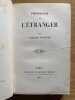
Edition originale.Karol (Charles) Forster (1800-1879) était un journaliste et poète polonais qui avait été le secrétaire du prince Zajonczek, vice-roi de Pologne, avant de s'exiler en France en 1830, puis à Berlin en 1848.Lhéritier, 162. Vicaire, VI, 599. - - VENTE PAR CORRESPONDANCE UNIQUEMENT - LIEN DE PAIEMENT, NOUS CONSULTER.
Karol Modzelewski, Isabelle Macor-Filarska, ...
Reference : RO20270793
(2006)
ISBN : 270072349X
L'Europe des barbares - Germains et Slaves face aux héritiers de Rome
AUBIER / FLAMMARION - collection hsitorique. 2006. In-8. Broché. Etat d'usage, Couv. convenable, Dos satisfaisant, Quelques rousseurs. 448 PAGES. . . . Classification Dewey : 940-Histoire générale de l'Europe
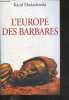
Karol Modzelewski, Isabelle Macor-Filarska, Agata Kozak, Corbin alain, Schmitt jean claude Classification Dewey : 940-Histoire générale de l'Europe
La Tombe de l'Empereur.
Paris, Brockhaus et Avenarius, 1840 in-8, 45 pp., dérelié. Mouillures claires supra-paginales.
Rare plaquette d'hommage publiée à l'occasion du retour des cendres. Elle contient le témoignage du navigateur Gabriel Lafond de Lurcy (1802-1876) sur son escale à Sainte-Hélène en 1832, au cours de son périple de Manille à Nantes. Le passage sera repris dans le recueil Quinze ans de voyages autour du monde, du même Lafond, dont la première livraison venait seulement de paraître.Karol Forster (1800-1879) était un journaliste et poète polonais qui avait été le secéraire du prince Zajonczek, vice-roi de Pologne, avant de s'exiler en France en 1830, puis à Berlin en 1848.Absent de Davois. Seulement deux exemplaires au CCF (BnF et Le Havre). - - VENTE PAR CORRESPONDANCE UNIQUEMENT - LIEN DE PAIEMENT, NOUS CONSULTER.
La chine de mao. l'autre communisme.
Robert Laffont Broch D'occasion tat correct 01/01/1966 150 pages
Virages a L'est
Editions de l'arabesque 1963 1963. Karol Bor - Virages a L'est / Éditions de l'Arabesque 1963
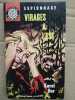
Bon état
( Frédéric Dard - Fleuve Noir - Collection Espionnage ) - Patrice Dard sous le pseudonyme de Alix Karol - Michel Gourdon.
Reference : 20075
Sexecution Capitale. ( Avec superbe dédicace pleine page de Patrice Dard ).
Editions Fleuve Noir / Collection Espionnage n° 1205 de 1975. In-12 broché de 218 pages au format 17,5 x 11 cm. Superbe couverture illustrée par Michel Gourdon. Dos resté carré. Plats et intérieur assez frais, avec des brunissures sur la tranche extérieure. Edition originale en bel état général. Précieux exemplaire enrichi d'une superbe dédicace autographe, pleine page, datée et signée " Alix Karol " par Patrice Dard.

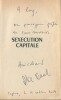
Vente exclusivement par correspondance. Le libraire ne reçoit, exceptionnellement que sur rendez-vous. Il est préférable de téléphoner avant tout déplacement.Forfait de port pour un livre 10 € sauf si épaisseur supérieure à 3 cm ou valeur supérieure ou égale à 100 €, dans ce cas expédition obligatoire au tarif Colissimo en vigueur. A partir de 2 livres envoi en colissimo obligatoire. Port à la charge de l'acheteur pour le reste du monde.Les Chèques ne sont plus acceptés.Pour destinations extra-planétaire s'adresser à la NASA.Membre du Syndicat Lusitanien Amateurs Morues
( Frédéric Dard - Fleuve Noir - Collection Espionnage ) - Patrice Dard sous le pseudonyme de Alix Karol - Michel Gourdon.
Reference : 20529
Nous avons les moyens de vous faire parler. ( Avec superbe dédicace pleine page de Patrice Dard ).
Editions Fleuve Noir / Collection Espionnage n° 1157 de 1975. In-12 broché de 215 pages au format 17,5 x 11 cm. Superbe couverture illustrée par Michel Gourdon. Dos resté carré. Plats et intérieur frais. Edition originale en superbe état général. Précieux exemplaire enrichi d'une superbe dédicace autographe, pleine page, datée et signée " Alix Karol " par Patrice Dard.

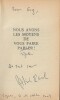
Vente exclusivement par correspondance. Le libraire ne reçoit, exceptionnellement que sur rendez-vous. Il est préférable de téléphoner avant tout déplacement.Forfait de port pour un livre 10 € sauf si épaisseur supérieure à 3 cm ou valeur supérieure ou égale à 100 €, dans ce cas expédition obligatoire au tarif Colissimo en vigueur. A partir de 2 livres envoi en colissimo obligatoire. Port à la charge de l'acheteur pour le reste du monde.Les Chèques ne sont plus acceptés.Pour destinations extra-planétaire s'adresser à la NASA.Membre du Syndicat Lusitanien Amateurs Morues
La Boutique De L Orfevre. Meditations Sur Le Sacrement Du Mariage Se Transformant De Temps A Autre En Drame.
Cana / Cerf Broch D'occasion bon tat 01/01/1979 150 pages
Les guerilleros au pouvoir/ l'itineraire politique de la revolution cubaine
Robert Laffont Broch D'occasion bon tat 01/01/1970 150 pages
L'INSTANT DE LA VERITE (IMAGES ET HISTOIRES)
Même et Autre, Bordeaux. 1977. In-4. Broché. Bon état, Couv. convenable, Dos satisfaisant, Intérieur frais. 75 pages. Dessin en noir et blanc en frontispice. Illustré de nombreux dessins en noir et blanc hors texte.. . . . Classification Dewey : 841-Poésie
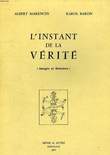
Dessins de Karol Baron. Edition originale sur Bouffant 14 S de Muller, tirée à 410 ex. num. Ex. n° 372. Classification Dewey : 841-Poésie
Heros populaires de tous les remps
Grund, 1976. Format 21x29cm, reliure editeur sous jaquette illustree, 212 pages. Illustre par Karol Ondreicka. Jaquette usee, froissee par endroits.Bon etat, petites traces d'usage sur un livre d'occasion.