 Write to the booksellers
20 books for « john johannes »Edit
-
Language
French (19)
Latin (1)
-
Century
16th (1)
17th (4)
19th (2)
20th (7)
21st (2)
-
Countries
Belgium (11)
Canada (1)
Denmark (3)
France (5)
-
Syndicate
ALAC (1)
CLAQ (1)
ILAB (7)
SLAM (2)
Ioannis XXIII Pont. Max. Litterae encyclicae de recentioribus rerum socialium processibus ad Christiana praecepta componendis
Roma, Unione Cristinana Imprenditori Dirigenti 1962 720pp. + plates out-of-text, 22cm., full-leather binding (with gilt lettering on spine, library label removed from upper plate), in cart.slipcase, 2 stamps, [multilingual: Latin-English-French-Italian-Portuguese-Spanish-German], R73424
Goethe-Brevier
Philipp Reclam. 1999. In-24. Relié toilé. Bon état, Couv. convenable, Dos satisfaisant, Intérieur frais. 421 pages - nombreuses illustrations en noir et blanc hors texte. Livre en allemand. Signet conservé. Jaquette convenable.. Avec Jaquette. . . Classification Dewey : 430-Langues germaniques. Allemand
Classification Dewey : 430-Langues germaniques. Allemand


Epigrammatum Joannis Oveni Cambro Britanni Oxoniensis, et Alberti Ines e societate Jesu, acroamatum epigrammaticorum Editio postrema & postumis quibusdam adaucta.
Amstelodami (Amsterdam), Elsevier, 1679, in-8°, 14.2 x 8 cm, ii unn + 402 p + 2 unn pp ( errata) , lacks the engraved title. Sewn, contemporary marbled paper wrapper, uncut copy, wrapper severely worn, part of spine missing, margins dusty and soiled, contemporary (?) handwritten ex-libris (Marini Tuvache). Rare uncut false Elzevier edition. (See Willems 2158, Berghman 883).
Epigrammatum Joannis Oveni Cambro Britanni Oxoniensis, et Alberti Ines e societate Jesu, acroamatum epigrammaticorum Editio postrema & postumis quibusdam adaucta.
Amstelodami (Amsterdam), Elsevier, 1679, in-8°, 14.2 x 8 cm, ii nn pp ( lacks engraved title) + 402 p + (2) nn pp (errata). Bound in contemporary full leather, edges painted red. Binding with some wear and damaged extremities. False Elzevier edition. (See Willems 2158, Berghman 883).
Johannes de Evangelist ( Saint John ) - Original engraving by Johannes Wierix.
Antwerpen, publisher Johannes Baptista Vrints, 1585, original engraving 207 x 264 mm, printed on paper, engraved by Wierix , designed by Maerten de Vos. Caption underneath reads '' Ut genus omne avium superat iovis ales, aperta...''. This print formed part of suite of engravings '' Thesaurus sacrarum historiarum veteris ( et novi) testamenti....editus sumptibus atque expensis Gerardi de Iode AN. 1585''. Fine printing with ample margins. See Hollstein Dutch 1122. Mauquoy-Hendricx 835. The plate can be seen on internet as item RP-P-1988-312-215 in the collection of the Rijksmuseum in Amsterdam. (The evangelist Saint John is writing underneath a tree next to an eagle that holds an inkpot.).
De divisione naturae [also known as the Periphyseon]. Libri quinque. Accedit appendix et ambiguis S. Maximi Graece & Latine. - [""WITH HIM TRUE PHILOSOPHY FIRST BEGINS"" (HEGEL)]
Oxford, E Theatro Sheldoniano, 1681. Folio. Nice contemporary full calf with five raised bands and single gilt line-decorations to spine. Gilt title-label and gilt lettering to spine. Double blindstamped borders to boards. All edges of boards gilt. A bit of wear to hinges and capitals, but overall very nice. Internally very clean and fresh with only minimal, light occasional browning. With the book-plate of Gaddesden Library to inside of front board. Engraved device to title-page. (14), 312"" (4), 88 pp.
Rare first edition of the founding work of Western medieval philosophy, the main work by ""the one important philosophical thinker to appear in Latin Christendom between Augustine... and Anselm."" (Encycl. of Phil.). This magnum opus of medieval thought is considered the ""final achievement"" of ancient philosophy (Burch: Early Medieval Philosophy, 1951) and is one of the few true defining moments of medieval philosophy. It not only marks the beginning of Western medieval philosophy, it also anticipates German idealism. Kolakowski identifies ""De divisione naturae"" as the archetype of Hegel's Phenomenology of Mind (see ""Main Currents of Marxism""), the Hegelians considered him the father of German idealism, and Hegel states that ""Scholastic philosophy is considered to begin with John Scotus Erigena who flourished about the year 860, and who must not be confused with the Duns Scotus of a later date... With him true philosophy first begins, and his philosophy in the main coincides with the idealism of the Neo-Platonists."" (From Hegel’s Lectures on the History of Philosophy: Part Two. Philosophy of the Middle Ages). As the dialectical reasoning in the “De divisione naturae” prefigures Hegel, its theory of place and time as defining structures of the mind anticipates Kant. As Gordon A. Leff also points out, Eriugena stands out as the one original thinker in the period from Boethius to Anselm. He is responsible for a revival of philosophical thought which had remained largely dormant in Western Europe after the death of Boethius and creates the only philosophical system to emerge in more than half a millenia. He is the forerunner to speculative idealism, considered a “Proclus of the West” (Hauréau, 1872) and the “Father of Speculative Philosophy” (Huber, 1861). According to The Stanford Encyclopaedia of Philosophy, Eriugena is ""the most significant Irish intellectual of the early monastic period. He is generally recognized to be both the outstanding philosopher (in terms of originality) of the Carolingian era and of the whole period of Latin philosophy stretching from Boethius to Anselm"""" Gersh praises his notion of structure, which places him amongst modern writers rather than medieval ones, stating also that ""(i)n some respects, Western medieval philosophy can be viewed as beginning with the brilliant and controversial ninth-century thinker JohnScotus Eriugena."" (Gersh, p. 125). His magnum opus ""synthesizes the philosophical accomplishments of fifteen centuries and appears as the final achievement of ancient philosophy"" (Burch). Eriugena became extremely influential throughout the later Middle Ages and directly influenced Bernard of Clairvaux, Hildegard van Bingen, and Nicolas of Cusa. He also anticipates Thomas Aquinas in saying that one cannot know and believe a thing at the same time, and exercised a direct influence on modern philosophy. After the rediscovery of his magnum opus, which was printed for the first time in 1681 (the present work), his astonishingly modern train of thought and his immensely important philosophical system came to directly influence some of the most important thinkers of the modern era, most significantly probably Hegel. Eriugena is often referred to as “the Hegel of the 9th century”, and he thus also became a primary influence upon Marx’ dialectical form. Schopenhauer stresses the importance of the rediscovery of Eriugena with the present publication and says in Parerga and Paralopomena (vol. I) “ After Scotus Erigena had been lost and forgotten for many centuries, he was again discovered at Oxford and in 1681, thus four years after Spinoza's death, his work first saw the light in print. This seems to prove that the insight of individuals cannot make itself felt so long as the spirit of the age is not ripe to receive it.” “In the later Middle Ages both Meister Eckhart of Hochheim (c.1260–c.1328) and Nicholas of Cusa (1401–64) were sympathetic to Eriugena and familiar with his “Periphyseon”. Cusanus owned a copy of the “Periphyseon”. Interest in Eriugena was revived by Thomas Gale’s first printed edition of 1687 (recte: 1681). However, soon afterwards, Thomas Gale’s first printed edition, the “Periphyseon”, was listed in the first edition of the “Index Librorum Prohibitorum”, and remained on it, until the Index itself was abolished in the 1960s. In the nineteenth century, Hegel and his followers, interested in the history of philosophy from a systematic point of view, read Eriugena rather uncritically as an absolute idealist and as the father of German idealism. The first critical editions of his major works were not produced until the twentieth century (Lutz, Jeauneau, Barbet) [...] Eriugena is an original philosopher who articulates the relation between God and creation in a manner which preserves both divine transcendence and omnipresence. His theory of human nature is rationalist and intellectualist but also apophatic. His theory of place and time as defining structures of the mind anticipates Kant, his dialectical reasoning prefigures Hegel. But above all, Eriugena is a mystic who emphasizes the ultimate unity of human nature and through it of the entire creation with God.” (SEP). Eriugena - who Bertrand Russel also considered ""the most astonishing person of the ninth century"" - had been commissioned by Charles the Bald to translate the writings that were then thought to be by Dionysius (the learned pagan converted by St. Paul). Eriugena had taught himself Greek and succeeded in an excellent translation. ""He went on to translate various other Greek Christian texts, by Gregory of Nyssa and the seventeenth-century Maximus the Confessor. All these influences along with his wide reading of the Latin fathers (especially Ambrose and Augustine) and his enthusiasm for logic.. are combined in his masterpiece ""Periphyseon (""About Nature"""" it is also sometimes known as ""De divisione naturae"", ""On the division of nature""), written in the 860s. The ""Periphyseon"" has been seen by some as continuing a tradition of Greek Neoplatonic thought, and by some as anticipating nineteenth-century German Idealist philosophy"". (Stephen Gersh, Johannes Scotus Eriugena and Anselm of Canterbury, p. 121. In: Marenbon, Medieval Philosophy, 2004). Although the beautiful Oxford-imprints from the second half of the seventeenth century are usually not rare in themselves, the present work is very scarce indeed. A reason for this might be that the book was placed on the “Index Librorum Prohibitorum” right after publication and remained on it, until the Index itself was abolished in the 1960s. This editio princeps of Eriugena’s main work also contains Eriugena’s translation of one of the works that influenced him the most, namely the “Scholia Maximi in Gregorium Theologium”, which also appears here in print for the first time. Johannes (c.800–c.877), who signed himself as “Eriugena” in one manuscript, and who was referred to by his contemporaries as “the Irishman” (scottus—in the ninth century Ireland was referred to as “Scotia Maior” and its inhabitants as “scotti”) is the most significant Irish intellectual of the early monastic period. He is generally recognized to be both the most outstanding philosopher (in terms of originality) of the Carolingian era and of the whole period of Latin philosophy stretching from Boethius to Anselm… Eriugena’s uniqueness lies in the fact that, quite remarkably for a scholar in Western Europe in the Carolingian era, he had considerable familiarity with the Greek language, affording him access to the Greek Christian theological tradition, from the Cappadocians to Gregory of Nyssa, hitherto almost entirely unknown in the Latin West… Eriugena’s thought is best understood as a sustained attempt to create a consistent, systematic, Christian Neoplatonism from diverse but primarily Christian sources. Eriugena had a unique gift for identifying the underlying intellectual framework, broadly Neoplatonic but also deeply Christian, assumed by the writers of the Christian East… Overall, Eriugena develops a Neoplatonic cosmology according to which the infinite, transcendent, and “unknown” God, who is beyond being and non-being, through a process of self-articulation, procession, or “self-creation”, proceeds from his divine “darkness” or “non-being” into the light of being, speaking the Word who is understood as Christ, and at the same timeless moment bringing forth the Primary Causes of all creation. These causes in turn proceed into their Created Effects and as such are creatures entirely dependent on, and will ultimately return to, their sources, which are the Causes or Ideas in God. These Causes, considered as diverse and infinite in themselves, are actually one single principle in the divine One. The whole of reality or nature, is involved in a dynamic process of outgoing (exitus) from and return (reditus) to the One. God is the One or the Good or the highest principle, which transcends all, and which therefore may be said to be “the non-being that transcends being”. In an original departure from traditional Neoplatonism, in his dialogue Periphyseon, this first and highest cosmic principle is called “nature” (natura) and is said to include both God and creation. Nature is defined as universitas rerum, the “totality of all things”, and includes both the things which are (ea quae sunt) as well as those which are not (ea quae non sunt). This divine nature may be divided into a set of four “species” or “divisions” (divisiones) which nevertheless retain their unity with their source. These four divisions of nature taken together are to be understood as God, presented as the “Beginning, Middle, and End of all things”.” (SEP).
Correspondence of John Morris with Johannes De Laet (1634-1649)
, Van Gorcum-Prakke 1970 xxvii + 255pp., [introduction & notes in english, texts of letters in latin], Academic dissertation Catholic University of Nijmegen (NL.) 1970, promotor: prof.T.A.Birrell, softcover, good condition, G33814
JOHN PAUL II [JOHANNES PAULUS II] (HEMMING Laurence Paul e.a., eds.)
Reference : R70986
(2002)
Restoring faith in reason. A new translation of the encyclical letter Faith and Reason of Pope John Paul II, together with a commentary and discussion
London, SCM Press 2002 xiii + 308pp., 24cm., softcover, VG, [bilingual: Latin-English], ISBN 0-334-02841-8, R70986
JOHANNES OZNIENSIS [JOHN OF OTZUN] (& AUCHER Johannes Bapt., ed.)
Reference : X114350
(1834)
Tearn Yovhannow Imastasiri Awjnecwoy Matenagrowt Iwnk / Domini Johannis Philosophi Ozniensis Armeniorum Catholici Opera
Venetiis [Venetik-Venice], Typ. PP. Mechitaristarum in Insula S. Lazari [Mixt'arean Hratarakow'iwn] 1834 12 + 313 + [3] pp., bilingual: Armenian text with Latin translation, 24cm., bound in solid modern hardcover in green cloth, text is clean and bright except for few occasional foxing, good condition, rare, X114350
Historiæ Naturalis de Piscibus et Cetis Libri V. Cum æneis figuris. + Historiæ Naturalis De Exanguibus Aquaticis Libri IV. Cum figuris Æneis.
Amstelodami (Amsterdam), Johannes Jacobi Schipperi, 1657. Folio. Bound in one later (ca. 1800) hcalf w. marbled boards, uncut. Back w. six raised bands and coloured title-labels. Hinges, capitals and corners w. traces of use. First 12 leaves of ""De Piscibus"" w. repair to lower margin (ca. 4 x 10 cm. and decreasing) w. waterstaining around it, neither repair nor waterstaining affecting text or illustrations. Otherwise internally nice and clean. Engr. t-p. and 48 engr. plates (most of them depicting between 7 and 20 animals that live in water), 5, (3), 160 pp. (De Piscibus) + woodcut title-vignette and 20 engr. plates (most of them depicting between 10 and 20 shell-fish etc.), 58, (2) pp.
Second edition of both works. The ""Exanguibus Aquaticis"" is in accordance with Nissen's description of the second edition (Nissen 2134), the second edition of the ""De Piscibus"", however, is described in Nissen without year and as containing 47 plates, as the first edition, whereas this copy has 48 plates (all numbered), place and printer are the same. The first editions were both printed in Frankfurt in 1650. Johnston (1603 - 1675) was born in Poland and of Scottish descend, he was primarily a medic and natural historian. His works are usually seen as compilations of information with no personal judgment accompanying it. None the less his works of natural history were of great importance to the growing interest in this field of the time. ""For example four of his dictionary-style works on fish, birds, quadrupeds, and insects -published between 1650 and 1653 with excellent illustrations- were widely read and translated"" (D.S.B. VII:164). Though he relied a lot on the writings of others (e.g. those of Aldrovandi), his works became of great importance, first of all because of their new educational approach, but they were also of paramount importance to the development of natural history in Japan. The first collected edition in Dutch of the Historia Naturalis published at Amsterdam in 1660, was presented as a gift to the Japanese ruler Shogun Yoshimune. It was the only source of knowledge of western natural history in Japan, until in 1750. ""Jonston's writings were a useful contribution to seventeenth-century thought, although he was not in the forefront of changing concepts of the time."" (D.S.B. VII:165).These two works are the separate volumes three and four of Johnston's six-volume work ""Historia Naturalis"". All the beautifully executed plates are by Merian, who printed the first edition. Wood mentions this 1657-edition as the ""editio princeps"" (Wood p. 409). Nissen 2133 + 2134.
Parallels : Girardoni - Parallèles : Schweitzer
New York - Montreal Stephen Haller Fine Art - Edition John A. Schweitzer 1991 In-4 illustré, dépliant de 6p.
:: Catalogue d'expo. Textes en français et en anglais de Andrea Meyers-Klein. :: Bon état. Avec une reproductionde Motherwell.
JOHANNES LEMOVICENSIS [= Jean de Limoges, John of Limoges] & HORVATH Constantinus O.C.S.O. (ed.)
Reference : R118176
(1932)
Johannis Lemovicensis abbatis de Zirc 1208-1218 Opera omnia. Tomus I
Veszprem, Egyhazmegyei Konyvnyomda 1932 Volume I (out of 3) of John of Limoges' complete works, xxiv + 102 + 197pp. + 1 folding table, 20cm., in the series "Zirci konyvek - Libri de Zirc" volume 2, solid hardcover binding, text is clean and bright, text in Latin, good condition, R118176
JOHANNES LEMOVICENSIS [= Jean de Limoges, John of Limoges] & HORVATH Constantinus O.C.S.O. (ed.)
Reference : R118177
(1932)
Johannis Lemovicensis abbatis de Zirc 1208-1218 Opera omnia. Tomus II
Veszprem, Egyhazmegyei Konyvnyomda 1932 Volume 2 (out of 3) of John of Limoges' complete works, xv + 578pp., 20cm., in the series "Zirci konyvek - Libri de Zirc" volume 3, solid hardcover binding, text is clean and bright, text in Latin, good condition, R118177
Lapis philosophicus sive Commentarius in octo libros Physicorum Aristot in quo arcana Physiologiae examinatur [relié à la suite :] Ancilla Philosophiae seu Epitome in octo libros Physicorum Aristotelis.
Francofurti ad Moenum, apud heredes Andreae Wecheli & Anton. Hierat., 1600 - Francofurti, apud heredes Andreae Wecheli, 1600. 2 parties reliées en un fort vol. au format in-12 (173 x 112 mm) de 1 frontispice allégorique gravé n.fol., 22 ff. n.fol., 1.068 pp. et 12 ff. n.fol. ; 88 pp. et 4 ff. n.fol. Reliure XIXème de demi-basane marbrée havane, dos lisse orné de filets gras dorés, fleurons dorés, titre doré, tranches émeraude.
![Lapis philosophicus sive Commentarius in octo libros Physicorum Aristot in quo arcana Physiologiae examinatur [relié à la suite :] Ancilla ...](https://static.livre-rare-book.com/pictures/BLS/23683_1_thumb.jpg)
Rare et important ouvrage ; complet de ses deux parties ici reliées en un fort volume. La première s'ouvre sur un curieux frontispice gravé sur cuivre. ''John Case fut regardé comme un des plus subtils argumentateurs de son temps. A la tête d'une école de Philosophie, alors très fréquentée, il joignit à l'étude de la philosophie celle de la physique. La plupart de ces ouvrages sont consacrés à des travaux d'exégèse de la philosophie d'Artistote''. ''L'Officina Welchiana resta l'une des plus importantes typographies d'Allemagne jusqu'au milieu du XVIIème''. (in Deschamps). Deschamps, Dictionnaire de géographie, 525. Angles, coupes et coiffe supérieure élimés. Feuillets parfois légèrement oxydés. Du reste, très belle condition.
[Ex officina J.-M. Eberhart, Collegii Imperialis Franciae Typographi S. et J. Luchtmans] - LYDUS, Johannes Laurentius ; (FUSS, Jean Dominique ; HASE, Charles Benoît ) ; [ JEAN LE LYDIEN ; JOHN THE LYDIAN ]
Reference : 37043
(1812)
Ioannis Laurentii Lydi Philadelpheni De Magistratibus Reipublicae Romanae Libri Tres.
Nunc primum in Lucem editi, et versione, notis indicibusque aucti.A Joanne Dominico Fuss, Praefatus est Carolus Benedictus Hase, 1 vol. in-8 reliure de l'époque demi-chagrin brun, Ex officina J.-M. Eberhart, Collegii Imperialis Franciae Typographi, Parisiis [ Paris ], Apud S. et J. Luchtmans, Lugduni Batavorum [ Leyde ], 1812, 4 ff., lxxxvij-316 pp.
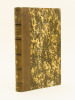
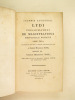
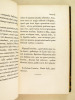
Bel exemplaire imprimé sur beau papier vergé. Texte grec avec la traduction latine en regard. Un texte important par les détails qu'il fournit sur l'administration justinienne. On trouvera par ailleurs dans notre catalogue une très belle édition des deux autres oeuvres de Jean le Lydien : le De Ostentis et le de Mensibus.
Rollinger Robert Steele John Haubold Johannes Lanfranchi Giovanni B
Reference : 100144353
(2013)
ISBN : 9783447067287
The World of Berossos: Proceedings of the 4th International Colloquium on "The Ancient Near East between Classical and Ancient Oriental Traditions" ... July 2010 (Classica et Orientalia Band 5)
Harrassowitz Verlag 2013 339 pages 17 8x24 4x2 8cm. 2013. Cartonné. 339 pages.
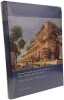
proche du neuf sous rhodoïd coins supérieurs un peu enfoncés
Hand-coloured Copper Engraving of Sheep from 'Historia Naturalis'
Amsterdam Johann Jacob Schipper 1657
Single sheet from 'Historia Naturalis' published 1657 and engraved by Matthaus [Matthew] Merian. Beautifully hand-coloured, in excellent condition, under cream passe partout. This would look great framed. 295 x 180 mm (11œ x 7 inches).
IOHANNES SCOTTUS [JOHANNES SCOTTUS ERIUGENA, JEAN SCOT, JOHN SCOTUS] (& MADEC Goulven, ed.)
Reference : R118862
(1978)
Iohannis Scotti De divina praedestinatione liber (Corpus Christianorum, Continuatio Mediaevalis, 50)
Turnhout, Brepols 1978 xix + 279pp., 25cm., dans la série "Corpus Christianorum Continuatio Mediaevalis" volume L (50), reliure toile d'éditeur avec titre doré, ISBN 2-503-03501-7, (introduction en français, texte en latin), texte frais, petit cachet ex-libris sur la feuille de garde blanche et au verso de la page de titre, bon état, R118862
Elementa Geometriae Planae ac Solidae, una cum Sphaericorum doctrina atq praxi Trigonometrica. Ad ductum veterum juxta ac recentium Mathematicorum, in usum juventutis patriae peculiari methodo conscripta, necessariisq" demonstrationibus illustrata. E...
Stockholm, B.Wankijfwii, Ol...Sumptibus Joh. Siwertz, 1691. Small 8vo. Contemp. full vellum. Minor spots to covers. (8),191,(1) pp., 4 folded engraved plates, textillustrations. A few annotations in old hand. A few brownspots, but well-preserved.
Second, much expanded, edition of Bilberg's textbook for the Swedish youth, in which he creates his own method of how to learn plane and spherical geometry based both on old mathematicians (Euclid etc.) and also on modern mathematicians. The first edition, published 1687 comprised only 32 pages.Bilberg was professor in mathematics at Uppsala University and later bishop in Strängnäs.Colljin ""1600-Talet"", 79-80.
VERMEER Johannes - Albert BLANKERT - John Michael MONTIAS - Gilles AILLAUD :
Reference : 24509
Vermeer. (2e druk).
3. Amsterdam, Meulenhoff,1992, large in-4°, 232 pp, 127 b/w+coloured ills, 33 coloured plates, bibliography, index, publisher's cloth, dustwrapper, text in Dutch, second edition (first was from 1987), fine copy.

