Write to the booksellers
219 books for « jean dumas »Edit
-
Type
Book (142)
Music sheets (75)
Photographs (2)
-
Century
18th (5)
19th (26)
20th (117)
21st (15)
-
Countries
Belgium (6)
Denmark (12)
France (186)
Germany (1)
Switzerland (14)
-
Syndicate
CNE (1)
ILAB (75)
NVVA (3)
SLACES (3)
SLAM (59)
SNCAO (3)
Topics
- Animals (1)
- Aquitaine (8)
- Architecture (1)
- Ariel (1)
- Aslan (1)
- Astronomy (2)
- Biography (1)
- Boats - ships (2)
- Card games (1)
- Chemistry (18)
- Christmas (3)
- Collaboration (3)
- Comic strip (2)
- Corsica (2)
- Courteline georges (1)
- Cousteau jean yves (2)
- Death (1)
- Dedication (1)
- Desnos (1)
- Diseases (2)
- Dumas alexandre (3)
- Economics (3)
- Education (3)
- Engraving (books about) (2)
- Ethic (2)
- Fernandel (34)
- Fine arts (3)
- First edition (2)
- Fleury (1)
- Fox (5)
- Games of chance (1)
- Geography (1)
- Gibert (1)
- Goya francisco (4)
- Grammar (1)
- History (6)
- Industrial arts & crafts - fine arts (2)
- Instruments (3)
- Instruments (3)
- Java (2)
- Justice (1)
- Latin (1)
- Law (2)
- Leisure (1)
- Literature (4)
- Machines (1)
- Magazine (1)
- Man ray (1)
- Mariology (1)
- Medicine (2)
- Metaphysics (2)
- Military arts (2)
- Milorad (1)
- Museums (1)
- Music (1)
- Navy (3)
- Newspapers press (2)
- Noury pierre (1)
- Paris (1)
- Philosophy (4)
- Photography (6)
- Pinup girl (1)
- Poetry (1)
- Poincaré raymond (1)
- Poirier jacques (2)
- Portraits (1)
- Provence (3)
- Psychiatry neurology (1)
- Raimu (2)
- René-jacques (2)
- Review (4)
- Reviews (3)
- Richepin jean (1)
- Rooster (1)
- Rossi tino (1)
- Sagan françoise (1)
- Sartre jean paul (3)
- Savoy (1)
- Sciences (3)
- Scores (79)
- Sociology (1)
- Songs (73)
- Sports (1)
- Sports pc (1)
- Tea (7)
- Theatre (2)
- United kingdom (1)
- Vidal (1)
- View (1)
- Waltz (4)
- Willy (2)
- Writing - calligraphy (1)
- Youth (1)
UN PRENOM CHARMANT..IGNACE - CREATION FERNANDEL - FASCICULE.
BOUSQUET E. - BEUSCHER PAUL. NON DATE. In-8. En feuillets. Etat d'usage, Couv. convenable, Dos satisfaisant, Intérieur frais. fascicule de 2 pages de partition et paroles - plats illustrés - 1 tampon sur le 1er plat.. . . . Classification Dewey : 780.26-Partitions
UN GROS SUCCES EXTRAIT DE L'OPERETTE ET DU FILM - PAROLES DE JEAN MANSE - MUSIQUE DE R. DUMAS Classification Dewey : 780.26-Partitions


Bordeaux, Ville Paradoxale - Temps Et Espaces Dans La Construction Imaginaire D'une Métropole
PHOTOS SUR DEMANDE
Merci de nous contacter à l'avance si vous souhaitez consulter une référence dans notre boutique à Authon-du-Perche.
L'art du tarot - Comment jouer et gagner au jeu de Tarot.
Chaix. 1976. In-8. Broché. Bon état, Couv. convenable, Dos satisfaisant, Intérieur frais. 151 pages.. . . . Classification Dewey : 795.4-Jeux de cartes

Préface de Emmanuel Jeannin-Naltet. Classification Dewey : 795.4-Jeux de cartes
"La Java des P'tits Galons ( Java de l'Opérette ""Ignace"" )"
BOUSQUET E. et BEUSCHER Paul. Non daté. In-8. En feuillets. Bon état, Couv. convenable, Dos satisfaisant, Intérieur frais. 4 pages, dont 2 de partitions accompagnées des paroles.. . . . Classification Dewey : 780.26-Partitions
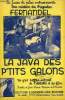
Classification Dewey : 780.26-Partitions
LE JEU DE PILE OU FACE
THE RAINBOW PRESS. non daté. In-12. Broché. Bon état, Couv. convenable, Dos satisfaisant, Intérieur frais. Non paginé, environ 10 pages. Ouvrage tiré en 100 exemplaire.. . . . Classification Dewey : 795-Jeux de hasard
Classification Dewey : 795-Jeux de hasard
LES ACTIVITES INDUSTRIELLES DANS LA COMMUNAUTE URBAINE DE BORDEAUX ETUDES DE GEOGRAPHIE ECONOMIQUE ET SOCIO POLITIQUE EN 2 TOMES
N.C.. 1980. In-8. Broché. Bon état, Couv. convenable, Dos satisfaisant, Intérieur frais. 841 pages pour les deux volumes.. . . . Classification Dewey : 330-Economie
Classification Dewey : 330-Economie
Chronique de Boulazac
Copédit. 1989. In-8. Broché. Bon état, Couv. convenable, Dos satisfaisant, Intérieur frais. 174 pages. Nombreuses gravures en noir et blanc. Couverture contre pliée.. . . . Classification Dewey : 908.447-Régionalisme : Aquitaine
Classification Dewey : 908.447-Régionalisme : Aquitaine
CARDONNEL, DUBARLE, JOLIF (Révérends Pères), BOSC Jean, DUMAS André (Pasteurs), GARAUDY Roger et alii
Reference : 49386
L'homme chrétien et l'homme marxiste.
Paris/Genève, La Palatine, 1964. 12 x 19, 269 pp., broché, bon état (couverture légèrement défraîchie).
"semaines de la pensée marxiste; confrontations et débats."
VIVE LE SPORT ! Des temps héroïques à l'aube du XXIe siècle.
1997 / 464 pages. Broché. Editions Atlantica.

Très bon état.
DUMAS, JEAN BAPTISTE-ANDRE & J.S. STAS. - THE MAIN PAPER ON SUBSTITUTION AND THE THEORY OF TYPES.
Reference : 45032
(1840)
Premier Mémoire sur les Types Chimiques Par M. J. Dumas. (+) Second Mémoire sur les Types Chimiques" par MM. J. Dumas et J.-S. Stas.
(Paris, Fortin, Masson et Cie, 1840). 8vo. Without wrappers. Extracted from 'Annales de Chimie et de Physique', 2e Series, tome 73. Pp. 73-103 (incl. Note de Liebig pp. 100-103) and pp. 113-166. Some scattered brownspots.
This paper, which was published at the same year in ""Comptes Rendues"" (3 Fevrier), is the most importent on the theory of structural types and the nomenclature of organic compounds, refuting the electrochemical theory of Berzelius. ""The development of this idea (type organique) into what is sometimes called the ""Older Type Theory"", as distinguished from Gerhardt's Type heory, is contained in Dumas' importent memoir on the substitution and the theory of types, presented on 3 febriary 1840.""(Partington IV, p. 365). In the second paper Stas and Dumas record the first use of 'potash-lime', the precursor of soda-lime, an invaluable reagent in organic chemistry.""Jean Baptiste Dumas advances a theory that the chemical properties of an organic compound are determined by its structure and not, as seems to be the case with inorganic compounds, by its electrical properties. he illustrates the concept with the example that the basic qualitative properties of acetic acid are retained even after replacing three fourths of the hydrogen by chlorine. As a consequence, he calls for a revision of chemical nomenclature for organic compounds, basing terms on common features, not on elemental composition.""(Parkinson ""Breakthroughs"" 1840 C).
Premier Mémoire sur les Types Chimiques Par M. J. Dumas. (+) Second Mémoire sur les Types Chimiques" par MM. J. Dumas et J.-S. Stas. - [THE MAIN PAPER ON SUBSTITUTION AND THE THEORY OF TYPES.]
Paris, Fortin, Masson et Cie, 1840. 8vo. In contemporary half calf with gilt lettering spine and five raised bands. The original wrappers withbound in the back. In ""Annales de Chimie et de Physique"", tome 73. Entire volume offered. Paper label pasted on to top of spine. Two stamps to verso of title-page. A few light occassional brownspots, otherwise a fine copy. 73-103 (incl. Note de Liebig pp. 100-103) and pp. 113-166. [Entire volume: 448 pp. + 5 folded plates.
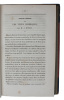
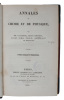
This paper, which was published at the same year in ""Comptes Rendues"" (3 Fevrier), is the most importent on the theory of structural types and the nomenclature of organic compounds, refuting the electrochemical theory of Berzelius. ""The development of this idea (type organique) into what is sometimes called the ""Older Type Theory"", as distinguished from Gerhardt's Type heory, is contained in Dumas' importent memoir on the substitution and the theory of types, presented on 3 febriary 1840.""(Partington IV, p. 365). In the second paper Stas and Dumas record the first use of 'potash-lime', the precursor of soda-lime, an invaluable reagent in organic chemistry. ""Jean Baptiste Dumas advances a theory that the chemical properties of an organic compound are determined by its structure and not, as seems to be the case with inorganic compounds, by its electrical properties. he illustrates the concept with the example that the basic qualitative properties of acetic acid are retained even after replacing three fourths of the hydrogen by chlorine. As a consequence, he calls for a revision of chemical nomenclature for organic compounds, basing terms on common features, not on elemental composition.""(Parkinson ""Breakthroughs"" 1840 C).
CASTENET Jean, DAEHN François-Jean, DESPLATS François, DU SAILLANT Paul, GUERITHAULT Gilles, MAUBLANC Henri de, RANOU Thierry, RIBADEAU-DUMAS Guy, RICHARD François, ROUSSET ROUARD Yves, TROUBLE Bruno
Reference : 14079
(1983)
AMERICA'S CUP le défi français
1983 cartonné entoilé éditeur in-quarto sous jaquette illustrée en couleurs - à rabats imprimés - (editor hard-back percale with dustjacket illustrated in colours in-quarto), toutes tranches lisses (all smooth edges), pages de garde blanches (white endpapers), page de faux-titre (half title page), abondamment illustré (plentifully illustrated) illustrations photographiques de (photographic illustrations of) Christian Bachelier - Beken of Cowes - Jacques Goubert - Jacques Léo - Guy Morice - Michel Piquemal - Thierry Ranou - François Richard - Guy Ribadeau Dumas, 200 pages, 1983 à Paris Editions Acla-Paris,
très bel état (fine condition)
"DUMAS, JEAN BAPTISTE-ANDRE & PIERRE PELLETIER. - TOWARDS A CLASSIFICATION OF ORGANIC COMPOUNDS.
Reference : 44741
(1823)
Recherches sur la Composition élémentaire et sur quelques propriétes caractéristiques des bases salifiables organiques.
(Paris, Crochard, 1823). Without wrappers. In: ""Annales de Chimie et de Physique, par Gay-Lussac et Arago"", tome 24, Sec. Series, Cahier 2. Pp. 163-191. (Entire issue offered pp. 113-223.
First appearance of Dumas and Pelletier's importent paper in which they analyzed nine alkaloids by combustion and found for the first time the number of atoms of carbon, hydrogen, oxygen and nitrogen in them. Dumas' name is still associated with the two procedures which he devised here, the determination of vapor density and combustion analysis.""The most important problem with which Dumas was concerned throughout his career was the classification of chemical substances. He sought to devise comprehensive classificatory schemes for organic compounds and for the elements. Dumas’s earliest contribution to organic chemistry was his study of nine alkaloids, published in 1823, jointly with Pierre Pelletier.1 He analyzed the elemental constituents of these organic “bases” and attempted to prove that their relative proportions of oxygen followed Dalton’s law of multiple proportions. He had embraced the ideas of the two reigning theories in contemporary chemistry: dualism, with its division of substances into electronegative (acid) and electropositive (alkaline)"" and atomism, which Dalton had used to explain his law. Dumas spent the next few years attempting to create an adequate system of classification of organic compounds based upon these two theories.""(DSB).
Recherches sur la Composition élémentaire et sur quelques propriétes caractéristiques des bases salifiables organiques. - [TOWARDS A CLASSIFICATION OF ORGANIC COMPOUNDS.]
Paris, Crochard, 1823. 8vo. In contemporary half calf with gilt lettering spine and five raised bands. The original wrappers withbound in the back. In ""Annales de Chimie et de Physique"", tome 24. Entire volume offered. Paper label pasted on to top of spine. Two stamps to verso of title-page and stamos to verso of all plates. A few light occassional brownspots, otherwise a fine copy. Pp. 163-191. [Entire volume: 448 pp. + 4 folded plates.
First appearance of Dumas and Pelletier's importent paper in which they analyzed nine alkaloids by combustion and found for the first time the number of atoms of carbon, hydrogen, oxygen and nitrogen in them. Dumas' name is still associated with the two procedures which he devised here, the determination of vapor density and combustion analysis. ""The most important problem with which Dumas was concerned throughout his career was the classification of chemical substances. He sought to devise comprehensive classificatory schemes for organic compounds and for the elements. Dumas’s earliest contribution to organic chemistry was his study of nine alkaloids, published in 1823, jointly with Pierre Pelletier.1 He analyzed the elemental constituents of these organic “bases” and attempted to prove that their relative proportions of oxygen followed Dalton’s law of multiple proportions. He had embraced the ideas of the two reigning theories in contemporary chemistry: dualism, with its division of substances into electronegative (acid) and electropositive (alkaline)"" and atomism, which Dalton had used to explain his law. Dumas spent the next few years attempting to create an adequate system of classification of organic compounds based upon these two theories.""(DSB). The Present volume also contain papers by Faraday, Becquerel and many other.
DUMAS, (JEAN BAPTISTE-ANDRE). - THE MAIN PAPER ON SUBSTITUTION AND THE THEORY OF TYPES.
Reference : 47109
(1840)
Mémoire sur la loi des substitutions et la Theorie des types" Séance du Lundi 5 Février 1840.
Paris, Bachelier, 1840 4to. No wrappers. In: ""Comptes Rendus Hebdomadaires des Séances de L'Academie des Sciences"", Tome X , No 5 (entire issue offered). Pp. (143-) 207. Dumas' paper: pp. 149-178.
First appearance of this paper, which was published the same year in 'Annales de Chimie et de Physique', is the most importent on the theory of structural types and the nomenclature of organic compounds, refuting the electrochemical theory of Berzelius. ""The development of this idea (type organique) into what is sometimes called the ""Older Type Theory"", as distinguished from Gerhardt's Type heory, is contained in Dumas' importent memoir on the substitution and the theory of types, presented on 3 febriary 1840.""(Partington IV, p. 365). ""Jean Baptiste Dumas advances a theory that the chemical properties of an organic compound are determined by its structure and not, as seems to be the case with inorganic compounds, by its electrical properties. he illustrates the concept with the example that the basic qualitative properties of acetic acid are retained even after replacing three fourths of the hydrogen by chlorine. As a consequence, he calls for a revision of chemical nomenclature for organic compounds, basing terms on common features, not on elemental composition.""(Parkinson ""Breakthroughs"" 1840 C).
DUMAS, (JEAN BAPTISTE-ANDRE). - THE MAIN PAPER ON SUBSTITUTION AND THE THEORY OF TYPES.
Reference : 51504
(1840)
Mémoire sur la loi des substitutions et la Theorie des types" Séance du Lundi 5 Février 1840.
Paris, Bachelier, 1840. 4to. No wrappers. In: ""Comptes Rendus Hebdomadaires des Séances de L'Academie des Sciences"", Tome X , No 5 (entire issue offered). Pp. (143-) 207. Dumas' paper: pp. 149-178. With half-title to Tome X.
First appearance of this paper, which was published the same year in 'Annales de Chimie et de Physique', is the most importent on the theory of structural types and the nomenclature of organic compounds, refuting the electrochemical theory of Berzelius. ""The development of this idea (type organique) into what is sometimes called the ""Older Type Theory"", as distinguished from Gerhardt's Type heory, is contained in Dumas' importent memoir on the substitution and the theory of types, presented on 3 February 1840.""(Partington IV, p. 365). ""Jean Baptiste Dumas advances a theory that the chemical properties of an organic compound are determined by its structure and not, as seems to be the case with inorganic compounds, by its electrical properties. he illustrates the concept with the example that the basic qualitative properties of acetic acid are retained even after replacing three fourths of the hydrogen by chlorine. As a consequence, he calls for a revision of chemical nomenclature for organic compounds, basing terms on common features, not on elemental composition.""(Parkinson ""Breakthroughs"" 1840 C).
Collectif Ancellin Raphaëlle Berta Jean-Louis Dumas Céline Martin Ambroise Collectif Berta Jean-Louis Dumas Céline Martin Ambroise
Reference : 88509
(2005)
ISBN : 9782845971516
Cahier de l'AFSSA N° 1 : Nutrition et risques alimentaires
Textuel 2005 93 pages 19x13x1cm. 2005. Broché. 93 pages.
FRENCH édition -livre de bibliothèque recyclé avec étiquette et couverture plastifiée - Quelques marques de lecture et/ou de stockage mais du reste en bon état. Expédition sous blister dans une enveloppe matelassée depuis la France
[La Nouvelle Société d'Édition] - JAMMES Francis ; BARTHOU Louis ; DE BORDEU Charles ; TOULET Paul-Jean ; DERÈME Tristan ; BORDEAUX Henry ; CHAMPETIER DE RIBES Auguste ; DUHOURCAU François ; MARTIN DU GARD Maurice ; BERL Emmanuel ; RIBADEAU DUMAS François ; BLÉRY Michelle ; BLÉRY Paul ; LASSERRE Pierre ; TOUSSAINT Franz ; NABONNE Bernard
Reference : 70746
(1931)
Plaisir du Béarn [ Contient : ] Panneaux pour un paravent de Lendresse (Francis Jammes) ; Souvenirs de la rue Sablière (Louis Barthou) ; Belles feuilles arrachées par la mort au Béarn (Charles de Bordeu) ; Fragment de Journal au Béarn (Paul-Jean Toulet) ; Vacances béarnaises (Tristan Derème) ; Les Enfances de Henri IV à Pau (Henry Bordeaux) ; Conquêtes du Béarn (A. Champetier de Ribes) ; Pau, station philosophique et poétique (F. Duhourcau) ; Le Béarn, département littéraire (M. Martin du Gard) ; D'un Béarn romantique et conformiste (Emmanuel Berl) ; La Vallée d'Aspe et sa Pleureuse (F. Ribadeau Dumas) ; Retour de Lourdes (Michelle et Paul Bléry) ; Un savant béarnais : le souvenir de Charles Moureu (Pierre Lasserre) ; Alfred de Vigny en Béarn (Franz Toussaint) ; Plaisir des Vins du Béarn (Bernard Nabonne).
1 vol. in-12 br., La Nouvelle Société d'Édition, Paris, 1931, 286 pp. et 1 f. [Contient : ] Panneaux pour un paravent de Lendresse (Francis Jammes) ; Souvenirs de la rue Sablière (Louis Barthou) ; Belles feuilles arrachées par la mort au Béarn (Charles de Bordeu) ; Fragment de Journal au Béarn (Paul-Jean Toulet) ; Vacances béarnaises (Tristan Derème) ; Les Enfances de Henri IV à Pau (Henry Bordeaux) ; Conquêtes du Béarn (A. Champetier de Ribes) ; Pau, station philosophique et poétique (F. Duhourcau) ; Le Béarn, département littéraire (M. Martin du Gard) ; D'un Béarn romantique et conformiste (Emmanuel Berl) ; La Vallée d'Aspe et sa Pleureuse (F. Ribadeau Dumas) ; Retour de Lourdes (Michelle et Paul Bléry) ; Un savant béarnais : le souvenir de Charles Moureu (Pierre Lasserre) ; Alfred de Vigny en Béarn (Franz Toussaint) ; Plaisir des Vins du Béarn (Bernard Nabonne).
![Plaisir du Béarn [ Contient : ] Panneaux pour un paravent de Lendresse (Francis Jammes) ; Souvenirs de la rue Sablière (Louis Barthou) ; Belles ...](https://static.livre-rare-book.com/pictures/CDL/70746_thumb.jpg)
![Plaisir du Béarn [ Contient : ] Panneaux pour un paravent de Lendresse (Francis Jammes) ; Souvenirs de la rue Sablière (Louis Barthou) ; Belles ...](https://static.livre-rare-book.com/pictures/CDL/70746_2_thumb.jpg)
![Plaisir du Béarn [ Contient : ] Panneaux pour un paravent de Lendresse (Francis Jammes) ; Souvenirs de la rue Sablière (Louis Barthou) ; Belles ...](https://static.livre-rare-book.com/pictures/CDL/70746_3_thumb.jpg)
Etat très satisfaisant (couv. un peu frottée, qq. rouss.)
Jean-Louis Dumas photographe
2008 Gottingen, Steidl, 2008, 22 x 24 cm ,101 pp, 103 pp , sous coffret d'éditeur, comme neuf,
photographies.
PHOTOGRAPHIE] DOISNEAU, RONIS, JAHAN, DUMAS, LANDAU- Jules Romains, André Siegfried, Jean Cassou; Georges Friedman.
Reference : 24265
(1951)
L'AUTOMOBILE DE FRANCE. Régie nationale des usines Renault.
1951 Billancourt, Régie nationale des usines Renault, 1951. In-4, cartonnage ivoire de l'éditeur, titre doré estampé sur le plat supérieur, 251 pages, étui. Bel album réalisé par Draeger sur la fabrication d'une voiture Renault à Billancourt : 256 photos en premier tirage et en héliogravure par Nora Dumas, Ergy Landau, Robert Doisneau, René Jacques, Pierre Jahan, Willy Ronis, Schall, Steiner, etc. Les textes sont signés par Jules Romains, André Siegfried, Jean Cassou et Georges Friedman. Très bel exemplaire dans son étui.
![L'AUTOMOBILE DE FRANCE. Régie nationale des usines Renault.. PHOTOGRAPHIE] DOISNEAU, RONIS, JAHAN, DUMAS, LANDAU- Jules Romains, André Siegfried, Jean ...](https://static.livre-rare-book.com/pictures/BRK/24265_1_thumb.jpg)
![L'AUTOMOBILE DE FRANCE. Régie nationale des usines Renault.. PHOTOGRAPHIE] DOISNEAU, RONIS, JAHAN, DUMAS, LANDAU- Jules Romains, André Siegfried, Jean ...](https://static.livre-rare-book.com/pictures/BRK/24265_2_thumb.jpg)
Remise de 20% pour toutes commandes supérieures à 200 €
L'Esprit du citoyen. Ouvrage philosophique, politique & critique
Neuchâtel, Fauche fils aîné, Favre, 1783 in-8, XVI pp., [328] pp. mal chiffrées 250, avec un tableau dépliant hors texte, demi-veau fauve marbré, dos à nerfs, pièce de titre noire, plats de carton dominoté, tranches mouchetées de rouge (reliure de l'époque). Coupes frottées, coins abîmés, petite galerie de vers stoppée en début et en fin d'ouvrage, tache brune angulaire aux derniers feuillets.
Unique édition de ces réflexions sur le dévouement au bien public exigé de tous, bien dans l'air du temps. L'avocat Jean-François Dumas (1757-1795), installé à Lons-le-Saulnier, fit ultérieurement carrière dans le personnel révolutionnaire : désigné le 25 avril 1790 comme électeur par l'assemblée primaire du canton de Lons, il fut ensuite élu le 11 novembre 1792 au conseil général du département qui le nomma au directoire, dont il devint vice-président. Il fit partie des administrateurs du département du Jura mis en cause par Dumas et Ragmey en 1793. Déclaré rebelle par décret pour s'être opposé à l'exécution des mesures proposées par ces représentants en mission, avec ses collègues, il prit la fuite. Rentré plus tard en France, il s'installa à Trévoux, où il mourut d'apoplexie en 1795. - - VENTE PAR CORRESPONDANCE UNIQUEMENT - LIEN DE PAIEMENT, NOUS CONSULTER.
Journal de l'adjudant-général Ramel, commandant de la garde du corps législatif de la république française, l'un des déportés à la guiane aprés le 18 fructidor; sur les faits relatifs à cette journée, sur le transport, le séjour et l'évasion de quelques-uns des déportés; avec des détails circonstanciés de la fin terrible du général Murinais, De Tronçon-Ducoudray, Lafond-Ladebat, etc. etc. A la suite: Lettre au Directoire Exécutif de la République Française par J. P. Ramel, suivie des notes de son ouvrage.
Londres, 1799, 1 br., sans couverture, exemplaire à relier. in-8, f.t., portrait en frontispice, titre, IV-174 pp., 1 ff. Blanc, 2 et 11 pp. ;
Edition originale. Ouvrage rédigé par le général Matthieu Dumas.
"DUMAS, (JEAN BAPTISTE-ANDRE) & (JUSTUS ) LIEBIG. - A NEW CLASSIFICATION IN ORGANIC CHEMISTRY.
Reference : 47237
(1837)
Note sur l'état actuel de la Chemie organique.
(Paris, Bachelier), 1837. 4to. No wrappers. In: ""Comptes Rendus Hebdomadaires des Séances de L'Academie des Sciences"", Tome V , No 17. (Entire issue offered). Pp. (567-) 572. Dumas & Liebig's paper: pp. (567-) 572.
First appearance of a historical paper in chemistry. stating a new way to organize organic chemistry.When Liebig visited Paris in 1837, he persuaded Dumas to accept the ethyl theory, and in a joint memoir (written by Liebig) presented on 23 October 1837 to the Paris Academy (the paper offered) they asserted that ""in inorganic chemistry the radicals are simple"" in organic chemistry they are compounds - that is the sole difference. The laws of combination, the laws of reaction, are the same in the two branches of chemistry"" (Partington, vol. IV, p. 351).""In the paper ""Note on the present state of organic chemistry"" .... (Dumas and Liebig)) claim to have found the key to systematically organizing organic chemistry, basing research not on the elements, as in inorganic chemistry, but on the radicals. The radicals in organic chemistry act analogous to the elements in mineral chemistry, with the same general principles of combination and reaction.""(Partington ""Breakthroughs"" 1837 C).
Audouin, Jean-Victor (1797-1841). Brongniart, Adolphe (1801-1876).Dumas, Jean-Baptiste (1800-1884).
Reference : 27147
(1824)
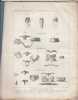
ANNALES DES SCIENCES NATURELLES - Atlas; tome 1 fevrier 1824
1824 Paris : Béchet jeune, 1824,in4 broché,couv. bleues imp.- 7 planches lithos en noir,traces de mouillure claires en coin de qques planches
Remise de 20% pour toutes commandes supérieures à 200 €
Dumas Alexandre Savant Jean Victor Savant-Aleina dit Jean
Reference : 300015940
(1967)
Alexandre Dumas. Crimes célèbres : Préface de Jean Savant
CERCLE DU BIBLIOPHILE 1967 373 pages 1967. 373 pages.