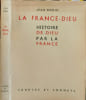
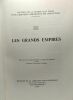
Presses Universitaires de France 1940 327 pages in12. 1940. broché. 327 pages.
Très bon état pages non coupées
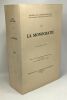
Éditions Rieder 1936 97 pages in12. 1936. broché couverture rempliée papier cristal. 97 pages.
Très bon état
1953 Bruxelles, Editions de la Librairie Encyclopédique, 1954, fort volume grand in 8° broché, 655 pages.
...................... Photos sur demande ..........................
Phone number : 04 77 32 63 69
1953 Bruxelles, Editions de la Librairie Encyclopédique, 1955, fort volume grand in 8° broché, 682 pages.
...................... Photos sur demande ..........................
Phone number : 04 77 32 63 69
1953 Bruxelles, Editions de la Librairie Encyclopédique, 1957, grand in 8° broché, 334 pages.
...................... Photos sur demande ..........................
Phone number : 04 77 32 63 69
1953 Bruxelles, Editions de la Librairie Encyclopédique, 1953, grand in 8° broché, 343 pages.
...................... Photos sur demande ..........................
Phone number : 04 77 32 63 69
1953 Bruxelles, Nouvelle Société d'Edition, 1938, grand in 8° broché, 335 pages ; non coupé.
...................... Photos sur demande ..........................
Phone number : 04 77 32 63 69
1953 Wetteren, Scaldis, 1949, grand in 8° broché, 299 pages ; non coupé.
...................... Photos sur demande ..........................
Phone number : 04 77 32 63 69
Éd. de la librairie encyclopédique bruxelles 1969 536 pages in-8. 1969. Broché. 536 pages.
Bon état léger usure couverture et tranche intérieur très bon
Éditions de la librairie encyclopédique 1962 545 pages in-8. 1962. Broché. 545 pages.
Très bon état couverture légèrement brunie intérieur en excellent état non coupé
Librairie encyclopédiques / Bruxelles 1962 in8. 1962. Broché.
Bon état de conservation intérieur propre pages non-coupées couverture défraîchie ternie quelques rousseurs
, Bruxelles, Librairie encyclopédique 1953/ 1954/ 1955/ 1957/ 1958/ 1958/ 1959, 7 vol. in-8, demi-vélin ivoire, tit. doré sur pc. de maroquin olive avec filets dorés encadrants, dos orné de dentelle dorée, rel. au chiffre «J.G.G.», couv. cons., t.V: portrait hors texte N&B de Alexandre Eck, t.XI: portrait hors texte N&B de André Gonthier (marques de bibl., t.V: léger impact sur la coupe sup., t.VII: rares soulignures au crayon, 1e plat légt insolé), très bon état général, 342/ 651/ 677/ 332/ 402/ 592/ 347.

Phone number : 01 43 29 46 77
Librairie encyclopédique 1973 in8. 1973. Broché.
Bon état couverture ternie intérieur propre
Librairie encyclopédique in8. Sans date. Broché. 2 volume(s).
Bon état tranche et couvertures ternies intérieurs propres
, Bruxelles, Éd. de la Libr. encyclopédique 1976, in-8, br., très bon état, 670p.
Phone number : 01 43 29 46 77
P., Table Ronde, 1953, in 8° broché, 255 pages ; qq. traits de crayon marginaux.
PHOTOS sur DEMANDE. ...................... Photos sur demande ..........................
Phone number : 04 77 32 63 69
PRESSES UNIVERSITAIRES DE FRANCE. 1970. In-8. Broché. Etat d'usage, Couv. convenable, Dos satisfaisant, Quelques rousseurs. 199 pages. . . . Classification Dewey : 70.49-Presse illustrée, magazines, revues
SOMMAIRE : Les espagnols devant leur regime de guy hermet- la grande bretagne s'eloigne t elle de l'europe de francoise de la serre- l'aviateur jules vedrines candidat a la deputation (1912-14) de jacques chouvy- notes de recherches Classification Dewey : 70.49-Presse illustrée, magazines, revues
2. Bruxelles, Editions de la Librairie Encyclopédique, 1966, in-8°, 395 pp, sewn, original wrapper. Volume XXVII de la série.
2. Bruxelles, Editions de la Librairie Encyclopédique, 1966, in-8°, 395 pp, sewn, original wrapper. Volume XXII de la série.
CRAHAY Roland - Marie Thérèse ISAAC - Marie Thérèse LENGER (Editors) - [ ] Jean BODIN :
Reference : 25056
Bruxelles, Académie Royale de Belgique, 1991, in-8°, XVIII+356 pp, numerous b/w facsimiles (plates), bibliography, index, sewn, orig. stiff wrapper, dustwrapper, text in French, fine copy.
CRAHAY Roland - Marie Thérèse ISAAC - Marie Thérèse LENGER (Editors) - [ ] Jean BODIN :
Reference : 55088
Bruxelles, Académie Royale de Belgique, 1991, in-8°, XVIII+356 pp, numerous b/w facsimiles (plates), bibliography, index, sewn, orig. stiff wrapper, dustwrapper, text in French, fine copy. Livre en français.
Paris, Jacques du Puys, 1582. In-4 de (12) ff., 256. Ex libris manuscrit sur le titre, cachet sur le titre, répété p. 66. Relié en vélin souple à recouvrement de l’époque, traces de liens, dos lisse avec le titre manuscrit, titre manuscrit sur la tranche supérieure. Reliure de l’époque. 225 x 177 mm.
Très rare seconde édition, avec un titre de relais, de cette œuvre célèbre de Jean Bodin qui a «eu une grande vogue dans le temps et a été traduite en latin dès 1581». Tchemerzine, I, 721; Obadia, Bibliographie française de la sorcellerie, n°843. A échappé à Caillet. « Édition non citée par les bibliographes» Dorbon, 387. L’ouvrage, paru pour la première fois en 1580, est dédié au président Christophe de Thou, père de l’historien et collectionneur Jacques-Auguste. Souvent réimprimé, traduit en latin dès 1581, il s’impose rapidement à l’époque comme un «bréviaire des juges dans les actions pour maléfice» (F. Renz, Jean Bodin, p. 73) et constitue aujourd’hui l’un des meilleurs documents sur les procès en sorcellerie du XVIe siècle. «Ouvrage plein de singularités et de bizarreries. Dans un chapitre il parle d’un personnage encore en vie, qui avait un démon familier comme Socrate, esprit qui se fit connaitre à ce personnage lorsqu’il avait 37 ans, et qui depuis dirigeait ses pas et ses actions: s’il faisait une bonne action, l’esprit lui tirait l’oreille droite, et l’oreille gauche s’il en commettait une mauvaise. On suppose que le personnage était Bodin lui-même». (Bulletin Morgand et Fatout, n°4635). «Je pense au rebours de Bodin» dit Montaigne (Essais, II, 32) et «En fin et en conscience, je leur (les sorciers) eusse plustot ordonné de l’ellebore que de la cicue» (Essais, III, 11). Montaigne appréciait la lucidité et la tolérance de Bodin en matière politique et fut, selon Villey, fortement influencé par l’auteur des ‘Six livres de la république’ quoiqu’il le désavouait dans sa croyance à la sorcellerie. Pour Bodin, les incroyables opérations des sorciers sont l’œuvre des démons. Chaque partie de la nature devient ainsi le lieu d’activité d’un démon. S’il existe ainsi une «association des esprits avec les hommes» (Bodin), alors les bizarreries du monde et la variété parfois extrême des esprits humains peuvent s’expliquer par un «art diabolique» créateur de «merveilles». Exemplaire d’une grande pureté conservé dans sa première reliure en vélin souple de l’époque à recouvrement. Provenance: ex libris Biblioth. Gasp. Fromensii Valent, 1625 sur le titre, un autre ex libris anciennement biffé. Cachet répété p. 66.
Paris, J. du Puys, 1580. 4to. Contemporary full vellum wih contemporary handwritten title to spine. Binding somewhat warped, but unrestored and tight. A (mostly very faint) damp stain to upper blak margin of some leaves (not affecting text), but otherwise internally very nice clean and fresh. Old owner's name to title-page (Dufault) and old acquisition note to front free end-paper. Woodcut title-vignette, woodcut headpieces, woodcut end-vignette, and a few woodcut initials. A large copy with good margins. (14), 252 (recte: 256) ff.
Scarce first edition of Bodin's seminal ""Demon-Mania"", the most important book on witchcraft of the era. The work profoundly influenced the position on witchcraft of the following half century and directly influenced the course of witch trials of this period. The work is furthermore of fundamental importance to the understanding of Bodin's tripartite world picture and constitutes an invaluable supplement to his ""Six livres de la république"".""Jean Bodin's ""On the Demon-Mania of Witches"" (De la démonomanie des sorciers) appeared in 1580 and rapidly became a major publishing success. It underwent at least twenty-three editions and was translated from its original French into German, Italian and Latin. It was surely the most published work of the era on the subject of demons and witches. Because of its wide distribution, it has been considered by generations of historians to have been an extremely influential book, responsible in itself for large-scale prosecutions of witches in the four or five decades following its appearance."" (Pearl, p. 9).The present first edition constitutes not only the original version of the work, but also the model for all French editions that followed (as well as the later translations) - as many as 11 between 1581 and 1616. Bodin edited an edition in 1587, which contained some additions"" that edition is considered very flawed, however, and no subsequent editions were based upon it. Jean Bodin (1529/30 - 1596), ""one of the towering figures in the history of French thought"" (Scott), was a lawyer, economist, natural philosopher, historian, and one of the major political theorists of the sixteenth century. His main work, the ""Six livres de la république"" is one of the most important works of modern political thought. Here Bodin gave the first systematic statement of sovereignty and coined the term ""political science"". With his theory of the State and statement of Sovereignty, he fundamentally changed the history of political thought in the West. The ""Six livres de la république"" is Bodin's most famous and frequently read work. Due to the seemingly ""supernatural"" contents of the ""Démonomanie"", scholars have had difficulties recognizing the Bodin of the ""Six livres"" in this work, which, within its domain, was just as influential. There has been, however, increasing recognition of the political contents of the ""Démonomanie"", and a tendency towards reconciliation of the great works by this towering figure of early modern French thought. First of all, the work is written with the same impressive thoroughness and style as Bodin's other works. Second, although based upon a concrete sorcery case, the ""Démonomanie"" is of the utmost importance to the understanding of Bodin's tripartite world picture and his attempts at maintaining a clear line of separation between the world of nature and the supernatural. His monumental conception of ""Theatrum Naturae"" is just as dominant as a thematical background in his ""Démonomanie"" as it is in his ""Six livres"" and there ought to be no doubt about the fact that the basic features of his system of thought are dominant in the present work, which due to its concrete matter of investigation is all the more interesting. In fact, the ""Démonomanie"" is now considered an invaluable source for the general thought of the great political thinker. With its two-fold turn of focus on social problems and questions of natural-philosophical and theological character, the ""Démonomanie"", in accordance with Bodin's scientific plan of life, marks the transition from ""human sciences"" to ""the science of natural and divine things"". ""Contrary to the judgment of the Enlightenment thinkers, this midway-position does not reduce its value in the Bodin corpus"" on the contrary: Precisely this work is suitable for clarifying and illustrating the unity of his works."" (Own translation from the German. Lange, p. 162). Concerning himself with witchcraft and demonology, it is in this work that we find an emphasized statement of Bodin's thoughts on women, on punishing and sentencing, and on the general threats of state and society. Having experienced severe criticism of his earlier works, Bodin's critics became more serious and dangerous with regard to his ""Démonimanie"". In his letter of dedication (December 20, 1579) to Christophle de Thou, the first president of the Parlement of Paris, Bodin explained his motives for writing the work. ""First, he hoped to denounce the mania, the spiritual errors, and distraction, as well as the ""fury"" that sorcerers possess as they ""chase after the devil."" He wrote this treaty with two purposes in mind: on the one hand, ""to use it as a warning to all who will see him [the devil],"" and on the other hand, ""to alert readers that there is no crime that could be more atrocious or deserve more serious punishment."" Bodin wished to speak out against those who ""try by all means to rescue the sorcerers through printed books."" He reminded all that ""Satan has men in his grasp who write, publish, and speak claiming that nothing that is said about sorcerers is true."" It was essential to provide the tools to magistrates and judges, who were confronted by the accused sorcerers, in order to face this formidable problem. The work was bold and perilous for its author. Many wondered if Bodin, so curious about this topic, such an expert, so convinced of the devil's existence, may not himself have been involved with witchcraft. These suspicions alarmed the authorities, and on June 3, 1587, the general prosecutor to the Parlement of Paris ordered the general lieutenant of the baillage of Laon to proceed with a search of Bodin's home, on suspicion of witchcraft. This inspection brought no results due to the intervention of eight prominent citizens and two priests who registered their support of Bodin."" (SEP).""The conclusions of the proceedings against a witch, to which I was summoned on the last day of April, 1578, gave me occasion to take up my pen in order to throw some light on the subject of witches, which seems marvelously strange to everyone and unbelievable to many... And because there were some who found the case strange and almost unbelievable, I decided to write this treatise which I have entitled ""The Demon-Mania of Witches"", on account of the madness which makes them chase after devils: to serve as a warning to all those who read it, in order to make it clearly known that there are no crimes which are nearly as vile as this one, or which deserve more serious penealties. Also partly to respond to those who in printed books try to save witches by every means, so that it seems Satan has inspired them and drawn them to his line in order to publish these fine books."" (Bodin's Preface).A feature which clearly distinguishes Bodin's theories on witchcraft from late medieval and early Renaissance demonology is his struggle against skepticism, and the gender strategies that he deploys in the present work to thwart Skeptics, constitute a central feature of his modern demonology - a demonology that came to be dominating for more than half a century. The ""Démonomanie"" is a work designed to update a vast corpus concerned with the identification and punishment of witches. It provides us quite clearly with Bodin's thoughts on divinity, punishment, practice of law, and not least on women - women in general and women in society. ""[W]omen generally serve as means to an end in Bodin's thought. The wife's natural inferiority to the husband provides an analogy for a nonreciprocal relation of command and obedience that he establishes between the sovereign and his subjects in ""De la république"". In ""De la démonomanie"", Bodin's portrayal of women as the possessors of unsavory secrets and his characterization of the confessions of witches as fragments of a grandly devilish design create the need for hermeneutical expertise - expertise that he claimed to have. In using women to ""think with"", the author of ""De la démonomanie"" had much in common with his opponent, the Lutharen physician Johann Weyer, who protested against the witch trials in ""De praestigiis daemonum"" (1563)."" (Wilkin p. 53).An important part of Bodin's defence of the existence of witchcraft lies in the latter part of the present work, namely the pages 218-252, which constitute the famous refutation of the opinions of Johann Weyer (""Refutation des opinions de Jean Wier""). In his ""De praestigiis daemonum"" from 1563, Weyer had argued that that which we call witchcraft are actually manifestations caused by mental illness of the women in question. It is interesting to see how much Bodin actually drew on Weyer, while at the same time attacking him on both scholarly and legal grounds. As the thorough and classically bred scholar that he was, he cited both classical, Arab, and Christian authorities on witchcraft against Weyer. He arrays the authority of all philosophers, prophets, theologians, lawgivers, jurists, rulers, etc. Ultimately, Bodin here became the first to challenge Weyer's denial of the right to judge and punish the mentally ill, making the work of foundational importance to the following development of legal theory specifically targeted on the punishment of insane men and women. ""As a major Renaissance scholar, Bodin based his work on an extensive and varied group of sources. He depended heavily on the Old Testament, classical and patristic authorities and a large number of medieval scholastic works. He was immersed in the late medieval legal and canon law traditions. He also cited a large number of recent and contemporary texts like the ""Malleus meleficarum"", as well as accounts told by friends and acquaintances. Interestingly, while Bodin condemned the work of Johann Weyer, he mined this book for anecdotes and accounts when they could be useful."" (Pearl).The refutation of Weyer shows Bodin as a formidable controversialist. The reason why the ""Démonomanie"" is published two years after the trial of Jeanne Harvillier, which is constitutes the concrete basis of the work, is that Bodin needed time to carefully prepare the most effective resonse to Weyer's works and attach it to his own. Bodin seeks total demolishment of his opponent - and, as time will tell, he succeeds. Despite some modern disciples, Weyer's position was largely traditional. His aim is not to deny the existence of Satan, nor of satanic practitioners, but rather to contend that those suspected of witchcraft are delusional and victims of mental illness. ""Weyer's characterization of women replicated the views of the ""Malleus Maleficarum"" (1487), or ""witches hammer"", one of the first and certainly the most influential manual for identifying and prosecuting witches... Weyer draws from the same sources as Kramer to argue that women cannot be held accountable for the crimes for which they stand accused and to which they often confess... Vying with the author of the ""Malleus"", weyer inscribes in etymology the correspondence between the soft female body and her persuasive mind... Weyer's portrayal of women diverges from that of Kramer only in his assessment of the witch's responsibility."" (Wilkin, pp. 13-14).""The essentially melancholic imagination of women, he argues, makes them incapable of the sense perception to which he assigned pride of place in the search for truth. The madness with which Weyer diagnosed witches thus masked the contradiction that vitiated his plea. Identifying the susceptibility to demonic illusion as a feminine trait was to compartmentalize it, to limit implicitly the damage that the Devil could inflict elsewhere - for instance, on the perception of learned physicians. Those who refuted ""De praestigiis daemonum"" rejected the hermeneutical advantage that Weyer claimed for himself. To the gender strategy by which he claimed his advantage, however, they did not object. Weyer's vociferous adversary, Jean Bodin, decried the physician's medical diagnosis of witches"" nevertheless, he called upon woman to embody his opposing hermeneutics. The phenomenon that Clark has felicitously termed ""thinking with demons"" was thus, I argue, inseparable from another thought process: ""Thinking with women""."" (Wilkin, pp. 9-10).The ""Démonomanie"" also constitutes a seminal exercise in jurisprudence, which came to set the standard for following decades. Bodin's aim was not only to make sure that witches were judged and punished, he also aimed at fair trial rules according to principles of law developed over centuries in the secular and ecclesiastical courts. Also in this way, the work differs profoundly from other works on demonology and witchcraft and shows us the author as a profound political and legal thinker, whose aim was to alter society for the better. Because this interesting work places itself amidst the divine and the earthly, between the supernatural and the natural, we find in it a wealth of themes that go beyond the actual witch trial with which Bodin begins his work. It is also for these reasons that the work provides us with an even more thorough knowledge of the foundational thoughts of the great legal and political thinker that is its author. See: Rebecca May Wilkin: Women, Imagination and the Search for Truth in Early Modern France, 2008.Jean Bodin: On the Demon-Mania of Witches. Translated by Randy A. Scott with an Introduction by Jonathan L. Pearl, 1995. Ursula Lange: Untersuchungen zu Bodins Demonomanie, 1970.
Lyon, Jacob Roussin, 1596. 8vo. Contemporary limp vellum. Title-page printed in red and black. A fine copy. (16), 633 pp.
The rare first edition of Bodin's great final work, his main contribution to the field of natural philosophy, ""The Theatre of Nature"", which was written in 1590, but published for the first time in the year of his death, 1596. In spite of the fact that the ""Theatrum"" has been somewhat neglected by modern scholars and has for instance never translated into English in 1997, it is in fact one of his most important works. It constitutes the most systematic exposition of Bodin's vision of the world and is the culmination point of his systematic examination of things, revealing to us the full extent of his entire philosophy.In this Bodin's magnum opus of natural history, a completely new type of natural philosophy is constructed, one which attempts to combine religion with philosophy. By combining philosophical research concerning causes with a pious recognition of divine providence and the greatness of God, Bodin constantly reminds us of the importance of reason and reasoning at the same time that he refers to the Holy Scripture. Jean Bodin (1529/30 - 1596), ""one of the towering figures in the history of French thought"" (Scott), was a lawyer, economist, natural philosopher, historian, and one of the major political theorists of the sixteenth century. His main work, the ""Six livres de la république"" is one of the most important works of modern political thought. Here Bodin gave the first systematic statement of sovereignty and coined the term ""political science"". With his theory of the State and statement of Sovereignty, he fundamentally changed the history of political thought in the West. The ""Six livres de la république"" is Bodin's most famous and frequently read work, and ever since the 18th century, it has completely overshadowed everything else that he wrote. In the 17th century, however, Bodin's ""Theatrum"" was considered very important to the understanding of Bodin's entire philosophical system, including the political. It is the only one of his works that attempts to actually do that which he ever since the beginning of his career set out to do: to methodologically study all things, human and divine.Bodin does this in a manner that made it universally understandable. ""While its erudition and philosophical originality suited it well to professors and scholars, Bodin's ""Theatrum"" was also designed to be pedagogical, with its question-and-answer format and its broad coverage of natural philosophy from first principles to metals and minerals, plants and animals, souls, angels, and the heavenly bodies."" (Ann Blair, The Theater of Nature: Jean Bodin and Renaissance Science, p. 17). Tchemerzine: II:250.