 Write to the booksellers
59 books for « invention »Edit
-
Century
16th (1)
18th (6)
19th (34)
20th (4)
-
Countries
Canada (1)
Denmark (42)
France (16)
-
Syndicate
ALAC (1)
CLAQ (1)
ILAB (46)
SLAM (3)
Topics
- Ampere andré - marie (2)
- Animals (1)
- Astronomy (1)
- Berry (1)
- Bridge (1)
- Chemistry (4)
- Communication (1)
- Drums (1)
- Earth (1)
- Electricity (1)
- First edition (4)
- Fox (1)
- Gallimard (2)
- Gas (1)
- Gold (1)
- Hackney (1)
- History (5)
- Inventions (1)
- Jazz (3)
- Lamp (1)
- Mathematics (1)
- Mitchell margaret (1)
- Newspaper (1)
- Newspapers press (1)
- pharmacy (1)
- Photography (4)
- Physics (14)
- Quebec (1)
- Review (5)
- Rock (4)
- Rock (4)
- Sciences (1)
- Surrealism (1)
- Tea (44)
- Technology (14)
- Telecommunications (1)
- Travel (1)
- Tuberculosis (1)
- Various (1)
"MAREY, (ETIENNE JULES). - THE INVENTION OF THE PHOTOGRAPHY OF MOTION, THE CINEMATOGRAPHE.
Reference : 48088
(1882)
Analyse du méchanisme de la locomotion au moyen d'une série d'images photographiques recueillies sur une même plaque et représentant les phases successives du mouvement (Séance 3 Juillet 1882). (+) Emploi de la photographie pour déterminer la tr...
Paris, Gauthier-Villars, 1882, 1888, 1892. 4to. No wrappers. 7 entire issues. In: ""Comptes Rendus Hebdomadaires des Séances de L'Academie des Sciences"", Tome 95, No 1, 6 a. 14. Tome 107, No 16, 17 a. 18, Tome 114, No 18. (7 entire issues offered). With halftitles and titlepages to Vol. 95, 107 a. 114. The papers: pp. 14-16 (No1), 267-270 (no 6), 583-585, 2 textillustr. (no 14) - pp. 607-609 (No 16), 643-645, 1 textillustr. (No 17), 677-678 (No 18) - pp. 989-990 (No. 18). Stamps on verso of titlepages.
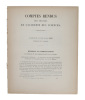
First printing of the main papers CONSTITUTING THE INVENTION OF MODERN CINEMATOGRAPHY -- from his invention of 1888 of the ""Chronophotograph"" followed the modern ""Cinematograph"" (first described here in the offered papers of 1888).It started with his invention of the chronographic apparatus with stationary plates and chronographic disk schutter... the paper of August 7, 1882, later in 1882 his description of the photographic gun, and in the 1892 paper ""Marey constructs, according to the reversible principle of the chronophotograph, an apparatus for the projection on a screen of series of pictures taken by the afore-mentioned apparatus and thus realizes the photographic synthesis of motion"" (Joseph Maria Eder ""History of Photography"", p.510).Marey (1830-1904) was a French physician, and his inventions sprang from his investigations in the physiology of the motion of men and animals.""In 1882, Marey, often claimed to be the 'inventor of cinema,' constructed a camera (or ""photographic gun"") that could take multiple (12) photographs per second of moving animals or humans - called chronophotography or serial photography, similar to Muybridge's work on taking multiple exposed images of running horses. [The term shooting a film was possibly derived from Marey's invention.] He was able to record multiple images of a subject's movement on the same camera plate, rather than the individual images Muybridge had produced. Marey's chronophotographs (multiple exposures on single glass plates and on strips of sensitized paper - celluloid film - that passed automatically through a camera of his own design) were revolutionary. He was soon able to achieve a frame rate of 30 images. Further experimentation was conducted by French-born Louis Aime Augustin Le Prince in 1888. Le Prince used long rolls of paper covered with photographic emulsion for a camera that he devised and patented. Two short fragments survive of his early motion picture film (one of which was titled Traffic Crossing Leeds Bridge).The work of Muybridge, Marey and Le Prince laid the groundwork for the development of motion picture cameras, projectors and transparent celluloid film - hence the development of cinema. American inventor George Eastman, who had first manufactured photographic dry plates in 1878, provided a more stable type of celluloid film with his concurrent developments in 1888 of sensitized paper roll photographic film (instead of glass plates) and a convenient ""Kodak"" small box camera (a still camera) that used the roll film. He improved upon the paper roll film with another invention in 1889 - perforated celluloid (synthetic plastic material coated with gelatin) roll-film with photographic emulsion."" (Tim Dirks ""The History of Film. The Pre-1920s"").

Brevet d'Invention pour quinze années pour un produit alimentaire de la Grutelline Mille au Cacao Caraque.
Brevet grand in folio de 4 pages, imprimé et servi à la main, avec timbre à sec, daté du 9 juillet 1861. La pharmacie de Guillaume Mille, était située au 60, rue Cour Sarlon à Bourges . On a joint une lettre autographe du pharmacien " Duplicata de la description originale de l'invention de la Grutelline Mille au Caco Caraque", daté de Bourges le 15 mai 1861, 1 page 1/2 , avec le timbre du ministère. 2 récépissés d' acquittement de la taxe sur les brevets d'invention du 28 juin 1862 et 15 juin 1863.
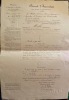
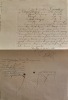
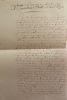
On joint une commande manuscrite de épicier Larible, domicilié à Véron près de Sens daté du 4 octobre 1865, Mille a indiqué " expédié le 7 novembre 1865". 1 page in-8°. L'ensemble du dossier est rangé dans l'enveloppe qui a servi d'envoi au pharmacien à l'entête des Brevets d'Invention et adressée à Monsieur Mille, rue Cour Sarlon, 60 à Bourges, Département du Cher. ( trace de cachet de cire rouge, enveloppe poussiéreuse,avec petites déchirures et manque de papier au rabat ). Cl Gr3

"ARAGO, FRANCOIS - LOUIS DAGUERRE. - THE INVENTION OF THE DAGUERREOTYPE.
Reference : 46845
(1839)
Fixation des images qui se forment au foyer d'une chambre obscure. (Seance du Lundi 7 Janvier 1839). (+) Le Daguerréotype. (Seance du Lundi 19 Aout 1839).
Paris, Bachelier, 1839. 4to. No wrappers. In: ""Comptes Rendus Hebdomadaires des Séances de L'Academie des Sciences"", Tome VIII (No.1)+ IX, (No. 8) Entire issues offered with htitles and titlepages to both volumes. Pp. 1-36 + Pp. 249-282 and 1 lithographed plate. The papers: pp. 4-7 and pp. 250-267. A faint stamp to top of titlepages. A few brownspots to titlepages.
First Edition of the official and complete report of the invention of the ""daguerreotype"", the photographic process invented by Louis Daguerre. Together with the preliminary report of the invention (OF JANUARY 7). The presentation by Arago preceeded Daguerre's own publication ""Historique de description des procédés du daguerreotype et du diorama"", (1839). ""When the attempt to exploit the process of daguerreotype was unsuccessfull, Daguerre and Nièpce decided to offer their method to the government. Daguerre approached Francois Jean Arago, to whom he imparted, under the seal of secrecy his processes and those of Nicéphore Niépce. It was fortunate that Arago possessed such a great insight into the invention, which he received enthusiastically. He reported the invention of the daguerretype to the Academy of Sciences on January 7, 1839. The secrecy, however, was not observed very carefully, for the ""Gazette de France"" published a note abouit it on January 6, 1839, although without printing any details.""(Eder ""History of Photography"").
Description d'un nouveau four électrique.
(Paris, Gauthier-Villars), 1892. 4to. No wrappers. In: ""Comptes Rendus Hebdomadaires des Séances de L'Academie des Sciences"", Tome 115, No 24. Pp. (1029-) 1112. (Entiere issue offered). Moissan's paper: pp. 1031-1033.nA few small tears to frontpage.
First printing of the paper in which Moissan described his famous invention of the Electric Furnace and hereby laying the foundations for high-temperature chemistry. For this invention and his isolation of flourine Moissan received the Nobel Prize in 1906.""Moissan had turned his attention to the production of artificial diamonds and in the process constructed his famous electric furnace, which, although simple in design, proved to be a technological tool of the first order. The original model, which he subsequently improved, was demonstrated to the Academy of Sciences in December 1892 (the paper offered). It consisted of two blocks of lime, one laid on the other, with a hollow space in the center for a crucible, and a longitudinal groove for two carbon electrodes which produced a high-temperature electric arc. In one experiment Moissan heated iron and carbonized sugar in his electric furnace, causing the carbon to dissolve in the molten iron..... Moissan’s electric furnace provided great impetus to the development of high-temperature chemistry. With this apparatus he prepared and studied refractory oxides, silicides, borides, and carbides" he succeeded in volatilizing many metals" and, by reducing metallic oxides with carbon, he obtained such metals as manganese, chromium, uranium, tungsten, vanadium, molybdenum, titanium, and zirconium. The electrochemical and metallurgical applications to industry of Moissan’s work became immediately apparent, for example in the large-scale production of acetylene from calcium carbide.""(DSB).Moissan received the Nobel prize in Chemistry in 1906 ""in recognition of the great services rendered by him in his investigation nd isolation of the element fluorine, and for the adoption in the service of science of the electric furnace called after him"".Parkinson ""Breakthroughs"" 1892 C.This issue also contains another notable paper by PIERRE CURIE in which he describes his invention of a quadrant electrometer that improved upon the one devised by Kelvin by adding an ingenious magnetic damper.
"BELL, ALEXANDRE (ALEXANDER) GRAHAM. - BELL, ALEXANDER GRAHAM. - ""THE GREATEST INVENTION I HAVE EVER MADE"": THE PHOTOPHONE.
Reference : 48149
(1880)
De la Production et de la Reproduction du Son par la Lumière. Mémoire lu à l'Association américaine pour l'avancement des Sciences, au Congrès de Boston, le 27 août 1880. (+) Les Récepteurs photophoniques de Sélénium. (Cette Note fait suite au M´wem...
Paris, G. Masson, 1880. 8vo. Contemp. hcalf, raised bands, gilt spine. Light wear along edges. Small stamps on verso of titlepage. In: ""Annales de Chimie et de Physique"", 5e Series, Tome 21. 576 pp. and 2 folded engraved plates. (Entire volume offered). Bell's paper: 399-430. With 11 fine textillustrations (showing the apparatus). Clean and fine.
First French version of ""On the Production and Reproduction of Sound by Light"" (the French version published in November and the English in October 1880) of this importent paper in which Bell describes his and Charles Sumner Tainter's, his assistent, invention of the Photophone or Radiophone, THE PROGENITOR OF MODERN FIBER OPTICS. This invention made possible the world's FIRST WIRELESS TELEPHONE MESSAGE, and the first call was sent from the Franklin Scool to the window of Bell's laboratory, some 213 meter away.Also with Breguet's importent paper on the Selenium used in the technology.""On June 3, 1880, Alexander Graham Bell transmitted the first wireless telephone message on his newly invented ""photophone."" Bell believed the photophone was his most important invention. The device allowed for the transmission of sound on a beam of light. Of the eighteen patents granted in Bell's name alone, and the twelve he shared with his collaborators, four were for the photophone. Bell's photophone worked by projecting voice through an instrument toward a mirror. Vibrations in the voice caused similar vibrations in the mirror. Bell directed sunlight into the mirror, which captured and projected the mirror's vibrations. The vibrations were transformed back into sound at the receiving end of the projection. The photophone functioned similarly to the telephone, except the photophone used light as a means of projecting the information, while the telephone relied on electricity."" (Mary Bellis).The first successful attempts were based upon the properties of selenium: ""The electric resistance of which varies with the degree of illumination to which it is exposed. Hence, given a transmitting instrument, such as a flexible mirror, by which the vibrations of a sound could throw into vibrations a beam of light, a receiver, consisting of sensitive selenium, forming part of an electric circuit with a battery and a telephone, should suffice to translate the varying intensities of light into corresponding varying intensities of electric current, and finally into vibrations of the telephone disk audible once more as sound."" (Prescott, George. Bell's Electric Speaking Telephone. 313 p.).
"BELL, ALEXANDER GRAHAM. - ""THE GREATEST INVENTION I HAVE EVER MADE"": THE PHOTOPHONE.
Reference : 46951
(1880)
On the Production and Reproduction of Sound by Light. (Read before the American Association for the Advancement of Science, in Boston, August 27, 1880).
(New Haven), 1880. 8vo. Modern plain wrappers. In: American Journal of Science"", Third series, Vol. XX, No. 118, October 1880. Frontispiece-plate. Pp. 257-352 (entire issue offered). Bell's paper: pp. 305-324 and 11 textillustrations. A small stamp to verso of plate and the first leaf.
First printing of this important paper in which Bell describes his and Charles Sumner Tainter's, his assistent, invention of the Photophone or Radiophone, THE PROGENITOR OF MODERN FIBER OPTICS. This invention made possible the world's FIRST WIRELESS TELEPHONE MESSAGE, and the first call was sent from the Franklin Scool to the window of Bell's laboratory, some 213 meter away.""On June 3, 1880, Alexander Graham Bell transmitted the first wireless telephone message on his newly invented ""photophone."" Bell believed the photophone was his most important invention. The device allowed for the transmission of sound on a beam of light. Of the eighteen patents granted in Bell's name alone, and the twelve he shared with his collaborators, four were for the photophone. Bell's photophone worked by projecting voice through an instrument toward a mirror. Vibrations in the voice caused similar vibrations in the mirror. Bell directed sunlight into the mirror, which captured and projected the mirror's vibrations. The vibrations were transformed back into sound at the receiving end of the projection. The photophone functioned similarly to the telephone, except the photophone used light as a means of projecting the information, while the telephone relied on electricity."" (Mary Bellis).The first successful attempts were based upon the properties of selenium: ""The electric resistance of which varies with the degree of illumination to which it is exposed. Hence, given a transmitting instrument, such as a flexible mirror, by which the vibrations of a sound could throw into vibrations a beam of light, a receiver, consisting of sensitive selenium, forming part of an electric circuit with a battery and a telephone, should suffice to translate the varying intensities of light into corresponding varying intensities of electric current, and finally into vibrations of the telephone disk audible once more as sound."" (Prescott, George. Bell's Electric Speaking Telephone. 313 p.).
( Revue Rock & Folk ) - Frank Zappa & The Mothers of Invention - Jimi Page - Led Zeppelin - Jefferson Airplane - James Brown - John Mayall - Joni Mitchell - Terry Riley - Velvet Underground - Robert Crumb - Marcel Gotlib.
Reference : 32660
(1519)
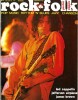
Mensuel Rock & Folk, numéro 66 de juillet 1972 complet du poster Rock & Folk Galerie n° 4 avec Frank Zappa & The Mothers of Invention + Jimi Page - Led Zeppelin - Jefferson Airplane - James Brown - John Mayall - Joni Mitchell - Terry Riley - Velvet Underground - Robert Crumb - Marcel Gotlib.
Revue Rock & Folk n° 66 de juillet 1972. In-4 agrafé de 90 pages, au format 27 x 21,5 cm. Couvertures photographiques avec Jimmy Page. Couvertures et intérieur frais. Complet du poster dépliant de Frank Zappa & The Mothers of Invention au format 40 x 27 cm. Le poster est solidaire de la couverture et plié sous cette dernière. Mensuel musical français consacré à la musique rock et pop, fondé en 1966 par Robert Baudelet, Jean Tronchot, Philippe Adler, Jean-Pierre Leloir et Philippe Koechlin. La revue connut la participation de nombreux photographes dont : Jean-Pierre Leloir, Claude Gassian, Pierre Terrasson, Gaëlle Ghesquière, Bruno Ducourant,Patrice Guino, Jean-Louis Rancurel, Dominique Tarlé, Bertrand Alary et Saddri Derradji. Nombreux articles sur le Rock, le blues, la soul, la pop dont : Jimi Page, Led Zeppelin, Jefferson Airplane, James Brown, John Mayall, Joni Mitchell, Terry Riley, Velvet Underground, Robert Crumb, etc. Nombreuses chroniques avec de très nombreuses photographies en noir et blanc. Planche de " Hamster Jovial " par Marcel Gotlib. Rare édition originale, en très bel état de fraicheur et surtout complète du poster.
Vente exclusivement par correspondance. Le libraire ne reçoit, exceptionnellement que sur rendez-vous. Il est préférable de téléphoner avant tout déplacement.Forfait de port pour un livre 10 € sauf si épaisseur supérieure à 3 cm ou valeur supérieure ou égale à 100 €, dans ce cas expédition obligatoire au tarif Colissimo en vigueur. A partir de 2 livres envoi en colissimo obligatoire. Port à la charge de l'acheteur pour le reste du monde.Les Chèques ne sont plus acceptés.Pour destinations extra-planétaire s'adresser à la NASA.Membre du Syndicat Lusitanien Amateurs Morues
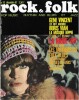
( Revue Rock & Folk ) - Boris Vian - Frank Zappa & The Mothers of Invention - Gene Vincent - Françoise Hardy - Soft Machine - Cabu.
Reference : 32584
Mensuel Rock & Folk, numéro 13 de décembre 1967 : Boris Vian - Frank Zappa & The Mothers of Invention - Gene Vincent - Françoise Hardy - Soft Machine.
Revue Rock & Folk n° 13 de décembre 1967. In-4 agrafé de 70 pages, au format 27 x 21,5 cm. Couvertures photographiques avec Ulla. Couvertures avec d'infimes frottis aux coins. Intérieur frais. Mensuel musical français consacré à la musique rock et pop, fondé en 1966 par Robert Baudelet, Jean Tronchot, Philippe Adler, Jean-Pierre Leloir et Philippe Koechlin. La revue connut la participation de nombreux photographes dont : Jean-Pierre Leloir, Claude Gassian, Pierre Terrasson, Gaëlle Ghesquière, Bruno Ducourant,Patrice Guino, Jean-Louis Rancurel, Dominique Tarlé, Bertrand Alary et Saddri Derradji. Nombreux articles sur le Rock, le blues, la soul, la pop dont : Boris Vian, Frank Zappa & The Mothers of Invention, Gene Vincent, Françoise Hardy, Soft Machine, etc. Nombreuses chroniques avec de très nombreuses photographies en noir et blanc. Dessins en noir de Cabu. Rarissime édition originale, en très bel état de fraicheur de ce mythique n° 13.
Vente exclusivement par correspondance. Le libraire ne reçoit, exceptionnellement que sur rendez-vous. Il est préférable de téléphoner avant tout déplacement.Forfait de port pour un livre 10 € sauf si épaisseur supérieure à 3 cm ou valeur supérieure ou égale à 100 €, dans ce cas expédition obligatoire au tarif Colissimo en vigueur. A partir de 2 livres envoi en colissimo obligatoire. Port à la charge de l'acheteur pour le reste du monde.Les Chèques ne sont plus acceptés.Pour destinations extra-planétaire s'adresser à la NASA.Membre du Syndicat Lusitanien Amateurs Morues
"SIEDENTOPF, H. und R. (RICHARD) ZSIGMONDY. - THE INVENTION OF THE ULTRAMICROSCOPE.
Reference : 44237
(1903)
Ueber Sichtbarmachung und Grössenbestimmung ultramikroskopischer Teilchen, mit besondrer Anwendung auf Goldrubingläser.
(Leipzig, Johann Ambrosius Barth, 1903). Without wrappers.. In ""Annalen der Physik. Vierte Folge. Bd. 10. No 1. (Entire issue offred). With halftitle to vol. 10. 224 pp. and 1 folded plate. Seidentopf & Zsigmondy's paper: pp. 1-39 a. textillustrations. The issue punched in inner margin after cords. 3 small stamps in the text.
First printing of the paper in which Zsigmondy describes his invention of the Ultramicroscope, by which is became possible to see the Brownian movements of molecules. His microscope is still of great importence in colloid studies, but in most fields where great magnification is required, it has been outdistanced by the electron microscope.""Zsigmondy was a figure of paramount importance on colloid chemistry during the first quarter of the twentieth century. His receipt of the Nobel Prize in 1925, for invention of the ultramicroscope and his work on colloids was the first time this fledgling science had been so honored. In 1926 work by J. B. Perrin and Theodor Svedberg that followed directly from Zsigmondy’s achievement was recognized by the Nobel Prizes in physics and in chemistry, respectively. No Nobel Prize since then has been awarded for work solely in colloid chemistry. (DSB).The offered issue contains another importent paper by MAX ABRAHAM ""Prinzipien der Dynamik des Elektrons. Pp. 105-179. In 1902 Abraham said ""It now becomes necessary to base the dynamics of the electrons from the outset on electromagnetic considerations"" In 1903 (the paper offered) he published his main detailed article on the rigid electron""(Pais in Subtle is the ord"" pp. 157 ff.""The ultramicroscope is form of microscope that reveals the presence of particles that cannot be seen with a normal optical microscope. Colloidal particles, smoke particles, etc., are suspended in a liquid or gas in a cell with a black background and illuminated by an intense cone of light that enters the cell from the side and has its apex in the field of view. The particles then produce diffraction-ring systems, appearing as bright specks on the dark background.
"LEGRAY, GUSTAVE. - THE INVENTION OF THE WAXED-PAPER PROCESS IN PHOTOGRAPHY.
Reference : 49595
(1851)
Note sur un nouveau mode de préparation du papier photographique négatif. (Séance du Lundi 8 December 1851).
(Paris, Bachelier), 1851. 4to. Without wrappers. In ""Comptes rendus hebdomadaires des séances de l’Académie des sciences"", Vol. 33, No 23. Pp. (631-) 648. (Entire issue offered). Legray's paper: pp. 643-644. Clean and fine.
First printing of a landmark paper in photography, introducing his invention of the waxed-paper process.""Gustave Legray brought photograpy on paper to its culmination in the 1850s with the waxed-paper process. A struggling young artist..., Legray abandoned painting for photography around 1848, and with the financial backing of the Comte de Briges opened a portrai studio on the top floor of the same house as the Bisson brothers, in the Madelaine district. His reputation, however, was made not in the field of portraiture but as an architectural and landscape photographer. He also taught photography and ""nearly all renowned photographers of the day have been his pupils"". Legray devoted a good deal of time to experiments and wrote a number of manuals. His invention of the waxed-paper proces dates to before 25 Febr. 1851, but the manipulation was not published until the following December (the paper offered)..... The wxed-paper process was far more than a modification of the calotype, as can be seen from the substances used in oidizing paper - rice water, sugar of milk, iodide of potassium, cyanide of potassium, fluoride of potassium (to which was later added white honey and the white of some egg). Sensitizing was done with an acid solution of nitrate of silver and development took place with gallic acid.... The process took its name from the fact that the paper was waxed before iodizing, instead of merely after exposure, to facilitate printing."" (Helmut E. R. K. Gernsheim).
On the fire-damp of coal mines, and on methods of lighting the mines so as to prevent its explosion. Read November 9, 1815. (And) An account of an invention for giving light in explosive mixtures of fire-damp in coal mines, by consuming the fire-damp....
(London, W. Bulmer and Co., 1816). 4to. 4to. No wrappers as extracted from ""Philosophical Transactions"" 1816 - Part I. Pp. 1-22 a. pp. 23-24 and 1 large folded engraved plate. showing details of the construction of the lamp. Clean and fine, wide-margined..
First description and the first announcement of the invention of the Mine Safety Lamp, the so-called ""Davy-Lamp"" together with his further remarks on the functioning of this lamp. The papers are miliestones of applied chemistry.""In 1815 he (Davy) invented the Davy lamp, in which an open flame is surrounded by a cylinder of metallic gauze. Oxygen can get through the gauze and feed the flame. The heat of the flame, however, is dissipated by the metal and explosive gases outside the lamp and not ignited. For the first time, miners were reasonably safe from explosion. In 1818 Davy was made a Baronet for his service to industry."" (Asimow).Dibner: Heralds of Science 181. - Partington IV: p. 36 a. 62-70.
On Voltaic Combinations. In a Letter addressed to Michael Faraday. Received January 26, - Read February 11, 1836. (+) Additional Observations on Voltaic Combinations. In a Letter to Michael Faraday. Received April 14, - Read April 21, 1836. (2 Papers).
London, Richard Taylor, 1836. 4to. No wrappers as extracted from ""Philosophical Transactions"" 1836 - Part I. Pp.107-124 and 1 engraved plate. + Pp. 125-129 and 1 engraved plate. Both plates with a dampstain in upper part, not reaching the image. With titlepage to Part I of theTransacti
First appearance of Daniell's first paper on the construction of the famous ""Daniell-Cell"", in which he announced his invention of the battery, THE FIRST RELIABLE SOURCE OF AN ELECTRIC CURRENT. In the new invention by Charles Wheatstone of the electric telegraph in 1837, the Daniell cell was used as the electric source.In 1831 Daniell was appointed profesor of Chemistry at King's College London. He invented several scientific instruments, including a hygrometer for measuring humidity he is best known for his work in electrochemistry, his interests having been aroused by the work of his good friend Faraday. Volta's battery had the defect of rapid diminution in current. What was needed, however, was a battery yielding a constant current over a considerable lenght of time. In 1836 Daniell succeeded, producing the Daniell cell, of copper and zinc. his was the first reliable source of electric current.Parkinson ""Breakthroughs"" 1836 P.
"AMICI, JEAN-BAPTISTE. - INVENTION OF THE ACROMATIC MICROSCOPE.
Reference : 48349
(1821)
Sur les Microscopes catadioptriques. (Traduit de l'italien).
Paris, Crochard, 1821. No wrappers. In: ""Annales de Chimie et de Physique, Par MM. Gay-Lussac et Arago."", tome 17, Cahier 4. With titlepage to tome 17. Pp. 337-414 a. 1 engraved folded plate. (Entire issue offered). Amici's paper: pp. 412-434 a. 1 folded engraved plate. Clean and fine, printed on good paper.
First French edition of Amici's famous paper ""Dei microscopii catadiottrici"" first published in Italian in 1818, in which he describes his invention of a new type of catadioptric microscope, the first with successfull achromatic lenses. The invention had a great impact on biology - Amici himself was able to see the streeming movements of protoplasm in the Alga Chara and in examining the hairs on the stigma of Purslane he saw a tube given off by the pollen grain, and the granular content os prerform streaming movementys like those in Chara, an importent feature in plant fertilization.
L'INVENTION COLLECTIVE. Avant-propos de Pierre Vilar.
Bruxelles. Didier Devillez, éditeur. Collection " Fac-Simile ". 1995. Grand in-8° broché. 14 [+ 50] pages. Très bon état. (Aron & Soucy, 556)
Réimpression en fac-simile des deux numéros de la revue de Raoul Ubac et René Magritte, parus en février et avril 1940. Textes et illustrations d'Achille Chavée, Marcel Lecomte, Louis Scutenaire, Marcel Mariën, Fernand Dumont, Pol Bury, Paul Delvaux, Armand Simon, Raoul Ubac, Pierre Mabille, André Breton, Irène Hamoir, Louis Van De Spiegele.
Décret impérial qui accorde plusieurs Brevets d'invention. Le 23 vendémaire an XIII (15 octobre 1804)
Paris, Imprimerie Impériale, s.d. in-8, 3 pp.
Le décret prend en considération la remise de 10 brevets les plus divers. - - VENTE PAR CORRESPONDANCE UNIQUEMENT - LIEN DE PAIEMENT, NOUS CONSULTER.
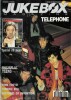
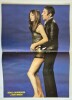
( Musique Rock ) - Serge Gainsbourg - Téléphone - Pink Floyd - Frank Zappa & The Mothers of Invention - Collectif.
Reference : 6813
L'Argus des Collectionneurs de Disques : JukeBox Magazine n° 48 de mai 1991. Spécial Serge Gainsbourg ( 20 pages ), complet du rare poster de Serge Gainsbourg et Jane Birkin.
Jacques Leblanc éditions / L'Argus des Collectionneurs de Disques - JukeBox Magazine n° 48 de mai 1991. In-4 agrafé de 80 pages au format 29,5 x 21 cm. Couverture avec photos de Serge Gainsbourg et du groupe Téléphone. Plats et intérieur frais, malgré un petit gribouillis de stylo sur le visage de Gainsbourg. Dossier de 20 pages sur Serge Gainsbourg suite à son décès, avec ses 20 disques majeurs, ses interprètes féminines, un entretien " confidentiel ", sa discographie, avec de nombreuses photographies en noir et en couleurs. Dossier sur Téléphone, Nashville Teeens, Pink Floyd, Freddie Bell, Frank Zappa & The Mothers of Invention, etc. Photos, argus des albums, critiques, chroniques. Edition originale en bel état général de ce magazine mensuel.
Vente exclusivement par correspondance. Le libraire ne reçoit, exceptionnellement que sur rendez-vous. Il est préférable de téléphoner avant tout déplacement.Forfait de port pour un livre 10 € sauf si épaisseur supérieure à 3 cm ou valeur supérieure ou égale à 100 €, dans ce cas expédition obligatoire au tarif Colissimo en vigueur. A partir de 2 livres envoi en colissimo obligatoire. Port à la charge de l'acheteur pour le reste du monde.Les Chèques ne sont plus acceptés.Pour destinations extra-planétaire s'adresser à la NASA.Membre du Syndicat Lusitanien Amateurs Morues
"SAY, HORACE. - THE INVENTION OF THE STEREOMETER (GAS PYCHNOMETER).
Reference : 44128
(1797)
Description d'un Instrument propre à measurer le volume des corps, sans les plonger dans aucun liquide.
(Paris, Chez Fuchs, Guillaume, An VI (1797)). Without wrappers. In: ""Annales de Chimie et de Physique, Par MM. Gay-Lussac et Arago."" , tome 23, Cahier 1. Pp. 1-112 (entire issue offered). Say's paper: pp. 1-27 a. 1 folded plate depicting the stereometer.
First appearance of Say's description of his invention of the Gas Pychnometer, which he himself called Stereometer. It is a simple apparatus for determining the density and volume of solids without water. - Darmstaedter 1797 Say.
Recherches sur divers Effets Lumineux qui résultent de l'Action de la Lumiere sur les Corps.(Ce Travail comprend les deux Mémoires présentés à l'Academie des Sciences le 16 novembre 1857 et le 24 Mai 1858). (Premiere-deuxieme Mémoire).
(Paris, Victor Masson et Fils, 1859). Without wrappers. In: ""Annales de Chimie et de Physique"", 3e Series - Tome 55, Cahier Janvier 1861. Pp. 5-128 a. 2 large folded engraved plates (emission-lines and the phosporoscope). The entire issue offered.
First appearance of Becquerel's first two pioneering studies on lluminiscent phenomena. ""It was in these studies that Becquerel first described the phosphoroscope, an instrument of his own invention consisting of a box sealed with two disks mounted on the same axis and pierced with holes arranged in such a way that light could not at any one time pass through the entire apparatus. By rapidly revolving these perforated disks, an observer could continously view substances in the dark only fractions of a second after they had been exposed to brilliant light"" and by regulating the speed of the revolution of the disks, one could measure the lenght of time that substances continued to glow after the exposure to light. Using this device, Becquerel was able to identify many new phosphorescent substances and to show that the phenomenon G.C. Stokes had named fluorescence in 1852 was in reality only phosphorescence of an extremely short duration....In this manner substances could be analyzed without physical or chemical alteration.""(DSB I, p. 556).Becquerel dis his most importent work in optics on the phenomena of luminescence. In the middle years of the nineteenth century, he virtually monopollized the significant discoveries made inthis field.(DSB).
"AMONTONS, (GUILLAUME). - THE INVENTION OF THE AIR PRESSURE THERMOMETER.
Reference : 44385
(1704)
Discours sur quelques proprietez de l'air, & le moyen d'en connoître la temperature dans tous les climats de la terre.
(Paris, Jean Boudot, 1704). 4to. Without wrappers. Extracted from ""Mémoires de l'Academie des Sciences. Année 1702"". Pp. 155-174 a. textillustrations.
First appearance of this paper in which Amontons describes his invention, construction and function of his air thermomer. He thus improves on Gallileo's design by using air pressure instead of volume. The paper is the earliest study in this field, and Amontions concludes ""that unequal masses of air under equal weights invcrease equally the force of their spring for equal degrees of heat"" Fifteen years later Gay-lussac performed the same experiments with better technique and results - the Gay-Lussac laws.The paper ""contains Amontons' account of the first thermometer with which temperature was measured by the pressure of air.""(Magie ""A Source book in Physics"", pp. 128 ff.).""His first scientific production was a Hygrometer in 1687....The other was an air thermometer independent of the atmospheric pressure. Air occupied the top of one of the branches of a U-shaped tube, and by its dilation it pushed down one of the mercury columns so that the other end ofthe branch formed a barometric chamber.""(DSB I, p. 138 a).Parkinson ""Breakthroughs"", 1702 M).
"LA HIRE, PHILIPPE DE. - THE INVENTION OF THE DOUBLE-ACTING WATERPUMP.
Reference : 44404
(1718)
Memoire pour la Construction d'une Pompe qui fournit continuellement de l'Eau dans le Reservoir. (+ de La Hire le Fils:) Description D'une Addition qu'il faut faire aux Croisées, pour empêcher, quoi-que fermées, que l'Eau de la Pluye n'entre dan...
(Paris, L'Imprimerie Royale, 1718). 4to. Without wrappers. Extracted from ""Mémoires de l'Academie des Sciences. Année 1716"". Pp. 322-325 and 1 folded engraved plate.+ pp. 326-328 and 1 folded engraved plate. The first plate depicts the double-pump.
First printing of Philippe De la Hire's invention and description of the double-acting water pump, which produces a continuous stream of water.Bryan Bunch 1717-Tools.
"LAGRANGE, (JOSEPH LOUIS). - THE INVENTION OF THE ""VARIATION OF PARAMETERS"" THE PRIZE WINNING MEMOIR OF 1782.
Reference : 44925
(1785)
Recherches sur la Theorie des Perturbations que les Comètes peuvent eprouver par L'Action des Planètes.
(Paris, Moutard, 1785). 4to. Extracted from ""Mémoires fe Mathematique et de Physique, Présentés à l'Academie des Sciences par divers Savans"", Tome X. Pp. 65-160. Wide-margined, clean and fine.
First appearance of this groundbreaking paper in which Lagrange presented his invention of the new method of solving differential equations as VARIATION OF PARAMETERS, and in which the method was completely developed for the first time. He applies the method to the determination of the orbit of a comet from three observations"" this formed the basis of subsequent recherches on the subject."" In the summer of 1779 Lagrange submitted ""Recherches sur la théorie des perturbations que les cométes peuvent éprouver par l’action des planétes"", which won the double prize of 4,000 livres. This was the last time that he participated in the competitions of the Paris Academy.""(DSB).""Lagrange, whose contributions to celestial mechanics were of the most brilliant characther, wrote his first memoir in 1766 on the perturbations of Jupiter and Saturn. In this work he developed still further the method of the variation of parameters, leaving his final equations still incorrect....their true form being that of the long period terms, as was shown by Laplace in 1784...The method of variatiobn of parameters was completely developed for the first time in 1782 by Lagrange in his prize memoir on the perturbations...(the paper offered).""
Description d'un Apparail électro-dynamique.
(Paris, Crochard, 1824). 8vo. Without wrappers. In 'Annales de Chimie et de Physique', Series 2 - Volume 26, Cahier 4. Pp. 337-448 (entire issue offered). With htitle to volume 26. Amperes' paper: pp. 390-411 and 2 folded engraved plates.
First appearence of the paper in which Ampere describes his invention of the SOLENOID, the electro-magnetic device he used in his early electrodynamical experiments.""A solenoid is a coil wound into a tightly packed helix. In physics, the term solenoid refers to a long, thin loop of wire, often wrapped around a metallic core, which produces a magnetic field when an electric current is passed through it. Solenoids are important because they can create controlled magnetic fields and can be used as electromagnets. The term solenoid refers specifically to a magnet designed to produce a uniform magnetic field in a volume of space (where some experiment might be carried out).""Poggendorff I, p. 29. - Ronalds, p. 10.
Le Bolomètre. Mémoire lu devant la Societe Mét´rorologique américaine, décembre 1880.
Paris, Imprimerie Gauthier-Villars, 1881. 8vo. Contemporary half calf, raised bands, gilt spine. Light wear along edges. Two small stamps on verso of title-page, and one on verso of the plates. In ""Annales de Chimie et de Physique"", Cinquiéme Series - Tome XXIV. 576 pp. + 2 folded plates. Langley's paper: pp. 275-284, textillustrations.
First French edition of the paper in which Langley describes the function of his invention of the bolometer for measurements of the cosmic microwave background radiation. A bolometer is a device for measuring the power of incident electromagnetic radiation via the heating of a material with a temperature-dependent electrical resistance.""Correctly recognizing the need for measurements of the energy of radiation as a function of wavelenght, Langley developed a new instrument ""the bolometer"" between 1879 and 1881 to do this......The superior measurements by means of the bolometer, the newly discovered extent of the solar spectrum, and the new results for selective absorption of the earth’s atmosphere were significant contributions to the study of the sun and its effects on the earth.""(DSB).Langley was awarded the Nobe l in physics in 1908.The volume conatins also Gabriel Lippmann (Nobel Prize 1908) ""Princiope de la Coservation de L'électricité"", pp. 145-178 and Crooke's famous paper (in French) ""Sur la viscosité des Gaz trés raréfies"", pp. 476-547 with 1 plate.
"DRUMMOND, THOMAS. - THE INVENTION OF LIMELIGHT, THE ""DRUMMOND LIGHT""
Reference : 46535
(1826)
On the means of facilitating the observation of distant stations in geodætical operations. Read May 4, 1826.
(London, W.Nicol, 1826). 4to. No wrappers as extracted from ""Philosophical Transactions"" 1826 - Part III. Pp. 324-337 and 1 engraved plate. A faint dampstain to top of plate.
First appearance of Drummond's paper in which he described his (and Goldsworthy Gurney's) invention and coined the word 'limelight'. His apparatus, demonstrated on the plate, was originally used for surveying as the title of the paper shows. Drummond claimed the light to be 83 times brighter than any previous artificial light.The Scottish engineer, Thomas Drummond (1797-1840), saw a demonstration of the effect by Michael Faraday and realized that the light would be useful for surveying. Drummond built a working version in 1826, and the device is sometimes called the Drummond Light after him. Limelight was first used in public in the Covent Garden Theatre in London in 1837 and enjoyed widespread use in theatres around the world in the 1860s and 1870s. Limelights were employed to highlight solo performers in the same manner as modern followspots (spotlights). Limelight was replaced by electric arc lighting in the late 19th century. (Wikipedia).""John Hersehel describes the impression produced when the light was first exhibited in the Tower: ""The common Argand burner and parabolic reflector of a British lighthouse were first exhibited, the room being darkened, and with considerable effect. Fresnel’s superb lamp was next disclosed, at whose superior effect the other seemed to dwindle, and showed in a manner quite subordinate. But when the gas began to play, the lime being brought now to its full ignition and the screen suddenly removed, a glare shone forth, overpowering, and as it were annihilating, both its predecessors, which appeared by its side, the one as a feeble gleam which it required attention to see, the other like a mere plate of heated metal. A shout of triumph and of admiration burst from all present.""’ (DNB).Parkinson ""Breakthroughs"", 1825 C
"NIEPCE DE SAINT-VICTOR, (CLAUDE FELIX ABEL). - THE INVENTION OF NIEPCEOTYPES OR ""GLASS PICTURES"".
Reference : 47222
(1847)
Sur des propriétés particulières de l'iode, du phosphore, de l'acide azotique, etc. (Dépose en deux parties a l'Institut, le 22 juin 1846 et le 11 janvier 1847.) (Extrait). (+) Annexe au Mémoire précédent, présenté à l'Academie le 25 octobre 1847....
(Paris, Bachelier), 1847. 4to. No wrappers. In ""Comptes rendus hebdomadaires des séances de l’Académie des sciences"", Vol. 25, No 17. Pp. (561-) 608. (Entire issue offered). Niepce de Saint-Victor's paper: pp. 579-589.
First appearance of this milestone paper in the histroy of photography in which Niepce de Saint-Victor describes his invention of photography on glass or ""glass negatives"".""Early in 1847 Niepce de Saint-Victor experienced with the use of starch paste on his glass plates as a binding substratum for the iodide coating, but he soon found that albumen was preferable"" he also tried gelatine, but laid it aside because it came off in the aceto-silver nitrate bath. By a mixture of honey, syrup, or whey with the albumen, he oncreased, later the sensivity. He published his process on October 25, 1847, in the Comp. rend. (the paper offered), and soon had many followers. He also made many modifications (Annexe to the memoir)."" (Eder ""History of Photography"", Dover Publ., pp. 338 ff.).

