 Write to the booksellers
7 books for « i van t spijker »Edit
-
Language
Dutch (2)
French (5)
-
Century
20th (1)
21st (2)
-
Topics
Anthropology (1)
Calvin jean (1)
Helvética (1)
History (2)
Language (1)
Liturgy (1)
Philosophy (1)
Sociology (1)
Theology (2)
Western (1)
Zurich (1)
-
Countries
Belgium (4)
France (2)
Switzerland (1)
-
Syndicate
CLAM (2)
ILAB (2)
Cheza Maurice Van't Spijker Gérard Collectif
Reference : 519930
(2007)
ISBN : 2845868863
Théologiens et théologiennes dans l'Afrique d'aujourd'hui
Karthala 2007 271 pages 14x21x2cm. 2007. Broché. 271 pages.
Bon état coins légerement usés couverture et dos bons intérieur bon
Johannes Calvijn zijn leven, zijn werk
Kampen 2008 Uitgeverij Kok Hardcover
Relié, 29 x 22 cm, 415 pages, Néerlandais, Illustrations, état : Très Bon [Cette description peut avoir été traduite par une IA.]

Homo Interior and Vita Socialis. Patristic Patterns and Twelfth-Century Reflections
, Brepols, 2022 Paperback, 209 pages, Size:156 x 234 mm, Language: English. ISBN 9782503601182.
Summary Just as apparently universal ideas of inwardness are different over time, so the idea of the self in relation to others is subject to historical change and dependent on different contexts. Against a shared background of late antique and early medieval Christianity the thinkers who are the subject of this book develop their thoughts of a relational self within their wider concerns. Augustine is the thinker of interiority, but also of the social life. For Augustine, the opacity of others, even of oneself, and how to overcome it, is a main concern. Cassian writes about the ideal of solitude, yet neither the abbas who are the subject of his Conversations, nor his readers can avoid the company of others. For Cassian, human fellowship is instrumental in reaching the desired virtues of detachment, which then enables love for others. Gregory the Great searches for the right balance of the contemplative and the active life, but even the contemplative is not a separate individual. Gregory's instruction of the leaders of the Church emphasises the need to widen in compassion, against the constant danger for the preachers of hypocrisy and the swollenness of pride and arrogance. These three authors were among the most influential sources in later ages. Their echoes resonated in the twelfth century, when a renewed interest in interiority raises the question how the twelfth-century 'inner man' relates to others. Hugh of Saint-Victor, Abelard, and Heloise, are among the writers in whose thoughts we see patristic thought reflected and changed in various ways. TABLE OF CONTENTS Introduction Chapter One. Detained in human society: Augustine Chapter Two. The Use of Humana Consortia: Cassian Chapter Three. The Common Condition: Gregory the Great Chapter Four: Patristic Reflections in the Twelfth Century
Als door een speciaal stempel , traditie en vernieuwing in heiligenlevens uit Noordwest-Frankrijk ( 1050 - 1150 )
1990 Hilversum Soft cover
Langue: néerlandais. Comme par un tampon spécial, tradition et renouveau dans les vies de saints du Nord-Ouest de la France (1050 - 1150) Broché, 240 x 160 mm, 190 pages, en bon état [Cette description peut avoir été traduite par une IA.]
Fictions of the Inner Life. Religious Literature and Formation of the Self in the Eleventh and Twelfth Centuries,
Turnhout, Brepols, 2004 Hardback, X+264 p., 160 x 240 mm. ISBN 9782503515144.
Interiorization and a trend towards a consideration of the nature of personal experience have long been recognized as important elements in the changing landscape of the religious culture of the eleventh and twelfth centuries. The homo interior is at the centre of the religious writings of that time, and the 'inner man' is a pivotal concept for making sense of the literature of religious formation. Monastic writers try to provide their readers with a 'script' to enact in themselves, in order to form their inner self, as the way to ascend to the knowledge of God. Interiority, however, is not a straightforward aspect of human existence with an unchanging meaning. The notion as it is used by medieval monastic authors gives expression to a specific understanding of what a human being was thought to be, quite different from later self-perceptions. Because of this difference, when they write 'histories of the self' historians and philosophers often pass over the Middle Ages. On the other hand, in histories of mysticism the twelfth century is often read through the lens of later mysticism. This book explores the notion of interiority via four influential authors of the eleventh and twelfth centuries, and the way in which notions about interiority function in their pedagogy. The concepts governing how the homo interior is fashioned are developed within age-old monastic and theological traditions. Medieval ideas about man as imago Dei, monastic reading culture and biblical exegesis are only a few of the elements of these traditions. The choice of authors has been guided by the wish to encompass and highlight various aspects of the eleventh- and twelfth-century notions of 'inner life': monastic and eremitical tradition in Peter Damian, theological-anthropological concepts in Hugh of Saint-Victor, the importance of exegetical procedures in Richard of Saint-Victor, and the role of experience in William of Saint-Thierry. These authors illustrate what was then conceptually possible when it came to thinking about the inner life. Their notions of the inner self are an intriguing part of a continuing history of conceptions of the self and of how it may be fashioned. Languages : English.
Befragte Gemeinde. Das christliche Leben in der katholischen Pfarrgemeinde Rapperswil.Eine Untersuchung im Dienste der pastoralen Verkündigung.
Rapperswil, Katholisches Pfarramt 1970, 225x155mm, 528Seiten, broschiert. Schönes Exemplar.
Pour un paiement via PayPal, veuillez nous en faire la demande et nous vous enverrons une facture PayPal
Anthropologie et missiologie (XIXe-XXe siècles) - Entre connivence et rivalité - Actes du colloque conjoint du CREDIC et de l'AFOM
Karthala, 2004, in-8 br. (16 x 24), 467 p., coll. "Mémoire d'Eglises", état de neuf.
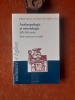
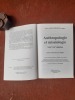
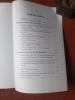
Peuples et cultures se sont toujours rencontrés, plus ou moins bien. De cette rencontres réfléchie, aux XIXe et XXe siècles, naissent deux disciplines : la missiologie chrétienne et l'anthropologie culturelle. Pour des raisons différentes, missionnaires et anthropologues veulent comprendre les cultures des autres et apparaissent comme ayant un grand nombre de buts et de méthodes communs -connivence- mais sans toujours s'en rendre compte ou vouloir le reconnaître-rivalité. La richesse de l'ouvrage ici présenté, fruit d'un colloque du CREDIC et de l'AFOM à Doorn aux Pays-Bas, vient de ce que la problématique générale est illustrée par une longue série d'exemples historiques traités par des représentants de tous les champs scientifiques concernés : anthropologues, missiologues, philosophes, historiens. Voir le sommaire sur photos jointes

