Write to the booksellers
24 books for « hornemann j w »Edit
-
Century
18th (4)
19th (19)
-
Countries
Denmark (19)
France (5)
-
Syndicate
ILAB (21)
SLAM (2)
Topics
- Autographs (1)
- Biology (1)
- Botany (9)
- Colonies (1)
- Egypt (2)
- First edition (1)
- Geographical maps (1)
- Geography pc (1)
- Geology (1)
- Germanic languages (1)
- Jacob (1)
- Maps (1)
- Medicine (1)
- North africa (2)
- Philology (1)
- Philosophy (1)
- Pyramids (1)
- Religions (1)
- Ruins (1)
- Sahara (1)
- Topography (2)
- Travel (2)
Forsøg til en dansk oeconomisk Plantelære.
Kiøbenhavn, Popp, 1796. 8vo. In contemporary half calf with gilt lettering to spine. Binding with light wear. A nice and clean copy. (6), 730 pp.
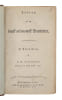
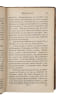
Rare first edition of Hornemann’s pioneering treatise on Danish economic botany - the earliest systematic attempt to classify native Danish plants based on their practical use in agriculture, horticulture, and industry. Issued as the result of a prize essay competition held by the newly founded Naturhistorieselskab (Natural History Society), the work marked a turning point in the practical application of botanical knowledge in Denmark. Jens Wilken Hornemann (1770–1841) later became one of Denmark’s most influential botanists. Trained under Martin Vahl at the University of Copenhagen and the Naturhistorieselskab he was appointed lecturer at the Botanical Garden in 1801, and succeeded Vahl as editor of Flora Danica in 1804. Hornemann's Plantelære remained the principal Danish handbook of economic botany until Johan Lange’s mid-century publications. As such, it played a foundational role in the systematization and dissemination of applied botanical knowledge in Denmark during the Enlightenment and early 19th century.

Forsøg til en dansk oeconomisk Plantelære. - [PIONEERING TREATISE ON DANISH ECONOMIC BOTANY]
Kiøbenhavn, Popp, 1796. 8vo. In contemporary half calf with gilt lettering to spine. Light wear to extremities. Internally with light occassional browning, but generally a good copy. (6), 730 pp.
![Forsøg til en dansk oeconomisk Plantelære. - [PIONEERING TREATISE ON DANISH ECONOMIC BOTANY]. HORNEMANN, J.W.](https://static.livre-rare-book.com/pictures/LLX/62486_1_thumb.jpg)
![Forsøg til en dansk oeconomisk Plantelære. - [PIONEERING TREATISE ON DANISH ECONOMIC BOTANY]. HORNEMANN, J.W.](https://static.livre-rare-book.com/pictures/LLX/62486_2_thumb.jpg)
![Forsøg til en dansk oeconomisk Plantelære. - [PIONEERING TREATISE ON DANISH ECONOMIC BOTANY]. HORNEMANN, J.W.](https://static.livre-rare-book.com/pictures/LLX/62486_3_thumb.jpg)
Rare first edition of Hornemann’s pioneering treatise on Danish economic botany - the earliest systematic attempt to classify native Danish plants based on their practical use in agriculture, horticulture, and industry. Issued as the result of a prize essay competition held by the newly founded Naturhistorieselskab (Natural History Society), the work marked a turning point in the practical application of botanical knowledge in Denmark. Jens Wilken Hornemann (1770–1841) later became one of Denmark’s most influential botanists. Trained under Martin Vahl at the University of Copenhagen and the Naturhistorieselskab he was appointed lecturer at the Botanical Garden in 1801, and succeeded Vahl as editor of Flora Danica in 1804. Hornemann's Plantelære remained the principal Danish handbook of economic botany until Johan Lange’s mid-century publications. As such, it played a foundational role in the systematization and dissemination of applied botanical knowledge in Denmark during the Enlightenment and early 19th century.
Forsøg til en dansk oeconomisk Plantelære. 2 vols.
Kjøbenhavn, 1821 & 1837. 8vo. Two volumes, uncut unopened, uniformly bound in contemporary (original?) marbled boards with paper title-labels to spines. Spines split. Internally with occassional brownpostting. XII, 1042 pp. (4), 990 pp. + 2 engraved plates. .
Third expanded edition of Hornemann’s pioneering treatise on Danish economic botany—the earliest systematic attempt to classify native Danish plants based on their practical use in agriculture, horticulture, and industry. Issued as the result of a prize essay competition held by the newly founded Naturhistorieselskab (Natural History Society), the work marked a turning point in the practical application of botanical knowledge in Denmark. Jens Wilken Hornemann (1770–1841) later became one of Denmark’s most influential botanists. Trained under Martin Vahl at the University of Copenhagen and the Naturhistorieselskab he was appointed lecturer at the Botanical Garden in 1801, and succeeded Vahl as editor of Flora Danica in 1804. Hornemann's Plantelære remained the principal Danish handbook of economic botany until Johan Lange’s mid-century publications. As such, it played a foundational role in the systematization and dissemination of applied botanical knowledge in Denmark during the Enlightenment and early 19th century.
Enumeratio plantarum horti botanici Hafniensis.
(Copenhagen, Schultz, 1807) 8vo. Bound in a nice full mottled calf binding with gilt ornamentation to boarders of boards. Binding with a few scratches and wear to spine. Internally fine and clean. Printed on good paper. Without title-page (as issued). 44, (2) pp.

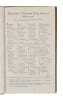
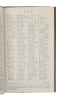
Rare second edition of Hornemann’s catalogue of the Copenhagen Botanical Garden. The work lists and classifies the Garden’s living plant collection according to the Linnaean system and served as a foundational teaching work in early 19th-century Danish botanical education. Jens Wilken Hornemann (1770–1841) later became one of Denmark’s most influential botanists. Trained under Martin Vahl at the University of Copenhagen and the Naturhistorieselskab he was appointed lecturer at the Botanical Garden in 1801, and succeeded Vahl as editor of Flora Danica in 1804.
Supplementum Horti Botanici Hafniensis in usum tyronum et botanophilorum.
Hafniae, 1819. 8vo. in contemporary half calf. All edges coloured in blue. Light wear to extremities. Stamp to title-page. Internally nice and clean. 172 pp.
Hornemann’s catalogue of the Copenhagen Botanical Garden intended for students and amateur botanists. The work lists and classifies the Garden’s living plant collection according to the Linnaean system and served as a foundational teaching work in early 19th-century Danish botanical education. Jens Wilken Hornemann (1770–1841) later became one of Denmark’s most influential botanists. Trained under Martin Vahl at the University of Copenhagen and the Naturhistorieselskab he was appointed lecturer at the Botanical Garden in 1801, and succeeded Vahl as editor of Flora Danica in 1804.Biblioteca Danica II, 198.
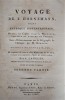
Voyage dans l'Afrique septentrionale, depuis le Caire jusqu'à Mourzouk
Dentu | Paris 1803 | 12.50 x 20 cm | 2 tomes en un volume relié
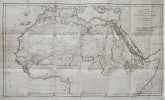
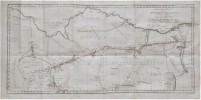
Edition originale de la traduction de Langlès depuis l'Allemand, accompagnée de 2 grandes cartes dépliantes sur papier fort. Langlès est également responsable des diverses notes et du mémoire sur les oasis, composé d'après les auteurs arabes. Une autre édition française parue en 1802 et fut faite d'après la traduction anglaise, fautive. Introduction par William Young, président de la Société Africaine de Londres. Plusieurs mémoires viennent enrichir l'édition : Eclaicissements sur la géographie de l'Afrique par Rennel. Mémoire sur les oasis. Observations sur la langue de Syouah. Notice sur la langue berbère (Conjugaison, grammaire, vocabulaire). Reliure en demi veau vert d'époque. Dos lisse orné. Titre doré. Fente au mors inférieur en tête sur 3 cm. Pertes de papier marbré sur le plat inférieur. Bon exemplaire, bien frais. Hornemann se mit au service de la Société Africaine de Londres avec pour mission de parachever la découverte de l'Afrique du nord par l'Egypte. Après avoir appris l'Arabe, il se rendit au Caire et rencontra le Général Bonaparte qui lui facilita son entrée en Afrique du nord. Se faisant passer pour un marchand mahométan, il joignit une caravane en 1798,ce qui lui permit d'atteindre les oasis de Siwa, Aujilla et Mourzouq. il y vécut jusqu'en juin 1799, puis il rejoignit Tripoli d'où il expédia le récit de ses aventures à Londres.Le consul britannique à Tripoli fut amené à penser qu'en juin 1803, Hornemann était à Caina (Katsina), dans le Nord duNigeria, en bonne santé et vénéré commemarabout. Un rapport dira plus tard (en 1819) que l'explorateur s'était rendu parmi le peupleNupe, où il était mort. - Photographies et détails sur www.Edition-Originale.com -

De Indole Plantarum Guineensium Observationes.
Hauniæ (Copenhagen), Schultz, 1819. 4to. In recent half vellum. Stamp to title-page, otherwise a nice and clean copy. 27 pp.
The rare first edition of Hornemann's work on the plants of Guinea.
Efterladte Philosophiske Skrifter.
Kiøbenhavn, Johan Frederik Schultz, 1795. 8vo. Indbundet i et samtidigt havlæderbind med rygforgyldning. Titeletiket bortslid. Ryg og permer og kanter af permer noget slidte. Exlibris og navnetræk på forsats. Tidligere navnetræk på forsats bortklippet. Særdeles ren indvendig. Trykt på skrivepapir. (8), XXXII, 542, (2) pp.
Den yderst sjældne originaludgave. Hornemann var ivrig Kantianer og introducerede med sine forelæsninger Kants filosofi i Danmark.
Tagebuch seiner Reise von Cairo nach Murzuck der Haupstadt des Königreichs Fessan in Afrika in den Jahren 1797 und 1798. Aus der Teutschen Handschrift desselben herausgegeben von Carl König. Mit 2 Charten.
Weimar, Landes=Industrie=Comptoirs, 1802. Unbound, but stitched. (1),VII,XXX,240 pp. and 1 (of 2) large folded engraved map ""Friedrich Hornemann's Reise von Aegypten nach Fezzan mit den anliegende Küsten undGegenden. Verfasst von J. Rennell, 1802."" (30x62 cm.), handcoloured in outline.
First edition. (Bibliothek der neuesten und wichtigsten Reisebeschreibungen...hrsg. von M.C. Sprengel, 7. Bd.: 1..Theil). Also having the Series-title, this with a stamp.
Bemærkninger angaaende Forskielligheden af Vegetationen i de danske Provindser.
(Copenhagen), 1821. 4to. Bound uncut in recent marbled covered boards. Extracted from ""Vis. Sel. phys. Skr. I Deel. I Hæfte"". A nice and clcean copy. (3), 156-208 pp.
Forsøg til en dansk oeconomisk Plantelære. 1.-2. Deel (1. Del i 3. oplag - 2. Del i 1. oplag).
København, 1821 - 1837. 8vo. I to samtidige halvlæderbind. Rygge med slitage. False på bind 2 gået op. Indvendig en smule bruplettet. XII,1042(4),990 pp. + 2 kobberstukne plancher.

Voyage dans l'Afrique septentrionale, depuis Le Caire jusqu'à Mourzouk, capitale du royaume de Fezzan ; suivi d'Eclaircissemens sur la Géographie de l'Afrique, par M. RENNELL. Traduit de l'anglais par … et augmenté de notes et d'un Mémoire sur les Oasis, composé principalement d'après les auteurs arabes par L. LANGLÈS.
Paris, Dentu, An XI (1803). 2 parties (pagination continue) en un vol. in-8, basane fauve marbrée, dos lisse orné, p. de titre rouge, tr. rouges (reliure de l'époque). Reliure restaurée, illustré de 2 grandes cartes dépliantes.
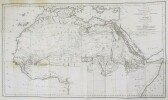
Friedrich Konrad Hornemann (1772-1801), séjourna en Egypte de 1797 à 1800 où il rencontra Napoléon. Connaissant bien la langue et les mœurs arabes, il partit du Caire, en 1798, avec une caravane de trafiquants en compagnie de J. Fremdenburgh. Ils gagnèrent l'oasis de Jupiter-Ammon dont ils ne purent visiter les ruines, puis Schiacha, Aoudjila, Temissa, Mourzouk. Son journal de voyage fut publié après sa mort en 1802, à Londres.
Haandbog ved botaniske Excursioner i Egnen om Sorøe. Indbydelsesskrift...Sorøe Akademie...2 parts.
Copenhagen, 1834 - 1835. 4to. In recent half calf with gilt lettering to spine. Previous owner's name to front free end-paper. Some miscolouring to upper margin on first title-page, otherwise a fine copy. (4),182,(2) pp.

Tagebuch seiner Reise von Cairo nach Murzuk, der Hauptstadt des Königreichs Fessan in Afrika, in den Jahren 1797 und 1798. Aus der teutschen Handschrift desselben herausgegeben von Carl König
Weimar, Landes-Industrie-Comptoir, 1802 1802 Petit in-8, demi-basane à coins marbrée, dos lisse, filets dorés, XXX- 240 pp. 2 cartes repliées. Mors fendillés en tête, coins sup. un peu usés, petits accrocs de cuir. Bon exemplaire.
Edition originale. Bon état d’occasion
Egenhændigt brev med underskrift til ""Kjære Vaage"".
Dateret kbh. 14/11 - 02. 1side, 8vo.
Har gennemgået en trio og finder den frisk. Christian Frederik Emil Horneman (17. december 1840 – 8. juni 1906), en dansk komponist, dirigent, musikforlægger, organisator og lærer.
Cités Ouvrières en Danemark.
Copenhague, Oettinger, 1876. 4to. Orig. clothbacked printed boards. Stamps on title-page. A paperlabel pasted on upper part of spine. 41 pp., textillustrations.
Aarhus Amt. Beskrevet efter de til det Kongelige Landhuusholdningsselskab indkomne Beretninger og egne Iagttagelser.
Kbhvn., 1827. Ubeskåret i smukt nyere hldrbd. i brun oaseged (Axel Jensen). (6),64 pp. + 15 foldetabeller.
Aarhuus Amt. Beskrevet, efter de til det Kongelige Landhuusholdningsselskab indkomne Beretninger og egne Iagttagelser.
Kjøbenhavn, Schultz, 1827. Samt. hldrbd. med rygforgyldning. Stempel på fællestitelbladet.(8),64 pp. samt 15 store foldede statistiske tabeller.
Originaludgaven. (Bidrag til Kundskab om de danske Provindsers nærværende Tilstand i oeconomisk Henseende, Tredie Stykke).
Om Fucus Buccinalis Lin.
(Kiøbenhavn, Hartvi. Frid. Popp, 1828) 4to. Uden omslag. I: ""Videnskabernes Selskabs Skrifter"" Titelblad., pp. 379-390 samt 1 kobberstukket håndkoloreret planche. (49x30 cm).
Specimen exercitationum criticarum in versionem LXX. interpretum ex Philone. (+) Observationes ad illustrationem Doctrinae de Canone veteris Testamenti ex Philone... Dissertatio quam pro Stipendio Collegii Medicei Claudio Frees Horneman... . defendit ...
Göttingen, Io. Chr. Dieterich, 1773. - Hauniae, Höpffner, 1775. - Hauniae, Höpffner, 1778. Bound in one contemp. full calf. Richly gilt spine, raised bands, titlelabel with gilt lettering.Gilt borders on covers. First hinge weakening. (4),118 pp. + (4),238,(8),70 pp. + (2),76,(10) pp. Internally clean and fine.
Originaltrykkene af Hornemans betydningsfulde studier over Philo (Philon) og det GamleTtestamente. Det første værk blev til under hans tre-årige studium i Göttingen under Walch, Heyne og Michaelis og fortsattes efter hans hjemkomst (de to andre værker).
Om Aarsagerne til Sprogenes Forandringer. Paa ny udgivet af Vilh. Thomsen.
Kjøbenhavn, Gyldendalske Boghandels Forlag (F. Hegel & Søn), 1886. 8vo. Indbundet i et samtidigt halvshirtbind med håndskrevet titeletiket på forpermen. Første og sidste blad brunet ellers ren og pæn indvendig. Med Nicolai Bøghs exlibris på det påklæbede forsatsblad. 32 pp.
Anden udgave (først udkommet i 1821) af Bredsdorffs vigtige afhandling om sprogenes forandring.
Begyndelsesgrunde af Geognosien.
Kbhvn., 1827. Orig.hollanderet bind. Ubeskåret. Frisk eksemplar. (8),342 pp. samt 3 stukne foldeplancher. - Første danske lærebog i mineralogi/geologi.
GEDANKEN UND VORSCHLÄGE ZU EINER PARALLELGRAMMATIK DER FÜNF SCHULSPRACHEN (Deutsch, Lateinisch, Griechisch, Französisch, Englisch)
Carl Meyer (Gustav Prior), Hannover-List, Berlin. 1888. In-8. Broché. Etat d'usage, Couv. légèrement passée, Dos abîmé, Intérieur acceptable. 71 pages. Etiquette de code sur la couverture. Quelques tampons de bibliothèque.. . . . Classification Dewey : 430-Langues germaniques. Allemand
'Schriften des Deutschen Einheitsschulvereins', Drittes Heft. Classification Dewey : 430-Langues germaniques. Allemand
Voyage dans l'Afrique septentrionale, depuis Le Caire jusqu'à Mourzouk, capitale du royaume de Fezzan. Suivi d'éclaircissements sur la géographie de l'Afrique, par M. Rennell. Traduit de l'anglais [...]. Et augmenté de notes et d'un mémoire sur les oasis, composé principalement, d'après les auteurs arabes, par L. Langlès [...].
Paris, Dentu, an XI ( 1803). 2 vol. in-8° (210x130mm); 2 h.-t. (texte n.c., rouss. sur la 1re carte, 2 prem. ff. du t. II en partie déreliés). Brochés (pet. us.). Illustré de 2 grandes cartes dépliantes (route suivie d'Égypte au Fezzan et progrès des découvertes en Afrique du Nord). . Non rogné. XLVIII-236pp.-1ff . ; 2ff.-237-476pp. Pour le compte de la Société africaine de Londres, Hornemann (1772-1801) explora une partie du nord-est africain, il atteignit Mourzouk, capitale du royaume de Fezzan (dans l'actuel sud-ouest de la Libye) en rejoignant, déguisé en marchand mahométan, une caravane qui partait du Caire. Il y resta jusqu'en 1799 avant de partir vivre à Tripoli. Il repartit ensuite en Afrique et voyagea dans le Nigeria. Il aurait apparemment été vénéré comme marabout à Katsina Travel account in North Africa until Murzuk (in southwest Libya) illustrated with 2 folding maps. Sewed (foxing on 1st pl.). (REF: P2-6B)