 Write to the booksellers
9 books for « hilaire perez liliane »Edit
L'expérience de la mer. Les Européens et les espaces maritimes au XVIIIe siècle.
Seli Arslan, 1996, gr. in-8°, 384 pp, préface de Daniel Roche, 4 pl. de gravures, chronologie, notes bibliographiques, biblio, index, broché, couv. illustrée, qqs soulignures crayon, bon état
Un temps, la civilisation européenne a puisé son énergie, ses idées, voire son fonctionnement dans son rapport à la mer : elle s'est appuyée sur les groupes qui vivaient de la mer (pêche, piraterie, commerce) et sur la liberté dont ils jouissaient. Elle a ainsi remis en cause le contrôle de l'économie par l'État, la subordination des riches « travailleurs » aux privilégiés oisifs. Ainsi, au XVIlle siècle, naît le libéralisme économique et se déploie une réflexion sur la liberté politique. Pour Liliane Hilaire-Pérez, la cause essentielle de cette mutation réside dans l'échange. D'abord, le marchand a fait de la mer un instrument de déstabilisation des anciennes structures économiques. Ensuite, les monopoles des grandes compagnies ont été dévoyés. Ils ont pourtant permis un regroupement des énergies avant d'être détournés par un monde interlope. Enfin, la microsociété des gens de mer a innové des formes de sociabilité inédites. Trois moments, trois espaces, trois lieux de remise en cause de l'Ancien Régime. Trois portes ouvrant sur la modernité. Outre son apport au débat historique, ce livre nous propose un cadre pour comprendre nos réactions face à l'aventure qui détermine le devenir de nos sociétés : l'aventure spatiale. N'y voit-on pas le rôle essentiel des entreprises, lq mise en cause des monopoles d'Etat et la recherche de ressources lointaines ? Pour qui lira cet ouvrage, la mer et le ciel prendront la même teinte. Désormais les frais d'envoi sont de 6 € seulement pour les livres jusqu'à 1 kg (colissimo suivi), pour la France métropolitaine.
Le livre de poche de Salomon Hyman
Albin Michel (3/2026)
LIVRE A L’ETAT DE NEUF. EXPEDIE SOUS 3 JOURS OUVRES. NUMERO DE SUIVI COMMUNIQUE AVANT ENVOI, EMBALLAGE RENFORCE. EAN:9782226502742
L'expérience De La Mer , Les Européens et Les Espaces Maritimes Au XVIIIe Siècle
Paris Seli Arslan 1997 In-8 384 pp
Bon Broché à raba
L'expérience de la mer. Les Européens et les espaces maritimes au XVIIIe siècle. Préface de Daniel Roche. Deuxième tirage.
1997 Paris, Seli Arslan, 1997, in 8° broché, 384 pages ; quelques illustrations hors-texte ; couverture illustrée en couleurs.
Fermeture du 1er au 23 Août


Phone number : 04 77 32 63 69
L'expérience De La Mer : Les Européens et Les Espaces Maritimes Au XVIIIe Siècle
Seli Arslan 15 x 22 Paris 1997 Préface de Daniel Roche. Collection "Histoire, cultures et sociétés". Broché, 384 p., chronologie détaillée, bibliographie et index. Exemplaire à l'état neuf.(C40) Livre 2842760468
HILAIRE-PEREZ Liliane - MASSOUNIE Dominique - SERNA Virginie (textes réunis par)
Reference : QWA-19272
Archives, objets et images des constructions de l'eau du Moyen Age à l'ère industrielle
ENS Editions, 2002, in-8 br. (14,5 x 20,5), 392 p., "Cahiers d'histoire et de philosophie des sciences, 51", illustrations photos, dessins, très bon état.
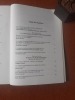
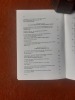
Les constructions de l'eau, équipements, édifices et machines, appartiennent taux temps longs de la technique et aux milieux hybrides, naturels et artificiels. Qu'elle soit matière, énergie ou espace, l'eau a mobilisé des compétences techniques multiples pour résoudre des contraintes et tirer profit de ressources. En vallée, les moulins, pêcheries et ponts, les écluses, biefs et barrages, et les techniques liées, inscrivent dans le paysage les marques concrètes des enjeux économiques et des conflits d'autorité. Installations modestes et travaux d'envergure attestent de temporalités techniques diverses, croisées, qui prennent leur sens au gré des besoins, des usages et des ambitions. Il en va de même dans les ports, des grèves aménagées aux chantiers d'urbanisme, des simples plages aux cales, où les pontons, quais et digues soutiennent les échanges. Dans la ville, la fontaine fait évènement. Les dispositifs de capture, stockage, distribution et évacuation des eaux rythment la vie des citadins, manifestent les ambitions des édiles et révèlent une mosaïque de cultures techniques. Ces thèmes font l'objet de recherches menées depuis plusieurs années, dans des cadres institutionnels variés, à partir de problématiques diverses. Ils fournissent l'occasion privilégiée d'interroger les savoir-faire et les matériaux de l'histoire des techniques, discipline qui affirme sa spécificité par l'intensité des collaborations entre historiens, archéologues, archivistes, muséologues et acteurs du patrimoine. Ce volume, fruit de journées d'études, confronte un très large éventail de sources et de méthodes et reflète le dynamisme de la communauté des chercheurs en histoire des techniques. Voir le sommaire sur photos jointes.
L'expérience de la mer. Les Européens et les espaces maritimes au XVIIIe siècle
Editions Seli Arslan, 1997, in-8 br., 384 p., 1ère édition, préface de Daniel Roche, coll. "Histoire, cultures et société", 4 plache h.-t., très bon état.


Voir le sommaire sur photos jointes.
Global History of Techniques. (Nineteenth to Twenty-First Centuries)
, Brepols, 2024 Hardback, 781 pages, Size:178 x 254 mm, Illustrations:37 b/w, Language: English. ISBN 9782503591513.
Summary It is impossible to understand societies without looking at their technological underpinnings. Technology constitutes the very fabric of societies' political, economic, cultural, and everyday realities. Building on recent historiography, this book offers the first overview of the global history of contemporary technology. Gathering more than fifty specialists of the history of technology, the collection of essays presents an overview of technological evolutions on a global scale. The book challenges both teleological approaches on progress and eurocentric perspectives. It explores the complex socio-economic implications of ?techniques' (and not simply technology) as well as the systems of representation and power structures that led to the emergence of today's world. The purpose of the collected essays is to offer a new history of technology. In this perspective, a central question concerns the very category of the history of technology, i.e. the term ?technology' itself. Refusing both the limitations of ?technology' and of ?useful knowledge', the book stresses the necessity to study technology as embodying human activity as a whole. In that sense, history of technology, envisioned as techniques rather than purely technologies, is intrinsically linked to anthropology and ethnology. This book is divided into three sections. The first section opens with a world tour of techniques, restoring the complexity of regional historiographies and of the meanings given to technological activities in different societies. The second part focuses on sectors of activity, processes, and products with a strong emphasis on means of production and communication, the exploitation of natural resources, major technological systems, infrastructures and networks. The final section provides access to major cross-related issues. It pays particular attention to the role played by technology/techniques in the process of globalization, particularly through colonization, imperialism, and the development of large technological systems. TABLE OF CONTENTS Global History of Techniques, Globalization of the History of Techniques, by Guillaume Carnino, Liliane Hilaire-P rez, J r me Lamy Part 1: Techniques Across the World Introduction, by Liliane Hilaire-P rez From the ?Stone Age' to the Digital Era: Techniques in Oceania, a Brief Historiography (19th-21st centuries), by Marie Durand The Middle East in the 19th and 20th centuries: At the Crossroads of Technological Continuity and Sudden Western Modernity, by Elisabeth Mortier Integration Process of Science and Technology, between Dependence and the Desire to Innovate: the Case of Maghreb, by Yamina Bettahar Technology and Modernisation in East Asia: What Dragons Can Teach us about Global History, by Francesca Bray, Alexandra Kobiljski Framing the History of Technology in India: From the Colonial Era to the Digital Age, by Dhruv Raina, Om Prasad, Nayani Sarma African Technological Pasts since 1800, by Joshua Grace Central European Historical Writing on Technology, from 1945 to the Present Day: Institutional Contexts and Directions of Research, by Jawad Daheur Unpacking ?Eurocentric' Technology Discourses ?Back Home': Technology and Societal Challenges in Western Europe, by Erik van der Vleuten The Russian Empire, the Soviet Union and Post-socialist Russia, 19th century-early 21st century, by Elena Kochetkova, Julia Obertreis Technology in North America: Nation Building, Industrialization, and Technoscience, by J r me Baudry Latin America in the Global History of Technology, by David Pretel Part 2: Artefacts, Processes, Sectors Introduction, by Guillaume Carnino Technology and its Temporalities, a Global Perspective, by Jonas van der Straeten, Heike Waltraud Weber Mining and Extractive Industries: Prospecting, Extracting, And Post-mining Techniques in the Anthropocene Era, by Kevin Troch Heavy Industries, from Steel and Molecules to the Cloud, by Florence Hachez-Leroy Energy in the History of Technology, by Mahdi Khelfaoui, Ana l Marrec Aeronautics and Aerospace: Globalization and Technical Junctions, by J r me Lamy, Arnaud Saint-Martin Mobility Techniques: Objects and Supports of Transfers, by Arnaud Passalacqua Sailing and Fishing: when Technical Innovation Reshaped the Seas, by G raldine Barron, Julia Lajus Water Harnessed by Industry: Hydraulic Technology in the Nineteenth and Twentieth Centuries, by Rapha l Morera, Elisabeth Mortier Food Technology: Food Preservation, Packaging and Transport, by Ludovic Laloux Four Examples of Transformations of Agricultural Techniques from the 19th to the Beginning of the 21st century, by Fabien Knittel Electrifying Information: Global Telecommunication Technologies 19th-21st centuries, by Vincent Kuitenbrouwer From Calculators to Datacenters: History of Industrial Computing and Quantification, by Guillaume Carnino From Banking Computerization to Fintech: The Digital Revolution in Banking (1950s-1990s), by Sabine Effosse, Laure Quennouelle-Corre Two Centuries of Technical Progress in Civil Engineering and Construction: A Few Lines of Strength, by Dominique Barjot The Factory of Desire: Textiles and Techniques (19th-21st centuries), by Audrey Millet Part 3: Cross-cutting Issues Introduction, by J r me Lamy Technology as a Human Science, by Liliane Hilaire-P rez Laboratory Techniques, by Joris Mercelis Big Science and Technological Transformations, by Olof Hallonsten Technique and Law, by Alessandro Nuvolari, Caterina Sganga Training and Technological Education, by St phane Lembr Prometheus Unbound: War and Technology from 1800 to Globalisation, by Patrice Bret Taylorism, by Patrick Fridenson Conflicts and Controversies over Techniques, by Fran ois Jarrige Body Techniques and the Search for Human Perfection: From the Regeneration of the Social Body to the Injunction to Surpass Oneself, by Cecilia Calheiros Thinking the Co-constitution of Gender and Technology from a Feminist Perspective, by Virginie Julliard Technologies of Art and Culture: Film and Sound, by Martine Beugnet, Mathieu Duplay A Short and Reflexive History of Everyday Life Technologies, Late 18th-21st Centuries, by Gil Bartholeyns, Manuel Charpy Technology, Pollution, and Environment, by Soraya Boudia, Nathalie Jas Repair, Recycling and Waste, by Thierry Bonnot, Michel Lett
Techniques et religions. Cultures techniques, croyances, circulations de l'Antiquit nos jours
, Brepols, 2026 Hardback, Pages: 364, Size:156 x 234 mm, Illustrations:29 b/w, 4 col., 5 tables b/w., 1 maps color, Languages: French, English. ISBN 9782503593586.
Summary Ce livre collectif a pour but de faire une place sp cifique la r flexion sur les relations entre technique et religion. Il entend favoriser une conceptualisation inclusive des rapports entre technique et religion, ainsi qu'une attention aux volutions et aux circulations l'oeuvre dans le temps et dans l'espace. Deux axes sont privil gi s. Les interf rences entre technique et religion appartiennent d'une part, l'histoire de la pens e, des dogmes et de leurs interpr tations. C'est par exemple le mouvement de s cularisation des religions et de d sacralisation de la nature, associ aux monoth ismes. Ainsi, au XIXe si cle, le culte du progr s et de l'industrie trace la voie d'une eschatologie la cis e que certains penseurs au XXe si cle ont pu amplifier par leurs espoirs en l'av nement d'une soci t du travail mancipateur. Ces approches sont actuellement travers es par plusieurs questionnements. Ceci justifie un deuxi me volet : les interf rences entre technique et religion dans les mondes de la pratique (rites, magie, c r monies, artisanat conventuel, etc.). Alors que l'univers religieux est souvent consid r la lumi re de la seule spiritualit , bien des tudes rel vent la spiritualit des techniques et l'importance des objets, des gestes, des techniques et m me, de leur codification dans l'exercice religieux. Ces rapports passent aussi par des images et des spectacles. Le th me est vaste et interroge galement les rapports des communaut s religieuses la technique, ainsi que le r le de passeurs, tels les j suites en Asie et en Am rique du Sud, et de bien d'autres interm diaires moins visibles, que l'on commence identifier. TABLE OF CONTENTS Guillaume Carnino, Liliane Hilaire-P rez, S bastien Pautet, Avant-propos Michael Lambek, Les techniques l mentaires de la vie religieuse ACTES TECHNIQUES, ACTES RELIGIEUX Jean-Fran ois Bert, L'origine rituelle des techniques (agraires). Le point de vue de l'anthropologie fran aise durant la premi re moiti du xxe si cle Pierre Lemonnier, Compresser des objets, enfermer des hommes, faire cran: trois modalit s physiques de r alisation de l'impossible chez les Baruya de Papouasie-Nouvelle-Guin e Constantin Canavas, "Arabic alchemy: Circulation Paths between Theology, Mysticism, and Technical Practice" Mariana S nchez-Daza, Techniques de distillation au monast re de El Escorial: la pharmacie hi ronymite au temps de Philippe II Wu Kuo-Sheng, "How did the First French Jesuit Missionaries Introduce European Pharmaceutical Technology and Medicines into Chinese Imperial Court in the Late Seventeenth century ? Discussions on Fr re Joachim Bouvet's Report to Louis XIV" Mo Wang, "The Representative Significance of Lamaism in Tibetan Architecture. Taking Temple Architecture as an Example". Jean-Michel Mathoni re, Le Grand Architecte ou la g om trie l'origine des techniques Laura Tatoueix, Les interdits spirituels concernant le corps des femmes enceintes la fin de l' poque moderne: Avortement th rapeutique et c sarienne ante-mortem en question RELIGION ET CULTURE MAT RIELLE Timothy Stoneman, "The Presences of God: Reflections on Technical Activity and Material Culture in Latin Christendom, 600-1600" Eukene Bilbao Zubiri, Les proc d s techniques dans la caract risation des images votives en Grande Gr ce (VIIe-Ve si cles av. J.-C.)? Madalina Vartejanu-Joubert, "Kosher Technology for Kosher Artifacts :Talmudic Concepts Commanding the Making of the skhakh and the lulav" Sophie Lagabrielle, L' glise et le verre (Ve-XIIIe si cles). Du d veloppement d'une mystique la stimulation d'une technique (v. 1100 - v. 1260) Emese B lint, "How the Hutterites Put Together a Creed and an Industry in the Post-Reformation Period" Denis ve, Le proc d indirect et les abbayes cisterciennes sud-champenoises et franc-comtoises l' poque moderne Antonina Kizlova, "Personnel of the Power Plant of Kyiv Dormition Caves Lavra in the Face of War (1914-1921)" LA RELIGION TECHNICIENNE St phane Guy, Eschatologie de la R volution industrielle : science et foi chez les socialistes r formateurs britanniques la fin du XIXe si cle Etienne Faugier, Automobilisme et religion au Qu bec, 1890-1960 : ambivalence de la technique Alexandre Moatti, Julian Huxley (1887-1975), proph te d'une religion sans r v lation David Doat & Franck Damour, "What Does Transhumanism Teach Us About the Contemporary Repositioning of the Religion - Technology Boundary?" Florence Jamet-Pinkiewicz, Animismes num riques. La magie au secours de la foi en la technique Yulia Razmetaeva, "Technological Neutrality and Religious Polarization in the Digital Age"

