 Write to the booksellers
8 books for « hermann struck »Edit
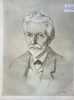
Lithography by Hermann Struck, Portrait of August Bebel, 1909, Jewish artist
Hermann Struck. Portrait of August Bebel, 1909. Paper, lithograph. Size: 43.2x58.3 cm plus margins. Hermann Struck (1876 1944) was a German Jewish artist known for his etchings. Hermann Struck (Chaim Aaron ben David) was born in Berlin. He studied at the Berlin Academy of Fine Arts. In 1904, he joined the modern art movement known as the Berlin Secession. In 1900, Struck met Jozef Israels, a Dutch artist, who became his mentor. Both were recognized as leading artists of their time. In 1908, Struck published Die Kunst des Radierens (The Art of Etching), which became a seminal work on the subject. It was a textbook that offered both theory and practical instruction. Struck's students included Marc Chagall, Lovis Corinth, Jacob Steinhardt, Lesser Ury and Max Liebermann. In 1899, upon completing his studies at the Berlin Academy, he was banned from teaching there because he was Jewish. He signed his work with his Hebrew name, Chaim Aaron ben David, and a Star of David. Struck did commission portraits of Ibsen, Nietzsche, Freud, Albert Einstein, Herzl, Oscar Wilde and other leading figures of the time. Struck's home in Haifa has been open as the Hermann Struck Museum since 2013. Struck's work is held in the collections of several other institutions worldwide. (Brooklyn Museum, Jewish Museum (Manhattan), Haifa Museum of Art, Leo Baeck Institute, New York, University of Michigan Museum of Art, the British Museum, the Museum of New Zealand Te Papa Tongarewa, Fine Arts Museums of San Francisco), You are welcome to reach out to us for a detailed description of the copies currently available. Delivery of this book may take longer than usual including extended processing and pre-shipping time, no expedited shipping is available. Please advise us if you have a set date or a deadline to receive your order.SKUKAZ000001
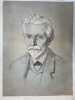
Lithography by Hermann Struck, Portrait of August Bebel, 1909, Jewish artist
Hermann Struck. Portrait of August Bebel, 1909. Paper, lithograph. Size: 43.2x58.3 cm plus margins. Hermann Struck (1876 1944) was a German Jewish artist known for his etchings. Hermann Struck (Chaim Aaron ben David) was born in Berlin. He studied at the Berlin Academy of Fine Arts. In 1904, he joined the modern art movement known as the Berlin Secession. In 1900, Struck met Jozef Israels, a Dutch artist, who became his mentor. Both were recognized as leading artists of their time. In 1908, Struck published Die Kunst des Radierens (The Art of Etching), which became a seminal work on the subject. It was a textbook that offered both theory and practical instruction. Struck's students included Marc Chagall, Lovis Corinth, Jacob Steinhardt, Lesser Ury and Max Liebermann. In 1899, upon completing his studies at the Berlin Academy, he was banned from teaching there because he was Jewish. He signed his work with his Hebrew name, Chaim Aaron ben David, and a Star of David. Struck did commission portraits of Ibsen, Nietzsche, Freud, Albert Einstein, Herzl, Oscar Wilde and other leading figures of the time. Struck's home in Haifa has been open as the Hermann Struck Museum since 2013. Struck's work is held in the collections of several other institutions worldwide. (Brooklyn Museum, Jewish Museum (Manhattan), Haifa Museum of Art, Leo Baeck Institute, New York, University of Michigan Museum of Art, the British Museum, the Museum of New Zealand Te Papa Tongarewa, Fine Arts Museums of San Francisco), You are welcome to reach out to us for a detailed description of the copies currently available. Delivery of this book may take longer than usual including extended processing and pre-shipping time, no expedited shipping is available. Please advise us if you have a set date or a deadline to receive your order.SKUKAZ000002
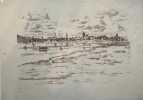
Lithography by Hermann Struck, View of Kovno, 1916, Jewish artist
Hermann Struck. View of Kovno, 1916. Paper, lithography. Size: 39.5x27.5 cm. Hermann Struck (1876 1944) was a German Jewish artist known for his etchings. Hermann Struck (Chaim Aaron ben David) was born in Berlin. He studied at the Berlin Academy of Fine Arts. In 1904, he joined the modern art movement known as the Berlin Secession. In 1900, Struck met Jozef Israels, a Dutch artist, who became his mentor. Both were recognized as leading artists of their time. In 1908, Struck published Die Kunst des Radierens (The Art of Etching), which became a seminal work on the subject. It was a textbook that offered both theory and practical instruction. Struck's students included Marc Chagall, Lovis Corinth, Jacob Steinhardt, Lesser Ury and Max Liebermann. In 1899, upon completing his studies at the Berlin Academy, he was banned from teaching there because he was Jewish. He signed his work with his Hebrew name, Chaim Aaron ben David, and a Star of David. Struck did commission portraits of Ibsen, Nietzsche, Freud, Albert Einstein, Herzl, Oscar Wilde and other leading figures of the time. Struck's home in Haifa has been open as the Hermann Struck Museum since 2013. Struck's work is held in the collections of several other institutions worldwide. (Brooklyn Museum, Jewish Museum (Manhattan), Haifa Museum of Art, Leo Baeck Institute, New York, University of Michigan Museum of Art, the British Museum, the Museum of New Zealand Te Papa Tongarewa, Fine Arts Museums of San Francisco), You are welcome to reach out to us for a detailed description of the copies currently available. Delivery of this book may take longer than usual including extended processing and pre-shipping time, no expedited shipping is available. Please advise us if you have a set date or a deadline to receive your order.SKUKAZ000012
STAADT Heinrich - Hofbuchhandlung Wiesbaden - Julius Baum - Ernst Oppler - Franz Werfel - Hermann Struck - Emil Orlik - Arthur Schnitzler - Max Brod - [...] ( Einträger ) :
Reference : 43500
Gästebuch der Hofbuchhandlung Heinrich Staadt Wiesbaden. 1921 - 1928 .
" Wiesbaden, Hofbuchhandlung Heinrich Staadt, 1921 - 1928, in-4° Album, 31 x 25 cm, ca. 400 unpaginated pages, bound in full red morocco with gilt ruling and title on the front cover, five raised bands and gilt title on the spine, marbled endpapers, top edge gilt. ( Signed binding H. Fikentscher Leipzig 1920). Binding with minor traces of use, some edges of the uncut leaves a bit browned but the album is in a fine state of preservation. Interesting guestbook of the bookdealer company Hofbuchhandlung Heinrich Staadt Wiesbaden which contains the signatures, the contributions, the original drawings of many postwar artists and literary figures in Germany during the Weimar period. Many of the signatories were of Jewish origine and would be obliterated from German cultural life within the next decade. Some names ; Waldemar Bonsels , Liesbeth Dill , Friedrich Hübner (drawing) , Friedrich von T.? , Hans Christiansen ( portrait drawing) , Walter Jacob (drawing) , E. Frank (portrait drawing) , Leo Sternberg , Felix Merem (portrait drawing ) , ? Jasper , Fried Lübbecke , Karl Berger , Alfred Bock , Konrad Dreher , Bertha Freifrau von Nauendorf , Christian Heinrich Kleukens , Max Thalman , Alexander Eliasberg , Dimitri Mereschkovsky , Rudolf Dietz ( poem ) , Siegfried Wagner , Herman Struck , Eric Franck (drawing ) , Adam Karillon , Ernst Horneffer, Ernst Oppler (drawing of a ballerina ) , Emil Orlik , Arthur Schnitzler , Max Brod (text) , Adolf von Hatzfeld , Hermann Kesser , Colin Ross, Friedrich Schönemann [...] In all there are 54 entries ; 1 music stave , 8 drawings, 33 with a text , 12 signatures. Some of the entries were not identified by us.."
DIE KUNST DES RADIERENS
PAUL CASSIRER. 1923. In-8. Cartonnage d'éditeurs. Etat d'usage, Couv. légèrement passée, Dos frotté, Intérieur frais. 327 pages. Frontispice en noir et blanc avec serpente imprimée. Nombreuses planches illustrées en noir et blanc, dont certaines avec serpente. Texte en allemand.. . . . Classification Dewey : 700-LES ARTS
Classification Dewey : 700-LES ARTS

Die Kunst des Radierens. Ein Handbuch (5. Auflage, 10.-14. Tausend). Mit 4 Original-Graphiken.
Berlin, Paul Cassirer, 1923. lg. in-8vo, 328 S., mit O.-Radierung von Max Liebermann in Frontispiz und weiteren von Hermann Struck, Holzschnitt von Ernst Barlach und Lithographie von Oskar Kokoschka, obere Ecke etwas wellig. rez. Exlibris, hs. Eintrag von 1933 auf Vorsatz, Original-Leinenband. Buchdeckel mit Goldverz.
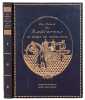
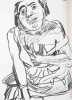
A fine copy in the original black pictorial cloth gilt. Contains the original graphics by Max Liebermann, Ernst Barlach, Hermann Struck, Oscar Kokoschka at the end a woodcut reproduction of Maurice de Vlaminck: Vogel (Bird). Image disp.

(SLACES, NVVA)
Phone number : 41 (0)26 3223808
"Alte Jüdin - Segensspruch über Kerzen"
Radierung. Bildgrösse: 28 x 18 cm. Blattgrösse: 35 x 27,5 cm.
Gut erhaltene Radierung, unter Passe-Partout. Unten links mit Bleistift signiert.
Skizzen aus Litauen, Weissrussland und Kurland. 60 Steinzeichnungen. Hergestellt in der Druckerei des Oberbefehlshabers Ost.
Berlin, Verlag von Georg Stilke 1916. 4°. 3 Bl., 1 S. Einführung, 60 ganzseitige Lithographien mit je 1 S. Text. Originalleinwand mit montiertem Deckelbild.
Sauberes Exemplar.

