 Write to the booksellers
3804 books for « hermann l »Edit
-
Type
Book (3784)
Drawings (1)
Magazine (5)
Music sheets (12)
New book (2)
Photographs (2)
-
Latest
Last 3 days (2)
Last month (20)
Last week (5)
-
Language
Dutch (1)
English (2)
French (3724)
German (17)
Italian (1)
Latin (2)
Russian (59)
-
Century
16th (4)
17th (7)
18th (23)
19th (253)
20th (1678)
21st (82)
-
Countries
Belgium (286)
Canada (4)
Côte d'Ivoire (8)
Denmark (112)
France (2581)
Germany (6)
Greece (6)
Netherlands (5)
Switzerland (725)
United Kingdom (6)
United States of America (67)
-
Syndicate
ALAC (3)
CLAM (8)
CLAQ (1)
ILAB (1756)
NVVA (240)
SLACES (240)
SLAM (1228)
SNCAO (6)
Topics
- Alps (36)
- Alsace (27)
- Anatomy (11)
- Archaeology (45)
- Architecture (39)
- Army (55)
- Asia - orient (12)
- Austria (27)
- Autographs (12)
- Basel (9)
- Belgium (11)
- Bible (25)
- Bibliophilism (9)
- Biography (17)
- Biology (14)
- Botany (18)
- Chemistry (16)
- Children’s books (13)
- Civilisation (10)
- Comanche (14)
- Comic strip (284)
- Dedication (12)
- Dictionaries (9)
- Drawings (20)
- Economics (24)
- Egypt (21)
- Egyptology (11)
- Entomology (11)
- Exegesis (10)
- Fine arts (22)
- First edition (48)
- Flora (18)
- Geography (33)
- Geology (10)
- German history (9)
- German literature (37)
- Germanic languages (279)
- Germany (104)
- Germany pc (10)
- Greece (11)
- Helvética (135)
- Hermann-paul (194)
- Hesse hermann (134)
- History (201)
- Hitler (14)
- Humour anecdotes (15)
- Illustrated books (11)
- India (13)
- Industrial arts & crafts - fine arts (19)
- Junker (11)
- Langbein hermann (13)
- Latin (17)
- Law (15)
- Linguistics (26)
- Literature (208)
- Maria theresa (16)
- Mathematics (20)
- Medicine (67)
- Melville herman (14)
- Military arts (13)
- Music (17)
- Newspapers press (72)
- Painting (9)
- Philology (20)
- Philosophy (83)
- Photography (24)
- Physics (28)
- Physiology (29)
- Poetry (11)
- Provence (17)
- Psychology (22)
- Quéru hermann (20)
- Rauschning hermann (18)
- Regionalism (13)
- Religions (62)
- Review (19)
- Reviews (13)
- Savoy (16)
- Schreiber hermann (27)
- Sciences (23)
- Scores (32)
- Siebel hermann (16)
- Songs (12)
- Surgery (9)
- Switzerland (122)
- Tea (14)
- Theology (27)
- Translation (10)
- Travel (20)
- Various (23)
- Wagner richard (14)
- War (72)
- Willette (10)
- Woods & woods’ price lists (46)
- Youth (10)
- Zoology (14)
- Zurich (13)
Les Bestiaires.
Paris, Éditions Mornay, 1926. 23 x 17 cm, 301 pp. Relié demi-maroquin rouge à coins, dos à nerfs, titre doré, tête dorée, couverture et dos conservés (reliure signée De Meyer). Bel exmplaire. Illustré par Hermann-Paul, un des 360 exemplaires sur Arches numérotés. Deuxième roman de Montherlant, "Les Bestiaires" est l'un des plus fameux hommages à la tauromachie.
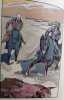
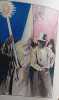


L'ASSIETTE AU BEURRE. 1904-1905.
31,5 x 24,5 cm, un volume du n° 182 de septembre 1904 au n°208 de mars 1905. Relié demi veau noir, dos à nerfs, titre doré, reliure usée, des épidermures.
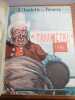
Le rire N°156 de la nouvelle série - Les joies du Congrès.
Tonnelle. 27 janvier 1906. In-4. Broché. Bon état, Couv. convenable, Dos satisfaisant, Intérieur frais. 24 pages, gravures noir et blanc in et hors texte, une gravure double en couleurs, 1ère et dernière page couleurs par Léandre et Hermann-Paul.. . . . Classification Dewey : 70.441-Journaux satiriques anciens
M.Fallières sortant de l'urne par Léandre, Au déjeuner du Congrès par Sem, En route pour le Congrès par Hermann-Paul, Aux réservoirs par Hermann-Paul, Encore un héros par Hermann-Paul, Les tribunes sont pleines par Hermann-Paul, Dans les couloirs et Quelques notes par Léandre, Quelques champions des poids légers par Léandre, Après le vote par Léandre, La porte à côté et Les délégués de M.Cavard par Hermann-Paul, Après l'élection par Hermann-Paul, Echos du rire par Somm, Retiré des affaires...! par Hermann-Paul. Classification Dewey : 70.441-Journaux satiriques anciens

Douze dessins pour l'amour de Goya.
Liège, Les Éditions du balancier, 1932. In-folio (252 x 331 mm), 27 ff. n. ch. Chemise blanche imprimée d'éditeur et chemise noire cartonnée d'éditeur avec étiquette imprimée et rabats bleu ciel.
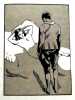
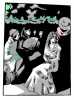
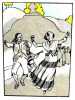
Cette très rare suite en couleurs a été dessinée et gravée sur bois par Hermann-Paul. La vie de Goya. Cette suite en couleurs a été dessinée et gravée sur bois par Hermann-Paul. Elle représente en 12 moments de la vie de Goya : sa jeunesse, ses études de peintre, sa vie à Madrid, à la cour, à Bordeaux… Chaque planche est précédée d'un titre pris dans un encadrement. Elles ont été tirées à Paris sur les presses de Marthe Fequet et de Pierre Baudier. Hermann-Paul (Paris 1864-1940), peintre, professeur à l'école des beaux-arts de Paris, graveur et illustrateur est surtout connu pour son œuvre de dessinateur humoristique. Il participa notamment à L'Assiette au beurre, La Vie parisienne, Le Rire… Son œuvre picturale s'inspire de celle de Cézanne dont il admirait l'œuvre et des Nabis avec qui il exposa au Salon d'automne. Hermann-Paul est l'auteur de nombreuses suites comme La Vie de monsieur Quelconque (1894), Conseils obscurs (1925). Il illustra Carmen de Mérimée (1927), Gargantua de Rabelais (1921), Le Testament de Villon (1922), L'Assomoir de Zola (1920)… Cette rare suite, inconnue à Monod, a été imprimée à seulement 48 exemplaires sur Japon nacré. Celui-ci est l'un des 40 (n°38) signé par l'artiste. Très bel exemplaire.
Über die Grundlagen physikalischer Aussagen in den älteren und den modernen Theorien.
Berlin, Offentliches Leben, 1937. 8vo. In the original wrappers. With repair to lower part and lower right corner bended, otherwise a very nice and clean copy. [Hermann:] Pp. 309-398. [Entire issue: Pp. 273-504, (3) + frontispeice depicting Jakob Friedrich Fries.].
First printing of Hermann's publication on the historical development and foundation of physics. Today she if famous for her pioneering work with respect to the interpretation of quantum theory, the present paper being her most extensive on the philosophical aspects of the development of research in physics.Attempts to interpret and understand what was then new and very puzzling physics were of great contemporary importance when Grete Hermann entered the field, and her work in physics was mainly related to the interpretation of quantum mechanics. More specifically, her main work in physics was on the philosophical foundations of quantum mechanics, the significance of modern physics for the theory of knowledge, and causality in physics. She was one of the active early contributors to the historic debates on causality in quantum mechanics, and on the completeness of quantum mechanics and its description of reality.Hermann's work during the 1930s reveals the influence of her background in the neo-Kantian school, yet it also owes much to the way in which Heisenberg and Weizsäcker had interpreted Bohr's doctrine of the indispensability of classical concepts in the description of experience.Heisenberg has written that Grete Hermann came to Leipzig for the purpose of challenging the philosophical basis of atomic physics. Heisenberg devoted an entire chapter of his book ""Physics and Beyond: Encounters and Conversations"" to a reconstruction of discussions that he had on quantum mechanics and Kantian philosophy with Grete Hermann and Carl Friedrich von Weizsäcker.
Hermann Vogel-Album.
Munchen Braun & Schneider 1896 Première édition. Un exemplaire attrayant de cet album. Couverture en buckram crème avec décorations et titres dorés. En bon état, propre, avec juste quelques traces / noircissements à certains endroits. Pages de garde imprimées en doré avec ex-libris à l'intérieur de la couverture avant. Les deux premières pages (y compris la page de titre) présentent de légères rousseurs. Le reste du livre est propre et soigné, avec quelques traces sur les bords inférieurs des pages brillantes. 96 feuilles imprimées uniquement au recto (soit 192 pages). Chaque page est décorée de magnifiques gravures accompagnant des contes de fées racontés sous forme de ballades (en vers). 15 des pages sont des planches pleine page. Un ouvrage très attrayant. 34 cm x 27 cm. Conforme à WorldCat / OCLC : 707162759. Hermann Vogel (1854-1921), peintre et illustrateur allemand réputé de Plauen, mieux connu sous le nom de Hermann Vogel-Plauen, dont les vignettes romantiques enchanteresses ont si mémorablement orné les contes de fées, les périodiques et les volumes de la fin de siècle. Son style fluide et narratif faisait le pont entre le romantisme et le Jugendstil allemand.
First edition. An attractive copy of this album. Cream buckram boards with gilt decoration and titles. In good clean condition, with just a touch of marking / darkening to parts. Gold printed end papers with bookplate to the inside front board. The first couple of pages (including the title page) have light foxing. The rest of the book is clean and neat, with a little marking to the bottom edges of the glossy pages. 96 leaves each printed to the recto only. (so 192 pages). Each page is decorated with beautiful engravings alongside fairy tales told as ballads (in verse). 15 of the pages are full page plates. A very attractive work. 34cm x 27cm. Conforms to WorldCat / OCLC: 707162759. Hermann Vogel (18541921), the esteemed German painter and illustrator of Plauenbetter known as Hermann Vogel-Plauenwhose enchanting romantic vignettes so memorably adorned fairy tales, periodicals, and volumes of the fin-de-siècle. His flowing, narrative style bridged romanticism and German Jugendstil. .
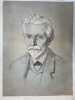
Lithography by Hermann Struck, Portrait of August Bebel, 1909, Jewish artist
Hermann Struck. Portrait of August Bebel, 1909. Paper, lithograph. Size: 43.2x58.3 cm plus margins. Hermann Struck (1876 1944) was a German Jewish artist known for his etchings. Hermann Struck (Chaim Aaron ben David) was born in Berlin. He studied at the Berlin Academy of Fine Arts. In 1904, he joined the modern art movement known as the Berlin Secession. In 1900, Struck met Jozef Israels, a Dutch artist, who became his mentor. Both were recognized as leading artists of their time. In 1908, Struck published Die Kunst des Radierens (The Art of Etching), which became a seminal work on the subject. It was a textbook that offered both theory and practical instruction. Struck's students included Marc Chagall, Lovis Corinth, Jacob Steinhardt, Lesser Ury and Max Liebermann. In 1899, upon completing his studies at the Berlin Academy, he was banned from teaching there because he was Jewish. He signed his work with his Hebrew name, Chaim Aaron ben David, and a Star of David. Struck did commission portraits of Ibsen, Nietzsche, Freud, Albert Einstein, Herzl, Oscar Wilde and other leading figures of the time. Struck's home in Haifa has been open as the Hermann Struck Museum since 2013. Struck's work is held in the collections of several other institutions worldwide. (Brooklyn Museum, Jewish Museum (Manhattan), Haifa Museum of Art, Leo Baeck Institute, New York, University of Michigan Museum of Art, the British Museum, the Museum of New Zealand Te Papa Tongarewa, Fine Arts Museums of San Francisco), You are welcome to reach out to us for a detailed description of the copies currently available. Delivery of this book may take longer than usual including extended processing and pre-shipping time, no expedited shipping is available. Please advise us if you have a set date or a deadline to receive your order.SKUKAZ000001
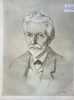
Lithography by Hermann Struck, Portrait of August Bebel, 1909, Jewish artist
Hermann Struck. Portrait of August Bebel, 1909. Paper, lithograph. Size: 43.2x58.3 cm plus margins. Hermann Struck (1876 1944) was a German Jewish artist known for his etchings. Hermann Struck (Chaim Aaron ben David) was born in Berlin. He studied at the Berlin Academy of Fine Arts. In 1904, he joined the modern art movement known as the Berlin Secession. In 1900, Struck met Jozef Israels, a Dutch artist, who became his mentor. Both were recognized as leading artists of their time. In 1908, Struck published Die Kunst des Radierens (The Art of Etching), which became a seminal work on the subject. It was a textbook that offered both theory and practical instruction. Struck's students included Marc Chagall, Lovis Corinth, Jacob Steinhardt, Lesser Ury and Max Liebermann. In 1899, upon completing his studies at the Berlin Academy, he was banned from teaching there because he was Jewish. He signed his work with his Hebrew name, Chaim Aaron ben David, and a Star of David. Struck did commission portraits of Ibsen, Nietzsche, Freud, Albert Einstein, Herzl, Oscar Wilde and other leading figures of the time. Struck's home in Haifa has been open as the Hermann Struck Museum since 2013. Struck's work is held in the collections of several other institutions worldwide. (Brooklyn Museum, Jewish Museum (Manhattan), Haifa Museum of Art, Leo Baeck Institute, New York, University of Michigan Museum of Art, the British Museum, the Museum of New Zealand Te Papa Tongarewa, Fine Arts Museums of San Francisco), You are welcome to reach out to us for a detailed description of the copies currently available. Delivery of this book may take longer than usual including extended processing and pre-shipping time, no expedited shipping is available. Please advise us if you have a set date or a deadline to receive your order.SKUKAZ000002
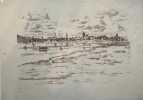
Lithography by Hermann Struck, View of Kovno, 1916, Jewish artist
Hermann Struck. View of Kovno, 1916. Paper, lithography. Size: 39.5x27.5 cm. Hermann Struck (1876 1944) was a German Jewish artist known for his etchings. Hermann Struck (Chaim Aaron ben David) was born in Berlin. He studied at the Berlin Academy of Fine Arts. In 1904, he joined the modern art movement known as the Berlin Secession. In 1900, Struck met Jozef Israels, a Dutch artist, who became his mentor. Both were recognized as leading artists of their time. In 1908, Struck published Die Kunst des Radierens (The Art of Etching), which became a seminal work on the subject. It was a textbook that offered both theory and practical instruction. Struck's students included Marc Chagall, Lovis Corinth, Jacob Steinhardt, Lesser Ury and Max Liebermann. In 1899, upon completing his studies at the Berlin Academy, he was banned from teaching there because he was Jewish. He signed his work with his Hebrew name, Chaim Aaron ben David, and a Star of David. Struck did commission portraits of Ibsen, Nietzsche, Freud, Albert Einstein, Herzl, Oscar Wilde and other leading figures of the time. Struck's home in Haifa has been open as the Hermann Struck Museum since 2013. Struck's work is held in the collections of several other institutions worldwide. (Brooklyn Museum, Jewish Museum (Manhattan), Haifa Museum of Art, Leo Baeck Institute, New York, University of Michigan Museum of Art, the British Museum, the Museum of New Zealand Te Papa Tongarewa, Fine Arts Museums of San Francisco), You are welcome to reach out to us for a detailed description of the copies currently available. Delivery of this book may take longer than usual including extended processing and pre-shipping time, no expedited shipping is available. Please advise us if you have a set date or a deadline to receive your order.SKUKAZ000012
Über die Grundlagen physikalischer Aussagen in den älteren und den modernen Theorien.
Berlin, Offentliches Leben, 1937. 8vo. Offprint in the original wrappers. Wrappers with minor miscolouring and top left corner of front wrapper slightly bended, otherwise a very nice and clean copy. 90 pp.
First printing of Hermann's publication on the historical development and foundation of physics. Today she if famous for her pioneering work with respect to the interpretation of quantum theory, the present paper being her most extensive on the philosophical aspects of the development of research in physics.Attempts to interpret and understand what was then new and very puzzling physics were of great contemporary importance when Grete Hermann entered the field, and her work in physics was mainly related to the interpretation of quantum mechanics. More specifically, her main work in physics was on the philosophical foundations of quantum mechanics, the significance of modern physics for the theory of knowledge, and causality in physics. She was one of the active early contributors to the historic debates on causality in quantum mechanics, and on the completeness of quantum mechanics and its description of reality.Hermann's work during the 1930s reveals the influence of her background in the neo-Kantian school, yet it also owes much to the way in which Heisenberg and Weizsäcker had interpreted Bohr's doctrine of the indispensability of classical concepts in the description of experience.Heisenberg has written that Grete Hermann came to Leipzig for the purpose of challenging the philosophical basis of atomic physics. Heisenberg devoted an entire chapter of his book ""Physics and Beyond: Encounters and Conversations"" to a reconstruction of discussions that he had on quantum mechanics and Kantian philosophy with Grete Hermann and Carl Friedrich von Weizsäcker.
[Hermann-Paul] - Montherlant, Henry de - Hermann-Paul (ill.)
Reference : 3383
(1928)
Trois images de l'Espagne. Illustrées de bois en couleurs par Hermann Paul.
Paris Société de la gravure sur bois originale 1928 in-4 en feuilles Paris, Aux dépens de la Société de la gravure sur bois originale, 1928. 28,5 x 20,5 cm, in-4, 19 (1) pp., frontispice et 6 gravures sur bois dans le texte (3 larges en-têtes en couleurs, 3 culs-de-lampe en deux tons), en feuilles sous couverture rempliée marron imprimée.
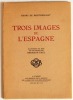
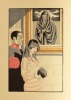
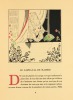
Edition originale de ces trois courtes nouvelles. Tirage à 160 exemplaires seulement (tous sur simili-Japon). Celui-ci, nominatif, imprimé pour André Baudet (n° 24). Très bel exemplaire. (MONOD, 8412 ; CARTERET, V, 143) Parfait
[Hermann-Paul ] - LE RIRE ( Journal humoristique paraissant le samedi ) Hermann-Paul
Reference : 35743
LE RIRE, 3e année, N°150 du 18 Septembre 1897. FÉLIX Ier CHEZ NICOLAS II, croquis humoristiques du Voyage du Président de la République, exécutés d'après nature en Russie, par Hermann-Paul, Envoyé spécial du ''Rire''
Paris Félix Juven, Directeur (imprimerie spéciale du Rire) 1897 in 4 (31x23,5) 1 fascicule broché, couverture illustrée en couleurs, plat supérieur de la couverture illustré d'un dessin par Hermann-Paul, titré: FÉLIX Ier CHEZ NICOLAS II, croquis humoristiques du Voyage du Président de la République, exécutés d'après nature en Russie, par Hermann-Paul, envoyé spécial du ''Rire'', non paginé (20 pages), avec des illustrations en noir et blanc et en couleurs, dont pages publicitaires. Journal humoristique paraissant le samedi. Journal ''Le Rire'', 3e année, N°150 du 18 Septembre 1897, numéro exceptionnel. Bon exemplaire ( Photographies sur demande / We can send pictures of this book on simple request )
Bon
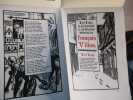
Litterature - Oeuvres de François Villon - Edition ornée de gravures d'Hermann Paul - Les Lais, le Testament et les poésies diverses.
1922 Paris, Léon Pichon, 1922 - Edition Originale numérotée, 76/157, sur vergé à la cuve des Papeteries d'Arches contenant une suite d'épreuves des gravures sur chine- In-8, 19,5 x 28 cm - En feuilles, non coupées sous couverture rempliée -Titre imprimé en rouge et noir, texte imprimé en caractères gothiques au centre d'une gravure sur bois de Paul Hermann - 108 pages + Table et suite des illustrations (108 pages) - infimes rousseurs sur le plat de la suite, Sinon très frais - Bel exemplaire - Réf. 48050
Cnformément à nos conditions générales de vente :Les frais de port sont affichés à titre indicatif. Il se peut que nous devions vous contacter pour vous informer du coût de laffranchissement supplémentaire en fonction du poids et du nombre de livres, surtout pour les envois internationaux Cependant vu l'augmentation des tarifs postaux à l'internationale, nous pouvons expédier les ouvrages en point relais MONDIAL RELAY pour les pays suivants : Allemagne, Autriche, Belgique, Espagne, Italie, Luxembourg, Pays-Bas, Pologne, et Portugal. Merci de nous indiquer en retour le point relais choisi ainsi que votre numéro de téléphone mobile & adresse Courriel pour assurer le suivi du colis.N'hésitez pas à nous interroger.In accordance with our general terms and conditions of sale:Shipping costs are displayed for informational purposes only. We may need to contact you to inform you of the additional postage costs depending on the weight and number of books, especially for international shipments.However, given the increase in international postal rates, we can ship books via Mondial Relay to the following countries: Germany, Austria, Belgium, Spain, Italy, Luxembourg, Netherlands, Poland, and Portugal. Please provide us with your chosen Mondial Relay point, as well as your mobile phone number and email address to ensure package tracking.Please feel free to contact us with any questions
Erysipelas (Rose, Rothlauf) und Erysipeloid. Von Dr. Hermann Lenhartz. Specielle Pathologie und Therapie. Hrsg. Hermann Nothnagel. III. Band, III. Theil.
Wien, Alfred Hölder 1899, 250x175mm, VI- 104Seiten, broschiert.
Pour un paiement via PayPal, veuillez nous en faire la demande et nous vous enverrons une facture PayPal
Die angeborenen Herzkrankheiten. Von Prof. Dr. Hermann Vierordt in Tübingen. Mit 25 Abbildungen im Text.Specielle Pathologie und Therapie. Hrsg. Hermann Nothnagel. XV. Band. I. Theil. II. Abtheilungen.
Wien, Alfred Hölder 1898, 250x175mm, VI- 225Seiten, broschiert.
Pour un paiement via PayPal, veuillez nous en faire la demande et nous vous enverrons une facture PayPal
CONSEILS OBSCURS OU QUARANTE ANS D'INEXPERIENCE, CARTON D'ESTAMPES CONTENANT TREIZE PLANCHES EN COULEURS DESSINEES ET GRAVEES SUR BOIS PAR HERMANN-PAUL.
PARIS. CHEZ L'IMPRIMEUR LEON PICHON. 1925. IN-FOLIO EN FEUILLES SOUS PORTEFEUILLE A RABATS EN 1/2 PERCALINE NOIRE A COINS DE L'EDITEUR, TITRE IMPRIME EN NOIR SUR ETIQUETTE COLLEE SUR LE PLAT SUPERIEUR (29,5 X 39 X 1 CENTIMETRES ENVIRON). CONTIENT 13 PLANCHES TIREES EN DEUX TONS, SOUS SERPENTE LEGENDEE. PREMIER ET UNIQUE TIRAGE LIMITE A 150 EXEMPLAIRES NUMEROTES ET PARAPHES PAR L'AUTEUR, TOUS SUR VELIN A LA FORME DES PAPETERIES D'ARCHES, CELUI-CI PORTANT LE NUMERO 21, IMPRIME POUR MONSIEUR LUCIEN J.... . ON JOINT LE FEUILLET DE PRESENTATION DE L'OUVRAGE. ENVOI D'AUTEUR SIGNE SUR LE FEUILLET DE FAUX-TITRE : "A MR LUCIEN J..., AVEC PLAISIR. HERMANN PAUL". BON EXEMPLAIRE DE CETTE SUITE D'ESTAMPES RARE ET RECHERCHEE.
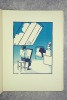
Le Capitaine Bitterlin au café.
Dessin original, plume et encre, 420 x 260, signature dans le coin inférieur gauche, encadrement moderne. Vers 1891
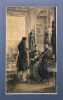
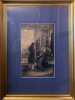
Très beau et grand dessin original réalisé par Hermann Vogel (1856-1918) pour illustrer l’ouvrage d’Edmond About (1828-1885) intitulé Trente et quarante, paru chez Hachette en 1891. L’illustration apparait à la page 9.
Hermann Paul. Etude critique. Lettre-prface de Francis de Miomandre. Portrait par Valentine Hugo.
Paris Henry Babou 1929 In-4, en feuilles, couverture imprime.Edition originale de la lettre-prface de Francis de Miomandre (dont le texte manuscrit est reproduit en fac-simil) et de l'tude de Raymond Geiger, illustre d'un portrait-frontispice d'Hermann Paul d'aprs Valentine Hugo, d'une vignette de titre imprime en noir et de 31 compositions d'Hermann Paul, dont 18 in-texte (un en couleurs, 17 en noir), un fleuron en deux couleurs et 12 hors-texte (6 en couleurs et 6 en noir). Ouvrage publi dans la collection Les Artistes du livre. Tirage limit 750 exemplaires numrots. Un des 650 exemplaires sur vlin blanc Johannot. De la bibliothque Franois Louis Schmied (ex-libris)
Hermann hesse gertrude
Presses Pocket 1987 1987. Hermann Hesse: Gertrude/ Presses Pocket 1987 Référence: LMA17A. Hermann Hesse: Gertrude/ Presses Pocket 1987
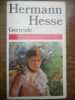
Bon état
Catalogue de l'exposition de lithographies, pastels et dessins d'Hermann-Paul à la galerie Bernheim jeune
Galerie Bernheim jeune | Paris s. d. [circa 1900] | 10.50 x 14 cm | broché
Edition originale de ce catalogue présentant 61 oeuvres d'Hermann-Paul, lithographies, pastels et dessins, exposés à la galerie Bernheim jeune à Paris du 1er au 20 Février. Bel et rare exemplaire. Catalogue illustré de 6 dessins d'Hermann-Paul. Texte d'Arsène Alexandre. - Photographies et détails sur www.Edition-Originale.com -
Hermann Hesse, le Magicien.
S.l., Hachette, (1989). Un vol. au format in-8 (243 x 152 mm) de 349 pp., broché.
![Hermann Hesse, le Magicien.. SENES (Michel et Jacqueline) - [HESSE (Hermann)].](https://static.livre-rare-book.com/pictures/BLS/30781_1_thumb.jpg)
L'ouvrage s'agrémente de cahiers photographiques ainsi que de photographies contrecollées (en lien avec l'ouvrage) par les soins d'un précédent possesseur. ''Les esthètes préfèrent Siddharta, ou le pur joyau qu'est Le Loup des steppes ; les passionnés Le jeu des perles de verre qui valut à son autour le prix Nobel de littérature en 1946. Mais qui était vraiment Hermann Hesse ? Divisé, double, éternel insatisfait, Hesse a écrit une oeuvre qui illustre, avec un sens aigu de l'ambiguïté, le passage douloureux à la modernité. Adulé par les jeunes Allemands dès la publication de son premier roman (Peter Camenzind, 1904), symbole tout à la fois de la révolte et de l'humanisme les plus intransigeants, Hermann Hesse redeviendra, dans les années soixante, la figure emblématique d'une jeunesse désorientée. Cette biographie, la première en français, dépeint la crise spirituelle de l'Europe, crise qui devait prendre dans la vie de Hesse, en raison de son héritage piétiste, une dimension dramatique. Elle montre comment s'est édifiée une ceuvre littéraire authentique, ses soubresauts, ses élans, ses hésitations et ses triomphes, et restitue fidèlement le grand projet de Hesse : réconcilier l'Orient et l'Occident.'' Quelques rousseurs sur les tranches. Du reste, très belle condition.
LA CARACO. Raconte camarguen emé de bos engrava pèr Hermann-Paul. LA CARAQUE
Ais-de-Prouvenço ( Aix-en-Provence ) Editcioun de la Revisto ''Le Feu'' ( Editions de la Revue "le Feu'' ) 1926 grand in 8 (28,5x19,5) 1 volume broché, couverture à rabats, 168 pages [3], avec des bois gravés par Hermann-Paul (6 vignettes et 6 culs-de-lampe gravés sur bois). Texte en provençal avec la traduction française en regard. Joseph d'Arbaud, Meyrargues 1874 - Aix-en-Provence 1950, poète provençal. Edition originale. Tirage limité à 1000 exemplaires numérotés, celui-ci un des 700 exemplaires numérotés sur "Boufarèu". Bel exemplaire ( Photographies sur demande / We can send pictures of this book on simple request )
Très bon Broché Ed. numérotée
SUR LES FEMMES. Édition ornée de gravures sur bois originales de Hermann-Paul
Paris Chez l'imprimeur Léon Pichon 1919 in 8 (22,5x16) 1 volume reliure pleine basane fauve bigarée de l'époque, dos à nerfs orné de fleurons dorés, pièce de titre de cuir rouge, plats ornés d'un encadrement de filets dorés, couverture conservée, tête dorée, 28 pages [1], coiffe supérieure légérement usée, et petite fente sur un mors. Ouvrage illustré de gravures sur bois originales de Hermann-Paul. Tirage limité à 371 exemplaires numérotés. Celui-ci un des un des trois cent vingt exemplaires sur velin à la cuve des papeteries d'Arches. Bon exemplaire ( Photographies sur demande / We can send pictures of this book on simple request )
Bon Couverture rigide Ed. numérotée
Cahan (David), ed. on Hermann von Helmholtz - 'Arleen Tuchman - Kathryn M. Olesko and Frederic L. Holmes - Timothy Lenoir - R. Steven Turner - Richard L. Kremer - Stephan Vogel - Fabio Bevilacqua - Jed Z. Buchwald - Walter Kaiser - Helge Kragh - Günter Bierhalter - Michael Heidelberger - Robert DiSalle - Gary Hatfield
Reference : 100273
(1993)
Hermann von Helmholtz and the Foundations of Nineteenth-Century Science , (1. Physiologist : Helmholtz and the German medical community - Experiment, quantification and discovery : Helmholtz's early physiological researches, 1843-1850 - The eye as mathematician : Clinical practice, instrumentation, and Holemholtz's construction of an empirical theory of vision - Consensus and controversy : Helmholtz on the visual perception of space - Innovation through synthesis : Helmholtz and color research - Sensation of tone, perception of sound, and empiricism : Helmhotz's physiological acoustics - 2. Physicist : Helmhotz's Ueber die Erhaltung der Kraft : The emergence of a theoretical physicist - Electrodynamics in context : Object states, laboratory practice, and anti-romanticism - Helmholtz's instrumental role in the formation of classical electrodynamics - Between physics and chemistry : Helmholtz's route to a theory of chemical thermodynamics - Helmholtz's mechanical foundation of thermodynamics - 3. Philosopher : Force, law, and experiment : The evolution of Helmholtz's philosophy of science - Helmholtz's empiricist philosophy of mathematics : Between laws of perception and laws of nature - Helmholtz and classicism : The science of aesthetics and the aesthetics of science - Helmholtz and the civilizing power of science)
University of California Press , California Studies in the History of Science Malicorne sur Sarthe, 72, Pays de la Loire, France 1993 Book condition, Etat : Très Bon hardcover, editor's binding, under editor's original purple dust-jacket, illustrated by a portrait of Hermann von Helmholtz fort et grand In-8 1 vol. - 695 pages
31 black and white illustrations 1993's edition "Contents, Chapitres : Contents, List of Illustrations, Acknowledgments, Contributors, Abbreviations, Chronological listing of the Principal Events and Publications of Helmholtz's Life and Career, xxix, Text, 666 pages - D. Cahan : Introduction, Helmholtz at the borders of science - 1. Physiologist : Arleen Tuchman : Helmholtz and the German medical community - Kathryn M. Olesko and Frederic L. Holmes : Experiment, quantification and discovery : Helmholtz's early physiological researches, 1843-1850 - Timothy Lenoir : The eye as mathematician : Clinical practice, instrumentation, and Helmholtz's construction of an empirical theory of vision - R. Steven Turner : Consensus and controversy : Helmholtz on the visual perception of space - Richard L. Kremer : Innovation through synthesis : Helmholtz and color research - Stephan Vogel : Sensation of tone, perception of sound, and empiricism : Helmhotz's physiological acoustics - 2. Physicist : Fabio Bevilacqua : Helmhotz's Ueber die Erhaltung der Kraft : The emergence of a theoretical physicist - Jed Z. Buchwald : Electrodynamics in context : Object states, laboratory practice, and anti-romanticism - Walter Kaiser : Helmholtz's instrumental role in the formation of classical electrodynamics - Helge Kragh : Between physics and chemistry : Helmholtz's route to a theory of chemical thermodynamics - Günter Bierhalter : Helmholtz's mechanical foundation of thermodynamics - 3. Philosopher : Michael Heidelberger : Force, law, and experiment : The evolution of Helmholtz's philosophy of science - Robert DiSalle : Helmholtz's empiricist philosophy of mathematics : Between laws of perception and laws of nature - Gary Hatfield : Helmholtz and classicism : The science of aesthetics and the aesthetics of science - David Cahan : Helmholtz and the civilizing power of science - Bibliography and Index - Hermann Ludwig Ferdinand von Helmholtz est un scientifique (physiologiste et physicien) prussien, né le 31 août 1821 à Potsdam et mort à Berlin-Charlottenburg en 1894. Il a notamment apporté d'importantes contributions à l'étude de la perception des sons et des couleurs ainsi qu'à la thermodynamique. - Helmholtz a vécu à une époque propice à développer lexpérimentation grâce à un arsenal dinstruments de plus en plus performants, qui prolongent, démultiplient, amplifient, accélèrent le regard des scientifiques sur la nature des phénomènes (et dans ce cas précis, des phénomènes sonores) pour mettre en évidence les explications de certaines observations : la technique a permis de transcrire sous une forme objective des phénomènes inexpliqués ; ainsi, lacoustique progresse considérablement et Helmholtz fonde l'optique physiologique et la psychophysique. (source : Wikipedia)" near fine copy, no markings, the dust-jacket is complete and near fine, minor folding tracks on the spine, the bottom part of the D.J. is very lightly torn on less than 0,5 cms, quite nothing, inside is fine, a very nice copy of this masterwork on Helmholtz
Via crucis
1929 Paris Babou 1929 in4, 64 pages en feuillets sous emboitage, Texte espagnol et Français en regard, 14 grand bois gravés en deux teintes (bleue et noir) de Hermann Paul. Exemplaire numéroté,, tirage à 380 exemplaires, un des 303 sur vélin blanc de rives. édition originale. Bon exemplaire bien complet et en bon état de ce superbe ouvrage.

