 Write to the booksellers
131 books for « henri poincare »Edit
-
Language
French (112)
Russian (19)
-
Century
19th (23)
20th (48)
21st (2)
-
Countries
Belgium (5)
Canada (1)
Denmark (24)
France (79)
Switzerland (2)
United States of America (20)
-
Syndicate
ALAC (1)
ILAB (51)
NVVA (1)
SLACES (1)
SLAM (25)
Topics
- Allais alphonse (1)
- Alps (2)
- Ampere andré - marie (1)
- Apollinaire guillaume (1)
- Astrophysics (1)
- Barres maurice (1)
- Bergson henri (1)
- Bibliophilism (1)
- Bordeaux (1)
- Bordeaux henry (1)
- Boutroux emile (2)
- Bruyère (1)
- Camus albert (1)
- Carpenter (1)
- Chagny andré (2)
- Champagne (2)
- Children’s books (1)
- Cosmology (1)
- Courteline georges (2)
- Discipline (1)
- Discovery (2)
- Early printed books (1)
- Einstein (2)
- Electricity (1)
- Engineering (1)
- Epistemology (1)
- First edition (3)
- Flammarion camille (1)
- Flowers (1)
- Foulon (1)
- Guitry sacha (1)
- Hachette (2)
- Hadamard (2)
- Lapaire hugues (2)
- Law (2)
- Leibniz (1)
- Literature (1)
- Logic (1)
- Lorrain (1)
- Lyautey pierre (1)
- Madelin louis (1)
- Marie louise (1)
- Mathematics (27)
- Mechanics (2)
- Medicine (1)
- Metaphysics (1)
- Mistinguett (1)
- Monk (1)
- Montgolfier (1)
- Newspapers press (1)
- Philosophy (10)
- Physics (14)
- Poincaré raymond (122)
- Printing (1)
- Psychology (2)
- Pyrenees (2)
- Rabaut jean-paul aka saint-etienne (1)
- Review (4)
- Reviews (1)
- Rough sketch (1)
- Sciences (20)
- Sciences & technique (16)
- Sheridan (1)
- Social sciences (1)
- Sully Prudhomme (1)
- Tea (3)
- Technology (1)
- Thouroude daniel de (1)
- Touraine (1)
- Universe (1)
- Various (1)
- Vidal (1)
- Vito (1)
- Weil simone (1)
Samueli (Jean-Jacques) et Boudenot (Jean-Claude) sur Henri Poincaré
Reference : 100705
(2005)
Henri Poincaré, physicien, 1854-1912 , (Poincaré et les équations de la physique mathématique - Poincaré et la valeur des principes en physique, le conventionnalisme de Poincaré - Le problème des trois corps - La contribution à la théorie des ondes hertziennes, le concept de potentiel retardé - L'éther de Lorentz et de Poincaré, et celui d'Einstein, le nouvel éther ? - Poincaré et l'inertie de l'énergie électromagnétique - Poincaré et la relativité restreinte (Rendiconti - Mémoire de Poincaré consacré à la dynamique de l'électron) - Qui a inventé la relativité restreinte ? - La contribution à la thermodynamique - La contribution de Poincaré à la théorie de quanta - Poincaré et la radioactivité)
Ellipses Malicorne sur Sarthe, 72, Pays de la Loire, France 2005 Book condition, Etat : Bon broché, sous couverture imprimée éditeur blanche, illustrée d'un portrait d'Henri Poincaré grand In-8 1 vol. - 152 pages
8 planches hors-texte avec de nombreuses illustrations en noir (complet) 1ere édition, 2005 Contents, Chapitres : Introduction - Aperçu des travaux de Poincaré dans le domaine de la physique mathématique - Poincaré et les équations de la physique mathématique - Poincaré et la valeur des principes en physique, le conventionnalisme de Poincaré - Le problème des trois corps - La contribution à la théorie des ondes hertziennes, le concept de potentiel retardé - L'éther de Lorentz et de Poincaré, et celui d'Einstein, le nouvel éther ? - Poincaré et l'inertie de l'énergie électromagnétique - Poincaré et la relativité restreinte (Le groupe de Lorentz - Le mémoire des Rendiconti - Les travaux d'Einstein de 1905 et 1907 - Quelques remarques sur le mémoire de Poincaré consacré à la dynamique de l'électron) - Qui a inventé la relativité restreinte ? - La contribution à la thermodynamique - La contribution de Poincaré à la théorie de quanta - Poincaré et la radioactivité - Poincaré, historien des sciences - Poincarré et le prix Nobel de physique - Biographie de Poincarré - De l'utilité d'une lecture attentives des textes scientifiques - Chronologie de Poincarré - Liste des principales publications relatives à la physique mathématique - Bibliographie couverture à peine jaunie avec une légère trace de pliure au coin inférieur droit du plat supérieur, infime petite tache sur le bord gauche du plat inférieur (affectant à peine l'intérieur), intérieur sinon frais et propre, cela reste un bel exemplaire, bien complet des 8 planches hors-texte de cette étude passionnante sur la naissance de la relativité. - NB : grand format de la 1ere édition de 2005, il ne s'agit pas de la réédition en poche
Une philosophie de savant - Henri Poincaré et la logique mathématique
François Maspéro , Algorithme Malicorne sur Sarthe, 72, Pays de la Loire, France 1978 Book condition, Etat : Très Bon broché, sous couverture imprimée à rabats éditeur verte, illustrée d'une figure d'un rouage de machine In-8 1 vol. - 175 pages
1ere édition, 1er tirage, 1978 "Contents, Chapitres : Introduction - 1. Les mathématiques : Mathématiques et expérience - Mathématique et logique - Mathématique et langage - 2. La géométrie - 3. La mécanique et la physique : Mécanique et géométrie - Mécanique et physique - La physique - 4. La philosophie - 5. Le fait et l'exemple : La stratégie - L'intégration - 6. Critique de la logique mathématique : Les ""vraies mathématiques"" - Poincaré face à la crise des fondements des mathématiques, 1905-1912 - Conclusion et bibliographie - Selon Wikipedia : ""Pendant les six dernières années de sa vie (à partir de 1905), Poincaré participe activement aux débats sur les fondements qui traversaient à l'époque la communauté mathématique. Il n'a jamais essayé d'y contribuer sur le plan technique, mais certaines de ses idées ont eu une influence indéniable. L'un de ses contradicteurs, Bertrand Russell, écrira en 1914 : « Il n'est pas possible d'être toujours juste en philosophie ; mais les opinions de Poincaré, justes ou fausses, sont toujours l'expression d'une pensée puissante et originale, servie par des connaissances scientifiques tout à fait exceptionnelles ». Entre autres, à cause de son refus d'accepter l'infini actuel, cest-à-dire la possibilité de considérer l'infini comme une entité achevée et non simplement comme un processus qui peut se prolonger arbitrairement longtemps, Poincaré est considéré par beaucoup d'intuitionnistes comme un précurseur. Poincaré n'a cependant jamais remis en cause le tiers exclu, et rien n'indique qu'il aurait pu adhérer à une refondation aussi radicale des mathématiques que celle que proposera Luitzen Egbertus Jan Brouwer. La position de Poincaré a évolué. Dans une période précédente, il s'est intéressé aux travaux de Georg Cantor, dont les travaux sur la construction des réels et la théorie des ensembles s'appuient de façon essentielle sur un infini actuel, au point de superviser la traduction en français d'une partie des articles de ce dernier (en 1871, 1883), et d'utiliser ses résultats dans son mémoire sur les groupes kleinéens (1884). Il s'intéresse également aux travaux de David Hilbert sur l'axiomatisation : il fait, en 1902, une recension soignée et très louangeuse des Fondements de la géométrie (1899). En 1905 et 1906, Poincaré réagit, de façon assez polémique, à une série d'articles de Louis Couturat sur les « principes des mathématiques » dans la Revue de métaphysique et de morale, articles qui rendaient compte des Principles of Mathematics de Bertrand Russell (1903). Russell finira par intervenir lui-même dans le débat""." papier à peine jauni, sinon bel exemplaire, frais et propre
Société Française de Physique - Jean Perrin - Paul Langevin - Edmond Bauer - Eugene Bloch - M. A. Blanc - L. Dunoyer - Madame Pierre Marie Curie - A. Debierne - Pierre Weiss - Henri Poincaré
Reference : 100455
(1913)
Les idées modernes sur la constitution de la matière - Conférences faites en 1912 , Collection de Mémoires Relatifs à la Physique, 2eme série (Les preuves de la réalité moléculaire - Les grains d'électricité et la dynamique électromagnétique - Les quantités élémentaires d'énergie et d'action - La théorie électronique des métaux - L'ionisation par chocs et l'étincelle électrique -Les gaz ultrararéfiés - Le rayonnement des corps radioactifs -Les transformations radioactives - Les moments magnétiques des atomes et le magnéton - Les rapports de la matière et de l'éther)
Gauthier-Villars à Paris , Collection de Mémoires Relatifs à la Physique Malicorne sur Sarthe, 72, Pays de la Loire, France 1913 Book condition, Etat : Bon broché, sous couverture imprimée éditeur bleu-gris grand In-8 1 vol. - 371 pages
quelques figures dans le texte en noir 1ere édition, édition originale, 1913 "Contents, Chapitres : Texte, 370 pages, table, i - Jean Perrin : Les preuves de la réalité moléculaire (pages 1 à 53, 6 figures) - Paul Langevin : Les grains d'électricité et la dynamique électromagnétique (pages 54 à 114) - Edmond Bauer : Les quantités élémentaires d'énergie et d'action (pages 115 à 147) - Eugene Bloch : La théorie électronique des métaux - M. A. Blanc : L'ionisation par chocs et l'étincelle électrique - L. Dunoyer : Les gaz ultrararéfiés - Madame Pierre Marie Curie : Le rayonnement des corps radioactifs (pages 272 à 303)- A. Debierne : Les transformations radioactives - Pierre Weiss : Les moments magnétiques des atomes et le magnéton (pages 332 à 356) - Henri Poincaré : Les rapports de la matière et de l'éther (pages 357 à 370) - En 1907-1909, Jean Perrin publie une série d'articles sur le mouvement brownien dont il fait une synthèse sous le titre Mouvement brownien et réalité moléculaire publié dans les Annales de Chimie et de Physique en 1909. Cet article, immédiatement traduit en anglais, contribue à sa notoriété scientifique en France et à l'étranger. En 1910, Jean Perrin est promu professeur de chimie physique à la Sorbonne. En 1911, il est élu membre d'honneur de l'Institut de physique de l'université de Berlin. Il est aussi convié au premier congrès Solvay de physique qui se tient à Bruxelles. Ernest Solvay organise ainsi le premier congrès scientifique qui rassemble une vingtaine des plus grands physiciens de l'époque. Les congressistes doivent envoyer leur communication en avance pour qu'elles soient distribuées aux participants avant la réunion. La conférence de Jean Perrin, intitulée ""Les preuves de la réalité moléculaire"", est si claire et argumentée que tous les participants sont convaincus de l'existence des atomes, même les plus sceptiques. En particulier, Wilhelm Ostwald qui, comme chimiste, n'a pas participé à la réunion et qui avait été un opposant déterminé à l'atomisme défendu par son collègue Ludwig Boltzmann, s'est déclaré converti à la lecture de la communication de Perrin Henri Poincaré, jusqu'alors sceptique sur l'existence des atomes, avoue, après avoir entendu l'exposé de Perrin, que « l'atome des chimistes est devenu réalité ». (wikipedia) - Poincaré, décédé l'année de cette conférence en 1912, aborde les relations entre l'éther et la matière, très importantes dans la relativité restreinte (Loi de Rayleigh, action de la lumière sur les molécules ou l'inverses, par rapport aux travaux d'Einstein et aux quanta). - En 1906, Paul Langevin (1872-1946) prépare un cours sur la théorie électromagnétique pour le Collège de France et aboutit au résultat selon lequel l'inertie de l'électron serait une propriété de lénergie. Quelques mois plus tard, il a l'occasion de lire les publications d'Einstein sur la relativité restreinte et saisit le lien entre ses recherches et cette nouvelle théorie révolutionnaire. C'est à partir de ce moment qu'il passe une partie de son temps à répandre la théorie nouvelle. Il est le promoteur de cette théorie en France. Il enseigne pour la première fois la théorie de la relativité dans ses cours au Collège de France en 1910-1911. Il invente le paradoxe des jumeaux, qu'il présente pour la première fois au congrès de Bologne et à la Société française de philosophie en 1911. En 1922, il invite Einstein au Collège de France pour donner des conférences sur la relativité. Henri Bergson, qui avait assisté au congrès de Bologne et aux conférences d'Einstein au Collège de France, publie Durée et Simultanéité en 1922 et Émile Meyerson La Déduction relativiste en 1925. (wikipedia)" couverture propre, bords des plats à peine jaunis, le dos a été consolidé proprement et renforcé au bas du dos, dos un peu empoussiéré avec une légère déchirure sur le haut du dos et un manque de 1 cm sur le bas, le bord des plats a été collé aux pages de gardes sur 3 cms, l'intérieur est sinon très frais et propre, papier à peine jauni, le volume garde une belle allure malgré les défauts indiqués, ce volume regroupe un ensemble de conférences sur la matière avec l'élite de la physique française de l'époque, Poincaré, Curie (un an après le Nobel de 1911), Langevin, Perrin ou encore Edmond Bauer (Assistant de Perrin et collaborateur de Langevin) et Pierre Weiss (magnétisme et aimantation), André-Louis Debierne (Actinium), elles furent données à la Société de Physique, un an après le premier congrès Solvay de 1911 sur les quanta, et après la présentation de la structure atomique d'Ernest Rutherford en 1911.
La Science et l'hypothèse édition définitive
Ernest Flammarion Éditeur 304 pages in8. Sans date. broché. 304 pages. Ouvrage de philosophie des sciences écrit par le mathématicien Henri Poincaré au début du XXe siècle devenu un classique. Il explore le rôle de l'hypothèse et de la convention dans le raisonnement scientifique en parcourant divers domaines comme l'arithmétique la géométrie la mécanique et la physique expérimentale. Destiné au grand public il interroge ce qu'il faut attendre des sciences
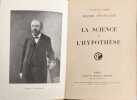
Etat correct couverture usagée coins emoussés papier jauni mais lisible intérieur bon avec quelques marques ne génant en rien la lecture du texte
Revue d'Histoire des Mathématiques - B. Bru, M.-F. Bru et O. Bienaymé sur Irénée Jules Bienaymé - A. Herreman sur Henri Poincaré
Reference : 100819
(1998)
Revue d'Histoire des Mathématiques - Tome 3. Fascicule 2 - Février 1998 (1997) , (La statistique critiquée par le calcul des probabilités : Deux manuscrits inédits d'Irénée Jules Bienaymé - Le statut de la géométrie dans quelques textes sur l'homologie, de Poincaré aux années 1930)
Société Mathématique de France , Revue d'Histoire des Mathématiques Malicorne sur Sarthe, 72, Pays de la Loire, France 1998 Book condition, Etat : Bon broché, sous couverture imprimée éditeur blanche, avec une bande turquoise au bas du plat supérieur grand In-8 1 vol. - 157 pages
1ere édition, 1997-1998 Contents, Chapitres : B. Bru, M.-F. Bru et O. Bienaymé : La statistique critiquée par le calcul des probabilités : Deux manuscrits inédits d'Irénée Jules Bienaymé - A. Herreman : Le statut de la géométrie dans quelques textes sur l'homologie, de Poincaré aux années 1930 - Irénée-Jules Bienaymé, né à Paris le 28 août 1796 et mort à Paris le 19 octobre 1878, est un probabiliste et statisticien français. Continuateur de l'uvre de Laplace dont il généralise la méthode des moindres carrés, il contribue à la théorie des probabilités, au développement de la statistique et à leurs applications aux calculs financiers, à la démographie aux statistiques sociales. Il a énoncé en particulier l'inégalité de Bienaymé-Tchebychev concernant la loi des grands nombres (1869). (source : Wikipedia) couverture propre, à peine jaunie, intérieur frais et propre, bon exemplaire - paginé 137 à 293
Revue d'Histoire des Sciences - Strasser (Bruno J.) - Borella (Vincent) sur Henri Poincaré - Sinacoeur (Hourya) - Hulin (Nicole)
Reference : 101056
(2002)
Revue d'Histoire des Sciences - Tome 55, n°1 - Janvier-Mars 2002 , (Totems de laboratoires, microscopes électroniques et réseaux scientifiques : L'émergence de la biologie moléculaire à Genève, 1945-1960 - Les écrits épistémologiques de Poincaré, obstacles à la diffusion de la relativité ? - Modernité mathématique : Quelques invariants épistémologiques - L'enseignement des sciences naturelles au XIXe siècle dans ses liens à d'autres disciplines)
Presses Universitaires de France - P.U.F. , Revue d'Histoire des Sciences Malicorne sur Sarthe, 72, Pays de la Loire, France 2002 Book condition, Etat : Bon broché, sous couverture imprimée éditeur blanche, titre en bleu et noir grand In-8 1 vol. - 135 pages
1ere édition, 2002 Contents, Chapitres : 1. Articles : Bruno J. Strasser : Totems de laboratoires, microscopes électroniques et réseaux scientifiques : L'émergence de la biologie moléculaire à Genève, 1945-1960 - Vincent Borella : Les écrits épistémologiques de Poincaré, obstacles à la diffusion de la relativité ? - Hourya Sinacoeur : Modernité mathématique : Quelques invariants épistémologiques - Nicole Hulin : L'enseignement des sciences naturelles au XIXe siècle dans ses liens à d'autres disciplines - 2. Analyse d'ouvrages couverture à peine jaunie, sinon bon etat, intérieur frais et propre - paginé 1 à 135
Choquet-Bruhat (Yvonne), Coll (B.), Kerner (R.) et Lichnerowicz (André), eds. - A.S. Alves - L. Bel et J.M. Aguirregabiria - U. Bruzzo - B. Carter - E. Combet - E. Cremmer - A. Crumeyrolle - T. Damour - M. Dubois-Violette - F. Fayos, B. Coll et J.J. Ferrando sur Teukolsky - M. Francaviglia, M. Ferraris et O. Robutti - F. Grassi - S. Gutt - J. Hajj-Boutros - Y. Kosmann-Schwarzbach sur Noether - L. Mas, J. Carot et J. Ibanez - R.G. McLenaghan et J. Carminati on Huygens, Maxwell and Weyl - A. Papadopoulos - A. Perez-Rendon et J.J. Seisdedos on Henri Poincaré - F. Piazzese et G. Rizzi on Schwarzschild - J.M. Souriau
Reference : 101107
(1987)
Géométrie et physique - Journées relativistes de Marseille-Luminy d'avril 1985 , dans la collection Travaux en Cours n° 21 (Sur l'approche vers l'équilibre d'un gaz relativiste dans un champ stationnaire - Systèmes héréditaires et réductions dominantes - Supersymmetric gauge theories on supermanifolds - Différentiation bitensorielle dans un fibré non-affine appliquée à un champ de type harmonique couplé à un champ de jauge - Physique quantique et formules de localisation - Formulation des supergravités étendues - Spineurs symplectiques et transformation de Fourier - Sur les nouvelles méthodes d'approximation en relativité générale - Structures algébriques des anomalies et cohomologies de B.R.S. - Sur les potentiels de Debye et les relations de Teukolsky - J.J. Ferrando, B. Coll et F. Fayos : Sur le champ électromagnétique et les relations de Teukolsky - On the notion of energy and the existence of superpotentials in gravitational theories - Confining transition in cosmology - Quantifications isospectrales et déformations équivalentes - An interior solution to Einstein's fields equations with plane symmetry - Sur les théorèmes de Noether - Etude du tenseur impulsion-énergie associé à une géométrie - Recent results on the validity of Huygens principle for the scalar wave equation, Maxwell's equations and Weyl neutrino equation on curved space-time - La notion de p-invariance en relativité générale - Utiyama type theorems in the Poincaré gauge approach to gravity II - Equivalence principle and the electrostatic self-force in a Schwarzschild symmetry - Electrodynamique galiléenne)
Hermann à Paris , Travaux en Cours Malicorne sur Sarthe, 72, Pays de la Loire, France 1987 Book condition, Etat : Très Bon broché, sous couverture imprimée éditeur rouge et noir grand In-8 1 vol. - 221 pages
quelques figures dans le texte en noir 1ere édition, 1987 Contents, Chapitres : Introduction, liste des participants, table, x, Texte, 211 pages - A.S. Alves : Sur l'approche vers l'équilibre d'un gaz relativiste dans un champ stationnaire - L. Bel et J.M. Aguirregabiria : Systèmes héréditaires et réductions dominantes - U. Bruzzo : Supersymmetric gauge theories on supermanifolds - B. Carter : Différentiation bitensorielle dans un fibré non-affine appliquée à un champ de type harmonique couplé à un champ de jauge - E. Combet : Physique quantique et formules de localisation - E. Cremmer : Formulation des supergravités étendues - A. Crumeyrolle : Spineurs symplectiques et transformation de Fourier - T. Damour : Sur les nouvelles méthodes d'approximation en relativité générale - M. Dubois-Violette : Structures algébriques des anomalies et cohomologies de B.R.S. - F. Fayos, B. Coll et J.J. Ferrando : Sur les potentiels de Debye et les relations de Teukolsky - J.J. Ferrando, B. Coll et F. Fayos : Sur le champ électromagnétique et les relations de Teukolsky - M. Francaviglia, M. Ferraris et O. Robutti : On the notion of energy and the existence of superpotentials in gravitational theories - F. Grassi : Confining transition in cosmology - S. Gutt : Quantifications isospectrales et déformations équivalentes - J. Hajj-Boutros : An interior solution to Einstein's fields equations with plane symmetry - Y. Kosmann-Schwarzbach : Sur les théorèmes de Noether - L. Mas, J. Carot et J. Ibanez : Etude du tenseur impulsion-énergie associé à une géométrie - R.G. McLenaghan et J. Carminati : Recent results on the validity of Huygens principle for the scalar wave equation, Maxwell's equations and Weyl neutrino equation on curved space-time - A. Papadopoulos : La notion de p-invariance en relativité générale - A. Perez-Rendon et J.J. Seisdedos : Utiyama type theorems in the Poincaré gauge approach to gravity II - F. Piazzese et G. Rizzi : Equivalence principle and the electrostatic self-force in a Schwarzschild symmetry - J.M. Souriau : Electrodynamique galiléenne infimes traces de pliures aux coins des plats de la couverture, sinon bel exemplaire, frais et propre
Einstein et Poincaré - Sur les traces de la relativité
Editions Le Pommier , A Contre-Courant Malicorne sur Sarthe, 72, Pays de la Loire, France 1999 Book condition, Etat : Très Bon broché, sous couverture imprimée à rabats éditeur violet In-8 1 vol. - 302 pages
quelques figures dans le texte en noir et blanc 1ere édition, 1999 Contents, Chapitres : Questions inouyes - Des idées et des hommes - Relativité, la grande aventure commence - Transitions - La relativité généralisée - Annexes - Bibliographie et index - Jean-Paul Auffray (né le 24 juillet 1926 à Caen) est un physicien et historien des sciences français. Spécialiste de physique quantique et physique mathématique, il est l'auteur d'ouvrages de vulgarisation scientifique. - À partir de 1997, il entreprend l'écriture d'ouvrages de vulgarisation et de philosophie des sciences. Le 15 novembre 1999, il reçoit sous la coupole de l'Institut de France le prix Gegner de l'Académie des sciences morales et politiques pour son livre Einstein et Poincaré : sur les traces de la relativité aux Éditions du Pommier, éditions dont il est le cofondateur avec le philosophe, historien des sciences et académicien Michel Serres. Il défend l'idée que les données de la science sont plus accessibles si on les aborde dans le contexte de leur développement historique. En 2002 il prononce le discours de clôture au colloque international organisé à Bruxelles par l'Université libre de Bruxelles. Après plusieurs années de recherche, il publie en 2004 aux Éditions Aléas Évariste, 1811-1832 : le roman d'une vie, une enquête sur la vie, luvre et la mort d'Évariste Galois. Il publie également, dans la revue Cosinus, une BD accompagnée dune rubrique intitulée « Les mathématiques dÉvariste Galois à la loupe », sous la forme de 41 épisodes sortis entre 2007 et 2010. En 2005 il rédige l'entrée sur Isaac Newton dans le Dictionary of gnosis and western esotericism. En septembre 2011, pour les célébrations organisées autour du bicentenaire de sa naissance, le Ministère de la Culture lui confie la tâche de rédiger son éloge (source : Wikipedia) dos à peine insolé, sinon bel exemplaire, très frais et propre
Hommage à 9 Novembre 1913 Association Des Anciens Elèves
1913 1913. Hommage à Henri Poincaré - 9 Novembre 1913 - Association Des Anciens Elèves
Henri Poincaré , La Mécanique Nouvelle , Conférence, Mémoire et Note sur la Théorie de la Relativité , Introduction de M. Edouard Guillaume , Gauthier-Villars et Cie 1924 , Edition originale , Physique , Bibliophilie , Relativité restreinte , Histoire des Sciences
Rare exemplaire de l'édition originale, bon exemplaire, léger manque au niveau de la coiffe inférieure, intérieur en partie non coupée, uniformément un peu jauni , 81 p. + table des matières

Expédition franco de port pour la France en Colissimo recommandé, pour l'international, réduction d'un montant équivalent.
Science et méthode
Ernest Flammarion 332 pages in8. Sans date. broché sous couverture plastique. 332 pages.
Bon état couverture usagée et jaunie intérieur bon
L'évolution des lois
F. Alcan N. Zanichelli | Paris & Bologne& ... 1911 | 16 x 24.50 cm | agrafé
Edition originale imprimée à petit nombre de ce tiré à part. Agréable et rare exemplaire. - Photographies et détails sur www.Edition-Originale.com -


La MECANIQUE NOUVELLE
Un ouvrage de 83 pages, format 160 x 240 mm, broché, réimpression (1989) de l'édition de 1924, Editions Jacques Gabay, collection "Les Grands Classiques Gauthier-Villars", bon état, rare
Conférence, mémoire et note sur la théorie de la relativité
Phone number : 04 74 33 45 19
La Science et l'hypothèse
Ernest Flammarion 1935 In-12° de 222 pp.,
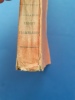
Le dos présente une insolation et une déchirure ( Cf. photo sur la page de fausse garde)
DERNIERES PENSEES
Un ouvrage de 259 pages, format 120 x 185 mm, illustré, broché, publié en 1912, Ernest Flammarion Editeur, collection "Bibliothèque de Philosophie Scientifique"
L'évolution des Lois ; L'Espace et le Temps ; Pourquoi l'espace a trois dimensions ; La logique de l'infini ; Les rapports de la Matière et de l'Ether ; La Morale et la Science, etc.
Phone number : 04 74 33 45 19
Poincaré (Henri) - Gaston Julia, ed. - René Garnier - Jacques Hadamard - Henri Villat - Louis de Broglie - Maurice de Broglie - M.N. Minorski - G. Darmois - G. Darrieus - Henri Poirier - André Weil - Hans Freudenthal - Laurent Schwartz - J. Lévy - W. Beth
Reference : 100874
(1955)
Le livre du centenaire de la naissance de Henri Poincaré 1854-1954 , (Les fonctions automorphes et la géométrie - Les mathématiques - La mécanique - La physique - La philosophie - L'édition des oeuvres de Poincaré - Sa vie et son oeuvre - La théorie des oscillations non linéaires - Calcul des probabilités - Electrotechnique - La valeur de la science - L'arithmétique - Equations différentielles de la physique - La mécanique céleste)
Gauthier-Villars et Cie, éditeurs à Paris Malicorne sur Sarthe, 72, Pays de la Loire, France 1955 Book condition, Etat : Bon relié, demi-toile rouge, pièce de titre en cuir, plats en papier relieur, reliure ordinare en très bon état, plats conservés In-4 1 vol. - 305 pages
1 planche en frontispice (2 faces de la médaille du centenaire) et un cahier de 58 planches dans le texte en noir et blanc avec quelques photographies et de très nombreux fac-similés de lettres, documents et manuscrits de la main de Poincaré, quelques figures scientifiques dans le texte également, complet 1ere édition, 1955 "Contents, Chapitres : Ce volume publié à l'occasion du centenaire de la naissance d'Henri Poincaré se divise en 6 parties avec les différentes manifestations organisées en France et à l'étranger, avec de très nombreux discours et hommages des scientifiques les plus éminents de l'époque. Parmi les articles conséquents, on peut citer : René Garnier : Les fonctions automorphes de Poincaré et la géométrie (pages 29 à 48, 14 figures géométriques) - Jacques Hadamard : Poincaré et les mathématiques (pages 50 à 57) - Henri Villat : Poincaré et la mécanique (57 à 61) - Louis de Broglie : Poincaré et les théories de la physique (62 à 71) - Maurice de Broglie : Poincaré et la philosophie (71 à 77) - Gaston Julia : L'édition des oeuvres de Poincaré (78 à80) - H. Poincaré, sa vie et son oeuvre (165 à 173) - M.N. Minorski : Influence de Poincaré sur l'évolution moderne de la théorie des oscillations non linéaires (120 à 126) - G. Darmois : Calcul des probabilités et ses applications (127 à 132) - G. Darrieus : Electrotechnique (132 à 139) - Henri Poirier : Poincaré et le problème de la valeur de la science (176 à 202) - A. Weil : Poincaré et l'arithmétique (206 à 212) - H. Freudenthal : Poincaré et les fonctions automorphes (212 à 219) - Laurent Schwartz : Equations différentielles de la physique (219 à 225) - J. Lévy : Poincaré et la mécanique céleste (225 à 232) - W. Beth : Poincaré et la philosophie (232 à 238) - Henri Poincaré est un mathématicien, physicien théoricien et philosophe des sciences français, né le 29 avril 1854 à Nancy et mort le 17 juillet 1912 à Paris. Poincaré a réalisé des travaux d'importance majeure en optique et en calcul infinitésimal. Ses avancées sur le problème des trois corps en font un fondateur de l'étude qualitative des systèmes d'équations différentielles et de la théorie du chaos ; il est aussi un précurseur majeur de la théorie de la relativité restreinte et de la théorie des systèmes dynamiques. Il est considéré comme un des derniers grands savants universels, maîtrisant l'ensemble des branches des mathématiques de son époque et certaines branches de la physique. (source : Wikipedia)" reliure ordinaire en très bon état avec de très discretes petites taches à peine visible sur la toile au bord gauche du plat supérieur, intérieur sinon très frais et propre, plats originaux conservés, bien complet de toutes les planches de documents, dont le frontispice, cela reste un bel exemplaire de cet ouvrage de prestige réalisé à l'occasion du centenaire de la naissance d'Henri Poincaré regroupant de nombreux petits textes sur la carrière scientifique de Poincaré certains des professeurs les plus émérites de l'époque (Broglie, Schwartz, Julia, Hadamard, Weil ou Hans Freudenthal) ainsi que de nombreux hommages, notamment celui à la Sorbonne, à l'Ecole Polytechnique ou à Nancy
Poincaré (Henri) - Gaston Darboux, N.E. Norlund et Ernest Lebon, eds.
Reference : 100871
(1916)
Oeuvres de Henri Poincaré publiées sous les auspices du Ministère de l'Instruction Publique par G. Darboux - Tome II (2) publié avec la collaboration de N.E. Norlund et Ernest Lebon - Fonctions fuchsiennes
Gauthier-Villars et Cie, éditeurs à Paris , Oeuvres d'Henri Poincaré - Académie des Sciences Malicorne sur Sarthe, 72, Pays de la Loire, France 1916 Book condition, Etat : Bon broché, sous couverture imprimée éditeur crème In-4 1 vol. - 703 pages
1 portrait d'Henri Poincaré en frontispice 1ere édition, 1916 "Contents, Chapitres : Préface de Gaston Darboux, Eloge historique d'Henri Poincaré par Gaston Darboux, LXXI (71 pages), Texte, 632 pages - Analyse pure : Sur les fonctions fuchsiennes - Sur une nouvelle application et quelques propriétés importantes des fonctions fuchsiennes - Sur les groupes kleiniens - Sur les groupes discontinus - Sur une fonction analogue aux fonctions modulaires - Sur une classe d'invariants relatifs aux équations linéaires - Sur les groupes des équations linéaires - Sur les groupes hyperfuchsiens - Sur les fonctions fuchsiennes et les formes quadratiques ternaires indéfinies - Grand prix des sciences mathématiques, géométrie - Sur les fonctions uniformes qui se reproduisent par des substitutions linéaires - Théorie des groupes fuchsiens - Mémoire sur les groupes kleiniens - Sur les groupes des équations linéaires - Mémoire sur les fonctions zétafuchsiennes - Les fonctions fuchsiennes et l'arithmétique - Fonctions modulaires et fonctions fuchsiennes - Notes par N.A. Norlund - Henri Poincaré est un mathématicien, physicien théoricien et philosophe des sciences français, né le 29 avril 1854 à Nancy et mort le 17 juillet 1912 à Paris. Poincaré a réalisé des travaux d'importance majeure en optique et en calcul infinitésimal. Ses avancées sur le problème des trois corps en font un fondateur de l'étude qualitative des systèmes d'équations différentielles et de la théorie du chaos ; il est aussi un précurseur majeur de la théorie de la relativité restreinte et de la théorie des systèmes dynamiques. Il est considéré comme un des derniers grands savants universels, maîtrisant l'ensemble des branches des mathématiques de son époque et certaines branches de la physique. (source : Wikipedia) - Poincaré est le fondateur de la topologie algébrique. Ses principaux travaux mathématiques ont eu pour objet la géométrie algébrique, des types de fonctions particuliers les fonctions dites « automorphes » (il découvre les fonctions fuchsiennes et kleinéennes), les équations différentielles La notion de continuité est centrale dans son travail, autant par ses répercussions théoriques que pour les problèmes topologiques qu'elle entraîne." bel exemplaire, infimes traces de pliures sans gravité sur le bord droit du plat supérieur, la couverture reste en très bon état, intérieur frais et propre, imprimé sur papier de qualité, cela reste un bel exemplaire - Tome 2 seul
"Oeuvres de Henri Poincaré publiées sous les auspices de l'Académie des Sciences par la Section de Géométrie par Paul Appell - Tome I (1) publié avec la collaboration de Jules Drach - dont la thèse d'Henri Poincaré : ""Sur les propriétés des fonctions définies par les équations aux différences partielles"" (présentée à la Faculté des Sciences, 1er août 1879) - Equations différentielles, intégrales, intégration, série, analyse"
Gauthier-Villars et Cie, éditeurs à Paris , Oeuvres d'Henri Poincaré - Académie des Sciences Malicorne sur Sarthe, 72, Pays de la Loire, France 1928 Book condition, Etat : Bon broché, sous couverture imprimée éditeur crème In-4 1 vol. - 409 pages
1ere édition, 1928 "Contents, Chapitres : Préface de Paul Appell - Première section : Analyse pure : 1. Présentation, CXXVII, Texte, 382 pages - Analyse des travaux de Henri Poincaré faite par lui-même, équations différentielles - Note sur les propriétés des fonctions définies par les équations différentielles - Sur les propriétés des fonctions définies par les équations aux différences partielles (Thèse présentée à la Faculté des Sciences, 1er août 1879) - Sur les courbes définies par une équation différentielle - Mémoire sur les courbes définies par une équation différentielle - Sur les courbes définies par les équations différentielles - Sur l'intégration des équations différentielles par les séries - Sur les séries trigonométriques - Sur les séries de polynomes - Sur les équations linéaires aux différentielles ordinaires et aux différences finies - Sur les intégrales irrégulières des équations linéaires - Remarques sur les intégrales irrégulières, réponse de M. Thomé - Extrait d'un mémoire - Notes de Jules Drach - Henri Poincaré est un mathématicien, physicien théoricien et philosophe des sciences français, né le 29 avril 1854 à Nancy et mort le 17 juillet 1912 à Paris. Poincaré a réalisé des travaux d'importance majeure en optique et en calcul infinitésimal. Ses avancées sur le problème des trois corps en font un fondateur de l'étude qualitative des systèmes d'équations différentielles et de la théorie du chaos ; il est aussi un précurseur majeur de la théorie de la relativité restreinte et de la théorie des systèmes dynamiques. Il est considéré comme un des derniers grands savants universels, maîtrisant l'ensemble des branches des mathématiques de son époque et certaines branches de la physique. (source : Wikipedia) - Poincaré est le fondateur de la topologie algébrique. Ses principaux travaux mathématiques ont eu pour objet la géométrie algébrique, des types de fonctions particuliers les fonctions dites « automorphes » (il découvre les fonctions fuchsiennes et kleinéennes), les équations différentielles La notion de continuité est centrale dans son travail, autant par ses répercussions théoriques que pour les problèmes topologiques qu'elle entraîne." infimes traces de pliures sur les bords des plats sans aucune gravité, tres légère trainée sombre sur le haut du bord gauche du plat supérieur, rien de grave, sinon bel exemplaire, intérieur frais et propre, imprimé sur papier de qualité, cela reste un bel exemplaire - Tome 1 seul
Poincaré (Henri) - Gaston Darboux, ed. - N.E. Nörlund et de Ernest Lebon
Reference : 100426
(1995)
Oeuvres d'Henri Poincaré publiées par Gaston Darboux - Tome II publié avec la collaboration de N.E. Nörlund et de Ernest Lebon - Fonctions fuchsiennes (Tome 2) , (Reprint en fac-similé de l'édition Gauthier-Villars, 1916)
Jacques Gabay , Les Grands Classiques Gauthier-Villars Malicorne sur Sarthe, 72, Pays de la Loire, France 1995 Book condition, Etat : Bon broché, sous couverture imprimée éditeur blanche, titre en rouge fort et grand In-8 1 vol. - 703 pages
Réimpression de 1999 de l'édition Gauthier-Villars de 1916 "Contents, Chapitres : Préface de Gaston Darboux, Eloge historique d'Henri Poincaré par Gaston Darboux, LXXI (71 pages), Texte, 632 pages - Henri Poincaré est un mathématicien, physicien théoricien et philosophe des sciences français, né le 29 avril 1854 à Nancy et mort le 17 juillet 1912 à Paris. Poincaré a réalisé des travaux d'importance majeure en optique et en calcul infinitésimal. Ses avancées sur le problème des trois corps en font un fondateur de l'étude qualitativea des systèmes d'équations différentielles et de la théorie du chaos ; il est aussi un précurseur majeur de la théorie de la relativité restreinte et de la théorie des systèmes dynamiques. Il est considéré comme un des derniers grands savants universels, maîtrisant l'ensemble des branches des mathématiques de son époque et certaines branches de la physique. - Poincaré est le fondateur de la topologie algébrique. Ses principaux travaux mathématiques ont eu pour objet la géométrie algébrique, des types de fonctions particuliers les fonctions dites « automorphes » (il découvre les fonctions fuchsiennes et kleinéennes), les équations différentielles La notion de continuité est centrale dans son travail, autant par ses répercussions théoriques que pour les problèmes topologiques qu'elle entraîne. (source : Wikipedia). Charles Auguste Briot, 1817-1882 est un mathématicien et physicien français. Il a publié plusieurs traités avec Bouquet concernant les fonctions elliptiques et les fonctions abéliennes. Il a aussi publié des travaux de physique mathématique : ""Essai sur la théorie mathématique de la lumière"" et ""Théorie mécanique de la chaleur"" d'après son cours donné à la faculté des sciences de Paris pendant l'année 1867-1868. Il conçoit de plus une formule de dispersion lumineuse éponyme, la formule de Briot. Jean-Claude Bouquet, 1819-1885, est un mathématicien français qui travailla notamment avec Charles Briot sur les fonctions doublement périodiques. - Lazarus Immanuel Fuchs (5 mai 1833 - 26 avril 1902) est un mathématicien allemand. Il a laissé son nom aux groupes fuchsiens et aux fonctions fuchsiennes (notions et adjectif créés par Henri Poincaré, avec qui il entretint une correspondance) ainsi qu'à l'équation de Picard-Fuchs et au théorème de Fuchs ; les équations différentielles fuchsiennes sont celles avec des singularités régulières. - Selon Rossana Tazzioli (2010) : ""Cest Poincaré qui, le premier, a compris le lien (tant profond quétonnant) entre la théorie des fonctions fuchsiennes et la géométrie non euclidienne, et pour comprendre ce lien il a dû passer par les groupes de transformations""." couverture à peine jaunie, sinon bel exemplaire, intérieur frais et propre
Oeuvres de Henri Poincaré publiées sous les auspices de l'Académie des Sciences par la Section de Géométrie - Tome V (5) publié avec la collaboration de Albert Chatelet - Algèbre et arithmétique
Gauthier-Villars et Cie, éditeurs à Paris , Oeuvres d'Henri Poincaré - Académie des Sciences Malicorne sur Sarthe, 72, Pays de la Loire, France 1950 Book condition, Etat : Bon broché, sous couverture imprimée éditeur crème In-4 1 vol. - 560 pages
1ere édition, 1950 "Contents, Chapitres : Préface de Louis de Broglie, note d'Albert Chatelet, viii, Texte, 552 pages - Analyse de ses travaux sur l'algèbre et l'arithmétique fait par H. Poincaré - Bibliographie des travaux d'algèbre et d'arithmétique - L'avenir des mathématiques -Etude algébrique des formes - Formes invariantes pour des substitutions - Nombres hypercomplexes - Zéros des polynomes - Algèbre de l'infini - Réseaux et formes quadratiques binaires - Fractions continues - Invariants arithmétiques - Formes quadratiques ternaires et groupes fuchsiens - Fonctions fuchsiennes arithmétiques - Etude arithmétique des formes cubiques ternaires - Réduction simultanée d'un système de formes - Formes binaires - Genre des formes - Nombres premiers - Arithmétique des courbes algébriques - Henri Poincaré est un mathématicien, physicien théoricien et philosophe des sciences français, né le 29 avril 1854 à Nancy et mort le 17 juillet 1912 à Paris. Poincaré a réalisé des travaux d'importance majeure en optique et en calcul infinitésimal. Ses avancées sur le problème des trois corps en font un fondateur de l'étude qualitative des systèmes d'équations différentielles et de la théorie du chaos ; il est aussi un précurseur majeur de la théorie de la relativité restreinte et de la théorie des systèmes dynamiques. Il est considéré comme un des derniers grands savants universels, maîtrisant l'ensemble des branches des mathématiques de son époque et certaines branches de la physique. (source : Wikipedia) - Poincaré est le fondateur de la topologie algébrique. Ses principaux travaux mathématiques ont eu pour objet la géométrie algébrique, des types de fonctions particuliers les fonctions dites « automorphes » (il découvre les fonctions fuchsiennes et kleinéennes), les équations différentielles La notion de continuité est centrale dans son travail, autant par ses répercussions théoriques que pour les problèmes topologiques qu'elle entraîne." couverture propre mais avec quelques rousseurs sur les plats, infime petite déchirure sur le haut du bord droit du plat supérieur, la couverture reste en bon état, intérieur très frais et propre, une page mal ouverte à l'ouverture, cela reste un bon exemplaire - Tome 5 seul
Oeuvres de Henri Poincaré publiées sous les auspices de l'Académie des Sciences par la Section de Géométrie - Tome IV (4) publié avec la collaboration de Georges Valiron - Analyse des travaux sur les fonctions d'une variable - Analyse des travaux sur les fonctions de deux variables - Analyse des travaux sur les fonctions abéliennes - Analyse des travaux sur diverses fonctions - Analyse des travaux d'astronomie
Gauthier-Villars et Cie, éditeurs à Paris , Oeuvres d'Henri Poincaré - Académie des Sciences Malicorne sur Sarthe, 72, Pays de la Loire, France 1950 Book condition, Etat : Très Bon relié, cartonnage éditeur, pleine percaline verte foncée imprimée In-4 1 vol. - 634 pages
1ere édition dans la série des Oeuvres de Poincaré, 1950 "Contents, Chapitres : Préface, ii, Texte, 632 pages - Analyse des travaux sur les fonctions d'une variable (Fonctions uniformes - Fonctions analytiques - Transcendantes entières - Fonctions entières - Fonctions à espaces lacunaires - Théorème de la théorie générale des fonctions - Uniformisation des fonctions analytiques) - Analyse des travaux sur les fonctions de deux variables (Fonctions de deux variables - Propriétés du potentiel et sur les fonctions abéliennes - Représentation conforme) - Analyse des travaux sur les fonctions abéliennes (Fonctions O - Sur un théorème de Riemann, en collaboration avec Emile Picard - Transformation des fonctions fuchsiennes et réduction des intégrales abéliennes) - Analyse des travaux sur diverses fonctions (Substitutions linéaires - Classe de transcendantes uniformes) - Analyse des travaux d'astronomie : Questions diverses (Séries trigonométriques - Convergence des séries trigonométriques, moyen d'augmenter la convergence - Divers (Sur la série de Laplace - Sur les intégrales irrégulières des équations linéaires) - Notes et commentaires - Henri Poincaré est un mathématicien, physicien théoricien et philosophe des sciences français, né le 29 avril 1854 à Nancy et mort le 17 juillet 1912 à Paris. Poincaré a réalisé des travaux d'importance majeure en optique et en calcul infinitésimal. Ses avancées sur le problème des trois corps en font un fondateur de l'étude qualitative des systèmes d'équations différentielles et de la théorie du chaos ; il est aussi un précurseur majeur de la théorie de la relativité restreinte et de la théorie des systèmes dynamiques. Il est considéré comme un des derniers grands savants universels, maîtrisant l'ensemble des branches des mathématiques de son époque et certaines branches de la physique. (source : Wikipedia) - Poincaré est le fondateur de la topologie algébrique. Ses principaux travaux mathématiques ont eu pour objet la géométrie algébrique, des types de fonctions particuliers les fonctions dites « automorphes » (il découvre les fonctions fuchsiennes et kleinéennes), les équations différentielles La notion de continuité est centrale dans son travail, autant par ses répercussions théoriques que pour les problèmes topologiques qu'elle entraîne." cartonnage à peine empoussiéré sans aucune gravité, sinon bel exemplaire, intérieur particulièrement frais et propre - Tome 4 seul
Oeuvres de Henri Poincaré publiées sous les auspices de l'Académie des Sciences par la Section de Géométrie - Tome III (3) publié avec la collaboration de Jules Drach - Analyse pure : Equations différentielles - Théorie des fonctions, intégrales simples et multuples
Gauthier-Villars et Cie, éditeurs à Paris , Oeuvres d'Henri Poincaré - Académie des Sciences Malicorne sur Sarthe, 72, Pays de la Loire, France 1965 Book condition, Etat : Bon relié, cartonnage éditeur, pleine percaline verte foncée imprimée In-4 1 vol. - 596 pages
nouveau tirage de 1965 "Contents, Chapitres : Première section : Analyse pure : 1. Equations différentielles (suite) : Sur un théorème de M. Fuchs - Sur l'intégration algébrique des équations différentielles - Sur l'intégration algébrique des équations différentielles du premier ordre et du premier degré - Sur les équations linéaires à intégrales algébriques - Sur l'intégration des équations linéaires par les moyens des fonctions abéliennes - Sur l'intégration algébrique des équations linéaires - Groupes continus - Quelques remarques sur les groupes continus, nouvelles remarques - 2. Théorie des fonctions, intégrales simples et multiples : Analyse des travaux sur les intégrales, faite par H. Poincaré - Bibliographie de la deuxième partie - Sur la réduction des intégrales abéliennes - Sur les intégrales de différentielles totales - Sur une généralisation du théorème d'Abel - Sur la réduction des intégrales abéliennes - Sur la réduction des intégrales abéliennes et la théorie des fonctions fuchsiennes - Sur les résidus des intégrales doubles - Remarques sur l'équation de Fredholm - Sur quelques applications de la méthode de Fredholm - Sur les équations de Fredholm - Remarques diverses sur l'équation de Fredholm - Notes et errata - Henri Poincaré est un mathématicien, physicien théoricien et philosophe des sciences français, né le 29 avril 1854 à Nancy et mort le 17 juillet 1912 à Paris. Poincaré a réalisé des travaux d'importance majeure en optique et en calcul infinitésimal. Ses avancées sur le problème des trois corps en font un fondateur de l'étude qualitative des systèmes d'équations différentielles et de la théorie du chaos ; il est aussi un précurseur majeur de la théorie de la relativité restreinte et de la théorie des systèmes dynamiques. Il est considéré comme un des derniers grands savants universels, maîtrisant l'ensemble des branches des mathématiques de son époque et certaines branches de la physique. (source : Wikipedia) - Poincaré est le fondateur de la topologie algébrique. Ses principaux travaux mathématiques ont eu pour objet la géométrie algébrique, des types de fonctions particuliers les fonctions dites « automorphes » (il découvre les fonctions fuchsiennes et kleinéennes), les équations différentielles La notion de continuité est centrale dans son travail, autant par ses répercussions théoriques que pour les problèmes topologiques qu'elle entraîne." cartonnage à peine empoussiéré sans aucune gravité, sinon bel exemplaire, intérieur particulièrement frais et propre - Tome 3 seul
Oeuvres de Henri Poincaré publiées sous les auspices de l'Académie des Sciences par la Section de Géométrie - Tome VIII (8) publié avec la collaboration de Pierre Semirot - Mécanique céleste et astronomie
Gauthier-Villars et Cie, éditeurs à Paris , Oeuvres d'Henri Poincaré - Académie des Sciences Malicorne sur Sarthe, 72, Pays de la Loire, France 1952 Book condition, Etat : Bon relié, cartonnage éditeur, pleine percaline verte foncée imprimée In-4 1 vol. - 693 pages
1ere édition dans la série des Oeuvres de Poincaré, 1952 "Contents, Chapitres : Analyse de ses travaux scientifiques par M. Poincaré - Fonctions perurbatrices et périodes des intégrales doubles - Figure de la Terre - Théorie des marées - Théorie de la Lune - Théorie des planètes - Quadratures mécaniques - Hypothèses cosmogoniques - Articles - Rapports - Conférences et errata - Henri Poincaré est un mathématicien, physicien théoricien et philosophe des sciences français, né le 29 avril 1854 à Nancy et mort le 17 juillet 1912 à Paris. Poincaré a réalisé des travaux d'importance majeure en optique et en calcul infinitésimal. Ses avancées sur le problème des trois corps en font un fondateur de l'étude qualitative des systèmes d'équations différentielles et de la théorie du chaos ; il est aussi un précurseur majeur de la théorie de la relativité restreinte et de la théorie des systèmes dynamiques. Il est considéré comme un des derniers grands savants universels, maîtrisant l'ensemble des branches des mathématiques de son époque et certaines branches de la physique. (source : Wikipedia)" cartonnage à peine empoussiéré sans aucune gravité, sinon bel exemplaire, intérieur particulièrement frais et propre - Tome 8 seul
Mémoire sur les fonctions zétafuchsiennes. (In: Acta Mathematica 5, 1884/1885). - [THE DISCOVERY OF AUTOMORPHIC FUNCTIONS]
Berlin, Stockholm, Paris, F. & G. Beijer, 1884. 4to. In contemporary half cloth. Stamps to title-page and last leaf. In ""Acta Mathematica"", no 5, 1884/1885. Entire issue offered. Pp. 209-278. [Entire issue: (4) 408 pp.].
First publication of this groundbreaking paper which together with his three other papers on the pubject (not offered here) constitute the discovery of Automorphic Functions. ""Before he was thirty years of age, Poincaré became world famous with his epoch-making discovery of the ""automorphic functions"" of one complex variable (or, as he called them, the ""fuchsian"" and ""kleinean"" functions)."" (DSB).These manuscripts, written between 28 June and 20 December 1880, show in detail how Poincaré exploited a series of insights to arrive at his first major contribution to mathematics: the discovery of the automorphic functions. In particular, the manuscripts corroborate Poincaré's introspective account of this discovery (1908), in which the real key to his discovery is given to be the recognition that the transformations he had used to define Fuchsian functions are identical with those of non-Euclidean geometry. (See Walter, Poincaré, Jules Henri French mathematician and scientist).The idea was to come in an indirect way from the work of his doctoral thesis on differential equations. His results applied only to restricted classes of functions and Poincaré wanted to generalize these results but, as a route towards this, he looked for a class functions where solutions did not exist. This led him to functions he named Fuchsian functions after Lazarus Fuchs but were later named automorphic functions. First editions and first publications of these epochmaking papers representing the discovery of ""automorphic functions"", or as Poincaré himself called them, the ""Fuchsian"" and ""Kleinian"" functions.""By 1884 Poincaré published five major papers on automorphic functions in the first five volumes of the new Acta Mathematica. When the first of these was published in the first volume of the new Acta Mathematica, Kronecker warned the editor, Mittag-Leffler, that this immature and obscure article would kill the journal. Guided by the theory of elliptic functions, Poincarë invented a new class of automorphic functions. This class was obtained by considering the inverse function of the ratio of two linear independent solutions of an equation. Thus this entire class of linear diffrential equations is solved by the use of these new transcendental functions of Poincaré."" (Morris Kline).Poincaré explains how he discovered the Automorphic Functions: ""For fifteen days I strove to prove that there could not be any functions like those I have since called Fuchsian functions, I was then very ignorant" every day I seated myself at my work table, stayed an hour or two, tried a great number of combinations and reached no results. One evening, contrary to my custom, I drank black coffee and could not sleep. Ideas rose in crowds I felt them collide until pairs interlocked, so to speak, making a stable combination. By the next morning I had established the existence of a Class of Fuchsian functions, those which come from hypergeometric series" i had only to write out the results, which took but a few hours...the transformations that I had used to define the Fuchsian functions were identical with those of Non-Euclidean geometry...""

