 Write to the booksellers
16 books for « hemsterhuis f »Edit
Vitae duumvirorum Tiberii Hemsterhusii et Davidis Ruhnkenii. Altera ab eodem Ruhnkenio, altera a Dan. Wyttenbachio scripta. Olim in Germania iunctim repetitae nunc iterum editae. Accessit Elogium Ioannis Meermanni, auctore Constantino Cras. Curavit Fridericus Lindemann.
Leipzig (Lipsiae), In Libraria Hinrichsiana, 1822.
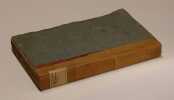
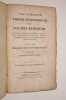
8vo. 284 p. Contemporary dull stiff wrappers 22 cm (Ref: Graesse 6/1,191; Ebert 19587; Brunet 4,1457) (Details: Margins uncut) (Condition: Spine covered with a strip of brown paper. Boards worn. Paper yellowing and foxed) (Note: The honour of reviving the study of Greek in the Netherlands belongs to the Dutch classical scholar Tiberius Hemsterhuis, 1685-1766, who became professor Mathematics and Philosophy at the Athenaeum of Amsterdam at the age of 19. His great example was the English classical scholar Richard Bentley, 1662-1742 with whom he corresponded early in his career. In 1705 Hemsterhuis was promoted to a professorship in Harderwijk, and in 1717 he was appointed professor of Greek at the University of Franeker. In 1740 he was finally called to Leiden. He produced an edition of Pollux (1706), 'Luciani colloquia et Timon' (1708), the complete works of Lucianus (1743) and of the Plutus of Aristophanes (1744), a work which Gudeman calls 'epochemachend'. He contributed also notes to the editions of many other scholars. Sandys observes that 'the work of a Hemsterhuis was worth whole bundles of the mechanically manufactured products of a Burman'. (Sandys 2,451) Hemsterhuis was the founder of a Dutch school of criticism, the so-called 'Schola Hemsterhusiana', which had disciples in Valckenaer, Jacob van Lennep and David Ruhnken. The last one was the most famous of his pupils. 'Hemsterhuis has had the supreme felicity of being immortalised by a 'laudator eloquentissimus'. The 'Elogium' delivered in 1768 by his devoted pupil Ruhnken, on resigning the office of Rector, is one of the Classics in the History of Scholarship. It presents us with the living picture of the perfect critic'. (Idem, ibidem) The Dutch scholar of German origin David Ruhnken, or Ruhnkenius, 1723-1798, was born in Pommern, and was sent by his parents in 1737 to the Friedrichscollegium in Königsberg, where he read Latin authors together with his friend Immanuel Kant. To finish his studies he went in 1744 to Leiden, to study Greek under Tiberius Hemsterhuis, whom he admired. He later told his biographer Wyttenbach that he found in his teacher the combined gems of Leiden classical scholarship, Scaliger and Salmasius, in one person. Hemsterhuis wanted to create a worthy successor, and appointed him to assist him as Reader in Greek. In 1761 Ruhnken succeeded the Latin chair vacated by Oudendorp. He became one of the leading scholars of his days. 'Die Führerstellung der Philologie erbte (...) von Hemsterhuys der Pommer David Ruhnken, der ganz zum Holländer ward und die vornehme und behäbige Würde eines Princeps criticorum zu wahren wusste. Als solchem hat ihm Fr.A. Wolf die Prolegomena gewidmet. (...) Musterhaftes Latein galt ihm soviel wie Wissenschaft. Aber als Lehrer muss er glänzend gewesen sein. (...) Alles was Ruhnken veröffentlicht hat, ist in seinen Grenzen tadellos'. (U. von Wilamowitz-Moellendorff, Geschichte der Philologie, Lpz./Bln. 1921, p. 39/40) Ruhnken was immortalized by Daniel Wyttenbach, 1746-1820, born at Bern in Switzerland, who came to Holland in 1770 to stay there, like Ruhnken before him. 'In the next 28 years he held professorships at Amsterdam (1771-99), and then returned to Leyden as Ruhnken's successor for 17 years (1799-1816)'. (Sandys 2,463) He published an edition of the complete Moralia of Plutarchus (with Latin translation) (1795-1806), a work of permanent value. On the death of Runken he became the most influential classical scholar in the Netherlands. 'The highest praise must be assigned to his 'Life of Ruhnken', a work of absorbing interest to his scholarly contemporaries, which still retains its importance as a comprehensive picture of the Scholarship of the Netherlands, and not of the Netherlands alone, in the age of Ruhnken'. (Idem 2/465) The third biography in this convolute concerns the Dutch politician, author and bibliophile Johannes Meerman, 1753-1815. The eulogy was first published in Amsterdam/The Hague in 1817. Lindemann was aware that Meerman was not a classical scholar, and that he in no way equalled Hemsterhuis and Ruhnken in scholarship and style, yet he added the Life, because he derived much pleasure from reading it, he tells in the preface, and hoped that it would stimulate young students ('iuvenes ad meliora eninentes et litterarum studia penitus amplecti cupientes'). (Praefatio editionis secundae, p. X) Meerman, who received private tuition from Ruhnken (p. 232) , is best known as a bibliophile. The Museum Meermanno, (House of the Book, Huis van het boek) in The Hague, formerly called Museum Meermanno-Westreenianum, was named after him, and holds part of his huge collection of rare books and manuscripts. The museum focuses on the written and printed book in all forms) (Collation: pi6 (minus blank leaf pi6), A-R8, S6 (signature of gathering S irregular)) (Photographs on request)
Oeuvres Philosophiques de F. Hemsterhuis. Nouvelle édition, revue et augmentee. Tome Premier [-Tome Second].
Paris, L. Haussmann, 1809. Very nice title-vignettes, 3 plates (2 folding), 13 tail-pieces, and 11 vignettes. Two volumes. xvi, 348, (2) pp.; (4), 359, (1) pp. 8vo. Near-contemporary half hard-grained morocco, spines gilt with raised bands and gilt lettering, marbled boards. Fresco, Geeraedts & Hammacher, Frans Hemsterhuis (1721-1790), Sources, Philosophy and Reception, p. 645; Brummel, p. 2; Petry, p. 164. Second and augmented edition, done by Hendrik Jansen, librarian of Talleyrand and future 'censeur impérial'. The book is dedicated to Talleyrand and has been augmented with the Lettre sur une pierre antique. Contains: Lettre sur la Sculpture; Lettre sur les Désirs; De l'Amour et de l'Égoisme; Lettre sur l'Homme et ses rapports; Description Philosophique du caractère de F.M. Fagel; Sophyle ou de la Philosophie; Aristée ou de la Divinité; Alexis ou l'Age d'Or; Simon ou des faculté de l'Ame; Lettre de Dicolès à Diotime sur l'Athéisme; Lettre de M. Jacobi à M. Hemsterhuis. This last letter by Jacobi adressed to Hemsterhuis deals with Spinoza, volume one includes Herder's essay on love and egoism (v. 1, p. [91]-130).Frans Hemsterhuis (1721-1790), Dutch philosopher. His life and philosophy may be divided into two periods. In the first period the Lettres sur l'Homme et ses rapports was his principal work, preceded by two small, closely connected treatises, Lettres sur la Sculpture and Lettre sur les Désirs in which works Hemsterhuis argued that the essence of the aesthetic experience is longing to unite oneself with the art object. This concept became part of his theory of ethics which is set out in the Lettre sur les Désirs. The theory is further developed in Alexis ou l'Age d'Or, on which the Platonic dialogues of his second period are based. In this second period he wrote four Platonic dialogues the most important of which are Aristée ou de la Divinitée, and Alexis ou de l'âge d'or. In Alexis Hemsterhuis, perhaps influenced by contemporary German philosophy, presented for the first time his concept of the golden age and the harmonious development of the individual. He also introduced the notion of the value of poetical truth (truth discovered by the poet in moments of enthusiasm). With these ideas Hemsterhuis had moved far from his earlier rationalism, and his thought was received with admiration and approval by representatives of the Sturm und Drang and romatic movements in philosophy. In this period he was very popular with and influenced the two Schlegels and Novalis.Provenance: the English philosopher Henry Longueville Mansel, with his engraved ex-libris, with stamps of Mansfield College Library, Oxford, and stamp of the bookdealer Danielle Cousin (Rennes) in both volumes, a bit browned and spotted.


(NVVA, )
Phone number : 31 20 698 13 75
Elogium Tiberii Hemsterhusii, auctore Davide Ruhnkenio. Accedunt duae Richardi Bentleji epistolae ad Hemsterhusium. Vita Davidis Ruhnkenii, auctore Daniele Wyttenbachio. Cum praefatione et annotatione edidit Joannes Theodorus Bergman.
Leiden (Lugduni Batavorum), Apud S. & J. Luchtmans, Amsterdam (Amstelodami), Apud P. den Hengst et Filium, 1824.
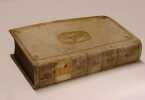
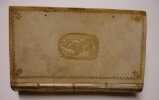
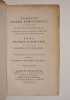
8vo. (VIII),XLIV,(IV);532 p. Vellum 22 cm (Ref: Ebert 24055: 'Beste Ausgabe dieser beiden Meisterwerke'; Graesse 6/1,191 & 6/2,481; Spoelder p. 545, Dordrecht 2) (Details: Prize copy, but without the prize. Back and boards gilt, gilt coat of arms of Dordrecht in the centre of both boards. The last 230 pages contain the notes of Bergman) (Condition: Prize gone. Vellum age-toned, back soiled, red label in the 'second compartment' gone. Upper board slightly curved. Several marginal pencil annotations and some foxing) (Note: The honour of reviving the study of Greek in the Netherlands belongs to the Dutch classical scholar Tiberius Hemsterhuis, 1685-1766, who became professor Mathematics and Philosophy at the Athenaeum of Amsterdam at the age of 19. His great example was the English classical scholar Richard Bentley, 1662-1742, Master of Trinity College, Cambridge, with whom he corresponded early in his career. In 1705 Hemsterhuis was promoted to a professorship in Harderwijk, and in 1717 he was appointed professor of Greek at the University of Franeker. In 1740 he was finally called to Leiden. He produced an edition of Pollux (1706), 'Luciani colloquia et Timon' (1708), the complete works of Lucianus (1743) and of the Plutus of Aristophanes (1744), a work which Gudeman calls 'epochemachend'. He contributed also notes to the editions of many other scholars. Sandys observes that 'the work of a Hemsterhuis was worth whole bundles of the mechanically manufactured products of a Burman'. (Sandys 2,451) Hemsterhuis was the founder of a Dutch school of criticism, the so-called 'Schola Hemsterhusiana', which had disciples in Valckenaer, Jacob van Lennep and David Ruhnken. The last one was the most famous of his pupils. 'Hemsterhuis has had the supreme felicity of being immortalised by a 'laudator eloquentissimus'. The 'Elogium' delivered in 1768 by his devoted pupil Ruhnken (...) is one of the Classics in the History of Scholarship. It presents us with the living picture of the perfect critic'. (Idem, ibidem) The Dutch scholar of German origin David Ruhnken, or Ruhnkenius, 1723-1798, was born in Pommern, and was sent by his parents in 1737 to the Friedrichscollegium in Königsberg, where he read Latin authors together with his friend Immanuel Kant. To finish his studies he went in 1744 to Leiden, to study Greek under Tiberius Hemsterhuis, whom he admired. He later told his biographer Wyttenbach that he found in his teacher the combined gems of Leiden classical scholarship, Scaliger and Salmasius, in one person. Hemsterhuis wanted to create a worthy successor and appointed him in 1757 to assist him as Reader in Greek. In 1761 Ruhnken succeeded the Latin chair vacated by Oudendorp. He became one of the leading scholars of his days. 'Die Führerstellung der Philologie erbte (...) von Hemsterhuys der Pommer David Ruhnken, der ganz zum Holländer ward und die vornehme und behäbige Würde eines Princeps criticorum zu wahren wusste. Als solchem hat ihm Fr.A. Wolf die Prolegomena gewidmet. (...) Musterhaftes Latein galt ihm soviel wie Wissenschaft. Aber als Lehrer muss er glänzend gewesen sein. (...) Alles was Ruhnken veröffentlicht hat, ist in seinen Grenzen tadellos'. (U. von Wilamowitz-Moellendorff, Geschichte der Philologie, Lpz./Bln. 1921, p. 39/40) Ruhnken was immortalized by Daniel Wyttenbach, 1746-1820, born at Bern in Switzerland, who came to Holland in 1770 to stay there, like Ruhnken before him. 'In the next 28 years he held professorships at Amsterdam (1771-99), and then returned to Leyden as Ruhnken's successor for 17 years (1799-1816)'. (Sandys 2,463). He published an edition of the complete Moralia of Plutarchus (with Latin translation) (1795-1806), a work of permanent value. On the death of Runken he became the most influential classical scholar in the Netherlands. 'The highest praise must be assigned to his Life of Ruhnken, a work of absorbing interest to his scholarly contemporaries, which still retains its importance as a comprehensive picture of the Scholarship of the Netherlands, and not of the Netherlands alone, in the age of Ruhnken'. (Idem 2/465)) (Provenance: in ink on front flyleaf: 'W.J.W. Kosteri ex libris'. The specialties of the Dutch scholar Willem Johan Wolff Koster, 1896-1986, were metrics and Aristophanes. In his dissertation 'De Re Metrica tractatus Graeci inediti' , Leiden 1922, he argued that the current views concerning Greek metrics were founded on an unstable basis, and that it would be wise to return to the sources, the ancient tractates on metrics. Very influential was his 'Traité de métrique grecque' of 1936, 4th. edition 1966. In 1940 he was appointed professor of Greek at the University of Groningen. Linked to his interest was his work on the metrics and the scholia of Aristophanes. In 1927 he already published 'Scholia in Aristophanis Plutum et Nubes', which was only the start of his 'opus magnum', the edition of the 'Scholia in Aristophanem', a scholarly entreprise of nearly half a century, that started in 1960 under his supervision, and then of D. Holwerda, who has seen it through to completion with the appearance of the scholia to the Thesmophoriazusae and Ecclesiazusae in 2007. This enormous project offers the first new critical edition of the complete scholia to Aristophanes since Dübner's in 1842. (J.C. Kamerbeek, 'Levensbericht W.J.W. Koster', in: Jaarboek, 1988, Amsterdam, p. 140/45. See also the review of R. Tordoff: 'R.F. Regtuit (ed.), Scholia in Thesmophoriazusas; Ranas; Ecclesiazusas et Plutum. Scholia in Aristophanem, III 2/3', Bryn Mawr Classical Review 2008.09.24)) (Collation: pi4, *-3*8; A-2K8, 2L2) (Photographs on request)
Elogium Tiberii Hemsterhusii auctore Davide Ruhnkenio.
Leiden (Lugduni Batavorum), Apud Sam. et Joh. Luchtmans, Academiae Typographos, 1768.
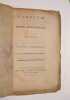
8vo. 60,(4 blank) p. Contemporary paper wrappers 22 cm (Ref: STCN ppn 240927982) (Details: First edition. Margins uncut) (Condition: Cover worn. Right edge thumbed and slightly chipping. Paper yellowing) (Note: The honour of reviving the study of Greek in the Netherlands belongs to the Dutch classical scholar Tiberius Hemsterhuis, 1685-1766, who was appointed professor Mathematics and Philosophy at the Athenaeum of Amsterdam at the age of 19. His great example was the English classical scholar Richard Bentley, 1662-1742, Master of Trinity College, Cambridge, with whom he corresponded early in his career. In 1705 Hemsterhuis was promoted to a professorship in Harderwijk, and in 1717 he was appointed professor of Greek at the University of Franeker. In 1740 he was finally called to Leiden. He produced an edition of Pollux (1706), 'Luciani colloquia et Timon' (1708), the complete works of Lucianus (1743) and of the Plutus of Aristophanes (1744), a work which Gudeman calls 'epochemachend'. He contributed also notes to the editions of many other scholars. Sandys observes that 'the work of a Hemsterhuis was worth whole bundles of the mechanically manufactured products of a Burman'. (Sandys 2,451) Hemsterhuis was the founder of a Dutch school of criticism, the so-called 'Schola Hemsterhusiana', which had disciples in Valckenaer, Jacob van Lennep and David Ruhnken. The last one was the most famous of his pupils. 'Hemsterhuis has had the supreme felicity of being immortalised by a 'laudator eloquentissimus'. The 'Elogium' delivered in 1768 by his devoted pupil Ruhnken, on resigning the office of Rector, is one of the Classics in the History of Scholarship. It presents us with the living picture of the perfect critic'. (Idem, ibidem) The Dutch scholar of German origin David Ruhnken, or Ruhnkenius, 1723-1798, was born in Pommern, and was sent by his parents in 1737 to the Friedrichscollegium in Königsberg, where he read Latin authors together with his friend Immanuel Kant. To finish his studies he went in 1744 to Leiden, to study Greek under Tiberius Hemsterhuis, whom he admired. He later told his biographer Wyttenbach that he found in his teacher the combined gems of Leiden classical scholarship, Scaliger and Salmasius, in one person. Hemsterhuis wanted to create a worthy successor, and appointed him in 1757 to assist him as Reader in Greek. In 1761 Ruhnken succeeded the Latin chair vacated by Oudendorp. He became one of the leading scholars of his days. 'Die Führerstellung der Philologie erbte (...) von Hemsterhuys der Pommer David Ruhnken, der ganz zum Holländer ward und die vornehme und behäbige Würde eines 'Princeps criticorum' zu wahren wusste. Als solchem hat ihm Fr.A. Wolf die Prolegomena gewidmet. (...) Musterhaftes Latein galt ihm soviel wie Wissenschaft. Aber als Lehrer muss er glänzend gewesen sein. (...) Alles was Ruhnken veröffentlicht hat, ist in seinen Grenzen tadellos'. (U. von Wilamowitz-Moellendorff, Geschichte der Philologie, Lpz./Bln. 1921, p. 39/40) (Collation: A-D8 (leaf D7 & D8 blank)) (Photographs on request)
Oeuvres philosophiques.
1792 2 volumes in-8, plein veau havane, dos à nerfs (rel. moderne), viij, 310 p. et 323 p., vignettes, culs-de-lampe et 3 planches dépliantes. Paris, H.J. Jansen, 1792.
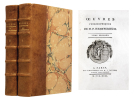
Première édition illustrée de 3 planches dont 2 dépliantes et de jolies vignettes. Chaque oeuvre figure sous page de titre particulière. Bien que diffusée confidentiellement, l'oeuvre d'Hemsterhuis exerça une influence majeure sur ses contemporains: Diderot, qui le fréquenta et le commenta, Friedrich Heinrich Jacobi dont la 'Lettre à M Hemsterhuis' sur Spinoza (1784) est insérée pour la première fois dans cette édition, mais aussi Herder, Goethe, Hölderlin, Novalis et Schlegel."Les thèmes des données immédiates de la conscience et du retour à la vie simple quillustrera Bergson sont toujours présents (). Bien avant les romantiques, il proclame lunion de la poésie et de la philosophie dans un éloge de lenthousiasme qui met limagination à la source de toute appréhension de la vérité (). Lapport fondamental de Hemsterhuis à la pensée de son temps est de lavoir, par son platonisme, écarté de tout empirisme et de tout matérialisme sans pour autant la limiter à une fonction critique, mais en lui restituant son sens métaphysique" (J.-L. Vieillard-Baron, 'Hemsterhuis platonicien', in XVIIIe siècle, VII, 1975, p. 129-146). Sur l'importance de l'oeuvre d'Hemsterhuis, sa singularité et ses recherches visant à "retrouver l'originalité profonde du spinozisme et à la dégager des perversions modernes", cf. P. Vernière, 'Spinoza et la pensée française', p. 668-673.(R.E. Stoddard, 'Hemsterhuis, bibliography', "The Book collector", vol. 50/2, n°13, p. 197).Faux-titre du tome I légèrement grisé dans la marge. Petit défaut à un mors. Quelques petites rousseurs et piqûres éparses.Bon exemplaire, frais, non rogné.
Lettre sur l'Homme et ses rapports.
Paris, , 1772. In-8 de 242, pp., maroquin vert, dos orné à nerfs, pièce de titre en maroquin rouge, large roulette dorée sur les plats, tranches dorées (reliure de l'époque).
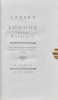
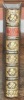
Édition originale rare. Exemplaire imprimé sur grand papier de Hollande. François Hemsterhuis (1721-1790), "le Platon hollandais", s'occupa principalement d'esthétique et de philosophie morale ; attaché au Conseil d’État des Provinces-Unies à La Haye de 1755 à 1780, il se lia à la même époque à la famille Galitzin et sollicita Diderot à propos de sa Lettre sur l'Homme et ses rapports publiée en 1772 - dont le commentaire n'apparaîtra que deux siècles plus tard. « Hemsterhuis voulait, selon ses propres termes, démontrer que "la raison seule (…) ne saurait jamais nous mener aux systèmes de matérialisme et de libertinage". Apparemment, bien qu'il ne le dît pas explicitement, il tentait de réfuter le Système de la Nature de d'Holbach. La Lettre sur l'Homme et ses rapports était un livre petit, mais très ambitieux. Il était également réactionnaire en ce sens qu'il déplorait dès le début que la liberté de la presse portât préjudice à la morale. Bref, dans un texte lapidaire, Hemsterhuis mettait en question tout ce à quoi Diderot tenait le plus et aimait le plus profondément, si bien que sa réaction est d'une importance capitale pour parvenir à comprendre sa philosophie. Se fondant au départ sur le postulat d'une philosophie idéaliste, Hemsterhuis soulevait vivement mais maladroitement toutes les questions métaphysiques et éthiques qui avaient assailli l'humanité depuis Platon. Pour faire des observations sur ces problèmes, Diderot dut naturellement répliquer sur un front très vaste, et donc le commentaire sur Hemsterhuis nous donne l'occasion d'embrasser d'un seul regard l'ensemble de la philosophie de Diderot » (Wilson). Bel exemplaire de présent ; une note manuscrite ancienne indique « Présent de l'auteur de l'essai sur les Désirs ». Roger Stoddard, A Bibliographical List of Books by François Hemsterhuis (1721-1790) (The Book Collector 2001, 189-201), n°4a ; Wilson, Diderot sa vie son oeuvre, pp. 539-540.
Alexis, ou de l’Âge d’or.
Riga, Jean Frédéric Hartknoch, 1787. In-12 de 188 pp. 2 ff. blancs, 1 planche repliée, maroquin rouge, dos lisse orné, pièce de titre en veau vert, plats décorés, dentelle intérieure, tranches dorées (reliure de l'époque).
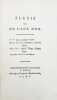
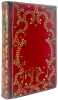
Édition originale rare illustrée d'un diagramme géométrique sans une reliure de l'époque de Thomas Van Os.François Hemsterhuis (1721-1790), "le Platon hollandais", s'occupa principalement d'esthétique et de philosophie morale. Attaché au Conseil d’État des Provinces-Unies à La Haye de 1755 à 1780, il se lia à la même époque à la famille Galitzin et sollicita Diderot à propos de sa Lettre sur l'Homme et ses rapports publiée en 1772. Alexis ou de l’Âge d’or appartient aux quatre Dialogues platoniques dédiés à Amélie Galitzin, qui ouvrent une nouvelle période « perhaps influenced by contemporary German philosophy, presented for the first time his concept of the golden age and the harmonious development of the individual. [...] His thought was received with admiration and approval by representatives of the Sturm und Drang and romantic movements in philosophy » (Leendert Brummel).Bel exemplaire relié par Thoms Van Os : « In the last quarter of the eighteenth century Thomas van Os was without any doubt the best binder in The Hague and probably in the whole of the Netherlands. His most beautiful bindings, like some for Hemsterhuis, have a frame of lacework on the covers with an undulating contour, which consists of arcs in different sizes, small leaves, fruits, birds and insects in a composition that is only symmetrical with respect to the longitudinal axes of the covers and is sometimes even totally asymmetrical. Thus van Os was the only Dutch binder of his time to translate the asymmetry of Rococco in terms of gold tooling. His technique stands the comparison with that of the best binders ».Roger Stoddard, A Bibliographical List of Books by François Hemsterhuis (1721-1790) (The Bookollector 2001, 189-201), n°11 ; Storm v. Leeuwen, IIa, pp. 209-213 ; Storm van Leeuwen, 18de-eeuwse Haagse Boekband, Cat. 289 (p. 351) pour une reliure similaire ; Fresco, Geeraedts & Hammacher, Frans Hemsterhuis (1721-1790), Sources, Philosophy and Reception, p. 644.
Aristée ou de la divinité.
A Paris [Haarlem ou La Haye], , 1779. In-12 relié sur brochure de (2)-X-208 pp., dem-vélin, dos lisse orné, pièce de titre en maroquin rouge, entièrement non rogné (reliure du XIXe siècle).
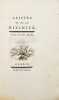
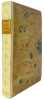
Édition originale tirée à petit nombre.François Hemsterhuis (1721-1790), "le Platon hollandais", s'occupa principalement d'esthétique et de philosophie morale. Attaché au Conseil d’État des Provinces-Unies à La Haye de 1755 à 1780, il se lia à la même époque à la famille Galitzin et sollicita Diderot à propos de sa Lettre sur l'Homme et ses rapports publiée en 1772. Alexis ou de l’Âge d’or appartient aux quatre Dialogues platoniques dédiés à Amélie Galitzin, qui ouvrent une nouvelle période « perhaps influenced by contemporary German philosophy, presented for the first time his concept of the golden age and the harmonious development of the individual. [...] His thought was received with admiration and approval by representatives of the Sturm und Drang and romantic movements in philosophy » (Leendert Brummel).Bel exemplaire relié sur brochure.Roger Stoddard, A Bibliographical List of Books by François Hemsterhuis (1721-1790) (The Bookollector 2001, 189-201), n°9 ; Fresco, Geeraedts & Hammacher, Frans Hemsterhuis (1721-1790), Sources, Philosophy and Reception, p. 644
Aristée ou de la Divinité.
Paris (La Haye) : [Ch. W. F. Dumas], 1779. UN TRAITÉ SUR L'ÂME DU PHILOSOPHE BIBLIOPHILE
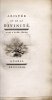
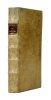
In-12° (188 x 120 mm, hauteur : 183 mm), [1] f. bl. - x - 208 pp. (sign *6 A-R6), vélin à recouvrements, dos à 5 nerfs, tête rouge, non rogné en queue, témoins en gouttière (reliure pastiche de la fin du XIXe siècle). Exemplaire grand de marges de cette édition originale imprimée sur papier fort de Hollande à petit nombre et non mise dans le commerce illustrée de 4 vignettes en taille-douce. Il s'agit ici du plus important des 4 dialogues platoniciens de l'auteur avec Alexis ou de l'âge d'or. « Hemsterhuis, qui croyait à l'origine en un dieu personnel, est converti à un clair panthéisme. L'omniprésence de dieu est à la base de la relation de l'homme avec lui, et c'est principalement grâce à l'« organe moral » comme on l'appelle, que l'homme est capable de s'approcher de dieu. » (Gale, Encycl. of Phil., 2006, III, p. 474). François Hemsterhuis (1721-1790), né à Franeker en Frise, ne fut pas un philosophe de troisième rang, épigone venu trop tard ou adversaire borné d'une philosophie jugée trop audacieuse à son goût. Il enthousiasma les penseurs et poètes du « Sturm und Drang » avant de captiver les premiers Romantique. Il est considéré comme un précurseur de Novalis, Schiller et Schlege. L'oubli quasi général dans lequel il est tombé de nos jours contraste avec une réelle notoriété d'époque. Bien qu'assez peu connu à Paris, il eut de nombreux lecteurs au large de l'Europe française des Lumières dont il remit en cause le rationalisme. Bibliophile, il fit imprimer les éditions originales de ses oeuvres à petit nombre et avec le plus grand soin typographique par l'imprimeur de La Haye, Ch. W. F. Dumas. Complet du premier feuillet blanc *1 qui manque souvent. Provenance : Eugène Forgues avec son ex-libris gravé contrecollé au premier contreplat, qui commença comme son père - Paul-Émile Daurand-Forgues (également connu sous les pseudonymes d'Old Nick et de Tim), journaliste, critique littéraire et écrivain - par collaborer à diverses revues. En 1884, il publie Mémoires et relations politiques du baron de Vitrolles, puis continue l'oeuvre de son père en publiant Lettres inédites de Lamennais à Montalembert en 1898. Il publiera aussi Le dossier secret de Fouché (juillet-septembre 1815) ainsi qu'une Vie de Gavarni. Magistrat colonial, il séjourna à la Martinique, en Guadeloupe, Indochine et à Madagascar. En 1912 à sa retraite, il est premier président de la Cour d'Appel.
Lettre sur l'Homme et ses rapports.
Paris, s.n. [Harlem], 1772. 1 vol. in-12, veau fauve marbré, dos à nerfs orné de fleurons dorés, large roulette formant dentelle d'encadrement sur les plats, roulette dorée intérieure, tranches dorées. Reliure de l'époque, mors fendillés, petit manque de cuir sur un des plats, coins émoussés, petits accrocs aux coiffes. Toutefois, agréable exemplaire. 242 pp. Quelques petites rousseurs.
Edition originale rare de cet important essai philosophique qui fixe des limites au matérialisme et remet en cause les thèses développées dans le Système de la Nature du baron d'Holbach. Lors de son voyage en Hollande en 1773, Hemsterhuis en avait confié un exemplaire au philosophe français qui l'annota considérablement et en écrivit une réfutation (Observations sur la Lettre sur l'Homme et ses rapports) qui fut publiée de façon posthume. Agréable exemplaire à grandes marges, sur grand papier de Hollande. Quérard IV, 62.
Oeuvres complètes de F. Hemsterhuis. En 2 TOMES
HAUSSMAN L.. 1809. In-12. Broché. Etat passable, Couv. remarquable, Mors fendus, Rousseurs. 348 + 359 pages. Quelques Eaus-Fortes en pages de titre, bandeaux et culs-de-lampe. Une planche et deux planches dépliantes gravées en noir et blanc, en fin de Tomes. Manque les 2 plats de couverture sur le 1er Tome. Quelques manques sur son dos. Dos du 2nd Tome légèrement fendu.. . . . Classification Dewey : 830-Littératures des langues germaniques
Tome 1er : Lettre sur la Sculpture, De l'Amour et de l'Egoïsme, Description philosophique du caractère de feu - Sophyle ... Tome 2nd : Aristée - Alexis - Simon, ou des Facultés de l'Ame - Lettres de Dioclès, sur l'Athéisme ... Classification Dewey : 830-Littératures des langues germaniques
Sophyle ou de la philosophie
A Paris Sélection Neiges d'Antan Relié 1778 RARE. EDITION ORIGINALE 1778. In-12 (11 x 18,5 cm), jolie reliure d'époque plein veau camel, ornements encadrant le premier plat, pièce de titre au dos portant autrefois un décor empressé à froid, tranches dorées, signet, papier à la cuve marbré aux gardes restauré, grandes marges sur grand papier, sans mention d'auteur ou d'éditeur ; dorure de tête passée, la pièce de cuir empressé contre-collée au dos présente des manques en tête et queue (sans que cela n'altère l'intégrité du dos), coins usés, bords frottés, griffures et traces (surtout au 4e plat), intérieur frais, bon état pour cette reliure. Livraison a domicile (La Poste) ou en Mondial Relay sur simple demande.
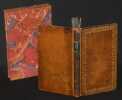
Aristée ou de la Divinité.
" Paris ('s Gravenhage), 1779, in-8°, 17 x 10 cm, title with engraved vignet + ii-viii + 208 pp with three engraved vignets, early 19th century full red morocco, triple gilt fillets on both covers, smooth gilt back, all edges gilt. Very nice copy with wide margins and printed on thick laid paper. First edition of this philosophical treatise on the faculties of the soul; imagination, intelligence, desire and moral feeling. Hemsterhuis, born in Franeker (Friesland) is considered a precursor to Novalis, Schiller and Schlegel. The author was himself a bibliophile, the original editions of his works were printed in small numbers and with the highest typographical care by the The Hague printer Ch.W.F.Dumas."
Aristée ou de la Divinité.
" Paris ('s Gravenhage), 1779, in-8°, 17 x 10 cm, title with engraved vignet + ii-viii + 208 pp with three engraved vignets, ontemporary green morocco, large floral gilt fillets on both covers, raised gilt spine, all edges gilt.. Nice copy with wide margins and printed on thick laid paper. Binding with some signs of use at extremities, title label on spine is missing. First edition of this philosophical treatise on the faculties of the soul; imagination, intelligence, desire and moral feeling. Hemsterhuis, born in Franeker (Friesland) is considered a precursor to Novalis, Schiller and Schlegel. The author was himself a bibliophile, the original editions of his works were printed in small numbers and with the highest typographical care by the The Hague printer Ch.W.F.Dumas."
Lettre sur la sculptureprécédée de laLettre sur une pierre antique
énsb-a, Paris, 1991. In-8, broché sous couverture illustrée en couleurs, 63 pp. - pl. Préface de Emmanuelle Baillon - Lettre sur une pierre antique du Cabinet de M. Théodore de Smeth, ancien président des échevins de la ville d'Amsterdam - Lettre sur la Sculpture à M. Théodore de Smeth, ancien président des échevins de ...
Avec 2 planches en noir in fine. --- Plus d'informations sur le site archivesdunord.com

