 Write to the booksellers
71 books for « haan a a m de »Edit
-
Language
Dutch (1)
French (69)
Russian (1)
-
Century
20th (34)
21st (2)
-
Countries
Belgium (25)
France (38)
Netherlands (4)
Switzerland (3)
United States of America (1)
-
Syndicate
CLAM (1)
ILAB (22)
SLAM (21)
Topics
- Amsterdam (1)
- Anatomy (1)
- Archaeology (1)
- Architecture (5)
- Belgium (1)
- Children’s books (1)
- Cinema (1)
- Dictionaries (1)
- Drug addiction (1)
- England (1)
- Ex-libris (1)
- Fishing hunting (1)
- Folklore (2)
- Ghetto (1)
- Greek (2)
- Hebraic literature (2)
- History (3)
- Holland (2)
- Holocaust (1)
- Hugo victor (25)
- Humanism (1)
- Industrial arts & crafts - fine arts (1)
- Israel (2)
- Jacob (3)
- Journalism (1)
- Latin (1)
- Medicine (1)
- Naturalist (1)
- Nazism (1)
- Painting (1)
- Palestine (2)
- Philosophy (4)
- Photography (1)
- Psychiatry neurology (1)
- Religions (2)
- Rubens (1)
- Sciences (1)
- Sculpture (1)
- Shoah (1)
- Switzerland (1)
- United kingdom (1)
- War (1)
- Wieviorka annette (1)
- Wildlife (1)
- Woods & woods’ price lists (1)
D. Bierens de Haan. Bibliographie néerlandaise historique-scientifique : Des ouvrages importants dont les auteurs sont nés aux 16e, 17e et 18e siècles, sur les sciences mathématiques et physiques, avec leurs applications [Unknown Binding] Bierens de Haan, David
EDITION DE 1965. Reliure toilée de l'éditeur, parfait état
Merci de nous contacter à l'avance si vous souhaitez consulter une référence dans notre boutique à Authon-du-Perche.
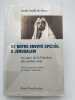
De notre envoyé spécial à Jérusalem : Au coeur de la Palestine des années vingt. Chroniques parues dans l'Algemeen Handelsblad d'Amsterdam (de 1919 à 1924).
Waterloo, André Versaille, 2013, gr. in-8°, 268 pp, édition présentée et établie par Nathan Weinstock, ouvrages cités, index, broché, couv. illustrée, bon état
Enthousiasmé par la perspective de participer à l'édification d'un Foyer national juif, Jacob Israël de Haan quitte sa Hollande natale en 1919 pour s'installer à Jérusalem. Ce poète, romancier et juriste y renoue avec la foi ancestrale et se lie à la mouvance juive ultra-orthodoxe. Au point de s'en faire le porte-parole lorsque ce courant dissident entre en conflit avec la direction sioniste. Devenu la cible d'une haine implacable, il sera abattu, en pleine rue, en 1924. En tant que correspondant du quotidien amstellodamois Algemeen Handelsblad, de Haan a laissé derrière lui près de 400 reportages rédigés sous forme de feuilletons quasi quotidiens de « choses vues » et de faits vécus en Terre Sainte, tant en milieu juif qu'arabe. Ces échos, qui comprennent notamment des interviews des leaders nationalistes arabes de l'époque, constituent - dans l'esprit du précepte d'Albert Londres « porter la plume dans la plaie » - une chronique fascinante de la vie palestinienne au cours des années 1919-1924 et nous offrent une vue aussi pénétrante que personnelle des « travaux et des jours » de sa population composite à l'époque du mandat britannique. Les commentaires, à l'occasion acerbes, y alternent avec des observations captivantes, une ironie parfois féroce avec des passages poignants. Notamment lorsqu'il décrit les mouvements arabes de protestation qui virent au pogrom sanglant ou quand il fait état de lettres le menaçant de mort. Des reportages passionnants qui restituent admirablement le climat et l'ambiance de l'époque, et qui sont à mettre dans la lignée de ceux de Joseph Kessel ou d'Albert Londres. Désormais les frais d'envoi sont de 6 € seulement pour les livres jusqu'à 1 kg (colissimo suivi), pour la France métropolitaine.
De notre envoyé spécial à Jérusalem. Au coeur de la Palestine des années vingt
André Versaille Paris, André Versaille éditeur, 2013. Grand In-8 broché de 268 pages. Edition présentée et établie par Nathan Weinstock. La trajectoire de Jacob Israël de Haan est d'un romanesque et d'une tragédie absolus. Passionné, sioniste de la première heure émigré en Palestine en 1919, il change radicalement de posture en découvrant la réalité du terrain. Devenu le porte-parole de la communauté juive ultra-orthodoxe (qui refusait la création d'un État laïque) et fervent défenseur d'une entente pacifique avec les populations arabes, il est considéré comme un traître par les milices sionistes de l'époque. Il est assassiné à Jérusalem en juin 1924 par la Haganah, devenant le premier assassinat politique de l'histoire sioniste moderne.Ce volume rassemble ses chroniques et dépêches envoyées au quotidien amstellodamois Algemeen Handelsblad. C'est un témoignage brut, d'une lucidité prophétique et d'une sensibilité poétique rare sur la vie quotidienne, les tensions religieuses et les espoirs brisés de la Jérusalem des années 1920.
Toutes les expéditions sont faites en suivi au-dessus de 25 euros. Expédition quotidienne pour les envois simples, suivis, recommandés ou Colissimo.
HET HOUTSNIJWERK IN NEDERLAND TIJDENS DE GOTHIEK EN DE RENAISSANCE.
Nijhoff, , 's-Gravenhage, , 1971 Gebonden, oranje linnen met vergulde titel op de voorplat, rug versierd met vergulde titel, originele geillustreerde omslagwikkel geillustreerd z/w, 20x27,5cm, 183pp + 154 buitentekstplaten z/w.
facsimile van de editie uit de jaren 20.
Hélène et son combat
Denoël 1965 1965. Hugo de Haan - Hélène et son combat / Denoël 1965
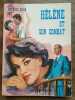
Bon état
FOLKLORE DER LAGE LANDEN,
, Amsterdam, Elsevier, 1972, Originele uitgeversomslag geillustreerde kartonomslag, 130 x 200mm., 351pp., z/w illustratie.
Vele foto's en curieuze prenten! In goede staat.
Van louter tranen...Melancholisch vrouwbeeld in poezie en schilderkunst
NL, d'Jonge Hond , 2008 Hardback, 160x160mm, 72p, Dutch (NL) edition . ISBN 978908910053513.
Ter gelegenheid van de tentoonstelling Vluchten in Schoonheid verschijnt tevens een uitgave waarin 25 schilderijen van vrouwen, die beantwoorden aan het schoonheidsideaal van de Pre-Rafaellieten, dat vooral wordt gekenmerkt door een bleke huid en lang rood haar, worden gekoppeld aan 25 prachtige gedichten van de grote dichters uit de tweede helft van de 19de eeuw.
Gabriel P. Weisberg, Edwin Becker, Maartje de Haan, David Jackson, Willa Silvermanand and Jean-Francois Rauzier;
Reference : 26356
Illusions of Reality: Naturalist Painting, Photography and Cinema, 1875-1918,
Brussels, Fonds Mercator, 2010 Hardcover with dust-jacket, 25,1 x 30,1 cm, 224pp., 226 colour illustrations, of which 90 full pages. ISBN 9789061539414.
Capturing realistic images on canvas has been a staple of western art since the renaissance development of scientific perspective. At the end of the nineteenth century, however, artists attempted not only to paint realistically, but also to create images that reflected the reality of the world around them. Naturalist painters portrayed life as they observed it, utilizing their academic artistic training to illustrate the existence of everyday people. Illusions of Reality: Naturalist Painting, Photography and Cinema, 1875-1918, published in association with an eponymous exhibition developed by the Van Gogh Museum in Amsterdam, traces the relationship between several art forms that utilize the Naturalist aesthetic. Painting, literature, theatre, photography and film, and the important relationship between these art forms, are examined within the context of Naturalism as a vehicle for understanding the lives of ordinary people at a time of great social, economic and cultural transformation. The cultural and technological threads that wove these diverse art forms together emerged earlier in the nineteenth century with the development of photography. In the 1840, painters began to experiment with the use of the camera as a tool for composition, and by the 1870s, Naturalists novelists, such as Emile Zola, recognized that the camera could supplement their written notes in documenting scenes from daily life. Likewise, the theatre became more receptive to producing plays about social and cultural concerns, broadening the repertoire to include dramas based on contemporary issues. The advent of film in the late nineteenth century added yet another dimension to the Naturalist aesthetic, basing this new art form on the models provided by large-scale narrative painting, Naturalist photography, and contemporary, socially conscious theatre productions. In a series of essays, the authors of Illusions of Reality: Naturalist Painting, Photography and Cinema, 1875-1918 explore the international scope of Naturalism through a number of interwoven themes. The livres of ordinary people are at the heart of Naturalist art in any medium, and so the themes of these works reflect the common concerns shared by urban an rural populations in both Europe and North America. The social ills created by industrialization are frequent themes, as are the social responses to these problems in the form of public education and newly energized religious faith. Likewise, the transformation brought about by industrialization led many artists to focus on the loss of traditional agrarian culture as well as the political upheaval caused by working conditions in the factories. In short, Illusions of Reality: Naturalist Painting, Photography and Cinema, 1875-1918 offers a fresh interpretation of how Naturalist artists, and the aesthetic the espoused, attempted to understand and explain the rapid and profound changes of their own time. Accompanies the exhibitions in the Van Gogh Museum Amsterdam, 8 October 2010 - 16 January 2011, and in the Ateneum Art Museum, Helsinki, February - June 2011.



Roger Baetens; Maartje de Haan; Carl Depauw; Ger Luijten; Bram Meij; Bert Meijer; Hans Vlieghe; Jacob Jordaens; Anthonie van Dyck; Peter Paul Rubens
Reference : 70697
Rubens, Jordaens, Van Dyck and Their Circle: Flemish Master Drawings from the Museum Boijmans Van Beuningen
, nai010 publishers/Museum Boijmans Van Beuningen, 2001 Green linnen under illustrated dustjacket, 7-381 pages, 32 x 25 cm, English text. Fine condition. ISBN 9789056622121.
Rubens, Jordaens, Van Dyck and Their Circle: Flemish Master Drawings from the Museum Boijmans Van Beuningen
Chro d'voyage en psychiatri
Le condottière (10/2024)
LIVRE A L’ETAT DE NEUF. EXPEDIE SOUS 3 JOURS OUVRES. NUMERO DE SUIVI COMMUNIQUE AVANT ENVOI, EMBALLAGE RENFORCE. EAN:9782487468405
Vince Fasciani : poète de sa vie
L'Âge d'Homme (10/2014)
LIVRE A L’ETAT DE NEUF. EXPEDIE SOUS 3 JOURS OUVRES. NUMERO DE SUIVI COMMUNIQUE AVANT ENVOI, EMBALLAGE RENFORCE. EAN:9782825144367
Université de Reims. Le Curé Meslier et la vie intellectuelle, religieuse et sociale à la fin du 17e siècle et au début du 18e siècle. Rudolf Charles et la diffusion de son édition du "Testament" de Meslier, 1860-1888. Actes du Colloque international de Reims, 17-19 octobre 1974
Reims, Bibliothèque de l'Université, 1980 , titre, ff. VII-VIII, ff. 539-557, puis 559-573, et enfin 595-601, [4] ff. n. ch., le tout anopisthographe et en reproduction photomécanique, broché, étiquette de titre sur la première couverture.
Il s'agit de la première publication séparée, limitée sans doute à quelques exemplaires, de la très intéressante communication de Tristan Haas sur le travail et la personnalité étrange de Rudolf Charles d'Ablaing Van Giessenburg, le grand "vulgarisateur" de Meslier à la fin du XIXe siècle. Elle avait été insérée dans les Actes du Colloque de Reims sur le curé d'Étrépigny.Envoi autographe de l'auteur. - - ACTUELLEMENT EN CONGÉS, DE RETOUR LE 17 AOÛT - VENTE PAR CORRESPONDANCE UNIQUEMENT - LIEN DE PAIEMENT, NOUS CONSULTER.
DE HAAN W. ( uitgever) - Willem PIJPER (muziek) - Rie CRAMER (illustraties)
Reference : 59018
Oudt Nederlandsche Minneliedjes. Met pianobegeleiding van Willem Pijper , Illustraties in Kleuren van Rie Cramer.
Utrecht, W. De Haan s.d. (1920), formaat in-4°, 20 nn pp, met opgeplakte kleur-illustraties, verzorgde typografie met typografische omlijsting. , gebonden met groen zijden lint. Mooi exemplaar.
Marksistskaya sotsiologiya i bankrotstvo ee sovremennykh kritikov. In Russian
In Russian. Haan, Erich. Marxist sociology and the bankruptcy of its contemporary critics. Moscow: 1974. Marksistskaya sotsiologiya i bankrotstvo ee sovremennykh kritikov. In Russian /Marxist Sociology and the Bankruptcy of Its Contemporary Critics. All images are for identification of editions only. Several books of the same edition may be available. Please feel free to request photos of available books. SKU7067162
Europese geest. Inhouden en vormen van het cultuurleven der Europese wereld. 3e dr.
Arnhem, Van Loghum Slaterus, 1948.
X,350 p. Cl. 25 cm (First 160 p. on antiquity & MA)
Het wijsgerig onderwijs aan het Gymnasium Illustre en de Hogeschool te Harderwijk, 1599-1811.
Harderwijk, Flevo, 1960.
15,198 p., 5 pls. Wrs. 24 cm (Diss., Leiden)(Cover waterstained at the edges; interior fine)
Delft van Vermeer
, Museum Prinsenhof Delft & Waanders, 2023 144 pagina?s, 110 illustraties in kleur, 27 x 23 cm, paperback, Nederlands. ISBN 9789462624498.
Delft was in de zeventiende eeuw een broedplaats van talent, een stad waar belangrijke innovaties plaatsvonden. Hier groeide Johannes Vermeer uit tot een schilder van wereldformaat. Helaas is er niet veel bekend over Vermeer, we weten niet eens van wie hij het vak leerde. Deze rijk ge llustreerde publicatie laat zien wat we w l weten en wat er te ontdekken valt in het Delft van Vermeer. Via sleutelfiguren in Vermeers leven krijgen we inzicht in het artistieke, intellectuele en sociale klimaat in het zeventiende-eeuwse Delft. Door in te zoomen op de wereld en de mensen rondom Vermeer krijgen we beter zicht op de meester, maar het mysterie over zijn genialiteit blijft intact.
Luc Dondeyne, Edited by Dirk Vanhecke, Translated by Sarah de Haan, Berd Ooghe
Reference : 67861
Luc Dondeyne It's Not Me.
, Transit Gallery, 2025 Hardback, Dimensions 240 x 170 mm, 160 Pages, Language(s)Eng/ NL ed. *new. ISBN 9789083459301.
Luc Dondeyne's exhibition at the Halle and also the publication are divided into ten themes, each in a separate space. The selection of works, a good portion of which are on loan from private collectors , covers a span of 20 years, from his first solo 'Real Time' (2004) at Galerie Transit to the present The themes are Cave / Water / My Second Skin / Third Eye (corridor with hall text) / Persona / Trial by error / Here and Now / Nightpool / Mirrors / Panorama.
Hoofdfiguren der geschiedenis van het wijsgeerig denken - I.Tijdperk van Cartesius tot Kant
Haarlem, erven F.Bohn 1927 [vii] + 247pp., linnen band met stofwikkel, 2e dr., F33667
Hoofdfiguren der geschiedenis van het wijsgeerig denken - II. De strijd tusschen idealisme en naturalisme in de 19e eeuw
Haarlem, erven F.Bohn 1929 [v +] 224pp., linnen band met stofwikkel, F33668
Delft van Vermeer
Zwolle, Uitgeverij Waanders & De Kunst, 2023 Softcover, 144 pagina's, 27 x 23 cm, rijkelijk ge llustreerd. *Nieuw. ISBN 9789462624498.
Delft was in de zeventiende eeuw een broedplaats van talent, een plek waar belangrijke innovaties plaatsvonden. Hier groeide Johannes Vermeer uit tot een schilder van wereldformaat. Er is niet veel bekend over Vermeer. Deze rijk ge llustreerde publicatie toont wat er w l te ontdekken valt in het Delft van Vermeer. Inzicht in het artistieke, intellectuele en sociale klimaat in het zeventiende-eeuwse leven van Delft krijgen we via sleutelfiguren uit Vermeers leven, zoals schoonmoeder Maria Thins, familienotaris n kunstverzamelaar Willem de Lange en schilder Leonaert Bramer. Door in te zoomen op de wereld en de mensen rondom Vermeer krijgen we meer inzicht in het leven en werk in zijn tijd. Het mysterie over zijn genialiteit blijft daarentegen intact.

