 Write to the booksellers
13 books for « frege gottlob »Edit
-
Century
20th (11)
21st (1)
-
Topics
English (1)
Ethic (2)
Germanic languages (1)
History (2)
Language (1)
Logic (1)
Mathematics (1)
Number (1)
Philosophy (9)
Psychology (2)
Western (2)
-
Countries
Belgium (1)
Denmark (3)
France (9)
-
Syndicate
ILAB (7)
SLAM (4)
The Thought: a Logical Inquiry (Translated by A.M. and Mercelle Quinton). (In: Mind. A quarterly Review of Psychology and Philosophy. Edited by Gilbert Ryle. Vol. LXV. No. 259. July, 1956). + Negation. Translated by P.T. Geach. (In: Translations from ... - [THE LOGICAL INVESTIGATIONS]
Edinburgh & Oxford, 1952, 1956 + 1963. All three articles are present in the entire orig. volumes, all in the orig. wrappers. The two volumes of ""Mind"" are in the orig. printed grey wrappers and the ""Philosophical Essays"" is in the orig. green full cloth w. the orig. d-j. in very good condition w. only a few smaller tears to upper capital and upper front wrapper, not price-clipped. Internally mint. Mind Vol. LXXII, No. 285 w. a tear to back, else very fine. Mind Vol. LXV, No. 259 w. some signs of wear, especially to extremities, but a fine and internally very clean copy.
This set comprises the entire ""Logische Untersuchungen"" in the first English language translations. In the foreword to ""Compound Thoughts"", the translator notes: ""This article, entitled ""Logische Untersuchungen. Dritter Teil: Gedankenfüge"", was published in the ""Beiträge zur Philosophie des deutschen Idealismus, III (1923), 36-51. The first two parts of these ""logical investigations"" were ""Der Gedanke"" (Beiträge I (1819), trans. ""The Thought"" in MIND LXV (1956) ) and ""Die Verneinung"" (Beiträge I (1919), trans. ""Negation"" in Geach and Black (ed.) ""Translations from the Philosophical Writings of Gottlob Frege.""). The three articles that constitute the Logical Investigations are some of the most important, influential and widely discussed of Frege's philosophical papers. In 1875 the entire ""Logical Investigations"" appeared together in English translation for the first time. It was Frege's wish that these three articles were viewed as a whole and published together under the title of ""Logische Untersuchungen"", now considered a work of the utmost importance. These three volumes also comprise many other articles by Frege in the first English translations (in Translations from the Philosophical Writings of Gottlob Frege) as well as original contributions by P.T. Geach: ""On Frege's Way Out"" (in Mind Vol. LXV, No. 259. and ""Mr. Strawson on Symbolic and Traditional Logic"" (in Mind Vol. LXXII, No. 285).Friedrich Ludwig Gottlob Frege (1848 - 1925) was a German mathematician, but his main contributions lie in his becoming a logician and a philosopher, who influenced the fields of logic and analytic philosophy immensely. Together with Wittgenstein, Russel and Moore, Frege is considered the founder of analytic philosophy, and a main founder of modern mathematical logic. His influence on 20th century philosophy has been profound, especially in the English speaking countries from the middle of the 20th century and onwards" in this period most of his works were translated into English for the first time.The philosophical papers of Frege were published in Germany in scholarly journals, which were barely read outside of German speaking countries. The first collections of his writings did not appear untill after the the Second World War, and Frege was little known as a philosopher during his lifetime. He greatly influenced the likes of Russel, Wittgenstein and Carnap, though, and bears a great responsibility for the turn modern philosophical thought has taken. Due to his contributions to the philosophy of language, analytic philosophy could be founded as it were.

Foundations of Arithmetic 2e Revised
John wiley & sons 1980 144 pages 14x1 2x21cm. 1980. Broché. 144 pages.
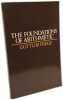
proche du neuf intérieur propre bonne tenue
Geach P. T. Frege Gottlob Stoothoff R.H
Reference : 100137820
(1980)
ISBN : 9780631171904
Logical Investigations
Blackwell Publishers 1980 92 pages in8. 1980. Broché. 92 pages.
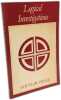
Bon Etat bonne tenue intérieur propre bonne tenue
Philosophical Writings: Translations
Blackwell Publishers 1980 238 pages 13 208x2 032x21 336cm. 1980. Broché. 238 pages.


Très bon état proche du neuf intérieur propre
1. Die Grundlagen der Arithmetik. - 2. Schriften sur Logik und Sprachphilosophie.
Hamburg, Meiner, 1988 & 2001. 2 vol. in-12 brochés, XXII-144 & XXX-217 pp. (Philosophische Bibliothek, 366 & 277).
Wie neue. - Frais de port : -France 5,7 € -U.E. 8 € -Monde (z B : 12 €) (z C : 22 €)

Funktion, Begriff, Bedeutung
Göttingen, Van den hoeck & Ruprecht 2002 xlvi + 96pp., with handwritten dedication by M. Textor, softcover, 20cm., Very good, F58159
Les fondements de l'arithmétique - Recherche logico-mathématique sur le concept de nombre - Collection l'ordre philosophique.
Seuil. 1969. In-8. Broché. Bon état, Couv. convenable, Dos satisfaisant, Intérieur frais. 232 pages.. . . . Classification Dewey : 100-PHILOSOPHIE ET DISCIPLINES CONNEXES
Collection l'ordre philosophique - traduction et introduction de Claude Imbert. Classification Dewey : 100-PHILOSOPHIE ET DISCIPLINES CONNEXES
Ecrits logiques et philosophiques - Collection l'ordre philosophique.
Seuil. 1971. In-8. Broché. Etat d'usage, Couv. convenable, Dos plié, Papier jauni. 233 pages.. . . . Classification Dewey : 100-PHILOSOPHIE ET DISCIPLINES CONNEXES
Collection l'ordre philosophique - traduction et introduction de Claude Imbert. Classification Dewey : 100-PHILOSOPHIE ET DISCIPLINES CONNEXES
Begriffsschrift und andere Aufsätze. Zweite Auflage Mit E. Husserls und H. Scholz' Anmerkungen herausgegeben von Ignacio Angelelli.
Hildesheim, Georg Olms, 1964. Orig. full cloth. A few underlinings in pencil. XVI,124 pp.
FUNKTION, BEGRIFF, BEDEUTUNG, FÜNF LOGISCHE STUDIEN
Vandenhoeck & Ruprecht. 1966. In-8. Broché. Etat d'usage, Couv. remarquable, Dos abîmé, Intérieur acceptable. 103 pages. Nombreuses annotations en page de titre et dans le texte (ouvrage de travail).. . . . Classification Dewey : 430-Langues germaniques. Allemand
Vandenhoeck & Ruprecht, 144-145. Herausg. von G. PATZIG. 2. durch. Auflage. Classification Dewey : 430-Langues germaniques. Allemand
Les fondements de l'arithmétique
P., Seuil, 1970, broché, 232 p.p., 20.5 x 14 x 1.7 cm, très bon état.
The Thought: A Logical Inquiry.
Edinburgh, Thomas Nelson & Sons, 1956. 8vo. In contemporary red stiff cardboards. In ""Mind"", Vol. LXV. Entire issue offered. Fine and clean. Pp. 289-311. [Entire volume: VII, (1), 576, (4) pp.].

