Write to the booksellers
5 books for « ellen g landau »Edit
-
Language
English (1)
French (4)
-
Topics
Expressionism (1)
Painting (2)
-
Countries
France (3)
Switzerland (2)
-
Syndicate
ILAB (2)
NVVA (1)
SLACES (1)
SLAM (1)
Jackson Pollock
Monographie, Jackson Pollock, Editions Harry N.Abrams, Inc, Publishers, 283 pages
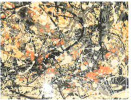
Jackson Pollock.
New York, Harry N. Abrams, (1989). Un fort vol. au format in-4 à l'italienne (267 x 307 mm) de 283 pp. Reliure d'édition de pleine percaline satinée olive, sous jaquette illustrée.
![Jackson Pollock.. LANDAU (Ellen G.) - [POLLOCK (Jackson)].](https://static.livre-rare-book.com/pictures/BLS/32668_1_thumb.jpg)
Textes en anglais. L'ouvrage s'agrémente d'une abondante iconographie. "Is Jackson Pollock the greatest living painter in the United States?" Life magazine startled its readers by asking in 1949. Seven years later, "Jack the Dripper," as Time magazine called him, was dead. Forty years later, Life's question no longer seems surprising, and Time's sarcastic phrase has lost its bite. But we may still wonder why the mass-circulation magazines singled Pollock out from his fellow Abstract Expressionists. How did he become a cult figure for the Beat Generation? And what caused his reputation to continue to soar? This compelling and original book locates the man and the artist in the continuum of his times, recreating the social and cultural milieu of New York in the 1940s and 1950s. Pollock's early years are chronicled, from his birth in the Wild West town of Cody, Wyoming, in 1912, through his prophetically troubled school years, marked by repeated expulsions, to his arrival in New York and periods of rewarding study with Thomas Hart Benton, David Alfaro Siqueiros, and Stanley William Hayter. Withdrawn, abrasive, often drunk, Pollock nevertheless attracted many other mentors: John Graham, the Russian-born artist whose theories were pivotal to the Abstract Expressionists; the French Surrealist émigrés who arrived during World War II; two highly supportive Jungian analysts; and, perhaps most important of all, Lee Krasner, a fellow artist (and later his wife), whose knowledge of art-world thinking and whose conviction of Pollock's genius were essential to his development. Key critics who recognized Pollock's achievement, such as Clement Greenberg and Harold Rosenberg, perceptive photographers, such as Hans Namuth and Arnold Newman, whose pictures of Pollock appeared in major publications, and other figures who made up Pollock's world are depicted here vividly and acutely.'' Coiffe supérieure de la jaquette légèrement plissée. Du reste, très belle condition.

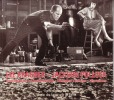
Lee Krasner - Jackson Pollock. Künstlerpaare - Künstlerfreunde. Dialogues d'artistes - résonances.
Berne, Musée des Beaux Arts, 1989-1990
Hardcover with dustjacket as new. comme neuf wie neu
Lee Krasner, Jackson Pollock. Künstlerpaare, Künstlerfreunde. Diaogues d’artistes, résonances.
Bern, Musée des beaux-arts, 1990, lg. in-8vo, 170 p., richement ill. de photographies n./b. et de peintures de Lee Krasner et Jackson Pollock, brochure originale.

(SLACES, NVVA)
Phone number : 41 (0)26 3223808
(KRASNER Lee & POLLOCK Jackson) / KUTHY Sandot & LANDAU Ellen G.
Reference : PEINTURE65940719
(1989)
Lee Krasner - Jackson Pollock. Künstlerpaare - Künstlerfreunde / Dialogues d'artistes - Résonances
Berne, Kunstmuseum, 1989, 24,5 x 24,5, 172 pages cousues sous couverture rempliée illustrée. Iconographie noir & blanc et couleurs. Catalogue de l'exposition du 21 novembre 1989 au 4 février 1990. BILINGUE.