 Write to the booksellers
4 books for « cudworth ralph »Edit
-
Century
17th (1)
18th (2)
20th (1)
-
Topics
Ethic (1)
Philosophy (2)
Religions (1)
-
Countries
Denmark (3)
France (1)
The true intellectual system of the universe: The first part wherein all the reason and philosophy of atheism is confuted and its impossibility demonstrated.
London, Richard Royston, 1678. Folio (320 x 220 mm). In contemporary full calf, spine rebacked. Wear to extremities, boards with numerous scratches and corners bumped, with loss of leather. Ex-libris (Danish author and philosopher Carl Henrik Koch) to pasted down front end-paper. Stamps to verso of frontispiece and title-page and verso of p. 899 (""MVSEVM BRITANNICVM"" and ""British Museum / sale duplicate / 1787""). Light marginal browning throughout, but generally internally nice. (20), 84, 97-156, 155-899, (87) pp. + frontispiece. Complete with the often lacking advertisement leaf.
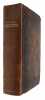
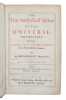
First edition of Cudworth’s only work of philosophy to be published in his lifetime – arguably one of the most ambitious and intellectually ambitious philosophical works of the 17th century. Here Cudworth sought to unite classical philosophy with Christian theology while offering a systematic refutation of atheism and materialism. His work had a significant impact on early modern philosophy shaping discussions on metaphysics, theology and the nature of divine providence. “(The present work) as published in 1678 is only the first of three volumes which Cudworth had planned to write with the same over-all title, but he defends it as a self-standing work. In it he seeks to provide an anti-determinist defence of theism against scepticism, atheism and materialism, and to demonstrate the compatibility of true philosophy with true religion. In so arguing, he probably had in mind the anti-atheist arguments of book X of Plato’s Laws. The last chapter, in particular, contains many, often extensive, arguments with his philosophical contemporaries (Descartes, Hobbes and Spinoza).” (SEP) “Arguably it constitutes the most important statement of innate-idea epistemology by any British philosopher of the seventeenth century …. The full extent of Cudworth’s legacy in philosophy has yet to be mapped out. In England John Ray, John Locke (his critique of innate ideas notwithstanding), the third Earl of Shaftesbury, Sir Andrew (Le Chevalier) Ramsay, Richard Price and Thomas Reid all acknowledge their debt to Cudworth. In the European Enlightenment, Cudworth was the focal point of a dispute between Bayle and Le Clerc in 1703–1706. His concept of Plastic Nature was taken seriously in France as late as the nineteenth century. Thanks to J.L. Mosheim’s Latin translation (1733) Cudworth’s writings were mediated to the German Enlightenment’ (Sarah Hutton, Dictionary of Seventeenth-Century British Philosophers, Thoemmes Press, 2000). ""The True Intellectual System is primarily a critique of what Cudworth took to be the two principal forms of atheism — materialism and hylozoism [a term coined by Cudworth for the doctrine that all matter is in some sense alive]. The materialist Cudworth had especially in mind is Thomas Hobbes. Cudworth attempts to show that Hobbes had revived the doctrines of Protagoras and is therefore subject to the criticisms which Plato had deployed against Protagoras the Theaetetus. On the side of hylozoism Strato is the official target. However, Cudworth’s Dutch friends had certainly reported to him the views which Spinoza was circulating in manuscript. Cudworth remarks in his Preface that he would have ignored hylozoism had he not been aware that a new version of it would shortly be published"" (John Passmore, Encyclopedia of Philosophy).

Traité de morale : "Traité concernant la morale éternelle et immuable". Traité du libre arbitre.
PUF 1995 PUF, Fondements de la Politique, Série Textes, 1995, 377 p., broché, environ 22x15cm. Bon état.

Introduction, traduction et notes par Jean-Louis Breteau. Merci de nous contacter à l'avance si vous souhaitez consulter une référence au sein de notre librairie.
Systema Intellectuale huius Universi seu de Veris Naturae rerum originibus Commentarii qvibus omnis eorum Philosophia, qvi Deum esse negant, funditus evertitur. Accedunt Reliqua eius Opuscula. Joannes Lavrentius Moshemius, Omnia ex Anglico Latine vert... - [THE ""PLASTIC MEDIUM""]
Jena, Vidvae Meyer, 1733. Folio. Cont. full calf w. richly gilt back. A bit of wear to extremities, but a very nice and clean copy. Beautiful vignettes and woodcut initials at beginning, as well as woodcut end-vignettes to the larger sections. Title-page printed in red and black. Engraved portrait-frontispiece, engraved frontispiece (depicting Aristotle, Socrates, Strato, Epicur, Anaximander and Pythagoras), (69), 1206" 1 blank leaf, (8), 88 47, (1) (16), 42 (8), 25, (1)" (52, -Index) pp.
First Latin edition of Cudworth's main work, ""The true Intellectual System of the World"" from 1678. The English philosopher Ralph Cudworth (1617- 1688) was the leader of the Cambridge Platonists. In 1678 he published parts of his main work, the ""Intellectual System"", which, according to Cudworth himself, arose out of a discourse refuting determinism, or, as he put it, ""fatal necessity"". Cudworth set out to prove three matters that together constitute the intellectual system of the universe (in opposition to the physical), namely the existence of God, the naturalness of moral distinctions, and the reality of human freedom, thereby disproving atheism, religious fatalism, and the fatalism of the Stoics. In his criticism of materialistic atheism, Cudworth principally aimed at Hobbes, who he necessarily had to refute. Apart from his great attempt to refute atheism and all the philosophers that he could connect with it, a much discussed part of the book is that in which he introduces his conception of the ""Plastic Medium"", which is supposed to explain the laws of nature without referring everything directly back to God, and which very much resembles Plato's ""World-Soul"". This ""Plastic Medium"" resulted in long philosophic controversies.""His [Cudworth's] most important work, The true Intellectual System..., is a fragment of an even larger work he had planned to refute materialism of Epicurus and of Thomas Hobbes. Cudworth believed that a ""rightly understood"" mechanical and corpuscular philosophy did not destroy traditional religion but instead offered it new support. If matter was inert and utterly passive, then a spiritual principle was necessary to endow the universe with life and activity. But the principle involved in the ordinary course of nature was not to be equated with God, for then He would be responsible for the ""Errors and bungles"" in nature. Such tasks were performed by a subordinate and unconscious ""plastic nature"". Cudworth rejected Cartesian dualism and asserted cosmic continuity."" (P.M. Rattansi in DSB). Brunet II:437 - Graesse II:305.
Systema Intellectuale huius Universi seu de Veris Naturae rerum originibus Commentarii qvibus omnis eorum Philosophia, qvi Deum esse negant, funditus evertitur. Accedunt Reliquua eius Opuscula. Joannes Lavrentius Moshemius,...Omnia ex Anglico Latine v...
Jena, Vidvae Meyer, 1733. Folio. 2 contemp. full calf, richly gilt backs in 8 compartments, raised bands. A few minor nicks to spine ends. Engraved frontispiece (showing Aristotle, Socrates, Strato, Epicur, Anaximander, Pythagoras). (58),1206 pp. + Index Auctorum. Also withbound, and with separate pagination, 4 of the author's other works. 478842"25 pp. Engraved portrait of the author and 3 large engraved vignettes.
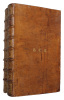
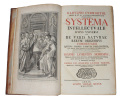
First Latin edition of the author's ""The true Intellectual System of the World"" from 1678. - ""His most important work, The true Intellectual System..., is a fragment of an even larger work he had planned to refute materialism of Epicurus and of Thomas Hobbes. Cudworth believed that a ""rightly understood"" mechanical and corpuscular philosophy did not destroy traditional religion but instead offered it new support. If matter was inert and utterly passive, then a spiritual principle was necesssary to endow the universe with life and acticity. But the principle involved in the ordinary course of nature was not to be equated with God, for then He would be responsible for the ""Errors and bungles"" in nature. Such taks were performed by a subordinate and unconscious ""plastic nature"". Cudworth rejected Cartesian dualism and asserted cosmic continuity."" (P.M. Rattansi in DSB). - Brunet II:437 - Graesse II:305.

