 Write to the booksellers
13 books for « crosse h »Edit
-
Type
Book (12)
Music sheets (1)
-
Language
English (1)
French (12)
-
Century
19th (9)
20th (2)
21st (1)
-
Topics
Latin (4)
Malacology (1)
Navy (1)
Scores (1)
Songs (1)
-
Countries
Belgium (1)
France (12)
-
Syndicate
ILAB (2)
SLAM (2)
Recherches sur la cellulose 1895-1910
Paris, Revue Générale des Matières Colorantes; Béranger, éditeur, 1914-1917, in-8, XII-482 pp, Demi toile noire, dos lisse à titre doré, Fonds Catho Couverture rigide
Bon XII-482 pp.


[Starmer ] - La Crosse Jean - Franklin Dave,Creamer Henry,Darcy Joe - Creamer Henry,Franklin Dave,Darcy Joe
Reference : 108573
(1922)
Partition de la chanson : Childhood Days
Jerome H. Remick 1922
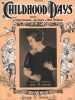
Bon état Format Américain Piano
Two papers: Faune malacologique terrestre et fluviatile de l'île de Saint-Dominique / Faune malacologique terrestre et fluviatile de l'île de Portorico.
1891-1892 142, 71 p. 3 lithographed pls, paperbound. Unopened copy. Published in: Journal de Conchyliologie.
Faune Malacologique terrestre et fluviatile de la Nouvelle Calédonie et de ses dépendances.
1894 317 p., 4 handcoloured pls, paperbound. Text and first plate somewhat browned due to quality paper used. Front cover slightly soiled, else good unopened copy. Published in: Journal de Conchyliologie.
Mission Scientifique au Mexique et dans l´Amérique Centrale. Recherches Zoologiques. Études sur les Mollusques terrestres et fluviatiles. Part 15..
1894 Coloured lithographed plates 59-62. with explanatory text to the plates, small folio, loose with the printed covers. Only the plates no text.The 4 magnificent, decorative plates depict species of Anodonta, Unio, Cyrena & Dreissensia.
Faune Malacologique terrestre et fluviatile de la Nouvelle Calédonie et de ses dépendances.
1894 317 p., 4 handcoloured pls, paperbound. Text and first plate somewhat browned due to quality paper used, else very good unopened copy. Published in: Journal de Conchyliologie.
Faune malacologique terrestre et fluviatile de l'île de Saint-Dominique.
1891 142 p., 3 lithographed pls, paperbound. Unopened copy. Published in: Journal de Conchyliologie. Good copy.
Faune malacologique terrestre et fluviatile de l'île de Saint-Dominique.
1891 142 p., 3 handcoloured lithographed pls, new hcloth (marbled boards). Published in: Journal de Conchyliologie. Good, well bound copy.
Faune malacologique terrestre et fluviatile de l'île de Saint-Dominique.
1891 142 p., 3 lithographed pls, paperbound. Unopened copy. Published in: Journal de Conchyliologie. Good copy.
Description de coquilles nouvelles / Note sur deux espèces de l’Archipel Calédonien.
1858 7 p., 1 hand-coloured plate, plain wrappers. Published in: Journal de Conchyliologie. Ex library Dr. A.C. van Bruggen (with his stamp).The plate depicts: Fusus pazzi, Solarium trochoides, Bulimus pseudocaledonicus, Columbella deshayesii, Conus ciliae, Columbella bourjotiana.
BRITISH BED & BREAKFAST (2007)
Alastair Sawday. 2006. In-8. Broché. Bon état, Couv. convenable, Dos satisfaisant, Intérieur frais. 432 pages. Illustré de nombreuses photos et cartes en couleur dans et hors texte. Texte sur 2 colonnes.. . . . Classification Dewey : 420-Langue anglaise. Anglo-saxon
Alastair Sawday's Special Places to Stay. Sleeker, smarter, and more interesting, B&Bs just get better and better. Classification Dewey : 420-Langue anglaise. Anglo-saxon
Faune malacologique du Lac Tanganyika.
1881 66 p., 1 lithographed plate, paperbound (new plain covers). Published in: Journal de Conchyliologie. Ex library Dr. A.C. van Bruggen (with his stamp).
"An account of the Grand Musical Festival held in September 1823 in the cathedral church of York...to which is prefixed, a sketch of the rise and progress of Musical Festivals in Great Britain ; with biographical and historical notes."
18. York, printed and sold by John Wolstenholme, 1825, large in-4°, 30,5 x 24 cm, coloured frontispiece plate + vii + 436 pp + xxvi (appendix and index) + (2)nn pp + 3 further coloured plates , of which one double-page + a folding plan of a new concert room. (complete). Contemporary half calf, marbled boards, edges and endpapers, spine skilfully renewed. Rare account on the development of the music festival in Great Britain. Nearly 125 pages (of over 450 pp) are devoted to the history of festivals up till 1823. Handel and travelling Italian soprano's seemed to be the main ingredients in the second half of the 18th century. Festivals were organised to raise money, in many cases to finance health care and or hospitals..

