 Write to the booksellers
52 books for « copy »Edit
-
Type
Book (51)
Music sheets (1)
-
Century
16th (1)
18th (3)
19th (14)
20th (23)
21st (1)
-
Countries
Belgium (8)
Denmark (36)
France (7)
Switzerland (1)
-
Syndicate
ILAB (38)
SLAM (1)
Topics
- Antarctica (2)
- Archaeology (2)
- Astronomy (1)
- Brittany (4)
- Chemistry (2)
- Comedy (1)
- Dedication (4)
- Einstein (2)
- Gold (1)
- History (2)
- Hoffmann (1)
- Lambert jean (1)
- Literature (2)
- Mathematics (2)
- Maurois andré (1)
- Medicine (1)
- Military arts (2)
- Philology (1)
- Philosophy (4)
- Physics (5)
- Portraits (1)
- Scandinavian literature (1)
- Schiller (1)
- Scores (1)
- Songs (1)
- Tea (4)
- Travel (1)
ELSEVIER Daniel (Elzevier ) - [ ] CATALOGUS LIBRORUM 1681 - : Unique copy ! :
Reference : 15951
"Catalogus Librorum officinae Danielis Elsevirii ; Designans Libros, qui ejus typis et impensis prodierunt..."
" Amstelodami (Amsterdam), 1681, in-12°, 18 x 10 cm, untrimmed copy. Title + (1)(bl) + (38) pp. Bound in old but not contemporary half leather, gilt title on back, marbled endpapers. Printed on laid-paper with watermark ( 'three spheres, diameter ca. 7 mm, touching each other and topped by a right-angled triangle with a height of ca. 10 mm). See Willems 20 ; Berghman 2002. The Berghman catalogue (note at n° 2002) estimates that only 4 or 5 copies are still in existence., We collated our copy against the BM copy. It looks as if our copy is from a previous imprint. It has been used as a proof copy and bears the manuscript ink marks of a professional corrector; e.g. pp A3 Bassecourt, Sermons de Pieté =/Piété ; Baxter..pecheurs =/pécheurs ; pp A4 Calvifii =/Calvisii.. Page A9recto :*histoire de l'Eucharistie, 8. This last entry has been changed in (format) 4. (Correction as it appears in the BM copy). Most of the corrections have been taken over by the British Museum copy. According the previous owner, in the 19th century the catalogue belonged to a French collector named De Viry from the neighbourhood of Rodez. Willems (n°20) states in his description that this catalogue is extremely rare. As pointed out above our copy seems to be from an imprint which preceded Willems 20. We reckon this copy to be of the utmost rarety - perhaps unique !!. We add to our copy the CD-Rom with the BM copy. We also add the very rare reprint made in 1823 by J. Motteley, printed by Firmin Didot, in 100 copies only. Incidently this reprint corresponds exactly with the BM imprint.."
British Jungermanniae: being a History and Description, with colored Figures, of each Species of the Genus, and microscopical Analyses of the Parts. - [ESTABLISHING HEPATICOLOGY - PRESENTATION COPY]
London, Longman, Hurst, Rees, Orme, and Brown, (1812-) 1816 4to. Bound in a fine contemp. full calf with broad rectangular gilt borders on covers. Inner gilt borders. Professionally re-backed to style and spine richly gilt. Fine repairs along edges and to corners. Engraved frontispiece-portrait of Hooker. (28) incl.htitle,20 pp., (2) pp. of Index. Unnumbered leaves with descriptions to each plate. Complete with 88 fine hand-coloured engraved plates (Numb. I-LXXXIV and Supplementplates I-IV (bound first). Portrait with some brownspots, some offsetting from portrait to title. Inner margins of portrait and title-page with 2 larger brownspots, not reaching the text or the engraving. Otherwise a fine clean copy with broad margins, printed on good paper. Exquisite handcolouring.
Interesting presentation-copy of the scarce first edition of Hooker's first botanical work, which is not only considered his most beautiful, but which is also the work that established hepaticology (the science of liverworts) as an independent entity and cemented Hooker's reputation. Presented on half-title: ""To Francis Boott, Esq./ of Boston, N. America,/ as a testimony of the affectionate/ regard & esteem of/ The Author/ Halesworth Aug. 5.th 1818."" Underneath the dedication in Francis Boott's hand: ""Mr. Hooker in a letter to me from Halesworth of Aug 5. - says of this copy - ""It will serve as a specimen of Country binding, printing and engraving - every thing in short belonging to it being executed in this neighbourhood.""/ signed ""F.B."". When Hooker returned from his botanical excursions, first to Iceland, then to France, Switzerland and Northern Italy, he devoted himself to the formation of his ""Herbarium"", which became of worldwide renown among botanists. In 1841 he was appointed director of the Royal Botanical Garden at Kew, where he founded the first museum of economic botany.""Hooker spent twelve years at Halesworth, during which he produced his British Jungermanniae, with his own illustrations, widely considered to be his most beautiful work. This book established hepaticology as an independent entity and made Hooker's reputation."" (Mea Allan in DSB).Francis Boott (1792-1863), to whom this copy was given, was a friend of Hooker. He had studied botany in America and medicine in London, where he practiced medicine and also gave lectures in botany, - he was also secretary to the Linnean Society. Pritzel: 4208 - BMC(NH) II.870 - Nissen: 916 - Staffleu & Covan: No 2987.

ROOSES Max (secretary to the exhibition ) - Tsar Nicolas II of Russia ( his copy ) :
Reference : 46271
Exposition Van Dijck, à l'occasion du 300e anniversaire de la Naissance du Maitre. Organisée par la ville d'Anvers...12 Aout - 15 Octobre 1899. (exhibition catalogue).
" Antwerpen, printed by J.E. Buschmann, tall in-8°, 27,5 x 17,5 cm, 79 pp, copy printed on high quality Dutch paper, uncut, sewn, with the original printed wrapper (wrapper with slightly discoloured margins), with a list of the lenders, bilingual French, Dutch.(Freitag 2601). The copy is kept in a purposely made full leather portfolio, with as supra libro the coat of arms of the city of Antwerp. The paste downs are in white watery silk, the binding is signed ''J. Mössly ''. Finely preserved allthough top and end of spine show some slight wear. This copy, kept in a fine leather portfolio, was destined to be given to Tsar Nicolas II. His name is printed on the first fly leaf '' Exemplaire très respectueusement offert à Sa Majesté Nicolas II Empereur de Russie''. This unique copy was never handed to the Tsar, most probably because he did a some time, cancel the visit to the exhibition. The bi-lingual (French - Dutch) catalogue is finely printed by the Antwerp master printer Buschmann and contains at the end a list of the lenders to the exhibition. Among the lenders; Queen Victoria, The Duke of Devonshire, Lord Spencer of Althorp , Sir Charles Robinson, ..."
Architecture Toscane , ou Palais , Maisons , et autres édifices de la Toscane , mesurés et dessinés par A. Grandjean de Montigny et A. Famin , Architectes , anciens pensionnaires de l'Academie de France , à Rome.
Paris, de l'Imprimerie de P. Didot L'Ainé, 1815, in-folio, large paper copy, 462 x 304 mm, vii pp + (1)(bl) + 50 pp + (2)(bl) + 1 leaf (engraved title) + 109 leaves each with a line engraved architectural illustration, printed on recto side only. Bound in 19th century half vellum, marbled boards, raised spine with red leather title label, uncut copy, nothwithstanding some marginal ink stains and some sparse marginal foxing a fine complete copy on large paper ( exemplaire sur grand papier) of the rare first imprint which was published in 18 installments over nearly 10 years (1806-1815). The architects modelled their publication on Percier and Fontaine's highly successful book on the architecture of Rome. It remained a major source for the study of Tuscan architecture throughout the 19th century. (Cat. British Arch. Library). It was the first publication to stress the importance of Florence in the development of Renaissance architecture ( Weinreb cat. 40 item 167.).
Poems. The third edition.
York, Robert Horsfield, 1773. Bound in a lovely contemporary full calf with richly gilt spine. Five raised bands and gilt title label to spine. Single gilt lineborders to boards. Upper right corner of title page neatly restored. Printed on good paper. Internally nice and clean.
The copy belonged to the renowned historian and literary critic C. Molbech and has his signature to verso of front free endpaper. A note from Molbech indicates that the copy was bought at Knud Lyne Rahbek's auction in 1830.
VICTORIA Queen - Arthur HELPS ( editor ) - Clémentine d'ORLÉANS (provenance) - (copy autographed by Queen Victoria ) :
Reference : 57083
Leaves from the Journal of Our Life in the Highlands from 1848 - 1861 to Which is Prefixed and Added Extracts from the Same Journal Giving an Account of Earlier Visits to Scotland and Tours in England and Ireland and Yachting Excursions.
" London, Smith, Elder and Co., 1868, format in-8°, (20 cm), xv pp + (5)nn pp + 315 pp, with a steel-engraved frontispiece (view of Balmoral). Bound in full green decorated morocco, all edges gilt, gilt fillets on both covers, silk headcaps, double fillets on the turn-ins.Bound by Burn (at Kirbystreet 37-38), a small printed label on the last fly leag. Binding and book in perfect condition. This copy with the autograph ex-dono of the queen to het cousin Clémentine d'Orléans. The dedication , in Victoria's hand, reads '' Pour ma chère Clémentine, de la part de sa dévouée Cousine VR (Victoria Regina), 28 Jan: 1868. Clémentine was the daughter of the last French king: Louis-Philppe ( 1773 - 1850) ; also called ''le roi bourgeois''. . She married in 1843 the German prince Auguste deSaxe-Cobourg-Gotha. Her husband was a first cousin of prince Albert, consort of Victoria. The book was published in 1868 and already at the end of January the queen had bound copies at her disposal to be send to members of the Royay Family and intimate friends as, according the editor's note, was the original purpose to write the book. The book became immensely popular and was printed in tens of thousand copies. This copy, with the interesting ex-dono autograph belongs to the very first edition and served the purpose (being send to relatives and intimate friends) as originally intended by the queen."
MOWBRAY Alfred Richard ( 1824 - 1875 ) (publisher) - The Anglican Missal - unique illuminated copy :
Reference : 30977
The Anglican Missal being the order for the administration of the Holy Communion according to the use of the Church of England together with the Collects to be used throughout the Year.
" Oxford, printed and published by A.R. Mowbray at his office in Saint Aldate's Street, 1869, in-4°, 29,5 x 25 cm, 33 unpaginated leaves, printed in Gothic type, all with a double red typographical fillet border. Bound in full bleached vellum , richly decorated with gilt and thick red fillets which surround a large losenge with gilt initials in the centre (LSU ?). The central losenge is surrounded by small losenges filled with stylized gilt lilies, all edges gilt, pastedown and flyleaves in cream coloured watery silk, smooth spine with decorated gilt lilies within a thick red fillet. This is a unique illuminated copy. 33 pages (out of 64) have been illuminated by a professional hand in the mediaeval style; 3 full page hand painted miniatures (of which the Cannon plate); 4 nearly full-page initials; 5 manuscript titles with initials; 21 pages with large full page ornamental borders. Some miniatures are heightened with gold (sometimes with oxidation). The high quality of the illumination might lead us to the supposition that this copy was in fact a design example which had to serve for a printed chromolithography edition, possibly in another size. We could not verify if A.R. Mowbry ever entertained such a project. If not it remains an interesting question who the artist was. Alfred Mowbray founded in 1858 in Oxford a bookshop specialised in religious books. A London branch was opened in 1873. In 2006 the business moved to Hatchards on Piccadilly."
Berliner Astronomisches Jahrbuch. Mit Genehmhaltung der Königlichen Akademie der Wissenschaften. Für 1830 - 1843. 14 Bde.
Berlin, Königl. Akademie der Wissenschaften etc., 1828-41. 8vo. Bound in 7 contemp. hcalf. One volume with loose spine, otherwise with weak hinges, a few broken. Small stamps on title-pages. Each year around 300 pp. 2 engraved plates. Some leaves at beginnings with browning and brownspots. On inside on frontcovers in all 7 bound volumes the engraved bookplate of John Couch Adams (Ex Libris Johannis Couch Adams and is portrait).
This copy of the first 14 volumes of the ""Jahrbuch"" was probably one of the ""tools"" by which Adams discovered the planet Neptune (1845) and finally confirmed Newton's theory of gravitation.Johann Franz Encke was editor of the ""Jahrbuch"" from 1830 to 1866. The ""Jahrbuch"" contains importent papers on the problems of the calculating astronomy. With e.g. Gauss ""Über die Methode der kleinsten Quadrate"", ""Über Interpolation"", Olbers ""Über die zweckmässigste Art bei der Berechnung einer Cometenbahn die versuche anzustellen"" many by Encke etc. etc.
Vernissages. Introduction d'Adrien Bovy.
Vésenaz, Genf Pierre Cailler, 1946. Klein-8°. XIX (1) S., S. 21-217. Mit 1 Frontispiz u. 25 Tafel nach Lithographien von Eugène Martin. Orig.-Broschur (gebräunt u. leicht fleckig). = "Collection écrits de peintres", Bd. 3.
Nr. 23 v. 100 (GA 1'400) Ex mit 4-zeiliger handschriftl. Widmung von Eugène Martin auf dem fl. Vorsatz. - Leicht gebräunt.
"EINSTEIN, A., L. INFELD, and B. HOFFMANN. - THE ROUND OFF OF GENERAL RELATIVITY - ASSOCIATION COPY.
Reference : 46475
(1938)
The gravitational Equations and the Problem of Motion. (Part I). (Received June 16, 1937). (+) II. (Received May 29, 1939). 2 Papers (Paper II only Einstein and Infeld).
(Princeton, NJ.), Annals of Mathematics, 1938 a. 1940. Both papers in orig. printed wrappers. Offprints from ""Annals of Mathematics"", Vol. 39, No. 1, january, 1938 and Vol. 41, No. 2, April, 1940. Pp. 65-100 and pp. 455-464. Both clean and fine. This copy has belonged to Abraham Pais (1918-2000) - the famous Einstein scholar, theoretical physicist and Einsteins collegue at Princeton - and having his name on top of both frontwrappers ""A Pais"".
First editions, in the scarce offprint versions, of Einstein's last and highly important contributions to General relativity, and in which is shown that the equation of motion follows directly from the field equation that defined the geometry.""Einstein's last importent contribution to general relativity deals again with the problem of motion. It is the work done with Leopold Infeld and Banash Hoffmann on the N-body problem of motion. In these papers, the gravitational field is no longer treated as external. Instead, it and the motion of its (singular) sources are treated simultaneously. Anew approximationscheme is introduced in which the fields are no longer necessarily weak but in which the source velocities are small compared with the light velocity .... The equations obtained have found use in situations where Newtonian interaction must be included. '(These equations) are widely used in analyses of planetary orbits in the solarsystem. For example, the Cal Tech Jet Propulsion Laboratory uses them, in modified form, to calculate ephmerides for high-precision tracking of planets and spacecraft.""(Pais ""Subtle is the Lord"", p. 290-91).""The problem of the equation of motion of bodies is the following. The 1916 theory had a classical structure in the sense that there were both field equations (the curvature of space-time is determined by the mass and motion of bodies in space-time) and equations of motion of bodies (the world line of small mass is a geodesic). Are these two statements really separate? If the field equations were linear, they indeed would be. They are not linear, however, and Einstein showed (in the papers offered) that if matter is represented by a point singularity of the metric field, these singularities are located on world lines that are geodesics of space-time, provided its metric satisfies the equation of general relativity.""(DSB).Weil: 202 a. 295 (both with an asterix denoting a major paper). - Boni: 236 a. 236.1.
Demonstration of the Non-Existence of Gravitational Fields with a non-vanishing total Mass free of Singularities.
Tucuman, Argentina, 1941. Royal8vo. Orig. printed wrappers. Offprint from ""Revista. Universidad Nacional de Tucuman"", Series A Matematicas y Fisica Teorica, Vol. 2, Diciembre de 1941, Nos 1 y 2. Pp. 11-15. Fine and clean. This copy has belonged to Abraham Pais (1918-2000) - the famous Einstein scholar, theoretical physicist and Einsteins collegue at Princeton - and having his name on top of the frontwrapper ""A Pais""
First edition of a scarce paper in the offprint version. The paper ""represents the basis of the one written by the same author in collaboration with Wolfgang Pauli in 1943, in which, by following analogous lines, the proof of the non-existence of regular particle-type solutions was generalized to the case of cilyndrical geometries in Kaluza-Klein theory (Einstein & Pauli, 1943). Besides, other generalizations were subsequently presented. The (non)-existence of such solutions in classical unified field theory was undoubtedly an important criterion leading Einstein's investigations.""(Galvagno and Giribet).""In his search for a unified field theory that could undercut quantum mechanics, Einstein considered five-dimensional classical Kaluza-Klein theory. He studied this theory most intensively during the years 1938-1943. One of his primary objectives was finding a non-singular particle solution. In the full theory this search got frustrated, and in the x5-independent theory Einstein, together with Pauli, argued it would be impossible to find these structures."" (Jeroen van Dongen).Weil: 208. - Boni: 243.
Unsolved Mysteries of the Arctic. Introduction by Stephen Leacock telling how this book came to be written.
New York, The Macmillan Company, 1938. Original hcloth. Orig. printed paper label title on spine. Uncut. Frontispiece by Rockwell Kent. XI,(6),381 pp., 4 maps. Clean and fine. This is No. 176 of 200 copies of the special edition made for the Explorers Club. It is signed by Stefansson, Leacock (at end of the introcuction) and Rockwell Kent (at bottom of the frontispiece). A handwritten note says: ""Above is the regular inscription.This copy is specially inscribed to Gaylord Beaman by Vilhjalmur Stefansson at the request of their friend Ralph Donaldson. New York March 11 1939."" On inside frontcover the exlibris of A. Gaylord Beaman.
First edition.
"BURTON, RICHARD F. - PRESENTATION COPY - INSCRIBED FROM THE AUTHOR.
Reference : 59271
(1876)
A New System of Sword Excercise for Infantry. - [PRESENTATION COPY - INSCRIBED FROM THE AUTHOR.]
London, William Clowes and Sons, 1876. Small 8vo. Original full red cloth. Title and author stamped in gold on upper wrapper. A small paperlabel at top of spine. A small stamp on top of title-page. Faint discoloration to lower part of upper wrapper. Frontispiece. 59 pp., textillustrations. Faint scattered brownspots, mainly to the first leaves. With dedication from the author on front free endpaper ""H.P./ General Baron von Bülow/ with the authors compliments."" Bülow is probably the Danish Genreral-Major Otto Chr. Severin August von Bülow (1812-95) or it could be General-Lieutnant Carl Ernst Johan Bülow (1814-1890) who was a member of the Danish legation to the English Court from 1865 to 1880. A note on the front free endpaper states, that the book in 1885 was handed over to the School of Gymnastics by General Fog. On foot of the same leaf some discoloration left over from a paperlabel.
![A New System of Sword Excercise for Infantry. - [PRESENTATION COPY - INSCRIBED FROM THE AUTHOR.]. "BURTON, RICHARD F. - PRESENTATION COPY - INSCRIBED ...](https://static.livre-rare-book.com/pictures/LLX/59271_1_thumb.jpg)
![A New System of Sword Excercise for Infantry. - [PRESENTATION COPY - INSCRIBED FROM THE AUTHOR.]. "BURTON, RICHARD F. - PRESENTATION COPY - INSCRIBED ...](https://static.livre-rare-book.com/pictures/LLX/59271_2_thumb.jpg)
First edition. - Extremely scarce. Penzer p.93: 'very rare'.
Matheus Ueta Léo Lins Murilo Couto Bárbara Bruno Dani Calabresa Pietra Quintela Sikêra Junior Danilo Gentili Antonio Tabet Ratinho Fabrício Bittar Ghost Killers vs. Bloody Mary ( Exterminadores do Além Contra a Loira do Banheiro ) (+ Digital Copy) Exterminadores do Além Contra a Loira do Banheiro Ghost Killers vs. Bloody Mary
Reference : 500366297
(2020)
ISBN : 3760125768786
Ghost Killers VS Bloody Mary [Blu-Ray] [Édition Limitée] (NEUF SOUS BLISTER)
Factoris Films 2020 13 6x17 2x1 2cm. 2020. blu_ray.
Neuf
Art, Société Et Politique Au Temps Des Ducs De Bretagne
Relié. Jaquette légèrement fatiguée aux extrêmités du dos.
Merci de nous contacter à l'avance si vous souhaitez consulter une référence dans notre boutique à Authon-du-Perche.
Half a Century of commercial education and publishing. Alfred Pitman Governing director, Sir Isaac Pitman & Sons Ltd. Foreword by Sir Francis Goodenough.
"14. Bath, The Pitman Press, s.d. (23rd August 1953), printed for private circulation, in-8°, frontispiece portrait of the author + 154 pp + 4 photo-ills., index. Bound in full dark blue morocco, front and back cover with elaborate gilttooling with fillets and fleurons, the petals of the large fleurons are inlaid with red leather, centerpiece contains the motto Fortiter Agendo. The back cover has as its centerpiece the initials of the author A.P., top edge gilt, raised decorated spine. Kept in box. Very fine unsigned binding but almost certainly made at the Bath workshop Bayntun. Presentation copy from the publisher, the Pitman Company, to the author and former director on the occasion of his 90th birthday. Tipped-in at the second fly-leaf is a typescripted note; ''Presented to Alfred Pitman...''. The history of ''Sir Isaac Pitman & Sons Ltd.'' written by his son Alfred Pitman. In 1837 Sir Isaac invented a shorthand system called ''Phonography'' which was to become a widely used shorthand system . He founded the company to publish handbooks and periodicals to promote his system. Later on when Remington patented his typewriter (1867), Pitman devised also educational systems for efficient use of the typewriter and office automation in general. His company became a leading provider of commercial education systems during the last quarter of the 19th and first half of the 20th century."
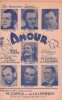
Lambert Jean,de Lanos Marcel,Roy Jean,Mague Line,Darrys René,Copy Robert,Rogero - Camia M.,Salimbeni Jean - Thibault Georges
Reference : 100139
(1939)
ART, SOCIETE ET POLITIQUE AU TEMPS DES DUCS DE BRETAGNE
AUX AMATEURS DE LIVRES 1986 In-8 relié 23,5 cm sur 21,8. 308 pages. Jaquette en bon état. Bon état d’occasion.
Bon état d’occasion
Meïpe ou la Déliverance.
Paris, Bernard Grasset, 1926. Fine private marbled boards (Juul-Lassen). On fly-leaf dedication: ""Pour M. Benny Dessau/hommage de l'auteur/Andre Maurois"" XII,224,(4) pp.
First edition.
Das Auge. Biträge zur Anatomie, Physiologie und Pathologie dieses Organs.
Leipzig, Leopold Voss, 1852. Orig. printed boards. (4),160 pp. and 4 lithographed plates. With dedication on fly-leaf to his brother Jacob Hannover.
First German edition of these main early works in the microscopy of the eye. Hannover was twice awarded the Monthyan Price of the Institute de France for his investigations into the structure and pathology of the eye.
PYROTECHNICS - (FREZIER, AMEDÉE FRANCOIS). - LARGE PAPER COPY.
Reference : 38386
(1747)
Traité des Feux D'Artifice pour le Spectacle. Nouvelle Edition, Toute changée, & considérablement augmentée. Par M. F*** D.D.F.D.B.
Paris, Nyon Fils, 1747. 4to. Bound in a fine contemp. full mottled calf. 5 raised bands, richly gilt back. Marbled edges. A paperlabel pasted on lower compartment. Titlepage with a stamp and a small hole after erasing an old name, no loos of text. Engraved frontispiece. LIV,(2),496 pp.13 engraved plates and 3 fine textengravings. Printed on good paper, internally clean and fine with very broad margins so that this work normally have 8vo- size now appears in 4to size (25,5x20 cm.).
Second edition of this treatise of fireworks for celebration, the first edition issued in 1706. There was a pirated edition in 1741. Frezier was encouraged by this pirated edition and he issued his second edition, which appeared in 1747 in three different versions by different printers. (Chris Philip F 110.5).
A Treatise of Formal Logic. Its Evolution and main Branches with its Relations to Mathematics and Philosophy. 3 Vols.
Copenhagen, London, 1931. 4to. Orig. printed wrappers. Uncut. Small tear to backstrip on two volumes. Previous owner's name to front free end-paper. 266,237,321 pp.
Analyse des Eaux Thermales de Borcette, Suivie de l'examen du gaz acote sulfuré dégagé des sources sulfureuses tant d'Aix-la-Chapelle que de Borcette.
Aix-La-Chapelle, Schwarzenberg, 1811. Orig. blank wrappers. VIII,63 pp. Clean and fine on good paper. On top of titlepage ""A La Societe des Sciences de Plissingue/ hommage de l'auteur.""
L' Homme pendant les Ages de la Pierre dans les environs de Dinant-sur-Meuse. Deuxième édition avec 41 gravures, 4 planches & 1 tableau synoptique.
Bruxelles, Muquardt, 1872. Contemp. hcalf. Spine gilt and somewhat rubbed. Top of spine worn. Stamps on titlepage and htitle. (2),250 pp., textillustr., 4 tinted lithographed plates and 1 large table ""Table Synoptique"" With presentation inscription on halftitle ""A Monsieur Engelhardt, honneur de l'Auteur, E. Dupont"". Engelhardt was a well-known Danish archaeologist.
Le principe de la Relativité et les Théories D'Einstein. Avec 37 figures dans le texte.
Paris, Octave Doin, 1922. Orig. full cloth. XIII,(3),512 pp. Inscribed to J. Hjelmslev (Danish mathematician) on the halftitlepage ""A mon cher collégue, Monsieur le professeur Hjelmslev en souvenir des heures passées ensemble. L Gustave du Pasquier.
Pasquier was a mathematician, wrote books in the history of science and was professor of mathematics at the University of Neuchatel.

