Write to the booksellers
3506 books for « clark m j »Edit
-
Type
Book (3460)
Disk (2)
Music sheets (43)
New book (1)
-
Latest
Last 24h (44)
Last 3 days (3)
Last month (30)
Last week (4)
-
Language
English (18)
French (3446)
Russian (42)
-
Century
18th (2)
19th (45)
20th (1530)
21st (805)
-
Countries
Belgium (135)
Brazil (1)
Canada (8)
China (2)
Côte d'Ivoire (2)
Denmark (44)
France (3115)
Netherlands (2)
Switzerland (146)
United Kingdom (6)
United States of America (45)
-
Syndicate
ALAC (6)
CLAM (3)
CLAQ (3)
ILAB (951)
NVVA (9)
SLACES (9)
SLAM (879)
SNCAO (3)
Topics
- Age (3)
- Anticipation (40)
- Archaeology (11)
- Architecture (9)
- Belief (4)
- Bibliography (4)
- Biography (8)
- Biology (4)
- Children’s books (55)
- China (5)
- Christmas (4)
- Civilisation (7)
- Clark alan (15)
- Clark brenda (16)
- Clark kathy (3)
- Clark kenneth (34)
- Clark leonard (10)
- Clark linda (8)
- Clark lucy (17)
- Clark mary jane (41)
- Clark pascale (7)
- Clark pétula (45)
- Clark sandra (3)
- Comic strip (4)
- Computer science (3)
- Conjuring (4)
- Crime (10)
- Darlton clark (178)
- Detective novels (44)
- Drawings (3)
- Dressmaking (3)
- Early printed books (25)
- Economics (6)
- Economics (10)
- England (7)
- English (202)
- Entomology (5)
- Erotic (4)
- Europe (5)
- Explorations (4)
- Faith (4)
- Fantastic (113)
- Fine arts (10)
- First edition (6)
- Geography (4)
- Germanic languages (4)
- Guide books (5)
- Hatch alden (4)
- Higgins clark mary (319)
- History (48)
- Howard clark (11)
- Industrial arts & crafts - fine arts (6)
- Invertebrates (7)
- Latin (4)
- Legends (4)
- Literature (1042)
- Love (4)
- Magazine (3)
- Mathematics (6)
- Medicine (13)
- Moreno dario (3)
- Murder (4)
- Newspapers press (5)
- Nobiliary heraldry (3)
- North america (5)
- Painting (3)
- Palaeontology (9)
- Philosophy (10)
- Photography (5)
- Physics (18)
- Poetry (4)
- Policy (4)
- Prehistory (9)
- Psychology (6)
- Religions (17)
- Review (4)
- Reviews (3)
- Richardson (4)
- Rock (4)
- Romance (5)
- Rossi tino (5)
- Science fiction (123)
- Sciences (11)
- Sociology (4)
- Spying (51)
- Suspense (47)
- Tea (11)
- Theatre (4)
- Thriller (21)
- Translation (11)
- United kingdom (4)
- United states (6)
- Ussr (3)
- Various (34)
- Vendall clark june (6)
- War (12)
- Wash tint (15)
- Webber meredith (3)
- Youth (22)
- Zoology (3)
The Distribution of Wealth. A Theory of Wages, Interest and Profits. - [FOUNDING WORK OF NEOCLASSICAL MICRO-ECONOMICS - ""A LANDMARK TREATISE IN THE DEVELOPMENT OF ECONOMICS""]
London, The Macmillan Company, 1899. 8vo. In the original full cloth with gilt lettering to spine. Traces after removel of label on lower part of spine. Library labels pasted on to pasted down front free end-paper. Embossed library stamp to titbel page (not affecting text). Otherwise a fine copy. XXVIII, (2), 445, (3) pp.
The scarce first edition of Clark's seminal work - a cornerstone of neoclassical micro-economics -, which is considered ""by any reasonable test, a landmark treatise in the development of economics"". (New Palgrave). Clark ""is regarded in some quarters as the one great American economist of the calibre of Smith and Mill"". (Cohen, American Thought: A Critical Sketch, p. 117).Clark here presented his famous theorem: Given competition and homogeneous factors of production labor and capital, the repartition of the social product will be according to the productivity of the last physical input of units of labor and capital. This theorem is one of the pillars of neoclassical micro-economics and was popularly formulated by Clark himself: ""[W]hat a social class gets is, under natural law, what it contributes to the general output of industry.""""Very early in his career Clark began to work on the problem of factor shares (possibly because of his interest in Henry Georg) and concluded that the treatment of land rent as a surplus whose size is not determined by marginal productivity was gross error. The most complete statement of his views on distribution is in [The present work]. [...] Despite its flaws (which include the universal measure of value) 'the Distribution' is a remarkable book and, by any reasonable test, a landmark treatise in the development of economics.The 'Distribution represents an advance on the prior art in two important respects. It offers a discussion of the relation of statics to dynamics - the terms was introduced into economics by Clark - superior to that of previous treatments. And it offers, for the first time, a complete and lucid exposition of the neo-classical theory of distribution."" (The New Palgrave)""One of the classics on the subject. ""Aims ""to show that the distribution of the income of society is controlled by a natural law, and that this law if it worked without friction, would give to every agent of production the amount of wealth which the agent creates."" (A Select Bibliography of Modern Economic Theory, 1870-1929, P. 69). John Bates Clark (1847 - 1938), American neoclassical economist, was one of the pioneers of the marginalist revolution and opponent to the Institutionalist school of economics, and spent most of his career teaching at Columbia University.Mattioli 687Einaudi 1114Katalog der Karl Menger-Bibliothek 431

( Fantastique - Bibliographie - Bibliophilie ) - Clark Ashton Smith - Donald Sydney-Fryer.
Reference : 14951
Emperor of Dreams. A Clark Ashton Smith bibliography, complied by Donald Sydney-Fryer. ( 1er tirage à 1375 exemplaires ).
Donald M. Grant, Publisher, Inc 1978. Fort in-4 cartonnage éditeur de 303 pages au format 21 x 27,5 cm. Magnifique jaquette illustrée par Ned Dameron et Clark Ashton Smith. Indispensable ouvrage avec bibliographie complète de Clark Ashton Smith avec quelques inédits de ce dernier. On trouve des poésies, poèmes en prose, des oeuvres de jeunesse, des traductions, la liste des pseudonymes, avec 8 photos hors texte. Lettres inédites de Fritz Leiber, Ray Bradbury, August Derleth, Harlan Ellison, etc. Infimes frottis aux coins de la jaquette, avec minuscules manques. Intérieur frais. Edition originale en 1er tirage à 1375 exemplaires. Rare.
Vente exclusivement par correspondance. Le libraire ne reçoit, exceptionnellement que sur rendez-vous. Il est préférable de téléphoner avant tout déplacement.Forfait de port pour un livre 10 € sauf si épaisseur supérieure à 3 cm ou valeur supérieure ou égale à 100 €, dans ce cas expédition obligatoire au tarif Colissimo en vigueur. A partir de 2 livres envoi en colissimo obligatoire. Port à la charge de l'acheteur pour le reste du monde.Les Chèques ne sont plus acceptés.Pour destinations extra-planétaire s'adresser à la NASA.Membre du Syndicat Lusitanien Amateurs Morues
The Conditions of Economic Progress. - [SEMINAL WORK ON GROWTH]
London, Macmillan, 1940. 8vo. In the original blue cloth with gilt lettering to spine with the orignal price clipped dust jacket. Dust jacket with a few nicks and a 2 cm tear to lower part of spine. Previous owner's name and an ""X"" to front free end paper, other wise a fine and clean copy including all the folded plates. XII, 504 pp. + 5 folded plates.
![The Conditions of Economic Progress. - [SEMINAL WORK ON GROWTH]. "CLARK, COLIN.](https://static.livre-rare-book.com/pictures/LLX/49347_1_thumb.jpg)
![The Conditions of Economic Progress. - [SEMINAL WORK ON GROWTH]. "CLARK, COLIN.](https://static.livre-rare-book.com/pictures/LLX/49347_2_thumb.jpg)
![The Conditions of Economic Progress. - [SEMINAL WORK ON GROWTH]. "CLARK, COLIN.](https://static.livre-rare-book.com/pictures/LLX/49347_3_thumb.jpg)
First edition of the author's seminal and ""monumental"" work which had a profound influence on Western thinking about the undeveloped world and is today considered one of the classic studies on growth. ""not only gave a considerable stimulus to the subsequent development of growth theory and models but also had an important effect on western thinking about the undeveloped world. For the first time, the gulf between living standards in the rich and poor countries of the world was brought home in hard statistical terms. Well into the postwar years, until United Nations data became available, almost every writer on development economics quoted Colin Clark's estimates."" (Arndt, Economic Development)Colin Grant Clark (1905-89) was a British economist and statistician. He was widely noted for his groundbreaking work in economic statistics and national income estimates pioneering the use of the gross national product (GNP)" Clark was also among the first economists to use gross national product rather than national income as the basis of his studies.
The Conditions of Economic Progress. - [SEMINAL WORK ON ECONOMIC GROWTH]
London, Macmillan, 1940. 8vo. In the original blue cloth with gilt lettering to spine with the orignal dust jacket (not price clipped). Dust jacket with a few small nicks and wear to upper and lower part of spine. Previous owner's name to front free end paper, other wise a very fine and clean copy including all the folded plates. XII, 504 pp. + 5 folded plates.
![The Conditions of Economic Progress. - [SEMINAL WORK ON ECONOMIC GROWTH]. "CLARK, COLIN.](https://static.livre-rare-book.com/pictures/LLX/50083_1_thumb.jpg)
![The Conditions of Economic Progress. - [SEMINAL WORK ON ECONOMIC GROWTH]. "CLARK, COLIN.](https://static.livre-rare-book.com/pictures/LLX/50083_2_thumb.jpg)
First edition of the author's seminal and ""monumental"" work which had a profound influence on Western thinking about the undeveloped world and is today considered one of the classic studies on growth. ""not only gave a considerable stimulus to the subsequent development of growth theory and models but also had an important effect on western thinking about the undeveloped world. For the first time, the gulf between living standards in the rich and poor countries of the world was brought home in hard statistical terms. Well into the postwar years, until United Nations data became available, almost every writer on development economics quoted Colin Clark's estimates."" (Arndt, Economic Development)Colin Grant Clark (1905-89) was a British economist and statistician. He was widely noted for his groundbreaking work in economic statistics and national income estimates pioneering the use of the gross national product (GNP)" Clark was also among the first economists to use gross national product rather than national income as the basis of his studies. In 1984 he was named by the World Bank as one of the pioneers of development along with Sir Arthur Lewis, Gunnar Myrdal, W.W. Rostow and Jan Tinbergen.
( Collection Néo Fantastique Science-Fiction Aventure - Suspense Insolite Mystère ) - Clark Ashton Smith.
Reference : 31357
(1911)
Le Dieu Carnivore, tome 2. ( Exemplaire du service de presse ).
Editions Néo / Collection " Fantastique / Science-Fiction / Aventures " n° 191 de 1987. In-8 broché de 154 pages au format 20,5 x 14 cm. Superbe couverture illustrée par Jean-Michel Nicollet. Dos carré. Plats frais. Intérieur resté frais, malgré une petite trace de mouillure au bord supérieur droit des 10 premières pages. Exemplaire du service de presse, tamponné " S.P " au verso de la dernière page de garde. Rare édition en partie originale, en assez bel état général.

Vente exclusivement par correspondance. Le libraire ne reçoit, exceptionnellement que sur rendez-vous. Il est préférable de téléphoner avant tout déplacement.Forfait de port pour un livre 10 € sauf si épaisseur supérieure à 3 cm ou valeur supérieure ou égale à 100 €, dans ce cas expédition obligatoire au tarif Colissimo en vigueur. A partir de 2 livres envoi en colissimo obligatoire. Port à la charge de l'acheteur pour le reste du monde.Les Chèques ne sont plus acceptés.Pour destinations extra-planétaire s'adresser à la NASA.Membre du Syndicat Lusitanien Amateurs Morues
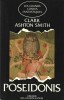
Poseidonis.
Editions Librairie des Champs-Elysées / Collection " Les Grand Contes Fantastiques " de 1981. In-8 broché de 243 pages au format 20,5 x 14 cm. Superbe couverture illustrée. Dos carré. Plats et intérieur resté frais. Préface de Lin Carter. Rare édition originale, en très bel état général.
Vente exclusivement par correspondance. Le libraire ne reçoit, exceptionnellement que sur rendez-vous. Il est préférable de téléphoner avant tout déplacement.Forfait de port pour un livre 10 € sauf si épaisseur supérieure à 3 cm ou valeur supérieure ou égale à 100 €, dans ce cas expédition obligatoire au tarif Colissimo en vigueur. A partir de 2 livres envoi en colissimo obligatoire. Port à la charge de l'acheteur pour le reste du monde.Les Chèques ne sont plus acceptés.Pour destinations extra-planétaire s'adresser à la NASA.Membre du Syndicat Lusitanien Amateurs Morues
( CD Albums - Rock ) - The Rock Bottom Remainders / The Wrockers - Stephen King, Amy Tan, James W. Hall, Kathi Kamen Goldmark, Tony Goldmark, Carl Hiaasen, Party Gang, Susanne Pari, Jessica Mitford, Maya Angelou, Roy Blount, Jr, Billy Philadelphia, Cynthia Robins, Leonard Maltin, Meg Mackay, Bob Greene, Diane Langlois, Faith Sale, Gail Parenteau, Greil Marcus, Joel Selvin, Roger Clark, Sandra Choron, Molly Ivins, Robert Reich, Tomie DePaola, Adaire Elizabeth Kamen, Harry Choron, Norman Mailer, Dave Barry.
Reference : 18931
(1991)
The Rock Bottom Remainders alias The Wrockers ( contraction de " writers " et " rockers " ) : Stranger than Fiction.
Oglio Records 1998. Unique double CD de ce groupe de rock and roll américain, composé d’écrivains renommés, fondé par Kathi Kamen Goldmark en 1992 et dissout après la mort de cette dernière en 2012. On trouvait entres autres : Stephen King, Amy Tan, James W. Hall, Kathi Kamen Goldmark, Tony Goldmark, Carl Hiaasen, Party Gang, Susanne Pari, Jessica Mitford, Maya Angelou, Roy Blount, Jr, Billy Philadelphia, Cynthia Robins, Leonard Maltin, Meg Mackay, Bob Greene, Diane Langlois, Faith Sale, Gail Parenteau, Greil Marcus, Joel Selvin, Roger Clark, Sandra Choron, Molly Ivins, Robert Reich, Tomie DePaola, Adaire Elizabeth Kamen, Harry Choron, Norman Mailer, Dave Barry, etc, accompagnés de musiciens de renom ; Lou ( Accordéon ), Christopher Kee, David O. Golia, Glenn Schuetz, Massimo Biolcati ( basse ), Joe Goldmark, Dobro, Billy Lee Lewis, Feral Wails, Ken Owen, Lee Levin, Peter Tucker, Ron Erwin, Scott Goulding ( batterie ), Doug Adams, Fiddle, Bob Livingston, David Phillips, Jerry Jeff Walker,Jim Campilongo, Jimmy LaFave, John Inmon, Michael Ross, Bob Halperin, Warren Zevon ( guitares ) , Billy Philadelphia, Henry Salvia, Rick Ulfik, Stewart Cochran ( claviers ), David Phillips, Joe Goldmark ( pedal Steel Guitar ), Jaime Brockett, Jeff Narell, Pete Devine, Robert Reich ( percussions ). Ce groupe de garage, reprenant des standards du Blues et du Rock, à tourné pendant deux décennies, à guichets fermés à travers les Etats-Unis, recueillant plus de 2 millions de dollars pour des œuvres caritatives. Etat de neuf, scellé sous blister, mais il y a un petit coup de massicot horizontal au bas du dos, montrant qu'il s'agit d'une solde U.S. Rare et épuisé.

Vente exclusivement par correspondance. Le libraire ne reçoit, exceptionnellement que sur rendez-vous. Il est préférable de téléphoner avant tout déplacement.Forfait de port pour un livre 10 € sauf si épaisseur supérieure à 3 cm ou valeur supérieure ou égale à 100 €, dans ce cas expédition obligatoire au tarif Colissimo en vigueur. A partir de 2 livres envoi en colissimo obligatoire. Port à la charge de l'acheteur pour le reste du monde.Les Chèques ne sont plus acceptés.Pour destinations extra-planétaire s'adresser à la NASA.Membre du Syndicat Lusitanien Amateurs Morues
A Case of Human Monstrosity, with a Commentary. [Read 16th May, 1831].
London, Taylor and Francis, 1833. 4to. As extracted, no back-stip. In ""Transactions of the Cambridge Philosophical Society"", volume 4. Fine and clean. Pp. (219)-255 + 4 plates of which 2 are handcoloured.
First appearance of Dr. William Clark's perhaps most important paper on ""Human Monstrosity"": ""The object of this memoir is to show that in one instance, at least, of the second order, the apparently excessive development may be brought within the action of the general laws by which the rudimentary organs of embryos advance to their perfect form"" (Macmillan's Magazine, Volume 21).
Clark Mary Higgins Clark Carol Higgins Clark Mary Higgins Damour Anne (Traduction) Damour Anne (Traduction)
Reference : 65561
(2001)
ISBN : 9782226130990
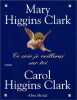
Ce soir je veillerai sur toi
Albin Michel 2001 280 pages in8. 2001. Broché. 280 pages. Les portes du paradis ne s'ouvriront pour Sterling Brooks qu'à une condition : retourner sur terre et sauver une personne en danger.Sa mission : aider Marissa une petite fille de six ans. Ses parents ont divorcé elle se sent triste et seule en cette veille du 25 décembre. Une terrible menace pèse sur son père... Sterling va faire tout ce qui est en son pouvoir pour que Noël soit pour Marissa la plus inoubliable des fêtes et non un horrible cauchemar. Un roman de Noël plein de charme d'humour et de fantaisie mais aussi un merveilleux message d'espoir de Mary et Carol Higgins Clark
french édition - l'article peut présenter de légères marques de stockage ou d'usure mais reste en très bon état. Envoi rapide et soigné dans enveloppe à bulles depuis France
Higgins Clark Mary Higgins Clark Carol Higgins Clark Carol
Reference : 173189
(2006)
ISBN : 2226173676
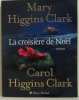
La croisiere de noel
Albin michel 2006 in12. 2006. Broché. Après Trois jours avant Noël et Le Voleur de Noël Mary et Carol Higgins Clark réunissent une fois encore leurs héroïnes favorites : Alvirah Meehan et Regan Reilly. Toutes deux embarquent pour une croisière de Noël sur un paquebot de luxe en compagnie des parents de Regan d'une célèbre romancière et d'un entrepreneur de pompes funèbres. À bord un congrès d'écrivains de polars et leurs fans. Mais les vacances sont vite compromises : une vieille dame prétend avoir vu le fantôme de l'écrivain objet du séminaire un fan disparaît une tempête inattendue dévie le paquebot de sa route et un mystérieux navire non-identifié s'approche... Traduit de l'américain
Bon Etat quelques inscriptions page de garde
Celebration of Spirit
, IMAS - International Museum of Art and Scienc 2006), 2006 Hardcover, 140 pages, English/ Spanish, 236 x 236 mm, book in perfect condition, with lots of pictures in colour, with a personal word from the author, ISBN 9780977493500.
The beautifully assembled book captures the story of the Clark family, family photographs, full-color artwork and poetry by Kirk Clark, a fascinating interview with Mr. Clark by Yvonamor Palix conducted via email, essays by Thom Wheeler and Anne Clark, and gallery photographs of the Celebration of Spirit exhibit at the International Museum of Art and Science?s newly renovated Charles and Dorothy Clark gallery in March of 2006.
On a Method of making a Direct Comparison of Electrostatic with Electromagnetic Force" with a Note on the Electromagnetic Theory of Light. (Read June 18, 1868). - [THE INTRODUCTION OF THE ""ELECTRICAL FORMULATION"" OF THE ELECTROMAGNETIC THEORY OF LIGHT.]
(London, Taylor & Francis, 1869) Large 4to. In recent blue wrappers with the title-page to vol. 158. Extracted from ""Philosophical Transactions of the Royal Society of London."", Vol. 158. Maxwell's paper: pp. 643-657. Clean and fine.
First appearance of this major paper on electromagnetic dynamics, in which Maxwell improves the groundbreaking equations he had set forth in his famous paper of 1865, the ""A dynamical Theory of Electro-Magnetic Fields"". In the paper offered here, he for the first time proposed to base the electromagnetic theory of light solely on 2 equations. The paper is one of Maxwell's 5 most importent contributions to electromagnetism.""Formulas for the forces between moving charged bodies may indeed de derived from Maxwell's equations, but the action is not along the line joining them and can be reconciled with a dynamical principle only by taking into account the exchange of momentum with the field. Maxwell remarked that the equations might be condensed, but ""to eliminate a quantity which expresses a useful idea would be rather a loss than a gain in this stage of our enquiry."" he had in fact simplified the equations in his fifth major paper, the short, but importent ""Note on the Electromagnetic Theory of Light."" (1868), writing them in an integral form without the function A, based on four postulates derived from electrical experiments. This may be called the electrical formulation of the theory, in contrast with the original dynamical formulation."" (C.W.F. Everitt in DSB).
Abhandlung von Verhütung der Pferdekrankheiten, welche ihren Grund in fehlerhafter Beschaffenheit der Ställe, des Futhers, des Wassers, der Luft und der Bewegung haben. Nebst einigen Bemerkungen über den chirurgischen und medicinischen Theil der Rossa...
Cont. boards. Some scratches on back. (4),319 pp.
First German edition.
The Story of South Africa. An Account of the historical Transformation of the Dark Continent by the European Powers and the Culminating Contest between Great Britain and the South African Republic in the Transvaal War. Copiously illustrated with color...
Chicago, Philadelphia, J.H. Moore, (1899). Royal 8vo. Orig. full pictorial cloth. Wear to spine-ends. Small tears on top of joints. Fronispiece map and plate. 652 pp., profusely illustrated with plates after photographs. Internally clean and fine.

The Mesozoic and Cenozoic Echinodermata of The United States.
Washington, 1915. 4to. Orig. full cloth. Top a. bottom of spine with wear. 341 pp., 107 plates. (Monogr. of the United States Geological Survey).
The earlier Stone Age Settlement of Scandinavia.
Cambr., 1975. Oboards. 282 pp. Textillustr. 6. boards.
Introduction to Logic.
Toronto & New York & London, D. van Nostrand Comp., (1962). 8vo. Orig. full cloth. XII,268 pp.
First US edition.
"MAXWELL, JAMES CLARK. - OPTICS, ELECTRICITY AND MAGNETISM UNITED
Reference : 41709
(1864)
""A Dynamical Theory of the Electromagnetic Field."" Received October 27, 1864. (Abstract)
(London, Taylor and Francis, 1864). No wrappers, as extracted from""Proceedings of the Royal Society"". From November 19, 1863, to December 22, 1864, inclusive."", Vol. XIII. Pp 531-536.
First printing of the first announcement of Maxwell unification of light-waves, electricity and magnetism, the most importent of the papers relating to his electromagnetic theory, in which he brought electro-magnetical phenomena on a clear mathematical form. The present paper is an abstract of the larger paper which was read to the Royal Academy in 1864, but only issued the year later (1865) in ""Philosophical Transactions of the Royal Society"" , where it was printed in full, and as an abstract in ""Philosophical Magazine"" (1865).""A generation later Einstein's work on relativity was founded directly oupon Maxwell's electromagnetic theory"" it was this that led him to equate Faraday with Galileo and Maxwell with Newton."" (PMM No 355, but only the paper from 1865). - Dibner. Heralds of Science No 68 (1865 paper).
"MAXWELL, JAMES CLARK. - THE INTRODUCTION OF THE ""ELECTRICAL FORMULATION"" OF THE ELECTROMAGNETIC THEORY OF LIGHT.
Reference : 42029
(1869)
On a Method of making a Direct Comparison of Electrostatic with Electromagnetic Force"" with a Note on the Electromagnetic Theory of Light. (Read June 18, 1868).
(London, Taylor & Francis, 1869) Large 4to. Without wrappers. Extracted from ""Philosophical Transactions of the Royal Society of London."", Vol. 158. Maxwell's paper: pp. 643-657. Clean and fine, wide margins.
First appearance of this major paper on electromagnetic dynamics, in which Maxwell improves the groundbreaking equations he had set forth in his famous paper of 1865, the ""A dynamical Theory of Electro-Magnetic Fields"". In the paper offered here, he for the first time proposed to base the electromagnetic theory of light solely on 2 equations. The paper is one of Maxwell's 5 most importent contributions to electromagnetism.""Formulas for the forces between moving charged bodies may indeed de derived from Maxwell's equations, but the action is not along the line joining them and can be reconciled with a dynamical principle only by taking into account the exchange of momentum with the field. Maxwell remarked that the equations might be condensed, but ""to eliminate a quantity which expresses a useful idea would be rather a loss than a gain in this stage of our enquiry."" he had in fact simplified the equations in his fifth major paper, the short, but importent ""Note on the Electromagnetic Theory of Light."" (1868), writing them in an integral form without the function A, based on four postulates derived from electrical experiments. This may be called the electrical formulation of the theory, in contrast with the original dynamical formulation."" (C.W.F. Everitt in DSB).
"MAXWELL, JAMES CLARK. - THE ""MAXWELL-DISTRIBUTION""S FINAL FORM - A MAIN PAPER IN 19TH CENTURY PHYSICS.
Reference : 43456
(1867)
""On the Dynamical Theory of Gases."" Received May 16, - Read May 31, 1866.
London, Taylor and Francis, 1867. 4to. No wrappers as extracted from ""Philosophical Transactions"", Vol. 157 - Part I. Titlepage to volume 155 and pp. 49-88. Titlepage with minor light browning at corners. Internally clean. A small stamp on verso of titlepage.
First appearance of this seminal paper (in its full version from ""Transactions""), representing the announcement of Maxwell's final ""Theory of Gases"" and introduces the ""Maxwell Distribution"" in its final form, a statistical means of describing aspects of the kinetic theory of gases, a theory, together with his electromagnetic theory, are considered to be SOME OF THE GREATEST ADVANCES IN PHYSICS OF ALL TIMES. Everett considers this paper (1868) to be Maxwell's greatest single paper. Maxwell's discoveries laid the foundations of special relativity and quantum mechanics.One of Maxwell's major investigations was on the kinetic theory of gases. Originating with Daniel Bernoulli, this theory was advanced by the successive labours of John Herapath, John James Waterston, James Joule, and particularly Rudolf Clausius, to such an extent as to put its general accuracy beyond a doubt" but it received enormous development from Maxwell, who in this field appeared as an experimenter (on the laws of gaseous friction) as well as a mathematician.In 1866, he formulated statistically, independently of Ludwig Boltzmann, the Maxwell-Boltzmann kinetic theory of gases. His formula, called the Maxwell distribution, gives the fraction of gas molecules moving at a specified velocity at any given temperature. In the kinetic theory, temperatures and heat involve only molecular movement. This approach generalized the previously established laws of thermodynamics and explained existing observations and experiments in a better way than had been achieved previously. Maxwell's work on thermodynamics led him to devise the Gedankenexperiment (thought experiment) that came to be known as Maxwell's demon.
On the Induction of Electric Currents in an Infinite Plane Sheet of Uniform conductivity.
(London, Taylor and Francis, 1872). 8vo. In the original printed wrappers. In ""Proceedings of the Royal Society"", Vol. XX [20], No. 132. Entire issue offered. Wrappers with light soiling and minor chipping with some loss to extremities, not affecting text. Fine and clean. Pp. 160-17. [Entire volume: 135-197].
First printing of Maxwell's paper in which he seeks to: ""determine the currents which are induced in an infinite plate of uniform conductivity and infinitethickness, and in a sphere or spherical shell of any thickness when in the presence of a varying magnetic system: and in any of these bodies When rotating near a constant magnetic system, round an axis which is normal to the faces of the plate or passes through the centre"" (From the introduction to the present paper"".
On the Theory of Compound Colours, and the Relations of the Colours of the Spectrum. - [MAXWELL ON THE RELATIONS OF COLOURS]
(London, Taylor and Francis, 1860). 8vo. In the original printed wrappers. In ""Proceedings of the Royal Society"", Vol. X [10], No. 39. Entire issue offered. Wrappers with a few brown spots, fine and clean. Pp. 404-408. [Entire issue: Pp. 319-494].
First printing of Maxwell's paper on a method of exhibiting the relations of colours.""Maxwell worked on the generation of white light by mixing different colors and in 1860, published the paper On the Theory of Compound Colours and its Relations to the Colours of the. In this paper, he extended the work of Thomas Young who first postulated only three colors, red, green and violet are necessary to produce any color including white and not all the colors of the spectrum are necessary as first illustrated by Newton. He also incorporated Hermann G?nther Grassman's concept that there are three variables of color vision (spectral color, intensity of illumination and the degree of saturation). Maxwell showed that these color variables can be represented on a color diagram based on three primary colors. While Newton distinguished his principal colors from the painters triad of primary colors (red, yellow and blue), he supposed the identity of mixing rule for lights and pigments. Even though Helmholtz explained that the mixture of color lights is an additive process while the mixture of pigments is a subtractive process as illustrated in Figure 2, Maxwell made experiments and developed a complete theory to explain how this happens by creating a color triangle which was originally suggested by James David Forbes and illustrated that any color can be generated with a mixture of any three primary colors and that a normal eye has three sorts of receptors as illustrated in his 1861 paper On the Theory of Three Primary Colours. He chose the three primary colors as red, green, and blue."" (Sarkar, Pp. 4-5). From 1855 to 1872, Maxwell published at intervals a series of valuable investigations concerning the perception of colour, colour-blindness and colour theory, for the earlier of which the Royal Society awarded him the Rumford Medal. The instruments which he devised for these investigations were simple and convenient to use. For example, Maxwell's discs were used to compare a variable mixture of three primary colours with a sample colour by observing the spinning ""colour top."".
The Drawings of Leonardo da Vinci in the Collection of Her Majesty the Queen at Windsor Castle. Volume 1.
Phaidon Press, 1968. Folio. In publisher's full orange cloth with gilt lettering to spine in the original dust-jacket. Dust-jacket with minor wear, otherwise very fine and clean. 219 pp.
""On the Dynamical Theory of Gases."" Received May 16, - Read May 31, 1866. - [THE ""MAXWELL-DISTRIBUTION""S FINAL FORM - A MAIN PAPER IN 19TH CENTURY PHYSICS.]
London, Taylor and Francis, 1867. 4to. Extracted and rebound in recent green plain wrappers. Title-page of vol. 157 pasted on to front wrapper. A fine copy. Pp. 49-88.
First appearance of this seminal paper (in its full version from ""Transactions""), representing the announcement of Maxwell's final ""Theory of Gases"" and introduces the ""Maxwell Distribution"" in its final form, a statistical means of describing aspects of the kinetic theory of gases, a theory, together with his electromagnetic theory, are considered to be SOME OF THE GREATEST ADVANCES IN PHYSICS OF ALL TIMES. Everett considers this paper (1868) to be Maxwell's greatest single paper. Maxwell's discoveries laid the foundations of special relativity and quantum mechanics.One of Maxwell's major investigations was on the kinetic theory of gases. Originating with Daniel Bernoulli, this theory was advanced by the successive labours of John Herapath, John James Waterston, James Joule, and particularly Rudolf Clausius, to such an extent as to put its general accuracy beyond a doubt" but it received enormous development from Maxwell, who in this field appeared as an experimenter (on the laws of gaseous friction) as well as a mathematician.In 1866, he formulated statistically, independently of Ludwig Boltzmann, the Maxwell-Boltzmann kinetic theory of gases. His formula, called the Maxwell distribution, gives the fraction of gas molecules moving at a specified velocity at any given temperature. In the kinetic theory, temperatures and heat involve only molecular movement. This approach generalized the previously established laws of thermodynamics and explained existing observations and experiments in a better way than had been achieved previously. Maxwell's work on thermodynamics led him to devise the Gedankenexperiment (thought experiment) that came to be known as Maxwell's demon.