 Write to the booksellers
1392 books for « charpentier j p »Edit
-
Type
Artists book (1)
Autograph (1)
Book (1391)
Magazine (1)
Maps (2)
Music sheets (15)
Photographs (3)
-
Latest
Last 24h (1)
Last month (7)
Last week (17)
-
Language
English (1)
French (1412)
Russian (1)
-
Century
16th (2)
17th (3)
18th (16)
19th (108)
20th (674)
21st (55)
-
Countries
Belgium (60)
Canada (10)
China (2)
Denmark (4)
France (1294)
Germany (4)
Greece (1)
Switzerland (38)
United States of America (1)
-
Syndicate
ALAC (9)
CLAM (1)
CLAQ (4)
CNE (1)
ILAB (666)
NVVA (4)
SLACES (4)
SLAM (645)
SNCAO (6)
Topics
- Aquitaine (5)
- Architecture (7)
- Asia - orient (6)
- Autographs (7)
- Berry (5)
- Bible (19)
- Biography (27)
- Biology (6)
- Carpenter (1255)
- Charpentier jacques (19)
- Charpentier marc antoine (5)
- Chartres (5)
- Children’s books (5)
- China (6)
- Christianity (7)
- Costumes (10)
- Customs (10)
- Dedication (6)
- Detective novels (10)
- Dreyfus affair (6)
- Earth (7)
- Education (6)
- England (5)
- English (5)
- Engraving (books about) (4)
- Enigmas (5)
- Esotericism (27)
- Essays (6)
- First edition (23)
- Genealogy (6)
- Geography (15)
- Geology (7)
- Gospel (5)
- Guide books (7)
- Guittoneau ben (5)
- Hagiography (6)
- History (93)
- Ile de france (10)
- India (8)
- Israel (9)
- Journalism (4)
- Latin (4)
- Law (4)
- Linguistics (4)
- Literature (136)
- Lorrain (14)
- Magazine (21)
- Manuscripts (6)
- Medicine (15)
- Music (12)
- Musset alfred de (5)
- Navy (5)
- Newspaper (5)
- Newspapers press (41)
- Opera (7)
- Opera ballet (7)
- Paris (41)
- Philosophy (8)
- Photography (12)
- Poetry (75)
- Policy (9)
- Printing (13)
- Psychology (4)
- Publishers (7)
- Pyrenees (5)
- Regionalism (29)
- Religions (31)
- Religions & spirituality (4)
- Review (35)
- Reviews (33)
- Rough sketch (12)
- Sciences (9)
- Scores (56)
- Shapes & colours (9)
- Songs (17)
- Sports (7)
- Symbolism (6)
- Testimonies / stories (6)
- Theatre (14)
- Theology (7)
- Travel (9)
- United kingdom (5)
- Various (13)
- War (20)
- Xenophon (5)
- Xviii th century (10)
Campa Laurence Charpentier Henry Krémer Louis Charpentier-Morel Françoise Morel Paul
Reference : 14624
(2008)
ISBN : 2710330857
D'encre de fer et de feu: Lettres à Henry Charpentier (1914-1918)
TABLE RONDE 2008 272 pages 20 8x2 2x30 8cm. 2008. Broché couverture rempliée. 272 pages. Cet ouvrage rassemble les lettres proses et dessins que Louis Krémer a adressés à son ami poète Henry Charpentier entre 1914 et 1918 offrant un témoignage littéraire atypique sur la Grande Guerre mêlant révolte ironie et lyrisme
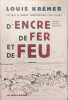
Très bon état
[Recueil des costumes de la Bretagne et des contrées de la France...]. Superbe suite de costumes d'hommes et de femmes issus de nombreux départements de la France et plus particulièrement de Bretagne.
Superbe suite de 88 costumes traditionnels français, et plus particulièrement bretons, finement coloriée à la main à l’époque. Nantes, Charpentier, [1829-1831].Grand in-4 de 88 planches lithographiées et coloriées à la main (sur 120) montées sur onglets. Relié sans le feuillet de titre en demi-chagrin vert, encadrement de filets frappés à froid encadrant les plats, dos à nerfs orné de motifs dorés. Mors légèrement frottés. Reliure de l’époque.350 x 257 mm.
![[Recueil des costumes de la Bretagne et des contrées de la France...]. Superbe suite de costumes d'hommes et de femmes issus de nombreux départements ...](https://static.livre-rare-book.com/pictures/AGA/lcs-17396_1_thumb.jpg)
![[Recueil des costumes de la Bretagne et des contrées de la France...]. Superbe suite de costumes d'hommes et de femmes issus de nombreux départements ...](https://static.livre-rare-book.com/pictures/AGA/lcs-17396_2_thumb.jpg)
![[Recueil des costumes de la Bretagne et des contrées de la France...]. Superbe suite de costumes d'hommes et de femmes issus de nombreux départements ...](https://static.livre-rare-book.com/pictures/AGA/lcs-17396_3_thumb.jpg)
Superbe suite de costumes d’hommes et de femmes issus de nombreux départements de la France et plus particulièrement de Bretagne.Colas, Bibliographie générale du costume et de la mode, I, 612 ; Vinet, Bibliographie méthodique, 2279 ; Lipperheide, 1195.« La plupart de ces planches sont lithographiées par H. Charpentier, elles sont très intéressantes pour les costumes régionaux et paysans de la France. » (Colas).Les lithographies ont été réalisées par Henri Charpentier, et finement coloriées à la main à l’époque. Un certain nombre de planches présentent des rehauts d’or dans les costumes.Sur fond de paysages ces planches sont un document très précieux pour l’histoire du costume traditionnel en France et plus particulièrement en Bretagne : paysans et paysannes, pêcheurs et jeunes mariés y côtoient les dames de condition. Les si célèbres coiffes traditionnelles y sont représentées dans un contexte très vivant. Les départements suivants figurent dans le présent recueil : la Vendée (6 pl.), le Maine et Loire (6 pl.), la Loire inférieure (18 pl.), le Morbihan (3 pl.), le Finistère (15 pl.), l’Ile et Vilaine (2 pl.), les Côtes du Nord (2 pl.), la Manche (3 pl.), la Seine inférieure (10 pl.), le Calvados (3pl.), la Charente inférieure (6 pl.), la Vienne (1 pl.), l’Indre et Loire (1 pl.), l’Eure et Loire (2 pl.), le Rhône (2 pl.), le Loiret (1 pl.), la Gironde (6 pl.), l’Ain (1 pl.).« This set of plates is the earliest work devoted to the costume of the Bretagne region, as well as being of the highest quality ». (The Exotic and the beautiful, III, n°921).Les Charpentier, installés à Nantes, étaient de très importants éditeurs bretons du milieu du XIXe siècle. Ils ont publié une série d’ouvrages sur la région et ont utilisé une nouvelle technique introduite à Nantes en 1821 : la lithographie. Très jolie réunion de 88 lithographies finement coloriées à la main à l’époque, véritable témoignage des usages vestimentaires en Bretagne et en France au tout début du XIXe siècle.

Le Symbolisme - numéroté 33/50 sur lafuma
Les Arts et le Livre 1927 319 pages in12. 1927. broché. 319 pages. Cet ouvrage de John Charpentier publié en 1927 par Les Arts et le Livre propose une étude du symbolisme au XIXe siècle suivie d'un florilège des meilleurs écrivains du mouvement. Il s'inscrit dans une collection dirigée par René Lalou et offre une perspective historique et critique sur ce courant poétique
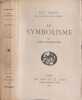
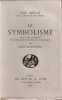
Très bon état coiffe sup. légèrement abimée ensemble trés propre
Dupleix et l'empire des Indes
Mame 1938 128 pages IN8. 1938. broché. 128 pages. Cet ouvrage de John Charpentier publié par Mame en 1938 retrace la vie et l'action de Joseph François Dupleix gouverneur général des établissements français en Inde et son rôle dans la construction de l'empire colonial français en Asie du Sud. Le livre est illustré de nombreuses gravures en noir et blanc et s'adresse à un public francophone intéressé par l'histoire coloniale

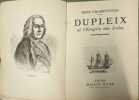
Bon état couverture légèrement usagée intérieur bon
Platonis cum Aristotele in universa philosophia comparatio.Qua hoc Commentario, in Alcinoi Institutionem ad eiusdem Platonis doctrinam, explicatur (+) Pars posterior Platonicae et Aristotelicae comparationis in universa Philosophia. Quae de animorum i... - [UNITING PLATO AND ARISTOTLE - ATTACKING RAMUS]
Parisiis, Iacobi du Puys, 1573. 4to. Bound in one near contemporary full vellum. Printers woodcut device to booth title pages. Ex-libris [Luigi Imolae, physician to Pope VII] pasted on to pasted down front free end paper. Title written in contemporary hand to upper part of spine. Names written in contemporary hand and crossed out, except for 'Livius' and 'Imolae', to first title page. Very light uniform browning to leaves. All in all a fine and clean copy. (87), 477, (11), 328, (4) pp.
First edition of Charpentier's famous comparison of Aristotle and Plato - one of the most thorough and important works of its kind - which came to influence the way that the Renaissance viewed the two great thinkers and their works. The work, which is profoundly anti-Ramist and also as such drew great attention, constitutes a fabulous determination of the joint legacy of Aristotle and Plato and is one of the works that best illustrates the nuanced basis of Renaissance scholarship and philosophy. It is a curious but generally accepted conception that with the rise of the Renaissance came the fall of Aristotle. It is a fact that with the recovery of many lost works of ancient literature, the widening of the range of classical studies and the renewed interest in Plato, Aristotle was no longer the sole authority on a huge number of fields, as he to a certain extent had been viewed during the Middle Ages. That this should mean a total ignorance of the teachings of Aristotle must be considered somewhat of a myth (though a very frequently repeated one), and in fact with the grand humanists of the late 15th and early 16th century, the study of Aristotle fits perfectly with the broader comprehension of scholarship. The idea of nearing the thought of Aristotle to that of Plato and vice-versa is something that understreams much original thought of the Renaissance, and Charpentier's work, which explicitly and thoroughly compares and reconciles the two great thinkers, gives us a fabulous insight into Renaissance thought, as it is rarely presented.""It was published at Paris in 1573. Charpentier shows a knowledge of other writers in this tradition, namely Boethius, Bessarion, George Trebizond, Giovanni Pico della Mirandola, Symphorien Champier, and Fox Morcillo, among others."" (Riccardo Pozzo, ""The Impact of Aristotelianism on Modern Philosophy"", p. 20). Jacques Charpentier (1521-74), Professor of medicine and philosophy, Charles IX's physician, taught mathematics at the Collège de France and philosophy at the Collège de Bourgogne and was later appointed Rector of the University of Paris. He passionately defended Peripateticism and was renowned for his philosophical and religious intolerance. Despite his remarkable merits he is today perhaps best known for his feud with Petrus Ramus, French humanist and protestant convert with a liberal approach to Aristotelian teaching. In Ramus Charpentier saw the impact of Lorenzo Valla's criticism or Aristotle: ""He thought that with Ramus the true idea of knowledge was in danger of eclipse"", as expressed in the present work. Charpentier is often referred to as a Anti-Ramist due to his many - often fierce and personal - attacks on Ramus's teaching:""More intellectual provocative were three attacks by Jacques Charpentier. In 1551 as rector of the University Charpentier ruled that because Ramus did not teach the Aristotelian logic required by the statutes, his pupils could not enjoy the privileges of Paris university students. Rasmus appealed first to the assembly of regents of Philosophy and later to the Parliament of Paris. Before the Parliament Ramus outlined a programme of study in which grammar, rhetoric, and dialectic led first to natural and moral philosophy and later theology or law. He argued that his method of teaching avoided wasting time on scholastic technicalities and produced graduates who were better prepared for practical life. The effectiveness of this speech and the support of his patron helped him to avoid censure and obtain a royal lectureship."" (Mack, A History of Renaissance Rhetoric 1380-1620, Pp. 153-4).""by 1565 he was leading opposition to the naming of Jacques Charpentier (no relation), a long-time adversary, to the royal chair of mathematics. Charpentier, who had by then succeeded Ramus as the Cardinal de Lorraine's protégé and who enjoyed Jesuit support, kept his chair"" and Ramus, ever more threatened, in 1567 again fled Paris, taking refuge with the Prince de Condé."" (DSB).
Essai sur les glaciers et sur le terrain erratique du bassin du Rhône.
Lausanne, Marc Ducloux, (étiquette collée sur titre de la couv. orig.: Genève, H. Georg ...), 1841, in-8°, 2 ff. + X + 363 p., avec 23 croquis + 1 f. d'errata + 8 planches (lithographiées par Spengler) + 1 grande carte dépliante du terrain erratique du bassin du Rhône (gravée par Bressanini), couverture originale illustrée conservée, qqs rousseurs sur les titres et les marges, non rogné, exlibris Peter E. Obergfell, jolie reliure en demi-cuir anthracite, dos à nerfs orné de titre, filets et fleurons, plats recouverts de papier dominoté.
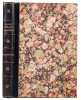
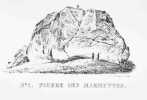
Edition originale de ce classique en matière de la géologie des Alpes, de glaciers et de blocs erratiques, relié avec sa très rare brochure originale, illustré d'un lithogr. au verso.“Jean de Charpentier, d'une famille française fixée en Saxe, étudia à l'école des mines de Freyberg (Saxe), fut attaché à l'administration des mines de Prusse, et passa en France en 1808. Il fut chargé en 1813 par le gouvernement vaudois de la direction des salines de Bex, qu'il réorganisa complètement. Des travaux d'endiguement du Rhône, en 1831, l'amenèrent à capter et à utiliser la source thermale de Lavey. Pendant son séjour à Bex, il s'adonna à la botanique et à la géologie, et s'intéressa notamment à la question des glaciers. Il fut le premier à affirmer que les blocs erratiques, déposés dans le plateau et sur le Jura suisses, avaient été amenés par la glace et non par l'eau. Cette théorie rencontra au début bien des sceptiques, entre autres Agassiz, qui en 1836, après un séjour à Bex, se rallia complètement au point de vue de Charpentier, qu'il développa et généralisa. Charpentier publia le résultat de ses recherches dans son «Essai sur les glaciers et le terrain erratique du Rhône», qui fait encore autorité. Il fut nommé en 1829 professeur honoraire à l'Académie de Lausanne, en 1846 directeur des mines du canton de Vaud” (DHBS).Lorsque les «Etudes» de Louis Agassiz furent publiées (1840), l'«Essai sur les glaciers» de Charpentier était sur le point de sortir de presse, mais hélas pour ce dernier, avec quelque peu de retard. Agassiz était conscient de brûler la politesse à Charpentier, risquant même leur amitié. Mais la priorité de Charpentier sur Agassiz dans les découvertes permettant l'élaboration de la théorie de l'âge glaciaire n'est pas à démontrer: dès 1834, dans le cadre de la société Helvétique des Sciences Naturelles, Charpentier faisait état de ses observations sur les glaciers.First edition of this classic in geology of the Alps, glaciers and erratic blocs. “Such is the power of publicity and enthusiasm that the origin of the theory of the Ice Age is today commonly attributed to Agassiz and not to its righful scientific parent, Charpentier. The scrupulous care with which Charpentier weighed the evidence and described the phenomenon of erratic blocks and the function of glaciers in transporting them makes this book a classic” (DSB). Uncut copy bound in with the originial illustrated wrappers (rare). DHBS II/480-481; Zittel, Geschichte der Geologie, p. 226; Poggendorff I/423; Dictionary of Scientific Biography III/210-211; Perret 0955 Image disp.

(SLACES, NVVA)
Phone number : 41 (0)26 3223808
La ville de Bruyères-et-Montbérault - documents historiques
LIVRE HISTOIRE 1996 222 pages 0x20x14cm. 1996. Broché. 222 pages.
Bon état
Lycée d'Avignon
Librairie classique et d'éducation 384 pages in8. Sans date. reliure editeur. 384 pages.


Bon état rousseurs sur les pages mais ne genent en rien la lecture du livre
Exposition exacte ou Tableau anatomique en tailles-douces des différentes parties du corps humain
Paris, chez Crepy, 1758. In-folio, 59 pp., broché, couverture de papier à la colle (petits manques et déchirures marginaux, taches, rebroché, pâles mouillures, manque la première planche).
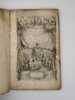
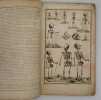
Édition originale de ce recueil de planches anatomiques entièrement gravé, le texte y compris. Il est composé d'un titre-frontispice gravé d'après François Boucher représentant une leçon d'anatomie et sa dissection, un avertissement composé par Babel et gravé par Crepy puis 28 planches dessinées par Crepy et Bouchardon et gravées par Charpentier, Danzel et Mathey. Ex-libris manuscrit Mr Richer. Voir photographie(s) / See picture(s) * Membre du SLAM et de la LILA / ILAB Member. La librairie est ouverte du lundi au vendredi de 14h à 19h. Merci de nous prévenir avant de passer,certains de nos livres étant entreposés dans une réserve.
Au Jardin de l'Infante. Suivi de plusieurs poèmes.
Paris, A. Ferroud - F. Ferroud successur (Petite Biliothèque Andrea), 1920. Petit in-8, 187-(3) pp. et suites, broché, couverture illustrée rempliée.
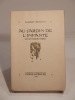
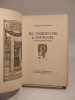
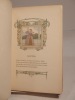
UN DES 70 exemplaires numérotés sur vélin d'Arches ou Japon (ici SUR JAPON) avec 3 ETATS des illustrations de Giraldon (définitif, noir, couleurs) (coloris par E. Charpentier). Bel exemplaire. * Voir photographies / See pictures. * Membre du SLAM et de la LILA / ILAB Member. La librairie est ouverte du lundi au vendredi de 14h à 19h. Merci de nous prévenir avant de passer,certains de nos livres étant entreposés dans une réserve.
Croisière du Steam-Yacht Medjé, en Angleterre, Ecosse et Irlande. Juillet-Aout 1892
Journal manuscrit, circa 1892-1894. Grand in-4, non paginé, demi maroquin vert émeraude à coins, dos à nerfs élégamment orné et mosaïqué, initiales du propriétaire en bas du dos, tête dorée, sous étui, reliure signée Champs (dos insolé avec petits frottements, étui abimé).
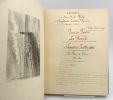
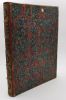
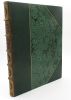
Abondamment illustré par 52 gravures de Charpentier. Envoi autographe de l'auteur.Journal de bord d'un passager, beau témoignage des croisières de plaisance à la belle époque, celle-ci remportera d'ailleurs la médaille de la plus intéressante traversée 1891-1893 (Union des yachts français). * Voir photographie(s) / See the picture(s). * Membre du SLAM et de la LILA / ILAB Member. La librairie est ouverte du lundi au vendredi de 14h à 19h. Merci de nous prévenir avant de passer,certains de nos livres étant entreposés dans une réserve.
GIVAUDAN (Claude), BERROCAL (Miguel) BROWN (Jacques) LOTH (Wilhelm), FRINK (Elisabeth), MEADOWS (Bernard), WALDBERG (Isabelle), RAMOUS (Carlo), MARTIN (Etienne), CHARPENTIER (Michel), DELAHAYE (Jacques)
Reference : 15074
Catalogue sculpteurs
Genève, Claude Givaudan, 1966. Nombreux feuillets non-paginés, format in-4, répartis sous 10 chemises illustrées en noir, emboîtage illustré en noir (emboîtage sali, ainsi que la chemise de présentation du catalogue).
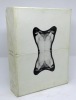


70 reproductions photographiques en noir duvres de Etienne-Martin, Miguel Berrocal, Michel Charpentier, Jacques Brown, Jacques Delahaye, Elisabeth Frink, Wilhelm Loth, Bernard Meadows, Isabelle Waldberg et Carlo Ramous ainsi que la liste des prix des oeuvres.* Voir photographie(s) / See the picture(s). * Membre du SLAM et de la LILA / ILAB Member. La librairie est ouverte du lundi au vendredi de 14h à 19h. Merci de nous prévenir avant de passer,certains de nos livres étant entreposés dans une réserve.
SUITE DE COSTUMES N°2 : "DAMES DES SABLES-D'OLONNE, EN ÉTÉ (DÉPARTEMENT DE LA VENDÉE)" 1830 (Charpentier Imprimeur)
nantes Charpentier Imprimeur lithographe 1829 - 1831 Une lithographie Originale d'époque en couleurs, Format : 35,5 centimètres de haut par 26,2 centimètres de large, sur papier blanc (format de la gravure seule : 21,2 cm de haut x 17,5 cm de large), 1829-31 Nantes Charpentier Imprimeur lithographe Editeur, [Recueil. Oeuvre de Charpentier, (Suite de costumes.) Lithographies, 1829-31],
Lithographie couleur représentant deux femmes richement vêtues portant l'ancienne coiffe Sablaise. Au second plan, la mer ....... SUPERBE ........... rare ....... en bon état (good condition). en bon état
SUITE DE COSTUMES N°8 : "GRISETTES DE NANTES (Département de la Loire-Inférieure)" 1830 (Charpentier Imprimeur)
nantes Charpentier Imprimeur lithographe 1829 - 1831 Une lithographie Originale d'époque en couleurs, Format : 35,5 centimètres de haut par 26,2 centimètres de large, sur papier blanc (format de la gravure seule : 21,2 cm de haut x 17,5 cm de large), 1829-31 Nantes Charpentier Imprimeur lithographe Editeur, [Recueil. Oeuvre de Charpentier, (Suite de costumes.) Lithographies, 1829-31],
Lithographie couleur représentant deux femmes richement vêtues portant l'ancienne coiffe nantaise. Au second plan, le château des ducs de Bretagne ....... SUPERBE ........... rare ....... en bon état (good condition). en bon état
SUITE DE COSTUMES N°2 : "PAYSANS DE CHATEAUBRIANT (Département de la Loire-Inférieure)" 1830 (Charpentier Imprimeur)
nantes Charpentier Imprimeur lithographe 1829 - 1831 Une lithographie Originale d'époque en couleurs, Format : 35,5 centimètres de haut par 26,2 centimètres de large, sur papier blanc (format de la gravure seule : 21,2 cm de haut x 17,5 cm de large), 1829-31 Nantes Charpentier Imprimeur lithographe Editeur, [Recueil. Oeuvre de Charpentier, (Suite de costumes.) Lithographies, 1829-31],
Lithographie couleur représentant deux femmes et un homme portant le costume de Chateaubriant dans un paysage bucolique ....... SUPERBE ........... rare ....... en bon état (good condition). en bon état
SUITE DE COSTUMES N°11 : "DEMOISELLES DE PORNIC (Département de la Loire-Inférieure)" 1830 (Charpentier Imprimeur)
nantes Charpentier Imprimeur lithographe 1829 - 1831 Une lithographie Originale d'époque en couleurs, Format : 35,5 centimètres de haut par 26,2 centimètres de large, sur papier blanc (format de la gravure seule : 21,2 cm de haut x 17,5 cm de large), 1829-31 Nantes Charpentier Imprimeur lithographe Editeur,[Recueil. Oeuvre de Charpentier, (Suite de costumes.) Lithographies, 1829-31],
Lithographie couleur représentant deux femmes richement vêtues portant l'ancienne coiffe de Pornic. Au second plan, le château de PORNIC ....... SUPERBE ........... rare ....... en bon état (good condition). en bon état
PORNIC ET SES BAINS : 5- LE CHATEAU
Nantes CHARPENTIER Lithographe 1841 une lithographie en 2 tons par Charpentier représentant : "LE CHATEAU", format : 31 x 23 cm, [provenance : PORNIC ET SES BAINS, ALBUM DU BAIGNEUR, par Auguste Guilmin, sans date [1841] Nantes : imprimerie de Forest pour CHARPENTIER Lithographe Editeur],
TOUT PETIT TIRAGE ...... RARISSIME ........ en trés bon état (very good condition). en trés bon état
PORNIC ET SES BAINS : 3- PARTIE OCCIDENTALE DU CHATEAU
Nantes CHARPENTIER Lithographe 1841 une lithographie en 2 tons par Charpentier représentant : "PARTIE OCCIDENTALE DU CHATEAU", format : 31 x 23 cm, [provenance : PORNIC ET SES BAINS, ALBUM DU BAIGNEUR, par Auguste Guilmin, sans date [1841] Nantes : imprimerie de Forest pour CHARPENTIER Lithographe Editeur],
TOUT PETIT TIRAGE ...... RARISSIME ........ en trés bon état (very good condition). en trés bon état
SUITE DE COSTUMES N°18 : "DEMOISELLES DU CROISIC (prés Guérande Loire-Inférieure)" 1830 (Charpentier Imprimeur)
nantes Charpentier Imprimeur lithographe 1829 - 1831 Une lithographie Originale d'époque en noir, Format : 35,5 centimètres de haut par 26,2 centimètres de large, sur papier blanc (format de la gravure seule : 21,2 cm de haut x 17,5 cm de large), 1829-31 Nantes Charpentier Imprimeur lithographe Editeur, [Recueil. Oeuvre de Charpentier, (Suite de costumes.) Lithographies, 1829-31],
Lithographie couleur représentant deux femmes richement vêtues portant l'ancienne coiffe Croisicaise ....... SUPERBE ........... rare ....... en bon état (good condition). en bon état
SUITE DE COSTUMES N°4 : "PAYSANNES DE MACHECOUL (Département de la Loire-Inférieure)" 1830 (Charpentier Imprimeur)
nantes Charpentier Imprimeur lithographe 1829 - 1831 Une lithographie Originale d'époque, rehaussée en couleurs à laquarelle et gomme arabique, Format : 35,5 centimètres de haut par 26,2 centimètres de large, sur papier blanc (format de la gravure seule : 21,2 cm de haut x 17,5 cm de large), 1829-31 Nantes Charpentier Imprimeur lithographe Editeur, [Recueil. Oeuvre de Charpentier, (Suite de costumes.) Lithographies, 1829-31],
Lithographie couleur représentant deux femmes richement vêtues portant l'ancienne coiffe de Machecoul ....... SUPERBE ........... rare ....... en bon état (good condition). en bon état
PORNIC ET SES BAINS : 2- COSTUMES DES PORNICAISES
Nantes CHARPENTIER Lithographe 1841 une lithographie en 2 tons par Charpentier représentant : "2- COSTUMES DES PORNICAISES", format : 31 x 23 cm, [provenance : PORNIC ET SES BAINS, ALBUM DU BAIGNEUR, par Auguste Guilmin, sans date [1841] Nantes : imprimerie de Forest pour CHARPENTIER Lithographe Editeur],
TOUT PETIT TIRAGE ...... RARISSIME ........ en trés bon état (very good condition). en trés bon état
SUITE DE COSTUMES N°3 : "GRAND COSTUME DES FEMMES DU PEUPLE ET CUISINIÈRES DE NANTES (Département de la Loire-Inférieure)" 1829 (Charpentier Imprimeur)
nantes Charpentier Imprimeur lithographe 1829 - 1831 Une lithographie Originale d'époque en couleurs, Format : 33,5 centimètres de haut par 25,5 centimètres de large, sur papier blanc (format de la gravure seule : 21,2 cm de haut x 17,5 cm de large), 1829-31 Nantes Charpentier Imprimeur lithographe Editeur,[Recueil. Oeuvre de Charpentier, (Suite de costumes.) Lithographies, 1829-31]
Lithographie couleur représentant 3 femmes richement vêtues portant l'ancienne coiffe nantaise + un homme au chapeau et pipe. Au second plan, la Loire....... SUPERBE ........... rare ....... en bon état (good condition). en bon état
OEUVRES COMPLETES, 20 TOMES (COMPLET)
Garnier Frères, Paris. 1870. In-12. Broché. Etat passable, Couv. défraîchie, Dos abîmé, Mouillures. 20 tomes d'env. 500 pages chacun. Texte en français, et en latin en notes (en bas de pages). Couvertures des tomes 6, 7, 8, 10, 11, 15, 16, 17, 18 fortement défraîchies et abîmées.. . . . Classification Dewey : 870-Littératures des langues italiques. Littérature latine
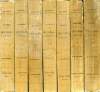
'Bibliothèque latine-française'. Traductions revues, notamment par M. Charpentier, Inspecteur honoraire de l'Académie de Paris, Agrégé de la Faculté des Lettres. Tome 1: Etude sur sa vie et ses ouvrages. Tome 2: Rhétorique à Herennius, par M. Delcasso; De l'Invention, trad. de E. Greslou. Tome 3: De l'Orateur, trad. de S. Andrieux. Tome 4: Brutus; L'Orateur; Les Orateurs parfaits; Dialogue sur les paritions oratoires; Les Topiques, trad. de M. Delcasso. Tome 5: Discours oour Roscius d'Amérie; Pour Publius Quintus, pour Q. Roscius le Comédien, trad. de Ch. du Rozoir; Discours contre Cécilius; Contre Verrès, trad. de MM. du Rozoir et Guéroult. Tome 6: Seconde action contre Verrès, trad. de Guéroult. Tome 7: Seconde action contre Verrès (fin), trad. de Guéroult; Discours, trad. par M. Cabaret-Dupaty. Tome 8: Disocurs, trad. de Guéroult, Durozoir et de Guerle; De Cicéron au peuiple après son retour, trad. de Guéroult. Tome 9: Discours pour sa maison, pour Sextius, trad. de M. Cabaret-Dupaty. Contre Vatinius, etc., trad. par M. Héguin de Guerle. Tome 10: Discours, trad. de J.P. Charpentier; Pour Marcellus, Pour Ligarius, etc., trad. par M. Héguin de Guerle. Tome 11: Discours contre Marc Antoine, 2e à 14e Philippiques, trad. par M. Héguin de Guerle. Tome 12: Lettres de M.T. Cicéron (685-701), trad. revue par M. H. Durand. Tome 13: Lettres de M.T. Cicéron (702-704), trad. revue par Paul Charpentier. Tome 14: Lettres de M.T. Cicéron (704-708), trad. revue par MM. Legoüez et Héguin de Guerle. Tome 15: Lettres de M.T. Cicéron (704-708), trad. revue par MM. Héguin de Guerle et Paul Charpentier. Tome 16: Les Académiques; Des vrais biens et des vrais maux; Les Paradoxes, trad. de MM. Delcasso et Stiévenart. Tome 17: Les Tusculanes; L'Amitié; La Demande du Consulat, trad. de MM. Matter, Jules Pierrot. Tome 18: Les devoirs; Sur la vieillesse; De la nature des dieux, trad. de MM. Stiévenart, Jules Pierrot. Tome 19: La Divination, La répubolique des lois, trad. de MM. de Golbery, Liez, J.P. Charpentier. Tome 20: Fragments, Ouvrages apocryphes, suivis d'une Table générale. Classification Dewey : 870-Littératures des langues italiques. Littérature latine

