 Write to the booksellers
243 books for « caspar r »Edit
-
Latest
Last 3 days (1)
Last month (3)
Last week (1)
-
Language
Dutch (1)
French (240)
Latin (2)
-
Century
17th (27)
18th (36)
19th (21)
20th (41)
21st (5)
-
Countries
Belgium (14)
Denmark (34)
France (85)
Switzerland (110)
-
Syndicate
CLAM (1)
ILAB (172)
NVVA (64)
SLACES (64)
SLAM (40)
SNCAO (1)
Topics
- Aesthetics (1)
- Alps (12)
- Anarchy (1)
- Anatomy (1)
- Architecture (3)
- Army (1)
- Astrology (1)
- Astronomy (1)
- Basel (1)
- Bible (2)
- Bibliography (2)
- Biography (2)
- Biology (1)
- Botany (1)
- Catastrophe (1)
- Chemistry (1)
- Christianity (2)
- Churches (1)
- Dialect (1)
- Early printed books (2)
- Economics (2)
- Engraving (books about) (4)
- Engravings (9)
- Entomology (2)
- Erasmus (3)
- Explorations (1)
- Fantastic (1)
- Fine arts (2)
- First edition (4)
- Genealogy (4)
- Geneva (1)
- Geography (1)
- Germanic languages (5)
- Germany (5)
- Helvética (61)
- History (15)
- History of art (1)
- Honegger (1)
- Industrial arts & crafts - fine arts (2)
- Industry (1)
- Islam muslim (3)
- Italian (2)
- Italy (2)
- Jacob (2)
- Latin (2)
- Law (7)
- Literature (3)
- Logic (1)
- Lorrain (1)
- Magazine (1)
- Maps (6)
- Mathematics (2)
- Medicine (14)
- Military arts (10)
- Mountaineering climbing (10)
- Music (1)
- Navy (1)
- Newspapers press (1)
- Painting (2)
- Philology (2)
- Philosophy (5)
- Policy (2)
- Political sciences (1)
- Portraits (5)
- Professions guilds (1)
- Psychology (3)
- Regionalism (3)
- Religions (9)
- Reviews (1)
- Romanticism (2)
- Sciences (6)
- Scores (1)
- Sociology (1)
- Sports (1)
- Switzerland (38)
- Symbolism (1)
- Tea (2)
- Theatre (1)
- Theology (8)
- Topography (1)
- Ussr (2)
- Various (4)
- View (6)
- War (2)
- Weights & measures (1)
- Zoology (2)
- Zurich (18)
WYSS, Caspar Leontius (1762-1798) / (d’après) WOLF, Caspar (1735-1783):
Reference : 123885aaf
Vue du Bain de Weissenbourg dans le Canton de Berne + Les Glacieres du Stroubel. 2 planches ens.
À Berne : chez B. Fehr, [zwischen 1780 / 1788] 31x22 cm, / 21.5x28.8 cm, Umrissradierungen, 2 Blatt. / 2 feuilles.
Autor: Caspar Leontius Wyss, Maler Zeichner Radierer; Caspar Wolf (pinxit), Landschaftsmaler Schweiz; Friedrich Steinfels, Seifenfabrikant Schweiz; Fehr, Bartholome (Kunsthandlung, Bern); Image disp.

(SLACES, NVVA)
Phone number : 41 (0)26 3223808
Souvenir du Lac des Quatre Cantons. (Einbandtitel) (= Erinnerung an den Vierwaldstättersee - Souvenir of the Lake of the Four Cantons).
Basel, Druck und Verlag v. Chr. Krüsi, o,J. (um 1867), Quer-4°. Mit 82 Stahlstich-Tafeln von C. Huber, mit den Orig.-Seidenhemdchen, Rote Original-Leinwand mit reicher Gold- und Schwarzprägung sowie dreiseitigem Goldschnitt (Ecken und Kapitale etwas bestossen, leicht gelockert). Insgesamt ein schönes (Pracht-) Exemplar.
Caspar Huber ist bekannt für seine Stahlstich Alben, zum Beispiel: Osenbrüggen: Alpes et Glaciers de la Suisse / St. Moritz, Souvenir Suisse usw. Dieses hier angebotenes Album ist wahrscheinlich eine Verlags zusammenstellung und von daher als Unikat zu betrachten. On connait plusieurs ouvrages gravées par Caspar Huber, e.a. un album de St. Moritz (Perret 2288-B.), Un souvenir de la Suisse. Berne & OSENBRÜGGEN, Ed Alpes et Glaciers de la Suisse vers 1880 (Perret 3253). L’album présent, rarissime, est bibliographiquement introuvable. Perret -; Andres, E.: Steel-engraved views of towns and cities (Bibliographie 2002, v. Stahlstich Folge) Nos. 858 bis 873. (Keine unter: Souvenir d. 4 cantons, aber fast alle Alben vom Verlag Krüsi). Image disp.
(SLACES, NVVA)
Phone number : 41 (0)26 3223808
Dissertatio medica de pleuritide.
Basileae : Typis GeorgI Deckeri ..., 1648, in-4to, 16 Bl., Rund-Stempel Universitäts-Bibliothek Basel auf Titelblatt, Mod. Pappband
Célèbre botaniste bâlois Caspar Bauhin. “Caspar Bauhinus, born at Basel and later professor of (Greek), anatomy and botany there...first established a scientific system of nomenclature.
(SLACES, NVVA)
Phone number : 41 (0)26 3223808
Geschichte des Appenzellischen Volkes. Neu bearbeitet von Johann Caspar Zellweger, Mitglied der schweizerischen geschichtforschenden Gesellschaft. (dazu): ders.: Urkunden zu Joh. Caspar Zellweger's Geschichte des appenzellischen Volkes. Total 11 Bände
Trogen, Meyer und Zuberbühler, 1830 .40 & 1831-38, in-8vo, mit 1 mehrfach gef. Karte von Obrist Merz in Band. 1: "Charte der Vogteien und Pfarreien in welche im XIV Jahrhundert der jetzige Kanton Appenzell eingetheilt war", (Karte sauber u. richtig gefaltet), Besitzer Stempel und Eintragungen Halbleinenbde. Rücken mit Titelei u. Fileten in Gold, Bibliotheks-Papierstreifen unten am Rücken. Sonst sehr gutes Exemplar.
3 in 4 Bänden und 3 in 7 Bänden = total 11 Bände. Mit einer gefalteten lithgrafierten Karte in Band 1. Vollständiges Exemplar der Geschichte und der Urkundensammlung. Titel & Titel verso mit Bibliotheksstempeln u.a. v. Donaueschingen. Fleckenloses Exemplar auf gutem Papier. Komplet selten. Barth 19962. Image disp.
(SLACES, NVVA)
Phone number : 41 (0)26 3223808
[Friedrich, Caspar David] VAUGHAN, William ; BÖRSCH-SUPAN, Helmut ; NEIDHARDT, Hans Joachim
Reference : 101771
(1972)
ISBN : 0900874368
Caspar David Friedrich, 1774-1840 : Romantic landscape painting in Dresden: [catalogue of an exhibition held at the Tate Gallery, London, 6 September-16 October, 1972]
London, Tate Gallery 1972 In-4 28 x 21,5 cm. Broché, couverture illustrée en couleurs, 112 pp., reproductions et planches en noir & blanc et en couleurs, notes, chronologie, sommaire. Exemplaire en bon état.
Texte en anglais. Bon état d’occasion
Biblia, das ist die ganze Heilige Schrift alten und neuen Testaments, herausgegeben durch Johann Caspar Ulrich. 2 Teile in 1 Band.
Zürich, Conrad Orell, 1755-56-56, in-Folio, 2-spalt. Text, insgesamt 1358 S. und 26 ganzseit. gestoch. Bildtafeln, vereinzelt etwas stock-, tinten- und fingerfleckig, im allgemeinen frisches Papier, letzte Bl. mit winzigen Wurmlöchern, schöner Holzdeckelband auf Bünden bezogen mit reichlich blindgeprägtem Pergament, etwas angestaubt, fleckig, berieben und Kratzspuren, 2 Kupferschliessen, Rotschnitt.
Prächtiges Exemplar der sogenannten Ulrichbibel. Johann Caspar Ulrich (1705-1768) war Theologe mildpietistischer Richtung, beliebter und origineller Prediger und Herausgeber homiletischer Schriften, wirkte auf das kirchliche Leben und Ritualwesen Zürichs vielfach anregend und erweiternd, trat u.a. für die aufkommenden Herrnhuter Kreise ein, und schrieb u.a. eine Geschichte der Schweizer Juden.Swiss (Zurich) Ulrich-Bible, in-folio. This copy is illustrated with 26 full-page engravings, being the frontispiece to the New Testament (by J. Rod. Holzhalb), 1 plate by G. Eichler, and a series of 24 plates engraved by P.A. Kilian. Little foxing and staining in places, generally crisp. Beautiful, richly blindstamped vellum on wooden boards and raised bands, somewhat duststained and rubbed, 2 copper clasps, red edges. Very good, complete copy. Leemann-van Elck 36; HBLS VII/117, Nr. 16. Image disp.
(SLACES, NVVA)
Phone number : 41 (0)26 3223808
Der Todtentanz. Gemälde auf der Mühlenbrücke in Lucern, ausgeführt von Casparus Meglinger, Pictor. Getreu nach den Originalien lithographirt und herausgegeben von Gebr. Eglin in Lucern.
Luzern, Gebr. Eglin, 1867, Qu-Folio, Titelblatt in Lithographie + IX (+ 1 leer) + 1 Lithogr. ‘Luzerns Ehrenwappen’ + 56 lithogr. Tafeln + 1 Bl. ‘Inhalt der Tafeln’, illustr. Orig.-Halbleinen. Buchdeckel mit lithogr. Abbildungen. Schönes Exemplar.
Erste Ausgabe. Dieser Totentanz-Zyklus ist eines der Wahrzeichen Luzerns, das Werk Caspar Meglingers, von 1626 bis 1635 gemalt, und zwar ursprünglich mit 67 Bildern. Es existieren heute noch 56, jedoch nur 45 davon wurden (damals 1867) in der Mühlebrücke aufgehängt. Über Jahrhunderte wurden die Totentanz-Bilder immer wieder restauriert.Die unter den Tafeln angebrachten Sinnsprüche sind eine katholische Umformung derjenigen des Pfarrers Müller von Thalwil, die dieser für den von J.R. Meyer gemalten Zürcher-Totentanz dichtete.“Meglingers Bedeutung liegt in seiner außerordentlichen szenischen Kompositionsgabe und gewandten Porträtkunst; auch in der weichen Behandlung des nackten Körpers und in seiner Auffassung landschaftlicher Reize. Sein Hauptwerk ist der von ihm entworfene und gemalte Totentanz auf der Spreuer- oder Mühlenbrücke in Luzern. Die Anregung hiezu bot ohne Zweifel sein Lehrer Jakob von Wyl” (SKL).First edition. lithogr. title, table of contents, history of the Dance of Death (in German, French). 10 p. of introductionary texts + 56 plates with legends in German + 1 index. Hardly any foxing, a fine fresh copy. Minns No. 438. Lonchamp 1967. Oppermann 1191; to Caspar Meglinger: Füssli (1779) p. 418, B/VII/305; Thieme-B. XXIV/336; Brun, SKL (1908) II/348-350; HBLS V/65, Nr. 2. Image disp.
(SLACES, NVVA)
Phone number : 41 (0)26 3223808
NANTES "VUE GENERALE"
Francfort Martin ZEILLER 1661 une gravure en taille douce en noir, colorée d'époque, Dimensions de l'image: 11 x 43,7 cm, collée sans marge sur une feuille crème, extrait de "Topographia Galliae", Francfort, Caspar MERIAN 1661 (tome IV, 9ème partie page 16), publié par Martin ZEILLER,
SUPERBE GRAVURE ..........TRES RARE....(encore plus rare en couleur d'époque)...... en trés bon état (very good condition). en trés bon état
NANTES "VUE GENERALE"
Francfort Martin ZEILLER 1661 une gravure en taille douce en noir, Dimensions de l'image: 15,5 x 49 cm, extraite de "Topographia Galliae", Francfort, Caspar MERIAN 1661 (tome IV, 9ème partie page 16), publié par Martin ZEILLER,
SUPERBE GRAVURE ..........TRES RARE.......... en trés bon état (very good condition). en trés bon état
FONTES SALVATORIS e quibus viae purgativar, illuminativae, unitivae saluberrima fluenta dimanant.
Anvers, chez Jean De Meurs, 1643, 1 reliure d'époque en peau de truie, ornée de décors floraux estampés à froid, montée sur ais de bois, dos à nerfs, tranches bleu, 1 fermoir et reste de l'autre. in-12, 1 ff. blanc, titre, 11 ff.n.c., 378 pp. + 1 ff. d'errata, ex-libris manuscrits: "Carolus 1673 Purwalter", "G. Lamberti Admontensis" (Abbaye d'Admont, monastère bénédictin, situé en Autriche, elle héberge la plus grande bibliothèque monastique du monde), tampon de bibliothèque: "Grand Séminaire de Grenoble" ;
Première édition.Caspar Tausch, jésuite de Bohème (1594-1645).L'image de Dieu, présentée comme une fontaine salvatrice "Fontes Salvatoris".
Phone number : 06 80 15 77 01
Observations sur la phraenologie ou la connaissance de l'homme moral et intellectuel fondée sur les fonctions du système nerveux, par G. Spurzheim,... Nouvelle édition [Unknown Binding] Spurzheim, Johann Caspar
Bon état, compte tenu des points suivants : Exemplaire relié provenant d'un désherbage de la Bibliothèque Franciscaine de Paris. Donc, tampons et marques de classement. Reliure d'époque, état moyen, coiffe érodée, plats usagés, un coin manquant. Corps de l'ouvrage en parfait état, bien complet du frontispice et des 6 planches in-finé. 1818. RARE.
Merci de nous contacter à l'avance si vous souhaitez consulter une référence dans notre boutique à Authon-du-Perche.
Exercices de comptabilité approfondie et révision DECF Epreuve n°6 2005 (ancienne édition) Caspar, Bernard and Enselme, Gérard
378 Pages.
Merci de nous contacter à l'avance si vous souhaitez consulter une référence dans notre boutique à Authon-du-Perche.
Huus=Postill, Eller korte Forklaringer Over alle Evangelier og Epistler, Som paa Søndage og hellige Dage Udi Guds Menighed, det gandske Aar igiennem, pleye at fremsættes og forhandles. Guds Børn til gudelig Øvelse Paa ny oplagt, og med stor Fliid igie... - [REGINE OLSEN'S ""FAMILY-BIBLE"" - ]
Kiøbenhavn, Vaysenhuses Bogtrykkerie, Friedrich Kisel, 1741. Large quarto. Bound in an absolutely magnificent, contemporary full morocco binding over wooden boards. Richly gilt spine with six raised bands and sumptuously gilt boards with a blank centre “mirror” of green morocco. Inner gilt dentelles and all edges of boards gilt. All edges gilt. Beautiful 18th century end-papers with flower-print motif. A bit of wear to spine and extremities. Small holes from clasps and remains of these to the back board. A truly splendid copy. (8), 710" (2), 613, (3) pp.Second front fly leaf with handwritten entries by Terkild Olsen (Regine’s father), spanning the years 1809-1830, of important events in his family, recording his wedding to Regina Malling as well as two confirmations and seven births, among them that of Regine Olsen.With the ownership stamp of O.C. Thielst (who was related to the Olsen family) to first fly-leaf.
The “family-bible” of Kierkegaard's fiance Regine Olsen, being a truly magnificent, splendidly bound copy of the 1741-edition of Brochmand’s seminal Huus-Postill, which throughout two centuries constituted the most widespread devotional book in Denmark.Brochmand’s collection of sermons for family use first appeared in two parts printed in 1635 and 1638 repectively under the title Sabbati Sanctificatio, with the first collected edition appearing in 1655. The first edition under the title Huus=Postill appeared in 1719, and the 1741-edition is the fifth edition under this canonical title. Numerous other editions appeared throughout the 18th century, the latter ones being the most common.The work was of the utmost importance to Danish Christianity throughout the 17th and 18th centuries, and almost every churchgoing household in Denmark owned a copy. It became decisively influential upon the form of the sermon in the Danish Church.Caspar Erasmus Brochmand, or Jesper Rasmussen Brochmand, (1585-1652) was a Danish Lutheran clergyman and theologian. He was professor at the University of Copenhagen from 1610-1638, and from 1638 until his death, he served as Bishop of Zealand. He was a key founder of the dogmatic system that formed the basis for the Lutheran orthodoxy in Denmark. His most widespread work is the Huus-Postill, which remained a classic for two centuries. The work proclaims preaching that is centered around Jesus’ death of atonement for the sake of man. This extraordinarily finely bound copy has belonged to Regine’s family, and her father, Terkild Olsen, has noted the most important family events on the front fly-leaf, beginning with the wedding of himself to Regine’s mother, Regina Frederikke, in 1809. After that follows the births of their seven children, Regine being the 7th.The entry about Regine reads “Den 20.de Januarum 1822 fødte hun [i.e. Regina Frederikke] en Datter som hun kaldte Regine og døbtes under Frue Menighed” (i.e. The 20th of January 1822 she [i.e. Regina Frederikke] gave birth to a daughter who she called Regine and was christened under Frue congregation). And thus begins the story of Regine – and in turn the story of Kierkegaard as an author.There are several later corrections and additions to the entries, e.g. dates of death etc. One of the corrections is in the Regine-entry, where her birthday has been corrected, first to January 22nd, then to 23rd. Regine’s father seems to have entered the birth dates at the same time as the christening dates, explaining why hecould have made a mistake in the birth date.Interestingly, Regine’s birthday seems to have always had some confusion about it. In Heiberg and Kuhr’s edition of Kierkegaard’s Papers, Regine’s birthday is recorded as January 23rd, 1823 and her christening as February 15, 1823. This is repeated from vol. 3, 1911 up until the last volume in 1948. Also, in the Kierkegaard-entry in Dansk Biografisk Leksikon, it says that Regine was 17 when they got engaged. According to the church books, Regine (there registered as Regina, whereas her father here, in their family book of sermons, calls here Regine) was born on January 23rd, 1822 and christened om March 15, 1823.We here have an extraordinary family heirloom from Regine’s family, a rare glimpse into a bygone time, when the mythical muse of the father of Existentialism was born.Terkild Olsen (1784-1849), Regine’s father, was councilor of state and department head in the Finance Ministry. His son Jonas Olsen, Regine’s brother, inherited the family heirloom after their father. According to a family record, the book was passed on to Oluf Thielst, when Jonas died in 1902. Oluf got it from his mother, Sophia Olsen, who was the daughter of Jonas Olsen, and who had married Johannes Mathiesen Thielst, Oluf Thielst’s father. Oluf Thielst was close to his aunt (his father’s sister) Regine and had taken great care of her in her old age. Oluf Thielst passed on the book to his son Otto Christian Mathiesen Thielst.Laid in the book is a photograph depicting Jonas Olsen (1816-1902) with his second wife Cathrine Elisabeth Augusta Petersen and his daughter Sophia Olsen (1847-1929). The photograph is presumably taken at the vicarage in S. Stenderup, where he was priest from 1871-1902. The picture is in his study, with his bookshelves in the background. On one of the shelves, right above his head, one sees the present copy of Brochmand’s Huus-Postill.Jonas Olsen – Regine’s brother, who inherited the present work from their father – was very close to his sister. He was also a good friend of Kierkegaard, with whom he studied theology before Kierkegaard’s engagement to his sister. Kierkegaard had great respect for him, as he had for their father, who almost took on a father role for Kierkegaard. When Kierkegaard broke off the engagement with Regine, Jonas was outraged and swore to hate Kierkegaard “like no-one had hated before”. Bibl. Dan. I: 480. Provenance: directly from the Thielst family. REGINE OLSEN It is safe to say that Regine Olsen occupies a place like none other in Kierkegaard’s life. Their love story is one of the most intriguing in the history of intellectual thought and has always been an inevitable source of fascination for anyone interested in understanding Kierkegaard. It is not so much the love story itself, the engagement, and the rupture of the engagement that is responsible for the lasting importance that Regine has come to have upon Kierkegaard-reception and -scholarship, as it is Kierkegaard’s own, endless reflections upon it and his constant insistence that she – the one – is the reason he became the writer that he did. Regine is inextricably linked to Kierkegaard’s authorship, and in his own eyes, she became the outer, historical cause of it. It is not only in his journals and in letters to his confidantes that Kierkegaard keeps returning to Regine, their story, and the ongoing importance she holds for him, her unique position in his authorship is evident both directly (as in the preface to his Two Upbuilding Discourses from 1843, where he imagines how the book reaches the one) and more indirectly, albeit still clearly alluding to her in e.g. Repetition, Either-Or, Fear and Trembling, Philosophical Fragments, etc. “Even though Regine is not mentioned by her legal name one single time in the authorship, she twines through it as an erotic arabesque. In poetical form she appears before the reader in works such as Repetition, Fear and Trembling and Guilty? – Not Guilty [i.e. in Stages on Life’s Way], which in each their way thematizes different love conflicts, but she can also show herself quite unexpectedly, e.g. deep inside philosophical Fragments, where it is said about the relationship between god and man that “The unhappy lies not in the fact that the lovers could not have each other, but in the fact that they could not understand each other.” (Gert Posselt, in Lex, translated from Danish). One of the most striking passages is from Repetition, where Constantin Constantius explains the paradox of loving the only one, but still having to end the relationship and how the loved one became the cause of his writing career: “The young girl whom he adored had become almost a burden to him and yet she was his darling, the only woman he had ever loved, the only one he would ever love. On the other hand, nevertheless, he did not love her, he merely longed for her. For all this, a striking change was wrought in him. There was awakened in him a poetical productivity upon a scale which I had never thought possible. Then I easily comprehended the situation. The young girl was not his love, she was the occasion of awakening the primitive poetic talent within him and making him a poet. Therefore he could love only her, could never forget her, never wish to love anyone else and yet he was forever only longing for her. She was drawn into his very nature as a part of it, the remembrance of her was ever fresh. (Lowrie, 1946, p. 140). It is no wonder that anyone interested in understanding Kierkegaard is also interested in understanding the relationship with Regine. According to Kierkegaard himself, there would not be the Kierkegaardian opus we have today, were it not for Regine Olsen – “the importance of my entire authorial existence shall fully and absolutely fall upon her” (draft of a letter, see: Mit Forhold til Hende, p. 116). Due to numerous letters and a wealth of journal entries, we have a very vivid picture of how Kierkegaard got engaged and what happened afterwards. Kierkegaard wanted us to know. He wanted posterity to know the significance that Regine and the relationship with her had upon his life and work. A few of Kierkegard’s journal entries about Regine are redacted – some things have perhaps become too personal for prosperity to read, or Kierkegaard had later wished to put the story in a slightly different light –, but the rest gives a very clear picture of both the engagement and Kierkegaard’s afterthoughts. And about the continuous role of both her and the rupture of the engagement in his authorship and personal life. Added to that, we also have many of the letters that Kierkegaard sent to Regine during their engagement period. A few years after the engagement ended, Regine got engaged to and later married the Government officer Fritz Schlegel, who got stationed in the Danish West Indies, where they lived from 1855 to 1860. Kierkegaard died the very same year that Regine left Denmark, and after his death, Regine received in the post the bundle of letters that Kierkegaard had written to her, along with the letters he wrote to his friend Emil Boesen concerning Regine as well as Kierkegaard’s Notebook 15, entitled My Relationship with “her”. When Søren and Regine’s engagement ended, it seems that they each gave back to the other the letters that they had written. Regine says that she burnt hers (see Raphael Meyer) – some speculate, however, that maybe she did not after all and that they might be out there in the world somewhere, but none of them have ever surfaced –, and Kierkegaard kept his, for Regine later to do with as she wanted. Regine kept the letters and the Notebook 15 and for years did nothing with them. But she did not destroy them. As she got older, she decided to pass them on to someone she trusted, and in 1893, she visited Henriette Lund (Kierkegaard’s favourite niece) and told her that she wished for her to be entrusted with the notebook and the letters. According to Henriette Lund, by the following year, Regine had given the matter some more thought and had decided that Henritte Lund should publish the letters, also parts of those to Boesen and parts of Notebook 15. The publication was to also include conversations she had with Regine about the engagement. The fruit of this is the book entitled Mit Forhold til Hende (My Relationship with Her) by Henriette Lund, which was finished in 1896 and published after Regine’s death, as agreed, in 1904. We do not know exactly what happened, but it seems that Regine was not completely satisfied with the collaboration, and in 1896 she turned to Raphael Meyer and asked him to “listen to what “an old lady” could have to tell”, write down everything about the engagement period, along with the publication of the letters, the letters to Boesen, and the contents of Notebook 15. This work too appeared in 1904, after Regine’s death, and is more complete than Henriette Lund’s publication. Thus, although this enormously important relationship seems to be somehow still shrouded in mystery and Kierkegaard followers still hunt for Regine’s diary from the period and the allegedly burnt letters that may contain groundbreaking new information that will let us understand the great existentialist philosopher and somehow solve the “mystery”, the Søren-Regine relationship is very well documented, from both sides. This does not make it any less interesting. There is a reason why it occupies Kierkegaard so deeply throughout his life. And why it continues to occupy the rest of us. It all begins in 1837, when Kierkegaard meets the lovely young girl Regine Olsen when paying a call to the widowed Cathrine Rørdam. Three years later, in September 1840, after having corresponded frequently with her and visited her on numerous occasions, Kierkegaard decides to ask for her hand in marriage. She and her family accept, but already the following day, Kierkegaard regrets his decision and agonizes endlessly over it, until finally, in October 1841, he breaks off the engagement. Or at least intentionally behaved in such a manner that Regine had no other choice but to break it off. Disregarding the scandal, the heartbreak (his own included), and the numerous pleas from family members and friends alike, Kierkegaard’s tortured soul, still searching for God and for the meaning of faith, cannot continue living with the promise of marriage. Once again, he says in his journals from 1848, looking back, he had been flung back to the abyss of his melancholy, because he did not dare believe that God would take away the underlying misery of his personality and rid him of his almost maddening melancholy, which is what he wished for with the entire passion of his soul, both for Regine’s and thus also for his own sake. (See Pap. 1848, p. 61). Later the same month, he flees Copenhagen and the scandal surrounding the broken engagement. He leaves for Berlin, the first of his four stays there, clearly tortured by his decision, but also intent on not being able to go through with the engagement. As is evident from his posthumously published Papers, Kierkegaard’s only way out of the relationship was to play a charming, but cold, villain, a charlatan, not betraying his inner thoughts and feelings – the relationship had to be broken and Kierkegaard had to be gruesome to help her – “see that is “Fear and Trembling” “ (Not 15:15 1849, SKS 19, 444). Despite the brevity of the engagement, it has gone down in history as one of the most significant in the entire history of modern thought. It is a real-life Werther-story with the father of Existentialism as the main character, thus with the dumbfounding existentialist outcome that no-one could have foreseen. This exceedingly famous and difficult engagement became the introduction to one of the most influential authorships in the last two centuries. It is during his stay in Berlin, right after the rupture of the engagement, that he begins writing Either Or, parts of which, like Repetition, as we have noted above, can be read as an almost autobiographical rendering of his failed engagement. Several of Kierkegaard’s most significant works are born out of the relationship with Regine – and its ending. And she is constantly at the back of his head, the backdrop to all of his writings. She was the reason for my authorship”, Kierkegaard writes, “Her name shall belong to my writing, remembered for as long as I am remembered”, “Her life had enormous importance”, “Neither history nor I shall forget you”, “In history she will walk by my side”, “She shall belong to history”, and so we could go on establishing the enormous importance of Regine through quotes from Kierkegaard’s diaries and letters. “– she has and must have first and only priority in my life – but God has first priority. My engagement to her and the break is in fact my relationship to God, is, if I dare say so, divinely my engagement to God.” (NB27 :21, SKS 25, 139). With good reason, many view Regine as the key to Kierkegaard’s authorship. Without Regine, not only none of Kierkegaard’s writings, but also no absolute relationship to God.
CASPAR DAVID FRIEDRICH et la Peinture Romantique. Texte de Charles SALA.
Terrail Paris 1993 In-4 carré ( 300 X 240 mm ) de 205 pages, broché sous couverture illustrée. Illustrations dans et hors-texte. Parfait état.

DE ARMILLIS VETERUM SCHEDION suivi de OLAI WORMII DE AUREO CORNU DANICO ad licetum Responsio suivi de INAVRIBUS VETERUM SYNTAGMA (par Caspar Bartholini ) - DE ANNULIS NARIUM (Miscellaneis Medicis de Morbis biblicis)
Amsterlodami, Henrici Wetstenii, 1676. Plusieurs ouvrages en un seul in/16, reliure plein veau brun, dos à nerfs à titre doré, frontispice, page de titre avec vignette, nombreuses illustrations in-texte et 4 planches dépliantes (bijoux antiques), 7 f., 114 p., 7 f., 40 p., 7 f., 148 p., 1 f., 17 p., 4 f.

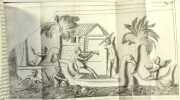
Petite découpe restaurée dans la marge du vol.2, page 55.Père et fils d’une famille Danoise d’érudits et médecins qui se distinguèrent dans les sciences ; le présent ouvrage traite entre autre, d’une corne d’or , un objet antique, découvert au Danemark ; objet couvert de nombreux symboles. La Bib. Esoterica en notice 233 précise pour une autre édition qu’il “est question dans cet ouvrage... non seulement de la licorne, mais aussi d’animaux cornus et de monstres humains, par exemple de François Trouillet qui vivait aux environs de 1599 et avait au milieu du front une véritable corne de bélier”.
Wanderungen in weniger besuchten Alpengegenden der Schweiz und ihre nächsten Umgebungen.
Zürich, Orell, Füssli, 1829, kl. in-8°, 4 Bl. + 168 S., leichter Stempel ,Breslauer Volksbibliothek’ / Exlibris Peter Ernst Obergfell, gelber Original-Glanzpapierumschlag (wie veröffentlicht) Rez. Schuber / emboîtage récent, avec titre au dos.
Erstausgabe dieser bedeutenden u. seltenen wissenschaftlichen Rundtour um den Monte-Rosa, die Glarner Alpen, die Schwyzer Alpen, aufgeteilt in 2 Kapitel:1) Reise (1822) von Zürich nach dem Monterosa und die damit verbundene vollständige Tour um diesen mächtigen Gebirgsstock. / 2) Kurze Reise im September 1823 nach einigen Gebirgsstöcken der Kantone Schwyz und Glarus, namentlich auf den Redetenstock, den Kärpfstock und das Glarner Faulhorn oder den schwyzer Griseltstock.“Nur selbst Gesehenes und durch Thatsachen Erwiesenes wird erzählt und beschrieben, und die hie und da aufgestellten Ansichten über wichtige Erscheinungen in der Natur, über Thalbildungen z.B. und Gletscherbewegungen, gründen sich auf eigene mehrjährige, mannigfaltige Beobachtungen” (der Verfasser im Vorwort).“Hirzel-Eschers bedeutendste Leistung war eine Rundtour um den Monte Rosa, vom Saastal über den damals noch wenig gemachten Monte-Rosa-Pass und zurück über den Theodulpass. Immerhin lenkte er die Aufmerksamkeit auf Zermatt und die südlichen Täler der Walliser Alpen”. Seine Aufzeichnungen über die Monte-Rosa-Tour konnte er bereits 1827 publizieren (Neue Alpina II, 177-250).In den Alpen der mittleren und östlichen Schweiz waren es die Gelehrten “H.C. Hirzel-Escher, dann Heinrich Zeller-Horner, Arnold Escher von der Lindt und Melchior Ulrich, die diese Alpenbezirke durchwanderten, verschiedene Gletscher begingen, einzelne Hochpässe überschritten und damit unschätzbare Beiträge zur näheren Kenntniss dieser Alpengruppe lieferten” (Lehner). Der Name Hans Caspar Hirzel kommt viel vor in den verschiedenen Zweigen der Familie Hirzel. Barth 18062; Dreyer 811; HBLS IV/231-5; Wäber BSL III/64, 215 und 320; Lehner, die Eroberung der Alpen S. 319-322 und 620; de Beer, Travellers in Switzerland 160, 163, und 542; Perret 2266-B. Image disp.
(SLACES, NVVA)
Phone number : 41 (0)26 3223808
Der Todtentanz auf der Mühlenbrücke in Luzern. – The Dance of Death on the Muhlenbruke in Lucerne.
Luzern, Ant. Eglin, 1893. Quer-8°. 1 (engl.) Titelblatt. Mit 1 Frontispiz und 3 Tafeln von Xaver Schwegler nach Caspar Meglinger. Illustr. Orig.-Halbleinenband.
Mit handschr. Besitzereinträgen auf dem fliegenden Vorsatz.
Wanderungen in weniger besuchte Alpengegenden der Schweiz und ihre nächsten Umgebungen.
Zürich, Orell, Füssli, 1829, kl. in-8°, 4 Bl. + 168 S., leichter Stempel ,Bresslauer Volksbibliothek’ / Exlibris Peter Ernst Obergfell, Halbleder d. Zeit, mit rotem Titelschild, Gelenke leicht angeplatzt.
Erstausgabe dieser bedeutenden wissenschaftlichen Rundtour um den Monte-Rosa, die Glarner Alpen, die Schwyzer Alpen, aufgeteilt in 2 Kapitel:1) Reise (1822) von Zürich nach dem Monterosa und die damit verbundene vollständige Tour um diesen mächtigen Gebirgsstock. / 2) Kurze Reise im September 1823 nach einigen Gebirgsstöcken der Kantone Schwyz und Glarus, namentlich auf den Redetenstock, den Kärpfstock und das Glarner Faulhorn oder den schwyzer Griseltstock.“Nur selbst Gesehenes und durch Thatsachen Erwiesenes wird erzählt und beschrieben, und die hie und da aufgestellten Ansichten über wichtige Erscheinungen in der Natur, über Thalbildungen z.B. und Gletscherbewegungen, gründen sich auf eigene mehrjährige, mannigfaltige Beobachtungen” (der Verfasser im Vorwort).“Hirzel-Eschers bedeutendste Leistung war eine Rundtour um den Monte Rosa, vom Saastal über den damals noch wenig gemachten Monte-Rosa-Pass und zurück über den Theodulpass. Immerhin lenkte er die Aufmerksamkeit auf Zermatt und die südlichen Täler der Walliser Alpen”. Seine Aufzeichnungen über die Monte-Rosa-Tour konnte er bereits 1827 publizieren (Neue Alpina II, 177-250).In den Alpen der mittleren und östlichen Schweiz waren es die Gelehrten “H.C. Hirzel-Escher, dann Heinrich Zeller-Horner, Arnold Escher von der Lindt und Melchior Ulrich, die diese Alpenbezirke durchwanderten, verschiedene Gletscher begingen, einzelne Hochpässe überschritten und damit unschätzbare Beiträge zur näheren Kenntniss dieser Alpengruppe lieferten” (Lehner).Der Name Hans Caspar Hirzel kommt viel vor in den verschiedenen Zweigen der Familie Hirzel. Barth 18062; Dreyer 811; HBLS IV/231-5; Wäber BSL III/64, 215 und 320; Lehner, die Eroberung der Alpen S. 319-322 und 620; de Beer, Travellers in Switzerland 160, 163, und 542.
(SLACES, NVVA)
Phone number : 41 (0)26 3223808
Weltharmonik. übersetzt und eingeleitet von Max Caspar.
München, 1973. Small folio. Original black full cloth. Excellent condition, near mint. 56, 403 pp.

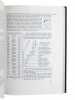
Third reprint, after the 1939-edition.
Patrocinii debitorum calamitate belli depauperatorum pars prima suivi de Pars secunda
typis Willem Eder | Ingolstadii (Ingolstadt) 1639 | 16 x 10 cm | relié
Edition originale de ces deux parties qui se trouvent rarement réunies. Manz fit publié plus tard deux autres parties. Absent aux catalogues allemands, on trouve une édition de la quatrième partie (1640) en Ecosse (car les parties se vendaient séparément puisqu'elles traitaient de points précis.) Absent à Brunet. Reliure en plein Parchemin à recouvrement réutilisant un manuscrit du Xve siècle. Dos en grande partie manquant. Traces de lacets. Mouillures sur les plats. P. 115 à 120, une déchirure avec manque en marge droite sans atteinte au texte. Caspar Manz (1606-1677) jurisconsulte et collaborateur du duc de Bavière, professeur à Ingolstat, écrivit ce traité de défense contre les tributs et les dettes de guerre qui ruinaient les peuples et les états. Ex libris gravé : Castello di Duino. - Photographies et détails sur www.Edition-Originale.com -

Phone number : 01 56 08 08 85
Faces augustae a Casparo Barleo et Cornelio Boyo
Apud Johannem Elsevirium | Lugduni Batavorum (Leyde) 1656 | 17 x 22 cm | relié
Nouvelle édition, et première elsevirienne, après l'originale parue à Dortrecht en 1643. Dédicace à la reine Elisabeth de Bohème. Page de titre en rouge et noir. Reliure en plein cartonnage d'attente usagé jaune. Pièce de titre en maroquin rouge. Frottement mettant le carton à nu aux mors, coiffes, coins et bordures. Bordures externes et coins émoussés Recueil de poésies sur le mariage et composées pour les futures noces d'Elisabeth de Bohème. Cette reine, âgée alors de 25 ans, étudiait la philosophie depuis sa première jeunesse - Descartes, qu'elle avait choisi pour maître, lui dédia Les principes de la philosophie en lui adressant cet éloge : "La première et la plus savante de ses disciples" - et craignait que ses prochaines noces ne nuisent à ses études. L'ouvrage contient 14 poèmes en vers sur le mariage, tous dans une veine assez satirique et comique (l'union d'Adam et Eve, la polygamie...), 9 par Caspar Barleus, 4 par Boyus et un par Cats, lequel s'est chargé de réaliser l'édition. Suit une partie constituée de dialogues philosophiques sur les vertus du mariage et des noces. Pour la petite histoire, l'union d'Elisabeth fut un échec, et la reine de Bohème choisit de finir abesse dans un monastère protestant. L'ensemble constitue une curiosité assez remarquable. - Photographies et détails sur www.Edition-Originale.com -
Phone number : 01 56 08 08 85
Celsiss. Origines Serenissimorum Ducum Brunswico-Luneburgensium. Historica Dissertatione pandent Caspar Sagitarius (und) PetrusFloto
Typis Nisianis | Jena (Iéna) 1684 | - | relié
Edition originale, rare, illustrée de 2 médailles en page de titre. Reliure en plein veau blond glacé ca 1880 signée Pagnant, dans le goût du XVIIIe. Dos à nerfs orné. Pièce de titre en maroquin rouge, pièce de date et lieu en maroquin noir. Triple filet d'encadrement sur les plats. Riche frise intérieure. Tranches dorées. Une légère griffure sur le plat inférieur. Très bel exemplaire parfaitement établi. Histoire et origines du duché deBrunswick-Lüneburg, dans le nord de l'Allemagne actuelle, et de ses Ducs. Les terres de Brunswick et Lunebourg furent élevées au rang de duché en 1235, lequel fut aboli en 1806. Le duché de Brunswick devint alors une partie du royaume du Hanovre avec la fin du Saint Empire Romain Germanique. Les études de Sagittarius se portent plus particulièrement sur les origines du Duché, de 1210 à 1235. - Photographies et détails sur www.Edition-Originale.com -
Phone number : 01 56 08 08 85
L'ART DE CONNAITRE LES HOMMES PAR LA PHYSIONOMIE. Tome VI ( VIème étude)
Paris Depélafol, Libraire 1820 in 8 (22,5x15) 1 volume reliure chagrin brun, dos lisse orné de fers dorés de style rocaille, tranches marbrées, 260 pages [1], avec des gravures hors-texte ( Planches numérotées de 254 à 345), des rousseurs. Johann Caspar Lavater, 1741-1801, écrivain et poète suisse de langue allemande, auteur d'un important ouvrage sur la physiognomonie. Nouvelle édition. augmentée. par Moreau de la Sarthe. Bon exemplaire
Bon Couverture rigide
Caspar David Friedrich.
S.l., Hazan, (2000). Un fort vol. au format in-4 (318 x 272 mm) de 296 pp. Reliure d'édition de plein cartonnage safran, sous jaquette illustrée.
![Caspar David Friedrich.. HOFMAN (Werner) - [FRIEDRICH (Caspar David)].](https://static.livre-rare-book.com/pictures/BLS/30650_1_thumb.jpg)
L'ouvrage s'agrémente d'une très abondante iconographie en couleurs. ''Ce que Friedrich peignit, plus que la nature elle-même, c'est la nature contemplée. La décision du cadrage est chez lui souveraine : à l'intérieur, ce qu'il perçoit, ce qu'il cherche à rejoindre, c'est une vibration intime et sombre qu'il psalmodie par ses tableaux méticuleux et dramatiques, qui rompent si violemment avec tout l'enseignement académique''. Dos de la jaquette passé. Ex-dono manuscrit porté au faux-titre. Du reste, très belle condition.
Juris publici Romano-Germanici eiusque prudentiae, liber unus. Editio II, Emendatior et auctior (+) Herr Rom. Kayserl. Majestat. Caroli VI Wahl-Capitulation und Reversales
Halae Magdeburgicae, Orphanotrophei, 1725. 8vo. Uniformly bound in two contemporary half vellum bindings with black lettering to spines. Small paper-label pasted on to spines. Marbled paper to boards with wear. Ex-libris pasted on to pasted down front end-papers. A nice and clean set. (14), 414 pp. 415-799, (50), 119, (1) pp. Black leaves bound in between the printed leaves.
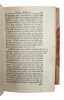
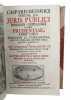
Interesting sammelband containing two works by Caspar Heinrich Horn on constitutional law focusing on aspects of Roman-German public law and the political structure of the Empire, especially regarding the responsibilities and agreements surrounding the election of an emperor. The first workis a study of the public law of the Holy Roman Empire combining Roman legal principles with Germanic customs and practices. Horn examines the structure, powers and legal foundations of the Empire discussing how Roman legal concepts were adapted to fit the Germanic context. The second work is on the electoral capitulation of Emperor Charles VI.

