Write to the booksellers
978 books for « cartier f »Edit
-
Type
Artists book (1)
Book (997)
Magazine (3)
Music sheets (2)
New book (1)
Photographs (1)
-
Latest
Last 3 days (1)
Last month (7)
Last week (1)
-
Language
English (2)
French (1000)
German (1)
Japanese (1)
Russian (1)
-
Century
18th (2)
19th (44)
20th (485)
21st (58)
-
Countries
Belgium (57)
Brazil (2)
Canada (13)
China (1)
Côte d'Ivoire (1)
France (862)
Germany (6)
Switzerland (59)
United Kingdom (3)
United States of America (1)
-
Syndicate
ALAC (11)
CLAM (2)
CLAQ (4)
CNE (1)
ILAB (416)
NVVA (10)
SLACES (10)
SLAM (383)
Topics
- Algeria (3)
- Animals (3)
- Aquitaine (4)
- Archaeology (5)
- Architecture (4)
- Army (8)
- Artists (3)
- Asia - orient (4)
- Astronautic (4)
- Autographs (13)
- Bali island (4)
- Belgium (4)
- Biography (13)
- Brassai (4)
- Cartier jacques (6)
- Cartier jean-pierre et rachel (8)
- Cartier raymond (137)
- Cartier rené (15)
- Cartier-bresson henri (33)
- Children’s books (3)
- China (8)
- Christ (the) (4)
- Christianity (5)
- Cinema (8)
- Clock-making (3)
- Comic strip (11)
- Conjuring (3)
- Dance & ballet (3)
- Dancing (3)
- Dauphiné (4)
- Dedication (5)
- Detective novels (6)
- Doisneau robert (7)
- Dressmaking (4)
- Drug addiction (4)
- Earth (7)
- Europe (6)
- Explorations (5)
- Fine arts (20)
- First edition (15)
- From lyons (5)
- Geneva (7)
- Geography (22)
- Germanic languages (3)
- Germany (4)
- Groueff stéphane (3)
- Hagiography (3)
- Helvética (8)
- History (101)
- Hitler (19)
- Horse riding (7)
- Industrial arts & crafts - fine arts (14)
- Italy (5)
- Japan (9)
- Leisure (3)
- Literature (56)
- Magazine (6)
- Mathematics (3)
- May 1968 (3)
- Medicine (5)
- Navy (12)
- Nazism (4)
- News (6)
- Newspapers press (31)
- Nobility (4)
- North america (7)
- Nourissier françois (3)
- Numismatic (5)
- Orchard (4)
- Painting (4)
- Paris (14)
- Philosophy (3)
- Photography (118)
- Poetry (10)
- Policy (12)
- Portraits (3)
- Quebec (6)
- Regionalism (7)
- Religions (15)
- Reliure (3)
- Review (10)
- Reviews (6)
- Russia (8)
- Savoy (3)
- Silversmith’s trade (3)
- Social sciences (5)
- Sociology (11)
- Songs (3)
- Switzerland (4)
- Theatre (10)
- Theology (6)
- Travel (6)
- United states (9)
- Various (10)
- War (54)
- Wildlife (3)
New-York
1949 Paris, Fernand Nathan, 1949, in 4 br. de 187 pp., jacquette illustr. d'une photographie noir et blanc sur le 1er plat, bon ex.
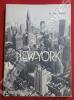

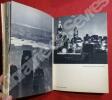
Éd. orig., illustrée de nombreuses photographies hors-texte dont 64 de CARTIER-BRESSON.
Hyères.
Tirage signé par Cartier-Bresson [Hyères, 1932]. 1 tirage argentique en noir (36 x 25 cm), signé à l'encre dans la marge inférieure droite. Encadré. Tirage moderne [circa 1990] sous le contrôle d'Henri Cartier-Bresson, signé en marge inférieure. Un de ses premières photographies, prises en 1932.
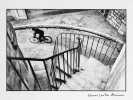
« Vers 1931, racontait Cartier-Bresson, j'ai vu une photographie de Martin Munkàcsi [...], trois enfants noirs courant dans les vagues. Je dois dire que c'est cette photo qui a mis le feu aux poudres. Il y a dans cette image une telle intensité, une telle spontanéité, une telle joie de vivre ». Il délaisse alors sa formation initiale - peinture et littérature - et se consacre à la photographie. « Hyères » a été prise au tout début de la carrière photographique de Cartier-Bresson, après son retour d'un voyage en Afrique en 1931. Il se positionne en haut d'un escalier de la rue Edith-Warton, déclenchant son Leica 50 mm acheté quelques jours plus tôt à Marseille, au passage fugace d'un cycliste. La rambarde, noire et courbée, est aujourd'hui blanche, et anguleuse : les pavés de la rue ont été recouverts de bitume. Au début de l'année 1932, il est de passage à Hyères. Le cadrage choisi par l'artiste n'est pas anodin et prouve toute l'esthétique recherchée dans ce paysage urbain. Une spirale se dessine avec l'escalier et sa rampe métallique répondant à celle du trottoir en contrebas. Une construction géométrique parfaite, qui transporte le spectateur dans le tourbillon de cette descente ; une composition presque mathématique - on sait Cartier-Bresson très influencé par l'ouvrage de Matila Ghyka sur le nombre d'or, édité la même année. Tout contribue ici au dynamisme de la photo. C'est l'illustration parfaite de sa devise : Pour « signifier » le monde, il faut se sentir impliqué dans ce que l'on découpe à travers le viseur. « En appuyant sur le déclencheur de son Leica, Cartier-Bresson arrêtait le mouvement, mais en même temps il était capable de produire des images qui, par leur cadrage, leur composition et leur rythme, conservaient le dynamisme de l'action. Selon le principe de la synthèse dialectique, elles sont donc à la fois en mouvement et au repos : fixes et explosives. » (Chéroux 2014, p. 86.) Une oeuvre majeure des débuts d'Henri Cartier-Bresson. Henri Cartier-Bresson, The Decisive Moment, Paris and New York, 1952 ; Peter Galassi, Henri Cartier-Bresson, The Modern Century, exhibition catalogue, Museum of Modern Art, New York, 2010, reproduit p. 89 ; Clément Chéroux, Henri Cartier-Bresson: Here and Now, London and New York, 2014 ; MET New York, Gilman Collection, 2005, 100-460 ; Robert Delpire, Henri Cartier-Bresson: Photographer (Boston, 1979), pl. 13 ; Peter Galassi, Henri Cartier-Bresson: The Early Work (New York, The Museum of Modern Art, 1987), p. 100 ; Peter Glassi, Henri Cartier-Bresson: The Modern Century (New York, The Museum of Modern Art, 2010), p. 89 ; Clément Chéroux, Henri Cartier-Bresson, Paris, Centre Pompidou, 2014), p. 88 ; Matthieu Humery, Henri Cartier-Bresson : le Grand Jeu (Paris, Bibliothèque nationale de France and Fondation Henri Cartier-Bresson, 2020), p. 82 et 248.


Cartier. Exceptional Objects. 2 volumes
Bachet, Olivier, and Alain Cartier: Cartier. Exceptional Objects. 2 volumes. 2019. 966 pages, over 1000 entries illustrated in colour. Hardback in a slipcase. 35 x 26cms. This is a limited edition of 500 copies that brings together over 1 000 rare objects created by Cartier between 1875 and 1965, most of which are in private collections, here published for the first time and illustrated life size.Volume one traces Cartier's history from its origins to the 1960s, beginning with the period of Fabergà influence through to the iconic 1920s art deco style and the exotic inspired by Chinese art and the maharajas of India.This chronology is complemented by a second volume on the relationship between the Cartier brothers and their collaborators, with a focus on the manufacturing process. In particular, it features more than 80 marks of master goldsmiths, a list of suppliers and original design drawings from both the Cartier Collection in Geneva and the authors' personal collections.
This is a limited edition of 500 copies that brings together over 1 000 rare objects created by Cartier between 1875 and 1965, most of which are in private collections, here published for the first time and illustrated life size.Volume one traces Cartier's history from its origins to the 1960s, beginning with the period of Fabergà influence through to the iconic 1920s art deco style and the exotic inspired by Chinese art and the maharajas of India.This chronology is complemented by a second volume on the relationship between the Cartier brothers and their collaborators, with a focus on the manufacturing process. In particular, it features more than 80 marks of master goldsmiths, a list of suppliers and original design drawings from both the Cartier Collection in Geneva and the authors' personal collections. Text in English


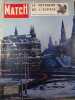
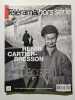


Paris Match n°1106 - Deux guerres Cambodge Israël un seul péril
Paris Match 1970 1970.

Bon état