 Write to the booksellers
6515 books for « bruno g m »Edit
-
Type
Any type (1)
Book (6348)
Magazine (6)
Music sheets (153)
New book (3)
Old papers (2)
Photographs (2)
-
Latest
Last 24h (5)
Last 3 days (2)
Last month (264)
Last week (1)
-
Language
Dutch (9)
English (7)
French (6455)
German (10)
Italian (9)
Russian (25)
-
Century
16th (1)
17th (1)
18th (9)
19th (61)
20th (2588)
21st (1460)
-
Countries
Belgium (367)
Canada (35)
Côte d'Ivoire (17)
Denmark (8)
France (5504)
Germany (2)
Greece (1)
Netherlands (2)
Switzerland (545)
United Kingdom (9)
United States of America (25)
-
Syndicate
ALAC (31)
CLAM (26)
CLAQ (7)
CNE (2)
ILAB (2606)
NVVA (81)
SLACES (81)
SLAM (2412)
SNCAO (5)
Topics
- Alsace (20)
- Archaeology (34)
- Architecture (103)
- Autographs (17)
- Barber (23)
- Belgium (26)
- Biography (59)
- Brazil (31)
- Bruno g. (47)
- Children’s books (108)
- Christianity (36)
- Christmas (18)
- Cinema (28)
- Comic strip (111)
- Cooking (52)
- Culinary art (22)
- Dauphiné (26)
- Dedication (41)
- Detective novels (38)
- Drawings (25)
- Economics (58)
- Education (101)
- Education - morals (61)
- English (44)
- Ethic (19)
- Exhibition (17)
- Fashion (23)
- Fine arts (90)
- First edition (49)
- Fischer bruno (35)
- Fox (27)
- Gay lussac (68)
- Geography (43)
- Germanic languages (50)
- Gibert (34)
- Greece (19)
- Guide books (43)
- Helvética (46)
- History (253)
- Humour anecdotes (21)
- Industrial arts & crafts - fine arts (26)
- Iron (23)
- Islam muslim (17)
- Italian (26)
- Italy (34)
- Journalism (36)
- Law (37)
- Linnean society of lyons (34)
- Literature (651)
- Lyons and area (34)
- Lyons college (34)
- Lyons college pc (34)
- Lyons revue (34)
- Magazine (68)
- Masure bruno (53)
- Medicine (56)
- Middle ages (17)
- Music (22)
- Navy (21)
- Newspapers press (105)
- Painters (20)
- Painting (43)
- Paris (36)
- Philosophy (104)
- Photography (112)
- Poetry (79)
- Policy (83)
- Professions guilds (19)
- Provence (20)
- Psychiatry neurology (26)
- Psychoanalysis (37)
- Psychology (107)
- Racine jean (22)
- Reading vocabulary (52)
- Regionalism (57)
- Religions (109)
- Review (66)
- Reviews (80)
- School (17)
- Sciences (41)
- Scores (170)
- Sculpture (36)
- Social sciences (20)
- Sociology (41)
- Songs (136)
- Switzerland (40)
- Tea (26)
- Teaching (21)
- Theatre (25)
- Theology (43)
- Travel (27)
- Various (42)
- Vintage (17)
- Viticulture (17)
- War (45)
- Weil simone (25)
- Wine (20)
- Youth (40)
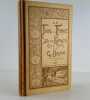
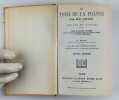
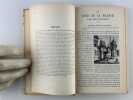
Le Tour de la France par Deux Enfants. Cours moyen par G. Bruno.
Paris, Librairie Classique Eugène Belin 1971, in-12, cartonnage éditeur, 322 pages. Bon état.
NB. Les commandes et questions sont traitées dans les 24h, les expéditions reprendront le 7 septembre. Tous les ouvrages de notre catalogue peuvent être consultés et retirés sous quelques jours à Saint-Gilles ou Paris, 5e arr. Merci de nous contacter.
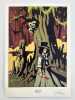
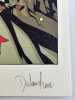
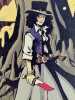
Ex-libris Kochka, t.2 Mambo - signé par Bruno Duhamel
Paris Chez Ben 2002, 21 x 30 cm. Impression en sérigraphie sur vélin. Bel état.
NB. Les commandes et questions sont traitées dans les 24h, les expéditions reprendront le 7 septembre. Tous les ouvrages de notre catalogue peuvent être consultés et retirés sous quelques jours à Saint-Gilles ou Paris, 5e arr. Merci de nous contacter.
Bruno HADJADJ. Préface de Dominique Farrugia & Rafaël Gillard-Dayspagne
Reference : 85819
(1991)
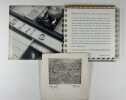
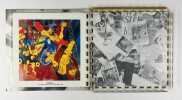
Bruno Hadjadj. Catalogue d'exposition. Cirque - Mondanités - Topless - Billard - Carrelages - Dessins. Un des 200 ex. du tirage de tête comprenant une gravure originale.
Paris 1991 15x15cm reliure à multi-spirales Bon état. 25 illustrations en couleurs et 3 en n/b. Complet de sa gravure N/B signée et justifiée 179/200.
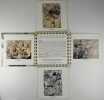
NB. Les commandes et questions sont traitées dans les 24h, les expéditions reprendront le 7 septembre. Tous les ouvrages de notre catalogue peuvent être consultés et retirés sous quelques jours à Saint-Gilles ou Paris, 5e arr. Merci de nous contacter.
Ueber die Lehre des Spinoza in Briefen an den Herrn Moses Mendelssohn. Neue vermehrte Auflage. - [THE FIRST EVER TRANSLATION OF BRUNO'S ""DE UNO ET CAUSA""...]
Breslau, Gottl. Löwe, 1789, 8vo. Very beautiful contemporary red full calf binding with five raised bands and gilt green leather title-label to richly gilt spine. elaborate gilt borders to boards, inside which a ""frame"" made up of gilt dots, with giltcorner-ornamentations. Edges of boards gilt and inner gilt dentelles. All edges gilt. Minor light brownspotting. Marginal staining to the last leaves. Engraved frontispiece-portrait of Spinoza, engraved title-vignette (double-portrait, of Lessing and Mendelssohn), engraved end-vignette (portrait of Jacobi). Frontispiece, title-page, LI, (1, -errata), 440 pp. Magnificent copy.
First edition thus, being the seminal second edition, the ""neue vermehrte Auflage"" (new and expanded edition), which has the hugely important 180 pp. of ""Beylage"" for the first time, which include the first translation into any language of any part of Giordano Bruno's ""de Uno et Causa..."" (pp. 261-306) as well as several other pieces of great importance to the ""Pantheismusstreit"" and to the interpretation of the philosophy of Spinoza and Leibniz, here for the first time in print. The present translation of Bruno seems to be the earliest translation of any of Bruno's works into German, and one of the earliest translations of Bruno at all - as far as we can establish, the second, only preceded by an 18th century translation into English of ""Spaccio della bestia trionfante"". It is with the present edition of Jacobi's work that the interest in Bruno is founded and with which Bruno is properly introduced to the modern world. Jacobi not only provides what is supposedly the second earliest translation of any of Bruno's works ever to appear, he also establishes the great influence that Bruno had on two of our greatest thinkers, Spinoza and Leibnitz. It is now generally accepted that Spinoza founds his ethical thought upon Bruno and that Lebnitz has taken his concept of the ""Monads"" from him. It is Jacobi who, with the second edition of his ""Letters on Spinoza..."", for the first time ever puts Bruno where he belongs and establishes his position as one of the key figures of modern philosophy and thought. Bruno's works, the first editions of which are all of the utmost scarcity, were not reprinted in their time, and new editions of them did not begin appearing until the 19th century. For three centuries his works had been hidden away in libraries, where only few people had access to them. Thus, as important as his teachings were, thinkers of the ages to come were largely reliant on more or less reliable renderings and reproductions of his thoughts. As Jacobi states in the preface to the second edition of his ""Letters on Spinoza..."", ""There appears in this new edition, under the title of Appendices (""Beylage""), different essays, of which I will here first give an account. The first Appendix is an excerpt from the extremely rare book ""De la causa, principio, et Uno"", by Jordan Bruno. This strange man was born, one knows not in which year, in Nola, in the Kingdom of Naples"" and died on February 17th 1600 in Rome on the stake. With great diligence Brucker has been gathering information on him, but in spite of that has only been able to deliver fragments [not in translation]. For a long time his works were, partly neglected due to their obscurity, partly not respected due to the prejudice against the new opinions and thoughts expressed in them, and partly loathed and suppressed due to the dangerous teachings they could contain. On these grounds, the current scarcity of his works is easily understood. Brucker could only get to see the work ""De Minimo"", La Croce only had the book ""De Immenso et Innumerabilibus"" in front of him, or at least he only provides excerpts from this [also not in translation], as Heumann does only from the ""Physical Theorems"" [also small fragments, not in translation]"" also Bayle had, of Bruno's metaphysical works, himself also merely read this work, of which I here provide an excerpt."" (Vorrede, pp. (VII)-VIII - own translation from the German). Jacobi continues by stating that although everyone complains about the obscurity of Bruno's teachings and thoughts, some of the greatest thinkers, such as Gassendi, Descartes, ""and our own Leibnitz"" (p. IX) have taken important parts of their theorems and teachings from him. ""I will not discuss this further, and will merely state as to the great obscurity (""grossen Dunkelheit"") of which people accuse Bruno, that I have found this in neither his book ""de la Causa"" nor in ""De l'Infinito Universo et Mondi"", of which I will speak implicitly on another occasion. As to the first book, my readers will be able to judge for themselves from the sample (""Probe"") that I here present. My excerpt can have become a bit more comprehensible due to the fact that I have only presented the System of Bruno himself, the ""Philosophia Nolana"" which he himself calls it, in its continuity... My main purpose with this excerpt is, by uniting Bruno with Spinoza, at the same time to show and explain the ""Summa of Philosophy"" (""Summa der Philosophie"") of ""En kai Pan"" [in Greek characters - meaning ""One and All""]. ... It is very difficult to outline ""Pantheism"" in its broader sense more purely and more beautifully than Bruno has done."" (Vorrede pp. IX-XI - own translation from the German). So not only does Jacobi here provide this groundbreaking piece of Bruno's philosophy in the first translation ever, and not only does he provide one of the most important interpretations of Spinoza's philosophy and establishes the importance of Bruno to much of modern thought, he also presents Bruno as the primary exponent of ""pantheism"", thereby using Bruno to change the trajectory of modern thought and influencing all philosophy of the decades to come. After the second edition of Jacobi's ""Ueber die Lehre des Spinoza"", no self-respecting thinker could neglect the teachings of Bruno"" he could no longer be written off as having ""obscure"" and insignificant teachings, and one could no longer read Spinoza nor Leibnitz without thinking of Bruno. It is with this edition that the world rediscovers Bruno, never to forget him again.WITH THE FIRST EDITION OF ""UEBER DIE LEHRE DES SPINOZA"" (1785), JACOBI BEGINS THE FAMOUS ""PATHEISMUSSTREIT"", which focused attention on the apparent conflict between human freedom and any systematic, philosophical interpretation of reality. In 1780, Jacobi (1743-1819), famous for coining the term nihilism, advocating ""belief"" and ""revelation"" instead of speculative reason, thereby anticipating much of present-day literature, and for his critique of the Sturm-und-Drang-era, had a conversation with Lessing, in which Lessing stated that the only true philosophy was Spinozism. This led Jacobi to a protracted and serious study of Spinoza's works. After Lessing's death, in 1783 Jacobi began a lengthy letter-correspondende with Mendelssohn, a close friend of Lessing, on the philosophy of Spinoza. These letters, with commentaries by Jacobi, are what constitute the first edition of ""Ueber die lehre des Spinoza"", as well as the first part of the second edition. The second edition is of much greater importance, however, due to greatly influential Appendices. The work caused great furor and the enmity of the Enlightenment thinkers. Jacobi was ridiculed by his contemporaries for attempting to reintroduce into philosophy belief instead of reason, was seen as an enemy of reason and Enlightenment, as a pietist, and as a Jesuit. But the publication of the work not only caused great furor in wider philosophical circles, there was also a personal side to the scandal which has made it one of the most debated books of the period: ""Mendelssohn enjoyed, as noted at the outset, a lifelong friendship with G. E. Lessing... Along with Mendelssohn, Lessing embraced the idea of a purely rational religion and would endorse Mendelssohn's declaration: ""My religion recognizes no obligation to resolve doubt other than through rational means"" and it commands no mere faith in eternal truths"" (Gesammelte Schriften, Volume 3/2, p. 205). To pietists of the day, such declarations were scandalous subterfuges of an Enlightenment project of assimilating religion to natural reason... While Mendelssohn skillfully avoided that confrontation, he found himself reluctantly unable to remain silent when, after Lessing's death, F. H. Jacobi contended that Lessing embraced Spinoza's pantheism and thus exemplified the Enlightenment's supposedly inevitable descent into irreligion.Following private correspondence with Jacobi on the issue and an extended period when Jacobi (in personal straits at the time) did not respond to his objections, Mendelssohn attempted to set the record straight about Lessing's Spinozism in ""Morning Hours"". Learning of Mendelssohn's plans incensed Jacobi who expected to be consulted first and who accordingly responded by publishing, without Mendelssohn's consent, their correspondence - ""On the Teaching of Spinoza in Letters to Mr. Moses Mendelssohn"" - a month before the publication of ""Morning Hours"". Distressed on personal as well as intellectual levels by the controversy over his departed friend's pantheism, Mendelssohn countered with a hastily composed piece, ""To the Friends of Lessing: an Appendix to Mr. Jacobi's Correspondence on the Teaching of Spinoza"". According to legend, so anxious was Mendelssohn to get the manuscript to the publisher that, forgetting his overcoat on a bitterly cold New Year's eve, he delivered the manuscript on foot to the publisher. That night he came down with a cold from which he died four days later, prompting his friends to charge Jacobi with responsibility for Mendelssohn's death.The sensationalist character of the controversy should not obscure the substance and importance of Mendelssohn's debate with Jacobi. Jacobi had contended that Spinozism is the only consistent position for a metaphysics based upon reason alone and that the only solution to this metaphysics so detrimental to religion and morality is a leap of faith, that salto mortale that poor Lessing famously refused to make. Mendelssohn counters Jacobi's first contention by attempting to demonstrate the metaphysical inconsistency of Spinozism. He takes aim at Jacobi's second contention by demonstrating how the ""purified Spinozism"" or ""refined pantheism"" embraced by Lessing is, in the end, only nominally different from theism and thus a threat neither to religion nor to morality."" (SEP).The Beylagen, which are not included in the 1785 first edition and only appear with the 1789 second edition, include: I. Auszug aus Jordan Bruno von Nola. Von der Ursache, dem Princip und dem Einen (p. 261-306) II. Diokles an Diotime über den Atheismus (p. 307-327) translation of Lettre ... sur l'Athéisme by F. Hemsterhuis.

Opera ea quae ad adinventam ab ipso ertem universalem, Scientiarum Artiumque omnium breui compendio, firmaque memoria apprehendendarum, locupletissimaque vel oratione ex tempore pertractandarum, pertinent. Ut et In eandem quorumdam interpretum scripti... - [SPARKING LEIBNIZ' DREAM OF A UNIVERSAL ALGEBRA]
Argentinae (i.e Strassburg], Lazarus Zetzner, 1598. 8vo. Very nice 19th century half calf with richly gilt spine. Some browning and spotting, but overall a nice copy. Many woodcut diagrams in the text. Woodcut printer's device to title-page. (24), 992, (32) pp.
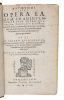
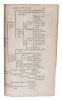
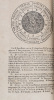
Scarce first edition of this seminal publication, which is practically solely responsible for the spreading of both Lullism and Bruno's mnemonic theories in the 17th century. This publication constitutes the standard work on Lull for more than a century and it directly influenced the most significant thinkers of the following century, e.g. Leibnitz, whose dream of a universal algebra was stimulated by the reading of Lull (and Bruno) in the present publication.""In 1598, while the philosopher from Nola (i.e. Bruno) was in prison in Rome, Johann Heinrich Alsted together with the printer Lazarus Zetzner in Strasburg, published a great collection of the works by Raymond Lull and the most significant commentaries on Lullism, among them also some treatises by Bruno. Since then, Bruno's mnemonics was a basic component of all attempts made in the seventeenth century to set up a universal science on the basis of a theory of combinations interpreted in terms of Neo-Platonism... It was also Leibniz who was one of the first to assume similarities between Bruno's theory of the infinite and the Cartesian theory of vortices in an undetermined and infinite universe"" Leibniz had had the opportunity to read these treatises in his capacity as librarian of the Herzog August Library in Wolfenbüttel"". (Blum, p. 110). ""From another of Pierce's Lists we know that he possessed an important collection of Lullian and Lullist texts, namely the Renaissance edition by the famous Strasbourg editor Lazarus Zetzner: ""Raymundi Lulli Opera ea quae ad adinventam ab ipso Artem universalem... pertinent"" (printed first in 1598, then 1609, 1617 and, by his heirs, in 1651). This edition, which was very influential - the young Leibniz, for instance, acquainted himself with Llull through this anthology-, contains several works by Llull himself as well as those Renaissance commentaries on his works by Agrippa of Netteshein, Giordano Bruno..."" (Fidora, p. 181).This highly influential publication of Lull's ""Opera"" through which Leibniz and many of his contemporaries got acquainted with Lull and Bruno, contains seven genuine works by Lull (including the two most important works of the last period of the Art, the ""Ars brevis"" and the ""Ars magna""), four works falsely attributed to Lull, Agrippa's ""In Artem Brevem"" - and Bruno's four highly important commentaries on Lull, being the ""De Lulliano specierum scrutinio"" (pp. 685-97), ""De Lampade combinatoria Lulliana"" (pp. 698-755), ""De Progressu Logicae venationis"" (pp. 756-62) and ""De Lampade venatoria logicurum"" (pp. 763-806), which constitute Bruno's most important logical treatises and his seminal writings on mnemonics. The four treatises originally appeared separately in 1587 and 1588 respectively, and all appear here for the second time (apart from the ""De progressu"", which also appeared together with the first printing of the ""De Lampade venatoria logicorum"" the following year and here thus appears for the third time). The first printings of these works are of impossible scarcity and hardly obtainable. These four groundbreaking works appear together for the first time in the present publication and it is through this second printing of them that 17th century thinkers such as Leibniz got acquainted with them. Raymond Lull (ca. 1232-1315) was one of the most important and influential philosophers and logicians of his time. He is considered a pioneer of several fields of science, now most notably computation theory. His works sparked Leibniz' interest in the field and drove him to his seminal invention. Lull invented an ""art of finding truth"" (often in Lullism referred to as ""The Art""), which centuries later, when read in the present publication, stimulated Leibnitz' dream of a universal algebra. Lull applied this art to basically all subjects studied at the Medieval Universities. ""Lull's metaphysics worked a revolution in the history of philosophy"" (The Cambridge History of Renaissance Philosophy, p. 548). Giordano Bruno (1548-1600) is one of the most significant thinkers of modern times. He prepared the way for the rise of modern philosophy and became a forerunner of modern philosophy and science. His logical commentaries and mnemonic treatises were of special importance to the emerging logic of the 17th century and it is his version of Lullism that comes to dominate this significant strand of thought for more than a century. Having been arrested in 1592 due to alleged heresy, Bruno was subjected to a 6 year long trial that finally condemned him to hanging in 1600, two years after the publication of the four works that came to secure his influence over the following century. ""Bruno burned for philosophy"" he was killed for moral, physical, and metaphysical views that terrified and angered authorities."" (Copenhaver & Schmitt, p. 315).""By far the greatest figure of this generation was Giordano Bruno (1548-1600), whose interest in Llull dates almost exclusively from his sojurns in France and Germany. His activities in this field, which he combined with his other aspects of Reniassance philosophy, are too complex to be treated in any detail here. Suffice it to say with Frances Yates that ""the three strands of the Hermetism, the mnemonics, the Lullism are all interwoven in Bruno's complex personality, mind and mission""...""Perhaps the most important event of Lulliasm of this period was not the appearance of any new figure or work but the publication of an anthology by Lazarus Zetzner of Strasburg, entitled ""Raymundi Lullii, opera ea quae ad adinventam ab ipso Artem universalem"", which, for the next century or so, was to become the standard work on Llull. It is therefore instructive in understanding seventeenth-century Lullism... The first edition of this anthology appeared in Strasburg in 1598. It was reprinted in 1609... reprinted in 1617 and again in 1651... This mixture of Llull, pseudo-Llull, and Renaissance commentaries, emphasizing a general art of discourse, constituted the ""package"" in which Llull was presented to seventeenth-century readers, including Leibniz (note 33: it was apparently the first edition of 1598 that Leibniz read), and it must be kept in mind when discussing their version of Llull."" (Bonner, pp. 67-68). Bruno's works, the first editions of which are all of the utmost scarcity, were generally not reprinted in Bruno's lifetime and new editions of them did not begin appearing until the 19th century. For three centuries his works had been hidden away in libraries, where only few people had access to them. One very significant exception is the four treatises that we find in the present publication. They are among the only of Bruno's treatises to be published again before the 19th century, and as they don't appear again on their own, but here, in THE most important publication of Lull's writings for more than a century, it is through this second printing of these four works that Bruno comes to have his primary influence upon 17th century philosophy and science. His separate publications were simply not accessible to thinkers like Leibniz and could thus not be studied. Also therefore, Zetzners' 1598 publication of Lull and Bruno together proved to be of seminal importance, not only to the spreading of Lullism, but just as much to the spreading of Bruno's even more important theories. ""Raymond Lull (ab. 1232 - 1315), Majorcan writer, philosopher, memorycian (he was later to become a great source of inspiration for Giordano Bruno), logician, and a Franciscan tertiary. He wrote the first major work of Catalan literature. Recently-surfaced manuscripts show him to have anticipated by several centuries prominent work on elections theory. He is sometimes considered a pioneer of computation theory, especially given his influence on Gottfried Leibniz. He is also well known also as a glossator of Roman Law. Lull taught himself Arabic with the help from a slave. As a result, he wrote his ""Ars Magna"", which was intended to show the necessary reasons for the Christian faith. To promote his theory and test its effectiveness, he went to Algiers and Tunis. At the age of 82, in 1314, Lull traveled again to North Africa, where an angry crowd of Muslims stoned him in the city of Bougie. Genoese merchants took him back to Mallorca, where he died at home in Palma the following year."". (Thorndyke)Giordano Bruno was born in Nola in Southern Italy in 1548, and entered the Dominican order in Naples at the age of 18. While pursuing theological studies, he also thoroughly studied the ancient philosophers and began doubting some of the teachings of the Catholic Church. When he was in Rome in 1576, these doubts became known to the authorities of his order, and an indictment for heresy was prepared against him. Before he could be arrested, he escaped and began a long journey which took him to many European countries, among these England, where his most important works are published, until in 1592 he was denounced to the Inquisition and arrested. In 1593 he was taken to Rome, imprisoned, and subjected to a 6 year long trial. He firmly refused to recant his philosophical opinions, and in 1600 he was condemned for heresy, sentenced to death, and burned alive.SALVESTRINI NR. 1.See:Anthony Bonner: Doctor Illuminatus. A Ramon Llull Reader, 1993.Paul Richard Blum: Giordano Bruno. An Introduction, 2012.The Cambridge History of Renaissance Philosophy.Alexander Fidora: Peirce's Account of the Categories and Ramon Llull.
Nampilly II. Le Grand Duel
Paris EPI, Le Nouveau Signe de Piste, 1979, in-8, broché, 190p. Bon état. Joint, la brochure des parutions du Nouveau Signe de Piste 1979.
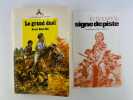
NB. Les commandes et questions sont traitées dans les 24h, les expéditions reprendront le 7 septembre. Tous les ouvrages de notre catalogue peuvent être consultés et retirés sous quelques jours à Saint-Gilles ou Paris, 5e arr. Merci de nous contacter.
Moure Gloria. Textes de Bruno Cora, Jean-Louis Froment, Rudi Fuchs, Mary Jane Jacob, Jannis Kounellis
Reference : 58394
(1991)
Kounellis
Paris, Editions Cercle d'Art, 1991, fort in-4, relié sous jaquette éditeur, 310 pages. Bon état.
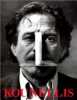
NB. Les commandes et questions sont traitées dans les 24h, les expéditions reprendront le 7 septembre. Tous les ouvrages de notre catalogue peuvent être consultés et retirés sous quelques jours à Saint-Gilles ou Paris, 5e arr. Merci de nous contacter.
Texte de Bruno Marchand, Christian Hauvette et Philipe Meier
Reference : 14002
(2000)
Meier & Associés. Architectes. Philippe Meier-Arianne Poncet. Projets, réalisations 1990-1999
Lausanne, Ed. Payot, 2000, in-4, Broché, Bon état.

NB. Les commandes et questions sont traitées dans les 24h, les expéditions reprendront le 7 septembre. Tous les ouvrages de notre catalogue peuvent être consultés et retirés sous quelques jours à Saint-Gilles ou Paris, 5e arr. Merci de nous contacter.
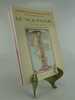
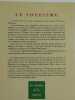
Le soufisme, coeur de l'Islam. Préface du père Christian Delorme.
Paris La Table Ronde/Les Chemins de la sagesse , 1996, in-8, broché, 276p. Très bon état. Glossaire, bibliographie.
NB. Les commandes et questions sont traitées dans les 24h, les expéditions reprendront le 7 septembre. Tous les ouvrages de notre catalogue peuvent être consultés et retirés sous quelques jours à Saint-Gilles ou Paris, 5e arr. Merci de nous contacter.
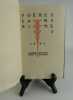
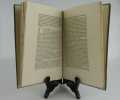
Poèmes sans rimes
Londres, Chez l'auteur/ imprimé à Londres aux presses de Chidwick d'après les dessins de Herbert P. Horne, 1894, 14x21cm, cartonnage muet, piece de titre au dos, viii, 53p. Edition originale. Impression soignée sur vergé. Imprimé à Londres aux presses de Chidwick d'après les dessins de Herbert P. Horne.
NB. Les commandes et questions sont traitées dans les 24h, les expéditions reprendront le 7 septembre. Tous les ouvrages de notre catalogue peuvent être consultés et retirés sous quelques jours à Saint-Gilles ou Paris, 5e arr. Merci de nous contacter.
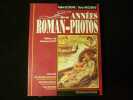
Les années roman-photos. Histoire du roman-photos. 300 documents. 100 artistes.
Paris, Veyrier /Librairie l'Avenue, 1991, in-4, broché, 288p. Très bon état.
NB. Les commandes et questions sont traitées dans les 24h, les expéditions reprendront le 7 septembre. Tous les ouvrages de notre catalogue peuvent être consultés et retirés sous quelques jours à Saint-Gilles ou Paris, 5e arr. Merci de nous contacter.
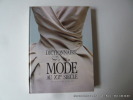
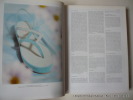
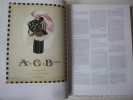
Dictionnaire de la mode au XXème siècle
Paris, Les Editions du Regard, 1999, in-4, cartonnage éditeur, 592 pages. Bon état.
NB. Les commandes et questions sont traitées dans les 24h, les expéditions reprendront le 7 septembre. Tous les ouvrages de notre catalogue peuvent être consultés et retirés sous quelques jours à Saint-Gilles ou Paris, 5e arr. Merci de nous contacter.
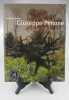
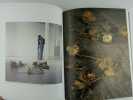
Giuseppe Penone. Préface par Bruno Racine. Avant-propos par Alfred Pacquement. Texte et entretien par Catherine Grenier.
Reference : 81652
(2004)
Giuseppe Penone. Exposition Centre Pompidou 21 avril-23 août 2004
Paris, Centre Pompidou, 2004, in-4, broché sous couvertures à rabats, 307p. Parfait état. ISBN 9782844262349
NB. Les commandes et questions sont traitées dans les 24h, les expéditions reprendront le 7 septembre. Tous les ouvrages de notre catalogue peuvent être consultés et retirés sous quelques jours à Saint-Gilles ou Paris, 5e arr. Merci de nous contacter.
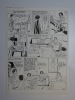
Le Jeu de l'Oie, planche originale numéro 35, à l'encre de Chine noire.
1989 36,5x51 cm, Timbre à sec "Schutzmarke Schoellershammer". Paru chez Magic-Strip en 1989. Planche composée de deux feuilles assemblées de papier satiné fort.
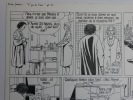
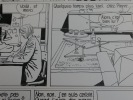
NB. Les commandes et questions sont traitées dans les 24h, les expéditions reprendront le 7 septembre. Tous les ouvrages de notre catalogue peuvent être consultés et retirés sous quelques jours à Saint-Gilles ou Paris, 5e arr. Merci de nous contacter.
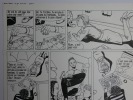
Le Jeu de l'Oie, planche originale numéro 27, à l'encre de Chine noire et collage.
1989 36,5x51 cm, Paru chez Magic-Strip en 1989. Planche composée de trois feuilles assemblées de papier satiné fort. Au verso, esquisses à l'encre d'oies en mouvement.
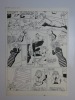
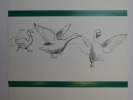
NB. Les commandes et questions sont traitées dans les 24h, les expéditions reprendront le 7 septembre. Tous les ouvrages de notre catalogue peuvent être consultés et retirés sous quelques jours à Saint-Gilles ou Paris, 5e arr. Merci de nous contacter.
Collectif. Agathe Rouart-Valéry. Jean-Dominique Rey. François Vléry. Bruno Foucart. Georges Liebert. Luce Abélès.
Reference : 75009
(1995)
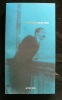
Paul Valéry et les Arts
Paris, Actes Sud, 1995, in-8, broché, 155 pages. Bon état.
NB. Les commandes et questions sont traitées dans les 24h, les expéditions reprendront le 7 septembre. Tous les ouvrages de notre catalogue peuvent être consultés et retirés sous quelques jours à Saint-Gilles ou Paris, 5e arr. Merci de nous contacter.
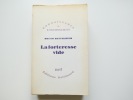
La forteresse vide. L'autisme infantile et la naissance du Soi
Paris, Gallimard. Connaissance de l'Inconscient, 1970, in-8, broché, 585 pages. Bon état
NB. Les commandes et questions sont traitées dans les 24h, les expéditions reprendront le 7 septembre. Tous les ouvrages de notre catalogue peuvent être consultés et retirés sous quelques jours à Saint-Gilles ou Paris, 5e arr. Merci de nous contacter.
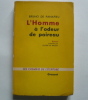
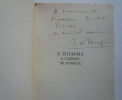
L'Homme à l'odeur de poireau. Envoi de l'auteur.
Paris, Grasset, Les Chemins de l'écriture, 1960, in-12, broché, 204 pages. Bon état. Photographies NB.
NB. Les commandes et questions sont traitées dans les 24h, les expéditions reprendront le 7 septembre. Tous les ouvrages de notre catalogue peuvent être consultés et retirés sous quelques jours à Saint-Gilles ou Paris, 5e arr. Merci de nous contacter.
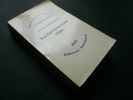
La forteresse vide. L'autisme infantile et la naissance du Soi.
Paris, Gallimard. Connaissance de l'Inconscient, 1976, in-8, broché, 585 pages. Bon état.
NB. Les commandes et questions sont traitées dans les 24h, les expéditions reprendront le 7 septembre. Tous les ouvrages de notre catalogue peuvent être consultés et retirés sous quelques jours à Saint-Gilles ou Paris, 5e arr. Merci de nous contacter.
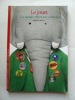
Le jouet. Un monde offert aux enfants.
Paris, Découvertes Gallimard, 2011, in-12, broché, 126 pages. Très bon état.
NB. Les commandes et questions sont traitées dans les 24h, les expéditions reprendront le 7 septembre. Tous les ouvrages de notre catalogue peuvent être consultés et retirés sous quelques jours à Saint-Gilles ou Paris, 5e arr. Merci de nous contacter.
Henri Moulinier. Préface de Michel Augern et Bruno Marnot. Postface de Gérard Bouédec.
Reference : 76989
(2015)
ISBN : 9782753540576
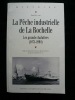
La pêche industrielle de La Rochelle. Les grands chalutiers (1871-1994).
Rennes, Presses Universitaires de rennes, 2015, in-8, broché, 343 pages. Très bon état. Envoi de l'auteur.
NB. Les commandes et questions sont traitées dans les 24h, les expéditions reprendront le 7 septembre. Tous les ouvrages de notre catalogue peuvent être consultés et retirés sous quelques jours à Saint-Gilles ou Paris, 5e arr. Merci de nous contacter.
Le poids d'une vie. Essais-souvenirs. La Vienne de Freud- Les enfants- L'héritage de l'holocauste.
Paris, Robert Laffont. Coll. Réponses., 1991, Broché, 334 pages. Bon état.
NB. Les commandes et questions sont traitées dans les 24h, les expéditions reprendront le 7 septembre. Tous les ouvrages de notre catalogue peuvent être consultés et retirés sous quelques jours à Saint-Gilles ou Paris, 5e arr. Merci de nous contacter.
L'homme violet
Paris, Gallimard, 1973, Broché, 169 pages. Bon état.
NB. Les commandes et questions sont traitées dans les 24h, les expéditions reprendront le 7 septembre. Tous les ouvrages de notre catalogue peuvent être consultés et retirés sous quelques jours à Saint-Gilles ou Paris, 5e arr. Merci de nous contacter.
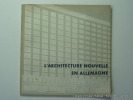
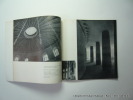
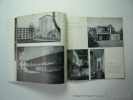
L'architecture nouvelle en Allemagne
Munich, Editiosn F. Bruckmann, 1952, in-8 carré, Broché, 79 pages. Bon état
NB. Les commandes et questions sont traitées dans les 24h, les expéditions reprendront le 7 septembre. Tous les ouvrages de notre catalogue peuvent être consultés et retirés sous quelques jours à Saint-Gilles ou Paris, 5e arr. Merci de nous contacter.
F.H. Bool, J.R. Kist, J.L. Locher, F. Wierda, Bruno Ernst. Sous la direction de J.L. Locher
Reference : 24524
(1981)
La vie et l'oeuvre de M.C. Escher
Paris, Chêne/Hachette, 1981, Relié-Jaquette éditeur, 349 pages. Bon état. 448 reproductions. Peu courant.
NB. Les commandes et questions sont traitées dans les 24h, les expéditions reprendront le 7 septembre. Tous les ouvrages de notre catalogue peuvent être consultés et retirés sous quelques jours à Saint-Gilles ou Paris, 5e arr. Merci de nous contacter.

