 Write to the booksellers
14 books for « bothe w »Edit
-
Language
French (13)
Greek (1)
-
Century
19th (4)
20th (7)
-
Topics
Architecture (2)
Exhibition catalogue (1)
Greek (4)
Neoclassicism (1)
Physics (6)
-
Countries
Belgium (1)
Denmark (6)
France (5)
Greece (2)
-
Syndicate
ILAB (11)
SLAM (3)
Über das wesen des Comptoneffekts" ein experimenteller beitrag zur Theorie der Strahlung. - [NOBEL PRIZE IN PHYSICS - BOTHE'S COINCIDENCE METHOD]
Braunschweig, Berlin, Vieweg & Sohn u. Julius Springer, 1923. 8vo. Bound in contemporary half cloth with gilt lettering to spine. In ""Zeitschrift für Physik"", Bd. 32. Library stamp to front free end paper. Pp. 639-663. [Entire volume: VI, (2), 951 pp.].
First appearance of Bothe and Geiger's important paper on Compton collisions and the Coincidence method which eventually resulted in Bothe being awarded the Nobel Prize in Physics ""for the coincidence method and his discoveries made therewith""""Among the topics that Bothe studied in 1924 was the ejection of electrons by X rays, and it was in connection with this phenomenon that he and Geiger performed an important experiment. In an effort to reconcile the particulate and wavelike properties of radiation, Bohr, Kramers, and Slater in 1924 formulated a new quantum theory of radiation. According to their hypothesis, momentum and energy-are conserved only statistically in interactions between radiation and matter. Bothe and Geiger suggested that this could be tested experimentally by examining individual Compton collisions. Bothe introduced a modification into the Geiger counter that made it appropriate for use in coincidence experiments (a very novel procedure in 1924). Using two counters, they studied the coincidences between the scattered X ray and the recoiling electron. Correlating photons with electrons, Bothe and Geiger found a coincidence rate of one in eleven"" since the chance coincidence rate for the situation was 10?5, the experimental results contradicted the theoretical predictions and indicated small-scale conservation of energy and momentum."" (DSB)

Über eine neue Sekundärstrahlung der Röntgenstrahlen. II. Mitteilung.
Berlin, Julius Springer, 1923. 8vo. In contemporary half cloth with gilt lettering. In ""Zeitschrift für Physik"" Bd. 20, 1923. Entire issue offered. Stamp to front free end paper, otherwise a fine and clean copy. Pp. 237-255. [Entire volume: V, (1) 426 pp.].
First appearance of Bothe's early paper on the Compton effect which, together with his later paper (in Bd 32, Zeitschrift für Physik), awarded him the Nobel Prize in Physics ""for the coincidence method and his discoveries made therewith"".""Among the topics that Bothe studied in 1924 was the ejection of electrons by X rays, and it was in connection with this phenomenon that he and Geiger performed an important experiment. In an effort to reconcile the particulate and wavelike properties of radiation, Bohr, Kramers, and Slater in 1924 formulated a new quantum theory of radiation. According to their hypothesis, momentum and energy-are conserved only statistically in interactions between radiation and matter. Bothe and Geiger suggested that this could be tested experimentally by examining individual Compton collisions. Bothe introduced a modification into the Geiger counter that made it appropriate for use in coincidence experiments (a very novel procedure in 1924). Using two counters, they studied the coincidences between the scattered X ray and the recoiling electron. Correlating photons with electrons, Bothe and Geiger found a coincidence rate of one in eleven"" since the chance coincidence rate for the situation was 10?5, the experimental results contradicted the theoretical predictions and indicated small-scale conservation of energy and momentum."" (DSB)
Über eine neue Sekundärstrahlung der Röntgenstrahlen. II. Mitteilung.
Berlin, Julius Springer, 1923. 8vo. In contemporary half cloth with gilt lettering. In ""Zeitschrift für Physik"" Bd. 20, 1923. Entire issue offered. Stamp to front free end paper, otherwise a fine and clean copy. Pp. 237-255. [Entire volume: V, (1) 426 pp.].
First appearance of Bothe's early paper on the Compton effect which, together with his later paper (in Bd 32, Zeitschrift für Physik), awarded him the Nobel Prize in Physics ""for the coincidence method and his discoveries made therewith"".""Among the topics that Bothe studied in 1924 was the ejection of electrons by X rays, and it was in connection with this phenomenon that he and Geiger performed an important experiment. In an effort to reconcile the particulate and wavelike properties of radiation, Bohr, Kramers, and Slater in 1924 formulated a new quantum theory of radiation. According to their hypothesis, momentum and energy-are conserved only statistically in interactions between radiation and matter. Bothe and Geiger suggested that this could be tested experimentally by examining individual Compton collisions. Bothe introduced a modification into the Geiger counter that made it appropriate for use in coincidence experiments (a very novel procedure in 1924). Using two counters, they studied the coincidences between the scattered X ray and the recoiling electron. Correlating photons with electrons, Bothe and Geiger found a coincidence rate of one in eleven"" since the chance coincidence rate for the situation was 10?5, the experimental results contradicted the theoretical predictions and indicated small-scale conservation of energy and momentum."" (DSB)
Eichmethoden für Emanationselektrometer (+) Über eine neue Sekundärstrahlung der Röntgenstrahlen.
[Berlin, Julius Springer, 1923]. 8vo. Extracted from ""Zeitschrift für Physik. Hrsg. von Karl Scheel. 16. Band"". No backstrip. Pp. 266-279"" pp. 319-320.
First appearance of Bothe's early paper on the Compton effect which, together with his later paper (in Bd 32, Zeitschrift für Physik), awarded him the Nobel Prize in Physics ""for the coincidence method and his discoveries made therewith"".""Among the topics that Bothe studied in 1924 was the ejection of electrons by X rays, and it was in connection with this phenomenon that he and Geiger performed an important experiment. In an effort to reconcile the particulate and wavelike properties of radiation, Bohr, Kramers, and Slater in 1924 formulated a new quantum theory of radiation. According to their hypothesis, momentum and energy-are conserved only statistically in interactions between radiation and matter. Bothe and Geiger suggested that this could be tested experimentally by examining individual Compton collisions. Bothe introduced a modification into the Geiger counter that made it appropriate for use in coincidence experiments (a very novel procedure in 1924). Using two counters, they studied the coincidences between the scattered X ray and the recoiling electron. Correlating photons with electrons, Bothe and Geiger found a coincidence rate of one in eleven"" since the chance coincidence rate for the situation was 10?5, the experimental results contradicted the theoretical predictions and indicated small-scale conservation of energy and momentum."" (DSB)
Künstliche Erregung von Kern-y-Strahlen. - [ANTICIPATING THE DISCOVERY OF THE NEUTRON]
Berlin, Springer, 1930. 8vo. In contemporary halv cloth with gilt lettering to spine. In ""Zeitschrift für Physik"", Bd. 66, 1930. Entire volume offered. Stamp to front free end-paper, otherwise fine and clean. Pp. 289-310. [Entire volume: VIII, 863 pp.].
First appearance of Bothe and Becker's seminal paper in which they found that if the very energetic alpha particles emitted from polonium fell on certain light elements, an unusually penetrating radiation was produced. Two years later this led directly to Chadwick's discovery of the neutron. ""In 1930 Bothe and Becker detected a highly penetrative radiation from beryllium bombarded by alpha particles, and they assumed that it was gamma radiation. Bothe estimated the photon energy from the degree of absorption of the secondary electrons. When physicists studied this ""beryllium radiation,"" estimating its energy constituted a problem, for it varied greatly according to the substance used as absorber. Chadwick later suggested that the radiation was particulate and consisted of a new particle, the neutron.""
Friedrich Gilly 1772-1800 und die Privatgesellschaft junger Architekten
Verlag Willmuth Arenhövel, Berlin, 1984. In-4, broché sous couverture rempliée et illustrée en couleur, 263 pp. Vorwort, Rolf Bothe - Die Bewertung Friedrich Gillys in der kunst. - und bauhistorischen Forschung, R. Bothe - Friedrich Gillys kurzes Leben. - Sein Friedrichsdenkmal und die Philosophie der Architektur, Werner Oechslin - Eine neue Welt entschleiert sich Von Friedrich ...
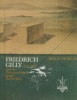
Nombreuses illustrations et planches en noir et en couleur.Texte en allemand. --- Plus d'informations sur le site archivesdunord.com
Kernspektren einiger leichter atome.
Berlin, Springer, 1936. 8vo. Bound in contemporary half cloth with gilt lettering to spine. In ""Zeitschrift für Physik"", Bd. 100, 1936. Entire volume offered. Library stamp to front free end paper and title page, light wear to extremities. Pp. 273-285. [Entire volume: VIII, 789 pp.].
First appearance of Bothe's paper on the atom nucleus of lighter atoms.
HOMERI CARMINA, ODYSSEAE, VOLUMEN PRIMUM ET VOLUMEN ALTERUM, LIB. I-XVI
Sumtibus Librariae Hahnianae, Lipsiae. 1834. In-8. Relié demi-cuir. Etat d'usage, Couv. convenable, Manque en coiffe de tête, Intérieur acceptable. 271 + 271 pages. 2 tomes en 1 volumes. Texte en grec ancien et notes en latin sur 2 colonnes. Etiquette de code sur le dos. Tranche marbrée. Mors fendus.. . . . Classification Dewey : 480-Langues helléniques. Grec
Très rare. Recognovit et Explicuit Fridericus Henricus Bothe. Classification Dewey : 480-Langues helléniques. Grec

HOMERI CARMINA, ILIADIS, LIB. I-XXIV
Sumtibus Librariae Hahnianae, Lipsiae. 1833. In-8. Relié. Etat d'usage, Couv. convenable, Dos satisfaisant, Intérieur acceptable. 377 + 338 + 328 pages (3 tomes en 1 volume). Texte en grec ancien et notes en latin (sur 2 colonnes). Auteur, titre, date, fleurons, roulettes et filets dorés sur le dos. Tranche marbrée (passée). Etiquette de code sur la couverture. Quelques tampons de bibliothèque. Tranche fortement tachée. Nombreuses annotations d'époque en pages de garde.. . . . Classification Dewey : 480-Langues helléniques. Grec
Recognovit et Explicuit Fridericus Henricus BOTHE. Classification Dewey : 480-Langues helléniques. Grec
HOMERI CARMINA, ODYSSEAE, VOL. III (LIB. XVII-XXIV), BATRACHOMYOMACHIA, HYMNI, EPIGRAMMATA ET FRAGMENTA, CARMINUM EPICORUM
Sumtibus Librariae Hahnianae, Lipsiae. 1835. In-8. Relié demi-cuir. Etat d'usage, Couv. convenable, Dos abîmé, Quelques rousseurs. 552 pages. Texte en grec ancien et notes en latin (sur 2 colonnes). Titre, tomaison, bandeaux et filets dorés sur le dos (passés). Tranche marbrée. Etiquette de code sur la couverture. Quelques tampons de bibliothèque. Dos et 1er plat se détachant.. . . . Classification Dewey : 480-Langues helléniques. Grec
Recognovit et Explicuit Fridericus Henricus BOTHE. Classification Dewey : 480-Langues helléniques. Grec
Poetae scenici graecorum.
Lipsiae, Sumtibus librariae hahnianae, 1831 ; in-8, cartonnage de l'éditeur. Volumen nonum, demi cuir vert a caisson petit manque sur le dos intérieur bon état.
Volumen nonum, demi cuir vert a caisson petit manque sur le dos intérieur bon état.
Architektur für Olivetti
Hamburg, 1997 [8] + 174 + 26pp. + 65 plates with bl/w ills., 30cm., Doctoral Dissertation (Dissertation zur Erlangung der Würde des Doktors der Philosophie der Universität Hamburg), stamp at verso of title page, text is clean and bright, weight: 1kg., S113043
ΑΝΑΚΡΕΟΝΤΕΙΑ. Anacreontica Graece.Recensuit notisque criticis.
Oxonii, W. Baxter, 1815, in-12o, 159 p. Texte grec. Rel. contemp. 1/3 basane a coins, dos droit.
Anacreontica Graece.Recensuit notisque criticis. ΑΝΑΚΡΕΟΝΤΕΙΑ.
Oxonii, W. Baxter, 1815, in-12o, 159 p. Texte grec. Rel. contemp. 1/3 basane a coins, dos droit.

