 Write to the booksellers
1921 books for « bloch l »Edit
-
Type
Book (1869)
Magazine (11)
Music sheets (41)
-
Latest
Last 24h (92)
Last 3 days (1)
Last month (46)
Last week (1)
-
Language
English (1)
French (1911)
Russian (9)
-
Century
18th (1)
19th (58)
20th (1003)
21st (161)
-
Countries
Belgium (97)
Brazil (1)
Canada (12)
Côte d'Ivoire (3)
Denmark (17)
France (1651)
Netherlands (14)
Switzerland (116)
United States of America (10)
-
Syndicate
ALAC (12)
CLAM (5)
CLAQ (2)
ILAB (872)
NVVA (14)
SLACES (14)
SLAM (816)
SNCAO (1)
Topics
- Abraham (7)
- Age (6)
- Archaeology (32)
- Architecture (9)
- Autographs (6)
- Bibliophilism (8)
- Biography (16)
- Bloch - laine françois (52)
- Bloch - michel jean (15)
- Bloch camille (5)
- Bloch jean richard (63)
- Bloch marc (32)
- Bloch morhange jacques (27)
- Bloch pierre (7)
- Bloch robert (86)
- Carcopino jérome (5)
- Cendrars blaise (5)
- Children’s books (83)
- Civilisation (10)
- Cocteau jean (6)
- Comic strip (8)
- Contemporary look (8)
- Dedication (10)
- Detective novels (9)
- Dictionaries (7)
- Economics (29)
- Education (19)
- Education - morals (11)
- Eluard paul (5)
- English (41)
- Ethic (6)
- Ethnology (6)
- Etymology (6)
- Europe (6)
- Exhibition (8)
- Fantastic (9)
- Fine arts (13)
- First edition (29)
- Furniture (8)
- Furniture (8)
- Gallimard (10)
- Games toys (9)
- Geography (27)
- Germanic languages (20)
- Germany (10)
- Glasswork (7)
- Grammar (7)
- Head edition (5)
- Hebraic literature (6)
- Helvética (5)
- History (134)
- Industrial arts & crafts - fine arts (12)
- Interior (9)
- Isaac (6)
- Italy (14)
- Judaism (judaica) (5)
- Language (6)
- Law (13)
- Literature (165)
- Magazine (11)
- Mathematics (5)
- Medicine (12)
- Middle ages (9)
- Military arts (5)
- Newspapers press (15)
- Painting (5)
- Paris (17)
- Philosophy (56)
- Photography (16)
- Physics (11)
- Picasso (12)
- Poetry (16)
- Policy (31)
- Psychology (27)
- Reading vocabulary (6)
- Religions (11)
- Review (29)
- Reviews (23)
- Rome (20)
- Science fiction (10)
- Sciences (10)
- Scores (34)
- Social sciences (10)
- Sociology (8)
- Songs (33)
- Spencer emile (8)
- Spying (5)
- Steinlen (6)
- Switzerland (5)
- Teaching (7)
- Theatre (11)
- Various (16)
- War (32)
- Weil simone (5)
TILMAN RIEMENSCHNEIDER. FRUHE WERKE.
, Regensburg, Pustet, 1981., Brosschiert, Original - Umschlagg illustriert koloriert, 20x20cm, 392pp, illustriert koloriert und s/w. ISBN 3791707248.
Mainfrankisches Museum, Wurzburg.
LES DECORATEURS DES ANNEES 50
Paris, Editions Norma, 2016 Relie, cartonnage blanche, jaquette illustree, frontispice en couleurs, 240 x 315mm., 351pp., illustration plein couleur et n/b ISBN 9782376660002.
Le renouveau des arts d coratifs dans la France d'apr s-guerre est d'une extr me diversit , du style 40 qui perdure travers les commandes officielles au meuble classique ou n oclassique dont le succ s est sans pr c dent. La modernit reste un combat mener apr s l' chec de l'Union des Artistes Modernes (UAM) qui n'a pas su convaincre. Ce d fi est relev par la jeune g n ration des d corateurs pr sent s dans cet ouvrage. Leur approche r pond aux besoins et aux aspirations d'un pays en pleine reconstruction, avec l'extraordinaire vitalit qui caract rise l' poque. Apr s une introduction qui met l'accent sur l'alliance d'esth tique, de fantaisie et de rigueur, de cette cr ation fran aise foisonnante, ce livre s'organise en quatre parties, chacune pr c d e d'une introduction qui en d finit le contexte historique. -les ma tres de l'entre-deux-guerres, tels qu'Adnet, Arbus ou Old. -les repr sentants d'un style 50 en libert , ludiques et affranchis de tout discours en isme , Mat got, Roy re... -les grandes figures de la Reconstruction - Gascoin, Hitier ou Sognot - qui ont transmis la g n ration suivante le sens d'une modernit exigeante et puriste. -leurs fils spirituels, Gautier-Delaye, Guariche, Motte, Paulin ou Philippon et Lecoq. Outre ces trente-trois monographies, Patrick Favardin analyse la mise en place de structure d' dition et de diffusion, avec des fabricants comme Airborne, Les Huchers-Minvielle ou Steiner, des galeries comme Steph Simono ou MAI ou encore les Salons.
LE VERRE EN FRANCE. LES ANNEES 80,
Paris, Les Editions de l'Amateur, 1988 Relie, toile bleue sous jaquette illustree, 230 x 285mm., 158pp., illustration profonde en couleurs. ISBN 2859170707.
Pres de 80 maitres verriers contemporains sont etudies. Livre est en bon etat.
BLOCH (Etienne), avec la collaboration d'Alfredo Cruz-Ramirez.
Reference : 24302
(1997)
ISBN : 9782911167119
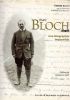
Marc Bloch, 1886-1944. Une biographie impossible / An Impossible Biography.
Limoges, Culture et Patrimoine en Limousin, 1997, in-4°, 152 pp, préface de Jacques Le Goff, abondamment illustré de près de 150 photos, gravures et fac-similés, broché, couv. illustrée à rabats, bon état. Texte bilingue en français et en anglais
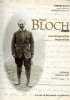
Préface ; Repères chronologiques ; Généalogie de Marc Bloch et de Simonne Vidal ; L'enfance de Marc Bloch ; Les années de formation ; La guerre de 1914-1918 ; Strasbourg ; Paris ; La guerre de 1939-1940 ; Les années noires ; Fougères ; Marc Bloch et Simonne Vidal, un couple indissoluble ; L'œuvre ; Les archives de Marc Bloch ; Hommages à Marc Bloch ; Bibliographie. / Preface. Milestones. Genealogy of Marc Bloch and Simonne Vidal. Childhood. The formative years. World War I - 1914-1918. Strasbourg. Paris. World War II - 1939-1940. The dark years. Fougères. Marc Bloch and Simonne Vidal, an unseparable couple. Marc Bloch's writings. The Archives of Marc Bloch. Tributes to Marc Bloch. Bibliography of Marc Bloch.
Geist der Utopie. - [THE MAIN WORK OF GERMAN EXPRESSIONISM]
München und Leipzig, Duncker & Humblot, 1918. Lex 8vo. Uncut in the orig. dark grey-brown wrappers, printed in gold on front wrapper and spine. Spine and lettering thereupon faded. Some smaller nicks, creases and loss of paper to extremities. Minor loss to capitals and two smaller holes w. a bit of loss to hinges. Overall an excellent copy in the fragile wrappers, rarely seen in such fine condition. Internally some minor brownspotting throughout, due to the paper-quality. With the ownership signature of J.B. Dumont deted ""Sept. '21"" to title-page and his stamp on half-title. 445 pp.
The rare first edition of Bloch's first major work, ""The Spirit of Utopia"", an expressionalist main work, which attempts to unite Marxism with Jewish-Christian messianism.The hugely influential German philosopher Ernst Bloch (1885-1977) was born as the son of Jewish parents in Ludwigshafen. He studied philosophy, physics, German and music in Munich and Würzburg and later became a main figure in Neomarxism. His first book, ""Geist der Utopie"" was written while Bloch was in exile in Switzerland during the First World War, and in this seminal work we find the cornerstones of his later so influential philosophy. In the ""Spirit of Utopia"", Bloch unites Marxism Jewish-Christian messianism by the common utopian element of both views: Hope, and faith in the fact that the world will and can become a better place. Bloch here set out to defend the attempts of humankind throughout history to create a humane world order, against the determinist socialism that viewed socialism as the inevitable result of history. With Marx and with the love and morality of religion, Bloch places man (that thinks of the common good) at the centre of his thinking as well as the metaphysical ideas of that which is not yet, but which can become. And thus he creates the spirit of utopia, due to which man can make the world a better place. This massive work of art begins with the powerful words: ""What now? It is enough. Now we have to begin. Life has been put in our hands. In itself it has already become empty long ago. It staggers senselessly around, but we stand firm, and thus we want to be its Faustus and its ends."" (""Wie nun? Es ist genug. Nun haben wir zu beginnen. In unsere Hände ist das Leben gegeben. Für sich selber ist es längst schon leer geworden. Es taumelt sinnlos hin und her, aber wir stehen fest, und so wollen wir ihm seine Faust und seine Ziele werden."") (P.9).The work was viewed as attacking the traditional Marxism of the time, and thus it was very controversial but also became hugely influential in the development of social liberation. Bloch is now considered one of the most undogmatic Marxists of the past century, and he influenced later political and philosophical thinkers enormously. Adorno himself cited this text of Bloch as having been transformative for his intellectual life, and as stated on the wrapper of the English translation, ""When this work was first published, it had a profound effect on major thinkers and artists in Weimar Germany. A poetical philosophical treatise with unusual insights into culture and political commentary, Bloch' s book laid the groundwork for thinkers like Adorno and Benjamin."" (Jack Zipes, University of Minnesota).This rare highly expressionist work consists of 445 pages of non-dogmatic strongly expressionistic and very influential recipes on and analyses of how man does and should behave in the humane world. ""But in return, we paint like savages again, in the best sense, in the sense of the primordial, the restless, unconcerned, concerned. For this is more or less how the dancing-mask was carved. This is more or less how primitive man shaped his fetishes, if only the simple need to express oneself should again be the same"" (""Aber dafür malen wir auch wieder wie die Wilden, im besten Sinn des Frühen, Unruhigen und Barbarischen genommen. So ungefähr wurde auch die Tanzmaske geschnitzt, so ungefähr baute sich der primitive Mensch seinen Fetisch zurecht, sollte auch nichts als die Not des Aussprechenmüssens wieder dieselbe geworden sein.""). (P. 19).The work was much re-written, and the first editions differs from all later editions.
Geist der Utopie. - [THE MAIN WORK OF GERMAN EXPRESSIONISM]
München und Leipzig, Duncker & Humblot, 1918. Lex 8vo. Original dark grey-brown paper binding, printed in gold on front wrapper and spine. A tear across spine, crudely repaired with tape, also to front hinge. Apart from the spine, a fine and fresh copy. Old owner's name to title-page. 445 pp.
![Geist der Utopie. - [THE MAIN WORK OF GERMAN EXPRESSIONISM]. "BLOCH, ERNST.](https://static.livre-rare-book.com/pictures/LLX/49061_1_thumb.jpg)
![Geist der Utopie. - [THE MAIN WORK OF GERMAN EXPRESSIONISM]. "BLOCH, ERNST.](https://static.livre-rare-book.com/pictures/LLX/49061_2_thumb.jpg)
The rare first edition of Bloch's first major work, ""The Spirit of Utopia"", an expressionalist main work, which attempts to unite Marxism with Jewish-Christian messianism.The hugely influential German philosopher Ernst Bloch (1885-1977) was born as the son of Jewish parents in Ludwigshafen. He studied philosophy, physics, German and music in Munich and Würzburg and later became a main figure in Neomarxism. His first book, ""Geist der Utopie"" was written while Bloch was in exile in Switzerland during the First World War, and in this seminal work we find the cornerstones of his later so influential philosophy. In the ""Spirit of Utopia"", Bloch unites Marxism Jewish-Christian messianism by the common utopian element of both views: Hope, and faith in the fact that the world will and can become a better place. Bloch here set out to defend the attempts of humankind throughout history to create a humane world order, against the determinist socialism that viewed socialism as the inevitable result of history. With Marx and with the love and morality of religion, Bloch places man (that thinks of the common good) at the centre of his thinking as well as the metaphysical ideas of that which is not yet, but which can become. And thus he creates the spirit of utopia, due to which man can make the world a better place. This massive work of art begins with the powerful words: ""What now? It is enough. Now we have to begin. Life has been put in our hands. In itself it has already become empty long ago. It staggers senselessly around, but we stand firm, and thus we want to be its Faustus and its ends."" (""Wie nun? Es ist genug. Nun haben wir zu beginnen. In unsere Hände ist das Leben gegeben. Für sich selber ist es längst schon leer geworden. Es taumelt sinnlos hin und her, aber wir stehen fest, und so wollen wir ihm seine Faust und seine Ziele werden."") (P.9).The work was viewed as attacking the traditional Marxism of the time, and thus it was very controversial but also became hugely influential in the development of social liberation. Bloch is now considered one of the most undogmatic Marxists of the past century, and he influenced later political and philosophical thinkers enormously. Adorno himself cited this text of Bloch as having been transformative for his intellectual life, and as stated on the wrapper of the English translation, ""When this work was first published, it had a profound effect on major thinkers and artists in Weimar Germany. A poetical philosophical treatise with unusual insights into culture and political commentary, Bloch' s book laid the groundwork for thinkers like Adorno and Benjamin."" (Jack Zipes, University of Minnesota).This rare highly expressionist work consists of 445 pages of non-dogmatic strongly expressionistic and very influential recipes on and analyses of how man does and should behave in the humane world. ""But in return, we paint like savages again, in the best sense, in the sense of the primordial, the restless, unconcerned, concerned. For this is more or less how the dancing-mask was carved. This is more or less how primitive man shaped his fetishes, if only the simple need to express oneself should again be the same"" (""Aber dafür malen wir auch wieder wie die Wilden, im besten Sinn des Frühen, Unruhigen und Barbarischen genommen. So ungefähr wurde auch die Tanzmaske geschnitzt, so ungefähr baute sich der primitive Mensch seinen Fetisch zurecht, sollte auch nichts als die Not des Aussprechenmüssens wieder dieselbe geworden sein.""). (P. 19).The work was much re-written, and the first editions differs from all later editions.
Geist der Utopie. - [THE MAIN WORK OF GERMAN EXPRESSIONISM]
München und Leipzig, Duncker & Humblot, 1918. Lex 8vo. A bit later, nice, dark blue half cloth with gilt lettering to spine. Half-title mounted with a few marginal repairs, otherwise a very nice and clean copy. Owner's signature to totle-page. 445 pp.
![Geist der Utopie. - [THE MAIN WORK OF GERMAN EXPRESSIONISM]. "BLOCH, ERNST.](https://static.livre-rare-book.com/pictures/LLX/49149_1_thumb.jpg)
![Geist der Utopie. - [THE MAIN WORK OF GERMAN EXPRESSIONISM]. "BLOCH, ERNST.](https://static.livre-rare-book.com/pictures/LLX/49149_2_thumb.jpg)
The rare first edition of Bloch's first major work, ""The Spirit of Utopia"", an expressionalist main work, which attempts to unite Marxism with Jewish-Christian messianism.The hugely influential German philosopher Ernst Bloch (1885-1977) was born as the son of Jewish parents in Ludwigshafen. He studied philosophy, physics, German and music in Munich and Würzburg and later became a main figure in Neomarxism. His first book, ""Geist der Utopie"" was written while Bloch was in exile in Switzerland during the First World War, and in this seminal work we find the cornerstones of his later so influential philosophy. In the ""Spirit of Utopia"", Bloch unites Marxism Jewish-Christian messianism by the common utopian element of both views: Hope, and faith in the fact that the world will and can become a better place. Bloch here set out to defend the attempts of humankind throughout history to create a humane world order, against the determinist socialism that viewed socialism as the inevitable result of history. With Marx and with the love and morality of religion, Bloch places man (that thinks of the common good) at the centre of his thinking as well as the metaphysical ideas of that which is not yet, but which can become. And thus he creates the spirit of utopia, due to which man can make the world a better place. This massive work of art begins with the powerful words: ""What now? It is enough. Now we have to begin. Life has been put in our hands. In itself it has already become empty long ago. It staggers senselessly around, but we stand firm, and thus we want to be its Faustus and its ends."" (""Wie nun? Es ist genug. Nun haben wir zu beginnen. In unsere Hände ist das Leben gegeben. Für sich selber ist es längst schon leer geworden. Es taumelt sinnlos hin und her, aber wir stehen fest, und so wollen wir ihm seine Faust und seine Ziele werden."") (P.9).The work was viewed as attacking the traditional Marxism of the time, and thus it was very controversial but also became hugely influential in the development of social liberation. Bloch is now considered one of the most undogmatic Marxists of the past century, and he influenced later political and philosophical thinkers enormously. Adorno himself cited this text of Bloch as having been transformative for his intellectual life, and as stated on the wrapper of the English translation, ""When this work was first published, it had a profound effect on major thinkers and artists in Weimar Germany. A poetical philosophical treatise with unusual insights into culture and political commentary, Bloch' s book laid the groundwork for thinkers like Adorno and Benjamin."" (Jack Zipes, University of Minnesota).This rare highly expressionist work consists of 445 pages of non-dogmatic strongly expressionistic and very influential recipes on and analyses of how man does and should behave in the humane world. ""But in return, we paint like savages again, in the best sense, in the sense of the primordial, the restless, unconcerned, concerned. For this is more or less how the dancing-mask was carved. This is more or less how primitive man shaped his fetishes, if only the simple need to express oneself should again be the same"" (""Aber dafür malen wir auch wieder wie die Wilden, im besten Sinn des Frühen, Unruhigen und Barbarischen genommen. So ungefähr wurde auch die Tanzmaske geschnitzt, so ungefähr baute sich der primitive Mensch seinen Fetisch zurecht, sollte auch nichts als die Not des Aussprechenmüssens wieder dieselbe geworden sein.""). (P. 19).The work was much re-written, and the first editions differs from all later editions.


Phone number : 01 43 29 46 77
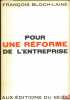
UN ESPOIR DÉÇU? LA CONVENTION DES NATIONS UNIES SUR LES LETTRES DE CHANGE ET BILLETS À ORDRE INTERNATIONAUX, Extrait du Journal du droit international, 119eannée (1992), n°4
, Paris, Éd. techn. 1992, in-8, fascicule agrafé, bon état, [11p.].
Phone number : 01 43 29 46 77
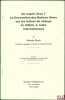
LA NOTION DE TRAVAIL PUBLIC, Préface Charles Eisenmann
, Paris, Librairies Techniques 1965, br., ENVOI DE L’AUTEUR à Maître Boré, (legt insolé), bon état, XI-210p.
Phone number : 01 43 29 46 77
LA RÉPUBLIQUE ROMAINE. Les conflits politiques et sociaux, coll. bibl. de Philosophie scientifique
, Paris, Ernest Flammarion 1927, in-8, br., (fané, jauni, petits accrocs), 334p.
Phone number : 01 43 29 46 77
GOLDMAN (Berthold), FADLALLAH (Ibrahim), BLOCH (Pascale), ALTER (Michel), FOUCHARD (Philippe)
Reference : 53695
LES TRAVAUX DE LA C.N.U.D.C.I, Extrait du Journal du Droit international, 106eannée, n°4
, Paris, Éd. techn. 1979, in-8, br., (rares soulignures au crayon), bon état, [98p.].
Phone number : 01 43 29 46 77
DESIGNERS ET CR ATEURS DES ANN ES 80-90 : Mobilier et am nagements
, Norma ditions, 2023 HB, 305 x 230 mm, 336 p, FR. edition, NOUVEAU, illustrations en couleur. ISBN 9782376660378.
Dans la lign e des ouvrages sur les d corateurs des ann es 40, 50 et 60/70, ce livre nous plonge dans l'univers des ann es 80/90. Celles-ci ont t les t moins d'exp rimentations in dites dans le monde du design et de l'architecture, celles d'une poque o la beaut et l' l gance classique c dent le pas une multitude d'expressions qui chappent tout classement et toute hi rarchie. Compos d'une riche introduction qui en donne une vision synoptique et de trente-huit monographies qui d crivent ses multiples visages, ce livre rend intelligible une p riode exceptionnellement cr ative et r v le travers une abondante iconographie, souvent in dite, sa formidable richesse esth tique. Avec l'av nement du post-modernisme, une nouvelle g n ration de designers se d marque, parmi eux Shiro Kuramata, Philippe Starck, Ron Arad, Bob Wilson, Elizabeth Garouste et Mattia Bonetti. Tous r g n rent la cr ation en refusant l' litisme de leurs pr d cesseurs et en favorisant l'utilisation de nouveaux mat riaux. Certains se tournent vers la r cup ration, comme le groupe Creative Salvage, et proposent des meubles inventifs et provocateurs gr ce la soudure et l'assemblage. D'autres, r unis en Italie autour d'Ettore Sottsass et de Memphis, allient couleurs et motifs inattendus l'utilisation ludique du stratifi plastique. Chez les architectes, de nouveaux concepts de b timent mergent, ainsi que l'utilisation de mat riaux destin s durer, comme le verre. Glissant jusqu' la fin des ann es 90, les r alisations pr sent es dans ce livre marquent la volont d'un dialogue entre les r f rences artistiques avec un nouveau rapport l'aspect industriel, l'or e du XXIe si cle et de ses innovations technologiques.
DESIGNERS ET CR ATEURS DES ANN ES 80-90 Mobilier et am nagements
, Norma editeur, 2023 HB, 305 x 230 mm, 336 pages, FR edition. ISBN 9782376660378.
Dans la lign e des ouvrages sur les d corateurs des ann es 40, 50 et 60/70, ce livre nous plonge dans l'univers des ann es 80/90. Celles-ci ont t les t moins d'exp rimentations in dites dans le monde du design et de l'architecture, celles d'une poque o la beaut et l' l gance classique c dent le pas une multitude d'expressions qui chappent tout classement et toute hi rarchie. Compos d'une riche introduction qui en donne une vision synoptique et de trente-huit monographies qui d crivent ses multiples visages, ce livre rend intelligible une p riode exceptionnellement cr ative et r v le travers une abondante iconographie, souvent in dite, sa formidable richesse esth tique. Avec l'av nement du post-modernisme, une nouvelle g n ration de designers se d marque, parmi eux Shiro Kuramata, Philippe Starck, Ron Arad, Bob Wilson, Elizabeth Garouste et Mattia Bonetti. Tous r g n rent la cr ation en refusant l' litisme de leurs pr d cesseurs et en favorisant l'utilisation de nouveaux mat riaux. Certains se tournent vers la r cup ration, comme le groupe Creative Salvage, et proposent des meubles inventifs et provocateurs gr ce la soudure et l'assemblage. D'autres, r unis en Italie autour d'Ettore Sottsass et de Memphis, allient couleurs et motifs inattendus l'utilisation ludique du stratifi plastique. Chez les architectes, de nouveaux concepts de b timent mergent, ainsi que l'utilisation de mat riaux destin s durer, comme le verre. Glissant jusqu' la fin des ann es 90, les r alisations pr sent es dans ce livre marquent la volont d'un dialogue entre les r f rences artistiques avec un nouveau rapport l'aspect industriel, l'or e du XXIe si cle et de ses innovations technologiques
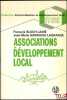
ASSOCIATIONS ET DÉVELOPPEMENT LOCAL, coll. Décentralisation et développement local
, Paris, L.G.D.J. 1988, in-8, br., ENVOI DES AUTEURS, bon état, 230p.
Phone number : 01 43 29 46 77
John of Salisbury on Aristotelian Science,
Turnhout, Brepols, 2012 Hardback, approx. X+267 p., 156 x 234 mm. ISBN 9782503540993.
This is the first substantial treatment of John of Salisbury's views on Aristotelian science. In his great work on logic and education, John of Salisbury proposes an Aristotelian foundation for education, research, and science. Theories and methods of science and scholarship were central topics in twelfth-century discourse, and John is apparently the first to propose use of the entire Organon, the texts of which were to become very influential and important in the thirteenth century. However, his precise knowledge and understanding of Aristotle has never been thoroughly examined. The present book challenges the view that John read, understood, and used the entire Organon. It pays particular attention to the Metalogicon, but it draws upon a variety of other sources as well in arguing that John did not in fact study the Ars nova with any care, and that he probably never read the most important text, the Posterior Analytics, in its entirety. The conclusions of the book have important consequences not only for our conception of John of Salisbury, but also for our views and understanding of twelfth-century Aristotelianism and science in general. Languages : English, Latin.
Decorators of the 1960s and 1970s / Les Decorateur des Annees 60s-70s
, Norma Editions , 2016 Hardback, 305x230mm, 336p, 380 bw and col. illustrations english edition. ISBN 9782915542837.
the 60s and 1970s marked a sharp turning point in the history of decoration and furniture. Until that point, the world was confined to national and elitist forms of expression. At the beginning of the 1960s, the sector took its inspiration from Anglo-Saxon, Scandinavian, Italian and French decoration. Genres were combined in a frenzied desire to live in symbiosis with one's time. The progress of technology strengthened the conviction that the individual had unlimited freedom and aroused the desire to inhabit in a new manner. Forms became rounder, furniture was in sync with a warm, playful, and anticonformist universe. Colours and decorative motifs took on the brilliance and fantasies of Pop Art and psychedelia. The living environment was transformed into a waking dream in which luxurious furniture in original materials and surprising objects were mixed, associated, for the first time, with early furniture. The end of the 1970s marked the advent of a period in which beauty and classic elegance gave way to a host of expressions that were unclassifiable and rejected any hierarchy. The postmodern period had arrived. Composed of a long introduction that provides a synoptic view and 32 monographs that describe its many faces, this book invites the reader to discover an exceptionally creative period and revels through an abundant iconography. Les annees 60 et 70 sont indissociables dans l'histoire de la decoration et du mobilier. Elles marquent un tournant radical dans un monde jusqu'alors confine a des expressions nationales et elitistes. Tout eclate au debut des annees 60. La mode est a la fois d'inspiration anglosaxonne, scandinave, italienne et francaise. Les genres se melangent dans un desir effrene de vivre en symbiose avec son temps. Les progres de la technologie accreditent la conviction d'une liberte conquerante de l'individu et suscitent des desirs inedits d'une nouvelle maniere d'habiter, fut-ce dans des cellules de science-fiction. Les formes s'arrondissent, les sieges deviennent des tapis-sculptures qui permettent de se lover dans des univers chaleureux, ludiques et anticonformistes. Les couleurs et les motifs decoratifs epousent l'eclat et les delires du Pop' Art et du psychedelisme. L'espace d'habitation se transforme en reve eveille ou se melent un mobilier luxueux dans des materiaux inedits et des objets surprenants de toutes origines, associes, fait nouveau, a des meubles anciens. La fin des annees 70 marque l'avenement d'une epoque ou la beaute et l'elegance classique cedent le pas a une multitude d'expressions qui echappent a tout classement et a toute hierarchie. L'heure du post-modernisme a sonne. Compose d'une longue introduction qui en donne une vision synoptique et de trente-deux monographies qui decrivent ses multiples visages, ce livre rend intelligible une periode exceptionnellement creative et revele a travers une abondante iconographie, souvent inedite, sa formidable richesse esthetique. Une iconographie mise a jour, une nouvelle jaquette et trois nouveaux decorateurs viennent enrichir cette nouvelle edition.
Phone number : 01 43 29 46 77
LE VENT SOUFFLE SUR L’HISTOIRE, témoignages et documents inédits
, Paris, S.I.P.E.P 1956, br., très bon état, 332p.
Phone number : 01 43 29 46 77
LES LETTRES DE CHANGE ET BILLETS À ORDRE DANS LES RELATIONS COMMERCIALES INTERNATIONALES, Étude comparative de droit cambiaire français et américain, Préface de Philippe Fouchard, coll. Études juridiques comparatives
, Paris, Économica 1986, in-8, br., (couv. fanée avec lég. abrasion et marque de bibl.), intérieur très frais, 298p.
Phone number : 01 43 29 46 77
Marc Bloch (1886-1944) - Une biographie impossible
Culture & Patrimoine en Limousin (1997) - In-4 broché de 152 pages - Couverture illustrée à rabats - Abondamment illustré de près de 150 photos en noir et blanc, gravures et fac-similés - Texte bilingue en français et en anglais - Préface de Jacques Le Goff - Exemplaire en très bon état
Préface - Repères chronologiques - Généalogie de Marc Bloch et de Simonne Vidal - L'enfance de Marc Bloch - Les années de formation - La guerre de 1914-1918 - Strasbourg - Paris - La guerre de 1939-1940 - Les années noires - Fougères Marc Bloch et Simonne Vidal, un couple indissoluble - L'oeuvre - Les archives de Marc Bloch - Hommages à Marc Bloch - Bibliographie.
Still life of mushroom and fruit - Chez Mario
Paris Bloch-Laine 1992 Première édition. Une grande photographie en noir et blanc du célèbre photographe Jean-Louis Bloch-Lainé. Il s'agit peut-être d'une de ses épreuves originales pour l'un de ses livres culinaires, mais nous n'avons pas été en mesure de la localiser si c'est le cas. Elle est signée au dos, avec la mention "Chez Mario", qui pourrait être un restaurant ? L'image elle-même est propre et nette, mais le cadre blanc présente quelques taches. Ces taches pourraient être cachées par un montage. L'image est maintenant présentée sous un passe partout temporaire. L'image mesure 20 cm x 30 cm. La feuille mesure 30 cm x 41 cm. Jean-Louis Bloch-Lainé est un éminent photographe français célèbre pour ses photographies éditoriales, artistiques et documentaires. Sa longue carrière, qui s'étend du début des années 1960 à aujourd'hui, a influencé la culture visuelle française, tant dans le domaine de la mode que dans celui des beaux-arts. Il a commencé à travailler pour le magazine Elle en 1963. Il est particulièrement connu pour ses photographies culinaires.
First edition. A large black and white photograph by the celebrated photographer Jean-Louis Bloch-Lainé. This may be one of his original proofs for one of his culinary books, but we haven't been able to locate it if so. It is signed to the rear, with the note "Chez Mario" which may be a restaurant ? The image itself is clean and neat, but the white surround has some staining to it. This could be hidden with mounting. Now presented under a temporary passe partout. Image is 20cm x 30cm. Sheet is 30cm x 41cm. Jean-Louis Bloch-Lainé is a distinguished French photographer celebrated for his editorial, artistic, and documentary photography. His extensive career, spanning from the early 1960s onward, has influenced French visual culture in both fashion and fine art contexts. He began his work with Elle magazine in 1963. He is particularly known for his culinary photographs. .
A photograph of the interior of the Oceanographic Museum of Monaco
Paris Bloch-Laine 1991 Première édition. Grande photographie en noir et blanc du célèbre photographe Jean-Louis Bloch-Lainé. Elle est signée au dos, avec la mention "Monaco". Elle représente le grand hall du Musée océanographique de Monaco. L'image elle-même est propre et nette, mais le cadre blanc présente quelques taches. Ces taches pourraient être masquées par un montage. Elle est actuellement présentée sous un passe-partout temporaire. L'image mesure 20 cm x 30 cm. La feuille mesure 30 cm x 41 cm. Jean-Louis Bloch-Lainé est un éminent photographe français célèbre pour ses photographies éditoriales, artistiques et documentaires. Sa longue carrière, qui s'étend du début des années 1960 à aujourd'hui, a influencé la culture visuelle française, tant dans le domaine de la mode que dans celui des beaux-arts. Il a commencé à travailler pour le magazine Elle en 1963. Il est particulièrement connu pour ses photographies culinaires.
First edition. A large black and white photograph by the celebrated photographer Jean-Louis Bloch-Lainé. It is signed to the rear, with the note "Monaco". It portrays the large hall of the Oceanographic Museum of Monaco The image itself is clean and neat, but the white surround has some staining to it. This could be hidden with mounting. Now presented under a temporary passe partout. Image is 20cm x 30cm. Sheet is 30cm x 41cm. Jean-Louis Bloch-Lainé is a distinguished French photographer celebrated for his editorial, artistic, and documentary photography. His extensive career, spanning from the early 1960s onward, has influenced French visual culture in both fashion and fine art contexts. He began his work with Elle magazine in 1963. He is particularly known for his culinary photographs. .
Les Origines, la Gaule indépendante et la Gaule romaine.
Hachette et Cie, 1911, gr. in-8° carré, 456 pp, un frontispice sous serpente et 23 pl. de gravures hors texte, biblio, reliure demi-basane blonde, dos lisse orné de fers originaux et filets dorés, tête dorée (rel. de l'éditeur), dos lég. frotté, cuir du 2e plat lég. épidermé, bon état (Histoire de France illustrée depuis les origines jusqu'à la Révolution. Tome I - Deuxième partie, sous la direction d'Ernest Lavisse)
Par Gustave Bloch, le père de Marc Bloch, l'édition "illustrée" du volume sur la Gaule de l'Histoire de France depuis les origines jusqu'à la Révolution dirigée par Lavisse. — "... Les modestes proportions de ce livre ne l’empêchent pas d’être sur cette matière, à l’heure présente, le guide le plus complet, le mieux informé, le plus sûr. Ces pages si nourries, où chaque mot porte, où chaque phrase apparaît pleine de sens et grosse de faits comme l’esquisse et le résumé de tout un paragraphe, se lisent avec le plus vif intérêt et plaisent par leur forme même. Le style, nerveux et sobre, soutient sans cesse l’attention. Un heureux concours de rares qualités, plus rarement encore associées, méritera à ce volume un durable succès. L’ouvrage se divise tout naturellement en deux parties, d’inégale étendue. La première est consacrée aux Origines (p. 3-118) ; l’auteur y étudie d’abord les sociétés primitives et les peuples historiques de la Gaule (Livre premier), puis la civilisation de l’époque de l’indépendance et la conquête romaine (Livre II). A mesure qu’on s’éloigne de l’obscurité des premiers temps les documents se multiplient, le terrain est plus solide et mieux connu. Dans le chapitre II du livre premier, on appréciera particulièrement les pages où M. Bloch résume les traits principaux de la constitution et de la civilisation massaliotes ; au chapitre I du livre II, l’exposé des croyances religieuses des Gaulois et les doctrines druidiques ; au chapitre II, un récit vivant et dramatique des campagnes de César. La seconde partie, beaucoup plus considérable, est intitulée : la Gaule romaine (p. 121-451). Elle comprend trois livres. Dans l’histoire politique de la Gaule romaine jusqu’à Théodose, M. Bloch distingue deux grandes périodes, dont l’édit de Caracalla marque à peu près la séparation. Le troisième livre est une étude de la société gallo-romaine. (...) L’ouvrage est d’un maniement commode ; les sous-titres écrits en marge, par un heureux retour à une vieille coutume trop longtemps négligée, en facilitent la lecture et l’usage. En tête de chaque chapitre et subdivision de chapitre, on trouve une double bibliographie (sources, ouvrages à consulter) exacte et suffisamment complète, copieuse sans être inutilement surchargée. Le livre de M. Bloch n’est pas appelé seulement à instruire et intéresser le public lettré auquel il s’adresse ; il rendra de grands services à tous ceux qui voudront recourir aux documents eux-mêmes et leur en facilitera singulièrement l’accès et l’intelligence." (Maurice Besnier, Revue internationale de l'enseignement, 1901)
Das Prinzip Hoffnung. 3 Bde. - [THE PRINCIPLE OF HOPE - PRESENTATION-COPY]
Berlin, 1954-59. Lex 8vo. All three in the original blue full cloth bindings, in excellent condition, in- as well as ex-ternally. Some light pencil-underlinings. 477, (3) 512, (1)" 518, (1) pp. + Errata for vols. I+II laid loose in vol. With a five-line presentation-inscription to front free end-paper of volume 1, signed in full: ""Herrn Gehrke/ in freundlicher Gesinnung/ mit besten Wünschen/ 30.VIII.54/ Ernst Bloch"".
![Das Prinzip Hoffnung. 3 Bde. - [THE PRINCIPLE OF HOPE - PRESENTATION-COPY]. BLOCH, ERNST.](https://static.livre-rare-book.com/pictures/LLX/49060_1_thumb.jpg)
![Das Prinzip Hoffnung. 3 Bde. - [THE PRINCIPLE OF HOPE - PRESENTATION-COPY]. BLOCH, ERNST.](https://static.livre-rare-book.com/pictures/LLX/49060_2_thumb.jpg)
The scarce first edition of all three volumes, with signed and dated presentation-inscription (in the year of appearance), of Bloch's magnum opus, his seminal ""The Principle of Hope"", which constitutes his philosophy of concrete utopia. The hugely influential German philosopher Ernst Bloch (1885-1977) was born as the son of Jewish parents in Ludwigshafen. He studied philosophy, physics, German and music in Munich and Würzburg and later became a main figure in Neomarxism. As his first book, ""Geist der Utopie"" was written while in exile in Switzerland during the First World War, this his main work was written while in exile in America during the Second World War, between 1938 and 1947, and it appeared for the first time in the DDR between 1954 and 1959. ""The Principle of Hope"" is considered a philosophical-political piece of art, which consideres in both philosophical-scientific and humanistic ways the possibilities for a utopia, at the same time as it traces throughout history man's strivings for utopia. The world is presented as open to man - open for man to make it the place that enables us to live like proper human beings. ""Ernst Bloch's Principle of Hope is one of the key books of our century. Part philosophic speculation, part political treatise, part lyric vision, it is exercising a deepening influence on thought and on literature. . . . No political or theological appropriations of Bloch's leviathan can exhaust its visionary breadth."" (editorial review by George Steiner, the 1986 English language edition). As his ""Geist der Utopie"" begins with the powerful words: ""What now? It is enough. Now we have to begin. Life has been put in our hands. In itself it has already become empty long ago. It staggers senselessly around, but we stand firm, and thus we want to be its Faustus and its ends."", so his ""Das Prinzip Hoffnung"" begins with the equally powerful words: ""Who are we? Where do we come from? Where are we going? What do we expect? What awaits us? Many feel as nothing but confused. The ground rocks, they do not know why and from what. This their state is fear, if it becomes more defined, it is fear. Once, someone set out to learn fear."" (""""Wer sind wir? Wo kommen wir her? Wohin gehen wir? Was erwarten wir? Was erwartet uns? Viele fühlen sich nur als verwirrt. Der Boden wankt, sie wissen nicht warum und von was. Dieser ihr Zustand ist Angst, wird er bestimmter, so ist er Furcht. Einmal zog einer aus, das Fürchten zu lernen.""The conception of ""Prinzip Hoffnung"" has now, due to this work, become a frequently used saying, not only in Germany, but also in America and large parts of Europe, where ""The Pronciple of Hope"" is used in numerous political and economical discussions, most actually for instance in the climate debate. The influence of the work has been immense, and it has done much to re-create modern man's belief in the world today and our ability to do good.

