 Write to the booksellers
1910 books for « bloch l »Edit
-
Type
Autograph (1)
Book (1889)
Magazine (10)
Music sheets (39)
-
Latest
Last 24h (2)
Last 3 days (1)
Last month (115)
Last week (4)
-
Language
English (1)
French (1927)
Russian (11)
-
Century
18th (1)
19th (56)
20th (971)
21st (166)
-
Countries
Belgium (84)
Brazil (1)
Canada (12)
Côte d'Ivoire (3)
Denmark (17)
France (1655)
Netherlands (15)
Switzerland (140)
United States of America (12)
-
Syndicate
ALAC (12)
CLAM (4)
CLAQ (2)
ILAB (806)
NVVA (13)
SLACES (13)
SLAM (752)
SNCAO (1)
Topics
- Abraham (6)
- Age (5)
- Archaeology (31)
- Architecture (7)
- Autographs (8)
- Bibliophilism (9)
- Biography (17)
- Bloch - laine françois (53)
- Bloch - michel jean (15)
- Bloch camille (6)
- Bloch jean richard (62)
- Bloch marc (26)
- Bloch morhange jacques (27)
- Bloch pierre (6)
- Bloch robert (85)
- Cendrars blaise (5)
- Children’s books (83)
- Civilisation (13)
- Cocteau jean (5)
- Comic strip (7)
- Dedication (10)
- Detective novels (9)
- Dictionaries (5)
- Early printed books (5)
- Economics (26)
- Education (20)
- Education - morals (13)
- Eluard paul (5)
- English (40)
- Ethic (6)
- Ethnology (8)
- Etymology (7)
- Europe (6)
- Exhibition (8)
- Fantastic (8)
- Fine arts (12)
- First edition (32)
- Gallimard (10)
- Games toys (8)
- Geography (24)
- Germanic languages (20)
- Germany (9)
- Glasswork (6)
- Grammar (6)
- Head edition (5)
- Hebraic literature (5)
- Helvética (5)
- History (140)
- Industrial arts & crafts - fine arts (11)
- Interior (5)
- Isaac (6)
- Italy (15)
- Judaism (judaica) (7)
- Laurencin marie (5)
- Law (9)
- Literature (161)
- Lorrain (5)
- Magazine (11)
- Medicine (13)
- Middle ages (8)
- Military arts (5)
- Music (6)
- Newspapers press (15)
- Painting (6)
- Paris (16)
- Philology (6)
- Philosophy (54)
- Photography (18)
- Physics (9)
- Picasso (12)
- Poetry (16)
- Policy (30)
- Psychology (25)
- Reading vocabulary (6)
- Religions (11)
- Review (24)
- Reviews (22)
- Rome (21)
- Science fiction (9)
- Sciences (7)
- Scores (33)
- Social sciences (9)
- Sociology (10)
- Songs (32)
- Spencer emile (7)
- Steinlen (5)
- Switzerland (5)
- Teaching (5)
- Theatre (10)
- Translation (5)
- Various (14)
- War (27)
- Weil simone (5)
- Youth (8)
Les inscriptions d'Asoka. Traduites et commentées par Jules Bloch. Collection Emile Senart, n.° 8 dans la série de classiques indiens publiée par l’Institut de Civilisation Indienne de l’Université de Paris sous le patronage de la Société Asiatique et de l’Association Guillaume Budé.
Paris, Les Belles Lettres 1950, 200x135mm, 216pages, reliure d'éditeur. Cachet de possesseur sur le bas du coin de la page de garde supérieure et avec inscriptions manuscrites savantes sur quelques marges, bords et pages vierges. Bel exemplaire.

une carte, Pour un paiement via PayPal, veuillez nous en faire la demande et nous vous enverrons une facture PayPal
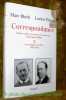
Marc Bloch, Lucien Febvre et les Annales d’Histoire Economique et Sociale. Correspondance. Tome troisième 1938-1973. Les Annales en crises. Edition établie, présentée et annotée par Bernard Müller.
Paris, Fayard 2003, 245x160mm, 356pages, reliure d'éditeur sous jaquette. Exemplaire à l'état de neuf.
Pour un paiement via PayPal, veuillez nous en faire la demande et nous vous enverrons une facture PayPal
Les origines de Rome
État : Bon état - Année : 1959 - Format : in 8° - Pages : 173pp - Editeur : Le Club français du Livre - Lieu d'édition : Paris - Type : Reliure toile éditeur - Divers : Edition hors-commerce tirée à 11000 exemplaires numérotés (n°3052). Couv légèrement insolée. - Commander rapidement : https://www.bons-livres.fr/livre/raymond-bloch/3884-les-origines-de-rome?lrb

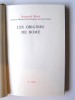
Les origines de Rome ont toujours fasciné les historiens. Faire le tri entre la légende et l'histoire n'est pas chose facile. L'auteur de cet ouvrage de vulgarisation, simple mais précis, s'appuyant sur des sources irréfutables, s'efforce de faire le point sur l'état actuel (en 1959) des recherches dans ce domaine autour des grands thèmes qui ont fondé la civilisation romaine. Chacun connaît les travaux de Jérôme Carcopino sur la question. Travaux qui font encore référence. Il semble que tout ait été dit. Ce petit n'a pas vocation à ouvrir le débat, ni même à apporter des éléments nouveaux originaux. Il a été écrit pour offrir, à un large public, une synthèse et ˮfixer les points acquis, énoncer les problèmes, ouvrir des perspectivesˮ.
BLOCH (Etienne), avec la collaboration d'Alfredo Cruz-Ramirez.
Reference : 24302
(1997)
ISBN : 9782911167119
Marc Bloch, 1886-1944. Une biographie impossible / An Impossible Biography.
Limoges, Culture et Patrimoine en Limousin, 1997, in-4°, 152 pp, préface de Jacques Le Goff, abondamment illustré de près de 150 photos, gravures et fac-similés, broché, couv. illustrée à rabats, bon état. Texte bilingue en français et en anglais
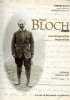
Préface ; Repères chronologiques ; Généalogie de Marc Bloch et de Simonne Vidal ; L'enfance de Marc Bloch ; Les années de formation ; La guerre de 1914-1918 ; Strasbourg ; Paris ; La guerre de 1939-1940 ; Les années noires ; Fougères ; Marc Bloch et Simonne Vidal, un couple indissoluble ; L'œuvre ; Les archives de Marc Bloch ; Hommages à Marc Bloch ; Bibliographie. / Preface. Milestones. Genealogy of Marc Bloch and Simonne Vidal. Childhood. The formative years. World War I - 1914-1918. Strasbourg. Paris. World War II - 1939-1940. The dark years. Fougères. Marc Bloch and Simonne Vidal, an unseparable couple. Marc Bloch's writings. The Archives of Marc Bloch. Tributes to Marc Bloch. Bibliography of Marc Bloch. Désormais les frais d'envoi sont de 6 € seulement pour les livres jusqu'à 1 kg (colissimo suivi), pour la France métropolitaine.
Geist der Utopie. - [THE MAIN WORK OF GERMAN EXPRESSIONISM]
München und Leipzig, Duncker & Humblot, 1918. Lex 8vo. Uncut in the orig. dark grey-brown wrappers, printed in gold on front wrapper and spine. Spine and lettering thereupon faded. Some smaller nicks, creases and loss of paper to extremities. Minor loss to capitals and two smaller holes w. a bit of loss to hinges. Overall an excellent copy in the fragile wrappers, rarely seen in such fine condition. Internally some minor brownspotting throughout, due to the paper-quality. With the ownership signature of J.B. Dumont deted ""Sept. '21"" to title-page and his stamp on half-title. 445 pp.
The rare first edition of Bloch's first major work, ""The Spirit of Utopia"", an expressionalist main work, which attempts to unite Marxism with Jewish-Christian messianism.The hugely influential German philosopher Ernst Bloch (1885-1977) was born as the son of Jewish parents in Ludwigshafen. He studied philosophy, physics, German and music in Munich and Würzburg and later became a main figure in Neomarxism. His first book, ""Geist der Utopie"" was written while Bloch was in exile in Switzerland during the First World War, and in this seminal work we find the cornerstones of his later so influential philosophy. In the ""Spirit of Utopia"", Bloch unites Marxism Jewish-Christian messianism by the common utopian element of both views: Hope, and faith in the fact that the world will and can become a better place. Bloch here set out to defend the attempts of humankind throughout history to create a humane world order, against the determinist socialism that viewed socialism as the inevitable result of history. With Marx and with the love and morality of religion, Bloch places man (that thinks of the common good) at the centre of his thinking as well as the metaphysical ideas of that which is not yet, but which can become. And thus he creates the spirit of utopia, due to which man can make the world a better place. This massive work of art begins with the powerful words: ""What now? It is enough. Now we have to begin. Life has been put in our hands. In itself it has already become empty long ago. It staggers senselessly around, but we stand firm, and thus we want to be its Faustus and its ends."" (""Wie nun? Es ist genug. Nun haben wir zu beginnen. In unsere Hände ist das Leben gegeben. Für sich selber ist es längst schon leer geworden. Es taumelt sinnlos hin und her, aber wir stehen fest, und so wollen wir ihm seine Faust und seine Ziele werden."") (P.9).The work was viewed as attacking the traditional Marxism of the time, and thus it was very controversial but also became hugely influential in the development of social liberation. Bloch is now considered one of the most undogmatic Marxists of the past century, and he influenced later political and philosophical thinkers enormously. Adorno himself cited this text of Bloch as having been transformative for his intellectual life, and as stated on the wrapper of the English translation, ""When this work was first published, it had a profound effect on major thinkers and artists in Weimar Germany. A poetical philosophical treatise with unusual insights into culture and political commentary, Bloch' s book laid the groundwork for thinkers like Adorno and Benjamin."" (Jack Zipes, University of Minnesota).This rare highly expressionist work consists of 445 pages of non-dogmatic strongly expressionistic and very influential recipes on and analyses of how man does and should behave in the humane world. ""But in return, we paint like savages again, in the best sense, in the sense of the primordial, the restless, unconcerned, concerned. For this is more or less how the dancing-mask was carved. This is more or less how primitive man shaped his fetishes, if only the simple need to express oneself should again be the same"" (""Aber dafür malen wir auch wieder wie die Wilden, im besten Sinn des Frühen, Unruhigen und Barbarischen genommen. So ungefähr wurde auch die Tanzmaske geschnitzt, so ungefähr baute sich der primitive Mensch seinen Fetisch zurecht, sollte auch nichts als die Not des Aussprechenmüssens wieder dieselbe geworden sein.""). (P. 19).The work was much re-written, and the first editions differs from all later editions.

Geist der Utopie. - [THE MAIN WORK OF GERMAN EXPRESSIONISM]
München und Leipzig, Duncker & Humblot, 1918. Lex 8vo. Original dark grey-brown paper binding, printed in gold on front wrapper and spine. A tear across spine, crudely repaired with tape, also to front hinge. Apart from the spine, a fine and fresh copy. Old owner's name to title-page. 445 pp.
![Geist der Utopie. - [THE MAIN WORK OF GERMAN EXPRESSIONISM]. "BLOCH, ERNST.](https://static.livre-rare-book.com/pictures/LLX/49061_1_thumb.jpg)
![Geist der Utopie. - [THE MAIN WORK OF GERMAN EXPRESSIONISM]. "BLOCH, ERNST.](https://static.livre-rare-book.com/pictures/LLX/49061_2_thumb.jpg)
The rare first edition of Bloch's first major work, ""The Spirit of Utopia"", an expressionalist main work, which attempts to unite Marxism with Jewish-Christian messianism.The hugely influential German philosopher Ernst Bloch (1885-1977) was born as the son of Jewish parents in Ludwigshafen. He studied philosophy, physics, German and music in Munich and Würzburg and later became a main figure in Neomarxism. His first book, ""Geist der Utopie"" was written while Bloch was in exile in Switzerland during the First World War, and in this seminal work we find the cornerstones of his later so influential philosophy. In the ""Spirit of Utopia"", Bloch unites Marxism Jewish-Christian messianism by the common utopian element of both views: Hope, and faith in the fact that the world will and can become a better place. Bloch here set out to defend the attempts of humankind throughout history to create a humane world order, against the determinist socialism that viewed socialism as the inevitable result of history. With Marx and with the love and morality of religion, Bloch places man (that thinks of the common good) at the centre of his thinking as well as the metaphysical ideas of that which is not yet, but which can become. And thus he creates the spirit of utopia, due to which man can make the world a better place. This massive work of art begins with the powerful words: ""What now? It is enough. Now we have to begin. Life has been put in our hands. In itself it has already become empty long ago. It staggers senselessly around, but we stand firm, and thus we want to be its Faustus and its ends."" (""Wie nun? Es ist genug. Nun haben wir zu beginnen. In unsere Hände ist das Leben gegeben. Für sich selber ist es längst schon leer geworden. Es taumelt sinnlos hin und her, aber wir stehen fest, und so wollen wir ihm seine Faust und seine Ziele werden."") (P.9).The work was viewed as attacking the traditional Marxism of the time, and thus it was very controversial but also became hugely influential in the development of social liberation. Bloch is now considered one of the most undogmatic Marxists of the past century, and he influenced later political and philosophical thinkers enormously. Adorno himself cited this text of Bloch as having been transformative for his intellectual life, and as stated on the wrapper of the English translation, ""When this work was first published, it had a profound effect on major thinkers and artists in Weimar Germany. A poetical philosophical treatise with unusual insights into culture and political commentary, Bloch' s book laid the groundwork for thinkers like Adorno and Benjamin."" (Jack Zipes, University of Minnesota).This rare highly expressionist work consists of 445 pages of non-dogmatic strongly expressionistic and very influential recipes on and analyses of how man does and should behave in the humane world. ""But in return, we paint like savages again, in the best sense, in the sense of the primordial, the restless, unconcerned, concerned. For this is more or less how the dancing-mask was carved. This is more or less how primitive man shaped his fetishes, if only the simple need to express oneself should again be the same"" (""Aber dafür malen wir auch wieder wie die Wilden, im besten Sinn des Frühen, Unruhigen und Barbarischen genommen. So ungefähr wurde auch die Tanzmaske geschnitzt, so ungefähr baute sich der primitive Mensch seinen Fetisch zurecht, sollte auch nichts als die Not des Aussprechenmüssens wieder dieselbe geworden sein.""). (P. 19).The work was much re-written, and the first editions differs from all later editions.
Geist der Utopie. - [THE MAIN WORK OF GERMAN EXPRESSIONISM]
München und Leipzig, Duncker & Humblot, 1918. Lex 8vo. A bit later, nice, dark blue half cloth with gilt lettering to spine. Half-title mounted with a few marginal repairs, otherwise a very nice and clean copy. Owner's signature to totle-page. 445 pp.
![Geist der Utopie. - [THE MAIN WORK OF GERMAN EXPRESSIONISM]. "BLOCH, ERNST.](https://static.livre-rare-book.com/pictures/LLX/49149_1_thumb.jpg)
![Geist der Utopie. - [THE MAIN WORK OF GERMAN EXPRESSIONISM]. "BLOCH, ERNST.](https://static.livre-rare-book.com/pictures/LLX/49149_2_thumb.jpg)
The rare first edition of Bloch's first major work, ""The Spirit of Utopia"", an expressionalist main work, which attempts to unite Marxism with Jewish-Christian messianism.The hugely influential German philosopher Ernst Bloch (1885-1977) was born as the son of Jewish parents in Ludwigshafen. He studied philosophy, physics, German and music in Munich and Würzburg and later became a main figure in Neomarxism. His first book, ""Geist der Utopie"" was written while Bloch was in exile in Switzerland during the First World War, and in this seminal work we find the cornerstones of his later so influential philosophy. In the ""Spirit of Utopia"", Bloch unites Marxism Jewish-Christian messianism by the common utopian element of both views: Hope, and faith in the fact that the world will and can become a better place. Bloch here set out to defend the attempts of humankind throughout history to create a humane world order, against the determinist socialism that viewed socialism as the inevitable result of history. With Marx and with the love and morality of religion, Bloch places man (that thinks of the common good) at the centre of his thinking as well as the metaphysical ideas of that which is not yet, but which can become. And thus he creates the spirit of utopia, due to which man can make the world a better place. This massive work of art begins with the powerful words: ""What now? It is enough. Now we have to begin. Life has been put in our hands. In itself it has already become empty long ago. It staggers senselessly around, but we stand firm, and thus we want to be its Faustus and its ends."" (""Wie nun? Es ist genug. Nun haben wir zu beginnen. In unsere Hände ist das Leben gegeben. Für sich selber ist es längst schon leer geworden. Es taumelt sinnlos hin und her, aber wir stehen fest, und so wollen wir ihm seine Faust und seine Ziele werden."") (P.9).The work was viewed as attacking the traditional Marxism of the time, and thus it was very controversial but also became hugely influential in the development of social liberation. Bloch is now considered one of the most undogmatic Marxists of the past century, and he influenced later political and philosophical thinkers enormously. Adorno himself cited this text of Bloch as having been transformative for his intellectual life, and as stated on the wrapper of the English translation, ""When this work was first published, it had a profound effect on major thinkers and artists in Weimar Germany. A poetical philosophical treatise with unusual insights into culture and political commentary, Bloch' s book laid the groundwork for thinkers like Adorno and Benjamin."" (Jack Zipes, University of Minnesota).This rare highly expressionist work consists of 445 pages of non-dogmatic strongly expressionistic and very influential recipes on and analyses of how man does and should behave in the humane world. ""But in return, we paint like savages again, in the best sense, in the sense of the primordial, the restless, unconcerned, concerned. For this is more or less how the dancing-mask was carved. This is more or less how primitive man shaped his fetishes, if only the simple need to express oneself should again be the same"" (""Aber dafür malen wir auch wieder wie die Wilden, im besten Sinn des Frühen, Unruhigen und Barbarischen genommen. So ungefähr wurde auch die Tanzmaske geschnitzt, so ungefähr baute sich der primitive Mensch seinen Fetisch zurecht, sollte auch nichts als die Not des Aussprechenmüssens wieder dieselbe geworden sein.""). (P. 19).The work was much re-written, and the first editions differs from all later editions.
Servir l’Etat. Cahiers de l’Homme Ethnologie - Géographie - Linguistique. Nouvelle série XXVII.
Paris, Editions de l’Ecole des Hautes Etudes en Sciences Sociales 1987, 240x160mm, 278pages, broché.
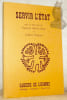
Pour un paiement via PayPal, veuillez nous en faire la demande et nous vous enverrons une facture PayPal
Zur Geschichte einiger suppletiver Verba im Griechischen. Diss.
Basel, Philographischer Verlag Dr. E. Waldstein 1940, 230x155mm, 118Seiten, broschiert.
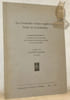
Pour un paiement via PayPal, veuillez nous en faire la demande et nous vous enverrons une facture PayPal
La société féodale. Préface de Robert Fossier. Collection Bibliothèque de l’Evolution de l’Humanité, 1.
Paris, Albin Michel 1998, 190x125mm, XII - 702pages, broché. Très bel exemplaire.
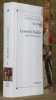
Pour un paiement via PayPal, veuillez nous en faire la demande et nous vous enverrons une facture PayPal
Traces. Traduit de l’allemand par Pierre Quillet et Hans Hildenbrand. Collection Les Essais CXLI.
Paris, Editions Gallimard 1968, 185x115mm, 242pages, broché. Couverture rempliée. Très bel exemplaire.
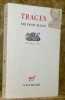
Pour un paiement via PayPal, veuillez nous en faire la demande et nous vous enverrons une facture PayPal
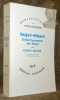
Sujet-Objet. Eclaircissements sur Hegel. Traduit de l’allemand par Maurice de Gandillac. Collection Bibliothèque de Philosophie.
Paris, Gallimard 1977, 225x140mm, 498pages, broché. Bel exemplaire.
Pour un paiement via PayPal, veuillez nous en faire la demande et nous vous enverrons une facture PayPal
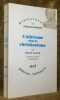
L’athéisme dans le christianisme. Traduit de l’allemand par Eliane Kaufholz et Gérard Raulet. Collection Bibliothèque de Philosophie.
Paris, Gallimard 1978, 225x140mm, 356pages, broché. Bel exemplaire.
Pour un paiement via PayPal, veuillez nous en faire la demande et nous vous enverrons une facture PayPal
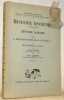
Histoire Ancienne. Troisième partie. Tome II. La République Romaine de 133 avant J.-C. à la mort de le César. Des gracques à Sulla. Collection Histoire Générale.
Paris, Presses Universitaires de France 1940, 255x165mm, 525pages, broché. Bon état.
Pour un paiement via PayPal, veuillez nous en faire la demande et nous vous enverrons une facture PayPal
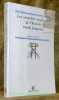
Les caractères originaux de l'histoire rurale française. Préface de Pierre Toubert. Collection Références “Histoire”.
Paris, Librairie Armand Colin 1999, 240x160mm, 316pages, broché. Exemplaire à l'état de neuf.
Pour un paiement via PayPal, veuillez nous en faire la demande et nous vous enverrons une facture PayPal
Aquamaniles. Objets sacrés et profanes du Moyen Age.
Milan, Franco Maria Ricci 1982, 250x235mm, 19pages, reliure d'éditeur sous jaquette. Exemplaire à l'état de neuf.
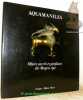
41 planches en couleurs, Pour un paiement via PayPal, veuillez nous en faire la demande et nous vous enverrons une facture PayPal
Bloch, R. - Danielou, J. - Eliade, M. - Griaule, M. - Hentze, C. - Puech, H.C. - Tucci. G.
Reference : 61041
Le Symbolisme cosmique des mouvements religieux. Actes de la conférence internationale qui à eu lieu sous les auspices de lÎs.M.E.O., à Rome, avril-mai 1955.
Roma, 1957, 245x160mm, 122pages, broché. Déchirure au coin supérieur de la couverture inférieure.
Pour un paiement via PayPal, veuillez nous en faire la demande et nous vous enverrons une facture PayPal
Il plagiario di Dio. Prefazione di Umberto Eco. Collana: Il sapere del libro.
Milano, Edizioni Sylvestre Bonnard sas 2002, 210x140mm, 155pagine, in brossura. Copertine con alette. Ottimo stato.
Pour un paiement via PayPal, veuillez nous en faire la demande et nous vous enverrons une facture PayPal
Dictionnaire étymologique de la langue française. Cinquième édition revue et augmentée par Walther von Wartburg.
Paris, Presses Universitaires de France 1968, 245x170mm, XXXII - 682pages, reliure d’éditeur sous jaquette. Inscriptions manuscrites sur le haut de la page de garde supérieure. Petites déchirures sur le haut et le bas du dos de la jaquette. Intérieur propre.
Pour un paiement via PayPal, veuillez nous en faire la demande et nous vous enverrons une facture PayPal
Les Origines du Sénat Romain. Recherches sur la formation et la dissolution du Sénat patricien. Thèse.
Paris, Ernest Thorin 1883, 230x150mm, VII- 334pages, demi-percaline. Plats papier marbré. Pièce de titre au dos aux lettres dorées. Très bel exemplaire.

Pour un paiement via PayPal, veuillez nous en faire la demande et nous vous enverrons une facture PayPal
Les Origines du Sénat Romain. Recherches sur la formation et la dissolution du Sénat patricien. Bibliothèque des Ecoles Française d’Athènes et de Rome, fascicule vingt-neuvième / 29.
Paris, Ernest Thorin 1883, 230x160mm, VII- 334pages, reliure demi-toile. Pièce de titre et d’auteur dorés au dos. Couvertures conservées. Bel exemplaire.

Cachet de possesseur. Pour un paiement via PayPal, veuillez nous en faire la demande et nous vous enverrons une facture PayPal
De Pseudo-Luciani Amoribus. Dissertationes Philologicae Argentoratenses Selectae, Volumen XII, Fasciculus III.
Argentorati, Apud Carolum I. Truebner 1907, 230x150mm, 75pages, broché. Petites déchirures sur le haut du dos, autrement bon état. Non coupé en partie.
texte en latin, Cachet de possesseur. Pour un paiement via PayPal, veuillez nous en faire la demande et nous vous enverrons une facture PayPal
Tite-Live et les premiers siècles de Rome. Collection d’Etudes Anciennes.
Paris, Société d’Edition Les Belles Lettres 1965, 195x125mm, 121pages, reliure d'éditeur sous jaquette. Jaquette en rhodoïde. Bel exemplaire.
illustré, Pour un paiement via PayPal, veuillez nous en faire la demande et nous vous enverrons une facture PayPal
Marc Bloch (1886-1944) - Une biographie impossible
Culture & Patrimoine en Limousin (1997) - In-4 broché de 152 pages - Couverture illustrée à rabats - Abondamment illustré de près de 150 photos en noir et blanc, gravures et fac-similés - Texte bilingue en français et en anglais - Préface de Jacques Le Goff - Exemplaire en très bon état

Préface - Repères chronologiques - Généalogie de Marc Bloch et de Simonne Vidal - L'enfance de Marc Bloch - Les années de formation - La guerre de 1914-1918 - Strasbourg - Paris - La guerre de 1939-1940 - Les années noires - Fougères Marc Bloch et Simonne Vidal, un couple indissoluble - L'oeuvre - Les archives de Marc Bloch - Hommages à Marc Bloch - Bibliographie.
Rome et son destin 8 planches en couleurs, 32 planches en noir, 42 figures, 18 cartes. Cartographies de Serge Bonin. Collection Destins du Monde.
Paris, Armand Colin 1960, 233x180mm, 545pages, reliure d'éditeur sous jaquette. Bon état.
Pour un paiement via PayPal, veuillez nous en faire la demande et nous vous enverrons une facture PayPal

