 Write to the booksellers
2 books for « benito navarrete priet... »Edit
Murillo: Persuasion and Aura
, Brepols - Harvey Miller, 2021 Hardback, 348 pages, Size:225 x 300 mm, Illustrations:14 b/w, 272 col., Language: English. ISBN 9781912554409.
Summary Murillo has attracted particular attention from historians since the seventeenth century to the present day, though opinions of his oeuvre have varied from period to period. The communicative power of his paintings, both then and now, has led him to be used and exploited for different ends. He deliberately cultivated this quality from the time he became an accomplished artist in his native Seville, where he enjoyed great prestige during his lifetime thanks to the resources of his art, his talent and his ability to elicit emotions and arouse passions. His paintings, as if they were prophecies, can only be understood from a visual culture approach and by analysing what his images provoke. Their seemingly easy and familiar appearance is merely the mirror that Murillo, with his command of local codes and the devices of painting, places in front of viewers to trigger a complex empathetic process designed solely to persuade and seduce them, often anticipating their response. TABLE OF CONTENTS Foreword Chapter I Murillo and image Chapter II How Murillo constructed his images: The rhetoric of gesture, appropriation and invention Chapter III Persuaded and seduced: Murillo and his patrons Chapter IV Art and illusion: Murillo and theatricality Chapter V How Murillo constructed his landscapes
AUGER Jean-Louis / BAUDOT Georges / CLEVENOT Dominique / DIEZ GARCIA José Luis / LACARRA Maria Carmen / LACOSTE Jacques / NAVARRETE PRIETO Benito / PEREZ-HIGUERA Teresa / ZIMMERMANN Michel
Reference : 112915
(2000)
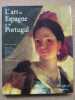
L'art en Espagne et au Portugal.
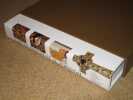
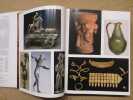
Citadelles Mazenod L'Art des Grandes Civilisations 2000 Citadelles & Mazenod, Coll. l'Art et les Grandes Civilisations, 2000, 617 p., cartonnage éditeur sous jaquette, sous son étui d'origine marron, environ 32x25cm, rares et menus frottements en bordure de jaquette, de petites rousseurs sur le haut et le bas du dos du livre, bon état néanmoins et intérieur très propre.
Merci de nous contacter à l'avance si vous souhaitez consulter une référence au sein de notre librairie.

