 Write to the booksellers
3 books for « beck peter »Edit
-
Topics
Botany (1)
Mammals (1)
Physics (1)
-
Countries
Denmark (1)
France (2)
-
Syndicate
ILAB (2)
SLAM (1)
MON ADORABLE LAPIN NAIN.
VIGOT. 1997. In-8. Broché. Bon état, Couv. convenable, Dos satisfaisant, Intérieur frais. 62 pages. Nombreuses photos en couleurs et quelques illustrations en noir et blanc dans le texte et hors texte.. . . . Classification Dewey : 636.9-Autres mammifères
Traduit de l'allemand par Manuel BOGHOSSIAN. Classification Dewey : 636.9-Autres mammifères


Guide des Plantes Aquatiques
Tetra 1991 131 pages in8. 1991. Cartonnage editeur. 131 pages.
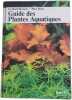
Très bon état
"MAGNAN, CLAUDE - JEAN THIBAUD et ANDRÉ MOUSSA - CHARLES HAENNY et ALBERT ROSENBERG - FRANCIS PERRIN - GUIDO BECK et PETER HAVAS.
Reference : 49286
(1939)
Sur la cassure des noyaux éléments plus légers que l'uranium, sous le bombardement des neutrons. (+) Sur la rupture des noyaux d'uranium sous l'action des neutrons et la libération d'énergie qui en résulte. (+) Émission de neutrons lors de la... - [THE ATOM BOMB AND NUCLEAR ENERGY.]
(Paris, Gauthier-Villars), 1939. 4to. No wrappers. In: ""Comptes Rendus hebdomadaires des Séances de L'Academie des Sciences"", tome 208, No 10, 12, 18, 20 a. 21. Pp. (5 Entire issues offered). The papers: pp. 742-744, 744-746, 898-900,1394-96,1573-1575 a. 1643-1645. Disbound.
First printing of 5 importent papers containing substantial contributions to the development and understanding of the fission process in the crucial year 1939, the results leading to the creation the atomic bomb and nuclear energy production. Among the papers here are Francis Perrin's landmark paper: ""Calcul relatif aux conditions éventuelles de transmutation en chaine de l'uranium."" (in 2 parts).Nuclear fission of heavy elements was discovered on December 17, 1938 by Otto Hahn and his assistant Fritz Strassmann, and explained theoretically in January 1939 by Lise Meitner and her nephew Otto Robert Frisch. The Group at College de France, headed by Joliot and Perrin, worked in the month after January intensively with the uranium processes and succeeded in establishing the possibility of nuclear chain reactions and nuclear energy production.""The remaining piece of the fission/atomic bomb concept was provided in 1939 by Francis Perrin who introduced the concept of the critical mass of uranium required to produce a self-sustaining release of energy. His theories were extended by Rudolf Peierls at Birmingham University and the resulting calculations were of considerable importance in the development of the atomic bomb. Perrin's group in Paris continued their studies and demonstrated that a chain reaction could be sustained in a uranium-water mixture (the water being used to slow down the neutrons) provided external neutrons were injected into the system. They also demonstrated the idea of introducing neutron-absorbing material to limit the multiplication of neutrons and thus control the nuclear reaction (which is the basis for the operation of a nuclear power station).""

