 Write to the booksellers
24 books for « b hellemans »Edit
-
Type
Book (23)
Music sheets (1)
-
Language
Dutch (1)
French (23)
-
Century
20th (3)
21st (1)
-
Countries
Belgium (21)
France (3)
-
Syndicate
CLAM (1)
ILAB (2)
SLAM (1)
Topics
- Antwerp (1)
- Architecture (3)
- Belgium (3)
- Bibliography (1)
- Bibliophilism (1)
- Biography (1)
- Christianity (1)
- Comic strip (1)
- Etchings (1)
- First edition (1)
- Flanders (1)
- Flemish (1)
- History (3)
- Language (1)
- Literature (1)
- Manuscripts (1)
- Newspapers press (1)
- Painters (1)
- Painting (1)
- Painting (1)
- Philosophy (1)
- Psychology (1)
- Religions (1)
- Sciences (3)
- Scores (1)
- Songs (1)
- Tea (1)
- Theatre (1)
- Waltz (1)
Making of Christianities in History. A Processing Approach
, Brepols, 2020 Paperback, 248 pages, Size:156 x 234 mm, Language: English. ISBN 9782503587813.
Summary There has been a major trend among social scientists and historians to assume that the history of modernity can be studied without taking into consideration religion as an important factor. This in contrast to premodern societies in which religion would have played such a predominant and all-embracing role that a total symbiosis between religion and society would have existed. Both of these views are challenged by the authors of this volume. They claim that neither of them does justice to the complexity of the relationship between society and religion. They propose a theoretical framework that fully addresses this complexity by focussing on the variegated active ways in which religious agents (groups and individuals) process(ed) their societal and religious contexts in the modern era as well as in the premodern period. Viewed from this perspective, the history of Christianity appears as the heterogeneous result of an ongoing and unceasing selective processing by all Christians - and non-Christians - of their environment. The application of this new theoretical and methodological framework sheds light - often in a surprising and unexpected way - on various processes in the history of Christianity: the conflict-ridden parting of the ways between Jews and Christians; the emergence and development of early Christian rituals; the formation of a Cathar Counter- Church; the emergence of new forms of Christianity in North America; the complicated and ambiguous evolution of Roman Catholicism in modernity. TABLE OF CONTENTS Introduction. On the Processing of Society and Religion by Religious Agents Staf Hellemans, Gerard Rouwhorst Turning 'Society' into 'Religion'. A Processing Approach Staf Hellemans Processing Scripture. Psalm 22 in Matthew, John, and Barnabas Maarten Menken The Making of Early Christianity. A Processing Perspective on the History of its Rituals Gerard Rouwhorst The Making of a Cathar Counter-Church, the 'Ecclesia Dei', through the Consolamentum Ritual (Baptism of the Holy Spirit) Daniela Muller Processing Puritanism in Early New England and the Birth of Religious Freedom Patrick Pasture Catholic Processing of Modernity in the Netherlands Theo Salemink
TAVERNE DU PASSAGE. NEDERLANDSE SCHILDERS EN SCHRIJVERS IN BELGIE.
Rekkem, Ons Erfdeel, 2006 Gebonden, rood halflinnen en geillustreerde platten, 195 x 265mm., 123pp., uitgebreide kleurillustratie. ISBN 9075862822.
Dit boek vertelt over de 'passage' van Nederlandse schilders en schrijvers in Belgie. Multatuli schreef zijn Max Havelaar op de zolderkamer van een Brussels logementshuis. Lourens Tadema leerde het schildersvak in de Antwerpse Academie. Vincent van Gogh ging het woord Gods verspreiden in de Borinage. De Tachtigers ontdekten dan op hun beurt het goede leven in de Ardennen. Het zijn maar enkele voorbeelden van Nederlandse schrijvers en schilders die kortere of langere tijd in Belgie verbleven, of er passeerden, maar nooit zonder een spoor na te laten. Deze kunstenaars lieten zich in en door Belgie inspireren. Hoe anders werd hun kunst erdoor? Maar vooral: hoe werden zij zichzelf in 'het dichtste buitenland'? In perfecte staat.
Bible Moralisee, une oeuvre a part entiere. Temporalite, semiotique et creation au XIIIe siecle,
Turnhout, Brepols, 2010 Paperback, 272 p., 14 b/w ill., 15,6 x 23,4. ISBN 9782503532042.
Avec l'avenement de ? la pensee gothique ? , le christianisme s'est decouvert une nouvelle maniere d'exprimer la Creation et les experiences du temps. Cette maniere se caracterise par une sensibilite a la representation de plenitude dans la Creation (horror vacui). En prenant les fameux Bibles Moralisees comme etude de cas, Babette Hellemans met en evidence diverses experiences temporelles du monde de la premiere moitie du XIIIe siecle : l'acte de creer, l'incarnation et le debat scolastique sur la notion de presence par rapport a la question de la condition humaine. Le lecteur est engage dans la decouverte passionnante d'une famille coherente de manuscrits, consideres d'abord dans leur materialite d'objets - le codex, ses folios de parchemin, le texte du scribe et les medaillons du peintre, les lignes et les couleurs - materialite a partir de laquelle se revele le sens du texte et des images. L'auteur produit ainsi une oeuvre scientifique d'essai par son intention hermeneutique et aussi par une demarche qui, a la maniere des Bibles Moralisees, lie de maniere indissociable le present et le passe. Les references a la philosophie et a la linguistique (Deleuze et Ricoeur par exemple), a la litterature (Proust, Le Clezio), a la peinture et sculpture (Mondrian, Brancusi) ne sont pas de simples ornements ?-elles nourrissent la pensee de l'auteur et eclairent des aspects essentiels des Bibles Moralisees, tel le caractere repetitif des medaillons et la geometrie matricielle de la page, ou encore l'articulation de la paraphrase biblique et de la ? signification ? ou ? moralisation ? qui lui repond en echo. L'enjeu de l'ouvrage est soutenu par un souci fondamental pour le debat methodologique; l'auteur vise a explorer, tenant compte du contexte historique avec une grande precision, des nouvelles voies de recherche apres le postmodernisme et le linguistic turn. Languages : French.
Grotesken een fascinerende fantasiewereld Grotesques fantasy portrayed
2019 Museum Plantin-Moretus / Prentenkabinet / BAI Hardcover 1st Edition


Reliure rigide: Comme neuf, 26,5 x 21,5 cm, 120 pp., néerlandais, 1ère édition, illustrations, état du livre: Comme neuf Bilingue néerlandais/anglais À la fin du 15ème siècle, les ruines souterraines du célèbre palais de l'empereur Néron ont été découvertes à Rome : la Domus Aurea. Les murs étaient peints avec des décorations symétriques somptueuses grouillant d'une multitude d'animaux bizarres et de créatures mythiques. C'était le début d'un nouveau langage visuel, connu sous le nom de grotesque, d'après le site trouvé dans des ruines en forme de grotte. Hans Vredeman de Vries et Cornelis Floris ont répandu le style grotesque avec ses variations infinies à travers leurs designs imprimés. Au 16ème siècle, les ornements grotesques sont devenus populaires non seulement dans la peinture et l'architecture, mais aussi dans la peinture sur verre, la métallurgie et l'impression de livres. Aujourd'hui, nous associons encore le terme grotesque à l capricieux, bizarre, monstrueux - mais aussi à ce qui est caricatural et risible. Bosch et Bruegel étaient les grands pionniers du grotesque dans la gravure avec leurs fantastiques drolleries. James Ensor, Fred Bervoets, René De Coninck, Carll Cneut et d'autres font partie d'une longue tradition d'artistes qui ont été, et sont encore, inspirés par le grotesque : à la fois en tant que concept et en tant que style figuratif.00Exposition : Musée Plantin-Moretus, Anvers, Belgique (05.04.-15.09.2019). [Cette description peut avoir été traduite par une IA.]

COLLECTIF - Textes réunis et coordonnés par Jacques Hellemans
Reference : 126083
(1969)
ISBN : 293055651X
Hommage à Henri Vernes. 70 Ans de Bob Morane - Actes de la journée d'études organisée par les Amis de lz Wittockiana et de la Bibliothèque de l'ULB (Samedi 16 octobre 2021)
1969 Édition L'Âge d'Or - 2023 - In-4, cartonnage illustré en couleurs - 87 pages - Nombreuses illustrations et reproductions photographiques en N&B et couleurs in et hors texte
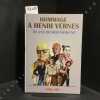
Bon état - Un coin légèrement tapé - Un ex-libris collé sur la deuxième de couverture Bon état
Partition de la chanson : Valse Coréenne
Francis Day 1952
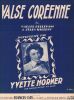
Bon état Format Coquille Accordéon
Grotesken een fascinerende fantasiewereld - Grotesques Fantasy portrayed.
, BAI, 2019 Hardcover, 260 x 210 mm, 120 pages, ENGLISH / NL edition *New. ISBN 9789085867944.
Eind vijftiende eeuw worden in Rome de ondergrondse ru nes van het beroemde paleis van keizer Nero ontdekt: het Domus Aurea. De muren zijn beschilderd met weelderige symmetrische versieringen, waartussen het wemelt van de bizarre dieren en fabelwezens. Dat is het begin van een nieuwe beeldtaal, die de naam 'grotesken' krijgt naar de vindplaats in 'grotachtige' ru nes. Hans Vredeman de Vries en Cornelis Floris verspreiden de grotesken via hun gedrukte ontwerpen met eindeloze variaties. De ornamentiek van de grotesken dringt in de zestiende eeuw niet alleen door tot de schilderkunst en de architectuur maar ook tot de glasschilderkunst, het edelsmeedwerk en de boekdrukkunst. Vandaag verbinden we het begrip 'grotesk' nog steeds aan het grillige, bizarre, monsterachtige maar ook aan het karikaturale en lachwekkende. Bosch en Bruegel waren met hun drollerie n de grote pioniers van het groteske in de prentkunst. James Ensor, Fred Bervoets, Ren De Coninck, Carll Cneut en anderen staan in een lange traditie van kunstenaars die zich lieten en nog steeds laten inspireren door het groteske en de grotesken. At the end of the fifteenth century, the underground ruins of the famous palace of Emperor Nero: the Domus Aurea were discovered in Rome. The walls are painted with lush symmetrical decorations, between which there are plenty of bizarre animals and fabulous creatures. That is the start of a new visual language, which is named 'grotesques' after the location in 'cave-like' ruins. Hans Vredeman de Vries and Cornelis Floris spread the grotesques through their printed designs with endless variations. In the sixteenth century, the ornamentation of grotesques penetrated not only to painting and architecture, but also to glass painting, goldsmith's work and book printing. Today we still connect the concept of 'grotesque' with the capricious, bizarre, monstrous but also with the caricatural and laughable. With their drollies, Bosch and Bruegel were the great pioneers of grotesque in printmaking. James Ensor, Fred Bervoets, Ren De Coninck, Carll Cneut and others are part of a long tradition of artists who were inspired by the grotesque and grotesque.
Essai bibliographique de la contrefaçon des revues françaises en Belgique. 1815-1854
S.l., Institut Supérieur d'Etudes Sociales de l'Etat, Herseaux, En vente chez l'Auteur, 1983 2 vol. in-4, VI-364 feuillets dactylographiés anopistographes, fac-similés in-t., thermocollé.
Texte reproduit à 25 exemplaires (n°21). - - VENTE PAR CORRESPONDANCE UNIQUEMENT - LIEN DE PAIEMENT, NOUS CONSULTER.

nieuwe kathedraal, waarom Oosterweel veel meer is dan de werf van de eeuw
, Pelckmans, 2024 paperback 221 pagina's 21.5 (hoogte) x 14 (breedte). ISBN 9789463374279.
Oosterweel heeft een lange en moeilijke voorgeschiedenis. Maar ook na de pijnlijke barenswee n was het niet meteen allemaal rozengeur en maneschijn. Wel integendeel. Nochtans is deze ?werf van de eeuw? niet alleen een gigantisch infrastructuurproject, maar ook een belangwekkend maatschappelijk project. Tegenover de negatieve associaties die Oosterweel bij velen oproept staan ook tal van positieve ontwikkelingen die wellicht te lang onderbelicht zijn gebleven. Dit boek staat daarom stil bij de manier waarop Oosterweel zal bijdragen tot een betere levenskwaliteit en een andere en groenere kijk op mobiliteit. Het kadert waarom Oosterweel past in een toekomstvisie waarin organisaties en individuen ?beter voor mij? en ?beter voor de wereld? hand in hand laten gaan. Het toont hoe dit project het voortouw neemt in burgerparticipatie. En het heeft vooral aandacht voor alle menselijke factoren die in alle discussies over het project te vaak worden vergeten. De nieuwe kathedraal is bedoeld voor iedereen die verder wil kijken dan de clich s en de vooroordelen en die wil leren van de manier waarop Oosterweel de grote principes van zorgzaam met elkaar omgaan ook heeft toegepast op de werf van de eeuw.
VAN BERLAER-HELLEMANS Dina, VAN KERKHOVEN Marianne, VAN DEN DRIES Luk
Reference : 102.969
"Het teater zoekt Zoek het teater; deel 2 : Werken aan vernieuwing; aspekten van het eigentijdse teater in Vlaanderen."
Antwerpen, Druk Smits Wommelegen, s.d. (ca 1986). 16 x 24, 382 pp., nombreuses illustrations en N/B (many B/W pictures), broché (paperback), bon état (fine condition).
"Livre en néerlandais/Nederlands boek; deel 2 alleen."
Liber Amicorum Albert Kriekemans - De mens zichzelf als taak
Tielt, Lannoo 1976 448pp.+ portret, bevat bibliografie van Kriekemans, 24cm., mooie staat, P52635
Taverne du Passage. Peintres et ecrivains Neerlandais en Belgique.
, Rekkem, Ons Erfdeel, 2006 , Relie, demi-toile, 123pp., 20.5x26.5cm., ilmls. en coul., comme neuf. ISBN 9075862830.
Libri in Collegio. Jean Jacobs e il Collegio dei Flamminghi in Bologna tra passato e presente. (Exhibition catalogue).
2. Bologna Bruxelles, Università di Bologna, 1995, in-8°, 95 pp, numerous b/w + coloured ills and plates, bibliographies, sewn, orig. stiff wrapper.
Jos Hendrickx. Antwerpen 1906 - 1971. Grafiek en tekeningen (exhibition catalogue).
2. Antwerpen, Stad Antwerpen, Publicatie MPM/PK 31, 1995, in-4°, 92 pp, 57 illustrations, small bibliography, sewn, orig. stiff wrapper, text in Dutch. Published on the occasion of an exhibition in ''het Stedelijk Prentenkabinet''..
Original photograph of a group of school girls. Etablissement des Dames de L'Instruction Chrétienne. Anvers dated 1893. Under passepartout.
2. Printed caption on passepartout. Photo size 14 x 22 cm. Some foxing on passepartout.
Taverne du Passage. Nederlandse Schilders en Schrijvers in België
Rekkem, Ons Erfdeel vzw, 2006, in-8°, 123 pp, halflinnen uitgeversband.
CATTEEUW Paul - Frank HELLEMANS ( editors ) - [ ] Robert van Passen :
Reference : 46777
In verscheidenheid. Liber amicorum prof. dr. em. Robert van Passen.
Aartrijke, uitgeverij Emiel Decock, 1993, in-8°, 474 pp, linnen uitgeversband met stofwikkel. Festschrift voor Prof. Robert van Passen.
Taverne du Passage. Nederlandse Schilders en Schrijvers in België
2. Rekkem, Ons Erfdeel vzw, 2006, in-8°, 123 pp, halflinnen uitgeversband. Mooi exemplaar.
NAVE Francine de - M. HELLEMANS ( editors ) - [ ] Paul van OSTAIJEN :
Reference : 49017
Paul van Ostaijen in beeld. Grafiek en tekeningen van tijdgenoten.
2. Antwerpen, Stad Antwerpen, Museum Plantin Moretus, Stedelijk Prentenkabinet. 1996, In-4°, 144 pp. Softcover.
Essai bibliographique de la contrefaçon des revues françaises en Belgique ( 1815 - 1854) Tome 1 ( - Tome 2 ). 2 vols.
" Bruxelles, Institut sup. d'études sociales de l'Etat, ( I.S.E.S.E.) , 1983, 2 vols. in-4°, ( format DIN A4 ), 186 pp ; pp 187 - 401. Index, bibliografie, 2 vols collés, imprimé en offset ( recto seulement). Mémoire de I.S.E.S.E. ( thèse).."
Comité Scientifique du Mundaneum ( éditeur ) - Paul ARON - Christian L'Hoest - Jacques HELLEMANS e.a. ( co-auteurs ) :
Reference : 52190
Les Premisses du Mundaneum. 1895 - 1995 . Cent Ans de l'Office International de Bibliographie.
Mons, Editions Mundaneum, 1995, in-8°, 368 pp, original softcover. Book in French. Livre en français..
CATTEEUW Paul - Frank HELLEMANS ( editors ) - [ ] Robert van Passen :
Reference : 53248
In verscheidenheid. Liber amicorum prof. dr. em. Robert van Passen.
Aartrijke, uitgeverij Emiel Decock, 1993, in-8°, 474 pp, linnen uitgeversband met stofwikkel. Festschrift voor Prof. Robert van Passen.
DENIS Ferre - Clara HAESAERTS - Karel HELLEMANS ( samenstellers ) - [ ] HAIKU :
Reference : 54941
Waakvlam 25 jaar Haikoe-centrum Vlaanderen ( 1976 - 2001 ).
Antwerpen, Haiku-Centrum, 2001, in-8°, 334 pp. Gekartonneerde uitgeversband..
Bloemen voor een nieuwe tijd
S.l. s.d. ( Provincie Antwerpen ? - ca. 2000 - 2010 ?), private uitgave. In-8°, 58 pp. Gekartonneerde uitgevcersband met titel in zilverdruk op voorste platten.

