 Write to the booksellers
252 books for « anders »Edit
-
Language
English (1)
French (249)
Russian (2)
-
Century
16th (1)
17th (2)
18th (22)
19th (16)
20th (84)
21st (32)
-
Countries
Belgium (22)
Canada (1)
Denmark (57)
France (129)
Switzerland (41)
United States of America (2)
-
Syndicate
ALAC (1)
CLAM (2)
ILAB (123)
SLAM (61)
Topics
- Africa (2)
- Archaeology (9)
- Architecture (3)
- Astronomy (2)
- Bibliography (1)
- Black africa (2)
- Botany (1)
- Brassai (1)
- Cap (2)
- Children’s books (1)
- Christianity (1)
- Collections (1)
- Comic strip (1)
- Communism (1)
- Criminology (1)
- Dedication (1)
- Detective novels (2)
- Diving (1)
- Economics (3)
- Economics (4)
- Education (1)
- Education - morals (1)
- Elzevier (1)
- Engravings (1)
- Erotic (3)
- Esther (3)
- Ethnography (1)
- Folklore (1)
- Geography (4)
- Germanic languages (1)
- Germany (1)
- Grosz george (1)
- Guide books (2)
- History (20)
- Hoffmann (1)
- Jan mayen (1)
- Knorr-anders esther (2)
- Latin (1)
- Law (9)
- Literature (13)
- Longships (1)
- Luxembourg (1)
- Magazine (2)
- Maps (1)
- Mathematics (2)
- Modern comic (1)
- Museums (2)
- Mythology (1)
- Navy (3)
- Newspaper (2)
- Newspapers press (4)
- Ornithology (2)
- Paris (1)
- Philology (3)
- Philosophy (9)
- Photography (3)
- Physics (3)
- Portraits (1)
- Psychology (1)
- Rabot charles (1)
- Religions (5)
- Reptiles (1)
- Reviews (2)
- Russia (2)
- Sail (1)
- Scandinavia (1)
- Scandinavian (4)
- Scandinavian literature (9)
- Sciences (3)
- Shipwreck (1)
- South africa (1)
- Sparrman (9)
- Spying (1)
- Sweden (6)
- Tea (2)
- Theatre (1)
- Theology (1)
- Tibet (1)
- Tibet pc (1)
- Topography (2)
- Travel (1)
- Trial (1)
- Ussr (2)
- War (6)
- Wieland (1)
- Zoology (3)
Pre-Christian Religions of the North. History and Structures 4 vols.
, Brepols, 2020 Hardback, 4 vols, lxviii + 2122 pages, Size:156 x 234 mm, Illustrations:297 b/w, 3 tables b/w., Language: English. *NEW ISBN 9782503574899.
Summary The product of an international interdisciplinary team, the History and Structures strand of the Pre-Christian Religion of the North series aims to approach the subject by giving equal weight to archaeological and textual sources, taking into consideration recent theories on religion within all the disciplines that are needed in order to gain a comprehensive view of the religious history and world view of pre-Christian Scandinavia from the perspective of the beginning of the twenty-first century. Volume I presents the basic premises of the study and a consideration of the sources: memory and oral tradition, written sources, religious vocabulary, place names and personal names, archaeology, and images. Volume II treats the social, geographical, and historical contexts in which the religion was practiced and through which it can be understood. This volume also includes communication between worlds, primarily through various ritual structures. Volume III explores conceptual frameworks: the cosmos and collective supernatural beings (notions regarding the cosmos and regarding such collective supernatural beings as the norns, valkyries, giants, and dwarfs) and also gods and goddesses (including rr, inn, Freyr, Freyja, and many others). Volume IV describes the process of Christianization in the Nordic region and also includes a bibliography and indices for the entire four-volume work. TABLE OF CONTENTS Volume 1. Introductory and Sources Jens Peter Schj dt, John Lindow, Anders Andr n, Preface & Introduction Jens Peter Schj dt, Theoretical Considerations Pernille Hermann, Memory, Oral Tradition, and Sources John Lindow, Written Sources John Lindow, Language: Religious Vocabulary Per Vikstrand, Language: Placenames and Personal Names Anders Andr n, Archaeology Anders Andr n, Images Terry Gunnell, Folklore Anders Andr n, The Spatial and Temporal Frame John Lindow, The Linguistic Frame Jens Peter Schj dt, Continuity and Break: Indo-European Jens Peter Schj dt, Continuity and Break: Germanic Rudolf Simek, Encounters: Roman Matthias Egeler, Encounters: Celtic Leszek P. S?upecki, Encounters: Slavic Thomas Dubois, Encounters: Baltic Thomas Dubois, Encounters: S mi Thomas Dubois, Encounters: Balto-Finnic Volume 2. Contexts and Communication between Worlds Anders Andr n, Historical and Social Contexts Stefan Brink, Laws and Assemblies John Lindow, Ethics Judy Quinn, Gender Jens Peter Schj dt, Kings and Rulers Jens Peter Schj dt, Warrior Bands Jens Peter Schj dt, Various Ways of Communicating Stephen A. Mitchell, Magic and Religion Torun Zachrisson & Anders Andr n, Ritual Space Andreas Nordberg, Ritual Time and Time Reckoning Olof Sundqvist, Cultic Leaders and Religious Specialists Jens Peter Schj dt, Crisis Rituals Jens Peter Schj dt, Cyclical Rituals Jens Peter Schj dt, Passage Rituals Neil Price, Death Ritual and Mortuary Behaviour John Lindow & Anders Andr n, Worlds of the Dead John Lindow, Fate John Lindow & Jens Peter Schj dt, The Divine, the Human and In Between Volume 3. Conceptual Frameworks: Cosmos and Collective Supernatural Beings, Gods and Goddesses Mathias Nordvig, Cosmogony Mathias Nordvig, Cosmology Anders Hultg rd, Cosmic Eschatology: Ragnar k John Lindow, Vanir and sir John Lindow, rr Jens Peter Schj dt, inn Olof Sundqvist, Freyr Jens Peter Schj dt, Loki Ingunn sd sard ttir, Freyja John Lindow, Baldr John Lindow, Nj?r r John Lindow, T r Anders Andr n, Ullr Sebastian C llen, Heimdallr Ingunn sd sard ttir, Frigg Jens Peter Schj dt, Hoenir John Lindow, Ska i John Lindow & Jens Peter Schj dt, Minor Gods and Goddesses Anders Andr n, Divine Twins Anders Andr n, Sun and Moon Rudolf Simek, Matronae John Lindow, D sir Karen Bek-Pedersen, Norns Judy Quinn, Valkyries Margaret Clunies Ross, Giants Terry Gunnell, Dvergar (Dwarfs) Terry Gunnell, lfar (Elves) Volume 4. The Christianization Process, Bibliography, General Indices Michael H. Gelting, The Christianization of Denmark S bj rg Walaker Nordeide, The Christianization of Norway J n Vi ar Sigur sson, The Christianization of the North Atlantic Bertil Nilsson, The Christianization of Sweden Tuomas Heikkil , Christianization of Finland H kan Rydving, The Christianization of the S mi Primary & Secondary Sources - General Indices
[HEDIN Sven Anders von] - HEDIN Sven Anders von - RABOT Charles
Reference : 17449
(1899)
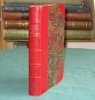
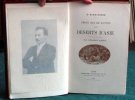
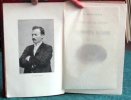
Trois ans de luttes aux Déserts d'Asie - Édition originale.
Ouvrage traduit du suédois et résumé par Charles Rabot.Nombreuses illustrations dans le texte et une planche dépliante reliée in fine, représentant 3 cartes : Itinéraire du Dr. Sven Hedin dans la région du Pamir - Bassin du Tarym - Tibet septentrional. En frontispice, photo du Docteur Sven Hedin.Paris, Librairie Hachette et Cie. - 1899 - 277 pages. Édition originale de la traduction française.Reliure demi chagrin rouge à coins de l'époque. Dos à nerfs avec titre et auteur doré. Tête dorée sur témoins, non rogné. La planche dépliante est partiellement déchirée et consolidée avec de l'adhésif, sans perte de texte. Pas de rousseur. Très bon état. Format in-4°(25x17).Sven Anders von Hedin est un géographe, topographe, explorateur, photographe, auteur de récits de voyage et illustrateur (de ses propres ouvrages) suédois. Au nombre de ses réalisations, figurent la production des premières cartes détaillées de vastes parties du Pamir, du désert du Taklamakan, du Tibet, de l'ancienne route de la Soie, et des Himalayas. Il semble avoir été le premier explorateur à se rendre compte que les Himalayas constituent une seule étendue de montagne. Il effectua de nombreux voyages en Asie centrale et publia des récits de ses explorations. Il est l'introducteur du terme Yardang en géomorphologie.Charles Rabot est un géographe français. Glaciologue, voyageur, journaliste, conférencier, traducteur et explorateur, il a été le principal spécialiste français des régions polaires jusqu'à la Première Guerre mondiale1.
HEDIN Sven Anders von
Wilke Hartmut Anders Uwe Algave Stéphanie Houba Christian Algave Stéphanie Anders Uwe Houba Christian
Reference : 84583
(2007)
ISBN : 9782501051200
La tortue : Bien la soigner Bien la nourrir
Marabout 2007 127 pages 19x14x1cm. 2007. Broché. 127 pages.
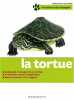
French édition - Le livre présente des marques de stockage et/ou de lecture sur la couverture et/ou les pourtours mais reste en très bon état d'ensemble_ Expédition soignée sous blister dans une enveloppe a bulles
Voyage au Cap de Bonne-Esperance, et Autour du Monde avec le Capitaine Cook, et Principalement dans le pays des Hottentots et des Caffres.
Paris, Buisson, 1787. 1787 2 vol in-4° (263 x 203 mm) de: vol I. [2] ff. (faux titre, titre): XXI (préface, introduction); [3] pp. (approbation, privilège); 478 pp. (dont explication des planches, table); 1 frontispice gravé; 1 carte dépliante; 7 planches (dont 3 dépliantes); vol II. [2] ff. (faux titre, titre); 462 pp. (dont vocabulaire, table); 8 planches. Un total de 15 planches (dont 3 dépliantes), 1 carte dépliante et 1 frontispice gravé. (rousseurs). Pleine basanne marbrée d'époque, dos lisse orné, titres et tomaisons de maroquin rouge, frise dorée encadrant les plats, tranches marbrées. (Accidents aux coins, mors fendus ou faibles, travaux de vers sur 2 plats, quelques f.f roussis à la fin du vol. 2).
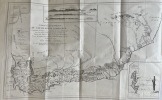
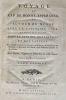
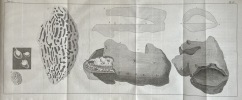
Édition originale en Français (traduite de langlais par Le Tourneur) de cette relation dun voyage au Cap de Bonne-Espérance due à Anders Erikson Sparrman (1747-1820), médecin, naturaliste et abolitionniste suédois. Fils dun vicaire, Sparrman étudie à luniversité dUppsala sous la tutelle du célèbre naturaliste suédois Carl Von Linné. Au cours de ses études, il effectue un premier voyage à Canton avec la Compagnie des Indes orientales suédoise. Il obtient son diplôme de médecine en 1770 et se rend dans la région du Cap de Bonne-Espérance en 1772 afin dy étudier les peuples et espèces animales. Sur place, il rencontre James Cook qui lui propose dêtre le botaniste de son second voyage autour du Monde. Cest à cette occasion quil rédige les notes qui donneront lieu au présent recueil. Celui-ci est composé de ses observations scientifiques, la majorité concernant la région du Cap de Bonne-Espérance. De retour en suède, il se consacre à la rédaction du présent ouvrage tandis quil obtient le poste de conservateur des collections de l'Académie royale des sciences de Suède à Stockholm. Dans le cadre de ses fonctions, il est envoyé en Afrique de louest pour y effectuer des observations. Si sa mission est un échec sur le plan scientifique, elle ouvre néanmoins les yeux de Sparrman sur la réalité de lesclavage. Ainsi, une fois rentré en Europe, il témoigne devant la Commission du commerce britannique en faveur de l'abolition de l'esclavage. Durant les 10 années qui suivent, il occupe différents postes à lAcadémie dont celui de Collegium Medicum de Stockholm. A la fin de sa vie, Sparrman se consacre aux pauvres du quartier de Klara en tant que médecin. Dans le présent ouvrage, Sparrman recueille en grande majorité ses observations effectuées dans la région du Cap de Bonne-Espérance. Son travail est illustré dune carte gravée dépliante du Cap de Bonne-Espérance et de 15 planches gravées représentant les outils, bijoux et accessoires des peuples hottentots (khoïkhoï) et cafre («Terrine à lait», «Collier de coquillages», «pipe à Tabac dun Boshi ou Hottentot sauvage», «Soulier de campagne», «Ornement de tête ou coiffure de Femme Hottentote», «Ceinturon de Hottento»), leurs armes («flèche», «Carquois», «Tête de flèche», «Hafsagay», sorte de lance) mais aussi la faune («Gazelle», «Spring-bok»«Termitière», «Gerboise», «Ratel, espèce de blaireau» ou encore «Lhippopotame»). Sparrman décrit également le physique de ces populations ainsi que leurs pratiques, notamment leur médecine à base de plantes ainsi que leurs rites spirituels et religieux. De plus, on trouve à la fin du deuxième volume un lexique de la langue Hottentote, cest à dire le groupe des langues khoïsan, dont la particularité unique au monde est lemploi des «clics» en tant que phonème (son distinctif dune langue), ainsi que des langues «cafres», correspondant au groupe des langues bantoues. Ouvrage riche de renseignements sur cette région de lAfrique, tant sur le plan botanique et zoologique que sur le plan ethnographique. 2 volumes 4to (263 x 203 mm) of: vol I. [2] ff. (half title, title) : XXI ( foreword, introduction) ; [3] pp. (approval, privilege); 478 pp. (including explanation of the plates, table); 1 engraved frontispiece; 1 folding map; 7 plates (3 of them folding); vol II. [2] ff. (half title, title); 462 pp. (including vocabulary, table); 8 plates. A total of 15 plates (including 3 folding), 1 folding map and 1 engraved frontispiece. (foxing). Full contemporary marbled basane, smooth spine decorated, labels in red morocco, gilt frieze framing the boards, marbled edges. ( damages to the corners, cracked or weak joints, worm tracks on 2 boards, a few pages browned at the end of vol. 2). First edition in French (translated from the English by Le Tourneur) of this account of a voyage to the Cape of Good Hope by Anders Erikson Sparrman (1747-1820), Swedish physician, naturalist and abolitionist. Sparrman was the son of a vicar and studied at the University of Uppsala under the tutelage of the famous Swedish naturalist Carl Von Linne. During his studies, he made his first trip to Canton with the Swedish East India Company.He obtained his medical degree in 1770 and went to the Cape of Good Hope in 1772 to study the people and animal species there. While there, he met James Cook who offered him to be the botanist for his second voyage around the world. It is on this occasion that he wrote the notes that will result in this book. It is composed of his scientific observations, the majority concerning the region of the Cape of Good Hope. Back in Sweden, he devoted himself to the writing of the present work while he obtained the position of curator of the collections of the Royal Swedish Academy of Sciences in Stockholm. As part of his duties, he was sent to West Africa to make observations. Although his mission was a scientific failure, it opened Sparrman's eyes to the reality of slavery. Once back in Europe, he testified before the British Trade Commission in favor of the abolition of slavery. During the next 10 years, he held various positions at the Academy, including that of Collegium Medicum in Stockholm. At the end of his life, Sparrman devoted himself to the poor of the Klara district as a physician. In the present work, Sparrman collected most of his observations made in the Cape of Good Hope region.While there, he met James Cook who offered him to be the botanist for his second voyage around the world. It is on this occasion that he wrote the notes that will result in this publication. It is composed of his scientific observations, the majority concerning the region of the Cape of Good Hope. Back in Sweden, he devoted himself to the writing of the present work while he obtained the position of curator of the collections of the Royal Swedish Academy of Sciences in Stockholm. As part of his duties, he was sent to West Africa to make observations. Although his mission was a scientific failure, it opened Sparrman's eyes to the reality of slavery. Once back in Europe, he testified before the British Trade Commission in favor of the abolition of slavery. During the next 10 years, he held various positions at the Academy, including that of Collegium Medicum in Stockholm. At the end of his life, Sparrman devoted himself to the poor of the Klara district as a physician. In the present work, Sparrman collects most of his observations made in the Cape of Good Hope region.His work is illustrated with an engraved fold-out map of the Cape of Good Hope and 15 engraved plates representing tools, jewelry and accessories of the Hottentots (Khoikhoi) and Cafre peoples ("Milk jug", "Shell necklace", "Tobacco pipe of a Boshi or wild Hottentot", "Country shoe", " Head ornament or headdress of a Hottentot woman ", " Hottento's belt "), their weapons (" Arrow ", " Quiver ", " Arrow head ", " Hafsagay ", a kind of spear) but also the fauna (" Gazelle ", " Spring-bok ", " Termite mound ", " Gerboise ", " Ratel, a kind of badger ", or " The hippopotamus "). Sparrman also describes the physical appearance of these populations as well as their practices, notably their herbal medicine as well as their spiritual and religious rites. In addition, at the end of the second volume there is a lexicon of the Hottentot language, that is to say the group of Khoisan languages, whose unique feature in the world is the use of "clicks" as a phoneme (distinctive sound of a language), as well as of the "Cafre" languages, corresponding to the group of Bantu languages. This book is rich in information on this region of Africa, both botanical and zoological, and ethnographic.


Autour du film les travaux et les jours (de Tayoko Shiojiri dans le bassin de Shiotani) Sommaire: L'épaisseur des choses; Entretien avec C.W. Winter; Entretien avec Anders Edström; Journal de Tayoko Shiojiri ...
Capricci. Mai 2022. In-8. Broché. Etat du neuf, Couv. convenable, Dos satisfaisant, Intérieur frais. 110 pages environ augmentées de nombreuses photos en couleurs dans et hors texte.. . . . Classification Dewey : 97.2-Dédicace, envoi
Sommaire: L'épaisseur des choses; Entretien avec C.W. Winter; Entretien avec Anders Edström; Journal de Tayoko Shiojiri ... Traduction de Chabin Marie et Rejl Julien. Dédicace au stylo sur page de titre du directeur éditorial et traducteur Rejl Julien. 2 photos disponibles. Classification Dewey : 97.2-Dédicace, envoi
Le Bistrot d'Hambourg.
Contrejour, 1979, 1 volume de 215x240 mm environ, 88 pages, broché. Petit défaut à la couverture, sinon bon état.
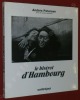
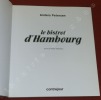
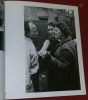
Anders Petersen, né le 3 mai 1944 à Solna, est un photographe suédois. Merci de nous contacter à l'avance si vous souhaitez consulter une référence au sein de notre librairie.
LES TEMPS MODERNES N° 108 - NELSON ALGREN. — L’homme au bras d’or (I).GUNTHER ANDERS. — Ruines d’aujourd’hui.FRANÇOISE CORRÈZE. - Viet Nam.TÉMOIGNAGESJOSEPH BUTTINGER. — L’effondrement du parti social-démocrate autrichien en février
JULLIARD. DECEMBRE 1954. In-12. Broché. Bon état, Couv. convenable, Dos satisfaisant, Intérieur frais. Paginé de 769 à 960.. . . . Classification Dewey : 70.49-Presse illustrée, magazines, revues
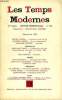
Revue fondée par Jean-Paul Sartre et Simone de Beauvoir. Sommaire : NELSON ALGREN. — L’homme au bras d’or (I).GUNTHER ANDERS. — Ruines d’aujourd’hui.FRANÇOISE CORRÈZE. - Viet Nam.TÉMOIGNAGESJOSEPH BUTTINGER. — L’effondrement du parti social-démocrate autrichien en février 1934.•LÉON WEINIGEL. - Le groomEXPOSÉSRENÉ LEIBOWITZ. — Connaissez-vous Verdi?ELENA DE LA SOUCHÈRE. - L’Amérique centrale à l’heure du choixCHRONIQUESJ.-B. PONTALIS. — Un nouveau guérisseur : J.-L. MorenoRENÉE SAUREL. — Un divertissement républicain.JEAN POUILLON. — Le Rouge et le Noir, film.NOTESRAYMOND BORDE. — « Ouragan sur le Caine », d’Edward Dmytryck; « La Belle et le voleur », de Keigo Kimura Classification Dewey : 70.49-Presse illustrée, magazines, revues
Anders Zorn aquafortiste.
Paris, Floury, 1923. In-4, broché, frontispice-30 p.-119 planches-(4) p., couverture illustrée.
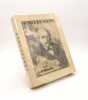
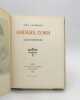
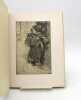
Edition originale de cette importante monographie consacrée à l'artiste graveur, scupteur et portraitiste Anders Léonard Zorn (1860-1920). * Voir photographie(s) / See picture(s). * Membre du SLAM et de la LILA / ILAB Member. La librairie est ouverte du lundi au vendredi de 14h à 19h. Merci de nous prévenir avant de passer,certains de nos livres étant entreposés dans une réserve.
Mémoires (1939-1946)
1948 Paris, La Jeune Parque, 1948, in-8, br., 478 pp., index, illustré de 16 photographies hors-texte et de 7 cartes et plans. Comprend une coupure de presse sur la ville de Wilno / Vilnius. Plats élimés, dos strié, papier bruni, ex-libris en page de faux-titre, intérieur propre et ferme.
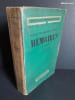
Władysław Albert Anders est un général de l’armée polonaise (général d'armée), né le 11 août 1892 en Pologne et mort le 12 mai 1970 à Londres. Pendant la Seconde Guerre mondiale, il a été commandant en chef de l’armée polonaise en Union soviétique à la suite du déclenchement de l'opération Barbarossa, puis au Moyen-Orient et en Italie de 1942 à 1945, sous l'autorité du chef suprême de l'armée polonaise, le général Władysław Sikorski, puis du général Kazimierz Sosnkowski. Son nom reste attaché aux durs combats et à la victoire de Monte Cassino, parachevée par les forces polonaises qu'il commandait, et parmi lesquelles il a souhaité être enterré en 1970.Ses mémoires illustrent, avec amertume, ce qui va être ensuite appelé la « Trahison de l'Ouest ». Cette perception d’une « trahison » dans les pays d’Europe centrale et orientale puise à plusieurs sources (de l'opération Barbarossa jusqu'à la conférence de Yalta en passant par l'attitude des Alliés face aux révélations de Jan Karski et Erwin Respondek ou au cours de l'insurrection de Varsovie) et pourrait se résumer à une indifférence géopolitique vis-à-vis de ces pays considérés comme négligeables. [Wikipédia]
Katyn
Paris, Éditions France-Empire, 1949, in-8, br., sous jaquette illustrée, 345 p. Inclus une série de coupure de presse sur le massacre de Katyn. Tranches salies (surtout supérieure), papier uniformément bruni, jaquette frottée, bon exemplaire par ailleurs.
Le livre du général Anders sur le massacre de Katyn évoque l’un des drames les plus horribles de la guerre. Il représente plusieurs années d’un travail ardu. Il fait état d’une documentation énorme. Bien qu’il n’apporte pas les preuves irréfutables du crime, il concentre, en un faisceau véritablement impressionnant, une série de déductions troublantes et qui ne permettent plus guère le doute sur les véritables coupables de cet horrible forfait. Il est regrettable qu’à l’automne 1946 le jugement du tribunal de Nuremberg n’ait pas pu faire mention de ce crime qui coûta la vie à plusieurs milliers d’officiers polonais, dont les corps furent retrouvés dans des tombes près de Smolensk. [Revue de Défense nationale, n°66, 119]
Kontinuitäten und Brüche in der Religionsgeschichte. Festschrift für Anders Hultgard...
Berlin, De Gruyter, 2001. Fort in-8 reliure éditeur pleine toile orange, XIV-674 pp. (Ergänzungsbände zum Reallexikon der Germanischen Altertumskunde, 31).
![Kontinuitäten und Brüche in der Religionsgeschichte. Festschrift für Anders Hultgard.... [HULTGARD (Anders), mélanges] STAUSBERG (Michael) [Hrsg.]](https://static.livre-rare-book.com/pictures/TRA/516804_1_thumb.jpg)
This interdisciplinary volume brings together 37 contributions, most of them on the history of Ancient Nordic religion. In addition, there are papers on later European and Mediterranean religious history and investigations into Bahai'ism, Christianity, Islam, Judaism, Zoroastrism, and the history of research in the history of religion. Seht gut Erhaltung. - Frais de port : -France 8,4 € -U.E. 10 € -Monde (z B : 15 €) (z C : 33 €)
Paolo Colombo, Anders Kruger and Stig Claessen. Interview by Marcel Dzama
Reference : 46921
Who Is Sleeping On My Pillow. Mamma Andersson & Jockum Nordstrom
, UK] T & H,, 2015 Hardback, 292x241mm, 247p, 200 colour illustrations, 62 bw illustrations, English edition . *NEW ISBN 9781935202264.
The Swedish artist couple Mamma Andersson (born 1962) and Jockum Nordstrom (born 1963) have been at the forefront of contemporary figurative painting since the late 1980s. Updating Vuillard for a post- Hitchcock age, Andersson paints beguilingly eerie untenanted interiors and landscapes. Nordstroms detailed collages, paintings and drawings occupy a more folkloric realm peopled by historical and contemporary characters enacting sexual and social roles across broad narrative panoramas. Who Is Sleeping on My Pillow showcases Andersson and Nordstroms work from the late 1980s to the present day in over 260 full-colour plates. Alongside these, it also includes family snapshots and source materials, texts by Paolo Colombo and Anders Kruger, a poem by Stig Claesson and an interview with Nordstrom by Marcel Dzama.
Dr Sven Hedin. Trois ans de luttes aux déserts d'Asie, ouvrage traduit du suédois et résumé par Charles Rabot [Unknown Binding] Hedin, Sven Anders and Rabot, Charles
Exemplaire en très bon état, relié 1/2 toile de l'éditeur, pièce de titre bordeaux, titre doré.
Merci de nous contacter à l'avance si vous souhaitez consulter une référence dans notre boutique à Authon-du-Perche.
BUZZ (2) De La Motte, Anders and Bruy, Carine
Fleuve éditions PHOTOS SUR DEMANDE
Merci de nous contacter à l'avance si vous souhaitez consulter une référence dans notre boutique à Authon-du-Perche.
Rouge encore [Paperback] Bodelsen, Anders; Berlioz, Christine and Flink Thullesen, Laila
Editions Autrement BROCHE
Merci de nous contacter à l'avance si vous souhaitez consulter une référence dans notre boutique à Authon-du-Perche.
Le cas de conscience du SS Kossmann - Collection Hippocampe - Roman
ALSATIA. 1969. In-8. Broché. Etat d'usage, Couv. convenable, Dos plié, Quelques rousseurs. 224 PAGES - Couverture rempliée, avec un portrait photo noir/blanc, de l'auteur, sur le rabat du 1er plat. . . . Classification Dewey : 830-Littératures des langues germaniques
ESTHER KNORR-ANDERS - REINOLD DENISE (traduction) - JOUBERT PIERRE (couverture) Classification Dewey : 830-Littératures des langues germaniques
ANDERS ZORN ALS RADIERER. Herausgegeben von Axel Romdahl. Mit 100 Abbildungen
Dresden ( Dresde ) Ernst Arnold 1922 in 8 (25x18,5) 1 volume reliure cartonnée illustrée de l'éditeur sous couverture à rabats illustrée en couleurs, 19 pages de texte préliminaire (dont table des planches), avec 100 planches hors texte en noir et blanc de reproductions de gravures, eaux-fortes, dont une en frontispice. Axel Ludvig Romdahl, 1880-1951. Bel exemplaire ( Photographies sur demande / We can send pictures of this book on simple request )
Bon Reliure
Voyage au Cap de Bonne-Esperance, et autour du monde avec le Capitaine Cook, et principalement dans le pays des hottentots et des caffres.
Paris, Buisson, 1787. 2 tomes en 1 vol. in-4 de (4)-XXI-(3)-478 pp. et (4)-462 pp., chagrin noir, dos à nerfs, titre frappé or, tranches marbrées (reliure moderne).
Première édition française. Traduction de l'anglais par Pierre Le Tourneur. L'ouvrage est illustré de 1 frontispice, 1 carte dépliante du Cap de Bonne Espérance, et 16 planches (dont 3 dépliantes, 1 répétée).Anders Erikson Sparrman (1747-1820), médecin, naturaliste, élève de Linné, rencontra James Cook au Cap de Bonne Espérance qui lui proposa de l'accompagner en tant que botaniste. De retour au Cap en 1775, Sparrman entreprit un voyage à l'intérieur des terres jusqu'alors peu connues. Ouvrage riche de renseignements sur cette région, tant sur le plan botanique et zoologique que sur le plan ethnographique : représentations d’animaux tels que le bouc Sauteur (spring-bok), l’hippopotame, le ratel (espèce de blaireau), la gerboise du Cap ou encore le rhinocéros ; sur les deux premières planches on découvre des accessoires utilisés par les Hottentots et Caffre comme les chaussures, ceintures, bijoux, diverses armes. In-fine on trouve un Vocabulaire des langues caffre et hottentote.Très bon exemplaire. Brunet V, 474 ; Chadenat, 702 ; Gay, 3125.
Le Peintre-Graveur illustré (XIXe et XXe siècles). Tome Quatrième. Anders Zorn.
Paris, Chez l'Auteur, 1909. 32 x 26 cm, 13 pp. et 217 oeuvres décrites. Relié demi-maroquin bordeaux, dos lisse, titre doré, couverture contrecollée sur le premier plat. Dos frotté, sinon bel exemplaire. Ex-libris contrecollé d'Auguste Wole, peintre et graveur belge.
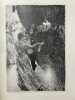
Voyage au Cap de Bonne-Esperance, et autour du monde avec le Capitaine Cook, et principalement dans le pays des hottentots et des caffres.
Paris, Buisson, 1787. 2 tomes en 1 vol. in-4 de (4)-XXI-(3)-478 pp. et (4)-462 pp., cartonnage papier crème, pièces de titre vertes (relié vers 1830).
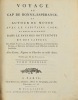
Éditon originale française. Traduction de l'anglais par Pierre Le Tourneur.L'ouvrage est illustré de 1 frontispice, 1 carte dépliante du Cap de Bonne Espérance, et 15 planches (dont 3 dépliantes).Anders Erikson Sparrman (1747-1820), médecin, naturaliste, élève de Linné, rencontra James Cook au Cap de Bonne Espérance qui lui proposa de l'accompagner en tant que botaniste. De retour au Cap en 1775 Sparrman entreprit un voyage à l'intérieur des terres jusqu'alors peu connues.Ouvrage riche de renseignements sur cette région, tant sur le plan botanique et zoologique que sur le plan ethnographique : représentations d’animaux tels que le bouc Sauteur (spring-bok), l’hippopotame, le ratel (espèce de blaireau), la gerboise du Cap ou encore le rhinocéros ; sur les deux premières planches on découvre des accessoires utilisés par les Hottentots et Caffre comme les chaussures, ceintures, bijoux, diverses armes. In-fine on trouve un Vocabulaire des langues caffre et hottentote.Bon exemplaire. Brunet V, 474 ; Chadenat, 702 ; Gay, 3125.
Voyage au Cap de Bonne-Espérance et autour du monde avec le capitaine Cook, et principalement dans le pays des Hottentots et des Caffres.
Paris, Buisson, 1787. 3 vol. in-8 de XXXII-389-(1) pp. 1 frontispice, 1 carte, 2 planches ; (4)-366-(2) pp., 7 planches ; (2)-366-(5), 6 planches, veau havane, dos orné à nerfs, pièce de titre en maroquin, tranches jaspées (reliure de l'époque).
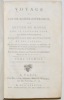
Première édition française établie par Letourneur publiée la même année au format in-4, illustrée d'une grande carte repliée du Cap et 16 planches dont une Vue des environs du Cap de Bonne-Espérance repliée en frontispice.Relation du voyage en Afrique du Sud du naturaliste suédois et élève de Linné Anders Erikson Sparrman (1748-1820) qui accompagna après leur rencontre au cap de Bonne-Espérance, le capitaine James Cook et les naturalistes Reinhold et Georg Forster dans leur voyage autour du monde, en qualité de botaniste. Il participa ainsi à l'expédition de novembre 1772 à mars 1775. À son retour au Cap, il entreprit la dangereuse exploration des terres sauvages de l'Afrique du Sud. L'ouvrage contient un vocabulaire de la langue des Hottentots et des Cafres. L'édition originale parut à Stockholm en 1783.Traces de frottement, épidermures, coiffe de pied usée au tome I.Provenance : bibliothèque du Marquis de Vichy avec ex-libris armorié. Brunet V, 474 ; Chadenat, 702 ; Gay, n°3125
Photos and texts Robert Van der Hilst, Mark Power, Stephane Duroy, Anders Petersen, Gerard Rondeau, Tastuhiro Oshiro.
Reference : 81451
(2000)
European Eyes on Japan 2. Japan Today. Robert Van der Hilst, Mark Power, Stephane Duroy, Anders Petersen, Gerard Rondeau, Tastuhiro Oshiro.
Collectif. EU-Japan Fest. EU-Japan Fest Japan Committee. , Kyushu-Okinawa Summit , 2000, in-4, broché sous jaquette, 173p. Texte anglais / japonais. Bon état.
NB. La librairie est fermée jusqu'à fin septembre. Les questions et commandes seront traitées début octobre.
La tortue (Bien la soigner, bien la nourrir, bien la comprendre)
Marabout. 1999. In-8. Broché. Bon état, Couv. convenable, Dos satisfaisant, Intérieur frais. 127 pages - nombreuses photos en couleurs dans et hors texte, en frontispice et sur les contreplats. Plats contrepliés en un rabat. Livre légèrement gondolé.. . . . Classification Dewey : 597.9-Reptiles
Photos : Uwe Anders. Illust. : Renate Holzner. Trad. : Stéphanie Alglave et Christian Houba. Classification Dewey : 597.9-Reptiles
Sjömäns dagelige Assistent, eller Anvisning uti de nödvändigaste Stycken af Navigations Wetenskapen, med dertill nödige Figurer och Tabeller.
Stockholm, A.D. Holmerus, 1777. 4to. Samtidigt hldrbd. med rygforgyldning og skindtitel på ryg. Kobberstukket titelblad (med en formindsket kopi af Stockholmsmotivet fra Chapmans Architectura Navalis). (8),168 pp. + Tabeller (ca. 150 pp. - sign. A - Y2), (6) pp. Trykt på kraftigt papir. Indvendig med brugsspor, lidt spredte brunpletter, fortrinsvis på foden af Tabellerne. 57, mest geometriske, tekstillustrationer.
Originaltrykket af Chierlins ganske sjældne lærebog i navigation. ""Löjtnant Lars Anders Chierlin utnämndes till föreståndare för Navigations Skolan i Stockholm 1768 som efterträdare till Carl Friedrich Hauswolff. Chierlins Sjömäns dagelige assistent ersatte Hauswolffs Theorien af navigation, eller Styrmans-Konsten (1756) i undervisningen vid skolan.""
Mester Anders Christensen Arrebos Levnet og Skrifter. 1.- 2. Deel.
København. 1857. Et samtidigt hldrbd. med rygforgyldning. Lidt krakelering i skindet.297,VIII,307 pp. Med litograferet portræt af forfatteren. Indvendig ren.

