 Write to the booksellers
19788 books for « alexander j j g »Edit
-
Type
Art print (2)
Autograph (2)
Book (19691)
Engraving (1)
Magazine (5)
Maps (1)
Music sheets (81)
New book (5)
-
Latest
Last 24h (2)
Last 3 days (1)
Last month (353)
Last week (305)
-
Language
Dutch (6)
English (33)
French (2701)
German (12)
Italian (1)
Japanese (1)
Latin (3)
Russian (17031)
-
Century
16th (4)
17th (3)
18th (69)
19th (157)
20th (1135)
21st (227)
-
Countries
Belgium (217)
Brazil (4)
Canada (21)
China (9)
Côte d'Ivoire (5)
Denmark (92)
France (1856)
Germany (4)
Greece (4)
Netherlands (47)
Switzerland (420)
United Kingdom (13)
United States of America (17096)
-
Syndicate
ALAC (16)
CLAM (20)
CLAQ (3)
ILAB (1250)
NVVA (84)
SLACES (84)
SLAM (936)
SNCAO (1)
Topics
- Africa (13)
- Alsace (7)
- American literature (7)
- Archaeology (17)
- Architecture (51)
- Army (8)
- Astronomy (7)
- Belgium (9)
- Bible (10)
- Biography (19)
- Children’s books (33)
- China (9)
- China (21)
- Cinema (14)
- Circus (9)
- Civilisation (7)
- Comic strip (7)
- Detective novels (15)
- Early printed books (10)
- Economics (9)
- England (12)
- English (50)
- Engravings (10)
- Entomology (9)
- Ethic (8)
- Europe (7)
- Fine arts (34)
- First edition (43)
- Flora (7)
- Fox (7)
- Furniture (8)
- Furniture (8)
- Geography (21)
- German literature (7)
- Germanic languages (75)
- Germany (15)
- Greece (9)
- Guittoneau ben (10)
- Helvética (42)
- Hermeticism (8)
- History (170)
- Industrial arts & crafts - fine arts (10)
- Java (8)
- Language (8)
- Latin (18)
- Law (12)
- Lernet-holenia alexander (11)
- Linguistics (9)
- Literature (135)
- Magazine (8)
- Mc kee alexander (23)
- Medicine (36)
- Mendelssohn (7)
- Music (15)
- Navy (17)
- Newspapers press (10)
- Painters (7)
- Painting (14)
- Paris (8)
- Philosophy (32)
- Photography (26)
- Physics (8)
- Poetry (13)
- Pope alexander (22)
- Prokofiev (21)
- Psychoanalysis (13)
- Psychology (26)
- Religions (23)
- Review (10)
- Reviews (7)
- Revue de l'art (8)
- Russia (28)
- Sciences (34)
- Scores (100)
- Sculpture (11)
- Silversmith’s trade (9)
- Songs (78)
- Spying (7)
- Switzerland (33)
- Symbolism (8)
- Tea (66)
- Technology (8)
- Theatre (7)
- Theology (21)
- Translation (10)
- Travel (15)
- United kingdom (7)
- United states (11)
- Ussr (15)
- Various (23)
- Walker alexander (7)
- Waltz (21)
- War (58)
- Werth alexander (26)
- Western (7)
- Williams tennessee (8)
- Woods & woods’ price lists (7)
- Youth (7)
- Zoology (8)
BAYLY (Thomas Haynes), BISHOP (Henry R.), HEMANS, LODGE (J.), LOVER (Samuel), LEE (Alexander), MOORE (Thomas), STEVENSON (Sir John), PRAED (Winthrop M.), FITZ GERALD (Mrs Edward), BRAHAM, BLACKWOOD (Price), MILLARD (Mrs Philip), HARRIS (G. F.), PLANCHE (J. R.), COOKE (T.), L.E.L.,FLOWER (Eliza), MURRAY (W. S.), DEWAR (James), LINLEY (George), BALFE (M. W.), HEMANS, BELLINI,
Reference : 12627
Collection of 64 Musical Scores / Recueil de 64 partitions de musique : In Happier Hours! by Thomas Haynes Bayly and Henry R. Bishop. / Ruth, by Georgiana Bloomfield and Miss Davis. / If Thou Hast Crush'd a Flower, Ballad, by Mrs Hemans and J. Lodge. / The Fairy Tempter, n° 6 of the Songs of The Superstitions of Ireland, by Samuel Lover. / Winter and Summer, A Ballad, by Thomas Haynes Bayly and Alexander Lee. / Flow on thou Shining River, for Two Voices, by Thomas Moore and Sir John Stevenson. / Angel of Charity [ibid]. / I Remember, I Remember how my Childhood Fleeted by, by Winthrop M. Praed and Mrs Edward Fitz Gerald. / Had I A Heart For Falsehood Fram'd, sung by Mr. Braham. / The Charming Woman, by Mrs Price Blackwood. / Alice Gray, A Ballad, by Mrs Philip Milliard. / Where's the Snow, the Summer Snow? by G. F. Harris. / Love's Ritornella (The Brigand), by J. R. Planché and T. Cooke. / L.E.L.'s Song Sleep, Heart of Mine! by Eliza Flower. / A Brave Old Country Gentleman, by W. S. Murray and James Dewar. / Look Forth, (Watherine Gray), by George Linley and M. W. Balfe. / The Bird's Release, by Mrs Hemans. / A te o Cara Amor Talora, by Bellini. / etc. etc.
London, Gouldinf & D'Almaine, s.d. / Dublin, Marcus Moses, s.d. / London, C. Lonsdale, s.d. / London, J. Duff & Co, s.d. / London, Alexander Lee & Lee, s.d. / London, Cramer, Addison & Beale, s.d. / s.d. / London, J. Balls & Son, s.d. / Edinburgh, Alexander Robertson, s.d. / London, J. Dean, s.d. / London, S. Chappell, s.d. / London, Royal Harmonic Institution, s.d. / London, J. Alfred Novello, s.d. / London & Edinburgh, Cramer, Addison & Beale, Alexander Robertson, s.d. / London, Cramer, Addison & Beale, s.d. / London, Lensdale & Mills, s.d. / London, R. Mills, Paris, Pacini, s.d. / etc., etc. 2 volumes in-4, 107 ff. et 133 ff. numérotés (encre et plume), reliure plein maroquin bordeaux de l'époque, dos et plats ornés (dos un peu frottés). Ex-dono à Mademoiselle Bréald (?).
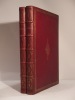
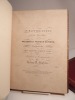
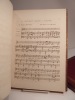
A collection of 64 musical scores of the XIXth century, finely bound in 2 volumes. / Recueil de 64 partitions musicales du XIXe siècle, bien reliées en deux volumes. * Voir photographies / See pictures. * Membre du SLAM et de la LILA / ILAB Member. La librairie est ouverte du lundi au vendredi de 14h à 19h. Merci de nous prévenir avant de passer,certains de nos livres étant entreposés dans une réserve.
Die Geschichte von Hindostan aus dem Persischen und nach der zweyten verbesserten englischen Ausgabe ins Deutsche übersetzt. [avec] Abhandlungen zur Erlauterung der Geschichte, Religion und Staatsverfassung von Hindostan.
Leipzig, Johann Friedrich Junius, 1772-1773. 4 tomes en 3 volumes in-8 de XXVIII (mal chiffré XVIII)-428-[4]; [6]-466; [4]-346 et [8]-200 pages, demi-veau brun à coins, dos à nerfs, pièces de titre beige, tranches rouges.
![Die Geschichte von Hindostan aus dem Persischen und nach der zweyten verbesserten englischen Ausgabe ins Deutsche übersetzt. [avec] Abhandlungen zur ...](https://static.livre-rare-book.com/pictures/KUA/20918_1_thumb.jpg)
![Die Geschichte von Hindostan aus dem Persischen und nach der zweyten verbesserten englischen Ausgabe ins Deutsche übersetzt. [avec] Abhandlungen zur ...](https://static.livre-rare-book.com/pictures/KUA/20918_2_thumb.jpg)
![Die Geschichte von Hindostan aus dem Persischen und nach der zweyten verbesserten englischen Ausgabe ins Deutsche übersetzt. [avec] Abhandlungen zur ...](https://static.livre-rare-book.com/pictures/KUA/20918_3_thumb.jpg)
Orné d'un frontispice, d'une grande carte dépliante "Allgemeine Landkarte von Hindostan une den Angrenzenden Lændern" et d'une planche dépliante au dernier volume figurant les différents alphabets. Alexander Dow est un militaire, officier dans la Compagnie britannique des Indes orientales, un écrivain orientaliste et un dramaturge écossais. Il meurt à Bhagalput en Inde en 1779. C'est en 1768 que paraît, à Londres, pour la première fois un texte historique, The History of Hindostan, traduction en anglais de l'histoire de l'Hindoustan jusqu'en 1606 écrite en persan par l'historien Mohammed Qacim Ferichta (1571-1612), qui travailla à la cour du sultan de Bijapur vers la fin du XVIe siècle. Et c'est sur la deuxième éditions anglaise que cette première édition de la traduction allemande fut réalisée. Rare complet.Coupes coiffes et coins frottés, quelques galeries d'insectes (dans le texte dans la première partie du deuxième volume et la dernière partie du dernier volume).
Alexander Calder
Amsterdam, Stedelijk museum, 1959. In-8, non paginé, couverture originale illustrée (très légère insolation de la couveture).
![Alexander Calder. [CALDER (Alexander)]](https://static.livre-rare-book.com/pictures/TVX/17069_1_thumb.jpg)
![Alexander Calder. [CALDER (Alexander)]](https://static.livre-rare-book.com/pictures/TVX/17069_2_thumb.jpg)
![Alexander Calder. [CALDER (Alexander)]](https://static.livre-rare-book.com/pictures/TVX/17069_3_thumb.jpg)
Catalogue de l'exposition itinérantes des mobiles, stabiles et mobilier d'Alexandre Calder qui, entre 1959 et 1960 se tiendra dans des musées d'Amsterdam, Hambourg, Krefeld, Mannheim, Wuppertal et Zurich. Il est imprimé sur papier kraft et illustré de reproductions en noir sur papier glacé. Voir photographie(s) / See picture(s) * Membre du SLAM et de la LILA / ILAB Member. La librairie est ouverte du lundi au vendredi de 14h à 19h. Merci de nous prévenir avant de passer,certains de nos livres étant entreposés dans une réserve.
The poetical works of Alexander Pope, with his last corrections, additions and improvements. In four volumes. With the life of the author. Vol. I, containing his Pastorals, Messiah, Windsor forest, Rape of the lock, Sappho to Phaon, Eloisa to Abelard, Temple of Fame, January and may - Vol. II, containing his Essay on man, Essay of criticism, Moral essays, Wife of Bath, Statius' Thebais, Book first - Vol III, containing his Imitations, Odes, Versifications, Epistles, Miscellanies, Epitaphs - Vol. IV, containing his Dunciad,etc.
Edinburg, at the Apollo Press, [for John Bell], 1780. 4 volumes in-16 (13 x 8,5 cm) de [6]-LXXVII-250-[4] (la numérotation en arabe suit celle en romain et débute donc à 79) / [4]-249-[4] / [4]-260-[2] / [4]-260-[2] et [2]-280-[2] pages. Plein veau glacé, dos lisses ornés de filets dorés, étiquettes de titre bordeaux, roulette dorée sur les coupes. Infimes manques à 3 coiffes, coins très légèrement tapés, un frotté, belle condition générale cependant.
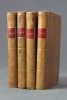
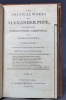
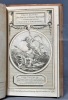
Illustré de 4 titres gravés, un par volume, et avec un portrait de l'auteur au frontispice du premier volume. Ravissante et délicate petite collection. Bell's Edition, coll. The Poets of Great Britain, complete from Chaucer to Churchill.
Promenade autour du monde 1871. Deuxième édition.
Paris, Hachette et Cie, 1873. 2 volumes in-12 de [4]-478 et [4]-501-[3] pages, demi-veau glacé tabac, dos à 5 nerfs ornés de filets, fleurons, titre et tomaison dorés, pièces de titre marron, de tomaison vertes, tranches mouchetées. Rousseurs.
Les voyages de ce diplomates contés dans cet ouvrage le menèrent en Amérique, en Japon et enfin en Chine.
Traduction de l'Essai sur l'Homme de Pope en vers français
Paris, Le Normant, 1822. In-4, VIII-243 pp., demi-veau glacé à coins bleu, filets dorés sur les plats, dos long orné de filets et fleurons dorés (manques et épidermures, rousseurs).
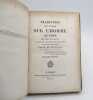
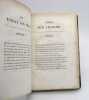
Seconde édition de cette traduction française, avec en regard le texte en anglais, complétée par une longue étude sur le sujet. Ex-libris héraldique de J[acques] Crépet (fils de l'homme de lettres Eugène Crépet) et de J[ean] Ziegler (fils de Jacques). * Membre du SLAM et de la LILA / ILAB Member. La librairie est ouverte du lundi au vendredi de 14h à 19h. Merci de nous prévenir avant de passer,certains de nos livres étant entreposés dans une réserve.
Les Alpes. Descriptions et récits.
Bâle et Genève, H. Georg, 1869. In-8 de VIII-448-[4] pages, demi-basane verte à coins, dos (insolé) à nerfs orné de filets et caissons dorés, tranches mouchetées.
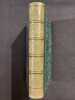
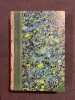
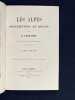
Illustré de 16 planches d’après les dessins de E. Rittmeyer, dont 1 en frontispice, et d'un titre gravé. Très bel exemplaire de ce classique présentant une description générale des Alpes avec les modes de vie des habitants. Perret, I, 398.
[Ferrier Jacques] Alexander Tzonis, Liane Lefaivre, Jacques Fol:
Reference : 25221
(2000)
Jacques Ferrier architecte.
Passage Piétons, 2000. In-8, cartonnage imprimé. Epuisé et ici à l'état de neuf.
![Jacques Ferrier architecte. . [Ferrier Jacques] Alexander Tzonis, Liane Lefaivre, Jacques Fol:](https://static.livre-rare-book.com/pictures/TBW/25221_1_thumb.jpg)
![Jacques Ferrier architecte. . [Ferrier Jacques] Alexander Tzonis, Liane Lefaivre, Jacques Fol:](https://static.livre-rare-book.com/pictures/TBW/25221_2_thumb.jpg)
![Jacques Ferrier architecte. . [Ferrier Jacques] Alexander Tzonis, Liane Lefaivre, Jacques Fol:](https://static.livre-rare-book.com/pictures/TBW/25221_3_thumb.jpg)
Monographie critique et conceptuelle consacrée à l’architecte Jacques Ferrier, l’un des architectes français contemporains les plus intéressants de la fin du XX et début du XXI siècle. Il s’agit d’une réflexion approfondie sur sa pratique architecturale et sur ses “stratégies du disponible”, c’est-à-dire une manière de travailler l’espace et la conception en réponse aux contraintes et potentialités du contexte réel.
Voyages dans la mer du Sud, par les Espagnols et les Hollandois.
A Paris, Chez Saillant & Nyon; Pissot, 1774. In-8 de [4]-XIV-[2]-502-[2] pages, plein veau brun moucheté, dos lisse orné de fleurons et motifs dorés, étiquette de titre orange, plats encadrés d’un filet à froid, tranches rouges.
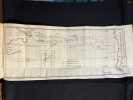
Illustré de culs-de-lampe et de 3 cartes dépliantes en fin d’ouvrage. Édition originale rare de la traduction française. David Dalrymple (1726-1792). Il entre de bonne heure à la Compagnie anglaise des Indes orientales. Il fait plusieurs explorations dans l'archipel indonésien, plusieurs voyages destinés à réaliser des relevés cartographiques des côtes. La Compagnie le nomme hydrographe. Ses observations contribuèrent à la réussite du premier voyage autour du monde de James Cook.Il fait paraître en 1767 et en 1768 deux livres sur ses observations dans l'Océan Pacifique. Il y évoque l'existence d'un grand continent, encore inconnu, dans le Pacifique. En 1769, il fait paraître un plan pour étendre le commerce de la Grande-Bretagne dans cette région.Il compile et traduit des récits de voyages de navigateurs espagnols en 1770, compilation qui sera traduite, en version abrégée, en 1774 en français par Anne-François-Joachim Fréville. Cette œuvre de collection des Voyages faits dans l'Océan Pacifique est réputée parmi ses contemporains.
Histoire de Martinus Scriblérus, de ses ouvrages & de ses découvertes. Traduites de l'Anglois.
A Londres, chez Paul Knapton, 1755. In-12 de XXIV-324 pages, demi-basane à coins, dos à 5 petits nerfs orné de fleurons, filets et titre dorés, tranches rouges.
![Histoire de Martinus Scriblérus, de ses ouvrages & de ses découvertes. Traduites de l'Anglois.. POPE [Alexander]; [LARCHER Pierre-Henri (trad.)]:](https://static.livre-rare-book.com/pictures/KUA/10553_1_thumb.jpg)
![Histoire de Martinus Scriblérus, de ses ouvrages & de ses découvertes. Traduites de l'Anglois.. POPE [Alexander]; [LARCHER Pierre-Henri (trad.)]:](https://static.livre-rare-book.com/pictures/KUA/10553_2_thumb.jpg)
Édition originale française dans la traduction de Pierre Henri Larcher. Infime manque en tête et toute petite fente au mors inférieur.
Alexandre Calder Suites 11.
Genève, Galerie Krugier, 1966. In-4 en feuilles sous couverture illustrée en couleurs.
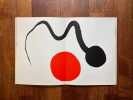
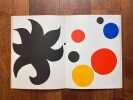
Outre l'illustration de couverture, on trouve deux double planches en couleurs. Jolie publication imprimée en juin 1966, la préface - de Giovanni Caradente - et la liste des oeuvres sont imprimées sur papier argenté. Pas courant.
Calder / Dubuffet. Entre ciel et terre.
Genève, Opera Gallery, sans date. In-4, couverture de carton brut imprimé. En belle condition. Illustré de photographies en noir et de nombreuses reproductions en couleurs.
![Calder / Dubuffet. Entre ciel et terre. . [Calder Alexander, Dubuffet Jean]:](https://static.livre-rare-book.com/pictures/TBW/13241_1_thumb.jpg)
![Calder / Dubuffet. Entre ciel et terre. . [Calder Alexander, Dubuffet Jean]:](https://static.livre-rare-book.com/pictures/TBW/13241_2_thumb.jpg)
![Calder / Dubuffet. Entre ciel et terre. . [Calder Alexander, Dubuffet Jean]:](https://static.livre-rare-book.com/pictures/TBW/13241_3_thumb.jpg)
Catalogue de l'exposition éponyme.
Calder. Exposicio antologica. Abril-maig 1977
Barcelone, Galeria Maeght, 1977. In-4, (32) pp. en ff., couverture souple illustrée (petite déchirure à la couverture).
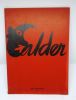
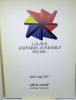

Illustrations en noir et en couleurs. * Voir photographie(s) / See the picture(s). * Membre du SLAM et de la LILA / ILAB Member. La librairie est ouverte du lundi au vendredi de 14h à 19h. Merci de nous prévenir avant de passer,certains de nos livres étant entreposés dans une réserve.
Derrière le miroir, n° 201. Calder.
Paris, Maeght, 1973. In-folio de 28 pages, en feuilles sous couverture lithographiée couleurs.
![Derrière le miroir, n° 201. Calder.. [CALDER Alexander] BESSET Maurice; BALTHAZAR André:](https://static.livre-rare-book.com/pictures/KUA/9649_1_thumb.jpg)
![Derrière le miroir, n° 201. Calder.. [CALDER Alexander] BESSET Maurice; BALTHAZAR André:](https://static.livre-rare-book.com/pictures/KUA/9649_2_thumb.jpg)
![Derrière le miroir, n° 201. Calder.. [CALDER Alexander] BESSET Maurice; BALTHAZAR André:](https://static.livre-rare-book.com/pictures/KUA/9649_3_thumb.jpg)
Illustré de 5 belles lithographies originales en couleurs de Calder, dont 2 à double page (y compris la couverture) et de 8 photographies couleurs. Texte imprimé en rouge, bleu et vert. Première édition, éditée en janvier 1973 pour l'exposition de 33 stabiles et mobiles à la Galerie Maeght. Toute petite rousseur en début, pour le reste en belle condition.
CALDER Alexander; FRANQUI Carlos; REILLE Jean-Francis (trad.):
Reference : 14775
(1971)
Derrière le miroir, n° 190. Calder.
Paris, Maeght, 1971. In-folio de 26-[2] pages, couvertures comprises, en feuilles sous couverture lithographiée.

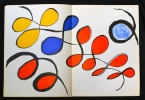
Illustré de 4 lithographies originales en couleurs dont 1 à double page, 1 lithographie en noir, 3 reproductions en couleurs et 17 reproductions en noir dont 2 à double page. Texte de Carlos Franqui "Calder, la liberté". Edité en février 1971 pour l'exposition de 4 stabiles et 23 animobiles de Calder à la Galerie Maeght. Petits accrocs, au premier plat et en tête.
The House at Pooh corner.
London, Methuen & Co, 1928. In-8 de XI-[1]-178-[2] pages, plein veau souple framboise, dos lisse orné de cinq personnages dorés, premier plat orné de Eeyore et Christopher Robin au centre, double encadrement de filets dorés, fleurons dorés aux angles, tranches dorées. Très bel exemplaire en parfaite condition, ayant pour seul défaut une marque d'étiquette au faux-titre.In-8 of XI-[1]-178- [2] pages, full raspberry colored soft calf, smooth back decorated with five golden figures, first side decorated with Eeyore and Christopher Robin in the center, double framing of gilt fillets, gilt floral ornaments at the angles, gilt edges. Very nice copy in perfect condition, as the only defect a label trace on the half title.
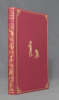
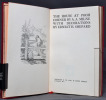
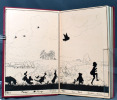
Ernest Howard Shepard est l'auteur des illustrations.Illustrations by Ernest Howard Shepard. First edition. A splendid copy in the de-luxe binding.
When we were very young.
London, Methuen & Co, 1930. In-8 de X-[2]-99-[1] pages, plein veau souple framboise, dos lisse orné de cinq personnages dorés, premier plat orné de Little Bo Peep au centre, double encadrement de filets dorés, fleurons dorés aux angles, tranches dorées. Très bel exemplaire en parfaite condition, ayant pour seul défaut une étiquette ovale collée au faux-titre.In-8 of X- [2] -99- [1] pages, full raspberry colored soft calf, smooth back decorated with five golden figures, first dish decorated with Little Bo Peep in the center, double frame of golden fillets, golden florets at the corners , golden slices. Very nice copy in perfect condition, having for only defect an oval label stuck to the false title.
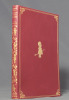
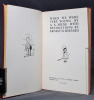
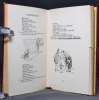
Ernest Howard Shepard est l'auteur des illustrations.Illustrations by Ernest Howard Shepard. Twentieth edition. A dainty, smart copy presented in the de-luxe binding.
[CALDER Alexander] SWEENEY James Johnson; LAUGIER Henri; HOPPENOT Henri; LEGER Fernand:
Reference : 9668
(1950)
Derrière le miroir, n° 31. Calder.
Paris, Maeght / Pierre à feu, 1950. In-folio de [4] pages sous couverture lithographiée couleurs.
![Derrière le miroir, n° 31. Calder.. [CALDER Alexander] SWEENEY James Johnson; LAUGIER Henri; HOPPENOT Henri; LEGER Fernand:](https://static.livre-rare-book.com/pictures/KUA/9668_1_thumb.jpg)
![Derrière le miroir, n° 31. Calder.. [CALDER Alexander] SWEENEY James Johnson; LAUGIER Henri; HOPPENOT Henri; LEGER Fernand:](https://static.livre-rare-book.com/pictures/KUA/9668_2_thumb.jpg)
Les 2 plats sont ornés chacun d'une lithographie originale couleurs de Calder. Première édition dans un état de fraîcheur remarquable.
Quaestiones naturales, De Anima, Morales: sive Difficilium dubitationum & solutionum Libri IIII. nuncc primùm in lucem editi. Gentiano Herveto Aureliano interprete. Cum gratia & privilegio Imperiali quinquennium. - [THE HERVET-EDITION OF ALEXANDER'S ""QUAESTIONES""]
Basel, (Iohnnes Oporinus, 1548 - on colophon). 8vo. Contemporary full limp vellum. A bit of soiling and light brownspotting to title-page, otherwise very nice and clean. The printer's name has been removed from the colophon, causing two small holes, which have been neatly repaired from verso. Two small holes corresonding to these to the second-last leaf, causing loss of a couple of letters. All in all a very nice copy. Woodcut initials. (16), 297, (6 - Life of Aristotle) pp.
The scarce first edition of leading French Humanist Catholic Gentian Hervet's important translation of Alexander's hugely influential ""Quaestiones"", presumably with this fourth part (which is not the ""De Fato"" as in other Renaissance editions) for the first time in print. Hervet's edition of Alexander's ""Questiones"" came to have a profound influence on the development of Renaissance Aristotelianism. The ""Questiones"" had appeared earlier, e.g. in 1541, and were by no means unknown to Renaissance thinkers at the time, but Hervet was an authority of a certain character, which meant that his edition was both read in a certain light and preferred by a great deal of thinkers. Furthermore, it seems that the 4th part, being 30 answers to the traditional 69 questions, here appears for the first time in print, making this a very important edition. In addition to the first three parts, it became customary to add a fourth part to Alexander's ""Questiones"", but that traditional fourth part was his ""De Fato"", and not as here the 30 solutions. It is worth noting that Hervet had in fact already translated Alexander's ""De Fato"", which he published in 1544. Alexander's, also known as simply as ""The Commentator"", impact upon the development of philosophy can hardly be overestimated, and his various ""Problems and Questions"", all aimed at establishing the views of Aristotle, came to influence all reading of Aristotle in the Renaissance. ""He was read in the classroom of Plotinus, who probably drew on him to a greater extent than we will ever be able to tell"" and when later Platonists show themselves critical of Aristotle's arguments, they can often be shown to attack Alexander's interpretation of Aristotle rather than Aristotle himself. The physician Galen, whose logic, epistemology and physics bear a distinctive Peripatetic stamp, chose to disagree with Alexander on, for instance, issues of dynamics and psychology."" (p. 244).Although his ""Questions"" were aimed at understanding the views of Aristotle, he established the views of the Stagirite in a version updated to take account of Stoic and other alternatives, as the best and most defensible current (i.e. 2nd-3rd cent.) ideas on their subjects. ""For Alexander, the inspired genius of Aristotle's writings was a sufficient basis, if they were properly interpreted, explicated, and fleshed out, to resolve with complete satisfaction all the questions debated among philosophers of varying schools in his own time."" (Cambr. Comp.). In his seminal ""Questiones"", he quarrelled with both Platonism and Stoicism in his attempts to develop Peripatetic answers to questions Aristotle had not dealt with in any detail.It is a curious but generally accepted conception that with the rise of the Renaissance came the fall of Aristotle. Weather this is actually true can be disputed, but it is a fact that with the recovery of many lost works of ancient literature, the widening of the range of classical studies and the renewed interest in Plato, Aristotle was no longer the sole authority on a huge number of fields. That this should mean a total ignorance of the teachings of Aristotle must be considered somewhat of a myth (though a very frequently repeated one), and in fact with the grand humanists of the late 15th and early 16th century, the study of Aristotle fits perfectly with the broader comprehension of scholarship. The great humanists like Ficino, Pico and Pomponazzi had not forgotten about Aristotle, and the revival of learning did not mean the neglect of the prince of philosophers. On the contrary, with the appreciation of the knowledge of Greek and the invention of the printing, works were being translated and printed like never before, which meant that the greatest of the humanists, many of whom did not themselves know Greek, could be acquainted with the Greek texts of Aristotle and the Greek commentaries of ""The Commentator"", Alexander of Aphrodisias, in Latin translation. ""Equally important for the continued growth of the Peripatetic synthesis was the recovery and diffusion of the Greek commentaries on Aristotle. These treatises, about ten times longer than the works they discuss, were written by pagans and Christians, Platonists and Peripatetics in late antiquity, between the second and seventh centuries in the Greek world of the Eastern Mediterranean, and then again in twelfth-century Byzantium. The most important of the two dozen commentators were Alexander of Aphrodisias, Ammonius, Simplicius, Themistius and John Philoponus. Of these five, only Alexander and Themistius were Aristotelians..."" (Copenhaver & Schmitt, p. 68).One of the most important of these Renaissance Humanists, who with his translations helped spread the knowledge and understanding of Aristotle and his commentators, was Gentian Hervet, who came to play a dominant role in the course of 16th century thought. ""Gentian Hervet (d. 1584) was a committed churchman, who after studies in the universities of Orleans and Paris lived in the household of Reginald Pole, later to become Archbishop of Canterbury and Cardinal, at first in England then - as Pole had, because of the Reformation, to leave England - in Padua, Venice and Rome. Hervet took part with Marcello Cervini (later Pope Marcellus II) in the first sessions of the Council of Trent. He returned to France in 1555 as vicar general to the bishop of Noyon and wrote pamphlets against the Huguenots. In 1561 he entered the service of the Cardinal of Lorraine, Charles de Guise, whom he accompanied to the third period of the Council of Trent (1562-3). In 1564 he took part as canon of the cathedral in the provincial council of Rheims, in which the cardinal published the decrees of the Council of Trent. About the time of his activity in the Council of Trent the focal point of Hervet's translations shifted. He translated not only the Greek Fathers of the Church, but in addition, under the influence of academic scepticism as represented also by Reginal Pole, Sextus Empiricus' ""Adversus Mathematicos"" (Paris, 1569). He had long been active as translator of works connected with the Aristotelian philosophy. During an earlier sojurn in Rome, he published a number of philosophical texts which concerned the controversies surrounding Pietro Pomponazzi. In 1544 he translated into Latin Aristotle's ""De anima"", together with the commentary of Johannes Philoponus. There followed translations of Alexander of Aphrodisias's ""De fato"" (1544) and ""Quaestiones naturales et morales"" (1548) and of Zacharias Scholasticus's ""Ammonius: Dialogus quod mundus non sit Deo coaeternus"" (1546). In these works Hervet described those who denied the immortality of the soul as atheists and as opponents of Aristotle and his commentators."" (Lohr, p. 36). ""Since the Renaissance had to discover or rediscover the tools of philology and history needed for such detective work, the pioneering labours of obscure humanist scholars - Gentian Hervet, who translated sextus, or William Canter, who first published a Greek text of the ""Eclogae"" of Stobaeus - certainly deserve our memory and admiration. It was they who first edited, organized, translated, printed, and disseminated the philosophical remains of antiquity that succeeding centuries have come to take for granted. If Thales and his successors were the fathers of Western philosophy, the humanist scholars of the Renaissance were the midwives of its rebirth in a classical form."" (Copenhaver & Schmitt, p. 18). Adams A:678" Graesse: I:69.
Alexander Hamilton: Writings (LOA #129) (Library of America Founders Collection Band 4)
Library of America 2001 1108 pages 12 954x3 302x20 066cm. 2001. Cartonné jaquette. 1108 pages.
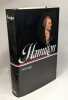
Comme neuf avec sa jaquette intérieur propre bonne tenue
Alexander Alexander of Arkhangelsk. Alexander I. In Russian /Arkhangelskiy Alek
Alexander Alexander of Arkhangelsk. Alexander I. In Russian /Arkhangelskiy Aleksandr. Aleksandr I.M.: VAGRIUS. 2000.We have thousands of titles and often several copies of each title may be available. Please feel free to contact us for a detailed description of the copies available. SKUalb4507404bc8232ccc.
Komponist und Bundesrichter. - Alexander Reichel wurde 1853 in Paris als Sohn von Adolf Reichel (1820 - 1896) und Maria Reichel-Ern geboren. Der westpreussische Vater war nach dem Musikstudium in Berlin als Komponist und Dirigent in Paris und Dresden tätig. Aus gesundheitlichen Gründen zog er 1867 in die Schweiz nach Bern. Dort wirkte er als Dirigent und Direktor der Musikschule. Das Umfeld in dem Alexander Reichel aufwuchs, war international geprägt und in kultureller, gesellschaftlicher wie politischer Hinsicht äusserst anregend. - Alexander Reichel immatrikulierte im Sommer 1872 an der philosophischen Fakultät der Universität Bern. Im Wintersemester 1874/75 wechselte er die Fakultät und studierte Rechtwissenschaften, welche er bereit 1876 abschloss. 1877 erwarb er das Fürsprecherpatent. 1884 eröffnete er in Bern eine eigene Kanzlei. Politisch war Alexander Reichel akitv in der SPS (Sozialdemokratische Partei der Schweiz) tätig. Er wurde 1890 Parteipräsident. An einer Wahl in den Nationalrat scheiterte er knapp. 1905 wurde Reichel als erstes Mitglied der SPS von der Bundesversammlung als Richter ins Bundesgericht gewählt. Er war bis 1920 als Bundesrichter tätig. - Alexander Reichel lernte noch in Dresden das Klavierspiel und das Violoncello. Von 1891 - 1899 wirkte er als Präsident des Cäcilienvereins, dem heutigen Oratorienchor in Bern. Er verfasste Werke für Klavier, Bläser, Chor und arrangierte bekannte Musikstücke für den Hausgebrauch. Reichel befasste sich auch mit musikwissenschaftlichen Fragen und veröffentlichte seine Studien regelmässig in der schweizerischen Musikzeitung.
1830 - 1920
Grosse Anzahl von gedruckten und handgeschriebenen Partituren. Die handgeschriebenen Stücke wurden meistens für einen Anlass oder für eine Person komponiert unt gewidmet. Unzählige Fotografien, Fotoalben, Tagebücher von Alexander Reichel, Marie Reichel (seine Mutter), Dokumente, Reiseunterlagen (vor allem für die Reisen nach Russland), etc.

Phone number : 41 (0)44 261 57 50
DAS HOHE LIED: In der Nachdichtung Goethes mit Zehn Lithographien von Georg Alexander Mathey. (Daedalus-Drucke Herausgegeben von Georg A. Mathey, Zweiter Druck)
1924 Berlin 1924 Verlag Dietrich Reimer Ernst Vohsen, - Original vellum spine and maroon pastepaper over boards; quarto (9 x 11.5 inches); upaginated. Illustrated with 10 lithographs by Georg Alexander Mathey From an edition of 1000 copies printed at the Staatliche Akademie fur Graphische Kunst und Buchgewerbe zu Leipzig. inscribed in the colophon by Georg Alexander Mathey to master wood engraver and Akademie director Hans Alexander Mueller Very good; quite clean and unworn
Remise de 20% pour toutes commandes supérieures à 200 €
Pypin A.N. Religious Movements under Alexander I + Essays on Literature and Publ
Pypin A.N. Religious Movements under Alexander I + Essays on Literature and Public Affairs under Alexander I. In Russian (ask us if in doubt)/Pypin A.N. Religioznye dvizheniya pri Aleksandre I + Ocherki literatury i obshchestvennosti pri Aleksandre Pervom. Short description: In Russian (ask us if in doubt).This work occupies a special place in the work of the researcher. It is almost the most coherent and harmonious of his works. The book includes a series of essays first published in periodicals since the 1870s which present articles about religious movements under Alexander I. The history of the Russian Bible Society the movement that arose around Mrs. Kruedner the history of Emperor Alexander's contacts with Quakers and the activities of the biblical Kotelnikov sect. We have thousands of titles and often several copies of each title may be available. Please feel free to contact us for a detailed description of the copies available. SKUalb014ead5bae01d6aa
[Giovanni Bologna called Giambologna] - Rudigier, Alexander, Blanca Truyols
Reference : 114711
ISBN : 9782901837640
Jean Bologne et les jardins d'Henri IV. Bulletin Monumental. Tome 174-III, septembre 2016
Rudigier, Alexander, Blanca Truyols: Jean Bologne et les jardins d'Henri IV. Paris: Societe francaise d'editions d'art, Series: Bulletin Monumental. Tome 174-III, septembre 2016. 176 pages (pp 249 - 418) with 21 colour and 163 black and white illustrations. Paperback. 27 x 22cms. Contents:Les presÃnts de Ferdinand I de MÃdicis á Henri IV pour ses Jardins de Saint-Germain-en-Laye by Blanca Truyols.Les bronzes envoyÃs de Florence á Saint-Germain-en-Laye, la VÃnus de 1597 et le derniÚres oeuvres de Jean Bologne by Alexander Rudigier.Additional information by Alexander Rudigier: Le non finito dans la sculpture Florentine et la notion de disegno. With a foreword by Bertrand Jestaz and a bibliography. Text in French.
Contents:Les presÃnts de Ferdinand I de MÃdicis á Henri IV pour ses Jardins de Saint-Germain-en-Laye by Blanca Truyols.Les bronzes envoyÃs de Florence á Saint-Germain-en-Laye, la VÃnus de 1597 et le derniÚres oeuvres de Jean Bologne by Alexander Rudigier.Additional information by Alexander Rudigier: Le non finito dans la sculpture Florentine et la notion de disegno. With a foreword by Bertrand Jestaz and a bibliography. Text in French

