 Write to the booksellers
932 books for « adams d »Edit
-
Type
Book (916)
Magazine (1)
Music sheets (14)
Photographs (1)
-
Latest
Last month (18)
Last week (5)
-
Language
English (8)
French (912)
Russian (12)
-
Century
17th (2)
18th (5)
19th (24)
20th (453)
21st (83)
-
Countries
Belgium (32)
Canada (4)
Côte d'Ivoire (3)
Denmark (14)
France (774)
Netherlands (2)
Switzerland (86)
United Kingdom (3)
United States of America (14)
-
Syndicate
ALAC (4)
CLAM (1)
CLAQ (2)
ILAB (439)
NVVA (6)
SLACES (6)
SLAM (406)
Topics
- Abraham (2)
- Adams ansel (5)
- Adams clifton (27)
- Adams gerry (4)
- Adams john (5)
- Africa (2)
- Age (2)
- Archaeology (4)
- Architecture (8)
- Armenia (2)
- Astrology (25)
- Astronomy (3)
- Astrophysics (2)
- Berlin (2)
- Bible (3)
- Biography (5)
- Boston (2)
- Botany (2)
- Canada (4)
- Chartres (2)
- Children’s books (7)
- Christmas (2)
- Cinema (7)
- Comic strip (26)
- Detective novels (39)
- Dictionaries (2)
- Earth (3)
- Ecology (2)
- Economics (4)
- Education (5)
- Egypt (3)
- Electricity (2)
- Engines (3)
- England (6)
- English (31)
- Esotericism (7)
- Ethic (3)
- Ethics (3)
- Fantastic (5)
- Fantasy (3)
- Fine arts (4)
- First edition (19)
- Fox (3)
- Gardens (4)
- Geography (6)
- Geology (2)
- Georgia (3)
- Germanic languages (2)
- Hackney (13)
- Helvética (2)
- History (19)
- Humour anecdotes (3)
- Industrial arts & crafts - fine arts (5)
- Italian (2)
- Japan (5)
- Jeanjean marcel (11)
- Linguistics (3)
- Literature (67)
- Marilyn (5)
- Medicine (2)
- Middle ages (2)
- Mines & miners (3)
- Morin edgar (4)
- Navy (5)
- New-york (2)
- Painters (3)
- Palaeontology (2)
- Paris (3)
- Perruchot (4)
- Philology (5)
- Philosophy (11)
- Photography (11)
- Poetry (6)
- Policy (3)
- Posters (2)
- Psychology (3)
- Religions (5)
- Review (4)
- Reviews (2)
- Rock (2)
- Rock (2)
- Ruth (7)
- Sciences (2)
- Sciences & technique (2)
- Scores (16)
- Sociology (2)
- Songs (12)
- Sports (2)
- Spying (9)
- Switzerland (4)
- Tea (5)
- Theology (5)
- Travel (3)
- United kingdom (6)
- United states (6)
- Various (9)
- War (5)
- Western (4)
- Yoga (7)
The Girl in a Swing
Allen Lane 1980 in8. 1980. Cartonné. Le roman raconte l'histoire d'Alan Desland un antiquaire anglais solitaire et socialement maladroit dont la vie est bouleversée lorsqu'il rencontre une femme mystérieuse et belle nommée Katarina (ou Karin) lors d'un voyage à Copenhague. Leur mariage idyllique dans un village anglais tranquille est peu à peu envahi par une horreur subtile et surnaturelle explorant les thèmes du désir de l'obsession et des conséquences de céder à nos pulsions les plus sombres
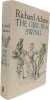
Bon Etat intérieur propre
The Action of Light on Selenium. Received May 18, - Read June 15, 1876. - [INVENTING THE SOLAR CELL]
(London, Harrison and Sons, 1878). 4to. No wrappers as extracted from ""Philosophical Transactions"" 1877 - Vol. 167. Pp. 313-349.
First appearance of Adams and Day's landmark paper, in which they demonstrated that electricity could be produced from light without moving parts, eventually leading to the modern solar cell. It is here that Adams shows for the first time that the discovery of Willoughby Smith - that the conductivity of selenium is due only to the effect of light - is correct and furthermore that light has an effect on the resistance of selenium and that light generates electrical currents in selenium. Two years later Adams expanded the work and published 'Solar Heat'. Here he described his ""Power Tower Concept"", which to this day remains the basis of solar plants.William Grylls Adams (1836 - 1915), professor of Natural Philosophy at King's College, London, and brother of the famous astronomer John Couch Adams (1819-1892), was President of the Physical Society of London from 1878 to 1880. In 1872 he was elected a Fellow of the Royal Society and in 1875 delivered their Bakerian Lecture. He was president of the Institute of Electrical Engineers and of the mathematical and physical section of the British Association.His greatest achievement lies in demonstrating the seminal discovery that electricity could be produced from light without moving parts. The road to this discovery was begun in 1839 when Becquerel discovered that illumination of one of two metal plates in a dilute acid changed the electromotive force. Another French scientist, Auguste Mouchout, followed up on Becquerel's discovery, but it was not until 1876, when Adams and Richard Evans Day discovered that illuminating a junction between selenium and platinum has a photovoltaic effect, that the foundation for the documented use of solar thermal power was laid [with the publication of the present paper]. ""From a historical viewpoint, it is of interest to note that the first experiments on the generation of solar thermal power in India were conducted by an Englishman, William Adams, about one hundred years ago. Adams stayed in Coloba, Mumbai and performed his experiments in the compound of his bungalow. He used a sphecical reflector 12 m in diameter, made from sheets of glass mirror. The sun's rays were focussed on a boiler having a capacity of about 60 litres and the steam generated was used to drive a 2.5 HP steam pump. Adams's work is described in a book written by him entitled ""Solar Heat - A Substitute for Fuel in Tropical Countries for Heating Steam Boilers and Other Purposes"" (Education Society's Press, Byculla, Bombay, 1878)."" (Sukhatme & Neyak, ""Solar Energy. Principles of Thermal Collection and Storage"", p. 48)""William Grylls Adams was and English scientist who taught as a professor in the department of Natural Philosophy at King's College. He is notable for his contribution to the discovery of the photoelectric effect, on which all solar energy applications are based. He was inspired by Auguste Mouchout's invention of the solar steam engine. With the intent of making improvements to Mouchot's design, Adams began to experiment with different materials and designs. In 1876, working in conjunction with his student, Richard Day, he discovered that selenium produced electricity when exposed to sunlight. Using the selenium, he then added mirrors to the design to concentrate sunlight on the engine. This design came to be known as the power tower concept and is still in use today."" (Smith & Taylor, ""Renewable and Alternative Energy resources: A Reference Handbook"", 2008, pp. 1556-56).Wheeler Gift, No. 3856. - Shiers ""Early Televison"", no. 73.

The Action of Light on Selenium. Received May 18, - Read June 15, 1876. - [INVENTING THE SOLAR CELL]
(London, Harrison and Sons, 1878). 4to. In the original wrappers. Offprint from ""Philosophical Transactions"" 1877 - Vol. 167. Author and title written in light pencil to front wrapper. Wrappers with a bit of soiling and part of spine is missing. Corners bended. Internally fine and clean. Pp. 313-349.
First edition, in the extremely rare offprint, of Adams and Day's landmark paper, in which they demonstrated that electricity could be produced from light without moving parts, eventually leading to the modern solar cell. It is here that Adams shows for the first time that the discovery of Willoughby Smith - that the conductivity of selenium is due only to the effect of light - is correct and furthermore that light has an effect on the resistance of selenium and that light generates electrical currents in selenium. Two years later Adams expanded the work and published 'Solar Heat'. Here he described his ""Power Tower Concept"", which to this day remains the basis of solar plants.William Grylls Adams (1836 - 1915), professor of Natural Philosophy at King's College, London, and brother of the famous astronomer John Couch Adams (1819-1892), was President of the Physical Society of London from 1878 to 1880. In 1872 he was elected a Fellow of the Royal Society and in 1875 delivered their Bakerian Lecture. He was president of the Institute of Electrical Engineers and of the mathematical and physical section of the British Association.His greatest achievement lies in demonstrating the seminal discovery that electricity could be produced from light without moving parts. The road to this discovery was begun in 1839 when Becquerel discovered that illumination of one of two metal plates in a dilute acid changed the electromotive force. Another French scientist, Auguste Mouchout, followed up on Becquerel's discovery, but it was not until 1876, when Adams and Richard Evans Day discovered that illuminating a junction between selenium and platinum has a photovoltaic effect, that the foundation for the documented use of solar thermal power was laid [with the publication of the present paper]. ""From a historical viewpoint, it is of interest to note that the first experiments on the generation of solar thermal power in India were conducted by an Englishman, William Adams, about one hundred years ago. Adams stayed in Coloba, Mumbai and performed his experiments in the compound of his bungalow. He used a sphecical reflector 12 m in diameter, made from sheets of glass mirror. The sun's rays were focussed on a boiler having a capacity of about 60 litres and the steam generated was used to drive a 2.5 HP steam pump. Adams's work is described in a book written by him entitled ""Solar Heat - A Substitute for Fuel in Tropical Countries for Heating Steam Boilers and Other Purposes"" (Education Society's Press, Byculla, Bombay, 1878)."" (Sukhatme & Neyak, ""Solar Energy. Principles of Thermal Collection and Storage"", p. 48)""William Grylls Adams was and English scientist who taught as a professor in the department of Natural Philosophy at King's College. He is notable for his contribution to the discovery of the photoelectric effect, on which all solar energy applications are based. He was inspired by Auguste Mouchout's invention of the solar steam engine. With the intent of making improvements to Mouchot's design, Adams began to experiment with different materials and designs. In 1876, working in conjunction with his student, Richard Day, he discovered that selenium produced electricity when exposed to sunlight. Using the selenium, he then added mirrors to the design to concentrate sunlight on the engine. This design came to be known as the power tower concept and is still in use today."" (Smith & Taylor, ""Renewable and Alternative Energy resources: A Reference Handbook"", 2008, pp. 1556-56).Wheeler Gift, No. 3856. Shiers ""Early Televison"", no. 73.
A commentary or, exposition upon the divine second epistle generall, written by the blessed apostle St. Peter. 2 vols. - [""THE SHAKESPEARE OF THE PURITANS""]
London, Richard Badger (Vol. 1) & Felix Kyngston (Vol. 2) for Jacom Bloome, 1633. Folio (338 x 230). Two volumes uniformly bound in contemporary full calf with six raised bands. Small paper-label pasted on to top of spines. Soiling to extremities, small wormholes to boards and wear to capitals. Endpapers miscoloured and with tears but internally generally fine and clean. Text within simple lined border. (6), 764 pp."" (2), 801-1634, (28) pp.
First edition of Adams' great commentary on the Second Epistle of Peter in which he combines exegesis with pastoral and practical applications. ""Adams published no other sermons after the appearance of his folio Workes until the appearance of Gods Anger and Mans Comfort (1652), his final two sermons. The only intervening work is his Commentary on Second Peter, a massive folio edition of 1634 pages on which Adams worked between 1620 and 1633. A learned and elegant capstone of his career, the Commentary reaches a more sophisticated level of scriptural exegesis and theological analysis than possible in the sermon form. In it, as in his sermons, he uses both the older Euphuistic style, with its sound devices or schemata, and the newer Senecan style, with its emphasis on brevity and point. It is difficult to explain Adams' abrupt disappearance from public view. Much about his ministry would have been distasteful to William Laud, Bishop of London in 1628 and Archbishop of Canterbury in 1633, whose increasingly repressive episcopacy silenced many suspected of Puritan leanings. Adams' staunch defense of the monarchy and ecclesiastical hierarchy notwithstanding, much about his career could have raised suspicions about his conformity. His strongly Calvinist doctrines, his bitter anti-papal sentiments, his wish that matters of ceremony be left ""indifferent"" rather than enforced, his criticism of the popish ""idolatry"" that threatened to creep into the Church, and his popularity as a lecturer: any one of these characteristics could have laid him open to attack by Laud and his followers."" (Dictionary of Literary Biography)Thomas Adams (1583-1653), an English clergyman and preacher - often referred to as ""The Shakespeare of the Puritans"" - known for his eloquent and vivid preaching, and his commentaries reflected his deep engagement with biblical texts. His works, including commentaries on various books of the Bible, were well-regarded in his time for their literary style and spiritual insight.
Tabouis Maed Deutsch Perruchot Morin Singer Lorenz Adams Fanconi Rubinstein Duckstein Schauffler Pasteur Dormann
Reference : 100153558
(1965)
Histoire illustrée de la Femme- 3 volumes: I. La Femme dans l'Histoire + II. La Femme dans la société + III. La Femme aujourd'hui
LIDIS 1965 in4. 1965. Cartonné jaquette. 3 volume(s).
Bon état jaquettes défraîchies intérieurs propres
Tabouis Mead Deutsch Perruchot Morin Singer Lorenz Adams Fanconi Rubinstein Duckstein Schauffler Pasteur Dormann
Reference : 100153426
(1965)
Histoire illustrée de la femme - TOME I II et III - La femme dans l'Histoire La femme dans la société La Femme aujourd'hui
ÉDITIONS LIDIS 1965 in8. 1965. Cartonné. 3 volume(s). Ouvrage en trois volumes de Geneviève Tabouis publié par les éditions Lidis retraçant l'histoire de la femme à travers les âges : tome 1 sur la femme dans l'histoire tome 2 sur la femme dans la société tome 3 sur la femme aujourd'hui. L'ouvrage est richement illustré en noir et blanc et en couleurs avec une préface d'André Maurois
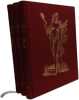
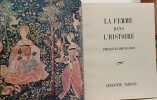
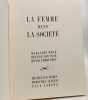
Très bon état de conservation intérieur propre bonne tenue coffret en bon état
Au coeur du Japon zen: Amours mystiques
Éditions victor attinger 1938 in8. 1938. Broché.
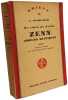
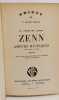
dos creusé couverture défraîchie quelques rousseurs
Mediae Latinitatis Lexicon Minus: Lexique Latin Medieval - Francais/Anglais/a Medieval Latin-French/English Dictionary : Abbreviationes Et Index Fon
Brill 1808 18 796x6 096x26 416cm. 1808. Cartonné.
Très Bon Etat intérieur propre bonne tenue
A Primer of Probability Logic: Volume 68 (Lecture Notes Band 68)
Center for the Study of Language and Inf 1996 392 pages 15 27x2 34x22 89cm. 1996. Broché. 392 pages.
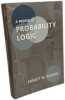
proche du très bon état intérieur propre bonne tenue
Revenue Sharing: The Second Round
Brookings Institution 1977 284 pages in8. 1977. Broché. 284 pages.
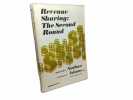
Bon Etat couverture un peu défraîchie intérieur propre
Aeronautical dictionary
United states governement printing office 1959 200 pages in8. 1959. Broché. 200 pages.
Bon Etat
It Can Be Done: Poems of Inspiration
George Sully & Company 1930 in12. 1930. Cartonné.
bon état de conservation quelaues tâches sur la 4e de couverture une tache sur la tranche intérieur propre ex-libris sur la garde
Paris reborn - a study in civic psychology / illustrations by Lester G. Hornby
The century Co 1915 in8. 1915. Cartonné.
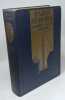
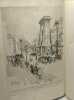
couverture défraîchie bords frottés tranche ternie rousseurs à l'intérieur odeur de tabac
Du Kashmir au Thibet à la découverte du Yoga - préface de Maurice Magre
Victor attinger 1963 in8. 1963. Broché.
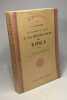
dos recollé tranche frottée ternie sous papier de soie intérieur propre
Ancient Hierakonopolis + Supplement --- 2 volumes
Aris & Phillips Ltd 1974 164 pages 22x30x2cm. 1974. Relié. 2 volume(s). 164 pages. iconographie en noir et blanc
Bon état couvertures défraîchies tranches ternies intérieurs propres bonne tenue
Land Transport in Roman Egypt: A Study of Economics and Administration in a Roman Province
OUP Oxford 2007 352 pages 15x22x3cm. 2007. Relié. 352 pages.
proche très bon état intérieur frais légères marques sur la tranche de tête avec sa jaquette
Le cadavre qui se déplace + D'une balle deux coups --- 2 romans collection Mystères
Presses de la cité 1971 in12. 1971. Broché. 2 volume(s).
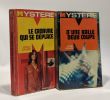
dos recollé couvertures défraîchies dos ridés intérieur jauni
Rendez-vous Au Paradis; Sally À La Folie
Duo 1992 315 pages in12. 1992. broché. 315 pages.

Bon Etat
Une Lumière dans la tempête (Harlequin)
Harlequin 1987 157 pages in12. 1987. broché. 157 pages.
Bon Etat
Meurtre (polar U.S.A)
Gérard de Villiers 1989 254 pages poche. 1989. broché. 254 pages.
Bon Etat
L'amour et les astres La femme de la vierge et les hommes
O.D.E.G.E 1969 95 pages in12. 1969. Broché. 95 pages.

Le singe d'or
Le masque 1931 250 pages in12. 1931. Cartonné. 250 pages.
Etat Correct qq rousseurs sans jaquette

