 Write to the booksellers
4324 books for « adam w »Edit
-
Type
Art print (1)
Autograph (13)
Book (4257)
Drawings (1)
Engraving (16)
Magazine (3)
Manuscript (1)
Maps (2)
Music sheets (27)
New book (2)
Photographs (1)
-
Latest
Last 24h (10)
Last 3 days (1)
Last month (189)
Last week (5)
-
Language
Dutch (1)
English (4)
French (4243)
German (3)
Russian (73)
-
Century
16th (3)
17th (29)
18th (60)
19th (479)
20th (1515)
21st (413)
-
Countries
Belgium (189)
Brazil (1)
Canada (18)
China (1)
Côte d'Ivoire (7)
Denmark (99)
France (3573)
Germany (5)
Greece (3)
Netherlands (1)
Switzerland (351)
United Kingdom (3)
United States of America (73)
-
Syndicate
ALAC (16)
CLAM (14)
CLAQ (4)
CNE (2)
ILAB (2141)
NVVA (54)
SLACES (54)
SLAM (1909)
SNCAO (55)
Topics
- Adam (3455)
- Adam antoine (40)
- Adam george (9)
- Adam jean pierre (17)
- Adam juliette (38)
- Adam michel (11)
- Alsace (27)
- Archaeology (14)
- Architecture (24)
- Autographs (71)
- Bibliophilism (12)
- Biography (21)
- Buffon (14)
- Caricature (11)
- Children’s books (35)
- Christmas (10)
- Comic strip (39)
- Cooking (10)
- Dedication (13)
- Detective novels (140)
- Dictionaries (10)
- Drawings (14)
- Early printed books (11)
- Economics (13)
- Economics (53)
- Education (23)
- Education - morals (13)
- English (17)
- Engraving (books about) (17)
- Ethic (10)
- Fantastic (18)
- Fine arts (18)
- First edition (85)
- French literature (13)
- Germanic languages (21)
- Germany (16)
- Hainaut (20)
- Helvética (25)
- History (135)
- Humour anecdotes (12)
- Illustrated books (20)
- Industrial arts & crafts - fine arts (19)
- Italy (12)
- Journalism (28)
- Language (10)
- Latin (11)
- Law (21)
- Literature (657)
- Lorrain (12)
- Magazine (9)
- Malacology (10)
- Manuscripts (30)
- Maps (10)
- Mathematics (75)
- Medicine (13)
- Military arts (12)
- Music (20)
- Newspapers press (17)
- Opera ballet (10)
- Paris (48)
- Philosophy (61)
- Photography (29)
- Poetry (31)
- Poland (17)
- Police (20)
- Policy (18)
- Portraits (16)
- Psychology (16)
- Raphael (16)
- Regionalism (13)
- Reliure (19)
- Review (32)
- Reviews (19)
- Rops félicien (11)
- Russia (14)
- Scandinavian literature (53)
- Science fiction (18)
- Sciences (17)
- Scores (137)
- Smith adam (24)
- Songs (33)
- Spying (36)
- Stendhal (10)
- Switzerland (18)
- Symbolism (15)
- Tales (46)
- Tea (10)
- Theatre (52)
- Travel (10)
- Various (18)
- War (55)
- Williams tennessee (9)
- Women (the) (25)
- Youth (14)
LES CARICATURES DE PUVIS DE CHAVANNES, Préface de Marcelle Adam.
Librairie Delagrave, Paris, 1906
Un portfolio grand in-4°, reliure cartonnée éditeur, couverture percaline bicolore (crème et verte, ornée d’un dessin de P. de CH. doré, comme sont dorés également le titre , le nom de la préfaciere MARTIN Camille, ENLART Camille et celui de l’édieur.La Préface de Marcelle Adam compte XIV pages et se poursuit par 40 planches de caricatures en noir et en couleurs de couleur, dessinées par le célèbre peintre et sculpteur français en qui l’on voit un des précurseurs du symbolisme. ETAT TRES SATISFAISANT.


LETTRES A MADAME JULIETTE ADAM, 1880-1922.
Plon, Paris, 05-11-1924
Un volume in-8° In-8, br., VIII-249 p., couv. rempl. Préface de Juliette Adam. Edition originale sur Hollande Van Gelder (3ème papier), N° 351 sur 1190 au total. Couv. très légèrement défraîchie mais ETAT TRES SATISFAISANT.
TRIBULAT BONHOMET, NOUVEAUX CONTES CRUELS, ( oeuvres complètes, tome III)
Mercure de France, Paris, 1922.
Un volume in-8°, broché, couverture souple éditeur couleur crème avec titre rouge, 332 pages, exemplaire numéroté (n°2061). TRES BON ETAT.
RELIQUES
Librairie José Corti, Paris, 1954.
Un volume in-12 broché, couverture grise à rabats, 99 pages. Il s’agit de l’édition originale. Exemplaire sur Marais (sur 690).Très bon état.
Jouve Edmond, M. Couve de Murville, Général de Gaulle, Eisenhower, Jean-Yves Guérin (Pierre Jean Jouve), Daniel Colard, Panayotis Soldatos, Adam Roberts, Michel Boivin, Kevin M. Capé.
Reference : 3871
ESPOIR.
Revue de l'Institut Charles de Gaulle, N° 15, juin 1976. In-8, broché, 76 pages.
[3871]
[REVUE] Antoine Adam, Jean Aicard, Marc Alyn, Jean Babelon, Yvette Barre-Barteaux, Camille Barthélémy, Jacques Baudou, Pierre Béarn, Camille Belliard, Louise Bellocq, Luc Bérimont, Charles Bertin, Jeannette Besançon-Flot, Paul Bialais, Jean Biès, Maurice Blin, Françoise Blond, Georges Bouillon, Maurice Bourg, Charles Braibant, Benoit Braun, Thomas Braun, André Breton, Suzanne Briet, Carlo Bronne, Roger Brucher, Charles Bruneau, Jean-Paul Brunet, Pierre Brunon, Roger Caminade, Albert Caquot, Jules Carrez, Carzou, Jean Cazenobe, Robert Cecconello, Elise Champagne, J. Charlet, Suzette Clément-Bodart, (Colette), Hubert Collin, Colonel Compagnon, Pierre Congar, Yves Congar, René Constant, Roger Cordier, Raymond Creuze, (Vera Cuningham), André Danjon, (Dante), Marcel Dardoise, Paul Dauchy, René Daumal, L.R. Dauven, Gabriel Delattre, Marie Delcourt, Bernard Delmas-Payer, Paul Denis, Victor Demanet, Patrick Demouy, Marcel Derwa, André Dhôtel, Marie-Thérèse Donnay, Gustave Doré, Michel Doury, Paul Dresse, Blaise Druart, Henri Druart, René Druart, Jean Ducasse, (Charles Duits), André Dulière, René Dumesnil, René Dürrbach, M. Failly, Lionello Fiumi, (Flaubert), Yves Florennes, Jean Follain, Paul Fort, Maud Frère, Raymond Gailly, André Galland, Yves Gandon, Jean-Pierre Gehin, Maurice Genevoix, Pierre Gentil, Gabriel Germain, Giacomelli, Yves Gibeau, R. Gillard, Michel Gillet, Willy Gilson, (Godefroy de Bouillon), Robert Goffin, E. Golfouse, Armand Got, Grandville, (Grévisse), Henri Guillemin, Guillevic, Paul Guth, François Héber-Suffrin, Jean Héber-Suffrin, Maurice Henry, (François de Herain), Jean Héraux, Dominique Hoizey, Robert Hossein, Houdon, Marie Howet, Lucien Hubert, Georges Jacquemin, Adrien Jans, Raymond Jubert, Hubert Juin, Anne-Marie Kegels, Frédéric Kiesel, Françoise Korganov, Maurice Kunel, Elisabeth de La Mauvinière, Henry de La Tour, Denise Laborde, Marcel Lallemand, Armand Lanoux, Georges Laurent, Jean L'Herbault, France Lambert, Armand Lanoux, Georges Laurent, Paul Leclers, Camille Lecrique, Suzette Lefèvre, Jean Leflon, Fernand Léger, Jeannine Lelièvre, Jules Leroux, Jean Levy, Jacques-Gérard Linze, J.K. Longuet, Gérard Macé, (André Malraux), Pierre Manil, Jean Marchal, Maugis, André Maurois, Jean Mazeraud, Mehul, P. Michel, (Albert Mockel), Arsène Muzerelle, (Agnès Nanquette), Général Nerot, Alphonse de Neuville, Etienne Noiret, Général Noiret, (Marcel Noppeney), Pierre Nothomb, Christine Orbey, Michel Pakenham, (Paul Palgen) (Georges Paulet), Jean Paulhan, Joséphin Péladan, Louis Pergaud, Patrick Perin, Régine Pernoud, Pierre Petitfils, Pierre-Luc Petitjean, André Pézard, Jean Piaubert, Gaston Picard, Michel Picard, Marie-Pierre Pinard, Maurice Piron, Charles Plisnier, Henri Pourrat, J.-M. Poussart, Michel Prince, Jean Renac, Paul Renaudin, Patrick Reumaux, Graham Reynolds, Pierre Richard, Arthur Rimbaud, René Robinet, Jeanne Roge, Jean Rogissart, Pierre Rogissart, Elyane Ronnet, Félicien Rops, Elisabeth Rouy, Noël Ruet, Christophe Ryelandt, Saint-Pol-Roux, Jacques Saunier, Michel-Paul Sécheret, Pierre Seghers, Jean Servais, Arsène Soreil, Michel Taillandier, Roger Taillardant, Stéphane Taute, André Theuriet, Marcel Thiry, Charles Thomas, Jacques Thomas, Eva Thomé, Gaston Titaux, Suzanne Tourte, Marc-Edo Tralbaut, Noël Tuot, Jacques Vadon, (Roger Vailland), Jean-Paul Vaillant, Philippe Vaillant, Edmond Vandercammen, Jacques Vaucherot, (Verlaine), Max Vilain, Y. Vineuil, René Violaines, Robert Vivier, Patrick Vloebergh, Jean-Claude Vuaroqueaux, Louise Weiss, Elie Willaime.
Reference : 5194
LA GRIVE, 1958-1972. 33 fascicules in-8, agrafés ou brochés.
Manquent les numéros 101-106, 108, 127, 130, 133-137, 139, 143, 146, 154. [5194]
[COLLECTIF] J.-P. Adam, P. Andrieux, C. Bémont, P. Blanc, J.-P. Caillet, Jacques Chirac, Maurice Doublet, Paul-Marie Duval, A. Erlande-Brandenburg, L.-C. Feffer, B. Fischer, Michel Fleury, P. Forni, J.-J. Hatt, V. Kruta, C. Lacour, C. Landes, H. Lavagne, F. Le Porzou, S. Legaret, P. Marquis, Bernard de Montgolfier, D. Morel, Patrick Périn, M. Petit, A. Rapin, L. Schmitt, E. Servat, P. Sorel, M. Tuffreau-Libre, P. Velay, J.-P. Willesme.
Reference : 5361
LUTECE. Paris de César à Clovis.
Paris, Société des amis du Musée Carnavalet, 1984. In-8 carré, broché, nombreuses illustrations, couverture à rabats, feuillet d'errata.
[5361]
FATAL, 1989-1993.
Le Plessis-Robinson, Imprimerie Blanchard fils, 1996. Fort in-8 carré, broché à la chinoise, illustrations sous calque imprimé.
Tirage limité à 350 exemplaires. [5681]
[REVUE] Albert Acrement, Alphonse Allais, Guillaume Apollinaire, Paul Alexis, Paul Ardot, Calixte Armel, G. Arnould, Timon d'Asnières, Jean d'Astorg, Régina Badet, Balérus, A. Barrère, Maurice Barrès, Jean Bastia, Charles Baudelaire, René Benjamin, Karl Benoit, Louis Béraud, Emile Bergerat, Tristan Bernard, José de Bérys, Albert Besnard, André Beury, Bing, Numa Blès, Ch. Bleunard, Louis Bonnafont, D. Bonnaud, Bousquet, Frédéric Boutet, Jacques Brindejont-Offenbach, Gustave Brisgand, André Brulé, Brunelleschi, Léonce Burret, Cami, Alfred Capus, Marcel Capy, Clément Carel, Albert Carré, Roland Catenoy, Cham, Henry Champly, André Charpentier, Chéri-Bibi, Jules Claretie, Georges Courteline, Gabriel D'Annunzio, Jane Danjou, J. Darsenne, De Losques, Maurice Dekobra, Georges Delaquys, Paul Deschanel, André Devambez, Deveria, Léon Devy, Henri Dispan, Maurice Donnay, Jean Droit, Odette Dulac, Henri Duvernois, Jacques Dyssord, Henri Enthoven, Raymond Escholier, Etcheverry, Fabiano, Delphi Fabrice, Emile Faguet, Abel Faivre, Henri Falk, Ricardo Florès, Régine Flory, Georges Fourest, Franc-Nohain, Henry Friedberg, Pierre Frondaie, Léon Galand, Ernest Gaubert, Paul Géraldy, Henri Géroule, Gervex, Gervèze, P.B. Gheusi, Giafar, André Gill, Glatigny, Urbain Gohier, Albert Guillaume, Sacha Guitry, Anna Held, J. Hénard, Jean Hervez, M.A. Hullet, Alfred Jarry, Pierre Jobbé-Duval, D. Kavé, Raphaël Kirchner, Koïster, J. Kuhn-Régnier, Gaston La Touche, Paul Lacour, Jeanne Landre, Juliette Landry, Hugues Lapaire, Ernest Laut, Henri Le Riche, Legrogenux, Lepape, Jean Lorrain, Robert Macaire, Robert Macker, Maurice Magre, René Maizeroy, Malatier, F.T. Marinetti, J. Marni, Achille Mélandri, Jacques Mercier, Lucien Métivet, A. Metzvil, Yves Mirande, Mistinguett, Montjauze, Montozon, Jules Moy, Charles Muller, Ludovic Naudeau, Nollat, Nozière, René Péan, Henri Pellier, Louis Pergaud, Jane Pierly, Raymond Poincaré, Marcel Prévost, Ray, Paul Reboux, Jacques Redelsperger, Henri de Régnier, André Reuze, Jean Richepin, Rip, Maurice Rostand, Georges Rozet, Ida Rubinstein, Marcel Saint-Jaurès, André Salmon, Aurélien Scholl, Seignac, Bernard Shaw, Emmanuel Sheridan, Louis Sonolet, Rabindranath Tagore, François de Tessan, Henri Thomas, Ed Touraine, Jacques Tournebroche, Harry Tremont, Vallée, Jean Veber, Verlhac, Raoul Vèze, Villiers de l'Isle-Adam, René Vincent, Gabriel Volland, Weyman, Gerda Wigener, Willette, Pierre Wolff, Xaudaro.
Reference : 5934
FANTASIO. Année 1912 (N° 131-154). Paris, Félix Juven éditeur, 1912. Fort in-4, demi-reliure toile, à coins.
Année complète. [5934]
[PEYTARD] Jacques Bourquin, Daniel Jacobi, Robyn Newkymet, Serge Goffart, Pierre Malandain, Paul Sadrin, Eddy Roulet, Ghislaine aas, Henri Mitterand, Marie Miguet-Ollagnier, Roger Barny, Catherine Mason, Michel Apel-Muller, André Chauvin, John Pier, Michel Charolles, François Migeot, Héliane Kholer, Jean Bessière, Lois Nathan, André Petitjean, Claude Condé, Lionel Follet, Bernard Couty, Jean-Blaise Grize, Denise Mieville, Yves Gentilhomme, Jean-Pierre Kaminker, Henri Boyer, Marie-Anne Mochet, Iva Cintrat, Robert Condat, Yves Gilli, Élisabeth Lhote, Christiane Owusu-Sarpong, Serge Sauvageot, Pierre Fresnault-Deruelle, Régis Labourdette, Gisèle Holtzer, Mongi Madini, Michel Otten, Jean-Michel Adam, Léon Robel, Bernard Mallet, Jacques Cortes, Franck Sainte-Martine, Jacques Bourquin, Michel Arrivé, Michel Dabene, Louis Porcher, Maryvonne Masselot, Dominique Bourgain, Émile Genouvier, Roger Beaumont, Monique Lebre, Charles Bried, Maurice Riguet.
Reference : 6458
MELANGES OFFERTS À JEAN PEYTARD.
Besançon, Annales littéraires de l'université, 1993. Deux volumes in-8, brochés.
[6458]
[COLLECTIF] Jean-Pierre Adam, Philippe Andrieux, Colette Bémont, Patrick Blanc, Alain Bouthier, Horace Boutrude, Jean-Pierre Caillet, Maurice Doublet, Paul-Marie Duval, Hélène Éristov, Alain Erlande-Brandenburg, Laure-Charlotte Feffer, Brigitte Fischer, Michel Fleury, Pierre Forni, Jean-Jacques Hatt, Venceslas Kruta, Catherine Lacour, Hubert Landais, Christian Landes, Henri Lavagne, Sylvie Legaret, Françoise Le Porzou-Camuset, Philippe Marquis, Catherine Metzger, Bernard de Montgolfier, Dominique Morel, Patrick Périn, Michel Petit, André Rapin, Laurent Schmitt, Edmond Servat, Philippe Sorel, Marie Tuffreau-Libre, Solange de Vaugiraud, Philippe Velay, Jean-Pierre Willesme.
Reference : 7676
LUTÈCE. Paris de César à Clovis.
Paris, Société des amis du Musée Carnavalet, 1984. Fort in-8, broché.
[7676]
Buddhastatuen.
Stuttgart, Strecker und Schröder, 1925. Grand in-8, cartonné, illustrations.
[9635]
Le vice filial.
Paris, Librairie Borel, 1898. In-12, demi-reliure cuir.
Illustrations de J. Dédina. [9914]
Histoires insolites.
Paris, Librairie moderne, (mars 1888). In-12, demi-reliure cuir, dos à nerfs, (4)-316 pages, couverture orange imprimée, avec une citation de Lamennais.
Mention de deuxième mille. [10411]
L'année de Clarisse.
Paris, Paul Ollendorff, 1897. In-12, demi-reliure cuir.
Reproduction de pointes sèches de Gaston Darbour. [11150]
Histoire de la littérature française au XVIIe siècle.
Del Duca, 1966. 5 volumes in-12, brochés.
[12614]
[REVUE] Th. Adam, Pierre Caussat, Jean-Pierre Chevènement, Paul Fraisse, Yves Goussault, Pierre Kende, J.-W. Lapierre, Michel Panoff, H. Pequignot, J.-P. Lambert, Jacques Julliard, Paul Thibaud, J.-C. Olmi, Jacques Champion, Luce Giard.
Reference : 15552
REVUE. Inaki Abalos, Alejandro Zaera, Renata Sentkiewicz, Guillermo Rendueles, Manuel Desviat, Amador Fernandez-Savater, Francisco Mora, Oliver Sacks, Frédéric Martel, Santiago Eraso, Serge Tisseron, Lou Andreas-Salomé, Anotnioni, Juan Gelman, Massimo Cacciari, Adam Zagajewski, Fernando Castro Florez, Isidro Herrero, Alexander Rodchenko, Jacques Derrida, Tiken Jah Fakoly, Simha Arom...
Reference : 19090
Schulz-Klossowski.
Minerva, Circulo de Bellas Artes, Madrid, 2008. Un fascicule in-4°, broché, nombreuses illustrations.
TBE. [19090]
Lettres. Correspondance à trois. réunies et présentées par Daniel Habrekorn.
Vanves : Les éditions Thot, 1980. Un volume in-8°, broché.
Mouillure à l'angle inférieur. [19921]
Untersuchung der Natur und Ursachen von Nationalreichthümern, Aus dem Englischen. 2 Bände. - [THE SEMINAL FIRST TRANSLATION OF 'WEALTH OF NATIONS']
Leipzig, Weidmann, 1776-78. 8vo. Bound in two nice uniform contemporary half calf bindings with five raised bands and gilt lettering to spine. Ex-libris pasted on to pasted down front free end-papers and a small embossed stamp to front free end paper on volume 1 (""Buchhändler u. Antiquar Carl Helf""). Stamp to p. 1 of both volumes. Spines with light soiling and capital on volume 1 lacking a small part of the leather. A few light brown spots throught. A fine set. VIII, 632 pp"" XII, 740 pp.
First German edition, also being the very first overall translation, of Adam Smith's ground-breaking main work, the ""Inquiry into the Nature and Causes of the Wealth of Nations"". This seminal first translation of the work was undertaken by J.F. Schiller, who finished the first part of the translation in time for it to appear as soon as 1776, the same year as the original English edition. The second part appeared in 1778, the same year as the exceedingly scarce first French translation. This first German translation has been of the utmost importance to the spreading of Smith's ideas throughout Europe, and, after the true first, this must count as the most important edition of the work.""The influence of the Wealth of Nations [...] in Germany [...] was so great that 'the whole of political economy might be divided into two parts - before and since Adam Smith"" the first part being a prelude, and the second a sequel."" (Backhouse, Roger E., The Methodology of Economics: Nineteenth-Century British Contributions, Routledge, 1997.)""The first review of the translation, which appeared in the Göttingische gelehrte Anzeigen for March 10, 1777, by J. G. H. Feder, professor of Philosophy at the University of Göttingen, was very favorable. In the words of the reviewer: ""It is a classic"" very estimable both for its thorough, not too limited, often far-sighted political philosophy, and for the numerous, frequently discursive historical notes,"" but the exposition suffers from too much repetition."" (Lai, Cheng-chung. Adam Smith Across Nations: Translations and Receptions of The Wealth of Nations, Clarendon Press, UK, 2000).Until 1797, [...], the work of Adam Smith received scant attention in Germany. While Frederick II was living, Cameralism held undisputed sway in Prussia, and the economic change which began with the outbreak of the French Revolution had still not gained sufficient momentum to awake the economic theorists from their dogmatic slumber."" (Lai, Cheng-chung. Adam Smith Across Nations: Translations and Receptions of The Wealth of Nations, Clarendon Press, UK, 2000).Various German economist read the german translations and was inspired by it.""Christian Garve, [...], must be considered as among the important contributors to the spread of Smith's views. Himself a popularizer of philosophical doctrines, he was early attracted by the Scotch writers and became one of their foremost exponents in Germany."" In 1791 Garve began a second translation of the Smith's work and in the introduction to the the translation he wrote: ""It (Smith's work) attracted me as only few books have in the course of my studies through the number of new views which it gave me not only concerning the actual abject of his investigations, but concerning all related material from the philosophy of civil and social life"". Georg Sartorius, August Ferdinand Lueder and, perhaps the most important economist of the period, Christian Jacob Kraus, were all important figures in the spread of Smith's thought. ""The most significant of Kraus' works and that also which shows his conception of economic science most clearly is the five-volume work entitled State Economy. The first four volumes of this work are little more than a free paraphrase of the Wealth of Nations"". Kraus was: ""to a large extent responsible for the economic changes which took place in Prussia after 1807, in so far as they can be ascribed to Smithan influence."" (Lai, Cheng-chung. Adam Smith Across Nations: Translations and Receptions of The Wealth of Nations, Clarendon Press, UK, 2000).Kraus wrote of the present volume: ""[T]he world has seen no more important book than that of Adam Smith.... [C]ertainly since the times of the New Testament no writing has had more beneficial results than this will have.... [Smith's doctrines form] the only true, great, beautiful, just and beneficial system."" (Fleischacker, Samuel , A Third Concept of Liberty, Princeton University Press, 1999.)_____________Hailed as the ""first and greatest classic of modern thought"" (PMM 221), Adam Smith's tremendously influential main work has had a profound impact on thought and politics, and is considered the main foundation of the era of liberal free trade that dominated the nineteenth century. Adam Smith (1723-1790) is considered the founder of Political Economy in Britain, mainly due to his groundbreaking work, the ""Wealth of Nations"" from 1776. The work took him 12 years to write and was probably in contemplation 12 years before that. It was originally published in two volumes in 4to, and was published later the same year in Dublin in three volumes in 8vo. The book sold well, and the first edition, the number of which is unknown, sold out within six months, which came as a surprise to the publisher, and probably also to Smith himself, partly because the work ""requires much thought and reflection (qualities that do not abound among modern readers) to peruse to any purpose."" (Letter from David Hume, In: Rae, Life of Adam Smith, 1895, p. 286), partly because it was hardly reviewed or noticed by magazines or annuals. In spite of this, it did evoke immense interest in the learned and the political world, and Buckle's words that the work is ""in its ultimate results probably the most important book that has ever been written"", and that it has ""done more towards the happiness of man than has been effected by the united abilities of all the statesmen and legislators of whom history has preserved an authentic account"" (History of Civilisation, 1869, I:214) well describes the opinion of a great part of important thinkers then as well as now. Kress S. 2567Goldsmith 11394Menger 521Not in Einaudi
Untersuchung der Natur und Ursachen von Nationalreichthümern, Aus dem Englischen. 2 Bände. - [THE SEMINAL FIRST TRANSLATION OF 'WEALTH OF NATIONS']
Leipzig, Weidmann, 1776-78. 8vo. Bound in two nice uniform contemporary half calf bindings with five raised bands, black title-label and gilt lettering to spine. Small paper-label to upper compartment (Catalogue-number from an estate-library). Light wear to extremities, otherwise a very nice set. VIII, 632 pp" XII, 740 pp.
First German edition, also being the very first overall translation, of Adam Smith's ground-breaking main work, the ""Inquiry into the Nature and Causes of the Wealth of Nations"". This seminal first translation of the work was undertaken by J.F. Schiller, who finished the first part of the translation in time for it to appear as soon as 1776, the same year as the original English edition. The second part appeared in 1778, the same year as the exceedingly scarce first French translation. This first German translation has been of the utmost importance to the spreading of Smith's ideas throughout Europe, and, after the true first, this must count as the most important edition of the work.""The influence of the Wealth of Nations [...] in Germany [...] was so great that 'the whole of political economy might be divided into two parts - before and since Adam Smith"" the first part being a prelude, and the second a sequel."" (Backhouse, Roger E., The Methodology of Economics: Nineteenth-Century British Contributions, Routledge, 1997.)""The first review of the translation, which appeared in the Göttingische gelehrte Anzeigen for March 10, 1777, by J. G. H. Feder, professor of Philosophy at the University of Göttingen, was very favorable. In the words of the reviewer: ""It is a classic"" very estimable both for its thorough, not too limited, often far-sighted political philosophy, and for the numerous, frequently discursive historical notes,"" but the exposition suffers from too much repetition."" (Lai, Cheng-chung. Adam Smith Across Nations: Translations and Receptions of The Wealth of Nations, Clarendon Press, UK, 2000).Until 1797, [...], the work of Adam Smith received scant attention in Germany. While Frederick II was living, Cameralism held undisputed sway in Prussia, and the economic change which began with the outbreak of the French Revolution had still not gained sufficient momentum to awake the economic theorists from their dogmatic slumber."" (Lai, Cheng-chung. Adam Smith Across Nations: Translations and Receptions of The Wealth of Nations, Clarendon Press, UK, 2000).Various German economist read the german translations and was inspired by it.""Christian Garve, [...], must be considered as among the important contributors to the spread of Smith's views. Himself a popularizer of philosophical doctrines, he was early attracted by the Scotch writers and became one of their foremost exponents in Germany."" In 1791 Garve began a second translation of the Smith's work and in the introduction to the the translation he wrote: ""It (Smith's work) attracted me as only few books have in the course of my studies through the number of new views which it gave me not only concerning the actual abject of his investigations, but concerning all related material from the philosophy of civil and social life"". Georg Sartorius, August Ferdinand Lueder and, perhaps the most important economist of the period, Christian Jacob Kraus, were all important figures in the spread of Smith's thought. ""The most significant of Kraus' works and that also which shows his conception of economic science most clearly is the five-volume work entitled State Economy. The first four volumes of this work are little more than a free paraphrase of the Wealth of Nations"". Kraus was: ""to a large extent responsible for the economic changes which took place in Prussia after 1807, in so far as they can be ascribed to Smithan influence."" (Lai, Cheng-chung. Adam Smith Across Nations: Translations and Receptions of The Wealth of Nations, Clarendon Press, UK, 2000).Kraus wrote of the present volume: ""[T]he world has seen no more important book than that of Adam Smith.... [C]ertainly since the times of the New Testament no writing has had more beneficial results than this will have.... [Smith's doctrines form] the only true, great, beautiful, just and beneficial system."" (Fleischacker, Samuel , A Third Concept of Liberty, Princeton University Press, 1999.)_____________Hailed as the ""first and greatest classic of modern thought"" (PMM 221), Adam Smith's tremendously influential main work has had a profound impact on thought and politics, and is considered the main foundation of the era of liberal free trade that dominated the nineteenth century. Adam Smith (1723-1790) is considered the founder of Political Economy in Britain, mainly due to his groundbreaking work, the ""Wealth of Nations"" from 1776. The work took him 12 years to write and was probably in contemplation 12 years before that. It was originally published in two volumes in 4to, and was published later the same year in Dublin in three volumes in 8vo. The book sold well, and the first edition, the number of which is unknown, sold out within six months, which came as a surprise to the publisher, and probably also to Smith himself, partly because the work ""requires much thought and reflection (qualities that do not abound among modern readers) to peruse to any purpose."" (Letter from David Hume, In: Rae, Life of Adam Smith, 1895, p. 286), partly because it was hardly reviewed or noticed by magazines or annuals. In spite of this, it did evoke immense interest in the learned and the political world, and Buckle's words that the work is ""in its ultimate results probably the most important book that has ever been written"", and that it has ""done more towards the happiness of man than has been effected by the united abilities of all the statesmen and legislators of whom history has preserved an authentic account"" (History of Civilisation, 1869, I:214) well describes the opinion of a great part of important thinkers then as well as now. Kress S. 2567Goldsmith 11394Menger 521Not in Einaudi
Undersøgelse om National-Velstands Natur og Aarsag. Af det Engelske oversat og med nogle Anmærkninger oplyst af Dræbye. 2 Deele. [Anden Deel:] Hertil er føiet Gourvenør Pownals Brev til Forfatteren i hvilket nogle af de i dette Værk fremsatte Læresætn... - [FIRST DANISH EDITION OF ""THE WEALTH OF NATIONS""]
Kiøbenhavn [Copenhagen], 1779-80. 8vo. Two very nice contemporary brown half calf bindings with raised bands, gilt ornamentations and gilt leather title- and tome-labels. Volume two with a bit of wear to upper capital. Corners slightly bumped. Pencil annotations to verso of title-page in volume one" title-page in volume two mounted to cover up a small hole caused by the removal of an old owner's name. Internally very clean and bright. All in all a very nice, clean, fresh, and tight copy. Engraved (by Weise, 1784) armorial book plate to inside of front boards (Gregorius Christianus Comes ab Haxthausen). (12), 575" (8), 775, (3, - errata) pp.
The extremely scarce first Danish edition of Adam Smith's seminal main work, ""the first and greatest classic of modern economic thought"" (PMM 221), the main foundational work of the era of liberal free trade. This publication constitutes the first Danish work worth mentioning in the history of economic thought - in spite of the great interest in political economy that dominated Danish political thought in the last quarter of the 18th century. The value of Smith's work was not immediately recognized in Denmark at the time of its appearance and a quarter of a century had to go by for its importance to be acknowledged and for Danish political economy to adapt the revolutionizing theories of Adam Smith. Few copies of the translation were published and sold, and the book is now a great scarcity. As opposed to for instance the German translation of the work, Smith concerned himself a great deal with this Danish translation. As is evident from preserved correspondence about it, he reacted passionately to it and was deeply concerned with the reaction to his work in Scandinavia (see ""Correspondence of Adam Smith"", Oxford University Press, 1977).- As an example, Smith writes in a letter to Andreas Holt on Oct. 26th, 1780: ""It gives me the greatest pleasure to hear that Mr. Dreby has done me the distinguished honour of translating my Book into the Danish language. I beg you will present to him my most sincere thanks and most respectful Compliments. I am much concerned that I cannot have the pleasure of reading it in his translation, as I am so unfortunate as not to understand the Danish language."" The translation was made by Frants Dræby (1740-1814), the son a whiskey distiller in Copenhagen, who mastered as a theologian and was then hired by the great Norwegian merchant James Collett as tutor to his son. There can be no doubt that Dræbye's relation to the Collett house had a great impact upon his interest in economics. In the middle of the 1770'ies, Dræbye accompanied Collett's son on travels throughout Europe, which took them to England in the year 1776, the same year that the ""Wealth of Nations"" was published for the first time. Through the Colletts, Dræbye was introduced to the mercantile environment in England and here became thoroughly acquainted with English economics and politics at the time. It is presumably here that he gets acquainted with Adam Smith's freshly published revolutionary work. When Dræbye returned to Denmark at the end of 1776, he was appointed chief of the Norwegian secretariat of the Board of Economics and Trade. He began the translation of the ""Wealth of Nations"" that he brought back with him from England immediately after his return.""WN [i.e. Wealth of Nations] was translated into Danish by Frants Dræbye and published in 1779 (three years after the first English edition). The translation was initiated by Andreas Holt and Peter Anker, who were acquainted with Smith. Dræbye was a Dane who lived mainly in Norway, reflecting the fact that Norway was much more British-oriented than Denmark proper (Denmark and Norway were united until 1814, when Sweden took Norway away from the Danes"" in 1905 Norway became an independent state). Norwegian merchants lived from exporting timber to Britain and tended on the whole to be adherents of a liberal economic policy, whereas the absolutist government in Copenhagen was more German-oriented and had economic views similar to those in contemporary Prussia."" (Cheng-chung Lai (edt.): ""Adam Smith Across Nations"", p. (37)). The last quarter of the eighteenth century in Denmark was dominated by a lively discussion of monetary policy and the institutional framework best suited to realize that policy. There was a vital interest in questions of economic concern, and contemporary Danish sources refer to the period as ""this economic age"" and state things such as ""never was the world more economically minded"" (both from ""Denmark and Norway's Economic Magazine""). During this period, Smith's revolutionary ideas did not play a major role, however, and only at the beginning of the 19th century did Danish politicians and economists come to realize the meaning of Smith's views. ""Without exaggeration it can essentially be said that a quarter of a century was to pass from the time of the publication of the book in Denmark before Danish political economy fully made Adam Smith's theories and points of view its own. It took so long a time because the economic conditions as a whole in the years from 1780-1800 did not make desirable or necessary the changing of their concepts. That glorious commercial period had to pass before it was understood that we had altogether too little help in our own natural resources and that a different course was, therefore, necessary. Only when one had come so far could the new thinking find a nourishing soil so that it could develop strength with which to push aside the old ideas.""(Hans Degen: ""On the Danish Translation of Adam Smith and Contemporary Opinion Concerning It."" Translated by Henrietta M. Larson. In: Adam Smith Across Nations, p. 51). This first Danish translation is one of the very earliest translations of ""Wealth of Nations"""" it is only preceded by the German (1776-78) and the extremely scarce French (1778-79). As a comparison, the Italian translation does not appear until 1790-91, the Spanish 1792, the Swedish 1800-1804, the Russian 1802, etc.Adam Smith Across Nations: A4 - nr. 1. ""All five books were translated"" appears to be a complete translation. The long letter from Governor Pownall to Adam Smith (25 Sept. 1776) is added as the Appendix (vol. 2, pp. 683 ff.).""(PMM 221 - first edition)
Undersøgelse om National-Velstands Natur og Aarsag. Af det Engelske oversat og med nogle Anmærkninger oplyst af Dræbye. 2 Deele. [Anden Deel:] Hertil er føiet Gourvenør Pownals Brev til Forfatteren i hvilket nogle af de i dette Værk fremsatte Læresætn... - [FIRST DANISH EDITION OF ""THE WEALTH OF NATIONS""]
Kiøbenhavn [Copenhagen], 1779-80. 8vo. Two nice contemporary half calf bindings with four raised bands and gilt leather title label to spines. Volume one lacking one cm of upper part of spine. Volume two with a small tear to lower part of spine. Both volumes with light brown spotting throughout, however, mainly affecting first and last five leaves of both volumes. A fine set. (12), 575"" (8), 775, (3, - errata) pp.
![Undersøgelse om National-Velstands Natur og Aarsag. Af det Engelske oversat og med nogle Anmærkninger oplyst af Dræbye. 2 Deele. [Anden Deel:] Hertil ...](https://static.livre-rare-book.com/pictures/LLX/50523_1_thumb.jpg)
![Undersøgelse om National-Velstands Natur og Aarsag. Af det Engelske oversat og med nogle Anmærkninger oplyst af Dræbye. 2 Deele. [Anden Deel:] Hertil ...](https://static.livre-rare-book.com/pictures/LLX/50523_2_thumb.jpg)
![Undersøgelse om National-Velstands Natur og Aarsag. Af det Engelske oversat og med nogle Anmærkninger oplyst af Dræbye. 2 Deele. [Anden Deel:] Hertil ...](https://static.livre-rare-book.com/pictures/LLX/50523_3_thumb.jpg)
The extremely scarce first Danish edition of Adam Smith's seminal main work, ""the first and greatest classic of modern economic thought"" (PMM 221), the main foundational work of the era of liberal free trade. This publication constitutes the first Danish work worth mentioning in the history of economic thought - in spite of the great interest in political economy that dominated Danish political thought in the last quarter of the 18th century. The value of Smith's work was not immediately recognized in Denmark at the time of its appearance and a quarter of a century had to go by for its importance to be acknowledged and for Danish political economy to adapt the revolutionizing theories of Adam Smith. Few copies of the translation were published and sold, and the book is now a great scarcity. As opposed to for instance the German translation of the work, Smith concerned himself a great deal with this Danish translation. As is evident from preserved correspondence about it, he reacted passionately to it and was deeply concerned with the reaction to his work in Scandinavia (see ""Correspondence of Adam Smith"", Oxford University Press, 1977).- As an example, Smith writes in a letter to Andreas Holt on Oct. 26th, 1780: ""It gives me the greatest pleasure to hear that Mr. Dreby has done me the distinguished honour of translating my Book into the Danish language. I beg you will present to him my most sincere thanks and most respectful Compliments. I am much concerned that I cannot have the pleasure of reading it in his translation, as I am so unfortunate as not to understand the Danish language."" The translation was made by Frants Dræby (1740-1814), the son a whiskey distiller in Copenhagen, who mastered as a theologian and was then hired by the great Norwegian merchant James Collett as tutor to his son. There can be no doubt that Dræbye's relation to the Collett house had a great impact upon his interest in economics. In the middle of the 1770'ies, Dræbye accompanied Collett's son on travels throughout Europe, which took them to England in the year 1776, the same year that the ""Wealth of Nations"" was published for the first time. Through the Colletts, Dræbye was introduced to the mercantile environment in England and here became thoroughly acquainted with English economics and politics at the time. It is presumably here that he gets acquainted with Adam Smith's freshly published revolutionary work. When Dræbye returned to Denmark at the end of 1776, he was appointed chief of the Norwegian secretariat of the Board of Economics and Trade. He began the translation of the ""Wealth of Nations"" that he brought back with him from England immediately after his return.""WN [i.e. Wealth of Nations] was translated into Danish by Frants Dræbye and published in 1779 (three years after the first English edition). The translation was initiated by Andreas Holt and Peter Anker, who were acquainted with Smith. Dræbye was a Dane who lived mainly in Norway, reflecting the fact that Norway was much more British-oriented than Denmark proper (Denmark and Norway were united until 1814, when Sweden took Norway away from the Danes"" in 1905 Norway became an independent state). Norwegian merchants lived from exporting timber to Britain and tended on the whole to be adherents of a liberal economic policy, whereas the absolutist government in Copenhagen was more German-oriented and had economic views similar to those in contemporary Prussia."" (Cheng-chung Lai (edt.): ""Adam Smith Across Nations"", p. (37)). The last quarter of the eighteenth century in Denmark was dominated by a lively discussion of monetary policy and the institutional framework best suited to realize that policy. There was a vital interest in questions of economic concern, and contemporary Danish sources refer to the period as ""this economic age"" and state things such as ""never was the world more economically minded"" (both from ""Denmark and Norway's Economic Magazine""). During this period, Smith's revolutionary ideas did not play a major role, however, and only at the beginning of the 19th century did Danish politicians and economists come to realize the meaning of Smith's views. ""Without exaggeration it can essentially be said that a quarter of a century was to pass from the time of the publication of the book in Denmark before Danish political economy fully made Adam Smith's theories and points of view its own. It took so long a time because the economic conditions as a whole in the years from 1780-1800 did not make desirable or necessary the changing of their concepts. That glorious commercial period had to pass before it was understood that we had altogether too little help in our own natural resources and that a different course was, therefore, necessary. Only when one had come so far could the new thinking find a nourishing soil so that it could develop strength with which to push aside the old ideas.""(Hans Degen: ""On the Danish Translation of Adam Smith and Contemporary Opinion Concerning It."" Translated by Henrietta M. Larson. In: Adam Smith Across Nations, p. 51). This first Danish translation is one of the very earliest translations of ""Wealth of Nations"""" it is only preceded by the German (1776-78) and the extremely scarce French (1778-79). As a comparison, the Italian translation does not appear until 1790-91, the Spanish 1792, the Swedish 1800-1804, the Russian 1802, etc.Adam Smith Across Nations: A4 - nr. 1. ""All five books were translated"" appears to be a complete translation. The long letter from Governor Pownall to Adam Smith (25 Sept. 1776) is added as the Appendix (vol. 2, pp. 683 ff.).""
""Om Beskatning"" (+) ""Om Jordbrukets förfall i Europa, efter Romerska Väldets undergäng"" (+) ""Om Handelsbalancen"" (+) ""Om Jordbruks-systemet I en Rikshushållning, samt om Economisterne I Frankrike"" (+) ""Om Pappers-myntet I Norr-Amerika Kolonierne, före... - [""THE EARLIEST APPEARANCE IN SWEDISH OF A NUMBER OF TRANSLATIONS FROM ADAM SMITH""]
Stockholm, Henrik A. Nordström, 1797-1801. 8vo. Uncut, partly unopened in the original wrappers. In 22 volumes as issued. Last volume name written on title-page, otherwise an exceptionally fine, clean and untouched set rarely seen in this condition. (4),102 pp." (2),182 pp. (2),107 pp. (2),157,(1) pp. (2),176,(4) pp. (4),138,(2) pp. (2),205,(1) pp. + 1 folded table (2),188 pp (2),190 pp. (2),89,(4) pp. (4),135,(1) pp. (2),116,(1) pp. (2),157 pp. (2),120 pp. (2),151,(1 blank,10) pp. + 1 folded map (2),215 pp. + 1 folded table (2),131,(5) pp. (4),207 pp. (2),183,(1) pp. + 1 folded table (2),218 pp. (2),144,(4) pp." (6),449,(1) pp. + 5 folded plates.""Om Beskatning"", Part: 36, 37, 38:Pp. 145-177""Om Jordbrukets förfall i Europa, efter Romerska Väldets undergäng"", Part: 27, 28. Pp. 93-120""Om Handelsbalancen"", Part: 25,26. Pp. 92-114""Om Jordbruks-systemet I en Rikshushållning, samt om Economisterne I Frankrike"", Part: 25-26. Pp. 43-92""Om Pappers-myntet I Norr-Amerika Kolonierne, före Revolutionen"". Part: 27-28. Pp.57-62""Om Krono-jord"". Part: 29,30,31. Pp 139-146.""Theorien för statsskulder"". Part: 44, 45, 46, 47, 48, 49 & 50. Pp. 151-161.
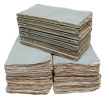
First, however partial, translation of Adam Smith's Wealth of Nations in Swedish rarely seen in this condition, thus making it the very first opportunity for Swedish speakers to study Adam Smith. A more lengthy translation was made in 1909 - 1911 but to this day a full Swedish translation has not been made.""Von Schulzenheim [nobleman, physician, country squire and politician] also published shorter articles in the review 'Läsning I blandade ämnen', an organ of the opposition to the absolutist and obscurantist regime of Gustavus IV Adolphus. The editor of the review was count Georg Adlersparre, an army officer and a political writer who in 1809 was to become one of the prime-movers behind the dethronement of the king. Adlersparre to was an admirer of Adam Smith. In 1799-1800 he published in the 'Läsning' his own Swedish translation of several selections from Wealth of Nations. In some cases Adlersparre added footnotes, making it easier for the readers to apply Smith's ideas to Swedish conditions. Those translations, to the best of my knowledge, were the first ones of Wealth of Nations in Sweden. They were followed by translations of other parts of Wealth of Nations, published in 1800 amd 1808. This time the translator was Erik Erland Bodell, an official of the Swedish Customs and thus, if you like, a colleague of Adam Smith."" ( Cheng-chung, Adam Smith Across Nations). Despite the comparatively late translation into Swedish, it still had a profound influence, not on economists since they were well aware of the original work in English, but upon politics and public opinion in general: ""There are few things more striking to the modem student of the history of ideas in Sweden than the negative phenomenon that Sweden was almost entirely uninfluenced by this fact and thus remained almost unaffected by English economic thought during a period when its superiority was most evident. As far as I am acquainted with the Swedish economic discussion and our popular economic literature of the 1860's and 1870's, there is almost no trace of any influence from English writers. [...]Of Adam Smith we have still only one abbreviated translation of his famous work and that was published as late as during this century"" and, as far as I know, nothing of Ricardo's or Malthus' exists in Swedish, nor do any of the major economic works of J.S. Mill."" (Heckscher, A survey of economic thought in Sweden, 1875-1950).The journal was preceded by Adlersparre's ""Läsning för landtmän"" 1795-96. The content is a mixture of literature, agriculture, law, philosophy and politics. Apart from the many contributions by Swedish authors, ""Läsning i blandade ämnen"" also contains texts by Kant, Gibbon and De Lolme OCLC lists copies at Yale, Minnesota, and Texas.

