 Write to the booksellers
4341 books for « adam c »Edit
-
Type
Art print (1)
Autograph (13)
Book (4295)
Drawings (2)
Engraving (16)
Magazine (3)
Manuscript (1)
Maps (2)
Music sheets (27)
New book (2)
Photographs (1)
-
Latest
Last 24h (4)
Last 3 days (1)
Last month (191)
Last week (4)
-
Language
Dutch (1)
English (4)
French (4277)
German (3)
Russian (78)
-
Century
16th (3)
17th (30)
18th (60)
19th (488)
20th (1556)
21st (418)
-
Countries
Belgium (189)
Brazil (1)
Canada (20)
China (1)
Côte d'Ivoire (6)
Denmark (100)
France (3604)
Germany (5)
Greece (3)
Netherlands (1)
Switzerland (351)
United Kingdom (3)
United States of America (79)
-
Syndicate
ALAC (18)
CLAM (14)
CLAQ (4)
CNE (2)
ILAB (2110)
NVVA (54)
SLACES (54)
SLAM (1874)
SNCAO (55)
Topics
- Adam (3481)
- Adam antoine (38)
- Adam jean pierre (16)
- Adam juliette (39)
- Adam michel (11)
- Africa (10)
- Alsace (27)
- Archaeology (13)
- Architecture (24)
- Autographs (72)
- Bibliophilism (12)
- Biography (21)
- Buffon (14)
- Caricature (11)
- Children’s books (35)
- Comic strip (44)
- Cooking (10)
- Dedication (13)
- Detective novels (140)
- Dictionaries (10)
- Drawings (15)
- Early printed books (12)
- Economics (12)
- Economics (54)
- Education (23)
- Education - morals (13)
- English (17)
- Engraving (books about) (17)
- Fantastic (20)
- Fine arts (16)
- First edition (97)
- French literature (14)
- Geography (9)
- Germanic languages (21)
- Germany (16)
- Hainaut (18)
- Helvética (25)
- History (136)
- Humour anecdotes (11)
- Illustrated books (23)
- Industrial arts & crafts - fine arts (18)
- Italy (12)
- Journalism (28)
- Latin (11)
- Law (21)
- Literature (660)
- Lorrain (12)
- Magazine (10)
- Malacology (10)
- Manuscripts (31)
- Maps (10)
- Mathematics (74)
- Medicine (13)
- Military arts (12)
- Music (18)
- Newspapers press (18)
- Opera ballet (10)
- Paris (47)
- Philosophy (63)
- Photography (30)
- Poetry (33)
- Poland (17)
- Police (20)
- Policy (18)
- Portraits (15)
- Psychology (15)
- Raphael (16)
- Regionalism (13)
- Reliure (19)
- Review (27)
- Reviews (20)
- Rops félicien (12)
- Russia (14)
- Scandinavian literature (54)
- Science fiction (19)
- Sciences (17)
- Scores (137)
- Short stories (9)
- Smith adam (23)
- Songs (33)
- Spying (37)
- Stendhal (10)
- Switzerland (18)
- Symbolism (14)
- Tales (45)
- Tea (11)
- Theatre (52)
- Travel (10)
- Ussr (9)
- Various (24)
- War (59)
- Williams tennessee (9)
- Women (the) (25)
- Youth (14)
ARK
2007 Kolkata, India, Laurens & Co Press, 2007, 430x340mm, 34 photographies en couleurs pleine page d’après les daguerréotypes de l’auteur, colophon sur une feuille séparée, plein cuir noir de l’éditeur, boîte en carton recouvert de toile noire, étiquette en couverture.Tirage total de 333 exemplaires numérotés au colophon, signé de l’empreinte du pouce du photographe.Conception graphique d’Andrew Roth et Adam Fuss. Bel exemplaire. (103049)

Très bon
Helen Adam, Laurie Anderson, Robert Ashley, Jim Brodey, Otis Brown, William S. Burroughs, Jackie Curtis, Mona DaVinci, Kenward Elmslie, The Fugs, John Giorno, Philip Glass, Anthony J. Gnazzo, Ted Greenwald, Steve Hamilton, Bernard Heidsieck, Joe Johnson, Michael Lally, Denise Levertov, Robert Lowell, Meredith Monk, Eileen, Myles, Frank O'Hara, Claes Oldenburg, Joel Oppenheimer, Ron Padget, Ishmael Reed, Ed Sanders, Harris Schift, Patti Smith, Lorenzo Thomas, Steve & Gloria Tropp, Anne Waldman, Larry Wendt, Robert Wolson & Christopher Knowles
Reference : 103164
(1978)
BIG EGO
1978 disque Etats Uis, 1978, Giorno Poetry System GPS 012-013, 2 disques 33trs, 30cm, sous pochette ouvrante, conception et photographies de Les Levine.The Dial-a-Poem poets Big Ego.Avec, Helen Adam, Laurie Anderson, Robert Ashley, Jim Brodey, Otis Brown, William S. Burroughs, Jackie Curtis, Mona DaVinci, Kenward Elmslie, The Fugs, John Giorno, Philip Glass, Anthony J. Gnazzo, Ted Greenwald, Steve Hamilton, Bernard Heidsieck, Joe Johnson, Michael Lally, Denise Levertov, Robert Lowell, Meredith Monk, Eileen, Myles, Frank O'Hara, Claes Oldenburg, Joel Oppenheimer, Ron Padget, Ishmael Reed, Ed Sanders, Harris Schift, Patti Smith, Lorenzo Thomas, Steve & Gloria Tropp, Anne Waldman, Larry Wendt, Robert Wolson & Christopher Knowles. (103164)

Faits mémorables de l'histoire de France
Didier Paris, Didier libraire éditeur et Aubert et Cie 1844. Grand in-8 plein cartonnage romantique bleu nuit estampé à froid, plats ornés d'un décor polychrome, fers spéciaux de l'éditeur, dos très orné, et tranches dorées. Non paginé. Illustré de 120 tableaux de M. Victor ADAM gravés par les premiers artistes de Paris. Frontispice de Beaucé d'après Barat et Gérard. Précédé d'une introduction par M. DE SEGUR. Rousseurs sur les premiers feuillets.
Toutes les expéditions sont faites en suivi au-dessus de 25 euros. Expédition quotidienne pour les envois simples, suivis, recommandés ou Colissimo.
DE LA TELEVISION CONSIDEREE COMME UN DES BEAUX-ARTS
Institut de France 1969 Institut de France 1969, in-4 broché, 13 pages, plaquette, bon état..
Plaquette de l'institut de France. Toutes les expéditions sont faites en suivi au-dessus de 25 euros. Expédition quotidienne pour les envois simples, suivis, recommandés ou Colissimo.
Histoires insolites suivies de Nouveaux contes cruels et de Lettres à Charles Baudelaire
Paris, Poussielgue, 1900. In Paris, Poussielgue, 1900. In-12 relié toile de 266 pages. Très bon état

Toutes les expéditions sont faites en suivi au-dessus de 25 euros. Expédition quotidienne pour les envois simples, suivis, recommandés ou Colissimo.
Un gallion chargé d'or
Spes Paris, Spes, 1960. In-8 broché de 189 pages couverture illustrées. Bel exemplaire
Toutes les expéditions sont faites en suivi au-dessus de 25 euros. Expédition quotidienne pour les envois simples, suivis, recommandés ou Colissimo.
Staline. L'homme et son temps. La montée
Calmann Levy Paris, Gallimard, Calmann Levy, 1977. In-8 broché de 536 pages. Couverture rempliée. Bon état.
Toutes les expéditions sont faites en suivi au-dessus de 25 euros. Expédition quotidienne pour les envois simples, suivis, recommandés ou Colissimo.
L'Angleterre en Egypte
Imprimerie du Centre Imprimerie du Centre, 1922. In-8 relié demi-basane bleue, dos à nerfs, titre doré. 416 pages; Papier jauni.

Toutes les expéditions sont faites en suivi au-dessus de 25 euros. Expédition quotidienne pour les envois simples, suivis, recommandés ou Colissimo.
Langage et connaissance suivi de six essais sur la philosophie du langage
Anthropos Anthropos 1973, In-8 broché de 372 pages. Bon état.
Toutes les expéditions sont faites en suivi au-dessus de 25 euros. Expédition quotidienne pour les envois simples, suivis, recommandés ou Colissimo.
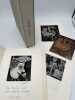
Contes cruels
Cercle Grolier Cercle Grolier, 1956. In-4 en feuillets sous chemise et double emboitage. Illustré de 25 Eaux-fortes de Mario AVATI tirées sur les presses à bras de J.J.J. RIGAL. Tirage à 220 exemplaires numérotés sur Grand Vélin de Rives. Exemplaire enrichi d'une Suite sur Japon nacré, signé de l'artiste sur la chemise, d'un superbe tirage original d'une eau-forte signée, de la plaque de cuivre de cette même eau-forte, du menu illustré, signé et dédicacé par Mario AVATI, du Cercle Grolier (15 décembre 1956 au Pavillon Dauphine) organisé pour la présentation de l'ouvrage. Egalement joint, dans le menu, les étiquettes d'une bouteille de vin "MARQUIS DE TERME 1951" + un 2ème menu. Légères rousseurs n'affectant que la chemie et l'intérieur de l'étui, sinon Très bel exemplaire, rare dans cette condition.


Toutes les expéditions sont faites en suivi au-dessus de 25 euros. Expédition quotidienne pour les envois simples, suivis, recommandés ou Colissimo.
MANUEL DU CHAUDRONNIER
PARIS LIBRAIRIE J.B. BAILLIERE 1924 Un volume in-12 de 412 pages + 48 pages de catalogue in-fine , dans son cartonnage éditeur illustré légèrement défraîchi , ouvrage enrichi de 324 figures in-texte , bon exemplaire . Bon Couverture rigide
L'amour suprême suivi de Histoires insolites et Akedysseril
Les humanoïdes associés Les Humanoïdes associés, 1979. In-8 broché, couverture à rabats de 245 pages. Très bon état

Toutes les expéditions sont faites en suivi au-dessus de 25 euros. Expédition quotidienne pour les envois simples, suivis, recommandés ou Colissimo.
LE JEU DE L'ARGENT suivi de LES CAPRICES DE LA BOURSE par Jacqueline GRAPIN.
Tchou Tchou 1970, fort In-8 broché, 372 pages. Bon état.
Toutes les expéditions sont faites en suivi au-dessus de 25 euros. Expédition quotidienne pour les envois simples, suivis, recommandés ou Colissimo.
Contes cruels suivis des Nouveaux Contes cruels
Belfond Belfond 1966, In-12 broché, 378 pages. Bon état.
Toutes les expéditions sont faites en suivi au-dessus de 25 euros. Expédition quotidienne pour les envois simples, suivis, recommandés ou Colissimo.
Art primitif
Arthaud Paris, Arthaud, 1959. In-8 broché de 345 pages, photos hors-texte. Petite tache en bord de couverture sinon Très bon état

Toutes les expéditions sont faites en suivi au-dessus de 25 euros. Expédition quotidienne pour les envois simples, suivis, recommandés ou Colissimo.
AU DECLIN DE L' ANCIEN REGIME , PERSONNAGES FRANCAIS , ECOSSAIS ET CANADIENS DU XVIIIe SIECLE & AUTOUR D' UN GRENIER A SEL : GENTILSHOMMES , BOURGEOIS , MOINES ET PAYSANS DE L'ANCIENNE FRANCE
PARIS LOUIS-MICHAUD 1924 2 tomes en un volume grand in-8 de 141 + 163 pages , dans une reliure demi basane marron clair marbrée , dos à 4 nerfs avec titrage doré , couvertures illustrées , illustrations , tirage à 600 ex. , 1 des 344 sur velin , le dos est insolé , autrement très bon exemplaire . Très bon Couverture rigide
Introduction à la sémantique. Problèmes de recherche de la sémantique. Catégories choisies de la sémantique
Anthropos Anthropos, 1968. In-8 broché 334 pages. Bon état.
Toutes les expéditions sont faites en suivi au-dessus de 25 euros. Expédition quotidienne pour les envois simples, suivis, recommandés ou Colissimo.
Chez les passants
Comptoir d'édition Paris, Comptoir d'édition, 1890. In-12 relié demi-basane Verte, dos lisse avec titre doré et date au bas du dos. Couverture conservée. 312 pages. Edition originale sur papier d'édition (après 15 exemplaires sur Japon). Frontispice de Félicien Rops (pointe sèche) imprimé sur vélin fort. Papaier légèrement jauni en marge, comme souvent. Bon état

Toutes les expéditions sont faites en suivi au-dessus de 25 euros. Expédition quotidienne pour les envois simples, suivis, recommandés ou Colissimo.
La tranchée. 1. Sauveur
Vents d'Ouest Vents d'Ouest, 2006. In-4 relié plein cartonnage éditeur. Edition originale. DL 02/06. Très bon état

Toutes les expéditions sont faites en suivi au-dessus de 25 euros. Expédition quotidienne pour les envois simples, suivis, recommandés ou Colissimo.
Les contes du 7eme souffle. 1. Aohige
Vents d'Ouest Vents d'Ouest 2002. In-4 cartonnage éditeur. Edition originale. DL 10.2002. Très bon état

Toutes les expéditions sont faites en suivi au-dessus de 25 euros. Expédition quotidienne pour les envois simples, suivis, recommandés ou Colissimo.
OEUVRES
PARIS CHEZ HUBERT ET COMPAGNIE 1806 Un volume grand in-12 de XLI + 324 pages , dans une reliure XIXe demi basane marron , dos plat à faux nerfs et titrage doré , tranches mouchetées , bien complet du portrait gravé en frontispice , édition soigneusement revue d' après celle originale de 1644 , ornée du portrait de l' auteur , gravé par Bovinet , augmentée de quelques notes ; et précédée d' une notice historique sur cet homme extraordinaire , par Pissot , bon à très bon exemplaire . Bon Couverture rigide
Commentaire sur les ordonnances contenant les difficultés meües entre les Docteurs de Droict canon et civil et décidées par icelles ordonnances, tant en matière bénéficiales, que civile et criminelles, instuctions des procez, jugements et exécutions d'iceux.
chez François Huguetan A Lyon, chez François Huguetan, 1653. In-4 plein vélin de l'époque, VI + 707 + 18 pages (pour l'index des matières). Belle vignette gravée en page de titre. Manque de vélin en partie supérieure du 2ème plat sans gravité. Sous-titre : Ensemble l'usage introduit et confirmé par les Arrests, avec les remarques sur ce qui a este adiousté ou diminué à aucunes desdites Ordonnances es compilations cy-devant faites. Le tout divisé en six livres. Dédié à Monseigneur le Cardinal de RICHELIEU, Grand Maistre, Chef et sur-Intendant de la Navigation et Commerce de France. Bel exemplaire, bien complet.

Toutes les expéditions sont faites en suivi au-dessus de 25 euros. Expédition quotidienne pour les envois simples, suivis, recommandés ou Colissimo.
Untersuchung der Natur und Ursachen von Nationalreichthümern, Aus dem Englischen. 2 Bände. - [THE SEMINAL FIRST TRANSLATION OF 'WEALTH OF NATIONS']
Leipzig, Weidmann, 1776-78. 8vo. Bound in two nice uniform contemporary half calf bindings with five raised bands and gilt lettering to spine. Ex-libris pasted on to pasted down front free end-papers and a small embossed stamp to front free end paper on volume 1 (""Buchhändler u. Antiquar Carl Helf""). Stamp to p. 1 of both volumes. Spines with light soiling and capital on volume 1 lacking a small part of the leather. A few light brown spots throught. A fine set. VIII, 632 pp"" XII, 740 pp.
First German edition, also being the very first overall translation, of Adam Smith's ground-breaking main work, the ""Inquiry into the Nature and Causes of the Wealth of Nations"". This seminal first translation of the work was undertaken by J.F. Schiller, who finished the first part of the translation in time for it to appear as soon as 1776, the same year as the original English edition. The second part appeared in 1778, the same year as the exceedingly scarce first French translation. This first German translation has been of the utmost importance to the spreading of Smith's ideas throughout Europe, and, after the true first, this must count as the most important edition of the work.""The influence of the Wealth of Nations [...] in Germany [...] was so great that 'the whole of political economy might be divided into two parts - before and since Adam Smith"" the first part being a prelude, and the second a sequel."" (Backhouse, Roger E., The Methodology of Economics: Nineteenth-Century British Contributions, Routledge, 1997.)""The first review of the translation, which appeared in the Göttingische gelehrte Anzeigen for March 10, 1777, by J. G. H. Feder, professor of Philosophy at the University of Göttingen, was very favorable. In the words of the reviewer: ""It is a classic"" very estimable both for its thorough, not too limited, often far-sighted political philosophy, and for the numerous, frequently discursive historical notes,"" but the exposition suffers from too much repetition."" (Lai, Cheng-chung. Adam Smith Across Nations: Translations and Receptions of The Wealth of Nations, Clarendon Press, UK, 2000).Until 1797, [...], the work of Adam Smith received scant attention in Germany. While Frederick II was living, Cameralism held undisputed sway in Prussia, and the economic change which began with the outbreak of the French Revolution had still not gained sufficient momentum to awake the economic theorists from their dogmatic slumber."" (Lai, Cheng-chung. Adam Smith Across Nations: Translations and Receptions of The Wealth of Nations, Clarendon Press, UK, 2000).Various German economist read the german translations and was inspired by it.""Christian Garve, [...], must be considered as among the important contributors to the spread of Smith's views. Himself a popularizer of philosophical doctrines, he was early attracted by the Scotch writers and became one of their foremost exponents in Germany."" In 1791 Garve began a second translation of the Smith's work and in the introduction to the the translation he wrote: ""It (Smith's work) attracted me as only few books have in the course of my studies through the number of new views which it gave me not only concerning the actual abject of his investigations, but concerning all related material from the philosophy of civil and social life"". Georg Sartorius, August Ferdinand Lueder and, perhaps the most important economist of the period, Christian Jacob Kraus, were all important figures in the spread of Smith's thought. ""The most significant of Kraus' works and that also which shows his conception of economic science most clearly is the five-volume work entitled State Economy. The first four volumes of this work are little more than a free paraphrase of the Wealth of Nations"". Kraus was: ""to a large extent responsible for the economic changes which took place in Prussia after 1807, in so far as they can be ascribed to Smithan influence."" (Lai, Cheng-chung. Adam Smith Across Nations: Translations and Receptions of The Wealth of Nations, Clarendon Press, UK, 2000).Kraus wrote of the present volume: ""[T]he world has seen no more important book than that of Adam Smith.... [C]ertainly since the times of the New Testament no writing has had more beneficial results than this will have.... [Smith's doctrines form] the only true, great, beautiful, just and beneficial system."" (Fleischacker, Samuel , A Third Concept of Liberty, Princeton University Press, 1999.)_____________Hailed as the ""first and greatest classic of modern thought"" (PMM 221), Adam Smith's tremendously influential main work has had a profound impact on thought and politics, and is considered the main foundation of the era of liberal free trade that dominated the nineteenth century. Adam Smith (1723-1790) is considered the founder of Political Economy in Britain, mainly due to his groundbreaking work, the ""Wealth of Nations"" from 1776. The work took him 12 years to write and was probably in contemplation 12 years before that. It was originally published in two volumes in 4to, and was published later the same year in Dublin in three volumes in 8vo. The book sold well, and the first edition, the number of which is unknown, sold out within six months, which came as a surprise to the publisher, and probably also to Smith himself, partly because the work ""requires much thought and reflection (qualities that do not abound among modern readers) to peruse to any purpose."" (Letter from David Hume, In: Rae, Life of Adam Smith, 1895, p. 286), partly because it was hardly reviewed or noticed by magazines or annuals. In spite of this, it did evoke immense interest in the learned and the political world, and Buckle's words that the work is ""in its ultimate results probably the most important book that has ever been written"", and that it has ""done more towards the happiness of man than has been effected by the united abilities of all the statesmen and legislators of whom history has preserved an authentic account"" (History of Civilisation, 1869, I:214) well describes the opinion of a great part of important thinkers then as well as now. Kress S. 2567Goldsmith 11394Menger 521Not in Einaudi

Untersuchung der Natur und Ursachen von Nationalreichthümern, Aus dem Englischen. 2 Bände. - [THE SEMINAL FIRST TRANSLATION OF 'WEALTH OF NATIONS']
Leipzig, Weidmann, 1776-78. 8vo. Bound in two nice uniform contemporary half calf bindings with five raised bands, black title-label and gilt lettering to spine. Small paper-label to upper compartment (Catalogue-number from an estate-library). Light wear to extremities, otherwise a very nice set. VIII, 632 pp" XII, 740 pp.
First German edition, also being the very first overall translation, of Adam Smith's ground-breaking main work, the ""Inquiry into the Nature and Causes of the Wealth of Nations"". This seminal first translation of the work was undertaken by J.F. Schiller, who finished the first part of the translation in time for it to appear as soon as 1776, the same year as the original English edition. The second part appeared in 1778, the same year as the exceedingly scarce first French translation. This first German translation has been of the utmost importance to the spreading of Smith's ideas throughout Europe, and, after the true first, this must count as the most important edition of the work.""The influence of the Wealth of Nations [...] in Germany [...] was so great that 'the whole of political economy might be divided into two parts - before and since Adam Smith"" the first part being a prelude, and the second a sequel."" (Backhouse, Roger E., The Methodology of Economics: Nineteenth-Century British Contributions, Routledge, 1997.)""The first review of the translation, which appeared in the Göttingische gelehrte Anzeigen for March 10, 1777, by J. G. H. Feder, professor of Philosophy at the University of Göttingen, was very favorable. In the words of the reviewer: ""It is a classic"" very estimable both for its thorough, not too limited, often far-sighted political philosophy, and for the numerous, frequently discursive historical notes,"" but the exposition suffers from too much repetition."" (Lai, Cheng-chung. Adam Smith Across Nations: Translations and Receptions of The Wealth of Nations, Clarendon Press, UK, 2000).Until 1797, [...], the work of Adam Smith received scant attention in Germany. While Frederick II was living, Cameralism held undisputed sway in Prussia, and the economic change which began with the outbreak of the French Revolution had still not gained sufficient momentum to awake the economic theorists from their dogmatic slumber."" (Lai, Cheng-chung. Adam Smith Across Nations: Translations and Receptions of The Wealth of Nations, Clarendon Press, UK, 2000).Various German economist read the german translations and was inspired by it.""Christian Garve, [...], must be considered as among the important contributors to the spread of Smith's views. Himself a popularizer of philosophical doctrines, he was early attracted by the Scotch writers and became one of their foremost exponents in Germany."" In 1791 Garve began a second translation of the Smith's work and in the introduction to the the translation he wrote: ""It (Smith's work) attracted me as only few books have in the course of my studies through the number of new views which it gave me not only concerning the actual abject of his investigations, but concerning all related material from the philosophy of civil and social life"". Georg Sartorius, August Ferdinand Lueder and, perhaps the most important economist of the period, Christian Jacob Kraus, were all important figures in the spread of Smith's thought. ""The most significant of Kraus' works and that also which shows his conception of economic science most clearly is the five-volume work entitled State Economy. The first four volumes of this work are little more than a free paraphrase of the Wealth of Nations"". Kraus was: ""to a large extent responsible for the economic changes which took place in Prussia after 1807, in so far as they can be ascribed to Smithan influence."" (Lai, Cheng-chung. Adam Smith Across Nations: Translations and Receptions of The Wealth of Nations, Clarendon Press, UK, 2000).Kraus wrote of the present volume: ""[T]he world has seen no more important book than that of Adam Smith.... [C]ertainly since the times of the New Testament no writing has had more beneficial results than this will have.... [Smith's doctrines form] the only true, great, beautiful, just and beneficial system."" (Fleischacker, Samuel , A Third Concept of Liberty, Princeton University Press, 1999.)_____________Hailed as the ""first and greatest classic of modern thought"" (PMM 221), Adam Smith's tremendously influential main work has had a profound impact on thought and politics, and is considered the main foundation of the era of liberal free trade that dominated the nineteenth century. Adam Smith (1723-1790) is considered the founder of Political Economy in Britain, mainly due to his groundbreaking work, the ""Wealth of Nations"" from 1776. The work took him 12 years to write and was probably in contemplation 12 years before that. It was originally published in two volumes in 4to, and was published later the same year in Dublin in three volumes in 8vo. The book sold well, and the first edition, the number of which is unknown, sold out within six months, which came as a surprise to the publisher, and probably also to Smith himself, partly because the work ""requires much thought and reflection (qualities that do not abound among modern readers) to peruse to any purpose."" (Letter from David Hume, In: Rae, Life of Adam Smith, 1895, p. 286), partly because it was hardly reviewed or noticed by magazines or annuals. In spite of this, it did evoke immense interest in the learned and the political world, and Buckle's words that the work is ""in its ultimate results probably the most important book that has ever been written"", and that it has ""done more towards the happiness of man than has been effected by the united abilities of all the statesmen and legislators of whom history has preserved an authentic account"" (History of Civilisation, 1869, I:214) well describes the opinion of a great part of important thinkers then as well as now. Kress S. 2567Goldsmith 11394Menger 521Not in Einaudi
Undersøgelse om National-Velstands Natur og Aarsag. Af det Engelske oversat og med nogle Anmærkninger oplyst af Dræbye. 2 Deele. [Anden Deel:] Hertil er føiet Gourvenør Pownals Brev til Forfatteren i hvilket nogle af de i dette Værk fremsatte Læresætn... - [FIRST DANISH EDITION OF ""THE WEALTH OF NATIONS""]
Kiøbenhavn [Copenhagen], 1779-80. 8vo. Two very nice contemporary brown half calf bindings with raised bands, gilt ornamentations and gilt leather title- and tome-labels. Volume two with a bit of wear to upper capital. Corners slightly bumped. Pencil annotations to verso of title-page in volume one" title-page in volume two mounted to cover up a small hole caused by the removal of an old owner's name. Internally very clean and bright. All in all a very nice, clean, fresh, and tight copy. Engraved (by Weise, 1784) armorial book plate to inside of front boards (Gregorius Christianus Comes ab Haxthausen). (12), 575" (8), 775, (3, - errata) pp.
The extremely scarce first Danish edition of Adam Smith's seminal main work, ""the first and greatest classic of modern economic thought"" (PMM 221), the main foundational work of the era of liberal free trade. This publication constitutes the first Danish work worth mentioning in the history of economic thought - in spite of the great interest in political economy that dominated Danish political thought in the last quarter of the 18th century. The value of Smith's work was not immediately recognized in Denmark at the time of its appearance and a quarter of a century had to go by for its importance to be acknowledged and for Danish political economy to adapt the revolutionizing theories of Adam Smith. Few copies of the translation were published and sold, and the book is now a great scarcity. As opposed to for instance the German translation of the work, Smith concerned himself a great deal with this Danish translation. As is evident from preserved correspondence about it, he reacted passionately to it and was deeply concerned with the reaction to his work in Scandinavia (see ""Correspondence of Adam Smith"", Oxford University Press, 1977).- As an example, Smith writes in a letter to Andreas Holt on Oct. 26th, 1780: ""It gives me the greatest pleasure to hear that Mr. Dreby has done me the distinguished honour of translating my Book into the Danish language. I beg you will present to him my most sincere thanks and most respectful Compliments. I am much concerned that I cannot have the pleasure of reading it in his translation, as I am so unfortunate as not to understand the Danish language."" The translation was made by Frants Dræby (1740-1814), the son a whiskey distiller in Copenhagen, who mastered as a theologian and was then hired by the great Norwegian merchant James Collett as tutor to his son. There can be no doubt that Dræbye's relation to the Collett house had a great impact upon his interest in economics. In the middle of the 1770'ies, Dræbye accompanied Collett's son on travels throughout Europe, which took them to England in the year 1776, the same year that the ""Wealth of Nations"" was published for the first time. Through the Colletts, Dræbye was introduced to the mercantile environment in England and here became thoroughly acquainted with English economics and politics at the time. It is presumably here that he gets acquainted with Adam Smith's freshly published revolutionary work. When Dræbye returned to Denmark at the end of 1776, he was appointed chief of the Norwegian secretariat of the Board of Economics and Trade. He began the translation of the ""Wealth of Nations"" that he brought back with him from England immediately after his return.""WN [i.e. Wealth of Nations] was translated into Danish by Frants Dræbye and published in 1779 (three years after the first English edition). The translation was initiated by Andreas Holt and Peter Anker, who were acquainted with Smith. Dræbye was a Dane who lived mainly in Norway, reflecting the fact that Norway was much more British-oriented than Denmark proper (Denmark and Norway were united until 1814, when Sweden took Norway away from the Danes"" in 1905 Norway became an independent state). Norwegian merchants lived from exporting timber to Britain and tended on the whole to be adherents of a liberal economic policy, whereas the absolutist government in Copenhagen was more German-oriented and had economic views similar to those in contemporary Prussia."" (Cheng-chung Lai (edt.): ""Adam Smith Across Nations"", p. (37)). The last quarter of the eighteenth century in Denmark was dominated by a lively discussion of monetary policy and the institutional framework best suited to realize that policy. There was a vital interest in questions of economic concern, and contemporary Danish sources refer to the period as ""this economic age"" and state things such as ""never was the world more economically minded"" (both from ""Denmark and Norway's Economic Magazine""). During this period, Smith's revolutionary ideas did not play a major role, however, and only at the beginning of the 19th century did Danish politicians and economists come to realize the meaning of Smith's views. ""Without exaggeration it can essentially be said that a quarter of a century was to pass from the time of the publication of the book in Denmark before Danish political economy fully made Adam Smith's theories and points of view its own. It took so long a time because the economic conditions as a whole in the years from 1780-1800 did not make desirable or necessary the changing of their concepts. That glorious commercial period had to pass before it was understood that we had altogether too little help in our own natural resources and that a different course was, therefore, necessary. Only when one had come so far could the new thinking find a nourishing soil so that it could develop strength with which to push aside the old ideas.""(Hans Degen: ""On the Danish Translation of Adam Smith and Contemporary Opinion Concerning It."" Translated by Henrietta M. Larson. In: Adam Smith Across Nations, p. 51). This first Danish translation is one of the very earliest translations of ""Wealth of Nations"""" it is only preceded by the German (1776-78) and the extremely scarce French (1778-79). As a comparison, the Italian translation does not appear until 1790-91, the Spanish 1792, the Swedish 1800-1804, the Russian 1802, etc.Adam Smith Across Nations: A4 - nr. 1. ""All five books were translated"" appears to be a complete translation. The long letter from Governor Pownall to Adam Smith (25 Sept. 1776) is added as the Appendix (vol. 2, pp. 683 ff.).""(PMM 221 - first edition)

