Write to the booksellers
11866 books for « a george »Edit
-
Type
Autographs (7)
Books (11639)
Drawings (1)
Engravings (8)
Magazines (31)
Manuscripts (1)
Maps (5)
Music sheets (151)
New books (1)
Old papers (5)
Photographs (11)
Postcards (1)
Posters (3)
Records (2)
-
Latest
Last 24h (3)
Last 3 days (10)
Last month (258)
Last week (24)
-
Language
Albanian (1)
Dutch (21)
English (128)
French (11390)
German (6)
Italian (1)
Japanese (1)
Latin (1)
Russian (316)
Spanish (1)
-
Century
16th (5)
17th (19)
18th (146)
19th (972)
20th (5261)
21st (662)
-
Countries
Belgium (748)
Brazil (10)
Canada (77)
China (47)
Côte d’Ivoire (12)
Denmark (226)
France (9407)
Germany (41)
Greece (15)
Netherlands (3)
Switzerland (934)
United Kingdom (24)
United States (322)
-
Syndicate
ALAC (65)
CLAM (79)
CLAQ (20)
CNE (5)
ILAB (5353)
NVVA (126)
SLACES (126)
SLAM (4705)
SNCAO (7)
Topics
- Archaeology (55)
- Architecture (42)
- Autographs (43)
- Balzac honoré de (27)
- Barber (152)
- Belgium (32)
- Berry (66)
- Besson george (35)
- Bibliophilism (31)
- Biography (98)
- Children’s books (85)
- China (31)
- China (76)
- Christianity (32)
- Christmas (59)
- Cinema (52)
- Civilisation (29)
- Comic strip (59)
- Dedication (32)
- Delamare george (30)
- Detective novels (94)
- Drawings (29)
- Duruy george (32)
- Early printed books (63)
- Economics (95)
- Egypt (38)
- Eliot george (129)
- England (67)
- English (275)
- English literature (27)
- Esotericism (26)
- Ethnology (63)
- Fantastic (26)
- Fine arts (129)
- First edition (316)
- French literature (34)
- Fronval george (79)
- Geography (191)
- Germanic languages (30)
- Gershwin georges (62)
- Helvética (34)
- History (363)
- Illustrated books (43)
- Industrial arts & crafts - fine arts (37)
- Langelaan george (34)
- Language (78)
- Literature (840)
- Magazine (26)
- Mathematics (45)
- Medicine (63)
- Mérédith george (62)
- Mikes george (40)
- Military arts (27)
- Music (34)
- Navy (37)
- Newspapers press (59)
- Orwell georges (209)
- Painters (50)
- Painting (61)
- Paris (54)
- Philosophy (130)
- Photography (88)
- Pléiade & album de la (27)
- Poetry (62)
- Policy (53)
- Psychology (52)
- Regionalism (43)
- Religions (99)
- Review (72)
- Reviews (77)
- Rock (39)
- Rock (37)
- Romanticism (26)
- Russia (31)
- Sand george (1623)
- Savage george (27)
- Sciences (53)
- Scores (187)
- Sculpture (30)
- Sociology (43)
- Songs (134)
- Spying (44)
- Steiner george (65)
- Switzerland (36)
- Tea (64)
- Theatre (76)
- Theology (39)
- Translation (37)
- Travel (62)
- United kingdom (62)
- United states (64)
- Ussr (27)
- Various (84)
- Waldemar george (58)
- War (126)
- Youth (41)
Progress and Poverty. An Inquiry into the Cause of Industrial Depressions, and of Increase of Want with Increase of Wealth - the Remedy. Author's Edition. - [""UNDOUBTEDLY THE MOST REMARKABLE AND IMPORTANT BOOK OF THE PRESENT CENTURY""]
San Francisco, Wm M.Hinton & Co, 1879. 8vo. In the original full cloth binding with gilt lettering to spine and a bit of blindstamping to boeards. A bit of light spotting to front board, spine faded, and capitals worn. Hinges internally a bit weak, and a professional closed tear to cloth at spine, barely noticeable. All in all an excellent copy in this fragile original binding. Internally very nice and clean. With the bookplate of Grove L. Johnson to inside of front board. (4), 512 pp.
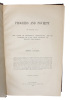

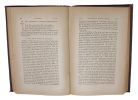
The exceedingly scarce first edition, printed in merely 200 copies (namely the ""Author's edition), of one of the most influential books ever published. Henry George's masterpiece of social reform, ""Progress and Poverty"", founded the ideology known as ""Georgism"", from which the worldwide social reform movement arose. The work initiated the Progressive Era and had a larger impact and ""a wider distribution than almost all other books on political economy put together"", as John Dewey put it (John Dewey's Foreword to Geiger's ""The Philosophy of Henry George"" (1933)). ""The present century has been marked by a prodigious increase in wealth-producing power. The utilization of steam and electricity, the introduction of improved processes and labor-saving machinery, the greater subdivision and grander scale of production, the wonderful facilitation of exchanges, have multiplied enormously the effectiveness of labor.At the beginning of this marvelous era it was natural to expect, and it was expected, that labor-saving inventions would lighten the toil and improve the condition of the laborer"" that the enormous increase in the power of producing wealth would make real poverty a thing of the past"", is how Henry George introduces his grandiose work of social reform. But though people naturally expected labor-saving inventions to improve working- and living conditions for all, quite the opposite was the case. As towns and cities grew - and grow - and new technologies continually improve methods of production and exchange, so misery, poverty and crime continued - and continues - to increase. Henry George magnificently pointed out the association of progress with poverty and how that precisely came to be the cause of our social and political difficulties. He pointed out, how this problem, if unsolved, would mean the downfall of civilization. And he provided the remedy - ""Deduction and induction have brought us to the same truth: Unequal ownership of land causes unequal distribution of wealth. And because unequal ownership of land is inseparable from the recognition of individual property in land, it necessarily follows that there is only one remedy for the unjust distribution of wealth: we must make land common property."" More precisely, Henry George proposed a single tax on land values.Henry George's revolutionary first book, ""Progress and Poverty"" sold millions of copies and became a world-wide bestseller. In sales, it exceeded all other books except the Bible during the 1890s. The first edition, however, was only printed in 200 copies, designated ""Author's Edition"" and is very scarce - not least in the original binding.""During the 1890s George, author of the 1879 bestseller Progress and Poverty, was the third most famous American, after Mark Twain and Thomas Edison. In 1896 he outpolled Teddy Roosevelt and was nearly elected mayor of New York.""""When Progress and Poverty first came out in 1879, it started a worldwide reform movement that in the US manifested in the fiercely anti-corporate Populist Movement in the 1880s and later the Progressive Movement (1900-1920). Many important anti-corporate reforms came out of this period, including the Sherman Antitrust Act (1890), a constitutional amendment allowing Americans to elect the Senate by popular vote (prior to 1913 the Senate was appointed by state legislators), and the country's first state-owned bank, The Bank of North Dakota (1919)."" (Stuart Jeanne Bramhall: Karl Marx vs Henry George, 2013).And the work continued to exercise its enormous influence throughout the Western world. According to a survey among British parliamentarians in 1906, the work was more popular than Walter Scott, John Stuart Mill, and William Shakespeare, and there is almost no end to the line of famous thinkers, who describe ""Progress and Poverty"" as life-changing, including George Bernard Shaw, Friedrich Hayek, H. G. Wells, and Leo Tolstoy, who like Winston Churchill, John Dewey, Bertrand Russell and many others claimed that it was impossible to refute Henry George on the land question. Philip Wicksteed characterized the book as ""by far the most important work in its social consequences that our generation or century [1882] has seen"", Alfred Russel Wallace hailed it as ""undoubtedly the most remarkable and important book of the present century,"" and placed it above Darwin's ""Origin of Species"", Albert Einstein concluded ""Men like Henry George are rare unfortunately. One cannot imagine a more beautiful combination of intellectual keenness, artistic form and fervent love of justice. Every line is written as if for our generation"", etc., etc. PROVENANCE: Grove Lawrence Johnson (1841 -1926) was an American attorney and politician from California. In addition to serving in both houses of the state legislature, Johnson also served as a United States Representative.

LÉGENDES RUSTIQUES. Dessins de Maurice Sand. Texte de George Sand.
1858 Paris, A. Morel et Cie, 1858. In-folio (288 X 395 mm) percaline violine, dos lisse muet, double encadrement avec écoinçons à froid sur les deux plats, auteur, titre et illustrateur dorés au centre du premier plat, grand fleuron à froid au centre du second plat, tranches dorées (reliure de l'éditeur) ; (2) ff. de faux-titre et titre illustré, VII pages (table des matières, fac-similé d'une lettre de George Sand à Maurice Sand et avant-propos), 48 pages et 12 planches hors-texte.
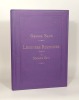
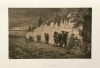
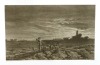
ÉDITION ORIGINALE du texte et premier tirage du titre illustré et des DOUZE STUPÉFIANTES COMPOSITIONS dessinées par Maurice SAND. Elles ont été lithographiées par E. Vernier, tirées sur Chine en fond teinté ; le titre a été lithographié par Rambert. Maurice SAND (1823-1889), dessinateur et peintre, est le fils de George Sand dont il a adopté le pseudonyme. Ses dessins sont un curieux mélange de romantisme bizarre et de noirceur fantastique, tout en restant empreints d'une « charmante naïveté d'invention », selon l'expression de son maître Eugène Delacroix. CONTES D'INSPIRATION FANTASTIQUE, ces "Légendes Rustiques" se présentent comme un parcours en douze récits, chaque chapitre étant consacré à un lieu ou à un personnage mystérieux : loup-garou, pierres vivantes, moine des marais, lavandières infanticides, etc. Parallèlement au conte pour enfant, la lecture montre aussi combien ces légendes étaient le quotidien des habitants de la région, mêlant foi chrétienne apotropaïque et superstitions effrayantes. On retiendra notamment le chapitre dans lequel on apprend à distinguer les lubins des lupins, les lubins étant des « Esprits chagrins, rêveurs et stupides, [qui] passent leur vie à causer dans une langue inconnue, le long des murs des cimetières. En certains endroits on les accuse de s'introduire dans le champ du repos et d'y ronger les ossements. Dans ce dernier cas, ils appartiennent à la race des lycanthropes et des garous, et doivent être appelés Lupins ». L'intérêt de George Sand pour le fonds culturel et linguistique berrichon s'inscrit d'abord dans le développement de l'ethnographie nationale en Europe au XIXe siècle. En effet, dans un style et une langue qui évoquent le parler populaire sans jamais se laisser aller au pastiche, George Sand a recréé, avec respect et amour, des vieilles légendes du Berry, tour à tour drôles, étranges et naïves. Avec ce recueil, elle participait activement - aux côtés des romantiques, Nerval, Paul Lacroix et d'autres - au premier mouvement de sauvegarde de ce patrimoine culturel que représentaient les contes et les chansons populaires menacés d'oubli ; elle en révélait ainsi les profondes valeurs poétiques. (Séverine MARÉCHAL, "Les Beaux esprits se rencontrent" - Éric BORDAS, "Les Histoires du terroir à propos des Légendes Rustiques de George Sand" - VICAIRE, VII, 262). BEL EXEMPLAIRE, très frais, de ce merveilleux album romantique, conservé dans son solide cartonnage éditeur en PARFAIT ÉTAT. NICE COPY. PICTURES AND MORE DETAILS ON REQUEST.

Kolhosp Tvaryn(i.e. “a Collective Farm of Animals” - being Animal Farm). - [FIRST UKRANIAN TRANSLATION OF ANIMAL FARM - WITH THE ONLY SURVIVING PREFACE TO THE WORK BY ORWELL HIMSELF]
(Munich), Prometheus, (1947). Original printed pictorial wrappers. In excellent condition with just slight edge wear and a small bump to upper capital. Internally also en very nice condition. Bookseller stamp to front free end-paper: Ukranian Book Store, Edmonton, Alberta. With portrait of Orwell after the preface.

Scarce first edition of the first Ukrainian translation of Animal Farm, being the only edition of Orwell’s masterpiece with a personal preface written by the author. Needless to say, Animal Farm constitutes one of the most important literary works of the 20th century. The satirical-political masterpiece magnificently reflects the events leading up to the Russian Revolution and brilliantly caricatures Stalinism. As Orwell himself put it, with this work, he deliberately tried ""to fuse political purpose and artistic purpose into one whole"". (Orwell, ""Why I Write""). Animal Farm brilliantly portrays not only the corruption of the revolution, but also how traits of human character themselves corrupt society. The greatest flaw of revolution is not the corrupt leadership on its own, but also the greed, indifference, ignorance, shortsightedness, wickedness, etc. that govern the individuals that make up the masses. George Orwell’s (1903-1950) Animal Farm was translated into Ukrainian by Ihor Ševcenko (1922-2009) – a Polish-born Ukrainian scholar, at the time residing in Germany – under the pseudonym Ivan Cherniatyns’kyi. The book was published by the Ukrainian publisher Prometheus in Munich in 1947. The Ukrainian title, Kolhosp Tvaryn (i.e. eng.: “A Collective Farm of Animals”) – a reference to Stalin’s collective farms (kolkhozy) – is deliberately not a literal translation, and “[a] brief examination of Ševcenko’s translation reveals that while his choices were distinctly loyal to the original English text, they simultaneously deepen the political allegory and expand the fairy tale tradition of the novel by domesticating certain aspects of the text through specific references to the Soviet Union and Ukrainian folktales.” (Gor, 2025, p. 18). The text “offered momentary solidarity, unity, and comfort to displaced Ukrainians through its loyal translation and parallel intentions between the source text and the translation” (Gor, 2025, pp. 3-4). At the time of the publication of Animal Farm, Ševcenko was regularly participating in the intellectual spheres of the Ukrainian Displaced Persons camps in Munich. There, he began sight-translating (i.e. without preparation) Animal Farm for camp residents. In April 1946, he wrote to Orwell requesting permission to publish the novel in Ukrainian. Among other things, he wrote to Orwell that ""‘Soviet refugees were my listeners. The effect was striking. They approved of almost all your interpretations. They were profoundly affected by such scenes as that of animals singing ""Beasts of England"" on the hill. Here I saw that apart from their attention being primarily drawn on detecting ""concordances"" between the reality they lived in and the tale, they visibly reacted to the absolute values of the book, to the tale types, to the underlying convictions of the author and so on. Besides, the mood of the book seems to correspond with their own actual state of mind... [T]he attitude of the Western World in many recent issues roused serious doubts among our refugees, who wondered how it were possible that nobody “knew the truth”’...Your bookhas solved the problem."" (Szewczenko to Orwell, 11 April 1946, XVIII, 236). Orwell immediately agreed to the translation, refused any royalties, and later also agreed to write a preface for it (Tatara, 2012"" Gor, 2025, p. 14). ""Although ‘frightfully busy’ Orwell did write this preface, which forever remained his most detailed explanation of the motives behind the “fairy story”. (Masha Karp: On the Ukranian Trnaslation of Animal Farm, the Orwell Foundation, 2022). The Ukrainian edition is especially interesting, not only because of its genesis, but also because it is the only edition of Orwell’s masterpiece with a personal preface written by the author, with the most detailed explanation of the motives behind the Animal Farm. In this context, it is worth noting that Orwell’s original version of the preface in English has been lost, and the only version surviving is the one he wrote for the Ukrainian translation. For the first edition in English, Orwell had intended to include his essay “Freedom of the Press” as a preface, but this was possibly rejected by the publishers. Overall, Orwell faced many obstacles when first publishing Animal Farm: It was rejected for almost a year by publishers, afraid of the criticism of England’s Soviet ally (Gor, 2025), and a preface never appeared. The small Ukranian printing press Promethius managed a print-run of 5.000 copies of the first edition of the Ukranian translation, but a mere 2.000 ended up being distributed throughout DP camps in and around Munich. The remaining copies were confiscated by the US military, who feared that it would be considered anti-Soviet propaganda and would jepardize the relationship with Stalin as the ally, who had helped defeat Hitler. The Americans thus handed over the confiscated copies to the Soviet authorities, who desctroyed them. Animal Farm was written between late 1943 and early 1944, when the wartime alliance with the Soviet Union was at its height and Stalin was held in highest esteem in Britain, among both the people and intelligentsia. Not surprisingly, it was initially rejected by both British and American publishers, and the publication of it was thus delayed. When it did appear, it became a great commercial success, however, probably not least due to the soon to follow Cold War. In his Ukranian preface, Orwell explains that 'It was of the utmost importance to me that people in Western Europe should see the Soviet régime for what it really was. Since 1930 I had seen little evidence that the USSR was progressing towards anything that one could truly call Socialism. On the contrary, I was struck by clear signs of its transformation into a hierarchical society, in which the rulers have no more reason to give up their power than any other ruling class. ""Having explained ‘why ‘totalitarianism is completely incomprehensible… to the workers and intelligentsia in a country like England’, Orwell named as the aim of his book ‘the destruction of the Soviet myth …essential’, he insisted, ‘for a revival of the Socialist movement’. (Orwell Foundation, 2022). The work is generally considered one of the best and most influential literary productions of the 20th century. The original subtitle ""A Fairy Story"" was dropped when the book was published in the United States, and all but one of the translations omitted it. References: Chalupa, Andrea (2012, March 7). How ‘Animal Farm’ Gave Hope to Stalin’s Refugees. Andrea Chalupa. Tatara, Halyna. (2012, July 31). George Orwell and the Ukrainian refugees: the untold story of Animal Farm. Ukrainian Institute London. The Orwell Foundation. (2022, March 15). Masha Karp on the Ukrainian translation of Animal Farm. The Orwell Foundation. The Orwell Foundation. Preface to the Ukrainian Edition of Animal Farm. Gor, Diana. (2025). Found in Translation: George Orwell's Animal Farm in Ukrainian. [Capstone project, Stanford University].
Vorlesungen über die Experimental-Physik nach ihrem gegenwärtigen Zustande. 2 vols. - [RARE FIRST GERMAN TRANSLATION]
Leipzig, Crusius, 1798 & 1799. 8vo. Uniformly bound in two contemporary half calf bindings. Light wear to extremities, spine slightly soiled. Internally very fine and clean. XVI, 686 pp. + 7 folded plates VIII, 774 pp. + 16 folded plates.


Rare first German translation of Adam’s ‘Lectures on natural and experimental philosophy’ arguably his most important and influential work covering a wide range of topics, including mechanics, optics, electricity, magnetism, and astronomy. George Adams was a prominent figure in the field of mathematical and scientific instrument making serving as the principal instrument maker during the mid-eighteenth century.. In 1756, he was appointed as the instrument maker to the Prince of Wales who would later become George III. He continued to hold this position when George ascended to the throne in 1760.
Treatment of Pernicious Anemia by a Special Diet. (Offprint from ""The Journal of the American Medical Association"", Aug. 14, 1926, Vol. 87, pp. 470-476). - [NOBEL PRIZE IN MEDICINE 1934 - ""ONE OF THE LANDMARKS IN THE HISTORY OF THERAPEUTICS""]
Chicago, American Medical Association, 1926. 8vo. Offprint in the original printed wrappers. Previous owner's name to top right corner of front wrapper. A very fine and clean copy. 19 pp.
First printing, in the scarce offprint, of Minot and Murphy's seminal Nobel Prize winning paper which ""ranks as one of the greatest modern advances in [anemia] therapy."" (GM). Minot and Murphy shared the Nobel Prize in Physiology or Medicine in 1934 with George Whipple ""for their discoveries concerning liver therapy in cases of anaemia"". ""The brilliant discovery by Minot and Murphy in 1926, demonstrating the dramatic effectiveness of liver preparations in pernicious anemia, forms one of the landmarks in the history of therapeutics."" (Satoskar, Pharmacology and Pharmacotherapeutics).""Prompted by pathologist George Whipple's research on the feeding of liver to anemic dogs, Minot and Murphy fed liver to their patients. In a now famous 1926 paper [the present], they announced its miraculous benefits for forty-five otherwise doomed souls."" (Wailoo, Drawing Blood: technology and Disease Identity in Twentieth-Century America). Up until the 1920'ies, pernicious anemia (also known as ""blood thinning"" disease) was a fatal disease, for which there was no cure. People who developed pernicious anemia - characterized by dangerously low counts of red blood cells - were left exhausted, hospitalized, and without the hope of being cured. ""Minot’s work and that of numerous pupils during the decade after 1926 initiated a new era in clinical hematology by replacing the largely morphologic studies of the blood and of the blood-forming and blood-destroying organs with dynamic measurements of their functions."" (DSB).In the early 1920s, most doctors believed that pernicious anemia was caused by a toxic substance in the body, and they prescribed doses of arsenic, transfusions, or removal of the spleen as treatments. But after these remedies were administered, patients had relapses, and death was inevitable. Across the world, 6,000 lives a year were lost to the scourge of pernicious anemia.""In 1923, Minot met William P. Murphy, who had graduated from Harvard Medical School in 1922 and who was to become an assistant instructor at Harvard Medical School in 1924. In their investigations to find a cure for pernicious anemia, Minot believed that research by George Whipple, a researcher whom he had known while both were at Johns Hopkins Hospital, was particularly significant. Whipple had completed experiments in which he bled dogs to make them anemic. Then he determined which foods restored their red blood cells. His results showed that red meat and certain vegetables were effective treatments, but liver was the best treatment. Minot wondered if Whipple's findings with dogs could be duplicated in humans. He and Murphy were determined to try it, and proceeded to do so with their private patients. Observing an increase in the patients' red blood cell counts, they thought they were on the right track, and decided to try the experiment with hospitalized patients which eventually led to their landmark discovery."" (The Harward University Gazette, 1998).After Minot and Murphy's verification of Whipple's results in 1926, pernicious anemia victims ate or drank at least one-half pound of raw liver, or drank raw liver juice, every day. This continued for several years, until a concentrate of liver juice became available.The active ingredient in liver remained unknown until 1948, when it was isolated by chemists Karl A. Folkers.Garrison & Morton: 3140
A Diet Rich in Liver in the Treatment of Pernicious Anemia. Study of one Hundred and Five Cases.
Chicago, American Medical Association, 1927. 8vo. Offprint in the original printed wrappers. A fine and clean copy. 25 pp.
First printing, in the scarce offprint, of Minot and Murphy's paper, published the year after their landmark Nobel Prize winning 1926-paper, in which they elaborate on their 1926-study and record further observations. Minot and Murphy shared the Nobel Prize in Physiology or Medicine in 1934 with George Whipple ""for their discoveries concerning liver therapy in cases of anaemia"". ""The brilliant discovery by Minot and Murphy in 1926, demonstrating the dramatic effectiveness of liver preparations in pernicious anemia, forms one of the landmarks in the history of therapeutics."" (Satoskar, Pharmacology and Pharmacotherapeutics).""Prompted by pathologist George Whipple's research on the feeding of liver to anemic dogs, Minot and Murphy fed liver to their patients. In a now famous 1926 paper [the present], they announced its miraculous benefits for forty-five otherwise doomed souls"" (Wailoo, Drawing Blood: technology and Disease Identity in Twentieth-Century America). Up until the 1920'ies, pernicious anemia (also known as ""blood thinning"" disease) was a fatal disease, for which there was no cure. People who developed pernicious anemia - characterized by dangerously low counts of red blood cells - were left exhausted, hospitalized, and without the hope of being cured. ""Minot's work and that of numerous pupils during the decade after 1926 initiated a new era in clinical hematology by replacing the largely morphologic studies of the blood and of the blood-forming and blood-destroying organs with dynamic measurements of their functions."" (DSB).In the early 1920s, most doctors believed that pernicious anemia was caused by a toxic substance in the body, and they prescribed doses of arsenic, transfusions, or removal of the spleen as treatments. But after these remedies were administered, patients had relapses, and death was inevitable. Across the world, 6,000 lives a year were lost to the scourge of pernicious anemia.""In 1923, Minot met William P. Murphy, who had graduated from Harvard Medical School in 1922 and who was to become an assistant instructor at Harvard Medical School in 1924. In their investigations to find a cure for pernicious anemia, Minot believed that research by George Whipple, a researcher whom he had known while both were at Johns Hopkins Hospital, was particularly significant. Whipple had completed experiments in which he bled dogs to make them anemic. Then he determined which foods restored their red blood cells. His results showed that red meat and certain vegetables were effective treatments, but liver was the best treatment. Minot wondered if Whipple's findings with dogs could be duplicated in humans. He and Murphy were determined to try it, and proceeded to do so with their private patients. Observing an increase in the patients' red blood cell counts, they thought they were on the right track, and decided to try the experiment with hospitalized patients which eventually led to their landmark discovery."" (The Harward University Gazette, 1998).After Minot and Murphy's verification of Whipple's results in 1926, pernicious anemia victims ate or drank at least one-half pound of raw liver, or drank raw liver juice, every day. This continued for several years, until a concentrate of liver juice became available.The active ingredient in liver remained unknown until 1948, when it was isolated by chemists Karl A. Folkers.Garrison & Morton: 3140
Signs and Symbols Illustrated and Explained: In a Course of Twelve Lectures on Free-Masonry. New Edition.
London, Sherwood, Gilbert and Piper, 1837. 8vo. Bound in a contemporary richly decorated full calf binding, elaborately tooled in gilt with Masonic symbolism. The covers are framed by blind-tooled fillets. At the center of each board appears a radiant sunburst composed of finely gilt rays, in the center a an open bible with the square and compasses, the principal emblem of Freemasonry. The corners are decorated with smaller symbolic tools and emblems, while the upper boards feature gilt sun and crescent moon motifs. All edges marbled. Edges of boards, spine and hinges with wear. Verso of front board stating “J. A. Grantham, Wincle, Chechire”. In hand: “Gift of F. P. Reynold”. Internally with light occasional brownspotting. XV, (1), 272, 6, (2) pp.
Rare second edition of one of the classic nineteenth-century works on Masonic symbolism. In a series of twelve lectures George Oliver examines and interprets the most important emblems, allegories and ritual symbols of Freemasonry, including the square and compasses, the sun and moon, the Temple of Solomon and the symbolic tools of the various degrees. Oliver’s writings were very influential in shaping the Victorian understanding of Masonic symbolism and the philosophical interpretation presenting Freemasonry as a moral and allegorical system rooted in biblical and ancient traditions. ""Oliver George (1782–1867), topographer and writer on freemasonry, was descended from an ancient Scottish family, some members of which came to England in the reign of James I, and were subsequently settled at Clipstone Park, Nottinghamshire. He was born at Papplewick, Nottinghamshire, on 5 Nov. 1782, and, after receiving a liberal education at Nottingham, he became in 1803 second master of the grammar school at Caistor, Lincolnshire. Six years afterwards he was appointed to the headmastership of King Edward's grammar school at Great Grimsby. He was ordained deacon in 1813, and priest in 1814" and in July 1815 Bishop Tomline collated him to the living of Clee, when his name was placed on the boards of Trinity College, Cambridge, by Dr. Bayley, subdean of Lincoln and examining chaplain to the bishop, as a 'ten-year man.' In the same year he was admitted as surrogate, and a steward of the clerical fund. He had been elected deputy past grand master of masons for Lincolnshire in 1832, and in 1840 he was appointed an honorary member of the grand lodge of Massachusetts, with the rank of deputy grand master.” (Dictionary of National Biography)
Ovid's Metamorphosis. Englished by G. S. - [THE EARLIEST ENGLISH POETRY WRITTEN IN THE NEW WORLD]
London, Robert Young, 1628. 12mo. Bound in a worn contemporary full calf binding. Gilt lines to spine and boards. Spine and boards rubbed and cracked, and corners bumped, but binding tight and sturdy. Notes to front free endpaper in a near-contemporary hand. Engraved title-page, nearly detached and torn through the center (reinforced from verso). Evenly browned, otherwise clean internally. (25), 445,(18) pp.
The exceedingly scarce second complete edition of the English poet and colonist George Sandys' celebrated translation of Ovid's 'Metamorphoses' (the first being London, 1626). In 1621 Sandys took up the post of treasurer of the colony of Virginia. By the time he reached Virginia, he had already completed a translation of the first five books (out of 15) of the 'Metamorphoses', which - according to tradition - was published in 1621" but with no surviving copies of this edition, its existence remains a matter of speculation. In 1947, however, a copy of what appears to be the second edition of this 'ghost', also printed in 1621, was found 'in a barrow in front of an obscure bookshop' (McManaway, 1948, 'The First Five Bookes of Ovids Metamorphosis, 1621, ""Englished by Master George Sandys""'). During his treasurership, he translated the remaining ten books and published a full translation in 1626 with William Stansby in London, the edition upon which the present is based. With the exception of the first five books, translated before he reached the US, Sandys' translation thus constitutes the earliest significant poetic output written in the New World. With only 11 copies recorded by OCLC, the present edition is by far the most uncommon of the complete editions.
Zur Quantentheorie des Atomkernes. Mit 5 Abbildungen. - [ALFA-DECAY EXPLAINED]
Berlin, Julius Springer, 1928. 8vo. Bound in contemporary half cloth with marbled boards and gilt lettering to spine. In ""Zeifschrift für Physik, 51 Band., 1928"", VII, (1), 903 pp.]. (Entire volumeoffered). Library stamp to front free end-paper. A fine and clean copy. [Gamow:] Pp. 204-212..
First printing of Gamow's seminal paper in which he explained alfa-decay for the first time. By 1928, George Gamow had solved the theory of the alpha decay via tunneling. The alpha particle is trapped in a ""potential well"" by the nucleus. In classic physics, it is forbidden to escape, but according to the then newly discovered principles of quantum mechanics, it has a tiny (but non-zero) probability of ""tunneling"" through the barrier and appearing on the other side to escape the nucleus. Gamow solved a model potential for the nucleus and derived from first principles a relationship between the half-life of the decay, and the energy of the emission. Alpha particles were first described in the investigations of radioactivity by Ernest Rutherford in 1899.Parkinson 507.""One of the first applications of quantum tunneling was by the physicist George Gamow in 1928, soon after the development of quantum mechanics. Alpha particles, which consist of two protons and two neutrons, are emitted by some nuclei. For example, ordinary uranium, 238U, with a lifetime of 4.5 billion years, decays by emitting an alpha particle.For decades alpha decay had presented a problem: the emitted alpha particles seemed to have too little energy to get out of the nucleus. The Coulomb barrier arises from the combined effect of the Coulomb repulsion between the alpha particle and the nucleus (both positively charged) and the nuclear force that attracts the two particles. The energy of the emitted alpha particle is less than the top of this barrier. Classically, the particle would be unable to get out of the nucleus, but it obviously does.Gamow suggested that alpha particles tunnel through the barrier. If so, the half-life of the decay should depend on the width and height of the barrier, and it does: the lower and thinner the barrier, the greater the chance of penetrating it. As the alpha particle's energy increases, the particle sees both a lower and thinner barrier so the probability of getting through increases extremely rapidly. For example, the energies of the alphas emitted by 232Th and 212Po are 4.05 MeV and 8.95 MeV, respectively, while their respective half-lives are 14 billion years and 0.3 millionth of a second. Thus, a factor of about two in energy produces a difference in half-lives of sixteen orders of magnitude (that is, sixteen powers of ten)!"" (Rigden, Building Blocks of Matter: A Supplement to the Macmillan Encyclopedia of , p. 393).
Zur Quantentheorie des Atomkernes. Mit 5 Abbildungen.
Berlin, Julius Springer, 1928. Without wrappers. In ""Zeifschrift für Physik, 51 Band., Dritte und Viertes Heft. Titlepage to Bd. 51. Pp. 165-308.(Entire issue offered). Gamov's paper: pp. 204-12., textillustr. A stamp on titlepage.
First printing of Gamow's first major contribution to physics, his theory of alpha-decay.By 1928, George Gamow had solved the theory of the alpha decay via tunneling. The alpha particle is trapped in a ""potential well"" by the nucleus. In classic physics, it is forbidden to escape, but according to the then newly discovered principles of quantum mechanics, it has a tiny (but non-zero) probability of ""tunneling"" through the barrier and appearing on the other side to escape the nucleus. Gamow solved a model potential for the nucleus and derived from first principles a relationship between the half-life of the decay, and the energy of the emission. Alpha particles were first described in the investigations of radioactivity by Ernest Rutherford in 1899.""One of the first applications of quantum tunneling was by the physicist George Gamow in 1928, soon after the development of quantum mechanics. Alpha particles, which consist of two protons and two neutrons, are emitted by some nuclei. For example, ordinary uranium, 238U, with a lifetime of 4.5 billion years, decays by emitting an alpha particle.For decades alpha decay had presented a problem: the emitted alpha particles seemed to have too little energy to get out of the nucleus. The Coulomb barrier arises from the combined effect of the Coulomb repulsion between the alpha particle and the nucleus (both positively charged) and the nuclear force that attracts the two particles. The energy of the emitted alpha particle is less than the top of this barrier. Classically, the particle would be unable to get out of the nucleus, but it obviously does.Gamow suggested that alpha particles tunnel through the barrier. If so, the half-life of the decay should depend on the width and height of the barrier, and it does: the lower and thinner the barrier, the greater the chance of penetrating it. As the alpha particle's energy increases, the particle sees both a lower and thinner barrier so the probability of getting through increases extremely rapidly. For example, the energies of the alphas emitted by 232Th and 212Po are 4.05 MeV and 8.95 MeV, respectively, while their respective half-lives are 14 billion years and 0.3 millionth of a second. Thus, a factor of about two in energy produces a difference in half-lives of sixteen orders of magnitude (that is, sixteen powers of ten)!"" (Rigden, Building Blocks of Matter: A Supplement to the Macmillan Encyclopedia of , p. 393).Parkinson ""Breakthroughs"", 1928 P.
LETTRES D'UN VOYAGEUR. [2 volumes].
1837 Paris, Félix Bonnaire, 1837. Deux volumes in-8 (146 X 227 mm) demi-maroquin noir à grain long et à petits coins, dos lisse composé de deux grands compartiments entièrement ornés de fers dorés à décor rocaille et d'un petit compartiment central contenant auteur, titre et tomaison dorés, plats et dos (petits manques aux dos) de la couverture conservés (BERNASCONI). Tome I : faux-titre, titre, 422 pages ; Tome II : faux-titre, titre, 414 pages.

ÉDITION ORIGINALE de cet « ouvrage important et recherché », selon Carteret. RARISSIME EXEMPLAIRE IMPRIMÉ SUR VERGÉ FORT DE HOLLANDE, tirage de luxe inconnu des bibliographies spécialisées. Ce papier est plus épais que celui du tirage courant, également imprimé sur papier vergé. Seul Georges Vicaire évoque ce papier de Hollande, à propos de l'exemplaire des "Oeuvres Complètes" de George et Maurice Sand, référencé sous le numéro 769 du catalogue de leur bibliothèque, et qui est annoncé sur «papier de Hollande ». Ces deux volumes des "Lettres d'un voyageur" composent en effet les tomes XV et XVI des "Oeuvres Complètes" publiées par Félix Bonnaire et qui comptent 27 tomes. Clouzot écrit, à propos de cette édition parue de 1837 à 1842 : «Édition très rare complète et des plus importantes. En effet de nombreuses oeuvres y paraissent pour la première fois. Il a été tiré fort probablement quelques vélin fort de chacun de ces volumes ». Carteret reproduit à pleine page la couverture bleu ciel avec encadrement de dentelle de cet ouvrage, mais n'évoque aucun grand papier pour cette édition. (VICAIRE, T. VII, pp. 302/303 et 305/306 - CLOUZOT, pp. 243 et 250 - CARTERET, II, pp. 307 et 318). Composés de douze lettres, datées du 15 mai 1834 au 29 mai 1836, ces récits constituent un singulier recueil, inclassable tant il est divers, rassemblant des lettres qui sont aussi des fragments de journal intime, des récits de voyage, des essais d'esthétique, de politique et de morale. On sait que les trois premières lettres, écrites à Venise après le départ d'Alfred de Musset, ont été inspirées par la relation orageuse de George Sand avec ce dernier, lors de leur voyage en Italie en 1833-34. Alfred de Musset s’inspirera de cette liaison pour écrire son unique roman, "La Confession d'un enfant du siècle", qu’il publiera en 1836. La septième lettre est adressée à Franz Liszt. BEL EXEMPLAIRE non rogné, soigneusement lavé et encollé, avec les plats des fragiles couvertures bleu ciel en parfait état, présenté dans une élégante reliure romantique à l'imitation de BERNASCONI. FINE COPY. PICTURES AND MORE DETAILS ON REQUEST.
Two masonic certificates certifying that Brother George Henry Jenvey was made a Mason. - [MASONIC CERTIFICATE]
Portland, December, 5929 (1929). Two folios (405 x 315). Single printed leaf with manuscript additions. Signed ""G. H. Jenvey"", with seal of masonry and engraved figures. Signed by the Grand Secretary, or Chief Executive, of the United Grand Lodge of England ""P. Colville Smith"". Fine and clean, folded. 2 ff.


Two rare masonic document certifying Brother Jenvey first was made brother in the Portland Chapter No. 1037 and 1034.
"SEDLEY, CHARLES (+) ETHEREGE, GEORGE (+) BUCKINGHAM, JOHN SHEFFIELD (+) BEHN, APHRA et al.
Reference : 61081
(1673)
A Collection of poems written upon several occasions by several persons. With many additions, never before in print.
London, for Tho. Collins and John Ford in Fleet-Street, and Will. Cademan and Th. Popes Head New-Exchange Strand, 1673. 8vo. In contemporary full sprinkled calf with five raised bands and gilt lettering and ornamentation to spine. Small paper-label pasted on to top of spine. Previous owner's name in contemporary hand to lower margin of title-page. Light occassional marginal browning and worm-tract to last 4 leaves. Overall a good copy. (6), 185 pp. With numerous typographical errors in pagination, but complete.
Often referred to as the second edition of this rare collection of poems. No poet is listed by name, but John Sheffield, Marquis of Normanby, Charles Sedley, George Etherege, and Aphra Behn have been identified as authors. A shorter version in two parts had appeared the year before, so all though technically being a second edition, this version contains new material. These authors are all associated with the period of English literature known as the ""Restoration Era"" (1660-1700) and were influential figures in the literary and theatrical scene of late 17th century England.The period was marked by a resurgence of the arts, theater, and literature characterized by wit, satire, and exploration of social norms.
A Brief Exposition on the XII Smal Prophets" The First Volume Containing an Expostion on the Prophecies of Hosea, Joel, and Amos (+) A Brief Exposition of the Prophecies of Obadiah, Jonah, Micah, Nahum, Habakkuk and Zephaniah (...) (+) A Brief Exposit...
London, Ralph Smith, 1654 [part 2 and 3] & 1655 [part 1]. 8vo. In contemporary full calf with four raised bands. Boards triple ruled in blind. Small paper-label pasted on to upper compartment. Wear to extremities, boards with a few stains and scratches. Inner hinges split. Dampstain in inner margin throughout. (15), 534, (16), 333, (17), 296 pp. Each with separate title pages, included in the collation.


Scarce first and only edition of this work on the minor prophets. Little is known of its author George Hutcheson: ""an English Biblical scholar, flourished about the middle of the 17th century. He was a minister first at Colomonell, and later at Edinburgh, but was ejected for nonconformity about 1660. In 1669 he preached at Irvine, though he continued steadfastly to oppose the use of the Episcopal liturgy. He died hi 1678.” (McClintock and Strong Biblical Cyclopedia)
Observations historiques et critiques sur le Mahometisme.
Genève, chez Barrillot & fils, 1751. 8vo. In contemporary full calf with five raised bands and gilt lettering and ornamentation to spine. Binding with some wear. Ex-libris pasted on to verso of front board. Map with a few nicks and tears in margin. Light occassional brownspotting throughout, otherwise a fine and clean copy. (2), 510 pp. + 4 folded plates (including the folded map).


Rare first separately published edition of Sale’s important introduction to his English 1734-translation of the Koran, originally being published as ‘Preliminary Discourse’, but here in the seperate publication translated into French. Though he did not place Islam at an equal level with Christianity, Sale seemed to view Mohammad as a conqueror who sought to destroy idolatry and a lawgiver who managed to change and supplant many practices in Arabia:“George Sale (1697-1736), the first translator of the Qur’an from Arabic to English and the author of the influential ‘preliminary discourse’ (1734), is regularly given credit for facilitating a balanced approached to Islam among the educated European public” (Lange, Follow the Light).
Statistical Papers of George Udny Yule (Born 1871-Died 1951). Selected by Alan Stuart and Maurice G. Kendall.
London, Griffin, (1971). 4to. Orig. full fabrikoid with dustjacket. (6),447 pp. and portrait.
First edition.
On the Theory of Probabilities. Received June 19, - Read June 19, 1862.
London, Taylor and Francis, 1862. 4to. No wrappers as extracted from ""Philosophical Transactions"" 1862. Vol. 152 - Part I. Pp. 225-252. Clean and fine, wide-margined..
First appearance of one of Boole's last papers. - ""This paper has for its object the investigation of the general analytical condition of a Method for the solution of Questions in the Theory of Probabilities, which was proposed by me in a work entitled ""An Investigation of the Laws of Thought, 1854."" (Foreword to the paper).George Boole is mostly known for his ""An Investigation on the Laws of Thought"" 1854 and his developments of a form of symbolic logic, called Boolean Algebra. But he also did importent work on the Calculus, Differential Equations and the Theory of probabilities.
On Simultaneous Differential Equations of the First Order in which the Number of the ariables exceeds by more than one the umber of the Equations. Received June 19, - Read June 19, 1862.
London, Taylor and Francis, 1862. 4to. No wrappers as extracted from ""Philosophical Transactions"" 1862. Vol. 152 - Part I. Pp. 225-252. A very faint dampstain to upper corners on the last 2 leaves, otherwise clean and fine, wide-margined..
First appearance of one of Boole's last papers.George Boole is mostly known for his ""An Investigation on the Laws of Thought"" 1854 and his developments of a form of symbolic logik, called Boolean Algebra. But he also did importent work on the Calculus, Differential Equations and the heory of probabilities.
On the Differential Equations which determine the form of the Roots of Algebraic Equations. Received April 27, - Read May 26, 1864.
(London, Taylor and Francis, 1865). 4to. No wrappers as extracted from ""Philosophical Transactions"" 1864. Vol. 154 - Part III. Pp. 733-755. Clean and fine.
First printing of Boole's last paper, - Boole, the founder of Computer science.George Boole is mostly known for his ""An Investigation on the Laws of Thought"" 1854 and his developments of a form of symbolic logic, called Boolean Algebra. But he also did importent work on the Calculus, Differential Equations and the Theory of probabilities.
Frank Fairlegh or Scenes from the Life of a private Pupil.
London, George Routhledge & Sons, (n. date, ca. 1890). 8vo. Orig. full cloth. Gilt lettering to spine. Uncut. X,(2),400 pp. and 30 fine engraved and handcoloured plates by Cruikshank. Internally fine and clean.
Principia Ethica. - [FOUNDING ANALYTIC PHILOSOPHY - INTRODUCING THE NATURALISTIC FALLACY]
Cambridge, 1903. 8vo. Orig. brown full cloth with gilt lettering to spine. Gilt armorial centre-piece to front board (indicating that this was a prize from ""Coll. di Joh. Bapt.""). A bit of bumping to capitals and corners, otherwise fine. Inner hinges slightly weak and a few marginal pencil annotations. XXVII, (1), 232 pp.


First edition of Moore's seminal magnum opus, his hugely influential ""Principia Ethica"", which helped found analytic philosophy and introduced and named the ""naturalistic fallacy"". ""Moore's ""Principia Ethica"" (1903) is a landmark in the history of ethics. Its impact and influence on subsequent ethical theory, at least in Anglo-American philosophy, have been tremendous. Its specific doctrines of the indefinability of good and of the naturalistic fallacy, whether reinforced, amended, or even rejected, by later theorists, have served as the starting points of much of twentieth century philosophy."" (Morris Weitz, 20th-Century Philosophy: The Analytic Tradition, (1966), p. 68).George Edward Moore (1873-1958) is one of the most influential twentieth century philosophers, and his contributions to analytic philosophy can be compared only to those of Russell, Wittgenstein, and Frege, with whom he founded this philosophical discipline. His impact on Anglo-American philosophy in the 20th century is unsurpassed. ""Principia Ethica"" is the most important of Moore's works. In this work, he makes use of analysis to establish the main doctrines of the book, and thereby lays one of the cornerstones of analytic philosophy. Moore here applies logic to ethics and shows us how this can provide a better foundation for ethics. Moore begins by showing that analysis will reveal to us that ""good"" is a simple, non-natural, and indefinable property, which cannot itself be defined and analyzed, because it is not a complex object that can be divided, but a simple object of thought and goes on to define ethics as an inquiry into what is good. He furthermore shows how sometimes false premises in the definition of good lead to false conclusions about ethical behavior and he introduces his seminal concept ""naturalistic fallacy"", which is defined as the error of assuming that ""good"" can be defined by naming various properties of things which we believe to be good. ""Naturalism"", according to Moore falsely assumes to have defined ""good"" and is therefore unable to provide any logical reason for any principle of ethics.""It appears to me that in Ethics, as in all other philosophical studies, the difficulties and disagreements, of which history is full, are mainly due to a very simple cause: namely to the attempt to answer questions, without first discovering precisely WHAT question it is which you desire to answer. "" (Moore, Preface, p. VIII). ""The influence [of ""Principia Ethics""] was not only overwhelming"" it was exciting, exhilarating, the beginning of a renaissance, the opening of a new heaven on a new earth, we were the forerunners of a new dispensation, we were not afraid of anything."" (Keynes).
Three Dialogues between Hylas and Philonous. The Design of which Is plainly to demonstrate the Reality and Perfection of Humane Knowledge, the Incorporeal Nature of the Soul, and the Immediate Providence of a DEITY: In Opposition to Sceptics and Athei... - [THE PERCEPTUAL RELATIVITY]
London, Printed by G. James, for Henry Clements, 1713. 8vo. Contemporary marbled full calf boards, prettily rebacked in period style with gilt title-label, raised bands and gilt ornamentations to spine. During the re-backing, new end-papers have been inserted, but the original front end-paper , containing old owners' inscriptions, has been preserved and is still withbound. Three old owners' names to title-page, two of them crossed out. The title-page had been repaired at the outer margin, affecting three letters in the last three lines of the subtitle (To open a Method for rendering the/ SCIENCES more easy, useful, and/ compensious), namely the ""he"" in ""the"" and the ""d"" in ""and"" as well as part fo the double-ruled border, which has been drawn up again. The final leaf with a somewhat crode repair causing loss of some words towards the hinge. A small hole in A3, not repaired. A bit of brownspotting, mostly at beginning and end. With its flaws, still and overall acceptable copy of this extremely rare title. (10), 166 pp.
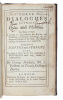
The very scarce first edition of Berkeley's other magnum opus, his great work of metaphysics, second in importance only to his ""Treatise Concerning the Principles of Human Knowledge"" (1710). The present work is not only a popularized version of the ""Treatise"", though it is a fact that it was more widely studied and more easily understood - being written as an almost Platonian dialogue between Hylas (Greek for ""matter"" - thought to be the representative for John Locke) and Philonous (Greek for ""the lover of reason"" - Berkeley's spokesman) - it also constitutes a thorough and elaborated explanation of Berkeley's central ideas and the emergence of many of the principal thoughts that we now associate with him and his anti-materialist philosophy.""In this Treatise, which does not presuppose in the Reader, any Knowledge of what was contained in the former (i.e. the ""Treatise""), it has been my Aim to Introduce the Notions I advance, into the Mind, in the most easy and familiar manner" especially, because they carry with them a great Opposition to the Prejudices of Philosophers, which have so far prevailed against the common Sense and natural Notions of Mankind.If the principles, which I here endeavour to propagate, are admitted true" the Consequences which, I think, evidently flow from thence, are, that Atheism and Scepticism will be utterly destroyed, many intricate Points made plain, great Difficulties solved, several useless Parts of Science retrenched, Speculation referred to Practise, and Men reduced from Paradoxes to common Sense"" (Preface, pp. (7-8)).In the present work, Berkeley, one of the greatest thinkers of early modern philosophy, sets out to alter the direction of philosophy and set straight the boundaries of man's knowledge of himself and the world around him. He seeks to bring back man to common sense and to bring back science and knowledge to that which is essential and factual. In the present work he famously defends the idealism, because of which he is still considered one of the greatest metaphysicians ever. As his ""Treatise"" is remembered today for the famous phrase ""Esse est percipi"" - to be is to be perceived - so his ""Dialogues"" is remembered for the introduction of the perceptual relativity argument (stating that the same object can have different characteristics, e.g. shape, colour, etc., depending on the perspective of the observer, e.g. distance, angle, light, etc.). Furthermore, as Berkeley had used God in the ""Principles"" as the CAUSE or originator of our ideas of sense, in the ""Dialogues"" he brings God a very important step further, stating that our ideas must EXIST IN God when not perceived by us, thus seeing this as the warrant for the continuity of our ideas (God being unchanging). This leap (from claiming that God must cause our ideas to claiming that our ideas must exist in God) that Berkeley thus takes in the ""Dialogues"" is among the most important within his philosophy, guaranteeing continuous existence to physical objects. The work is considered the foremost representative of Berkeley's phenomenalism.""George Berkeley, Bishop of Cloyne, was one of the great philosophers of the early modern period. He was a brilliant critic of his predecessors, particularly Descartes, Malebranche, and Locke. He was a talented metaphysician famous for defending idealism, that is, the view that reality consists exclusively of minds and their ideas. Berkeley's system, while it strikes many as counter-intuitive, is strong and flexible enough to counter most objections. His most-studied works, the Treatise Concerning the Principles of Human Knowledge (Principles, for short) and Three Dialogues between Hylas and Philonous (Dialogues), are beautifully written and dense with the sort of arguments that delight contemporary philosophers. He was also a wide-ranging thinker with interests in religion (which were fundamental to his philosophical motivations), the psychology of vision, mathematics, physics, morals, economics, and medicine. Although many of Berkeley's first readers greeted him with incomprehension, he influenced both Hume and Kant, and is much read (if little followed) in our own day."" (SEP).Berkeley published his first important philosophical work, ""Essay Toward a New Theory of Vision"" in 1709, aged 24. The book was well-received and a second edition came out later that same year. The following year he published ""A Treatise Concerning the Principles of Human Knowledge"" , in which he sought to lay out a complete philosophical system based on the idea that the only existing entities in the world are ideas and the mind that perceives them. The work was not very well received, however. This did not affect his search for truth, though, and he continued the outlay of his philosophical system in his ""Three Dialogues between Hylas and Philonous"", which was printed in 1713. Though neither of the two works were well received and appeared in small numbers, they are by far the most important and enduring of all of his works. The view that he presents in the ""Dialogues"" is that which he called ""immaterialism"" (now ""idealism""). He considered this anti-materialism the perfect answer to and refutation of skepticism and atheism, and his theories later became the foundation of much idealistic philosophy.""Upon the common Principles of Philosophers, we are not assured of the Existence of Things from their being perceived. And we are taught to distinguish their real Nature from that which falls under our Senses. Hence arise Scepticism and Paradoxes. It is not enough, that we see and feel, that we taste and smell a thing. Its true Nature, its absolute external Entity, is still concealed. For, tho it be the Fiction of our own Brain, we have made it inaccessible to all our Faculties. Sense is fallacious, Reason defective. We spend our Lives in doubting of those things which other Men evidently know, and believing those things which they laugh at and despise..."" (Preface, p. (6)).The first edition of this important work is very difficult to find. It was published in an edition together with the ""Treatise"" in 1734, which, though also scarce, is the edition of the work that most libraries and institutions have in their holdings, seeing that the first editions of both works are of even greater scarcity. We have only been able to locate three copies in libraries worldwide.
The Inconstant. A Comedy. Adapted for Theatrical Representation, as Performed at the Theatre-Royal, Covent-Garden. Regulated from the Prompt-Book, By permission of the Manager. + The Constant Couple or, A Trip To the Jubilee. A Comedy. + Sir Harry Wil...
London, George Cawthorn + John Bell, 1795, 1792, 1796. 12mo. Bound in one contemporary half calf with gilt spine and gilt title-label (gilding almost worn off). A bit of overall wear, corners bumped. With three engraved frontispieces. Internally nice and clean.
"MAGINN, (WILLIAM) AND AINSWORTH. - GEORGE CRUIKSHANK (ILLUSTR.) - BOOKBINDING (SAMUEL TOUT. BINDER).
Reference : 59049
John Manesty and Modern Chivalry. By the Late Dr. Maginn. Illustrated by George Cruikshank. (2 works with a joint title-page stating: as originally published).
London, Cunningham & Mortimer, (1843-) 1844. Large 8vo. (24,5 x 16 cm.). Bound uncut in a splendid, near contemporary in full red morocco with raised bands. Richly tooled in gold on covers and spine. Gilt lettering on spine. The gilding is in grolier-style with arabesque-bands. Broad inside gilt borders. Edges gilt. Free endpapers and covers inside with green silk. The binding is signed in gold on foot of inside froncover ""Tout. Binder"". The 2 novels were published in monthly installments, bound as such and with original printed wrappers from Ainsworth's Magazine: ""A Monthly Miscellany of Romance, General Literature and Art. Edited by William Harrison Ainsworth"". With a lithographed portrait of William Maginn and 11 plates in steel-etching by Cruikshank.