 Write to the booksellers
Clarence May
Par ordre du Roy
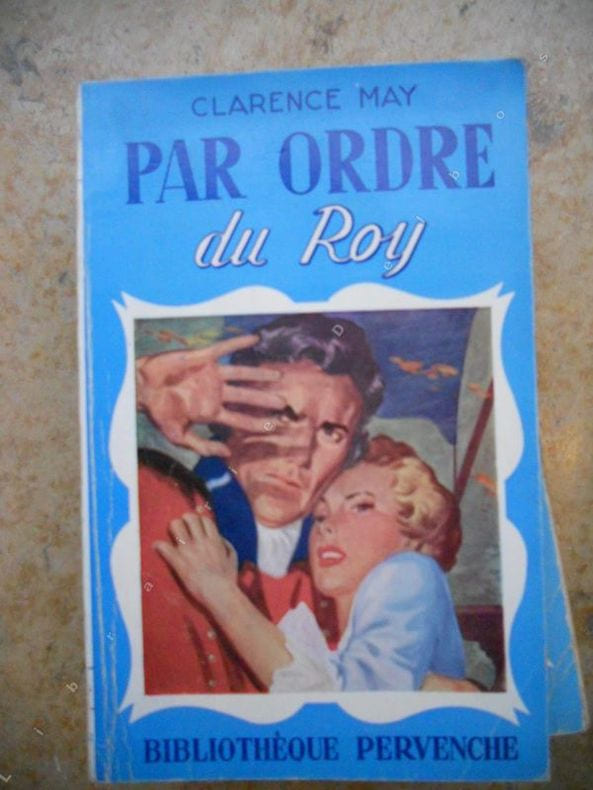
Dumas, collection "Pervenche" n°154, 1956. Format 12x19 cm, broche avec une couverture illustree.Bon etat, petites traces d'usage sur un livre d'occasion.
Reference : 30434
Bookseller's contact details
Librairie Frédéric Delbos
M. Frédéric Delbos
06 30 21 18 72
Payment mode

Sale conditions
Vous pouvez passer votre commande par e-mail (je préfère) ou par téléphone ou même par courrier. Nous vous confirmerons ainsi la disponibilité de l'ouvrage. Nous enverrons votre commande dès réception de votre règlement. Il faut ajouter au prix le prix du port au plus pres des frais de port. Les livres sont envoyés par pickup ou mondial relay. Pour les colis importants ou les envois à l'étranger, nous passerons un accord préalable.
5 book(s) with the same title
Beaulieu, Sebastien de Pontault Cartographe et Nicolas Cochin graveur
Reference : 28285
(1650)
EAU-FORTE ORIGINALE : Le siège d'Arras levé par la défaite des ennemis. 1654. Echelle de 150 toises [=0, 064 m. : 1 : 4 700 env]. Dessiné sur les lieux par ordre du Roy et présenté à Sa Majesté A Paris, Par le Sr.De Beaulieu-le Donjon, Ingénieur et géographe ordre du Roy et Ayde de ses Camps et Armées. Avec Privilege 1655 ; N.Cochin sculpsit
1650 1 estampe gravée en taille-douce à l'eau-forte en noir sur papier vergé ligné entoilé (avec traces des clous qui ont servi a la fixer tout autour d'un cadre avec traces de plis dans le mode de pliage de cette grande gravure), format : 206 x 179 cm, par Beaulieu, Sebastien de Pontault del. et gravé en noir par Nicolas Cochin, GRAVURE : Extrait des Memoires des généraux. Signé : La Mesnardière et Mesnarderius è Gallis Academicus. A Paris chez le sieur de Beaulieu, Ingénieur ordinaire du Roy, sur le Quay des Grans Augustins près le grand Portal de l'Eglise, au bout du Pont-Neuf. Avec privilège du Roy. 1656
Note : En haut, vue de la bataille devant la ville représentée de profil. En bas, plan de la Corne de Guiche 50 toises =0, 082 m. ; 1 : 240 env. et deux vues : Prise de St.Paul et Prise du Mont St.Eloy. - En médaillons, portraits d'Anne d'Autriche, Louis XIII, le duc d'Anjou, Mazarin, Turenne, la Ferté Seneterre et d'Hoquincourt, ces quatre derniers avec leurs armoiries sur des papillons collés. J.Frosne sculpsit. Encadré de texte en français et en latin : Arras secouru par l'armée françoise le jour de S.Louis en l'année 1654. Extrait des Memoires des généraux. Signé : La Mesnardière et Mesnarderius è Gallis Academicus. A Paris chez le sieur de Beaulieu, Ingénieur ordinaire du Roy, sur le Quay des Grans Augustins près le grand Portal de l'Eglise, au bout du Pont-Neuf. Avec privilège du Roy. 1656 ....... RARE ..... en bon état malgré les légers défauts signalés (good condition in spite of the defects indicated). en trés bon état
Carte particulière du Duché de Bourgogne levée géométriquement par ordre de MM. les Elus Généraux de la Province en conséquence du Décret des Etats de 1751, divisée par Diocèses, Baillages et Subdélégations, faisant partie de la Carte Générale de la France levée par ordre du Roy et par les Ingénieurs Géographes de Sa Majesté, sous la direction de Mrs Cassini, Camus & de Montigny, de l'Académie Rle des Sciences. Dressée et executée par le Sr Seguin, ingénieur géographe du roy en 1763. Echelle de dix mil Toises. Les Ornemens d'après les desseins du Sr. Galey, Inspectr. des Batiments du Roy. L'Ecriture par Bourguignon. N° 1 : Confins de la Champagne. Cours de l'Armençon, de l'Yonne...N° 2 : Confins de la Champagne. Cours de la Marne, de l'Aube et de la SeineN° 3 : Confins de la Lauraine et de la Franche-Comté.N° 4 : Confins du Nivernois.N° 5 : Centre de la Bourgogne.N° 6 : Confins de la Franche-Comté. Cours de la Saone, du DoubsN° 7 : Confins du Bourbonois. Cours de la Loire et de l'Arroux.N° 8 : Confins de la Bresse. Cours de la Saone.N° 9 : Confins de la Franche-Comté.
1763 toile, dans un emboitage 35 x 25 x 7 cm (XIXe sur laquelle on a placé l'étiquette XVIIIe). carte composée de 9 feuilles, 290 x 246 cms, 1763
La carte la plus détaillée et complète de la Bourgogne de l'Ancien Régime. Trés détaillée et fort décorative, elle est conçue pour être assemblée dans son bel encadrement.290 x 246 cm. Un plan de Dijon dans un cartouche, Armes de France, .
Des Livres : Chapitre X, Livre II, des Essais de Messire Michel Seigneur de Montaigne, Chevalier de l'Ordre du Roy et Gentilhomme Ordinaire de sa Chambre Maire et Govverneur de Bourdeaus.
Amsterdam, Gezelschap Nonpareil, 1951 Couverture rigide, 31 pp, 18.5 x 11.5 cm, Fran ais. *En bon tat.
Des Livres : Chapitre X, Livre II, des Essais de Messire Michel Seigneur de Montaigne, Chevalier de l'Ordre du Roy et Gentilhomme Ordinaire de sa Chambre Maire et Govverneur de Bourdeaus.
(Carte de France levée par ordre du Roy) N°. 42 (Cambrai)
1758 Carte du XVIIIe siècle (1758) faisant initialement partie d'un recueil général des cartes de France de l'époque, celle-ci (91,5 cm x 59 cm) est aquarellée en couleurs, en 21 petits panneaux montés sur toile rose-orange, destinée à être placée dans un étui ou boite, elle possède encore son étiquette de tirage de vélin numérotée manuscrite (n°42 Cambrai). La carte de Cassini est la première carte géométrique couvrant l'intégralité du royaume. Bon exemplaire.
Carte gravée d'après J. Seguin géographe du Roy. Etablie sous la direction de César-François Cassini de Thury.
Relation d'un voyage du Levant, fait par ordre du Roy, contenant l'histoire ancienne & moderne de plusieurs isles de l'archipel, de Constantinople, des Côtes de la Mer Noire, de l'Armenie, de la Georgie, des frontieres de Perse & de l'Asie Mineure. Avec les plans des villes & des lieux considerables; le génie, les meurs, le commerce & la religion des differens peuples qui les habitent; et l'explication des médailles & des monument Antiques. Enrichie de descriptions & de figures d'un grand nombre de plantes rares, de divers animaux; et de plusieurs observations touchant l'histoire naturelle.
Amsterdam, Au dépens de la Compagnie, 1718. 2 volumes in one 4° (253x202 mm). [14] ll., 188 pp; Title and 208 pp., [8] ll. of index. With 90 (4 folding) engraved plates and 52 text engravings. Contemporary vellum with title penned in ink on spine. Faint foxing in places.
An invaluable source of information for all travelers to the Greek Archipelago, Anatolia, Armenia, and Georgia. A fine copy of the Amsterdam reprint of the Paris first edition. The leading French botanist Tournefort started out on his voyage to the Near East in the spring of 1700, accompanied by the draughtsman at the Jardin du Roy, Claude Aubriet (1651-1742), and the German physician Andreas von Gundelsheimer (1668-1715). He visited thirty-eight islands of the Greek archipelago, as well as Northern Anatolia, Pontus and Armenia, and reached Tiflis in Georgia. The text is in the form of letters which Pitton de Tournefort wrote to to the Minister of the Exterior Count de Pontchartain, who sponsored his mission. "The systematic way he organizes his information on topography, economy, administration, ethnic composition, customs and habits of everyday life shows how one can arrive at truth and knowledge through research, methodical study, classification and generalization ... He methodically narrates his visit to each island, and describes the locations as well as events that he witnessed and encounters with locals. He then continues with the islands history from ancient times to the current age, citing the corresponding myths, and comparing with the information provided by ancient coins. Subsequently, he writes on the islands administration and taxes, commerce, products and prices thereof. An entire chapter is dedicated to the Greek Church. Tournefort also writes on monasteries and churches, house architecture and caves. He also describes the customs, the dress and the occupations of the inhabitants ... He continues with his journey on the southern coast of the Black Sea to Armenia. The work closes with a short description of Smyrna and Ephesus" (Ioli Vingopoulou, in Travelogues, Aikaterini Laskaridis Foundation). The travelogue is significant for its detailed botanical inventory alone. Written and illustrated on the spot, it contains rich information on the plants of the Greek islands and Anatolia, some of which were described for the first time. "He did not live to see the publication of his travel chronicle, which in the following three centuries became the basic manual to all travellers to these regions. Until today, researchers from numerous fields turn to Tournefort's text, as it remains an invaluable source of information" (Vingopoulou). Friedrich Adolph Lampe (1683-1729), German Pietist pastor, theologian and professor of dogmatics and Nicolaus Nonnen (1701-1772) professor of theology in Bremen, ms. entries on title page dated 1719 resp. 1730. - Bibliotheca amicorum Scientiis et Artibus, a private library founded by the Schaffhouse Theologian Johann Jakob Altorfer (1741-1829), bookplate engraved by H. R. Holzhalb after J. v. Ziegler (Wegmann 6239). Hage Chahine 4830; Pouillon 766; Lipperheide Kc 1; Hunt 444; Nissen, ZBI, 4154; Blackmer 1318; Broc, La géographie des philosophes (1975), S. 50ff.; Griep/Luber II, 1402.

