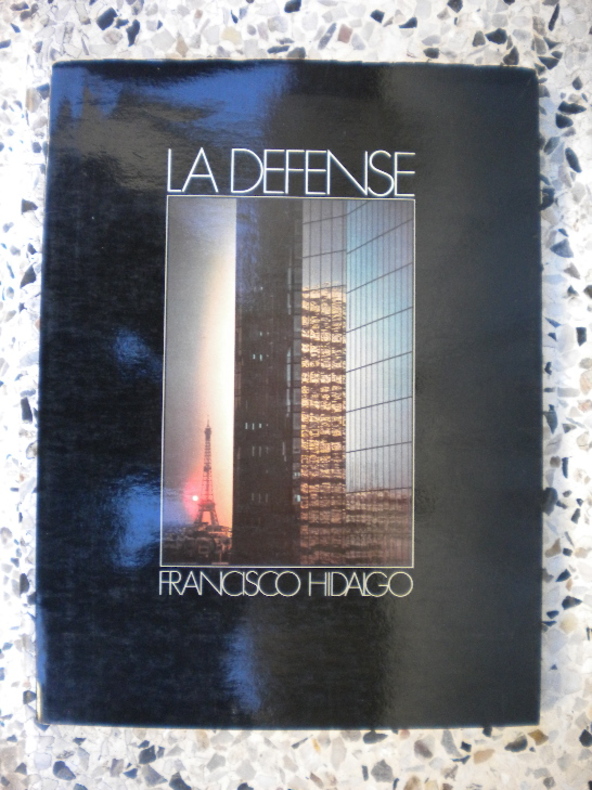
Agep, 1979. Format 22x31 cm, reliure souple de l'editeur, non pagine, 5 pages de texte et 65 planches photographiques.Bon etat, petites traces d'usage sur un livre d'occasion.
Reference : 21793
Librairie Frédéric Delbos
M. Frédéric Delbos
06 30 21 18 72
Vous pouvez passer votre commande par e-mail (je préfère) ou par téléphone ou même par courrier. Nous vous confirmerons ainsi la disponibilité de l'ouvrage. Nous enverrons votre commande dès réception de votre règlement. Il faut ajouter au prix le prix du port au plus pres des frais de port. Les livres sont envoyés par pickup ou mondial relay. Pour les colis importants ou les envois à l'étranger, nous passerons un accord préalable.
"PETERSON, VAL (US Ambassabor) (+) KUTER, LAURENCE S., (U.S. Air Force general and Commander in Chief of NORAD)
Reference : 60137
(1960)
(USA), The North American Defense Command, 1960. Elephant Folio (765 x 515 mm). Large collection of photos with accompanying commentaries, in the custom made blue binding with gilt lettering to front board. 137 original monochrome photos (measuring 255 x 200 mm) pasted on to 40 leaves of paper documenting a month long trip to document the US Air Defense System from Copenhagen to New York, Washington, Chicago, San Francisco and, the main focus of the trip, Thule and Station Nord in the North of Greenland. Also inserted are two formal signed letters to chief editor of the Danish newspaper Fyns Tidende, Knud Madsen, 1) from Val Peterson, American Ambassador to Denmark, 2) from Laurence S. Kuter, U.S. Air Force general and Commander in Chief of NORAD. Both letters are thanking Knud for his time, for their close working relationship and for his understanding. Light wear to extremities and paper slightly browned in margin but otherwise in fine condition and all photos well preserved.
Exceedingly rare photo album - curated by the North American Defense Command with personal signed letters by Val Peterson, American Ambassador to Denmark and Laurence S. Kuter, U.S. Air Force general and Commander in Chief of NORAD - depicting the Danish journalists' tour of the North American Defense Command in the summer of 1960. The album is of the utmost scarcity and was only presented to a select few of the participants of the tour. The present collection is a testament to one of the most controversial and disputed chapters in the Danish-North American relationship, namely that of Camp Century on Greenland" this includes installation of a portable nuclear reactor, the first of its kind, and eventually the creation of a vast network of nuclear missile launch sites – information only declassified in 1996. Furthermore, it is a fine example of US-military Cold War propaganda and it sought to influence the public opinion in allied countries. In 1951, the United States and Denmark - both founding members of the North American Treaty Organization (NATO) - signed the Defense of Greenland Agreement. The treaty was intended “to negotiate arrangements under which armed forces of the parties to the North Atlantic Treaty Organization may make use of facilities in Greenland in defense of Greenland and the rest of the North Atlantic Treaty area.” More simply put, the agreement allowed the United States to build military bases in Greenland. Denmark and the US had signed a formal agreement granting America the right to maintain military bases in Greenland, but only in strictly defined areas, such as Thule Air Base in Northwest Greenland. They still needed approval from the Danish authorities for all activities outside these defence areas. In 1957, without informing the Danish Parliament, the Danish Prime Minister H. C. Hansen gave the Americans permission to store nuclear weapons at Thule AB. When the US Army constructed Camp Century, complete with its own transportable nuclear reactor, the Danish Government found itself in a tight corner. As news about Camp Century spread due to the army’s publicity campaign, the Danish authorities were forced to explain that there were no nukes in Greenland. The Danes had to either give in entirely to the American requests to deploy various nuclear weapons in Greenland, or take a firmer stand against the Americans. Denmark opted for the second solution. In recognition of the unfavourable public climate in Denmark, the US military issued a press campaign to provide better understanding of the need for military bases in the Artic. This was primarily done by inviting chief editors from the major Danish newspapers on a month long trip to the US as is evident from the present photos, no expenses were spared. As ambassador Val Peterson wrote to Danish chief editor Knud Madsen in the accompanying letter:“From personal conversations with several participants in your tour, and from articles about the trip which already have appeared in the Danish press, I know that the various sponsoring agencies have done their utmost to make your visit instructive as well as pleasant. Above all, I am happy that you have had an opportunity to gain an insight in the vast effort made the the United States to safeguard the security of the free world and to maintain the peace, in close and cordial cooperation with our friends and Allies, Denmark prominently among them” And General Laurence S. Kuter: “We were delighted to have an opportunity to explain the important segments of our defense system to you – the NORAD Story. Denmark will continue to play a very important role in North American’s air and aerospace defenses in permitting important detection devices to be located in Greenland. Denmark is the only continental NATO power which provides such land-basing opportunity, which is essential for North America’s surveillance of the polar approach route. We hope, as a result of your visit, we now have a closer working relationship and understanding.” (From the accompanying letter). Over the next decade, the American military built three air bases in Greenland: Narssarsuaq, Sondestrom, and Thule. In context of the Cold War, these bases provided a refueling point and a base of operations for intermediate-range strategic bombers. Additionally, the United States deployed radar stations in Greenland to maintain a Ballistic Missile Early Warning System (BMEWS) and a Distant Early Warning (DEW) Line, which would give the United States advance warning of a Soviet nuclear attack. The Thule Air Base is the only of the three which is still operational today. Located less than 1,000 miles from the North Pole, it is the U.S. Air Force’s northernmost base. Construction on Camp Century began in June 1959 and was completed by October 1960. Army engineers first had to build a three mile road to bring the 6,000 tons of supplies it would require to build the $8 million facility. Most of the heavy equipment, including vehicles, were brought by bobsleds known as “heavy swings” which had a maximum speed of two miles per hour, making it a 70 hour trip from the Thule Air Base. The camp itself was not a secret. Officially, it was built for scientific purposes under the auspices of the Army Polar Research and Development Center. The Army even produced a short film promoting Camp Century as a “remote research community.” The facility did see some significant scientific discoveries, such as some of the first studies of ice cores, revealing geological secrets going back 100,000 years. Science, however was not the primary purpose of Camp Century. The facility was built primarily as a test for a military operation involving nuclear missiles. The U.S. Army continued to operate Camp Century in a limited capacity until 1966. Its tunnels quickly collapsed, and today the facility is unreachable, buried under a thick layer of ice. Project Iceworm remained a closely guarded secret until 1997, when the Danish Institute of International Affairs (DUPI) reported Camp Century’s military ambitions.
(Paris, 1923). Lex 8vo. Entire issue present, with the original printed wrappers. Some tears to spine and a bit of wear to extremities. A fagile publication. Ff. (6-7). [Entire issue: 8 ff.).
Sartre's extremely scarce first publication, in the also exceedingly scarce first number of the ""La Revue sans titre"", here in the second edition from the same year, which is of equal scarcity to the first. When Contat and Rybalka were making the bibliography of the writings of Sartre, they had great difficulty in finding the interesting rebellion publication ""La Revue sans titre"", which was - and is - not present in any French library. In fact, they finally borrowed a run of the magazine from M. Jean Gaulmier, professor of literature in Strasbourg, who possessed the only collection of the periodical that they could track down. The ""L'Ange du morbid"" had been reproduced in 1947 by Marc Beigbeder in his ""L'Homme Sartre"", but not quite in its entirety, and Contat and Rybalka thus printed the text again, for the second time since 1923, at the back of their Sartre-bibliography (1970) as the first part of the second appendix, which has the half-title ""Textes retrouvés"" (rediscovered texts). This interesting story which constitutes Sartre's first publication was published when he was merely 18 years old. In a strongly satirical tone Sartre tells the story of a mediocre professor's adventure with a young patient who has tuberculoses. The main character, the professor of a small provincial school, constitutes the pre-figuration of the highly unsympathetic character that occupies his following publications. The ""Revue sans titre"", of which we here have number one in its entirety, is also in itself interesting. The director of the publication is Charle Fraval, and the editorial secretary is Roger Letac. The publication claims to be ""in defense of the Young"", and on the front wrapper it states ""Those who suffer from the mercantilism of literature, those whose talent is suppressed by the literary magnates, in short all the Young, have reason to read ""REVUE SANS TITRE"", the only organ in defense of the Young"" (own translation, original: ""Ceux qui souffrent du mercantilisme de la literature, ceux don't le talent est étouffé par les magnats des letters, tous les jeunes en un mot, ont intérêt à lire la ""Revue sans titre"" seul organe de defense des Jeunes.""
Centaurus - Verlagsgesellschaft Pfaffenweiler. 1986. In-8. Broché. Bon état, Couv. convenable, Dos satisfaisant, Intérieur frais. 240 pages - texte en français, allemand, anglais.. . . . Classification Dewey : 300-SCIENCES SOCIALES
texte en français, allemand, anglais - Sommaire : la révision du programme minium de défense sociale - la défense sociale trente ans après - l'influence de la défense sociale nouvelle sur la législation pénale yougoslave - die neuformulierung des minimalprogramms der défense social - human dignity and social defense - la politique du traitement à la lumière de la 3e édition de la défense sociale nouvelle - research policy, criminal policy and social defense - im vorfeld einer entkriminalisierungspolitik einige beobachtungen etc. Classification Dewey : 300-SCIENCES SOCIALES
High Holborn, for the Council by Edward Truelove, 1871. Small 8vo. Near contemporary quarter cloth with silver lettering to front board. Binding with signs of use, but overall good. One closed marginal tear and title-page with a few brownspots, otherwise very nice and clean. 35 pp.
Exceedingly rare first edition (with the names of Lucraft and Odger still present under ""The General Council"") of one of Marx' most important works, his seminal defense of the Paris Commune and exposition of the struggle of the Communards, written for all proletarians of the world. While living in London, Marx had joined the International Working Men's Association in 1864 - ""a society founded largely by members of Britain's growing trade unions and designed to foster international working class solidarity and mutual assistance. Marx accepted the International's invitation to represent Germany and became the most active member of its governing General Council, which met every Tuesday evening, first at 18 Greek Street in Soho and later in Holborn. In this role, Marx had his first sustained contact with the British working class and wrote some of his most memorable works, notably ""The Civil War in France"". A polemical response to the destruction of the Paris Commune by the French government in 1871, it brought Marx notoriety in London as 'the red terror doctor', a reputation that helped ensure the rejection of his application for British citizenship several years later. Despite his considerable influence within the International, it was never ideologically homogenous... (homas C. Jones: ""Karl Marx' London"").The work was highly controversial, but extremely influential. Even though most of the Council members of the International sanctioned the Address, it caused a rift internally, and some of the English members of the General Council were enraged to be seen to endorse it. Thus, for the second printing of the work, the names of Lucraft and Odger, who had now withdrawn from the Council, were removed from the list of members of ""The General Council"" at the end of the pamphlet. ""[Marx] defended the Commune in a bitterly eloquent pamphlet, ""The Civil War in France"", whose immediate effect was further to identify the International with the Commune, by then in such wide disrepute that some of the English members of the General Council refused to endorse it."" (Saul K. Padover, preface to Vol. II of the Karl Marx Library, pp. XLVII-XLVIII).""Written by Karl Marx as an address to the General Council of the International, with the aim of distributing to workers of all countries a clear understanding of the character and world-wide significance of the heroic struggle of the Communards and their historical experience to learn from. The book was widely circulated by 1872 it was translated into several languages and published throughout Europe and the United States."" (The Karl Marx Archive)Marx concluded ""The Civil War in France"" with these impassioned words, which were to resound with workers all over the world: ""Working men's Paris, with its Commune, will be forever celebrated as the glorious harbinger of a new society. Its martyrs are enshrined in the great heart of the working class. Its exterminators history has already nailed to that eternal pillory from which all the prayers of their priests will not avail to redeem them.""The address, which was delivered on May 30, 1871, two days after the defeat of the Paris Commune, was to have an astounding effect on working men all over the world and on the organization of power of the proletarians. It appeared in three editions in 1871, was almost immediately translated into numerous languages and is now considered one of the most important works that Marx ever wrote. "" ""The Civil War in France"", one of Marx's most important works, was written as an address by the General Council of the International to all Association members in Europe and the United States.From the earliest days of the Paris Commune Marx made a point of collecting and studying all available information about its activities. He made clippings from all available French, English and German newspapers of the time. Newspapers from Paris reached London with great difficulty. Marx had at his disposal only individual issues of Paris newspapers that supported the Commune. He had to use English and French bourgeois newspapers published in London, including ones of Bonapartist leanings, but succeeded in giving an objective picture of the developments in Paris. ...Marx also drew valuable information from the letters of active participants and prominent figures of the Paris Commune, such as Leo Frankel, Eugene Varlin, Auguste Serraillier, Yelisaveta Tornanovskaya, as well as from the letters of Paul Lafargue, Pyotr Lavrov and others.Originally he intended to write an address to the workers of Paris, as he declared at the meeting of the General Council on March 28, 1871. His motion was unanimously approved. The further developments in Paris led him, however, to the conclusion that an appeal should be addressed to proletarians of the world. At the General Council meeting on April 18, Marx suggested to issue ""an address to the International generally about the general tendency of the struggle."" Marx was entrusted with drafting the address. He started his work after April 18 and continued throughout May. Originally he wrote the First and Second drafts of ""The Civil War in France"" as preparatory variants for the work, and then set about making up the final text of the address.He did most of the work on the First and Second drafts and the final version roughly between May 6 and 30. On May 30, 1871, two days after the last barricade had fallen in Paris, the General Council unanimously approved the text of ""The Civil War in France"", which Marx had read out.""The Civil War in France"" was first published in London on about June 13, 1871 in English, as a pamphlet of 35 pages in 1,000 copies. Since the first edition quickly sold out, the second English edition of 2,000 copies was published at a lower price, for sale to workers. In this edition [i.e., MECW], Marx corrected some of the misprints occurring in the first edition, and the section ""Notes"" was supplemented with another document. Changes were made in the list of General Council members who signed the Address: the names of Lucraft and Odger were deleted, as they had expressed disagreement with the Address in the bourgeois press and had withdrawn from the General Council, and the names of the new members of the General Council were added. In August 1871, the third English edition of ""The Civil War in France"" came out, in which Marx eliminated the inaccuracies of the previous editions.In 1871-72, ""The Civil War"" in France was translated into French, German, Russian, Italian, Spanish, Dutch, Flemish, Serbo-Croat, Danish and Polish, and published in the periodical press and as separate pamphlets in various European countries and the USA. It was repeatedly published in subsequent years....In 1891, when preparing a jubilee German edition of ""The Civil War in France"" to mark the 20th anniversary of the Paris Commune, Engels once again edited the text of his translation. He also wrote an introduction to this edition, emphasising the historical significance of the experience of the Paris Commune, and its theoretical generalisation by Marx in ""The Civil War in France"", and also giving additional information on the activities of the Communards from among the Blanquists and Proudhonists. Engels included in this edition the First and Second addresses of the General Council of the International Working Men's Association on the Franco-Prussian war, which were published in subsequent editions in different languages also together with ""The Civil War France"". (Notes on the Publication of ""The Civil War in France"" from MECW Volume 22). Only very few copies of the book from 1871 on OCLC are not explicitly stated to be 2nd or 3rd editions, and we have not been able to find a single copy for sale at auctions within the last 50 years.
COFER (COMITE FRANCAIS POUR L'EXPANSION ET LE RAYONNEMENT INTERNATIONAL DE PARIS LA DEFENSE)
Reference : ABE-1634036809846
(1989)
ISBN : 2281151107
168 PAGES-25 CM X 28 CM-DEUXIEME EDITION MISE A JOUR ET AUGMENTEE-LA DEFENSE SYMBOLE DE MODERNITE-HISTOIRE D'UNE AVENTURE URBAINE-LA DEFENSE AVANT LA DEFENSE-LA LENTE GENESE DU "PARIS DE DEMAIN"-UN ETABLISSEMENT PUBLIC POUR UNE CITE D'AFFAIRES-1974 1980: DE LA CRISE A LA RELANCE-L'ESSOR DE LA PREMIERE"VILLE CERVEAU" D'EUROPE-"TROISIEME GENERATION" LA DEFENSE CONTRE ATTAQUE-NOUVELLE IMAGE POUR LES ANNEES QUATRE VINGT-CAPITALE DES AFFAIRES-CNIT ET GRANDE ARCHE: LE NOUVEL AGE DE LA DEFENSE-LE RAYONNEMENT D'UNE "VILLE-DECISION"TABLEAU DES TOURS ET IMMEUBLES DU CENTRE D'AFFAIRES PARIS LA DEFENSE-BIBLIOGRAPHIE-RICHE ICONOGRAPHIE-(200A)
EDITIONS DU MONITEUR COUVERTURE SOUPLE ETAT COMME NEUF