 Write to the booksellers
-
Type
Art print (2)
Book (6155)
Magazine (20)
Manuscript (1)
Old papers (1)
Photographs (3)
-
Latest
Last 24h (1)
Last 3 days (3)
Last month (9)
Last week (1)
-
Language
English (10)
French (6167)
German (1)
Greek (1)
Italian (1)
Latin (2)
-
Century
16th (2)
17th (10)
18th (247)
19th (889)
20th (2995)
21st (135)
-
Countries
Belgium (266)
Canada (3)
Côte d'Ivoire (13)
Denmark (1368)
France (4231)
Switzerland (301)
-
Syndicate
ALAC (3)
CLAM (3)
ILAB (4380)
NVVA (139)
SLACES (139)
SLAM (2850)
SNCAO (15)
L'EMPIRE DES MOLECULES
Hachette. 1991. In-8. Broché. Etat d'usage, Couv. partiel. décollorée, Dos satisfaisant, Intérieur frais. 128 pages.. . . . Classification Dewey : 530-Physique
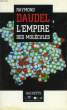
La Villette. 'Questions de science', collection dir. par Dominique Lecourt. Classification Dewey : 530-Physique


Atomes, Molécules et lumière.
LA JEUNE PARQUE. 1946. In-12. Relié demi-cuir. Parfait état, Couv. fraîche, Dos satisfaisant, Intérieur frais. 175 pages. Quelques planches de photos en noir et blanc hors-texte. Nombreuses figures et illustrations en noir et blanc dans le texte. Titre et fleurons dorés sur le dos en cuir marron marbré. Plats de couverture conservés.. . . . Classification Dewey : 530-Physique
Préface de Louis de Broglie. Les sciences et leurs applications. Classification Dewey : 530-Physique
L'intelligibilité dans la théorie physique et ses concepts - université de Paris faculté des lettres
Presses universitaire de France 1946 in8. 1946. Broché.
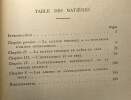
Bon état sous papier de soie intérieur propre pages non coupées
L'oeuvre de l'intelligence en physique
PUF. 1946. In-8. Broché. Bon état, Couv. partiel. décollorée, Dos satisfaisant, Mouillures. 190 pages.. . . . Classification Dewey : 530-Physique
LA science physique : à la recherche d'objets intelligibles, en quête du réel, intelligibilité mathématique de la théorie physique... Classification Dewey : 530-Physique
L'OEUVRE DE L'INTELLIGENCE EN PHYSIQUE
Pierre Téqui. 1946. In-8. Broché. Bon état, Couv. légèrement passée, Dos satisfaisant, Intérieur frais. 190 pages. Etiquette de code sur le dos. Tampon et annotation de bibliothèque en page de titre.. . . . Classification Dewey : 530-Physique

La science physique à la recherche d'objets intelligibles. L'intelligible et le réel... Classification Dewey : 530-Physique
L'oeuvre De L'intelligence En Physique
Paris P.U. F 1946 In-8 191 pp, Bibliothèque de philosophie contemporaine. Dos passé et un mors légèrement fendu en queue
Bon État Broché à raba
DES NOTIONS DE MATIERE ET DE FORCE DANS LES SCIENCES DE LA NATURE
Librairie Germer Baillière et Cie, Paris. 1878. In-8. Broché. Etat d'usage, 1er plat abîmé, Dos satisfaisant, Intérieur acceptable. 351 pages. Papier muet encollé sur le dos, le consolidant. Etiquette de code sur la couverture. Quelques tampons de bibliothèque. Manques sur les bords du 1er plat.. . . . Classification Dewey : 530-Physique
(Rare) De la Métaphysique de la Nature et de sa méthode. De la science des nombres et de la science des figures. Du mouvement et de la force selon la mécanique. Les qualités de la matière... Classification Dewey : 530-Physique
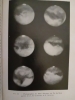
Actualités scientifiques et industrielles 1031 Physique cosmique Exposés publiés sous la direction de A. Dauvillier: I Genèse nature et évolution des planètes, cosmogonie du système solaire, géogénie - genèse de la vie.
Paris, Hermann, 1947. In-8, 345 pages, 17 croquis in-t., XII planches h.t., broché. Imprimerie Jouve et Cie, Paris.
LA TECHNIQUE DES RAYONS X
Paris Edité par la société '' Journal de Physique '' / Presses Universitaires de France 1924 in 8 (24,5x16) 1 volume reliure demi percaline grise de l'éditeur, dos et plat supérieur titrés en noir, 195 pages, avec 90 figures dans le texte, et 5 planches hors-texte en noir et blanc. Recueil des conférences-rapports de documentation sur la physique, 10, 2ème série. Bel exemplaire ( Photographies sur demande / We can send pictures of this book on simple request )
Très bon Couverture rigide
LA TECHNIQUE DES RAYONS X - RECUEIL DES CONFERENCES-RAPPORTS DE DOCUMENTATIONSUR LA PHYSIQUE - VOLUME 10 - 2e SERIE
JOURNAL DE PHYSIQUE. 1924. In-8. Relié. Etat d'usage, Coins frottés, Dos abîmé, Intérieur frais. 195 pages augmentées de nombreuses illustrations en noir et blanc dans et hors texte - dos bruni. . . . Classification Dewey : 530-Physique
Classification Dewey : 530-Physique
On the Masses and Modes of Decay of Heavy Mesons Produced by Cosmic Radiation. (G-Stack Collaboration).
[No place], 1955. 8vo. Without wrappers (as issued). Offprint, seperately paginated, from ""Il Nuovo Cimento"", Serie X, Vol. 2, Novembre. Very fine and clean. 41 pp + 1 blank.
Offprint of Davies' (and 36 co-authors) famous report on the G-stack experiment: how many measons excisted with a mass of about 1000 m. ""In the 1954 experiment 250 sheets of emulsion, each 37x27 and 0,6 mm thick were packed together seperately only by thin paper. The package was 15 cm thick and weighed 63 kg. It was flown over nothern Italy support by a ballon at 27 km for six hours. Because of a parachute failure on descent about 10% of the emulsion stack was damaged but the remainder was little affected. This endeavor marked the start of large collaborative efforts. In all, there were 36 authors from 10 institutions"". (Bederson, ""More Things in Heaven and Earth: A Celebration of Physics at the Millennium"").
Les forces de la nature - Collection Champs n°341.
Flammarion. 1995. In-12. Broché. Bon état, Couv. convenable, Dos satisfaisant, Intérieur frais. 256 pages - quelques figures en noir et blanc dans le texte.. . . . Classification Dewey : 530-Physique
Collection Champs n°341 - traduit de l'anglais par Alain Bouquet. Classification Dewey : 530-Physique
Superforce. Recherches pour une théorie unifiée de l'univers.
Broché, 22X14 cm, 1987, 321 pages, collection espace des sciences, éditions Payot. Bon exemplaire.
Nous sommes absents jusqu'au 17 septembre. Nous reprendrons les expéditions à cette date. Merci.
LA NOUVELLE PHYSIQUE.
FLAMMARION. 1993. In-4. Cartonné. Bon état, Couv. convenable, Dos satisfaisant, Intérieur frais. 515 pages augmentées de nombreuses illustrations en couleurs et en noir et blanc - 1er palt illustré d'un dessin ne couleurs.. . . . Classification Dewey : 530-Physique
Classification Dewey : 530-Physique
C. J. Davisson. Bellsystem Reseach Physicist. 1917-1946. Nobel Laureate 1937.
New York, American Telephone and Telegraph Company, 1951. 8vo. In the original printed blue wrappers. In ""The Bell System Technical Journal"", Volume XXX, Number 4, part 1, October, 1951. Entire issue offered. Light miscolouring to spine. A very fine fine and clean copy. 166 pp.
First printing.
Diffraction of Electrons by a Crystal of Nickel.
Minneapolis, The Collegiate Press, 1927. 4to. As extracted from ""The Physical Review, Volume 30, Second Series, July-December, 1927"". Title-page detached, with vague library stamp to top right corner. A fine and clean copy. (2), 704-740 pp.
First printing of Davisson and Germer's paper in which they present some additional discoveries not published in their groundbreaking paper ""The Scattering of Electrons by a Single Crystal of Nickel"" published the same year. This led directly to Davisson receiving the Nobel Prize in physics in 1937. It advanced understanding of physics at the quantum level and led to inventions such as the electron microscope.""Davisson and Germer submitted their results to Nature in early March and their paper was published on 16 April. It contains a detailed comparison between their replcted beams and those that would be produced by illuminationg the crystal with X-rays. There were thirteen reflected beams in all, of which ten corresponded to those seen in X-ray diffraction"". (Gerwin, A Century of Nature, 28 p.) They could not account for the last three wave and this was not published in their first paper. ""The remaining three peaks for which Davisson and Germer could not find any correspondence with X-ray data were later identified as being due to diffraction from atoms absorb ed on the surfaces of the target crystal."" (Ibid.). This information was published in the present paper. ""Davisson's investigations on the scattering of electrons entered a new phase when, in April 1925, his taget was heavily oxidized by an accidental explosion of a liquid-air bottle. He cleaned the target by prolonged heating and then found the distribution-inangle of the secondary electrons completely changed, new showing a strong dependence on crystal direction. Prior to the accident the target had consisted of many tiny crystals, but heating converted it to several large crystals. Davisson and L. H. Germer, who had replaced Kunsman before the accident, at once began bombarding targets of single crystals. [...] When Davisson returned from England, he and Germer began a systematic research for some sort of interference phenomenon, and in January 1927 they observed electron beams resulting from diffraction by a single crystal of nickle. The results were in good agreement with de Broglie's prediction. For his confirmation of electron waves Davisson shared the Nobel Prize in physics in 1937 with G. P. Thomson."" (DSB, III, 597b-598a).Davisson and Germer's confirmation of the de Broglie hypothesis if today known as the Davisson-Germer experiment.
The Scattering of Electrons by a Single Crystal of Nickel. - [ELECTRON DIFFRACTION - NOBEL PRIZE IN PHYSICS 1937.]
London, Macmillian and Co, 1927. Royal8vo. Bound in a nice black full cloth with title, year and exlibris (Grosvenor Library) in gilt on spine. The entire volume 119, 1927, of ""Nature"" offered. Pasted library stamp to pasted down free front end-paper. Binding tight, clean and externally as well as internally. Pp. 558-560. [Entire volume: LIX, (1), 948, 100].
First edition of this seminal and highly influential paper on electron diffraction. Today the paper is regarded as one of the most important in the entire journal of Nature, and it led directly to Davisson receiving the Nobel Prize in physics in 1937. It advanced understanding of physics at the quantum level and led to inventions such as the electron microscope. Davisson and Germer's confirmation of the de Broglie hypothesis if today known as the Davisson-Germer experiment.""Davisson's investigations on the scattering of electrons entered a new phase when, in April 1925, his taget was heavily oxidized by an accidental explosion of a liquid-air bottle. He cleaned the target by prolonged heating and then found the distribution-inangle of the secondary electrons completely changed, new showing a strong dependence on crystal direction. Prior to the accident the target had consisted of many tiny crystals, but heating converted it to several large crystals. Davisson and L. H. Germer, who had replaced Kunsman before the accident, at once began bombarding targets of single crystals. [...] When Davisson returned from England, he and Germer began a systematic research for some sort of interference phenomenon, and in January 1927 they observed electron beams resulting from diffraction by a single crystal of nickle. The results were in good agreement with de Broglie's prediction. For his confirmation of electron waves Davisson shared the Nobel Prize in physics in 1937 with G. P. Thomson."" (DSB, III, 597b-598a).
Electrons and Quanta. - [PHYSICS NOBEL PRIZE 1937.]
New York, American Telephone and Telegraph Company, 1929. 8vo. Original full green cloth. Volume VIII, 1929 of The Bell System Technical Journal. Library stamp to front free end-paper and title page. Minor bumping to extremities. A nice and clean copy. Pp. 217-224. [Entire volume: (8), 861 pp.].
First edition of Davisson's paper on electrons and quanta. Together with George Paget Thomson he won the Nobel Prize in Physics in 1937 for his discovery of electron diffraction.""The experiments by the author and L. H. Germer, by G. P. Thomson and by others from which the wave properties of electrons are adduced are briefly described. The agreement between the results of these experiments and the prediction of L. de Broglie is pointed out. The wave and corpuscular properties of electrons are compared with the similar properties of light quanta.""(From the introduction to the present paper).Other papers of interest is contained in the present volume:1. Osborne, H.S. The Principles of Electric Circuits Applied to Communication. Pp. 3-20.2. Frederick, Halsey A. Recent Advances in Wax Recording. Pp. 159-172.3. Elmen, G.W. Magnetic Alloys of Iron, Nickel, and Cobalt. Pp. 435-465.4. Davisson, C.J." Germer, L.H. A Test for Polarization of Electron Waves by Reflection. Pp. 466-481. 5. Martin, W.H. Gray, C.H.G. Master Reference System for Telephone Transmission. Pp. 536-5596. Germer, L.H. An Application of Electron Diffraction to the Study of Gas Adsorption. Pp. 591-6047. Darrow, Karl K. Statistical Theories of Matter, Radiation and Electricity. Pp. 672-748. 8. Fletcher, H. Steinberg, J.C. Articulation Testing Methods. Pp. 806-854.
Electrons and Quanta. - [THE DISCVERY OF ELECTRON DIFFRACTION]
New York, American Telephone and Telegraph Company, 1929. Lex8vo. Volume VIII, April, No. 1, 1929 of ""The Bell System Technical Journal"". In the original printed blue wrappers. Even soiling to spine and back wrapper. Internally fine and clean. Pp. 217-224. [Entire issue: Pp. 217-434].
First edition of Davisson's paper on electrons and quanta. Together with George Paget Thomson he won the Nobel Prize in Physics in 1937 for his discovery of electron diffraction.""The experiments by the author and L. H. Germer, by G. P. Thomson and by others from which the wave properties of electrons are adduced are briefly described. The agreement between the results of these experiments and the prediction of L. de Broglie is pointed out. The wave and corpuscular properties of electrons are compared with the similar properties of light quanta."" (From the introduction to the present paper).Other papers contained in the present issue:1. Williams, R.R." Murphy, E.J.The Predominating Influence of Moisture and Electrolytic Material Upon Textiles as Insulators. Pp. 225-242.2. Glenn, H.H. Wood, E.B. Purified Textile Insulation for Telephone Central Office Wiring. Pp. 243-256.3. Townsend, J.R.Telephone Apparatus Springs: A Review of the Principal Types and the Properties Desired of These Springs. Pp. 257-266.4. Herman, J.Effect of Signal Distortion on Morse Telegraph Transmission Quality. Pp. 267-285.5. Johnson, J.B.A Braun Tube Hysteresigraph. Pp. 286-308.6. Bailey, Austin Dean, S.W. Wintringham, W.T.The Receiving System for Long-Wave Transatlantic Radio Telephony. Pp. 309-367.7. Marrison, W.A.Oscillographs for Recording Transient Phenomena. Pp. 368-390.8. Darrow, Karl K.Contemporary Advances in Physics, XVIII, The Diffraction of Waves by Crystals. Pp. 391-428.
On the magnetic phenomena produced by Electricity" in a Letter.... to W.H. Wollaston. Read November 16, 1820.
(London, W. Bulmer and W. Nicol, 1821). 4to. No wrappers as extracted from ""Philosophical Transactions"" 1821 - Part I. Pp. 7-19. Faint offsetting to first page, otherwise fine, broad-margined.
A very interesting and early paper on electromagnetism where Davy only 4 months after Oersted's fundamental discovery of the magnetic effects of the electric curent, makes some of the same experiments (and new) with Volta's pile and with the Leyden Battery. In two long footnotes Davy describes the history of the discoveries of electromagnetic phenomena.""In a foot-note, the author refers to Romagnosi's observations made at Trent in 1802that an insulated wire connected with the pole of a battery deflects a magnwetic needle. Mojon of Genoa is quoted as having rendered a steel needle magnetic by placing it for a long time in a voltaic circuit.""(Weaver Cat.: 2548). - Ronalds Cat.,p. 29.
DAVY, HUMPHREY. - THE RELATION BETWEEN TEMPERATURE AND CONDUCTIVITY DISCOVERED.
Reference : 43173
(1821)
Farther researches on the magnetic phaenomena produced by electricity" with some new experiments on the properties of electrified bodies in their relations to conducting powers and temperature. ReadJuly 5, 1821.
(London, W. Bulmer and W. Nicol, 1821). 4to. No wrappers as extracted from ""Philosophical Transactions"" 1821 - Part II. Pp. 425-439. Clean and fine.
First printing of an importent paper in which Davy announces his discovery that the conductivity of metals varies inversely with temperature. This discovery receives a practical application half a century later when William Siemens uses it to invent the platinum-resistance thermonmeter to measure temperature. - Parkinson ""Breakthroughs"", 1821 P a. 1971 P.
Les mouvements de l'atmosphère et les variations du temps. Météorologie générale.
Paris, G. Masson, 1877. "16 x 24, 525 pp., 24 cartes en couleurs, nombreuses figures, reliure dos cuir à 5 nerfs, 1 pièce de titre, bon état (très peu de rousseurs; 1 cachet)."
Physique MP1 - PC1 - Tome 1 : mécanique.
Hachette. 1970. In-8. Broché. Etat d'usage, Couv. légèrement pliée, Dos satisfaisant, Intérieur frais. 281 pages - nombreuses figures en noir et blanc dans le texte - coins frottés.. . . . Classification Dewey : 530-Physique
Classification Dewey : 530-Physique
PHYSIQUE, 1. INSTITUTIONES PHILOSOPHICAE AD USUM SCHOLARUM EDITAE, 4.
Lugduni, Fratrum Perisse, 1785. In-16, relié, (4)-472 pages et 9 planches dépliantes.
[3835]

