Write to the booksellers
-
Type
Artists book (1)
Autograph (4)
Book (6001)
Magazine (15)
-
Latest
Last 24h (5)
Last 3 days (17)
Last month (33)
Last week (4)
-
Language
Dutch (6)
English (1)
French (6010)
Italian (4)
-
Century
16th (2)
17th (3)
18th (9)
19th (174)
20th (1060)
21st (177)
-
Countries
Belgium (652)
Canada (13)
Côte d'Ivoire (10)
France (5302)
Switzerland (44)
-
Syndicate
ALAC (13)
CLAM (11)
CLAQ (3)
ILAB (338)
NVVA (17)
SLACES (17)
SLAM (286)
SNCAO (7)
CAGLIOSTRO et CATHERINE II. La satire impériale contre le mage. Traduction intégrale de 3 comédies et d'un pamphlet de CATHERINE II. Avec introduction et notes sur la maçonnerie russe au XVIIIe siècle et le séjour de CAGLIOSTRO à Saint-Pétersbourg.
Les Editions Des Champs-Elysées Paris 1947 CAGLIOSTRO et CATHERINE II. La satire impériale contre le mage. Traduction intégrale de 3 comédies [le Trompeur, le Trompé, le Chaman de Sibérie] et d'un pamphlet [le Secret de la société anti-absurde dévoilé par quelqu'un qui n'en est pas] de CATHERINE II. Avec introduction et notes sur la maçonnerie russe au XVIIIe siècle et le séjour de CAGLIOSTRO à Saint-Pétersbourg.In-8 ( 255 X 170 mm ) de 210 pages, broché sous couverture imprimée. EDITION ORIGINALE, 1 des 30 exemplaires sur papier couché ( non justifié ). Vraisemblablement exemplaire de Cl. BOUMENDIL en vu de la réédition de cet ouvrage en 1977 enrichi d'une lettre tapuscrite signée de Wilfried-René CHETTEOUI demandant à son interlocuteur certaines corrections et de les copies manuscrite et tapuscrite de la future préface rédigée par le Professeur Laurent DAILLIEZ.

CAGLIOSTRO et CATHERINE II. La satire impériale contre le mage. Traduction intégrale de 3 comédies et d'un pamphlet de CATHERINE II. Avec introduction et notes sur la maçonnerie russe au XVIIIe siècle et le séjour de CAGLIOSTRO à Saint-Pétersbourg.
Les Editions Des Champs-Elysées Paris 1947 CAGLIOSTRO et CATHERINE II. La satire impériale contre le mage. Traduction intégrale de 3 comédies [le Trompeur, le Trompé, le Chaman de Sibérie] et d'un pamphlet [le Secret de la société anti-absurde dévoilé par quelqu'un qui n'en est pas] de CATHERINE II. Avec introduction et notes sur la maçonnerie russe au XVIIIe siècle et le séjour de CAGLIOSTRO à Saint-Pétersbourg.In-8 ( 255 X 170 mm ) de 210 pages, broché sous couverture imprimée. EDITION ORIGINALE, exemplaire N°166. Bel exemplaire.

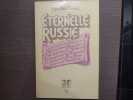
Eternelle Russie. Le Crépuscule des Paladins ou l'Art des derniers Rhapsodes. L'au-delà dans les Thrênes ou les Complaintes des Pleureuses. Les Origines de la Presse Russe. Illustrations de Nancy Dégallier.
Bélisane Nice 1979 In-8 ( 220 X 140 mm ) de 116 pages, broché sous couverture imprimée. Illustrations dans et hors-texte. Très bel exemplaire.
Où l'Alchimie se traite "OR fait OR".
Seconde Modernité S.L. 1991 In-4 ( 300 X 210 mm ), broché "à la japonaise" sous couverture imprimée. Illustrations hors-texte de M.D. FONTANEL. Très bel exemplaire imprimé sur papier jaune.
L'APOCALYPSE ET LES TEMPS PRESENTS. Essai d'explication sommaire.
Desclée, Lefebvre & Cie Rome 1907 In-12 ( 190 X 130 mm ) de XIII-226 pages, broché sous couverture imprimée. Bel exemplaire enrichi d'un envoi autographe signé de l'auteur.
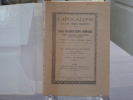
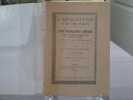
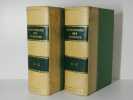
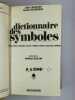
Dictionnaire des symboles. COMPLET en 2 vol.
Paris, Seghers, 1973. 2 forts vol. in-12°, non paginé, ill. n&b, intérieur frais (rares petits défauts). Reliure demi basane beige, plats de percaline verte, dos lisse avec filets dorés, titré doré sur étiquette de cuir vert. (reliure lég. salie). Bel exemplaire sinon.
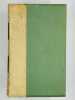
Dictionnaire des symboles ( Mythes, rêves, coutumes, gestes, formes, figures, couleurs, nombres) - Éditions Robert laffont - Paris 1982
Demi reliure basane avec signet, très bon état, 130x200, 871 gr, 1060 pages, Édition revue et augmentée, collection Bouquins, ISBN : 2221503198
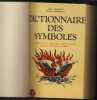
C'est trop peu de dire que nous vivons dans un monde de symboles, un monde de symboles vit en nous. Chacun sentira bien l'importance de ce dictionnaire. Plus de mille six cents articles, reliés par des comparaisons et des renvois, permettent de mieux approcher la nudité du symbole, que la raison dans sa seule mouvance ne parviendrait pas à saisir. Cette somme unique ouvre les portes de l'imaginaire, invite le lecteur à méditer sur les symboles, afin d'y découvrir la saveur et le sens d'une réalité vivante.
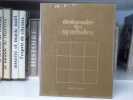
DICTIONNAIRE DES SYMBOLES. Mythes, rêves, coutumes, gestes, formes, figures, couleurs, nombres.
Robert Laffont Paris 1982 Fort in-4 ( ), de XXXI-842 pages, pleine toile camel de l'éditeur. nombreuses illustrations en noir, bibliographie. Edition revue et corrigée. Très bel exemplaire.
N.S. JESUS-CHRIST.
Imprimerie Paul Hoffmann Montbéliard 1878 In-12 ( 165 X 130 mm ) de 59 pages, broché sous couverture imprimée. Couverture tachée, bon exemplaire.
L'Esprit et le Messie dans le bas-judaisme et le nouveau testament.
Presses Universitaires De France Paris 1958 In-8 ( 255 X 170 mm ) de 154 pages, broché sous couverture imprimée. Bon exemplaire.
L'avion à la découverte du passé.
Fayard Paris 1964 In-8 ( 195 X 150 mm ) de 218 pages, broché sous couverture illustrée. Bon exemplaire.
ON NE MEURT PAS. Preuves scientifiques de la survie.
Jouvet & Cie, Editeurs Paris 1920 In-8 ( 190 X 120 mm ) de 317 pages, broché sous couverture imprimée. Dos absent, plats effrangés.
Histoire sommaire de la Nouvelle Eglise Chrétienne fondée sur les doctrines de SWEDENBORG par un ami de la Nouvelle Eglise.
Swedenborg Society - New Church Book - Librairie De La Nouvelle Jérusalem Londres - New-York - Paris 1879 In-8 ( 220 X 145 mm ) de IV-248 pages, demi-percaline grenat, dos lisse janséniste. EDITION ORIGINALE. Bel exemplaire. De la bibliothèque Gilbert TAPPA ( Ex-Libris ). Caillet, 10489. Très rare.
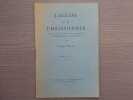
L'EGLISE ET LA THÉOSOPHIE. Conférence donnée au siège de la Société Théosophique, 4 square rapp, le 6 mars 1921.
Publications Théosophiques Paris 1921 Plaquette in-12 ( 180 X 120 mm ) de 29 pages, agrafée sous couverture imprimée. EDITION ORIGINALE. Bel exemplaire.
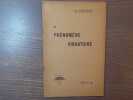
Le phénomène vibratoire.
Editions Adyar Paris 1923 Plaquette in-8 ( 240 X 150 mm ) de 36 pages, brochée sous couverture imprimée. EDITION ORIGINALE.
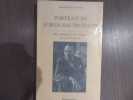
Portrait de JURGIS BALTRUSAITIS & Art Sumérien, Art Roman.
Flammarion, Editeur Paris 1989 In-4 ( 240 X 150 mn ) de 271 pages, broché sous couverture illustrée. Portrait de l'auteur en frontispice. Illustrations dans et hors-texte. Très bel exemplaire.
Oriens
Alphonse Lemerre Editeur 1897 in12. 1897. Broché. Oriens est un recueil de poèmes de Charles Florentin Loriot publié en 1895 chez Alphonse Lemerre. L'œuvre explore des thèmes spirituels et existentiels à travers des images symboliques comme le temple l'aube et l'étoile
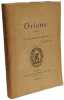
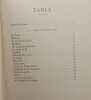
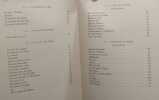
Etat Correct couverture défraîchie intérieur propre
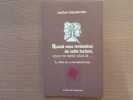
Quand vous reviendrez de cette lecture, vous ne serez plus là...
Le Mercure Dauphinois Grenoble 2018 In-8 ( 220 X 130 mm ) de 117 pages, broché sous couverture illustrée. Intérieur très frais. Petite ex-dono signé à Séverin BATFROI. Très bel exemplaire.
Holy Children and Liminality in Early Modern Art
, Brepols, 2025 Hardback, Pages: 231, Size:216 x 280 mm, Illustrations:8 b/w, 91 col., Language: English. ISBN 9782503586984.
Summary Children play a key role in the visual cultures of early modern Europe. On the one hand, they are central figures because of the Christian belief in a divine embodiment as a child; on the other, since children were assigned with values of mediation and transitions between different worlds, liminality became one of the ideas that structured the extensive spectrum of their roles in premodern imaginations. By fostering a conversation between art historians from different backgrounds and specializations, this volume departs from the conventional focus on representations of children as evidence for inquiries into childhood to explore their status as (normative) images. Starting from the ancient putto and liminal representations of children, before moving on to holy children, the Christ Child or child martyrs at the crossroad of religious conflict, the eight essays in this book seek to grasp the many different ambiguous meanings carried by objects representing children and the ways in which artists and viewers reflected on the concepts of childhood and liminality between the fourteenth and the nineteenth centuries across different European trajectories: from Ravenna to Sarajevo, from Milan to Mechelen, and beyond. TABLE OF CONTENTS Introduction Holy Children, Liminal Bodies: An Introduction Chiara Franceschini, Cloe Cavero de Carondelet Chapter 1 Fragments of Desire: On the Ravenna Thrones and their Multiple Contexts of Reuse Chiara Franceschini Chapter 2 Baptising the Putto: Transmigration of the Infantile Forms in Sacred Settings between the Adriatic and the Alps Jasenka Gudelj Chapter 3 Prudence, Memory and the Liminal Child in the "Medieval Housebook" Andrea Pearson Chapter 4 From Sacred to Secular: The Infants Christ and Saint John the Baptist Embracing Nelleke de Vries Chapter 5 Re-thinking so-called 'Holy Dolls': The Performative and Devotional Context of Christ Child Sculptures in the Early Italian Renaissance Patricia Simons Chapter 6 Child and God: The Body of the Christ Child in Medieval and Early Modern Italian Sculptures Fabien Lacouture Chapter 7 The Cult of the Holy Child from Sarajevo: Sanctity between Official Orthodoxy and Multiconfessional Piety Vuk Dautovi? Chapter 8 From Norwich to Nagasaki: Hieronymus Wierix and the Iconography of Crucified Child Martyrs Cloe Cavero de Carondelet Bibliography Indexes
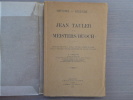
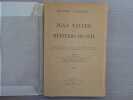
Jean TAULER et le "Meisters-Buoch".
A. Vix & Cie - E. Champion Strasbourg - Paris 1922 In-8 ( 255 X 165 mm ) de XVI-214 pages, broché sous couverture imprimée. EDITION ORIGINALE. Bel exemplaire enrichi d'un envoi autographe signé de l'auteur.
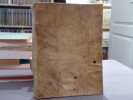
LA SCIENCE CURIEUSE ou traité de la CHYROMANCE récueilly des plus grand Autheurs qui ont traité de cette matiere & plus exactement recherché qu'il n'a esté cy-devant par aucun autre. Enrichi d'un grand nombre de figures pour la facilité du Lecteur. Ensem
Chez François Clousier Paris 1667 Petit in-4 ( 225 X 165 mm ) de - titre, 1 ffnch. au lecteur, 2 ffnch. de table, 2 parties à pagination continue 212 pages et 90 planches-, plein velin ivoire souple muet de l'époque. Ouvrage rare, bien complet des 90 planches à plusieurs sujets gravées en taille-douce. Petits manques de vélin en tête et en queue du dos, nonobstant, agréable exemplaire.
Ethnologies en miroir. La France et les pays de langue allemande
MSH PARIS 1987 396 pages 3x23x15cm. 1987. Broché. 396 pages. Cet ouvrage collectif dirigé par Isac Chiva et Utz Jeggle présente une analyse comparative de deux grandes écoles européennes d'ethnologie : la française et l'allemande. Il explore leurs spécificités divergences et approches distinctes notamment dans l'étude des faits symboliques et religieux
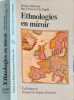
Très bon état annotations au crayon papier dans l'ouvrage et au stylo sur 4ème de couverture
Strangeness and Recognition: Mystery and Familiarity in Renaissance Paintings of Christ
, Brepols, 2019 Hardback, 230 pages, Size:216 x 280 mm, Illustrations:69 col., Language: English. ISBN 9782503581200.
Summary How do you paint a figure who is fully human and fully divine? How do you paint Christ? Strangeness and Recognition takes a fresh look at well-known Renaissance paintings of Christ and shows how surprising and deeply 'strange' they can be. This book brings an imaginative and affective theological perspective to the viewing experience as it explores the twin roles played by 'strangeness' and 'recognition' in responding to the challenge of creating and relating to images of Christ. By confounding expectations and defamiliarising subject matter, the ambiguity and mystery of these paintings disturbs viewers' expectations and reconnects them with the extraordinary mystery of the Incarnation. While neither words nor images can fully describe God, through a questioning, challenging dialogue with paintings, whose visual language disrupts itself, viewers can be brought to the limits of their own understanding and can enter into transformative and personlike relationships with paintings. These personal exchanges lead through estrangement to the rediscovery of the familiar within the strange and the renewed within the familiar, and to the ultimately unspeakable, unpaintable, mystery of the Incarnation. Drawing on a diverse range of theologians, philosophers, art historians and art theorists, and building on her own earlier work, Chlo Reddaway shows the theological potential of Christian images, even when they are far removed from their original contexts. A major contribution to the emerging field of visual theology, this book will appeal to scholars of theology and art history alike, as well as to the museum-going public. TABLE OF CONTENTS Introduction Part 1: Strangeness and Recognition Chapter 1: The problem and potential of religious language and art Chapter 2: Naming Strangeness Chapter 3: Recognising Christ Part 2: Making Strange Chapter 4: Strangeness in Renaissance Painting Chapter 5: Unexpected Iconography Chapter 6: Time and Place Chapter 7: Always and Nowhere Chapter 8: Revelation Chapter 9: Open Images Conclusions: Attending
Introduction au YI-KING.
Editions Du Rocher Paris 1983 In-8 ( 230 X 140 mm ) de 271 pages, broché sous couverture illustrée. Bon exemplaire.