Write to the booksellers
1972 books for « le bronze »Edit
-
Type
Book (1882)
Drawings (1)
Engraving (1)
Magazine (83)
New book (5)
-
Latest
Last 24h (2)
Last 3 days (3)
Last month (8)
Last week (2)
-
Language
Chinese (3)
English (12)
French (1704)
Russian (253)
-
Century
17th (1)
18th (4)
19th (188)
20th (661)
21st (79)
-
Countries
Belgium (105)
Canada (4)
China (5)
Côte d'Ivoire (8)
Denmark (13)
France (1417)
Greece (1)
Netherlands (22)
Switzerland (119)
United Kingdom (13)
United States of America (265)
-
Syndicate
ALAC (3)
CLAM (4)
ILAB (818)
NVVA (59)
SLACES (59)
SLAM (715)
Topics
- Africa (8)
- Age (31)
- Agriculture (8)
- Alsace (8)
- Applied arts (8)
- Aquitaine (27)
- Arabic (11)
- Archaeology (301)
- Architecture (38)
- Asia - orient (9)
- Bernard tristan (7)
- Briard jacques (14)
- Brittany (19)
- Bronze (72)
- Cabinetwork (8)
- Ceramic (22)
- China (59)
- Civilisation (13)
- Collections (33)
- Comic strip (15)
- Costumes (13)
- Customs (14)
- Dauphiné (6)
- Decoration (10)
- Decorative arts (21)
- Dedication (6)
- Drawings (7)
- Drumont edouard (13)
- Europe (7)
- Exhibition (7)
- Exhibition catalogue (8)
- Far east (26)
- Feudalism (7)
- Figaro (8)
- Fine arts (72)
- First edition (22)
- Furniture (11)
- Furniture (8)
- Gebhart emile (6)
- Geography (7)
- Greece (20)
- Greek (12)
- Helvética (20)
- History (71)
- Industrial arts & crafts - fine arts (32)
- Ironwork (16)
- Japan (7)
- Journalism (14)
- L'illustration (newspaper) (8)
- Larteguy jean (8)
- Literature (57)
- Magazine (46)
- Mathematics (13)
- Middle east (11)
- Military arts (10)
- Moses (11)
- Museums (33)
- Navy (8)
- Neolithic (6)
- Newspapers press (63)
- Normandy (7)
- Numismatic (14)
- Painting (7)
- Paris (12)
- Plate (11)
- Posters (9)
- Prehistory (24)
- Protohistory (34)
- Provence (8)
- Regionalism (10)
- Religions (26)
- Review (9)
- Reviews (60)
- Sciences (17)
- Scores (9)
- Sculpture (50)
- Silversmith’s trade (28)
- Sports (12)
- Switzerland (24)
- Tea (9)
- Theatre (19)
- Woods & woods’ price lists (11)
Description du Parnasse français, exécuté en bronze
Paris, la veuve Ribou, 1727. 2 parties en 1 vol. in-12, XXVIII-366-[10] pp., basane marbrée havane, dos à nerfs orné de caissons dorés, pièce de titre rouge, tranches rouges et mouchetées (manques à la reliure, mors fendus, coins émoussés, petites rousseurs éparses).
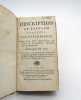
Rare édition originale de cet étonnant ouvrage. Évrard Titon du Tillet était un militaire amateur des arts. En 1708, il conçut le projet de faire exécuter une statue en bronze à la gloire des artistes du siècle de Louis XIV. Il confia son projet au sculpteur Louis Garnier qui en réalisa une maquette en bronze en 1718. Faute de fonds, il ne put voir son projet exécuté à la taille voulue, et dut se contenter de la maquette ainsi que d'un dessin de Nicolas de Poilly qu'il fit graver et présenter au roi Louis XV. Il exposa dans la première partie du présent ouvrage son ambitieux dessein en décrivant minutieusement l'apparence que devait avoir la sculpture. La seconde partie consiste en une liste alphabétique des artistes (poètes et musiciens), avec leurs biographies, représentés sur le monument. Titon du Tillet rédigea plusieurs suites à cet ouvrage, augmentant le nombre des biographies, ce qui le rendit incontournable pour l'étude de la musique du Grand Siècle. Voir photographie(s) / See picture(s) * Membre du SLAM et de la LILA / ILAB Member. La librairie est ouverte du lundi au vendredi de 14h à 19h. Merci de nous prévenir avant de passer,certains de nos livres étant entreposés dans une réserve.
Inheritance, Social Networks, Adaptation. Bronze and Early Iron Age Societies North of the Western Carpathians
, Brepols, 2025 Hardback, 820 pages, Size:210 x 297 mm, Illustrations:124 b/w, 277 col., 46 tables b/w., 2 tables col., Language: English. *new ISBN 9782503616773.
Summary How did societies change between the Early Bronze Age and the Early Iron Age? And what was the impetus that led to these changes - social contacts and innovation, intergenerational contacts, or perhaps simply adaptation? Taking these questions as its starting point, this richly detailed volume explores four different regions of southern Poland to compare and contrast the mechanisms that drove socio-cultural change in the region between the second and the first half of the first millennium BC. Drawing on standardized sets of archaeological data, the chapters gathered here examine the interplay of different factors influencing cultural change across five key parameters: environment; settlement patterns; settlement organization; economy; and material culture. The result is a beautifully illustrated volume that offers important insights into Central and Eastern European prehistory, made accessible for an English-speaking audience. TABLE OF CONTENTS Introduction, Marcin S. Przybyla, Karol Dziegielewski Part 1. Analysis of Source Data 1.1. Geographical Location of the Study Region and Test Areas, Karol Dziegielewski, Marta Korczynska-Cappenberg 1.2. Timeline 1.2.1. Bronze and Early Iron Ages Around the Western Carpathians: Civilizational Transformations in Central Europe in the 2nd and 1st Millennia BC, Jan Chochorowski, Karol Dziegielewski, Marcin S. Przybyla 1.2.2. Periodisation of the Bronze and Early Iron Ages on the Upper Vistula River, Karol Dziegielewski 1.2.3. Periodisation of the Bronze and Early Iron Ages in the Dunajec Valley, Marta Korczynska-Cappenberg, Marcin S. Przybyla 1.3. Transformations of Natural Environment 1.3.1. Environmental Changes in the Bronze and Early Iron Ages in Loess Areas of the Upper Vistula Basin (Test Area 1), Michal Wasilewski, Anna Gawlik 1.3.2. Environmental Changes in the Bronze and Early Iron Ages in the Upper Vistula Valley near Krak w (Test Area 2), Karol Dziegielewski, Dorota Nalepka, Maria Litynska-Zajac 1.3.3. Environmental Changes in the Bronze and Early Iron Ages in the Middle Dunajec Basin (Test Area 3), Marta Korczynska-Cappenberg, Katarzyna Korzen, Magdalena Moskal-del Hoyo, Maria Litynska-Zajac 1.3.4. Environmental Changes in the Bronze and Early Iron Ages in the Mountain Section of the Dunajec Valley (Test Area 4), Marcin S. Przybyla, Katarzyna Korzen, Magdalena Moskal-del Hoyo 1.4. Settlement Network 1.4.1. Methodology of Fuzzy Logic Mapping, Geostatistical Analyses and Cartographical issues, Marta Korczynska-Cappenberg, Klaus Cappenberg 1.4.2. Settlement Network in the Bronze and Early Iron Ages in Loess Areas of the Upper Vistula Basin (Test Area 1), Anna Gawlik 1.4.3. Settlement Network in the Bronze and Early Iron Ages in the Upper Vistula Valley near Krak w (Test Area 2), Michal Mazur, Karol Dziegielewski 1.4.4. Settlement Network in the Bronze and Early Iron Ages in the Middle Dunajec Basin (Test Area 3), Marta Korczynska-Cappenberg 1.4.5. Settlement Network in the Bronze and Early Iron Ages in the Mountain Section of the Dunajec Valley (Test Area 4), Marcin S. Przybyla, Joanna A. Markiewicz 1.5. Settlement Structure and Organisation 1.5.1. Organisation of Intra-settlement Space in Bronze and Early Iron Age Settlements from the Upper Vistula Basin (Test Areas 1 and 2), Karol Dziegielewski, Anna Gawlik, Michal Mazur 1.5.2. Organisation of Intra-settlement Space in Bronze and Early Iron Age Settlements from the Middle Dunajec Basin (Test Area 3), Marta Korczynska-Cappenberg, Tobias L. Kienlin 1.5.3. Organisation of Intra-settlement Space in Bronze and Early Iron Age Settlements from the Mountain Section of the Dunajec Valley (Test Area 4), Marcin S. Przybyla 1.6. Subsistence Economy 1.6.1. Late Bronze Age and Early Iron Age Farming and Animal Husbandry in the Loess Areas of the Upper Vistula Basin (Test Area 1), Krystyna Wasylikowa, Magdalena Moskal-del Hoyo, Dalia Pokutta, Anna Gawlik 1.6.2. Bronze Age and Early Iron Age Farming and Animal Husbandry in the Upper Vistula Valley near Krak w (Test Area 2), Karol Dziegielewski, Maria Litynska-Zajac, Ulana Gocman, Michal Mazur 1.6.3. Bronze Age and Early Iron Age Farming in the Middle Dunajec Basin (Test Area 3), Marta Korczynska-Cappenberg, Maria Litynska-Zajac, Magdalena Moskal-del Hoyo, Katarzyna Cywa 1.6.4. Bronze Age and Early Iron Age Farming and Animal Husbandry in the Mountain Section of the Dunajec Valley (Test Area 4), Marcin S. Przybyla, Ulana Gocman, Aldona Mueller-Bieniek 1.7. Pottery Manufacture 1.7.1. Notes on the Method of Classification of Ornaments and Morphological Features of Ceramic Vessels, Marcin S. Przybyla, Karol Dziegielewski, Anna Gawlik, Marta Korczynska-Cappenberg, Michal Mazur 1.7.2. Continuation and Change in Pottery Manufacture in the Upper Vistula Basin (Test Areas 1 and 2), Karol Dziegielewski, Michal Mazur 1.7.3. Continuation and Change in Pottery Manufacture in the Middle Dunajec Basin (Test Area 3), Marta Korczynska-Cappenberg 1.7.4. Continuation and Change in Pottery Manufacture in the Mountain Section of the Dunajec Valley (Test Area 4), Marcin S. Przybyla Part 2. Comparative Analyses 2.1. Interconnectivity: Geographic and Social Space, Marcin S. Przybyla, Marta Korczynska-Cappenberg, Klaus Cappenberg, Joanna A. Markiewicz, Karol Dziegielewski 2.2. Economy: Trends of Diachronic Changes and Local Specificity, Marta Korczynska-Cappenberg, Marcin S. Przybyla, Karol Dziegielewski, Klaus Cappenberg 2.3. Thoughts on Wealth and Social Differentiation, Consumption of Bronze, and Craft Specialisation, Karol Dziegielewski, Marcin S. Przybyla, Marta Korczynska-Cappenberg Part 3. Concluding Remarks 3.1. From Pots and Farmsteads to Demography: Exploring the Interplay of Cultural Transmission Patterns, Marcin S. Przybyla, Karol Dziegielewski Part 4. Specialist Analyses 4.1. Micromorphology and Physico-chemical Properties of Soils and Sediments from Maszkowice and Janowice Sites, Magdalena Makiel, Wojciech Szymanski, Mateusz Stolarczyk 4.2. Analysis of Animal Bone Remains from Trench 9 on Site 6 at Janowice (AZP 106-65/61), Plesna Commune, Ulana Gocman References Appendices: Lists of Bronze Age and Early Iron Age Sites Included in the Project List of Radiocarbon Dates used in the Chronometric Analysis for the Upper Vistula Area (Chapter 1.2.2)
Knut Ivar Austvoll, Marianne Hem Eriksen, Per Ditlef Fredriksen, Lene Melheim, Lisbeth Pr sch-Danielsen, Lisbeth Skogstrand (eds)
Reference : 65484
Contrasts of the Nordic Bronze Age. Essays in Honour of Christopher Prescott
, Brepols, 2021 Paperback, 284 pages, Size:215 x 280 mm, Illustrations:61 b/w, 30 col., 16 tables b/w., Language: English. ISBN 9782503588773.
Summary The Bronze Age in Northern Europe was a place of diversity and contrast, an era that saw movements and changes not just of peoples, but of cultures, beliefs, and socio-political systems, and that led to the forging of ontological ideas materialized in landscapes, bodies, and technologies. Drawing on a range of materials and places, the innovative contributions gathered here in this volume explore the disparate facets of Bronze Age society across the Nordic region through the key themes of time and trajectory, rituals and everyday life, and encounters and identities. The contributions explore how and why society evolved over time, from the changing nature of sea travel to new technologies in house building, and from advances in lithic production to evolving burial practices and beliefs in the afterlife. This edited collection honours the ground-breaking research of Professor Christopher Prescott, an outstanding figure in the study of the Bronze Age north, and it takes as its inspiration the diversity, interdisciplinarity, and vitality of his own research in order to make a major new contribution to the field, and to shed new light on a Bronze Age full of contrasts and connections. TABLE OF CONTENTS List of Illustrations Preface Contrasts of the Bronze Age - Time, Ritual and Encounters in the Nordic World: An Introduction - IVAR AUSTVOLL, MARIANNE HEM ERIKSEN, PER DITLEF FREDRIKSEN, LENE MELHEIM, LISBETH PR SCH-DANIELSEN AND LISBETH SKOGSTRAND Part I. Time and Trajectory in the Nordic Bronze Age The Nordic Bronze Age Rose from Copper Age Diversity: Contrasts in the Cimbrian Peninsula -JOHANNES M LLER AND HELLE VANDKILDE On the Periphery of an Agricultural Society: Traces From the Formative Agricultural Period in Norway - A Case Study From ygarden in Hordaland, Western Norway - ARNE JOHAN N R Y The Contrasting Region of Hedmark, Southeast Norway: A Border Zone Through Three Millennia - BERNT RUNDBERGET AND HILDE RIGMOR AMUNDSEN Lithic Production in Bronze Age Norway: The Legacy of a Neolithic Mosaic - ASTRID J. NYLAND Places to Be, or Places to Live? Transformations in Prehistoric Dwellings in the North-western Iberian Peninsula - M. PILAR PRIETO-MART NEZ A History in Prehistory: The Making of a Migration Period 'Technology of Remembrance' in South-West Norway - PER DITLEF FREDRIKSEN AND ELNA SIV KRISTOFFERSEN Part II. Ritual and Everyday Life: Ontologies, Images, and Place-making Practices Together or Apart? Identifying Ontologies in the Nordic Bronze and Iron Age through the Study of Human-Horse Relationships - JACOB KVEIBORG The Stacked, the Partial and the Large. Visual Modes of Material Articulation in M laren Bay Rock Art - FREDRIK FAHLANDER Ritual or Mundane? Scandinavian Tar Loaves from the Bronze Age - CAMILLA C. NORDBY AND KRISTINE ORESTAD S RGAARD Identifying and Investigating Diversity: New Perspectives and Possibilities Within Scandinavian Rock Art Research - JAMES DODD Patterns or Contrast? A GIS-based Study of the Landscape Context and Localization of Southern Rock Art Tradition in Stj rdal, Mid-Norway - ARNE ANDERSON STAMNES AND HEIDRUN STEBERGL KKEN Knapped Quartz in Finnish Bronze Age Cairns - JARKKO SAIPIO Bridging Perspectives: Social Dynamics of Houses and Households in the Nordic Bronze Age - MARIANNE HEM ERIKSEN AND KNUT IVAR AUSTVOLL Part III. Encounters: Identity, Things, and People on the Move A Safe Harbour: Identifying and Theorizing Harbours in Late Neolithic and Bronze Age Norway - H VARD KILHAVN What Can Artefacts Tell Us About Societies? Foreign Objects in Bronze Age Central Europe and Scandinavia - LUKAS WIGGERING Clay, Burial Urns, and Social Distinction in Late Bronze Age Southern Scandinavia - SERENA SABATINI, TORBJ RN BRORSSO, AND PETER SKOGLUND The Contrasts Within: Intersecting Identities in the Luseh j Mound, Denmark - LISBETH SKOGSTRAND Contrasting the Women in the Rege and Molkhaug Mounds: Poised Between the Here and the Beyond - KRISTIN ARMSTRONG OMA Thy at the Crossroads: A Local Bronze Age Community's Role in a Macro-Economic System - KRISTIAN KRISTIANSEN, LENE MELHEIM, JENS-HENRIK BECH, MORTEN FISCHER MORTENSEN, AND KARIN MARGARITA FREI
Bourgarit, David, Jane Bassett, Francesca Bewer, Arlen Heginbotham, Andrew Lacey
Reference : 122638
(2023)
ISBN : 9781606066904
Guidelines for the Technical Examination of Bronze Sculpture
Bourgarit, David, Jane Bassett, Francesca Bewer, Arlen Heginbotham, Andrew Lacey: Guidelines for the Technical Examination of Bronze Sculpture. New Haven: 2023. 518 pages. 468 colour illustrations, 80 charts and diagrams with 15 tables. Paperback. 27.9x21.6cms. 25 essays divided into 3 parts look at casting processes, the composition and properties of the copper alloys used, casting defects, repairs, assembly of bronze sculptures, tool marks, gilding and plating, patinas, and inlays and overlays. The second volume discusses analytical techniques, photography and other imaging tools, radiography and tomography for metal walls and interiors, measurements of dimension, metal types, surface layer and core analysis, dating methods, and the use of experimental simulation in developing new fabrication techniques. The final section contains 7 case studies on Roman reliefs, European vessels from the middle ages, a 3000 year old bronze elephant from China, 8th, 9th and 10th century Indonesian statuettes, renaissance statues, American sand-cast bronze, and an interview with Andrew Lacey on material choices. Also includes a terminology of sculpture, bronze and foundry vocabulary, and a visual atlas of features.
25 essays divided into 3 parts look at casting processes, the composition and properties of the copper alloys used, casting defects, repairs, assembly of bronze sculptures, tool marks, gilding and plating, patinas, and inlays and overlays. The second volume discusses analytical techniques, photography and other imaging tools, radiography and tomography for metal walls and interiors, measurements of dimension, metal types, surface layer and core analysis, dating methods, and the use of experimental simulation in developing new fabrication techniques. The final section contains 7 case studies on Roman reliefs, European vessels from the middle ages, a 3000 year old bronze elephant from China, 8th, 9th and 10th century Indonesian statuettes, renaissance statues, American sand-cast bronze, and an interview with Andrew Lacey on material choices. Also includes a terminology of sculpture, bronze and foundry vocabulary, and a visual atlas of features. Text in English

Circular Cities of Early Bronze Age Syria
, Brepols, 2020 Paperback, xxvi + 398 pages, Size:216 x 280 mm, Illustrations:133 b/w, 36 col., 16 tables b/w., Languages: English, French. ISBN 9782503551838.
Summary This volume corresponds to the acts of a conference that closes the international interdisciplinary research project Badiyah, directed by Corinne Castel and Jan-Waalke Meyer (Directors of the Tell Al-Rawda and Tell Chuera archaeological missions). Both sites illustrate the importance of the 3rd millennium BCE 'circular cities' discovered in today's Syria. These pre-planned cities were fortified and organized following a concentric and radial urban pattern. They represent a particular form of the endogenous process of urbanization that appeared in this region when the first cities and territorial states emerged. The main results obtained from these two sites are compared to other Syrian 'circular cities' of the Early Bronze Age. Twenty-nine contributions enable us to reassess the process of urbanization in the Near East and to question the Southern Mesopotamian model as the unique cradle of urban civilization. TABLE OF CONTENTS TABLE OF CONTENTS PREFACE AVANT-PROPOS Introduction Syrian Circular Cities of the Third Millennium BC: A Syrian Urban Model - CORINNE CASTEL Spatial and Temporal Distribution of Circular Cities in Early Bronze Age Syria: A Reappraisal - PHILIPPE QUENET The Birth of the Circular Cities - JAN-WAALKE MEYER SECTION I - THEMATIC TOPICS Origins of the Model The Origin and Early Development of Tell Chu?ra and Neighbouring Settlements - RALPH HEMPELMANN Retracing Settlements, Pots, and People: Frankfurt University's Southeast Anatolia Project (SOAP) - CHRISTIAN FALB & MUSTAFA KIBARO?LU Circular Cities: Fortifications and Official Areas The Fortification of Circular Cities: The Examples of Tell Chu?ra and Tell Al-Rawda - TOBIAS?B.?H. HELMS & PHILIPPE QUENET Creating the Urban Landscape. The Emergence of Monumentality in Third Millennium Chu?ra - OLESIA KROMBERG The Early Bronze Age Palace at Chu?ra and the Decline of the Settlement - ALEXANDER TAMM Circular Cities: Material Culture A Comparison of Early Bronze Age Ceramic Assemblages from Circular Cities in Inner Syria and the Western Jezirah: Some Preliminary Considerations - TAOS BABOUR & GEORGES MOUAMAR Djemdet Nasr or Early Bronze Age?III? Dating the Find Locations of Tell Chu?ra Seal Impressions - ANNE-BIRTE BINDER Peri-Urban Constructions and Environmental Studies The Circular Cities of Northern Syria in their Environmental Context - STEFAN LORENZ SMITH & TONY JAMES WILKINSON? Soils and Land Use Potential Around Tell Chu?ra in the Third Millennium BC - HEINRICH THIEMEYER Central Places in the Wadi ?amar Survey Area. Aspects of Urban Planning in the Regions of the Badiyah Project in the Third Millennium BC - VERONIKA KUDLEK Strat gies de subsistance et conomie v g tale dans les villes circulaires de la Shamiyah au Bronze ancien. Tell Al-Rawda et Tell Sh'airat dans les marges arides de Syrie - LINDA HERVEUX Potentiels agro-pastoraux et am nagements agricoles p riurbains de la micror gion d'Al-Rawda - OLIVIER BARGE & MARIE-LAURE CHAMBRADE Animal Economy at the End of the Third Millennium bc in the Syrian Badiyah: A Comparative Study of Tell Chu?ra and Tell Al-Rawda - EMMANUELLE VILA A Cataclysm in the Steppe? Environmental History of Al-Rawda, an Ephemeral City in the Syrian Arid Margins at the End of the Third Millennium - JACQUES E LIE BROCHIER Society and Textual Sources The Ebla Palace G Texts and the Circular Cities of Third Millennium Eastern Syria: Some Remarks - MARIA GIOVANNA BIGA The Ebla Palace G Texts and the Circular Cities of Third Millennium Southern Syria: Some Remarks - AMALIA CATAGNOTI Square Temples and Circular Cities: Sites of Attraction, 'Traditions of Identity' and Third Millennium Urbanisation in Northern Syria - ANNE PORTER SECTION II - REGIONAL TOPICS Anatolia The Spatial Organisation, Development and Sociology of Radial Pattern Settlements in Early Bronze Age Anatolia - B RENG RE PERELLO Jezirah Mari, une ville circulaire ordinaire? - PASCAL BUTTERLIN Notes sur l'architecture et l'urbanisme du Royaume de Nagar (3): similarit s entre Tell Brak et Tell Beydar l' poque Early Jezirah IIIb - MARC LEBEAU Tell Khazna I - A Concentric Planned Settlement in The Khabur Steppe - AMIROV SHAMARDAN N. Tell Tcholema Foqani: A New Circular City 'Kranzh gel' in the Region of Upper Jezirah - CHEIKHMOUS ALI A Season's Work at Khirbet Malhat, North-Eastern Syria - PHILIPPE QUENET & AHMAD SULTAN Bishri La contribution du Jebel Bishri la th matique des villes circulaires du troisi me mill naire av. J.-C. - AHMAD SULTAN A Planned new Major City on the Margins of the Syrian Steppe: Early Bronze Age Tell Sh?a?rat - GEORGES MOUAMAR Southern Mesopotamia Town-Planning in Third Millennium Mesopotamia: A View from the Alluvial Plain - R GIS VALLET INDEX OF SITES
Les maitres du feu. L'age du Bronze en France. 2300-800 avant J.-C.
<p><span>L’âge du Bronze reste encore peu connu, encadré par deux grandes périodes abordées dès l’école, le Néolithique (6000 à 2300 av. J.-C.) et l’âge du Fer (800 à 30 av. J.-C.). Les quinze siècles de l’âge du Bronze (-2300 / - 800 av. J.-C.) correspondent à l’invention puis au développement de la métallurgie du bronze. Cet alliage résulte d’une association de cuivre et d’étain qui lui donne des qualités nouvelles bien supérieures à celle du cuivre connu dès le Ve millénaire av. J.-C. en Europe orientale et centrale. Sa fusion vers 950 °C permet des moulages grâce à des enveloppes réfractaires de pierre ou d’argile. Sa résistance mécanique favorise la fabrication d’armes (épées, lances...) et d’outils (marteaux, faucilles, couteaux ...) ; sa belle couleur or est exploitée pour les bijoux (bracelets, torques, perles et pendeloques...) ; sa sonorité est aussi utilisée pour des trompes (lurs) et sonnailles cliquetantes. Son martelage permet de produire des tôles fines à l’origine de vaisselles, de casques et cuirasses.</span></p><p><span>Les gisements de cuivre et d’étain sont très inégalement répartis en Europe et il faudra que les matériaux circulent à l’échelle du continent pour que cette révolution technique touche tous les territoires. Le développement de la métallurgie du bronze suppose la présence de spécialistes du métal : mineurs, prospecteurs « géologues », artisans bronziers et orfèvres. Avec le métal, les sociétés gagnent en efficacité car les outils sont plus solides ; en compétitivité avec une production qui s’accroît considérablement, en complexité car les échanges et les rapports sociaux se multiplient. L’art des bronziers laisse à penser qu’ils font partie de l’élite sociale ou qu’ils en sont proches du fait de leurs compétences.</span></p><p><span>Aujourd’hui, avec l’amplification des recherches dynamisées par l’archéologie préventive, des centaines de fouilles en France et en Europe mettent en lumière les nombreuses innovations de cette période. Avec ces données récentes, différentes images de l’âge du Bronze en France apparaissent : des manières d’être et de paraître, de produire, d’habiter, de vivre. L’exposition du Musée d’Archéologie nationale, construite en partenariat avec l’Institut national d’archéologie préventive et l’Association pour la Promotion des Recherches sur l’âge du Bronze souhaite présenter toutes ces données nouvelles avec le support du catalogue qui l’accompagne.</span></p><p><span>Ce millénaire et demi d’innovations techniques de l’âge du Bronze marquent définitivement notre histoire humaine. Les hiérarchies et spécialisations de cette période s’expriment au sein de populations dispersées et rurales en Europe occidentale où le paysan éleveur sédentaire tient une place éminente. Cependant des interconnections s’établissent à l’échelle du continent grâce à l’amplification des échanges et contacts, des mobilités des produits, des idées et des savoirs, des personnes. L’âge du Bronze consacre l’entrée définitive du métal dans la société où nous vivons encore avec les complexifications sociales et les spécialisations que cela impose.</span></p> Dijon, 2025 Faton 183 p., nombreuses fig. couleur, broché 22 x 26
Neuf
Hoards from the European Bronze and Iron Ages. Current Research and New Perspectives
, Brepols, 2025 Paperback, 175 pages, Size:216 x 280 mm, Illustrations:42 b/w, 72 col., 6 tables b/w., 17 maps b/w, 3 maps color, Language: English. *new ISBN 9782503607511.
Summary Hoards are among the most enigmatic of archaeological finds. The term 'hoard' itself has been applied to different assemblages across space and time, from the Stone Age into the modern era, with an inventory that typically includes artefacts made of valuable raw materials, to which significant symbolic meanings can also be assigned. Archaeologists have been trying to understand this phenomenon for much of the last century, sometimes emphasizing the universal nature of hoards, but more typically focusing on specific regions, chronologies, and finds. They have, for the most part, used results derived from typolo-chronological methods. Contemporary archaeology has, however, developed a broad spectrum of paradigms and methods, and hoardresearch in the twenty-first century draws on an increasingly wide range of approaches. This volume presents examples of research that make use of these multi-faceted approaches through a focus on European hoards of metal objects dating to the Bronze and Iron Ages. The contributors to this volume make use of diverse methods, among them archaeometallurgical analyses, studies of use- and production-wear, destruction patterns, and landscape archaeology, but together, their common denominator is the search for a methodological toolkit that will allow researchers to better understand the phenomenon of hoard-deposition more broadly. TABLE OF CONTENTS List of Illustrations 1. Hoards Research - Past, Present, Future. A Few Words of Introduction Marcin Maciejewski, J nos G bor Tarbay, and Kamil Nowak 2. In an Interpretive Triangle. Main Trends in Research on Hoards in the Nineteenth and Twentieth Centuries: A Central European Perspective Wojciech Blajer 3. The Cognitive Development of Prehistoric Wetland Deposition Tradition Through Mnemonics. Case Studies of Iron Age Wales and Scotland Tiffany Treadway 4. There is a Light that Never Goes Out! New and Old Hoards from the Northern Adriatic Martina Ble?i? Kavur 5. The Urnfield Period Metal Hoards in South Bohemia. Find Circumstances, Topography, and Analyses Ond?ej Chvojka, Jan John, Ji? Kmo?ek, and Tereza ? lkov 6. An Active Search for Hoards? Contributions of a Systematic Field Survey to the Knowledge of Bronze Age Metal Hoarding. The Case Study of Salins-les-Bains, Jura, France Estelle Gauthier and Jean-Fran ois Piningre 7. Ice-marginal Valleys and Hoards. Natural Landscapes, Cultural Practices and their Amazing Convergence in Different Regions of Central Europe (Poland) Marcin Maciejewski 8. Twin Hoards and Hoard Selections from the Late Bronze Age Transdanubia J nos G bor Tarbay 9. Late Bronze Age Hoard from Nowe Kramsko. Is there a Method in Fragments? Kamil Nowak and Nicola Ialongo 10. Comparative Technological Analysis of Middle Bronze Age Bronze Objects from Hoards and Burials Szilvia Gy ngy si, P ter Bark czy, Julianna Cseh, Laura Juh sz, and G za Szab 11. Re-theorizing Deposition in Bronze Age Europe Kristian Kristiansen
Bronze Coins of Eastern Mount Ossa in the Thessalian Perioikic Region of Magnesia. Homolion, Eureai, Eurymenai, and Meliboia
, Brepols, 2024 Hardback, xxviii + 232 pages, Size:152 x 229 mm, Illustrations:226 b/w, 7 tables b/w., Language: English. ISBN 9780897223959.
Summary This monograph examines the Late Classical and Hellenistic bronze coinages of five mints in the Thessalian perioikic region of Magnesia. At the core of this work lies a new die-study of the coins produced by the strategically and economically important coastal cities of Homolion and Meliboia as well as the lesser-known mints of Eureai, Eurymenai, and Rhizous. Combining this die-study with a close examination of the cities' topographical context in a border region between Thessaly and Macedon and drawing on archaeological data from Magnesia and beyond, the monograph addresses key questions concerning the chronology, denominations, and circulation patterns of the bronze issues minted on eastern Mount Ossa. This analysis not only throws new light on coin production in Late Classical and Hellenistic Magnesia, but also allows a discussion of the possible military and non-military functions of the region's different bronze issues. Placing the coins of Eureai, Eurymenai, Homolion, Meliboia, and Rhizous in their wider context, this monograph furthermore addresses broader issues in the history of Thessalian coinage. In particular, the monograph's regional approach offers an unusual opportunity to examine to what extent Thessaly's Late Classical and Hellenistic civic coins were genuinely local in design, production, and function. The monograph thus both explores the coins of Mount Ossa and contributes towards a better understanding of the introduction and development of bronze coinages in the wider Thessalian region and beyond. TABLE OF CONTENTS Preface Abbreviations List of Tables List of Figures List of Plates 1. Setting the Scene: Thessalian Bronze Coinages 2. The Topography and Political Geography of Eastern Mount Ossa 3. The Cities of Eastern Mount Ossa and their Coinages (Homolion, Meliboia, Eurymenai, Rhizous, and Eureai) 4. The Chronology of the Coinages of Mount Ossa 5. The Bronze Coinages of Northeastern Magnesia: Circulation, Denominations, and Patterns of Minting Activity 6. The Bronze Coinages of Northeastern Magnesia: Two Possible Functions 7. Conclusion: Bronze Coinages between Magnesia, Thessaly, and Macedone Bibliography Appendix I: Catalogue of Coins Appendix II: Tables Indexes (Coins by Collection, Coins by Excavation and Findspot, Coins by Auction, Sources, General) Plates
Coins of the Ptolemaic Empire, Part I: Ptolemy I through Ptolemy IV. Volume 1: Precious Metal, Volume 2: Bronze
, Brepols, 2024 Hardback, 2 vols, xxxiv + 836 pages, Size:210 x 297 mm, Illustrations:37 b/w, 122 plates, Language: English.*New. ISBN 9780897223980.
Summary Coins of the Ptolemaic Empire, Part 1, Volumes 1 and 2 (Precious Metal and Bronze) by Catharine Lorber, is the massive, long-anticipated catalogue of coins struck by the first four Ptolemaic kings. It essentially rewrites the sections on these rulers in J. N. Svoronos' classic, but now much out of date,?Ta Nomismata tou Kratous ton Ptolemaion?(1904). The body of coinage catalogued by Svoronos is enlarged by more than 300 further emissions in precious metal and more than 180 emissions in bronze, recorded from subsequent scholarship, from hoards, from commercial sources, and from private collections, and constituting about a third of the total catalogue entries. Lorber's attributions, dates, and interpretations rest on numismatic research since Svoronos, or on the latest archaeological and hoard information. She also provides extensive historical and numismatic introductions that give the coins deeper context and meaning. The coinage of Ptolemies I through IV is supplemented by a few issues possibly attributable to Cleomenes of Naucratis, the predecessor of Ptolemy I in Egypt, as well as by coinages of Ptolemy Ceraunus, Magas, and Ptolemy of Telmessus, members of the Lagid dynasty ruling their own kingdoms outside of Egypt. TABLE OF CONTENTS Volume 1: Precious Metal Preface Acknowledgements Guide for Users Maps Introduction Ptolemy I Soter Ptolemy II Philadelphus Ptolemy III Euergetes Ptolemy IV Philopator Precious Metal Catalogue Cleomenes of Naucratis Ptolemy I Soter Ptolemy II Philadelphus Ptolemy III Euergetes Ptolemy IV Philopator Third-Century Provincial(?) Tetradrachms Unattributable as to Reign (Ptolemy I-IV) Late Additions to the Catalogues Appendices Ptolemaic Precious Metal Hoards Additional Provenances of Precious Metal Coins Bibliography Concordance to Svoronos Indices Remarkable Types in Gold and Silver Remarkable Denominations in Gold and Silver Remarkable Inscriptions on Gold and Silver Controls on Precious Metal Coins Image Credits Plates Volume 2: Bronze Preface Acknowledgements Guide for Users Bronze Catalogue Cleomenes of Naucratis Ptolemy I Soter Macedonia under Ceraunus and Meleager Ptolemy II Philadelphus Ptolemy of Telmessus Ptolemy III Euergetes Ptolemy IV Philopator Appendices 1. Ptolemaic Bronze Hoards 2. Additional Bronze Provenances Bibliography Concordance to Svoronos Numbers Indices 1. Remarkable Types in Bronze 2. Remarkable Inscriptions 3. Controls Image Credits Plates
El-Qitar. A Bronze Age Fortress on the Euphrates
, Brepols, 2019 Paperback, xxiv + 516 pages, Size:216 x 280 mm, Illustrations:322 b/w, 47 tables b/w., Language: English. ISBN 9782503579955.
Summary Located along the River Euphrates, in modern-day Syria, el-Qitar was a mountain fortress of the Middle Bronze Age. Excavations, fully analysed in this volume for the first time, revealed extensive fortifications, with two city gates, multiple towers, a fosse, an earthen rampart, and casemate walls, in addition to a public building lined with orthostats of the Middle Bronze Age. After a short time, the site was abandoned and, following a gap of several centuries, re-settled in the Late Bronze Age. It was then that upper and lower settlements were established within the old fortifications, possibly in the wake of Hittite campaigns in Northern Syria that destroyed nearby towns.?Detailed analyses of ceramics and objects explore the possibility that el-Qitar was re-occupied by local refugees. This volume traces the changing function of the site over time, arguing that el-Qitar might have been the site known as Dur Samsi-Addu during the Middle Bronze Age, and Til-Abnu of the Late Bronze Age. The latest construction episode belongs to the modern-day Tishreen Dam.
Revue historique et archéologique du libournais n° 120 - L'age du bronze - le bronze ancien, Trouvailles isolées, Matériel des caissons de la région de Sainte Foy la Grande, Le bronze moyen, Trouvailles a locales isolées, Trouvailles isolées étrangères
Bureau de la revue. 2e trimestre 1966. In-8. Broché. Bon état, Couv. convenable, Dos satisfaisant, Intérieur frais. Paginé de 33 à 72. Nombreuses illustrations en noir et blanc dans et hors texte.. . . . Classification Dewey : 908.447-Régionalisme : Aquitaine
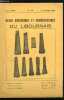
Sommaire : L'age du bronze - le bronze ancien, Trouvailles isolées, Matériel des caissons de la région de Sainte Foy la Grande, Le bronze moyen, Trouvailles a locales isolées, Trouvailles isolées étrangères au Libournais, Cachette de Génissac, Le bronze final, Trouvailles locales isolées, Trouvailles isolées étrangères au Libournais, Les dépots Classification Dewey : 908.447-Régionalisme : Aquitaine

Les statuettes anthropomorphes crétoises en bronze et en plomb du IIIe millénaire au VIIe siècle av. J.-C
Université Catholique de Louvain 1984 in8. 1984. Broché. Cet ouvrage de Colette Verlinden propose un recensement systématique et une étude de synthèse des statuettes anthropomorphes crétoises en bronze et en plomb couvrant la période du IIIe millénaire au VIIe siècle av. J.-C. Il aborde les questions d'authenticité de styles et de datation comblant ainsi une lacune dans la recherche sur la petite plastique crétoise
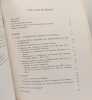
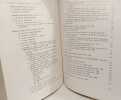
bon état couverture un peu défraîchie intérieur propre
Reference : albd90a73df5685b528
James Mackay. The Dictionary of Sculptors in Bronze Dictionary of Bronze Sculpt
James Mackay. The Dictionary of Sculptors in Bronze Dictionary of Bronze Sculptors. In English /James Mackay. The dictionary of sculptors in bronze Slovar skulptorov po bronze. In English, Woodbridge Antique Collectors Club 2000, 414 pp. We have thousands of titles and often several copies of each title may be available. Please feel free to contact us for a detailed description of the copies available. SKUalbd90a73df5685b528.
Interdisciplinary Research on the Bronze Age Diyala. Proceedings of the Conference Held at the Paris Institute for Advanced Study, 25-26 June, 2018
, Brepols, 2022 Paperback, x + 122 pages, Size:216 x 280 mm, Illustrations:23 b/w, 16 col., 2 tables b/w., 2 maps b/w, 1 maps color, Language(s):English, French. ISBN 9782503595344.
Summary The Diyala region in eastern Iraq has long been a focal area of study for scholars of the Bronze Age, thanks both to its long history of human occupation, and its position as a site of strategic importance. Drawing on this strong tradition of scholarship and the results of numerous excavations and collections in the area, the seven contributions gathered in this volume aim to offer new insights into the cultures and societies of the Bronze Age Diyala by proposing new questions, problems, and approaches. Exploring subjects as widespread as architecture and iconography, cultural and economic history, the study of social networks, historiography, and the identification of ancient cities, these chapters explore the richness of the Bronze Age Diyala from a range of perspectives, and together offer important new insights into our understanding of the area. TABLE OF CONTENTS Current Research on the Bronze Age Diyala: An Introduction ? C CILE MICHEL Old Babylonian E?nunna: A Historiographical Case ? DOMINIQUE CHARPIN La Diyala au Louvre ou le reflet d'une certaine historiographie ? ARIANE THOMAS Reconstructing the Temple Oval of Khafajah ? PHILIPPE QUENET From the Diyala to Ur, Passing by Mari, Ki? and the Jazira ? SOPHIE CLUZAN A New Text from Tell Sulayma - Diyala Region ? AHMAD KAMIL MOHAMMED The Diyala Region as a Linchpin in Early Old Babylonian Trade Networks: A View from Sippar ? RIENTS DE BOER Social Network Analysis, Homonyms, and Aliases in the Old Babylonian Diyala: A Study of the Archive of N?r-?ama? ? CARLOS GON ALVES
Reference : alb1ad5284e17dd9045
Christopher Payne. Animals in bronze Animals in bronze. In English (ask us if in
Christopher Payne. Animals in bronze Animals in bronze. In English (ask us if in doubt)/Christopher Payne. Animals in bronze Zhivotnye v bronze.In English. Woodbridge Suffolk UK. Antique Collectors Club 2002. 424 p.. SKUalb1ad5284e17dd9045.
Bronze de Voltaire en pied sappuyant sur une canne.
Bronze à patine brune, nuancée médaille, sur base cylindrique en bronze parsemée de végétation, diamètre 77 mm, hauteur 185 mm (socle inclus).
![Bronze de Voltaire en pied sappuyant sur une canne.. [Voltaire] - Non signé.](https://static.livre-rare-book.com/pictures/AUR/14076_1_thumb.jpg)
![Bronze de Voltaire en pied sappuyant sur une canne.. [Voltaire] - Non signé.](https://static.livre-rare-book.com/pictures/AUR/14076_2_thumb.jpg)
![Bronze de Voltaire en pied sappuyant sur une canne.. [Voltaire] - Non signé.](https://static.livre-rare-book.com/pictures/AUR/14076_3_thumb.jpg)
Bronze ciselé non signé et sans cachet de fondeur mais dune parfaite exécution et en parfait état, datant très certainement de la seconde partie du XIXe s.Lattribution de ce modèle, souvent associé à celui de Rousseau, est très incertaine. Le modèle est parfois attribué à Houdon, parfois à Forestier, parfois encore à latelier de Claude-Antoine Rosset (cf. Voltaire, bronze, H. 32,5 cm, Paris, musée du Louvre, inv. OA 5297) ; un modèle similaire en plâtre patiné, passé en vente en 2019 chez Delon-Hoebanx, était, quant à lui, signé et daté sur la base " Suzanne " " 1790 " et donc attribué à François-Marie Suzanne (1750-1802).Notre exemplaire est de taille réduite par rapport à ceux que lon rencontre parfois en salle des ventes (la plupart du temps de taille supérieure à 300 mm).
FONDEMENTS CULTURELS TECHNIQUES ECONOMIQUES ET SOCIAUX DES DEBUTS DE L'AGE DU BRONZE - CLERMONT FERRAND 27-29 OCTOBRE 1992 - PRETIRAGES.
COMITE DES TRAVAUX HISTORIQUES ET SCIENTIFIQUES. 1992. In-4. Broché. Etat d'usage, Coins frottés, Dos satisfaisant, Intérieur acceptable. Environ 50 pages - quelques figures et cartes en noir et blanc dans et hors texte - textes en français et quelque uns en allemand et en anglais.. . . . Classification Dewey : 930-Histoire générale du monde ancien jusqu'à 499 apr. J.-C.
Sommaire : définition et origine du bronze ancien en europe centrale - le bronze ancien occidentale - types et origines de la céramique d'accompagnement du companiforme en france - l'age du bronze ancien dans les sites littoraux lemaniques - le bronze ancien en bourgogne -le début de l'age de bronze dans le piemonts pyrenéens occidentaux problèmes actuels etc... Classification Dewey : 930-Histoire générale du monde ancien jusqu'à 499 apr. J.-C.
DOSSIERS DE L'ARCHEOLOGIE N° 246 SEPTEMBRE 1999 - ULYSSE - L'Europe d'Ulysse voyages vie quotidienne et artisanat - palais et citadelles - la céramique mycénienne - les roches vertes à l'age du bronze - du cheval de troie au cheval de l'age du bronze etc.
DOSSIERS DE L'ARCHEOLOGIE. 1999. In-4. Broché. Bon état, Couv. convenable, Dos satisfaisant, Intérieur frais. 86 pages - nombreuses illustrations en couleurs et en noir et blanc dans et hors texte.. . . . Classification Dewey : 930.1-Archéologie
Sommaire : L'Europe d'Ulysse voyages vie quotidienne et artisanat - palais et citadelles - la céramique mycénienne - les roches vertes à l'age du bronze - du cheval de troie au cheval de l'age du bronze - les héros de l'age du bronze et la mort - les croyances à l'age du bronze - Ulysse pendant l'antiquité gréco romaine - le thème d'Ulysse aux XVIIe et XVIIIe siècles - le mythe d'Ulysse au XIXe siècle - la tradition d'Ulysse. Classification Dewey : 930.1-Archéologie
Byron J.G. Byron G.G. Bronze Age The Age of Bronze. In Russian /Bayron Dzh.G. B
Byron J.G. Byron G.G. Bronze Age The Age of Bronze. In Russian /Bayron Dzh.G. Byron G.G. Bronzovyy vek The Age of Bronze. Series: Bilingual. Moscow: Text, 2020. We have thousands of titles and often several copies of each title may be available. Please feel free to contact us for a detailed description of the copies available. The delivery of this book might be delayed beyond the usual timeframe due to extended processing and preparation before shipment, and faster shipping options are not offered. Please inform us if you need the order by a certain date or have a deadline.SKUalb423dc814b9fb6241
Reference : alb605d2d1fee7a3aaa
Edith Mannony. Le Bronze et lAnimal. In English /Edith Mannony. Le Bronze et lA
Edith Mannony. Le Bronze et lAnimal. In English /Edith Mannony. Le Bronze et lAnimal. Edith Mannony. Le Bronze et lAnimal. We have thousands of titles and often several copies of each title may be available. Please feel free to contact us for a detailed description of the copies available. SKUalb605d2d1fee7a3aaa.

Syrie-Palestine. I : Des origines à l'Age du bronze. – II : De l'Age du Bronze moyen à la fin du monde classique.
Genève, Nagel, 1978-1979, 2 vol. gr. in-8°, 189 et 240 pp, 203 illustrations hors texte dont 66 en couleurs, 4 cartes, tableau chronologique, biblio, index, reliures éditeur, jaquettes illustrées, envoi a.s. de l'éditeur au 1er volume et ex-dono manuscrits, bon état (Coll. Archaeologia Mundi)
Un aperçu complet de l'archéologie syro-palestinienne des origines à la fin du monde antique. Le tome II est découpé en deux parties : 1. De l'Age du Bronze moyen jusqu'à la période classique (2200-332 av. J.-C.) par Aharon Kempinski ; 2. De l'époque d'Alexandre le Grand à la fin de la période romaine (332 av. J.-C.-324 apr. J.-C.) par Michael Avi-Yonah. — "Les temps qui, dans la zone syro-palestinienne, ont précédé les récits de la Bible étaient peu connus. Depuis quelques décennies de nombreuses équipes de chercheurs ont entrepris des fouilles qui se sont révélées très fructueuses. Jean Perrot y a lui-même participé comme directeur de la Mission archéologique française en Israël. Dans cet ouvrage, avec de belles illustrations à l'appui, il présente les problèmes posés aux archéologues, les méthodes scientifiques utilisées, les résultats obtenus. Ainsi commencent de s'éclairer les jalons de la préhistoire d'une région où l'homme semble être apparu il y a plus de 500.000 ans et a laissé, au cours des millénaires, des traces importantes de sa vie au milieu d'un environnement écologique changeant, de son industrie, des diverses civilisations qu'il a créées jusqu'à l'âge du bronze. Une bibliographie, détaillée par thèmes, complète ce volume." (Pierre Frison, revue Etudes, 1979) — "Cet ouvrage prolonge celui qu'a publié Jean Perrot (cf. Études, juillet 1979, p. 140). Descendant le cours du temps, il poursuit la présentation des résultats des recherches archéologiques effectuées dans la région syro-palestinienne. Il comporte deux parties, dont chacune est l'oeuvre d'un spécialiste. La première concerne l'âge de bronze, l'âge de fer et la période perse, au cours desquelles semble se croiser une influence venue de Syrie septentrionale et de Mésopotamie, avec une autre venue d'Egypte. La seconde partie va de l'époque d'Alexandre le Grand jusqu'à la fin de la période romaine : elle analyse les étapes de l'évolution qu'ont connue l'architecture, la sculpture, la peinture, les arts mineurs. L'intérêt de ces études est de dégager les strates successives d'une civilisation riche en histoire, de distinguer son originalité et les courants qui l'ont traversée, d'éclairer des sources qui ont nourri le premier art chrétien. 85 illustrations bien choisies, des tableaux chronologiques et des bibliographies complètent heureusement le texte." (Pierre Frison, revue Etudes, 1980) Désormais les frais d'envoi sont de 6 € seulement pour les livres jusqu'à 1 kg (colissimo suivi), pour la France métropolitaine.
L'AGE DU BRONZE DANS LE NORD DE LA FRANCE - BULLETIN DE LA SOCIETE PREHISTORIQUE DU NORD - N° 9 - 1974
SOCIETES DE PREHISTOIRE DU NORD. 1974. In-8. Broché. Etat d'usage, Couv. légèrement passée, Dos satisfaisant, Intérieur frais. 143 pages. nombreuses figures en noir et blanc dans et hors texte. 2 PHOTOS DISPONIBLE.. . . . Classification Dewey : 900-GEOGRAPHIE, HISTOIRE, SCIENCES AUXILIAIRES DE L'HISTOIRE
Préface de R. Agache. Table des matières: La découverte - Chalcolithique et Bronze Ancien - Le bronze Moyen - Le bronze final - Les tombes - La vie à l'âge du Bronze en France du Nord - Classification Dewey : 900-GEOGRAPHIE, HISTOIRE, SCIENCES AUXILIAIRES DE L'HISTOIRE
Revue archéologique de l'Est et du Centre-Est - consacrée aux antiquités nationales d'Alsace, Bourgogne, Champagne, Franche-Comté, Lorraine, Lyonnais, Nivernais - Le gérant : Jean-Jacques Hatt
Reference : 74032
Revue archéologique de l'Est et du Centre-Est L'établissement gallo-romain des Roches à La Chapelle-Vaulpeteigne (Yonne) (Abbé J. Duchatel) - Dépôts quaternaires du Jura français. Corrélations avec les données de la paléontologie et de la préhistoire (M. Campi, J.-C. Frachon et P. Petrequin) - Les Tasnières (Saône-et-Loire) (M. Jeannet) - Un poignard du Bronze ancien de Villefranche-sur-Saône (Rhône) (G. Gallay) - Nouvelles considérations sur la céramique à cannelures en Franche-Comté à l'Age du Bronze Final (J.-P. Daugas et P. Petrequin) - Une situle en bronze trouvée dans la Saône à Damerey (Saône-et-Loire) (L. Bonnamour) - Notes de protohistoire meusienne (A. Lieger et F. Pomarede) - Découverte d'un bracelet d'or "Au bois de la Manche" sur la commune de La Rochepot (Côte-d'Or) (J.-B. Devauges) - A propos d'une statue en bois des sources de la Seine (S. Deyts) - Les sculptures gallo-romaines découvertes sur le chantier Chambault à Entrains (Nièvre) de 1962 à 1969 (J.-B. Devauges) - Un plat ovale en bronze trouvé dans le lit du Doubs à Pontoux (Saône-etLoire) (L. Bonnamour) - Les stèles antiques de Saulieu (J. Dupont)Chronique
Tome XXI, Fasc. 3-4 - Juillet-Décembre 1970 - Fascicule trimestriel n° 81-82 - Fascicules publiés avec le concours du Centre National de la Recherche Scientifique - Revues illustrées - in-8 broché - 274 pages
assez bon état
Chine, l'énigme de l'homme de bronze. Archéologie du Sichuan (XIIe-IIIe siècle av. J.-C.).
PARIS MUSEES 2003 Petit in-4 br., 286 pp, qq cartes en couleur, nombreuses illustrations en noir et en couleurs, index, bibliographie.

En juillet 1986, au lieu-dit Sanxingdui, à quelques kilomètres de Chengdu, capitale du Sichuan, le hasard d'un coup de pioche révèle la plus inattendue des découvertes archéologiques : une douzaine de têtes en bronze, de grande taille, empilées dans une fosse. Aucun site de l'âge du bronze, en Chine, n'avait livré jusqu'alors de telles effigies humaines. Un mois plus tard, un autre coup de pioche met au jour le contenu d'une seconde fosse plus riche encore. Tous ces objets - environ 1 700 dont plus de 50 têtes et masques pour les deux fosses - ont été brisés et brûlés avant d'être inhumés. Pourquoi ? D'où vient cette civilisation ancienne du Sichuan ? Quels rapports entretient-elle avec les autres cultures, les autres époques de l'âge du bronze ? C'est à ces questions que l'équipe de spécialistes internationaux entourant Alain Thote tente de répondre en présentant d'abord les découvertes faites dans les dernières décennies à Sanxingdui, à Jinsha et à Zhuwajie, puis les sites de l'époque des Royaumes combattants au Sichuan. Parfait état. - Frais de port : -France 8,4 € -U.E. 10 € -Monde (z B : 15 €) (z C : 33 €)
Reference : alb6e4d0599952d399a
A step toward bronze by private collectors. In Russian /Shag k bronze chastnykh
A step toward bronze by private collectors. In Russian /Shag k bronze chastnykh kollektsionerov. St. Petersburg Palace Editions 2008.. Contact us for details or to request photos of available books. Delivery of this book could take longer than normal due to additional handling time before shipping, and no rush delivery options are available. Please let us know if you have a specific date by which you need to receive your order.SKUalb6e4d0599952d399a