 Write to the booksellers
7011 books for « systeme d »Edit
-
Type
Artists book (1)
Book (6962)
Drawings (1)
Engraving (3)
Magazine (38)
Maps (5)
Music sheets (7)
Old papers (6)
Posters (1)
-
Latest
Last 24h (4)
Last 3 days (3)
Last month (92)
Last week (8)
-
Century
17th (13)
18th (166)
19th (913)
20th (3286)
21st (504)
-
Countries
Belgium (282)
Canada (18)
China (3)
Côte d'Ivoire (5)
Denmark (36)
France (6407)
Germany (9)
Greece (3)
Netherlands (11)
Switzerland (250)
-
Syndicate
ALAC (16)
CLAM (8)
CLAQ (2)
CNE (7)
ILAB (4445)
NVVA (77)
SLACES (69)
SLAM (4301)
SNCAO (4)
Topics
- Accounting (16)
- Administration (24)
- Agriculture (26)
- Anatomy (70)
- Anonymous (26)
- Aquitaine (19)
- Archaeology (16)
- Architecture (40)
- Arithmetic (18)
- Astronomy (106)
- Aviation (25)
- Bank - stock exchange (35)
- Biology (18)
- Books from the xviiith (19)
- Botany (33)
- Card games (19)
- Carpentry (33)
- Chemistry (25)
- Children’s books (239)
- China (20)
- Computer science (50)
- Decoration (32)
- Diseases (64)
- Do-it-yourself (100)
- Early printed books (51)
- Earth (16)
- Economics (209)
- Education (95)
- Education - morals (62)
- Electronics (47)
- England (18)
- Esotericism (23)
- Ethic (19)
- Ethnology (29)
- Finances (40)
- Fine arts (20)
- First edition (74)
- Geography (50)
- Geology (18)
- Germany (22)
- Hegel (16)
- Helvética (21)
- History (209)
- Holbach paul henri thiry, baron d' (26)
- Industrial arts & crafts - fine arts (17)
- Iron (66)
- Journalism (23)
- Justice (18)
- Law (86)
- Linguistics (19)
- Literature (130)
- Magazine (829)
- Mathematics (317)
- Medicine (251)
- Military arts (27)
- Morin edgar (21)
- Motor vehicle (31)
- Music (19)
- Navy (42)
- Neurology (70)
- Newspapers press (872)
- Paris (31)
- Periodicals (65)
- Philosophy (234)
- Photography (43)
- Physics (31)
- Physiology (52)
- Policy (107)
- Political economy (24)
- Political sciences (29)
- Psychiatry neurology (92)
- Psychology (66)
- Railway (23)
- Regionalism (21)
- Religions (63)
- Review (50)
- Reviews (859)
- Sciences (316)
- Social sciences (23)
- Socialism (26)
- Sociology (38)
- Sports (24)
- Switzerland (19)
- Teaching (25)
- Technology (41)
- Theatre (19)
- Theology (39)
- Trade (27)
- Travel (22)
- United kingdom (18)
- United states (19)
- Various (32)
- War (35)
Physiologie du système nerveux central - 3eme édition
Masson & Cie 1962 391 pages in8. 1962. reliure editeur pleine toile. 391 pages. Ouvrage de référence en physiologie du système nerveux central rédigé par Georges Morin et publié par Masson & Cie. Plusieurs éditions existent (1955 1958 1965) avec des mises à jour et des schémas. Le livre traite de la neurologie et de la physiologie du système nerveux central
Bon état
L'hitlérisme et le système concentrationnaire
Presses Universitaires de France 1967 321 pages in8. 1967. broché. 321 pages. Ouvrage historique de Joseph Billig analysant le système concentrationnaire nazi comme une composante structurelle de l'idéologie et du régime hitlériens publié par les Presses Universitaires de France
Etat correct couverture légèrement usagée intérieur trés bon
Adieu dollar adieu pauvreté - nouveau système nouvelle prospérité
Les Peuples 2008 115 pages in8. 2008. broché. 115 pages. L'ouvrage présente une théorie économique alternative appelée
Très bon état
Le système monétaire européen
Presses Universitaires de France 1985 collection que sais je n° 2225. poche. 1985. broché. Ouvrage universitaire de la collection Que sais-je ? des Presses universitaires de France analysant le Système monétaire européen (SME). Il aborde son utilité la progression historique de l'idée monétaire européenne son organisation et son fonctionnement ainsi que les marges de divergence des politiques économiques illustrées par les dévaluations du franc
Bon état
Pour la Science - Hubert Curien - A. Cameron - George Wetherill - John Lewis - Anny Cazenave et André Brahic - Jean-François Minster - David Schramm et Robert Clayton - Gordon Pettengill, Donald Campbell et Harold Masursky - Gerald Schubert et Curt Covey - Claude Allègre - Raymond Arvidson, Alan Binder et Kenneth Jones - Norman Horowitz - Andrew Ingersoll - James Pollack et Jeffrey Cuzzi - Tobias Owen - Bruce Murray - John Wood - Joseph Veverka - Laurence Soderblom - Torrence Johnson - George Wetherill - E. Parker - J. Gosling et A. Hundhausen - Fred Whipple - James van Allen
Reference : 101271
(1982)
Le système solaire , (La genèse du système solaire - L'origine et l'évolution du système solaire - La formation de la terre par accrétion de planétoïdes - La chimie du système solaire - L'effet des marées dans le système solaire - L'âge du système solaire - Une supernova a-t-elle engendré le système solaire ? - Les planètes actives et les planètes géantes - La surface de Vénus - L'atmosphère de Vénus - Les premiers jours de la Terre - La surface de Mars -La vie sur Mars - Jupiter et Saturne - Les anneaux dans le système solaire - Titan - Les planètes mortes et les petits corps - Mercure - La lune - Phobos et Deimos - Les satellites Galiléens et Jupiter - Les satellites de Saturne - Les objets Apollo - Le soleil et l'espace interplanétaire - Le Soleil - Les ondes dans le vent solaire - La rotation des comètes - Champs et particules interplanétaires)
Belin , Bibliothèque Pour la Science Malicorne sur Sarthe, 72, Pays de la Loire, France 1982 Book condition, Etat : Bon relié, cartonnage éditeur blanc, illustré par la couronne solaire observée de l'espace ( photo NASA, Goddard Space Flight Center) In-4 1 vol. - 288 pages
très nombreuses illustrations dans le texte en noir et blanc, quelques-unes en couleurs nouvelle édition française, 1982 Contents, Chapitres : Hubert Curien : Préface - 1. La genèse du système solaire : A. Cameron : L'origine et l'évolution du système solaire - George Wetherill : La formation de la terre par accrétion de planétoïdes - John Lewis : La chimie du système solaire - Anny Cazenave et André Brahic : L'effet des marées dans le système solaire - Jean-François Minster : L'âge du système solaire - David Schramm et Robert Clayton : Une supernova a-t-elle engendré le système solaire ? - 2. Les planètes actives et les planètes géantes : Gordon Pettengill, Donald Campbell et Harold Masursky : La surface de Vénus - Gerald Schubert et Curt Covey : L'atmosphère de Vénus - Claude Allègre : Les premiers jours de la Terre - Raymond Arvidson, Alan Binder et Kenneth Jones : La surface de Mars - Norman Horowitz : La vie sur Mars - Andrew Ingersoll : Jupiter et Saturne - James Pollack et Jeffrey Cuzzi : Les anneaux dans le système solaire - Tobias Owen : Titan - 3. Les planètes mortes et les petits corps : Bruce Murray : Mercure - John Wood : La lune - Joseph Veverka : Phobos et Deimos - Laurence Soderblom : Les satellites Galiléens et Jupiter - Torrence Johnson : Les satellites de Saturne - George Wetherill : Les objets Apollo - 4. Le soleil et l'espace interplanétaire : E. Parker : Le Soleil - J. Gosling et A. Hundhausen : Les ondes dans le vent solaire - Fred Whipple : La rotation des comètes - James van Allen : Champs et particules interplanétaires - Index et Bibliographie cartonnage légèrement jauni, coin inférieur gauche du plat inférieur à peine émoussés, légères tâches de rousseurs sur les deux premières et dernières pages, sinon en bon état, intérieur propre, papier à peine jauni
Système social, ou principes naturels de la morale et de la politique, avec un examen de l'influence du gouvernement sur les moeurs. Par l'Auteur du Systême de la Nature [Mirabaud]. 3 Tomes. - [THE SYSTEM OF NATURE CONTINUED... THE SOCIAL SYSTEM]
London [recte: Amsterdam, M.M. Rey], 1773. 8vo. Bound in one beautiful contemporary full mottled calf binding with five raised bands to richly gilt spine triple gilt line-borders to boards and inner gilt dentelles. Edges of boards with single gilt line. All edges gilt. Corners abit bumped and a bit of overall wear. Inner hinges a bit weak. Internally very fine and clean. All in all a very fine copy indeed. (4), 210176" 167 pp. With all three half-titles, all three title-pages and all three indexes, as well as the introduction.
The rare first edition, first issue (though Tchermerzine mentions an unknown 2-volume-edition form the same year - this edition has never been verified), of one of d'Holbach's most important works, his influential ""social"" and political continuation of his seminal main work ""Systeme de la nature"" - the bible of materialism. D'Holbach (1723-1789), who was raised by a wealthy uncle, whom he inherited, together with his title of Baron, in 1753, maintained one of the most famous salons in Paris. This salon became the social and intellectual centre for the Encyclopédie, which was edited by Diderot and d'Alembert, whom he became closely connected with. D'Holbach himself also contributed decisively to the Encyclopédie, with at least 400 signed contributions, and probably as many unsigned, between 1752 and 1765. The ""Côterie holbachique"" or ""the café of Europe"", as the salon was known, attracted the most brilliant scientists, philosophers, writers and artists of the time (e.g. Diderot, d'Alembert, Helvetius, Voltaire, Hume, Sterne etc, etc.), and it became one of the most important gathering-places for the exchange of philosophical, scientific and political views under the ""ancient régime"". Apart from developing several foundational theories of seminal scientific and philosophical value, D'Holbach became known as one of the most skilled propagators and popularizers of scientific and philosophical ideas, promoting scientific progress and spreading philosophical ideas in a new and highly effective manner. D'Holbach was himself the most audacious philosophe of this circle. During the 1760's he caused numerous anticlerical tracts (written in large, but not entirely, by himself) to be clandestinely printed abroad and illegally circulated in France. His philosophical masterpiece, the ""Système de la nature, ou des lois du monde physique et du monde moral"", a methodological and intransigent affirmation of materialism and atheism, appeared anonymously in 1770"" (D.S.B. VI:468), as did the social and political follow-up of it, the famous ""Systême social"" in 1773. That is to say, Mirabeau whom he had used as the author on the ""System of Nature"" in 1770 is not mentioned in the ""Social System"", on the title-page of which is merely stated ""By the Author of ""Systême de la Nature"". As the theories of d'Holbach's two systematic works were at least as anticlerical and unaccepted as those of his smaller tracts, and on top of that so well presented and so convincing, it would have been dangerous for him to print any of them under his own name, and even under the name of the city or printer. Thus, ""Systême de la Nature"" appeared pseudonomously under the name of the secretary of the Académie Francaise, J.B. Mirabaud, who had died 10 years earlier, and under a fictive place of printing, namely London instead of Amsterdam. ""He could not publish safely under his own name, but had the ingenious idea of using the names of recently dead French authors. Thus, in 1770, his most famous book, ""The System of Nature"", appeared under the name Jean-Baptiste Mirabaud."" (PMM 215), and so the next ""System"" also appeared in the same manner three years later.In his ""Systême de la Nature"", d'Holbach had presented philosophical materialism in an actual system for the first time and had created a work that dared unite the essence of all the essential material of the English and French Enlightenment and incorporate it into a closed materialistic system"" on the basis of a completely materialistic and atheistic foundation, he provided the modern world with a moral and ethic philosophy, the effects of which were tremendous. It is this materialism and atheism that he continues three years later in his next systematic work ""Systême social"", through which politics, morality, and sociology are also incorporated into his system and take the place of the Christianity that he had so fiercely attacked earlier on. In this great work he extends his ethical views to the state and continues the description of human interest from ""Systême de la Nature"" by developing a notion of the just state (by d'Holbach calle ""ethocracy"") that is to secure general welfare. ""Système social (1773"" ""Social System"") placed morality and politics in a utilitarian framework wherein duty became prudent self-interest."" (Encyclopaedia Brittanica). ""Holbach's foundational view is that the most valuable thing a person seeking self-preservation can do is to unite with another person: ""Man is of all beings the most necessary to man"" (Sysème social, 76"" cf. Spinoza's Ethics IVP35C1, C2, and S). Society, when it is just, unites for the common purpose of preservation and the securing of welfare, and society contracts with government for this purpose."" (SEP).As the ""Systême de la Nature"" had been condemned to burning in the year of its publication, so the ""Systême social"" was on the list of books to be confiscated already in 1773, and it was placed on the Index of the Church in August 1775. As the ""Systême de la Nature"", the ""Systême social"" is thus also of great scarcity. Another edition of the work appeared later the same year, in 12mo. Tchermerzine says that ""Il ya une édition, que nous ne connaissons pas, en 2 vol. in-8. C'est sans doute l'originale."" The present edition was reprinted the following year, in 1774.Tschermerzine VI:246" Graesse III:317 Barbier IV:622 (only listing later editions).

Systeme de la Nature ou Des Loix du Monde Physique & du Monde Moral. 2 vols. - [""MAN IS OF ALL BEINGS THE MOST NECESSARY TO MAN""]
London, 1774. 8vo. 2 volumes uniformly bound in contemporary half calf with gilt ornamentation to spine. Spines with wear of boards miscoloured. Internally fine and clean. (16) 397 pp."" (4), 500, (3) pp. Wanting the frontispiece.
Later edition, published four years after the original, comprising ""The System of Nature"" - one of the most important works of natural philosophy ever written and the work that is considered the main work of materialism - and ""The Social System"", being d'Holbach's seminal ""social"" and political continuation of that groundbreaking work. D'Holbach (1723-1789), who was raised by a wealthy uncle, whom he inherited, together with his title of Baron, in 1753, maintained one of the most famous salons in Paris. This salon became the social and intellectual centre for the Encyclopédie, which was edited by Diderot and d'Alembert, whom he became closely connected with. D'Holbach himself also contributed decisively to the Encyclopédie, with at least 400 signed contributions, and probably as many unsigned, between 1752 and 1765. The ""Côterie holbachique"" or ""the café of Europe"", as the salon was known, attracted the most brilliant scientists, philosophers, writers and artists of the time (e.g. Diderot, d'Alembert, Helvetius, Voltaire, Hume, Sterne etc, etc.), and it became one of the most important gathering-places for the exchange of philosophical, scientific and political views under the ""ancient régime"". Apart from developing several foundational theories of seminal scientific and philosophical value, D'Holbach became known as one of the most skilled propagators and popularizers of scientific and philosophical ideas, promoting scientific progress and spreading philosophical ideas in a new and highly effective manner. As the theories of d'Holbach's two systematic works were at least as anticlerical and unaccepted as those of his smaller tracts, and on top of that so well presented and so convincing, it would have been dangerous for him to print any of them under his own name, and even under the name of the city or printer. Thus, ""Systême de la Nature"" appeared pseudonomously under the name of the secretary of the Académie Francaise, J.B. Mirabaud, who had died 10 years earlier, and under a fictive place of printing, namely London instead of Amsterdam. ""He could not publish safely under his own name, but had the ingenious idea of using the names of recently dead French authors. Thus, in 1770, his most famous book, ""The System of Nature"", appeared under the name Jean-Baptiste Mirabaud"" (PMM 215), and so the next ""System"" also appeared in the same manner three years later. D'Holbach was himself the most audacious philosophe of this circle. During the 1760's he caused numerous anticlerical tracts (written in large, but not entirely, by himself) to be clandestinely printed abroad and illegally circulated in France. His philosophical masterpiece, the ""Système de la nature, ou des lois du monde physique et du monde moral"", a methodological and intransigent affirmation of materialism and atheism, appeared anonymously in 1770"" (D.S.B. VI:468), as did the social and political follow-up of it, the famous ""Systême social"" in 1773. That is to say, Mirabeau whom he had used as the author on the ""System of Nature"" in 1770 is not mentioned in the ""Social System"", on the title-page of which is merely stated ""By the Author of ""Systême de la Nature"". In his main work, the monumental ""Système de la Nature"", d'Holbach presented that which was to become one of the most influential philosophical theories of the time, combined with and based on a complex of advanced scientific thought. He postulated materialism, and that on the basis of science and empiricism, on the basis of his elaborate picture of the universe as a self-created and self-creating entity that is constituted by material elements that each possess specific energies. He concludes, on the basis of empiricism and the positive truths that the science of his time had attained, that ideas such as God, immortality, creation etc. must be either contradictory or futile, and as such, his materialism naturally also propounded atheism"" his theory of the universe showed that nature is the product of matter (eternally in motion and arranged in accordance with mechanical laws), and that reality is nothing but nature. Thus, having in his ""Systême de la Nature"" presented philosophical materialism in an actual system for the first time and having created a work that dared unite the essence of all the essential material of the English and French Enlightenment and incorporate it into a closed materialistic system, d'Holbach had provided the modern world with a moral and ethic philosophy, the effects of which were tremendous. It is this materialism and atheism that he continues three years later in his next systematic work ""Systême social"", through which politics, morality, and sociology are also incorporated into his system and take the place of the Christianity that he had so fiercely attacked earlier on. In this great work he extends his ethical views to the state and continues the description of human interest from ""Systême de la Nature"" by developing a notion of the just state (by d'Holbach called ""ethocracy"") that is to secure general welfare. ""Système social (1773"" ""Social System"") placed morality and politics in a utilitarian framework wherein duty became prudent self-interest."" (Encyclopaedia Brittanica). ""Holbach's foundational view is that the most valuable thing a person seeking self-preservation can do is to unite with another person: ""Man is of all beings the most necessary to man"" (Sysème social, 76"" cf. Spinoza's Ethics IVP35C1, C2, and S). Society, when it is just, unites for the common purpose of preservation and the securing of welfare, and society contracts with government for this purpose."" (SEP). Both works had a sensational impact. For the first time, philosophical materialism is presented in an actual system, and with the second of them, this system also comprised politics and sociology, a fact which became essential to the influence and spreading of this atheistic scientific-philosophical strand. The effects of the works were tremendous, and the consequences of their success were immeasurable, thus, already in the years of publication, both works were confiscated. The ""Système de la Nature"" was condemned to burning by the Parisian parliament in the year of its publication"" the ""Système social"" was on the list of books to be confiscated already in 1773, and it was placed on the Index of the Church in August 1775. Both works are thus scarce. In spite of their condemnation, and in spite of the reluctance of contemporary writers to acknowledge the works as dangerous (as Goethe said in ""Dichtung und Wahrheit"": ""Wir begriffen nicht, wie ein solches Buch gefährlich sein könnte. Es kam uns so grau, so todtenhaft vor""), the ""Systems"" and d'Holbach's materialism continued its influence on philosophic, political and scientific thought. In fact, it was this materialism that for Marx became the social basis of communism. ""In the ""Système"" Holbach rejected the Cartesian mind-body dualism and attempted to explain all phenomena, physical and mental, in terms of matter in motion. He derived the moral and intellectual faculties from man's sensibility to impressions made by the external world, and saw human actions as entirely determined by pleasure and pain. He continued his direct attack on religion by attempting to show that it derived entirely from habit and custom. But the Systeme was not a negative or destructive book: Holbach rejected religion because he saw it as a wholly harmful influence, and he tried to supply a more desirable alternative. ""(Printing and the Mind of Man, 215). ""In keeping with such a naturalistic conception of tings, d'Holbach outlined an anticreationalist cosmology and a nondiluvian geology. He proposed a transformistic hypothesis regarding the origins of the animal species, including man, and described the successive changes, or new emergences, of organic beings as a function of ecology, that is, of the geological transformation of the earth itself and of its life-sustaining environment. While all this remained admittedly on the level of vague conjecture, the relative originality and long-term promise of such a hypothesis -which had previously been broached only by maillet, Maupertuis, and Diderot- were of genuine importance to the history of science. Furthermore, inasmuch as the principles of d'Holbach's mechanistic philosophy ruled out any fundamental distinction between living an nonliving aggregates of matter, his biology took basic issue with both the animism and the vitalism current among his contemporaries...This closely knit scheme of theories and hypotheses served not merely to liberate eighteenth-century science from various theological and metaphysical empediments, but it also anticipated several of the major directions in which more than one science was later to evolve. Notwithstanding suchprecursors as Hobbes, La Mttrie, and Diderot, d'Holbach was perhaps the first to argue unequivocally and uncompromisingly that the only philosophical attitude consistent with modern science must be at once naturalistic and antisupernatural."" (D.S.B. VI:469).
Revue Industrielle. Journal hebdomadaire illustré, fondé en 1870, publié par H. Josse, Ingénieur Civil. Année 1905 - XXXVIe année [ Contient notamment les 25 planches doubles suivantes : ] Compresseurs d'Air Pokorny et Wittekind ; Grue roulante de 2500 kg à 11m500 à portée variable construite par les ateliers Thomson Houston ; Machine à Vapeur de 660 x 1220 exposée à Saint Louis par The Murray iron Works ; Viaduc sur la Seine à Paris en Amont du Pont d'Austerlitz pour le Chemin de fer Métropolitain ; Machine à Tailler les Engrenages, construite par les Ateliers de Constructions Mécaniques, ci-devant Ducommun ; Machine Universelle à percer et à fileter, système Langbein ; Pont Roulant à Palan électrique de 1500kg et Treuil à noix de 5000 kgs construits par les Ateliers Thomson Houston ; Machine horizontale à fraise construite par M. H. Ernault ; Locomotive avec Chaudière à Tubes d'Eau (Système Robert) de la Cie Paris-Lyon-Méditerranée (réseau algérien) ; Machine à rectifier verticale, construite par M. Frédéric Schmaltz ; Machine à Tailler les limes et les rapes Système G. Peiseler ; Appariels électriques de Manutention pour les Aciéries construits par la Compagnie Internationale d'Electricité ; Locomotive Compound à grande vitesse ett à essieux couplés à Bogie de la Compagnie PLM ; Machine marine à triple expansion et à 4 cylindres construite par MM. Humphrys, tennant et Cie ; Moteur Diesel de 500 Chevaux à 3 Cylindres exposé à Liège par les Ateliers Carel Frères ; Pont Roulant électrique de 10 tonnes et 14m23 de portée exposé à Liège par les Ateliers J. J. Gilain ; Chauffage par la Vapeur des Trains sur le réseau P.L.M. ; Installation de Transporteurs Système Ad. Bleichert aux Hauts-Fourneaux de la Moselle ; Moteur à gaz pauvre de 300 Chevaux Système Rowden ; Machine horizontale Compound tandem à Pistons-Valves Système Van den Kerchove ; Turbo-Alternateur à Courant Triphasé système rateau de 400 KW exposé à Liège par Sautter, Harlé et Cie ; Fraiseuse-Raboteuse pour Aciers à Coupe Rapide Construite par Sir Armstrong Whitworth & Cie ; Nouvelle locomotive Compound à Marchandises à 4 cylindres et 2 à Bogies moteurs de la Compagnie du Chemin de fer du Nord ; Machine à Vapeur verticale à triple expansion Construite par les Union Iron Works ; Appareil Roulant et Pivotant pour Construction de Jetées
1 vol. in-folio reliure demi-chagrin noir, dos à 4 nerfs, Rédaction et Administration, Paris, 1905, XI-520 pp. et 25 planches hors texte [ Contient notamment les 25 planches doubles suivantes : ] Compresseurs d'Air Pokorny et Wittekind ; Grue roulante de 2500 kg à 11m500 à portée variable construite par les ateliers Thomson Houston ; Machine à Vapeur de 660 x 1220 exposée à Saint Louis par The Murray iron Works ; Viaduc sur la Seine à Paris en Amont du Pont d'Austerlitz pour le Chemin de fer Métropolitain ; Machine à Tailler les Engrenages, construite par les Ateliers de Constructions Mécaniques, ci-devant Ducommun ; Machine Universelle à percer et à fileter, système Langbein ; Pont Roulant à Palan électrique de 1500kg et Treuil à noix de 5000 kgs construits par les Ateliers Thomson Houston ; Machine horizontale à fraise construite par M. H. Ernault ; Locomotive avec Chaudière à Tubes d'Eau (Système Robert) de la Cie Paris-Lyon-Méditerranée (réseau algérien) ; Machine à rectifier verticale, construite par M. Frédéric Schmaltz ; Machine à Tailler les limes et les rapes Système G. Peiseler ; Appariels électriques de Manutention pour les Aciéries construits par la Compagnie Internationale d'Electricité ; Locomotive Compound à grande vitesse ett à essieux couplés à Bogie de la Compagnie PLM ; Machine marine à triple expansion et à 4 cylindres construite par MM. Humphrys, tennant et Cie ; Moteur Diesel de 500 Chevaux à 3 Cylindres exposé à Liège par les Ateliers Carel Frères ; Pont Roulant électrique de 10 tonnes et 14m23 de portée exposé à Liège par les Ateliers J. J. Gilain ; Chauffage par la Vapeur des Trains sur le réseau P.L.M. ; Installation de Transporteurs Système Ad. Bleichert aux Hauts-Fourneaux de la Moselle ; Moteur à gaz pauvre de 300 Chevaux Système Rowden ; Machine horizontale Compound tandem à Pistons-Valves Système Van den Kerchove ; Turbo-Alternateur à Courant Triphasé système rateau de 400 KW exposé à Liège par Sautter, Harlé et Cie ; Fraiseuse-Raboteuse pour Aciers à Coupe Rapide Construite par Sir Armstrong Whitworth & Cie ; Nouvelle locomotive Compound à Marchandises à 4 cylindres et 2 à Bogies moteurs de la Compagnie du Chemin de fer du Nord ; Machine à Vapeur verticale à triple expansion Construite par les Union Iron Works ; Appareil Roulant et Pivotant pour Construction de Jetées
Etat très satisfaisant (rel. frottée avec petits mq. de papiers aux plats en coupes, premiers ff. remontés)
[Revue Industrielle.] - JOSSE, M. H. ; FONTAINE, Hippolyte
Reference : 49088
(1883)
Revue Industrielle. Année 1883 [ Année 1883 Complète ] Contient notamment les 25 planches doubles suivantes : Bateaux torpilleurs par Thornycroft ; Machine à briques à deux hélices par Boulet Lacroix ; Compresseur d'air par Burton et Fils ; Transbordement des wagons pour traverser le Saint-Laurent ; Machine à aléser et à fraiser par Ch. Donnay ; Contrpoleur automatique pour chemins de fer, système H. Morris ; Exploitation de la Roussière aux ardoisières de la Rivière ; Installation d'un Sirène à vapeur pour signaux de la brume ; Machine Compound avec distribution à soupapes ; Pont roulant américain construit par la "Yale Lock Company" ; Indications relatives aux demandes de brevets d'invention ; Eclairage à l'électricité du pont suspendu entre NEw-York et Brooklyn ; Soulèvement et déplacement de bâtiments en maçonnerie ; Usine élévatoire et réservoir de Villejuif ; Installation de compresseurs d'air avec moteur hydraulique au tunnel de Wizzanova ; Viaduc métallique construit sur le Val-Saint-Léger ; Foyers fumivores appliqués au chauffage des générateurs de vapeur ; Pompes élévatoires de l'usine d'Ivry, construites par Farcot ; Haveuse atmosphérique par Chénot ; Machine Gramme de 3500 ampères pour l'affinage du cuivre ; Machine à agglomérer à double compression, système Couffinhal ; Locomotive à huit roues couplées du chemin de fer du Saint-Gothard ; Scie circulaire avec appareils préventifs, système Fromm ; Treuil à un seul arbre, système Dujour et Bianchi
1 vol. in-folio reliure demi-percaline bordeaux, Revue Industrielle, 1883, 520 pp.. Rappel du titre complet : Revue Industrielle. Année 1883 [ Année 1883 Complète ] Contient notamment les 25 planches doubles suivantes : Bateaux torpilleurs par Thornycroft ; Machine à briques à deux hélices par Boulet Lacroix ; Compresseur d'air par Burton et Fils ; Transbordement des wagons pour traverser le Saint-Laurent ; Machine à aléser et à fraiser par Ch. Donnay ; Contrpoleur automatique pour chemins de fer, système H. Morris ; Exploitation de la Roussière aux ardoisières de la Rivière ; Installation d'un Sirène à vapeur pour signaux de la brume ; Machine Compound avec distribution à soupapes ; Pont roulant américain construit par la "Yale Lock Company" ; Indications relatives aux demandes de brevets d'invention ; Eclairage à l'électricité du pont suspendu entre NEw-York et Brooklyn ; Soulèvement et déplacement de bâtiments en maçonnerie ; Usine élévatoire et réservoir de Villejuif ; Installation de compresseurs d'air avec moteur hydraulique au tunnel de Wizzanova ; Viaduc métallique construit sur le Val-Saint-Léger ; Foyers fumivores appliqués au chauffage des générateurs de vapeur ; Pompes élévatoires de l'usine d'Ivry, construites par Farcot ; Haveuse atmosphérique par Chénot ; Machine Gramme de 3500 ampères pour l'affinage du cuivre ; Machine à agglomérer à double compression, système Couffinhal ; Locomotive à huit roues couplées du chemin de fer du Saint-Gothard ; Scie circulaire avec appareils préventifs, système Fromm ; Treuil à un seul arbre, système Dujour et Bianchi
![Revue Industrielle. Année 1883 [ Année 1883 Complète ] Contient notamment les 25 planches doubles suivantes : Bateaux torpilleurs par Thornycroft ; ...](https://static.livre-rare-book.com/pictures/CDL/49088_thumb.jpg)
![Revue Industrielle. Année 1883 [ Année 1883 Complète ] Contient notamment les 25 planches doubles suivantes : Bateaux torpilleurs par Thornycroft ; ...](https://static.livre-rare-book.com/pictures/CDL/49088_2_thumb.jpg)
![Revue Industrielle. Année 1883 [ Année 1883 Complète ] Contient notamment les 25 planches doubles suivantes : Bateaux torpilleurs par Thornycroft ; ...](https://static.livre-rare-book.com/pictures/CDL/49088_3_thumb.jpg)
Bel exemplaire. Rare exemplaire bien complet des 52 numéros de l'année 1883. On y trouve notamment les 25 planches doubles suivantes : Bateaux torpilleurs par Thornycroft ; Machine à briques à deux hélices par Boulet Lacroix ; Compresseur d'air par Burton et Fils ; Transbordement des wagons pour traverser le Saint-Laurent ; Machine à aléser et à fraiser par Ch. Donnay ; Contrpoleur automatique pour chemins de fer, système H. Morris ; Exploitation de la Roussière aux ardoisières de la Rivière ; Installation d'un Sirène à vapeur pour signaux de la brume ; Machine Compound avec distribution à soupapes ; Pont roulant américain construit par la "Yale Lock Company" ; Indications relatives aux demandes de brevets d'invention ; Eclairage à l'électricité du pont suspendu entre NEw-York et Brooklyn ; Soulèvement et déplacement de bâtiments en maçonnerie ; Usine élévatoire et réservoir de Villejuif ; Installation de compresseurs d'air avec moteur hydraulique au tunnel de Wizzanova ; Viaduc métallique construit sur le Val-Saint-Léger ; Foyers fumivores appliqués au chauffage des générateurs de vapeur ; Pompes élévatoires de l'usine d'Ivry, construites par Farcot ; Haveuse atmosphérique par Chénot ; Machine Gramme de 3500 ampères pour l'affinage du cuivre ; Machine à agglomérer à double compression, système Couffinhal ; Locomotive à huit roues couplées du chemin de fer du Saint-Gothard ; Scie circulaire avec appareils préventifs, système Fromm ; Treuil à un seul arbre, système Dujour et Bianchi
Revue Industrielle. Journal hebdomadaire illustré, fondé en 1870, publié par H. Josse, Ingénieur Civil. Année 1894 - XXVe année [ Contient notamment les 25 planches doubles suivantes : ] Marteau-Pilon de 125 tonnes de la Bethlehem Iron Ct ; Machine à vapeur à triple expansion de la Southwark Foundry Cy ; Machine à quadruple expansion de 3000 chevaux construite par la Compagnie Allis ; Voiture automotrice à vapeur système Serpollet ; Machines à Vapeur de l'Exposition de Chicago ; Tunnel-Séchoir de produits céramiques : Compresseur d'Air à Haute-Pression de 500 litres construit par Mr Elwell Fils ; Viaduc de l'Oise (Ligne d'Argenteuil à Mantes) ; Application des Moteurs à gaz aux Tramways ; Machine à triple expansion de la Buckeye Engine Cy ; Appareils pour la production de la carbure et son emploi en Métallurgie ; Nouveaux Appareils exposés à Chicago par le service des Phares ; Assainissement des Etablissements par le Système hydro-pneumatique Shone ; Injecteurs américains ; Pont Roulant électrique de 15 tonnes des ateliers de Construction H. Bollinckx ; Eclairement des Voies Publiques ; Presse hydraulique à forger de 1200 tonnes : Moteur à gaz vertical charon de 100 kgm : Machine à glace de la Buffalo Refrigetrating Machine Cy ; Propulseur à Turbine pour bateaux système Zeuner ; Evaporateur Yaryan pour les Navire ; Chauffage à Vapeur des Voitures de Chemin de Fer et de Tramway Système Ch. Bourdon ; Applications des riveuses Delaloe et Piat dans les chantiers de montage ; Machine à Vapeur à réaction système Al. Morton ; Machine Universelle à Meuler et à rectifier Système Landis
1 vol. in-folio reliure demi-chagrin noir, dos à 4 nerfs, Rédaction et Administration, Paris, 1894, VII-520 pp. et 25 planches hors texte [ Contient notamment les 25 planches doubles suivantes : ] Marteau-Pilon de 125 tonnes de la Bethlehem Iron Ct ; Machine à vapeur à triple expansion de la Southwark Foundry Cy ; Machine à quadruple expansion de 3000 chevaux construite par la Compagnie Allis ; Voiture automotrice à vapeur système Serpollet ; Machines à Vapeur de l'Exposition de Chicago ; Tunnel-Séchoir de produits céramiques : Compresseur d'Air à Haute-Pression de 500 litres construit par Mr Elwell Fils ; Viaduc de l'Oise (Ligne d'Argenteuil à Mantes) ; Application des Moteurs à gaz aux Tramways ; Machine à triple expansion de la Buckeye Engine Cy ; Appareils pour la production de la carbure et son emploi en Métallurgie ; Nouveaux Appareils exposés à Chicago par le service des Phares ; Assainissement des Etablissements par le Système hydro-pneumatique Shone ; Injecteurs américains ; Pont Roulant électrique de 15 tonnes des ateliers de Construction H. Bollinckx ; Eclairement des Voies Publiques ; Presse hydraulique à forger de 1200 tonnes : Moteur à gaz vertical charon de 100 kgm : Machine à glace de la Buffalo Refrigetrating Machine Cy ; Propulseur à Turbine pour bateaux système Zeuner ; Evaporateur Yaryan pour les Navire ; Chauffage à Vapeur des Voitures de Chemin de Fer et de Tramway Système Ch. Bourdon ; Applications des riveuses Delaloe et Piat dans les chantiers de montage ; Machine à Vapeur à réaction système Al. Morton ; Machine Universelle à Meuler et à rectifier Système Landis
Etat très satisfaisant (rel. frottée avec petits mq. de papiers aux plats en coupes, petites mouill. marginales)
Revue Industrielle. Journal hebdomadaire illustré, fondé en 1870, publié par H. Josse, Ingénieur Civil. Année 1897 - XXVIIIe année [ Contient notamment les 25 planches doubles suivantes : ] Fours pour la distillation des schistes ; Pont de la rue de Tolbiac à Paris ; Touage électrique dans les égouts de la ville de Paris ; Chaudières semi-multitubulaires à un ou deux bouilleurs, système E. Lagosse ; Labourage mécanique par charrue à pelles, système Mechwart ; Appareils électro-pneumatiques de signaux et d'enclenchements système Westinghouse ; Pompes à bielles triangulaires système Holst ; Transporteur électrique aérien pour colis système Aspinall ; Machine à Vapeur compound verticale de 450 chevaux ; Cisailles pour les barres profilées en fer et en acier ; Hauts-Fourneaux de la Carnegie Steel Company à Duquesne ; Construction du Grand égout collecteur de Clichy ; Reconstruction et agrandissement de la gare des voyageurs de la Compagnie P.-L.M. à Paris ; Nouveaux compteurs à Gaz ; Chauffage au charbon pulvérisé ; Moteurs à pétrole et à Gaz, construits par la maison Ganz et Cie ; Drague suceuse et piocheuse de Smulders ; Cabestans électriques de la Compagnie du Chemin de fer du Nord ; Locomotive électrique pour voie normale ; Grille Kudlicz pour brûler les combustibles pauvres ; Perforatrices, système J. François ; Machine à quatre distributeurs, construite par les établisselents Weyher et Richemond ; Pont Roulant de 150 tonnes ; Tramways à accumulateurs de la Madeleine à Courbevoie et Levallois ; Locomotive articulée à adhérence totale et à pendule compensatoire
1 vol. in-folio reliure demi-chagrin noir, dos à 4 nerfs, Rédaction et Administration, Paris, 1897, XII-540 pp. et 25 planches hors texte [ Contient notamment les 25 planches doubles suivantes : ] Fours pour la distillation des schistes ; Pont de la rue de Tolbiac à Paris ; Touage électrique dans les égouts de la ville de Paris ; Chaudières semi-multitubulaires à un ou deux bouilleurs, système E. Lagosse ; Labourage mécanique par charrue à pelles, système Mechwart ; Appareils électro-pneumatiques de signaux et d'enclenchements système Westinghouse ; Pompes à bielles triangulaires système Holst ; Transporteur électrique aérien pour colis système Aspinall ; Machine à Vapeur compound verticale de 450 chevaux ; Cisailles pour les barres profilées en fer et en acier ; Hauts-Fourneaux de la Carnegie Steel Company à Duquesne ; Construction du Grand égout collecteur de Clichy ; Reconstruction et agrandissement de la gare des voyageurs de la Compagnie P.-L.M. à Paris ; Nouveaux compteurs à Gaz ; Chauffage au charbon pulvérisé ; Moteurs à pétrole et à Gaz, construits par la maison Ganz et Cie ; Drague suceuse et piocheuse de Smulders ; Cabestans électriques de la Compagnie du Chemin de fer du Nord ; Locomotive électrique pour voie normale ; Grille Kudlicz pour brûler les combustibles pauvres ; Perforatrices, système J. François ; Machine à quatre distributeurs, construite par les établisselents Weyher et Richemond ; Pont Roulant de 150 tonnes ; Tramways à accumulateurs de la Madeleine à Courbevoie et Levallois ; Locomotive articulée à adhérence totale et à pendule compensatoire
Etat très satisfaisant (rel. frottée avec petits mq. de papiers aux plats en coupes et épidremures en mors et dos, deux premiers ff. faibles)
La defense par le systeme nerveux - la sante du systeme nerveux - a systeme nerveux normal, sante normale - edition complete - organisation defensive naturelle, phagocytose, role du systeme nerveux, du maintien de l'equilibre du systeme nerveux, action...
AMEDEE LEGRAND LIBRAIRIE SCIENTIFIQUE ET MEDICALE / imp. L. Labrunie. NON DATE. In-12. Broché. Etat d'usage, Couv. convenable, Dos satisfaisant, Quelques rousseurs. 136 PAGES. . . . Classification Dewey : 616.8-Maladies du système nerveux
organisation defensive naturelle, phagocytose, role du systeme nerveux, du maintien de l'equilibre du systeme nerveux, action preventive, action curative, tuberculose, cancer, du traitement moral, de la tension arterielle, comment on peut agir sur le grand sympathique, precisions necessaires .. Classification Dewey : 616.8-Maladies du système nerveux

LA MERE MICHEL (Album à Transformations. Livre animé. Livre à système. Moveable)
Paris, A. Capendu, sans date (circa 1890) , in-4 (260X200mm) demi-toile bleue, plat supérieur illustré en couleur (chromolithographie), 9 pp (titre, 4 pages illustrées en couleurs en regard des systèmes, et 4 planches à système chromolithographiées en couleurs). ETAT : Couverture : une rayure sur le 1er plat (au niveau du visage de l'enfant) sinon 1er plat en très bon état. Dos et 2e plat en très bon état. Intérieur : 1er système : 2 déchirures dont 1 avec léger manque de papier, système en fonction. 2e système : 1 ou 2 infimes déchirures (bord inférieur), sinon TBE, système complet mais ne fonctionnant pas. 3e système : TBE, en fonction. 4E système : 1 déchirure de 3cm assez légère (bord inférieur), sinon TBE, système en fonction. Ensemble complet, propre et aux couleurs chatoyantes, avec quelques petites restaurations à prévoir.
BERNOULLI - DE LA HIRE - BOULDUC - LE MARQUIS DE L HOPITAL - VARIGNON - PERE DE FONTENAY - CASSINI - HOMBERG - DU VERNAY - LITTRE - CARRE - MARCHANT - DODARD - DE TSCHIRNAUSEN - SAUVEUR;
Reference : 110030
Histoire de l'Académie Royale des Sciences, Année MDCCI (1701), Avec les Mémoires de Mathématique & de Physique, pour le même année. Tirés des Registres de cette Académie. Seconde Edition, revûe, corrigée & augmentée. Table pour les Mémoires : Nouveau Phosphore, par M. BERNOULLI - Observations sur l'eau de pluye qui est tombée à l'Observatoire Royal pendant tout l'année 1700 avec quelques Remarques sur le Thermomètre & le Barometre, par M. DE LA HIRE - Observations Analytiques de la Coloquinte, par M. BOULDUC - La Quadrature absolue d'une infinité de portions moyennes, tant de la Lunule d'Hippocrate de Chio, que d'une autre nouvelle espece, par M. LE MARQUIS DE L'HÔPITAL - Autre Regle generale des Forces Centrales, avec une maniere d'en déduire & d'en trouver une infinité d'autres à la fois, dépendemment & l'année derniere 1700, par M. DE LA HIRE - Remarques sur le Rafinage de l'Argent par M. HOMBERG - Remarques sur l'Eclipse de Lune arrivée le 22 février 1701 par M. DE LA HIRE - Observation d'Aldebaram caché par la Lune, à Marseille le 26 février 1701 au soir - Remarques sur une Comete observée à Pékin le mois de février de l'année 1699, par le PERE DE FONTENAY, de la Compagnie de Jesus - Comparaison des Observations de la Comete de 1699 faites à la Chine par R.P. Fontenay, rapportées à l'Académie par le R.P. Gouye le 12 mars 1701 avec celle qui furent faites à l'Observatoire Royal de Paris, par Mrs CASSINI & MARALDI - Description des quatre Etoiles proche du Cercle Polaire, avec lesquelles on commença de voir cette Comete à Paris - Observation de la conjonction de la Lune avec l'oeil de Taureau Aldebaram, le 19 août 1699, par M. CASSINI - Observations des Passages de la Lune & de l'oeil austral du Taureau par le Meridien, le 18 & 19 aoust 1699 - Observations d'Aldebaram joint à la Lune, faites à Marseille & à Bologne, rapportées à notre figure - Observation de l'Eclipse de Lune, du 22 février 1701 - Comparaison des Phases principales de l'Eclipse de Lune du 22 fevrier de cette année 1701, observées en diverses villes d'Europe, rapportées à l'Académie le 25 juin par M. CASSINI - Eclipsis Lunae, Anno 1701, die 22 & 27, februarii vespere & mane observata Berolini, à Godsido Kirchio - Lunae Eclipsis partialis Norimbergae observata, anno 1701 die 22 februarii à J.P. Wulzerbaur - Taches dans le Soleil observées le 29 mars 1701 par Mrs CASSINI & MERALDI à Montpellier, envoyé à M. l'Abbé Bignon et rapporté à l'Académie le 9 avril - Comparaison de diverses Observations de l'Eclipse du Soleil du 23 septembre 1699 faites en diverses villes d'Europe - Différences des Longitudes de plusieurs villes de France, tirées des des Observations des Eclipses du Soleil du 12 Juillet 1684 - Observation sur un Foetus humain monstrueux, par M. LITTRE - Observations sur quelques effets des Fermentations, par M. HOMBERG - Methodes generales pour trouver la différence en Déclinaison & Ascension droite de deux Astres qui sont peu éloignés l'un de l'autre, en se servant du Micrometre oridinaire par M. DE LA HIRE - Observations analytiques du Jalap, par M. BOULDUC - Observations sur les Ovaires & les Trompes d'une femme, & sur une Foetus trouvé dans l'un de ses Ovaires, par M. LITTRE - Observations sur les Analyses des Plantes, par M. HOMBERG - Construction & Usage d'un nouveau Réticule pour les observations des Eclipses du Soleil & de la Lune, & pour servir de Micrometre, par M. DE LA HIRE - Remarques sur la nature de la Gomme-gutte, & ses différentes Analyses, par M. BOULDUC - Lettre à M. Bernouilli Professeur à Groningue, touchant son nouveau Phosphor - Observations d'Anatomie & de Chirurgie sur plusieurs especes d'Hydropisie, par M. DU VERNEY le jeun - Methode pour la rectification des lignes courbes par les Tangentes, par M. CARRE' - Rectification de la Cicloïde, par M. CARRE' - Remarques sur la mesure & sur la pesanteur de l'Eau, par M. DE LA HIRE - De la Méridienne de l'Observatoire Royal prolongée jusqu'aux Pyrénées, par M. CASSINI - Observations Anatomiques sur les Ovaires de Vaches & de Brebis, par M. DU VERNEY le jeune - Observations sur les effets de l'Ypecacuana, par M. BOULDUC - Projet d'un systême touchant les passages de la Boisson & des Urines, par M. MORIN - Dissertation sur une plante nomée dans le Bresil, Yquetaya, laquelle sert de correctif au Séné, & sur la préférence que nous devons donner au Plantes de notre Pays, par-dessus les Plantes étrangeres, par M. MARCHANT - Observations sur une Comete, faites à Pau le 28 et le 31 d'Octobre, par P. Pallu de la Compagnie de Jesus, & rapportées à l'Académie par M. DE LA HIRE - Observations sur les Sels volatils des Plantes, par M. HOMBERG - Memoire sur la circulation du sang des Poissons qui ont des ouies, & sur leur respiration, par M. DU VERNEY l'aîné - Second memoire sur la fécondité des Plantes. Conjectures sur ce sujet par M. DODART - Construction d'un Nouvel Astrolabe universel, par M. DE LA HIRE - Des taches observées dans le Soleil au mois de Novembre de l'année 1700 au mois de May, à la fin d'Octobre, & au mois de Novembre de cette année 1701 par M. CASSINI le fils - Solution du Problême proposé aux Géometres dans les Mémoires de Trévoux, des mois de septembre & octobre 1701, par M. CARRE - Observations sur les Hernies, par M. MERY - Effay d'une Methode pour trouver les Rayons des Developpées, des Tangentes, des Quadratures, & les Rectifications de plusieurs Courbes, sans y supporter aucune grandeur infiniment petite, par M. DE TSCHIRNAUSEN - Observations sur le corps d'une femme grosse de huit mois de son premier enfant, morte subitement d'une chute, par M. LITTRE - Observation de l'Eclipse de l'Etoile Adebaram ou Oeil du Taureau par la Lune, à l'Observatoire le 13 septembre au matin 1701 par M. DE LA HIRE - Systême general des Intervalles des Sons, & son application à tous les Systêmes & à tous les Instruments de Musique, par M. SAUVEUR - I. Du Rapport des Sons, & des Intervalles. II.et III. Explication de la premiere partie des Tables du Systême general des Intervalles, & des Rapports des Sons. IV. Division et Usage de l'Echometre general. V. Application du Systême & de l'Echometre general à tous les Systêmes de Musique. VI. Application du Systême & de l'Echometre general aux Voix et aux Instrumens de Musique. VII. Applicatiobn du Systême general au Plainchant. VIII. Application du Systême general à la Musique. IX. Des Sons harmoniques. X. Application du Systême general à la Trompette marine, au Cor de Chasse, & aux grands Instumens à vent. XI. Des Intervalles réciproques des Sons d'un Systême & d'un Instrument de Musique. XII. Maniere de trouver le Son fixe. Addition à la Section VI. De la Correction Gregorienne des mois lunaires Ecclésiastiques par M. CASSINI.
A Paris, chez Gabriel Martin, Jean-Bapt. Coignard & Hippolyte-Louis Guérin, ruë S. Jacques, Avec Approbation et Privilege du Roi, 1743, 1 volume in-4 de 260-195 mm environ, 1f.blanc viij-142-384 pages 1f.blanc, reliure plein veau marbré fauve d'époque, dos à 5 nerfs portant titres et tomaisons dorés sur pièce de titre maroquin bordeaux, orné de caissons à fleurons et feuillages dorés, double filet doré sur les coupes, tranches rouges, gardes marbrées. Quelques feuilles brunies, frottements et petites craquelures sur le cuir, un mors fendu sur 4 cm, petites déchirures sans manque p. 308 et 382. Contient 14 planches dépliantes et de nombreuses figures dans le texte.

Merci de nous contacter à l'avance si vous souhaitez consulter une référence au sein de notre librairie.
Étude sur le système du régime dotal sous le code civil
Librairie A. Marescq Aîné A. Chevalier-Marescq Gendre et Successeur 1882 499-242 pages in8. 1882. broché. 499-242 pages. Cet ouvrage de Léon Jouitou publié en 1882 est une étude juridique approfondie sur le système du régime dotal tel que défini par le Code civil français. Il s'inscrit dans une démarche de conservation patrimoniale et a été réédité par Hachette Livre et la BNF
État correct intérieur propre
Système des beaux-arts
Gallimard 1963 361 pages in8. 1963. broché. 361 pages. Ouvrage philosophique d'Alain (Émile-Auguste Chartier) publié en 1920 qui propose une réflexion structurée sur les différentes formes artistiques (danse poésie musique théâtre architecture peinture sculpture dessin prose). L'auteur y analyse l'art à travers les prismes de l'imagination de la création et de la perception en insistant sur le fait que l'artiste est avant tout un artisan et que la règle du beau n'apparaît que dans l'œuvre réalisée
Bon état couverture légèrement usagée intérieur propre
La biologie de l'homme - La cellule. Les tissus. Structure de base et organisation. Le tégument commun. L'appareil locomoteur. Le système digestif. Le système circulatoire. Le système respiratoire. Le
Payot 1956 in8. 1956. Broché. La biologie de l'homme - La cellule. Les tissus. Structure de base et organisation. Le tégument commun. L'appareil locomoteur. Le système digestif. Le système circulatoire. Le système respiratoire. Le système urinaire. Le système reproducteur


Bon état sous rhodoïd intérieur propre pages non-coupées
Les Cahiers Français n°198 Oct. déc. 1980 + supplément aux cahiers français - Crise persistante du système monétaire international - Un système - L'ordre monétaire en échec - La naissance du système central - De quoi allons-nous parler ? - La naissance d'
La Documentation Française. 1980. In-4. Broché. Bon état, Couv. convenable, Dos satisfaisant, Intérieur frais. 72 pages - nombreuses photos et illustrations en noir et blanc dans le texte. Texte sur plusieurs colonnes + 40 pages environ de supplément, en feuillets.. . . . Classification Dewey : 70.49-Presse illustrée, magazines, revues
"Sommaire : Crise persistante du système monétaire international - Un système - L'ordre monétaire en échec - La naissance du système central - De quoi allons-nous parler ? - La naissance d'un système ""adjacent"" - Masse et flux monétaires internationaux - Les menaces monétaires - Les errements : Balances des paiements et demandes de liquidités - La fin du ""benign neglect"" ? - Pourquoi l'abandon des parités fixes - La douteuse efficacité des changes flottants - L'échec de la démonétisation de l'or - Le système face au choc pétrolier : Recyclage des pétrodollars entre 74 et 78 - Pétrodollars : l'inconnue de 80 - Faut-il ralentir le développement du marché des eurodevises ? - Comment retrouver la stabilité ?.. Classification Dewey : 70.49-Presse illustrée, magazines, revues"
La Santé de A à Z. Tomes 1 à 8 (8 volumes) : Tome 1 : Introduction aux médecines douces - Le squelette, les articulations et les muscles - Le cerveau et le système nerveux - Cancer et médecines douces : le point - etc
Sud Ouest. 2004. In-4. Cartonné. Bon état, Couv. convenable, Dos satisfaisant, Intérieur frais. 126 + 120 + 120 + 120 + 118 + 120 + 120 + 120 pages. Nombreuses illustrations en couleurs, dans et hors texte. Texte sur plusieurs colonnes. Jaquettes en bon état. Jaquettes manquantes pour les tomes 5 +7.. Avec Jaquette. . . Classification Dewey : 614-Santé publique, médecine préventive

8 volumes. Tome 1 : Introduction aux médecines douces - Le squelette, les articulations et les muscles - Le cerveau et le système nerveux - Cancer et médecines douces : le point. Tome 2 : Le coeur et le système cardiovasculaire - Le sang, le système lymphatique et le système immunitaire. Tome 3 : Le foie et le système digestif. Tome 4 : Le système endocrinien et le métabolisme - Les voies respiratoires et les poumons. Tome 5 : Les oreilles, le nez, la bouche et la gorge - Les yeux. Tome 6 : La peau, les cheveux et les ongles - Les maladies infectieuses. Tome 7 : Les reins et la vessie - Le système reproducteur et les troubles de la sexualité. Tome 8 : La grossesse et la naissance - Les maladies mentales. Classification Dewey : 614-Santé publique, médecine préventive
Système nerveux cérébro-spinal (Juillet 1938-Juillet 1939) -- EDITION ORIGINALE
P., Hermann, 1940; un volume in 8, broché, couverture imprimée (défraîchie), 82pp.
---- EDITION ORIGINALE ---- Idée générale du rôle du système nerveux - Fonctions du système nerveux cérébro-spinal embryonnaire - Fonctions du système nerveux central primitif - Réflexes conditionnés et inconditionnés, principes fondamentaux de l'activité nerveuse - Lois générales de l'activité du système cérébro-spinal - Activité électrique du cerveau en fonction de l'âge - Activité thermique du système nerveux cérébro-spinal -Fonctions spéciales du système nerveux cérébro-spinal - etc**4496/H6
La vie de l'entreprise n° 54 - Comment fonctionne un ordinateur, les systèmes d'exploitation, Introduction - L'ordinateur, Pourquoi un système d'exploitation, Système d'exploitation et programmes enregistrés, Le système d'exploitation et la machine
Dunod économie. 1970. In-12. Broché. Bon état, Couv. convenable, Dos satisfaisant, Intérieur frais. 122 pages.. . . . Classification Dewey : 658-Gestion des entreprises privées et publiques
Sommaire : Comment fonctionne un ordinateur, les systèmes d'exploitation, Introduction - L'ordinateur, Pourquoi un système d'exploitation, Système d'exploitation et programmes enregistrés, Le système d'exploitation et la machine, Comment fonctionne un système d'exploitation - La gestion des entrées sorties, La multiprogrammation, L'enchainement des travaux Classification Dewey : 658-Gestion des entreprises privées et publiques
LA SANTE DE A à Z EN 8 TOMES : 1 - INTRODUCTION AUX MEDECINES DOUCES LE SQUELETTE LES ARTICULATIONS ET LES MUSCLES LE CERVEAU ET LE SYSTEME NERVEUX / 2 - LE COEUR ET LE SYSTEME CARDIOVASCULAIRE LE SANG LE SYSTEME LYMPHATIQUE ET LE SYSTEME IMMUNITAIRE...
LE PROGRES. 2004. In-4. Cartonnage d'éditeurs. Bon état, Couv. convenable, Dos satisfaisant, Intérieur frais. 120 pages pour chaques volumes illustrées de nombreuses representations en couleurs.. Avec Jaquette. . . Classification Dewey : 614-Santé publique, médecine préventive
Tome 3 - Le foie et le systeme digestif / 4 - Le systeme endocrinien et le metabolisme les voies respiratoire et les poumons. / 5 - Les oreilles le nez la bouche et la gorge les yeux. / 6 La peau les cheveux et les ongles les maladies infectieuses / 7 - Les reins et la vessie le systeme reproducteur et les troubles de la sexualite / 8 - La grossesse et la naissance les maladies mentales index. Classification Dewey : 614-Santé publique, médecine préventive
La défense par le système nerveux- La santé dépend du système nerveux, système nerveux normal, santé normale
Amédée Legrand. Non daté. In-12. Broché. A relier, Couv. défraîchie, Dos abîmé, Papier jauni. 139 pages. Couverture désolidarisée. Nombreuses rousseurs. Coins frottés.. . . . Classification Dewey : 616.8-Maladies du système nerveux
Classification Dewey : 616.8-Maladies du système nerveux
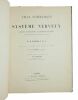
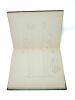
Atlas schématique du système nerveux... Traduit sur la troisième édition anglaise et augmenté par Duprat (du Brésil). Précédé d'une préface par M. Dejerine
Paris, G. Masson, s.d. (1888), in-4, 20 pp, 7 pl, Demi-percaline bleu foncé de l'époque, Première édition de la traduction française. Très rare. Sept planches à double page, quelques-unes imprimées en rouge et noir, représentant, de manière schématique, le cerveau, la distribution des nerfs dans le corps humain, le détail du système nerveux central et du système nerveux périphérique. Les nerfs sont représentés à partir de leur origine apparente jusqu'à leurs terminaisons dans la peau et dans les muscles. Une planche est dédiée à l'innervation cutanée. Important atlas, dont le neurologue français Jules Dejerine souligne l'intérêt dans la préface, datée du 9 août 1888. "Par rapport au système nerveux (...), une lacune restait à combler, car si nous possédons, aujourd'hui, nombre d'ouvrages et d'atlas traitant de l'anatomie de ce système, ce sont là des ouvrages d'anatomie surtout descriptive (...), nous manquions encore dans notre littérature d'un atlas qui vint compléter les tentatives de Duchenne (de Boulogne) et d'Erb, en nous donnant un aperçu complet et exact du système nerveux périphérique, depuis ses origines centrales, radiculaires, jusqu'à ses terminaisons. L'atlas de M. Flower me parait très bien compris et parfaitement conforme au but que s'était proposé son auteur". Bon exemplaire. Intérieur frais (pliures sur une page). Frottements à la reliure. Couverture rigide
Bon 20 pp., 7 pl.
Précis du système hiéroglyphique des anciens Égyptiens ou recherches sur les élémens premiers de cette écriture sacrée, sur leurs diverses combinaisons, et sur les rapports de ce système avec les autres méthodes graphiques égyptiennes. Avec un volume ... - [THE FINDING OF A LOST LANGUAGE]
Paris, Chez Treuttel et Würtz, 1824. Lex 8vo. Both volumes bound completely uncut in one near contemporary brown half calf with ornametal spine. A bit of wear to capitals, corners, and hinges. Occasional brownspotting. Overall a very nice copy. (Text-vol.:) (4), XVI, 410, (4, - 1 blank leaf + 1 leaf of book binder instructions) pp. + 16 plates, some folded" (2), 45 pp. + 32 plates (numbered 1-21 and A-K). Complete in two vols. w. all 38 lithographed plates.
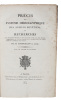
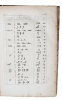
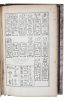
Very rare first edition of the work in which the deciphering of the hieroglyphs was fully presented for the first time. In 1822 Champollion had read his ""Lettre a M. Dacier"" before the Academie des Inscriptions, and for the first time presented the key to reading hieroglyphs. His monumental work ""Précis du système hiéroglyphique"" appeared two years later, and in this richly illustrated work he presents his definitive, expanded analysis, and finally corrects the misleading mistakes of the other Egyptologists, counting also Thomas Young. Jean Francois Champollion (1790-1832), the father of Egyptology, is credited with actually deciphering the inscription on the famous Rosetta Stone, translating it, and breaking the mystery of the ancient hieroglyphic script"" he is therefore accepted as the founder of Scientific Egyptology, -a title primarily justified with the publication of this work.The Rosetta Stone was found in 1799 by French Troops and was immediately brought to England, where it has been ever since. The stone was (and is) of the utmost importance to the understanding of the Egyptian language, the principles of which were totally unknown up to this point. Because the hieroglyphic inscription on the stone is accompanied by a Greek and a Demotic one with the same contents, Champollion was able to crack the code of the hieroglyphs and to read a language that had not been read for far more than a millennium. Champollion was an extraordinary philologist, who, by the age of sixteen, besides Greek and Latin, mastered six ancient Middle Eastern languages, among these Coptic, the knowledge of which, unlike that of Egyptian, was never lost. As the first, Champollion realized the connection between the Coptic and the Egyptian language, and was able to identify many of the Egyptian words on the Rosetta Stone, as he could read them with their Coptic equivalents. He was the first to believe that both Demotic and hieroglyphs represented symbols, and not sounds as earlier presumed. After that he quickly realized that each single hieroglyph could represent a sign, and he began compiling a hieroglyphic alphabet. In his ""Précis du système hiéroglyphique"" he could finally, in 1824, prove that the glyphs represented sounds as well as concepts, according to context. Champollion is the constructor of our present code of the hieroglyphic alphabet. ""Further study enabled him to discover the values of a number of syllabic hieroglyphic signs, and to recognize the use of hieroglyphs as determinatives. In cases where the Greek text supplied him with the meaning of hieroglyphs of which he did not know the phonetic values, his knowledge of Coptic enabled him to suggest values which he found subsequently to be substantially correct. Further reference to determinatives and the importance of parallel passages and texts will be made later on in his work. Between 1822-24 CHAMPOLLION worked incessantly, and was enabled to modify much of his earlier views, and to develop his Alphabet, -and he evolved some rudimentary principles of Egyptian Grammar. The results of his studies at this period he published in his ""Précis du Système Hiéroglyphique"", Paris, 1824, wherein he took special pains to inform his readers that his system had nothing whatever to do with that of Dr. YOUNG."" (Wallis Budge, The Rosetta Stone in the British Museum, pp. 224-25). ""... Ces mémoires réunis formèrent le grand ouvrage publié aux frais de l'Etat en 1824 sous le titre ""Précis du système hiéroglyphique des anciens Égyptiens"", didié au roi."" (N.B.G. Vol. 9, p. 650).

