 Write to the booksellers
217 books for « s m eisenstein »Edit
-
Type
Book (188)
Magazine (29)
-
Latest
Last 24h (1)
Last month (5)
-
Language
English (1)
French (151)
Russian (65)
-
Century
19th (3)
20th (92)
21st (4)
-
Countries
Belgium (7)
Denmark (3)
France (127)
Switzerland (9)
United States of America (71)
-
Syndicate
ILAB (63)
SLAM (60)
Topics
- Actors (1)
- Aesthetics (1)
- Anthology (1)
- Artists (1)
- Aumont jacques (3)
- Belles lettres (2)
- Biography (5)
- Black & white (1)
- Cinema (68)
- Cocteau jean (2)
- Director (6)
- Early printed books (1)
- Eisenstein (23)
- Fernandez dominique (6)
- Film-maker (15)
- Genealogy (1)
- Helvética (1)
- History (2)
- Hough richard (1)
- Hungary (1)
- Industrial arts & crafts - fine arts (1)
- Italian (1)
- L'avant scene cinema (2)
- Leisure (1)
- Literature (4)
- Lo duca (1)
- Magazine (10)
- Mauriac françois (1)
- Mexico mayas (1)
- Mitry jean (6)
- Moussinac leon (2)
- Newspapers press (8)
- Palestine (1)
- Photography (1)
- Potemkine (1)
- Prokofiev (1)
- Psychoanalysis (1)
- Review (7)
- Reviews (35)
- Russia (3)
- Satyajit ray (1)
- Shapes & colours (1)
- Sportsmen (1)
- Switzerland (1)
- Telephone - telegraph (1)
- Theatre (3)
- Theory (1)
- Travel (1)
- Various (1)
- Weil simone (1)
Serguei M. Eisenstein "Croquis de théâtre"
Moscou, Union cinématographique d'URSS, 1970. In-plano, 9 pp. + 26 pl., broché pour le livret, en feuilles pour les planches, étui éditeur illustré (taches et accidents à l'étui).
![Serguei M. Eisenstein "Croquis de théâtre". [EISENSTEIN (Serguei)]; YOUTKEVITCH (Serguei)](https://static.livre-rare-book.com/pictures/TVX/20176_1_thumb.jpg)
![Serguei M. Eisenstein "Croquis de théâtre". [EISENSTEIN (Serguei)]; YOUTKEVITCH (Serguei)](https://static.livre-rare-book.com/pictures/TVX/20176_2_thumb.jpg)
![Serguei M. Eisenstein "Croquis de théâtre". [EISENSTEIN (Serguei)]; YOUTKEVITCH (Serguei)](https://static.livre-rare-book.com/pictures/TVX/20176_3_thumb.jpg)
Recueil de 30 reproductions en couleurs de croquis de décors et costumes de théâtre du célèbre cinéaste soviétique Sergei Eisenstein. Elles sont montées sur papier fort gris et sont accompagnées d'un livret explicatif en russe, anglais et français, illustré de quelques reproductions en noir. Un des 1000 exemplaires tirés. Ouvrage peu commun. * Membre du SLAM et de la LILA / ILAB Member. La librairie est ouverte du lundi au vendredi de 14h à 19h. Merci de nous prévenir avant de passer,certains de nos livres étant entreposés dans une réserve. La librairie ferme ses portes pour quelques jours et rouvrira le 18 août. Nous reviendrons vers vous dans les meilleurs délais./ The bookstore will be closed for a few days and will reopen on August 18th. We will get back to you as soon as possible.
Nachtrag zum cubischen Reciprocitätssatze für die aus dritten Wurzeln der Einheit zusammengesetzten complexen Zahlen. Criterien des cubischen Characters der Zahl 3 und ihrer Theiler (+) Transformations remarquables de quelques séries (+) La loi de réc... - [""THERE HAVE BEEN ONLY THREE EPOCH-MAKING MATHEMATICIANS: ARCHIMEDES, NEWTON, AND EISENSTEIN""]
Berlin, G. Reimer, 1844. 4to. In ""Journal für die reine und angewandte Mathematik, 28 Band, 1 Heft, 1844"". In the original printed wrappers, without backstrip. Fine and clean. [Eisenstein:] Pp. 28-35" Pp. 36-43 Pp. 44-48 Pp. 49-52" Pp. 53-67. [Entire issue: IV, 96, (2) pp. + 2 folded plates.].
First printing of six exceedingly influential papers by the German mathematics prodigy Eisenstein. Even though he died prematurely at the age of 29, he managed to prove biquadratic reciprocity, Quartic reciprocity (Presented in the present: ""Lois de réciprocité""), Cubic reciprocity (Presented in the present: ""Nachtrag zum cubischen Reciprocitätssatze...""), to be imprisoned by the Prussian army for revolutionary activities in Berlin and making Gauss state that: ""There have been only three epoch-making mathematicians: Archimedes, Newton, and Eisenstein"". Alexander von Humboldt, then 83, accompanied Eisenstein's remains to the cemetery. The papers presented in the present issue is among his most prominent and made him famous throughout the mathematical world. (James, Driven to innovate, P. 88). ""The twenty-seventh and twenty-eighth volumes of Crelle's Journal, published in 1844, contained twenty-five contributions by Eisenstein. These testimonials to his almost unbelievable, explosively dynamic productivity rocketed him to fame throughout the mathematical world. They dealt primarily with quadratic and cubic forms, the reciprocity theorem for cubic residues, fundamental theorems for quadratic and biquadratic residues, cyclotomy and forms of the third degree, plus some notes on elliptic and Abelian transcendentals. Gauss, to whom he had sent some of his writings, praised them very highly and looked forward with pleasure to an announced visit. In June 1844, carrying a glowing letter of recommendation from Humboldt, Eisenstein went off to see Gauss. He stayed in Göttingen fourteen days. In the course of the visit he won the high respect of the ""prince of mathematicians,"" whom he had revered all his life. The sojourn in Göttingen was important to Eisenstein for another reason: he became friends with Moritz A. Stern-the only lasting friendship he ever made. While the two were in continual correspondence on scientific matters, even Stern proved unable to dispel the melancholy that increasingly held Eisenstein in its grip. Even the sensational recognition that came to him while he was still only a third-semester student failed to brighten Eisenstein's spirits more than fleetingly. In February 1845, at the instance of Ernst E. Kummer, who was acting on a suggestion from Jacobi (possibly inspired by Humboldt), Eisenstein was awarded an honorary doctorate in philosophy by the School of Philosophy of the University of Breslau.Eisenstein soon became the subject of legend, and the early literature about him is full of errors. His treatises were written at a time when only Gauss, Cauchy, and Dirichlet had any conception of what a completely rigorous mathematical proof was. Even a man like Jacobi often admitted that his own work sometimes lacked the necessary rigor and self-evidence of methods and proofs."" (DSB)
Théorèmes sur les Formes cubiques et Solution d'une Equation du quatrième Degré à quatre indéterminées (+) Über die Anzahl der quadratischen Formen, welche in der Theorie der complexen Zahlen zu einer reellen Determinante gehören (+) Allgemeine Auflös... - [""THERE HAVE BEEN ONLY THREE EPOCH-MAKING MATHEMATICIANS: ARCHIMEDES, NEWTON, AND EISENSTEIN""]
Berlin, G. Reimer, 1844. 4to. In contemporary half cloth. In ""Journal für die reine und angewandte Mathematik"", 27. band, Heft 1-4, 1844. Entire volume 27 offered. A small library stamp to lower part of p. 1 and a white label pasted on to upper part of spine. Light occassional brownspotting, otherwise fine and clean.
First printing of these influential papers by the German mathematics prodigy Eisenstein. Even though he died prematurely at the age of 29, he managed to prove Cubic reciprocity (presented in the present papers) biquadratic reciprocity, Quartic reciprocity, to be imprisoned by the Prussian army for revolutionary activities in Berlin and making Gauss state that: ""There have been only three epoch-making mathematicians: Archimedes, Newton, and Eisenstein"". Alexander von Humboldt, then 83, accompanied Eisenstein's remains to the cemetery. The papers presented in the present issue is among his most prominent and made him famous throughout the mathematical world. (James, Driven to innovate, P. 88). ""The twenty-seventh (the present and most extensive) and twenty-eighth volumes of Crelle's Journal, published in 1844, contained twenty-five contributions by Eisenstein. These testimonials to his almost unbelievable, explosively dynamic productivity rocketed him to fame throughout the mathematical world. They dealt primarily with quadratic and cubic forms, the reciprocity theorem for cubic residues, fundamental theorems for quadratic and biquadratic residues, cyclotomy and forms of the third degree, plus some notes on elliptic and Abelian transcendentals. Gauss, to whom he had sent some of his writings, praised them very highly and looked forward with pleasure to an announced visit. In June 1844, carrying a glowing letter of recommendation from Humboldt, Eisenstein went off to see Gauss. He stayed in Göttingen fourteen days. In the course of the visit he won the high respect of the ""prince of mathematicians,"" whom he had revered all his life. The sojourn in Göttingen was important to Eisenstein for another reason: he became friends with Moritz A. Stern-the only lasting friendship he ever made. While the two were in continual correspondence on scientific matters, even Stern proved unable to dispel the melancholy that increasingly held Eisenstein in its grip. Even the sensational recognition that came to him while he was still only a third-semester student failed to brighten Eisenstein's spirits more than fleetingly. In February 1845, at the instance of Ernst E. Kummer, who was acting on a suggestion from Jacobi (possibly inspired by Humboldt), Eisenstein was awarded an honorary doctorate in philosophy by the School of Philosophy of the University of Breslau.Eisenstein soon became the subject of legend, and the early literature about him is full of errors. His treatises were written at a time when only Gauss, Cauchy, and Dirichlet had any conception of what a completely rigorous mathematical proof was. Even a man like Jacobi often admitted that his own work sometimes lacked the necessary rigor and self-evidence of methods and proofs."" (DSB).
Eisenstein Sergei Eisenstein Y. Pimenov M. Myasnikov Olga Asienstat
Reference : 9830
(1961)
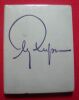
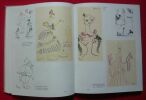
Dessins Eisenstein
1961. Moscou Éditions Iskustvo 1961 - Cartonné toilé 23 cm x 29 cm 227 pages - Textes en russe français anglais et allemand de Sergei Eisenstein Y. Pimenov M. Myasnikov Olga Asienstat - Nombreuses ills couleurs et N&B in et hors-texte de Sergei Eisenstein - Très bon état
Ciné-Club - Organe de la Fédération Française des Ciné-Clubs (S. M. Eisenstein)Président : Jean Painlevé
Reference : 50267
Ciné-Club S. M. Eisenstein 1898-1948. Sur le style d'Eisenetein (Jean Mitry) / Une force prodigieusement vivante (Alexandre Arnoux) / Permanence d'un style (Léon Barsacq) / S. M. Eisenstein, Le patriotisme est mon thème / Le contre-point "son-image" (Armand Panigel) / Notes au sujet d'Alexandre Nevsky (Henri Fescourt) / L'oeuvre d'Eisenstein (G. Sadoul) / La révélation du Potemkine (Georges Altman) - ...
N° 5 - mars 1948 - Redaction, Administration : 2, rue de l'Elysée. Paris-8e - Journal illustré
bon état
Über die Irreductibilität und einige andere Eigenschaften der Gleichung, von welcher die Theilung der ganzen Lemniscate abhängt (+) Über eine allgemeine Eigenschaften der Gleichung, von welcher die Theilung der ganzen Lemniscate abhängt, nebst Anwendu... - [Eisenstein's Criterion]
Berlin, G. Reimer, 1850. 4to. Bound in later marbled wrappers, as extracted from ""Journal für die reine und angewandte Mathematik, 28 Band, 4. Heft, 1844"". Very fine and clean. Pp. 160-179" Pp. 224-274 Pp. 275-287 [Entire issue: 289-380 + 2 folded plates].
First publication of lemniscate function and Eisenstein's Criterion, one of the best known irreducibility criteria of polynomials. It is often seen referred to as the Schönemann-Eisenstein. Euler had introduced and studied the arc length of the lemniscate in the 18th century, this work laying the ground work for the later development of elliptic functions. The lemniscate function expresses the parameter of the lemnicate in terms of its arc-length. It can be extended to complex values of the parameter, and it then makes sense to ask for the points which divide the lemniscate into m equal parts, where m is a Gaussian integer (a complex number). Abel had shown that the determination of these points reduced to finding the roots of a certain polynomial equation. A crucial point in Eisenstein's extension of Abel's work described in the present papers was to prove that this polynomial is irreducible. Eisenstein developed his eponymous criterion to establish this (although today it is most familiar when applied to the more elementary case of a polynomial with ordinary integer coefficients).
Avi Eisenstein Echoes [Hardcover] EISENSTEIN Avi, and 5 Continents - Fondazione Mudima
RELIE
Merci de nous contacter à l'avance si vous souhaitez consulter une référence dans notre boutique à Authon-du-Perche.
Cahiers du cinéma - Comité de rédaction : Jacques Doniol-Valcroze, Daniel Filipacchi, Pierre Kast, Jacques Rivette, Roger Thérond, François Truffaut.
Reference : 25018
Cahiers du cinéma N° 209 : S. M. Eisenstein (Pauvre Salieri ! (en guise d'envoi) (S.M. Eisenstein), Perspectives (S.M. Eisenstein)) - Walerian Borowczyk (Entretien avec Walerian Borowczyk, Sylvie Pierre et Jacques Rivette, L'île Borromée, L'évidence même (Patrice Leconte), Liste de films) - Problème du direct...
N° 209 - Février 1969 - Revue mensuelle du cinéma - In-4 Broché, couverture illustrée (Raoul Darblay, Ligia Branice et Hubert Lassiat) - 65 pages - Nombreuses reproductions photographiques en noir et blanc
bon état - Infime frottement sur la couv.
Recherches soviétiques n°3- Avril 1956-Sommaire: Présentation par G. Sadoul- Problèmes de la composition par S. Eisenstein- Le travail de l'acteur de cinéma et le système de Stanislavsky par Poudovkine V.,- La parole dans le scénario- Littérature et ciném
De la nouvelle Critique. 1956. In-8. Broché. Etat d'usage, Couv. défraîchie, Dos plié, Non coupé. 201 pages. Nombreuses photos en noir et blanc, in et hors texte. Coins frottés, déchirés. Papier jauni.. . . . Classification Dewey : 791.43-Cinéma
Sommaire: Présentation par G. Sadoul- Problèmes de la composition par S. Eisenstein- Le travail de l'acteur de cinéma et le système de Stanislavsky par Poudovkine V.,- La parole dans le scénario- Littérature et cinéma- Les traditions classiques et le film comique- etc. Classification Dewey : 791.43-Cinéma
Reference : alb5f30153224b67acc
Eisenstein S. M. Indifferent Nature. In Russian /Eyzenshteyn S. M. Neravnodushn
Eisenstein S. M. Indifferent Nature. In Russian /Eyzenshteyn S. M. Neravnodushnaya priroda. In 2 Volumes. Only Volume 2. On the Structure of Things. M. Film Museum, Eisenstein Center. 2006. You are welcome to reach out to us for a detailed description of the copies currently available. Delivery of this book may take longer than usual including extended processing and pre-shipping time, no expedited shipping is available. Please advise us if you have a set date or a deadline to receive your order.SKUalb5f30153224b67acc
Reference : alb687d1d34f753f278
Kushnirov Mark. Drawings by Sergei Eisenstein. 1942-1944. Collection of Lidia N
Kushnirov Mark. Drawings by Sergei Eisenstein. 1942-1944. Collection of Lidia Naumova In Russian /Kushnirov Mark. Risunki Sergeya Eyzenshteyna.1942-1944. Kollektsiya Lidii Naumovoy Kushnirov Mark. Sketches by Sergei Eisenstein. 1942-1944. Collection of Lidia Naumova 2004. You are welcome to reach out to us for a detailed description of the copies currently available. Delivery of this book may take longer than usual including extended processing and pre-shipping time, no expedited shipping is available. Please advise us if you have a set date or a deadline to receive your order.SKUalb687d1d34f753f278
Reference : alb38591f85fb6584f9
Jorgenson J., Lang S. Posn (R) and Eisenstein Series. In English /Jorgenson J.,
Jorgenson J., Lang S. Posn (R) and Eisenstein Series. In English /Jorgenson J., Lang S. Posn(R) and Eisenstein Series. Berlin E. Springer, 2005.Contact us for details or to request photos of available books. Delivery of this book could take longer than normal due to additional handling time before shipping, and no rush delivery options are available. Please let us know if you have a specific date by which you need to receive your order.SKUalb38591f85fb6584f9
Reference : alb69a1c1920e8ba311
Eisenstein, Sergei. Drama of the film form. Articles on film theory. In Russian
Eisenstein, Sergei. Drama of the film form. Articles on film theory. In Russian /Eyzenshteyn, Sergey. Dramaturgiya kinoformy. Stati po teorii kino. M. Eisenstein Center. 2016..Contact us for details or to request photos of available books. Delivery of this book could take longer than normal due to additional handling time before shipping, and no rush delivery options are available. Please let us know if you have a specific date by which you need to receive your order. SKUalb69a1c1920e8ba311
Cinéma 75 n199 Juin 1975 Cinéma portugais eisenstein Cinéma et Histoire
1975 1975. Cinéma 75 N°199 Juin 1975: Cinéma portugais Eisenstein cinéma et Histoire . Cinéma 75 N°199 Juin 1975: Cinéma portugais Eisenstein cinéma et Histoire
Bon état
Reference : bd-9655661d98ddf4ec
Mayakovsky, Yesenin, Eisenstein, and Meyerhold, our Western friends and enemies
"Mayakovsky, Yesenin, Eisenstein, and Meyerhold, our Western friends and enemies of the people under the rays of Spotlight Spotlight: an illustrated literary-artistic and satirical journal edited by N. Bukharin and A. Voronsky. # 1-21 for 1925 (i.e. annual kit without numbers # 22-24); # 1-6 for 1926./Mayakovskiy, Esenin, Eyzenshteyn i Meyerkhold, nashi zapadnye druzya i vragi naroda pod luchami Prozhektora Prozhektor: illyustrirovannyy literaturno-khudozhestvennyy i satiricheskiy zhurnal red. N. Bukharina i A. Voronskogo. # 1-21 za 1925 god (t.e. godovoy komplekt bez nomerov # 22-24); # 1-6 za 1926 god. Mayakovsky, Yesenin, Eisenstein and Meyerhold, our Western friends and enemies of the people under the rays of Spotlight Spotlight: an illustrated literary-artistic and satirical journal edited by N. Bukharin and A. Voronsky. # 1-21 for 1925 (i.e., an annual kit without numbers # 22-24); # 1-6 for 1926. We have thousands of titles and often several copies of each title may be available. Please feel free to contact us for a detailed description of the copies available. SKUbd-9655661d98ddf4ec."
ZERVOS, Christitan (Directeur). - MUHLSTEIN, Hans. - TERIADE, E. - LONGHURST, M. - EISENSTEIN, S. M. - GIEDION, S.
Reference : 73530
Cahiers d’Art, n.° 2, 5e année, 1930. Revue d’art paraissant dix fois par an. Peinture, sculpture, architecture, art ancien, ethnographie, cinéma. Des origines de l’art et de la culture, par Hans Muhlstein. Documentaire sur la jeune peinture, par E. Tériade. Quatre colonnes avec chapiteaux sculptés du XIIe siècle, par M. Longhurst. Le principe cinématographique et la civilisation japonaise, par S. M. Eisenstein. Walter Gropius et l’architecture allemande par S. Giedion. Les expositions. Les livres.
Paris, Editions “Cahiers d’Art” 1930, 315x245mm, broché. Déchirures sur le haut et le bas du dos, autrement bel exemplaire.
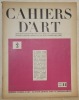
pages 57 à 112, planches en n/b, Pour un paiement via PayPal, veuillez nous en faire la demande et nous vous enverrons une facture PayPal
Anthologie du Cinéma : Eisenstein (Traduction et notes de Luda Schnitzer) (Rostislav Yourenev)
n° 1 - 1965 - supplément à l'avant scène du cinéma N° 44 - broché - 62 pages
Bon état
Reference : albf3bcb8ad4ca27a36
Vladimir Zabrodin. Eisenstein: an attempt at theatre. /Zabrodin Vladimir. Eyzens
Vladimir Zabrodin. Eisenstein: an attempt at theatre. /Zabrodin Vladimir. Eyzenshteyn: popytka teatra. M. Eisenstein Center 2005. 346 p. We have thousands of titles and often several copies of each title may be available. Please feel free to contact us for a detailed description of the copies available. SKUalbf3bcb8ad4ca27a36
Cahiers du cinéma - Comité de rédaction : Jacques Doniol-Valcroze, Daniel Filipacchi, Pierre Kast, Jacques Rivette, Roger Thérond, François Truffaut.
Reference : 25019
(1969)
Cahiers du cinéma N° 208 : S. M. Eisenstein (Mon dernier entretien avec Eisenstein (Ilya Veissfeld) - Roman Polanski (Entretien avec Roman Polanski, Folie et autres rêves (Jean-Louis Comolli), Filmographie de Polanski) - Satyajit Ray (Pourquoi je fais des films, Renoir à Calcutta, Quelques aspects de mon métier, Satyajit Ray à la cinémathèque) - Jean-Pierre Lefevre / Petit journal du cinéma - le cahier critique
1969 N° 208 - Février 1969 - En couverture: Les Rolling Stones dans "one plus one" - Revue mensuelle du cinéma - In-4 Broché - 65 pages - Nombreuses reproductions photographiques en noir et blanc
bon état - infimes frottements sur la couv.
Préface de I. Karetnikova. Présentation de L. Steinmets. S. Eisenstein.
Reference : 73685
(1968)
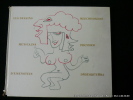
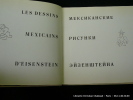
Les dessins mexicains d'Eisenstein
Moscou, Editions Sovietski Khoudojnik, 1968, in-4 à l'italienne, cartonnage éditeur, 128 pages. Accrocs en tête et pied du dos, coins frottés. Bon exemplaire. Texte français/russe.
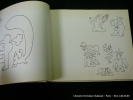
Les Dessins Mexicains d'Eisenstein
1969. Moscou Éditions Sovietski Khoudojnik 1969 - Cartonné 24 5 cm x 28 cm 129 pages ills et photos noir & blanc - Texte en français et en russe préface de I. Karetnikova présentation de L. Steinmers choix des dessins de I. Karetnikova et N. Kleiman - Bon état
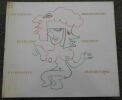
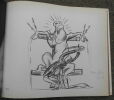
Eisenstein le mouvement de l'art
Les Editions du Cerf, 1986, in-8 br., 288 p., coll. "Septième Art", préface de Barthélémy Amengual, nombreux dessins et schémas, très bon état.
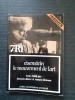
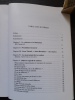
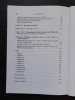
Grand cinéaste, Eisenstein fut aussi le plus grand théoricien du Septième Art. Dans ce volume de textes inédits, il aborde sous un jour neuf la littérature, le théâtre, étudie la musique et la danse et analyse les films de ses contemporains. Voir le sommaire sur photos jointes.
Les dessins mexicains d'Eisenstein. Préface de I. Karetnikova.
1969 Moscou, Edition Sovietski Khoudojnik, 1969, in 4° à l'italienne, cartonnnage illustré de l'éditeur ; texte bilingue russe et français.
Illustré de 129 gravures hors-texte en noir et en couleurs. Fermeture du 1er au 23 Août


Phone number : 04 77 32 63 69
[REVUE] S.M. Eisenstein, Max Ophuls, André S. Labarthe, François Weyergans, François Mars, Jean Douchet, Louis Marcorelles, André S. Labarthe, Fereydoun Hoveyda, Jacques Joly, Michel Delayahe.
Reference : 18318
Eisenstein. Max Ophuls. Orson Welles.
Les cahiers du cinéma, n° 117, mars 1961. Un fascicule in-4°, agrafé, photographies.
Bel exemplaire. [18318]à

