Write to the booksellers
26 books for « paix a la nature »Edit
-
Century
17th (2)
18th (1)
19th (5)
20th (9)
21st (1)
-
Countries
Belgium (1)
Denmark (2)
France (21)
Netherlands (1)
Switzerland (1)
-
Syndicate
CLAM (1)
ILAB (20)
NVVA (2)
SLACES (1)
SLAM (16)
Topics
- Aquitaine (1)
- Bavaria (1)
- Brittany (1)
- Brunswick (1)
- Cities (1)
- Ecology (1)
- Economics (2)
- Economics (2)
- England (3)
- Figaro (1)
- Haiti (1)
- History (1)
- Hugo victor (3)
- L'illustration (newspaper) (1)
- Law (3)
- Le play f. (1)
- Magazine (3)
- Mathematics (3)
- Middle ages (1)
- Montalembert (1)
- Morocco (1)
- Newspapers press (3)
- Philosophy (1)
- Poetry (1)
- Prussia (1)
- Reviews (3)
- Sciences (3)
- Slavery (1)
- Sociology (1)
- Trade (1)
- Translation (1)
- United kingdom (3)
- War (1)
Paix à la nature
Berger-Levrault. 1976. In-12. Broché. Bon état, Couv. convenable, Dos satisfaisant, Intérieur bon état. 155p.. . . . Classification Dewey : 577-Ecologie
L'écologie , l'environnement, la qualité de la vie, le retour à la nature... Autant de slgans qui révèlent notre désir d'une autre vie, et notre impuissance à la préciser.... Classification Dewey : 577-Ecologie
L'ENERGIE SOLAIRE : COMMENT VIVRE EN PAIX AVEC LA NATURE ?
UNESCO. 1998. In-4. Relié. Bon état, Couv. convenable, Dos satisfaisant, Intérieur frais. 206 pages. Nombreuses photos et/ou illustrations en couleurs et noir et blanc , dans et/ou hors texte. Jaquette en très bon état.. Avec Jaquette. . . Classification Dewey : 621-Energie
Classification Dewey : 621-Energie
La nature n° 2373 - La distribution du gaz d'éclairage à grande distance par Biousquet, Le cycle d'une goutte d'eau par Marre, Le Spitsberg et ses charbonnages devant la Conférence de la Paix par Rabot, La criptophotie par Flamel.
Masson et cie. 20 septembre 1919. In-12. Broché. Bon état, Couv. convenable, Dos satisfaisant, Intérieur frais. Paginé de 177 à 192. Quelques gravures en noir et blanc dans et hors texte.. . . . Classification Dewey : 500-SCIENCES DE LA NATURE ET MATHEMATIQUES
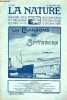
Sommaire : La distribution du gaz d'éclairage à grande distance par Biousquet, Le cycle d'une goutte d'eau par Marre, Le Spitsberg et ses charbonnages devant la Conférence de la Paix par Rabot, La criptophotie par Flamel. Classification Dewey : 500-SCIENCES DE LA NATURE ET MATHEMATIQUES
La nature n° 2287 - L'évaluation scientifique des pensions et indemnités des réformés de guerre par R.M, l'échec des zeppelins dans la guerre et leur avenir probable dans la paix par Houard, l'industrie de l'asphalte par Renouard.
Masson et cie. 28 juillet 1917. In-12. Broché. Bon état, Couv. convenable, Dos satisfaisant, Intérieur frais. Paginé de 49 à 64. Quelques gravures en noir et blanc dans et hors texte.. . . . Classification Dewey : 500-SCIENCES DE LA NATURE ET MATHEMATIQUES
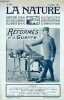
Sommaire : L'évaluation scientifique des pensions et indemnités des réformés de guerre par R.M, l'échec des zeppelins dans la guerre et leur avenir probable dans la paix par Houard, l'industrie de l'asphalte par Renouard. Classification Dewey : 500-SCIENCES DE LA NATURE ET MATHEMATIQUES
La nature n° 1428 - Nouvelle machine à timbrer - la petite planète Eros - la guerre et la paix armée en Europe - appareils de transformation - le crapaud - la pêche à la baleine en Norvège - les nouveaux ascenseurs de la Tour Eiffel - l'industrie
Masson et cie. 06 octobre 1900. In-12. Broché. Bon état, Livré sans Couverture, Dos satisfaisant, Intérieur frais. Paginé de 289 à 304. Quelques gravures en noir et blanc dans et hors texte.. . . . Classification Dewey : 500-SCIENCES DE LA NATURE ET MATHEMATIQUES
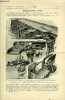
Sommaire : Nouvelle machine à timbrer - la petite planète Eros - la guerre et la paix armée en Europe - appareils de transformation - le crapaud - la pêche à la baleine en Norvège - les nouveaux ascenseurs de la Tour Eiffel - l'industrie des parfums artificiels - effets des sulfates sur la gerrmination et la végétation - AS séance du 01.10.1900 - petites industries japonaises Classification Dewey : 500-SCIENCES DE LA NATURE ET MATHEMATIQUES
L'ILLUSTRATION JOURNAL UNIVERSEL N° 2603 - Gravures: un coin du salon de la paix, à la chambre des députés, le Laocoon - procès du Panama, les accusés, dessin d'après nature de M.Paul Renouard - au cercle des patineurs, dessins d'après nature par Mars..
Au bureau du journal. 14 janvier 1893. In-Folio. Broché. Bon état, Couv. convenable, Dos satisfaisant, Intérieur frais. 16 pages environ illustrées de nombreuses gravures en noir et blanc - Paginées de 26 à 40 - avec couverture et pages publicitaires.. . . . Classification Dewey : 70.4417-L'illustration / Figaro salon
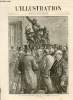
"SOMMAIRE : Gravures: un coin du salon de la paix, à la chambre des députés, le Laocoon - procès du Panama, les accusés, dessin d'après nature de M.Paul Renouard - au cercle des patineurs, dessins d'après nature par Mars / Articles: farina par G.-M. Valtour - le krach des ponts en métal par Max de Nansouty - en Perse par H.P. (à suivre) - la derniere vigne, nouvelle charentaise par Ernest Rivaut - justice de femme, roman nouveau par Daniel Lesueur, illustrations de Marchetti (suite - voir nos numéros depuis le 17 décembre 1892) / 1 partition ""bouton d'or"" fantaisie lyrique en 4 actes et 5 tableaux, représentéee au Nouveau-Theatre, l'entrée des clartés du matin, ballet du 3e acte, livret de M.Michel Carré et musique de M.Gabriel Pierné. Classification Dewey : 70.4417-L'illustration / Figaro salon"
SUD OUEST NATURE N°69 MAI 1990 - Recettes de l'ours à la sauce pyrénéenne - pour une paix négociée entre chasseurs et protecteurs - dossier agriculture une autre agriculture - inconvénients des lacs et retenuues collinaires etc.
SUD OUEST NATURE. 1990. In-8. Broché. Bon état, Couv. convenable, Dos satisfaisant, Intérieur frais. 44 pages - quelques illustrations en noir et blanc dans le texte.. . . . Classification Dewey : 908.447-Régionalisme : Aquitaine
SOMMAIRE : Recettes de l'ours à la sauce pyrénéenne - pour une paix négociée entre chasseurs et protecteurs - dossier agriculture une autre agriculture - inconvénients des lacs et retenuues collinaires - désenvasement des étangs landais - calamités naturelles - opération soyons nature - les Pyrénées occidentales un enjeu écologique - souvenir 5 ème festival international du film ornithologique. Classification Dewey : 908.447-Régionalisme : Aquitaine
REVUE DES DEUX MONDES N°9 - JACQUES REGNIEZ. LA FIN DU CYCLE D’EPINAY. MAURICE SCHUMANN. GUERRES OU PAIX EN L’AN 2000 ? EDOUARD BONNEFOUS. RECONCILIER L'HOMME ET LA NATURE. Dossier - Politique économique : bon ou mauvais choix ? PHILIPPE AUBERGER.
AU BUREAU DE LA REVUE DES DEUX MONDES. SEPTEMBRE 1993. In-12. Broché. Bon état, Couv. convenable, Dos satisfaisant, Intérieur frais. 224 pages.. . . . Classification Dewey : 70.49-Presse illustrée, magazines, revues
Sommaire : JACQUES REGNIEZ. LA FIN DU CYCLE D’EPINAY. MAURICE SCHUMANN. GUERRES OU PAIX EN L’AN 2000 ? EDOUARD BONNEFOUS. RECONCILIER L'HOMME ET LA NATURE. Dossier - Politique économique : bon ou mauvais choix ? PHILIPPE AUBERGER. Le plan Balladur. GALILEE. La tragédie du « franc fort ». ALAIN MINC. Les apprentis sorciers. ALAIN COTTA. Une nouvelle politique. MAURICE LAURE. Crise, libre-échange et délocalisations. La guerre de Vendée. PIERRE CHAUNU. LE DEVOIR DE MEMOIRE. RAOUL GIRARDET. LA VENDEE DANS LE LEGENDAIRE NATIONAL FRANÇAIS. PHILIPPE JOUTARD. MEMOIRE VENDEENNE ET MEMOIRE CEVENOLE. JEAN-PIERRE BOIS. ENTRE GRANDE GUERRE ET PETITE GUERRE. Classification Dewey : 70.49-Presse illustrée, magazines, revues
GEO - N° 129 - NOVEMBRE 1989 / decouverte, les corbieres, terre cathare - science, touts les couleurs du cerveau - rites, faire la paix avec le mal - nature, periple dans les ilots des mers australes - geographie, l'empire des hieroglyphes - peuples, comb
PRISMA PRESSE. 1989. In-8. Broché. Etat d'usage, Couv. convenable, Dos satisfaisant, Intérieur frais. 302 pages - nombreuses photos en noir et blanc et en couleurs dans et hors texte.. . . . Classification Dewey : 70.49-Presse illustrée, magazines, revues
Sommaire: decouverte, les corbieres, terre cathare - science, touts les couleurs du cerveau - rites, faire la paix avec le mal - nature, periple dans les ilots des mers australes - geographie, l'empire des hieroglyphes - peuples, combats secrets en birmanie - animaux, n'ecrasez plus les herissons!... Classification Dewey : 70.49-Presse illustrée, magazines, revues
TERRES LONTAINES - LE RENDEZ VOUS DES 10-15 ANS AVEC LE MONDE - MENSUEL - MAI 1993 N°451 - L'AFRIQUE DU SUD : DES ENFANTS NOIRS ET DES ENFANTS BLANCS REVENT DE PAIX - BD : MANDELA UN NOIR CONTRE L'APARTHEID - NATURE ; UN LION BLANC
IMP. FOUNIER TOULOUSE. 1993. In-8. Broché. Etat d'usage, Couv. légèrement passée, Dos frotté, Intérieur frais. 43 pages augmentées de nombreuses illustrations en couleurs dans le texte - un tampon sur le 1er plat.. . . . Classification Dewey : 70.49-Presse illustrée, magazines, revues
SOMMAIRE : L'AFRIQUE DU SUD : DES ENFANTS NOIRS ET DES ENFANTS BLANCS REVENT DE PAIX - BD : MANDELA UN NOIR CONTRE L'APARTHEID - NATURE ; UN LION BLANC - ACTUALITE NOUS ON CROIT EN L'ESPRIT SAINT - LES REFUGIES DANS LE MONDE - LE SAUVETAGE DE BOM-BOM L'ELEPHANTEAU Classification Dewey : 70.49-Presse illustrée, magazines, revues
La constitution de l'Angleterre considérée dans ses rapports avec la loi de Dieu et les coutumes de la paix sociale précédée d'aperçus sommaires sur la nature du sol et l'histoire de la race tome 2
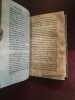
Tours, Alfred Mame 1865 1 in -8 demi chagrin, pièce de titre 437 [p.p] Dans ce second tome, Frédéric Le Play analyse les fondements de la stabilité britannique. Il y expose sa théorie sur la paix sociale, la loi de Dieu et l'importance des coutumes. Une œuvre fondatrice de la science sociale qui a profondément influencé la pensée conservatrice et réformatrice du XIXe siècle.État : État d'usage (marques du temps visibles sur la reliure).Reliure : Reliure d'éditeur demi-chagrin Dos : Dos non fendu, malgré l'usure extérieure.Intérieur : Complet pour ce tome. Texte parfaitement lisible,
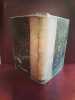
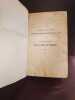
en état d'usage Disponibilité sous réserve de vente en boutique, prix valable, frais de port en plus, La Poste ou Mondial Relay
Recueil de pièces fugitives, en prose et en vers [a été relié à la suite :] Nouveau recueil de pièces fugitives pour servir de Supplément au Tome cinquième de l'édition de Londres 1740. [contenant :] Essai sur le siècle de Louis XIV - Discours sur l'homme - De l'égalité des conditions - De la liberté - De l'envie - De la modération en tout - Sur la nature du plaisir - De la nature de l'homme - De la gloire - Du suicide - Sur le fanatisme - Sur la paix - Poésies diverses - Lettres familières - Madrigaux - Remarques [sur Le Temple du goût] - Nouvelle - Lettres - etc.
A Londres [Rouen], aux dépens de la Compagnie, 1741. 2 ouvrages reliés en 1 vol. in-12 (163 x 97 mm) de 1 f. bl., 3 ff. n.fol. et 212 pp. ; 1 f. bl., 4 ff. n.fol., 60 pp. et 1 f. bl. Reliure de l'époque de plein veau marbré havane, plats jansénistes, dos à nerfs ornés de filets gras à froid, caissons d'encadrement dorés, fleurons et fleurons stylisés dorés, filets dentelés dorés, palette dorée en queue, jeu de petits filets obliques dorés sur les coupes, toutes tranches mouchetées.
![Recueil de pièces fugitives, en prose et en vers [a été relié à la suite :] Nouveau recueil de pièces fugitives pour servir de Supplément au Tome ...](https://static.livre-rare-book.com/pictures/BLS/13899_1_thumb.jpg)
Edition en partie originale. Jolies pages de titre à la sphère. Réunion en un volume des Recueil et Nouveau recueil de pièces fugitives. ''La première édition du Recueil paru en 1740 et fut immédiatement condamnée par arrêt du conseil. Depuis cette publication, le nombre de poésies de Voltaire s'est considérablement augmenté. A chaque réimpression, soit séparée, ou faisant partie des premières éditions des oeuvres de l'auteur, Voltaire a nécessairement ajouté ce qui, dans les unes comme dans les autres, ne se trouvait pas dans la précédente. D'un autre côté, des éditeurs sont venus qui avaient recueilli des pièces qui n'étaient point encore connues et les ont fait imprimer''. (in Quérard). Quérard X, Bibliographie voltairienne, 89. Angles émoussés. Léger manque superficiel pouvant affecter coupes et coiffes. Coiffe supérieure arasée. Pièce de titre absente. Quelques rousseurs dans le texte. Nonobstant, belle condition. Rare.
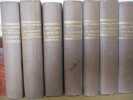
Les Moines d'Occident depuis Saint Benoit jusqu'à Saint Bernard - COMPLET en 7 Volumes T. I) L'Empire Romain après la paix de l'église - Les précurseurs monastiques en Orient - Les précurseurs monastiques en Occident. T. II) Saint Benoit - Saint Grégoire Le Grand - L'Espagne monastique au VIe siècle - Les Moines en Gaule sous les premiers mérovingiens.Les moines et la Nature - Saint Colomban et les Irlandais en Gaule. T. III) Conversion de l'Angleterre par les Moines - Les Origines chrétiennes des Iles Britanniques - Saint Columba, apôtre de la Calédonie - Saint Augustin de Cantorbéry et les Missonnaires Romains en Angleterre.T. IV) Conversion de l'Angeletrre par les Moines II - Les Moines Celtiques et les Anglo-Saxons - Saint Wilfrid fait prévaloir l'Unité Romaine et la Règle Bénédictine - Contemporains et Successeurs de Saint Wilfrid T. V) Contemporains et successeurs de Saint Wilfrid (Suite) - Influence sociale et politique des Moines ches les Anglo-Saxons - Les Religieuses Anglo-SaxonnesT. VI) L'église & la féodalité, l'ordre monastique & la société laïque -Saint-Grégoire, moine et papeT. VII) Saint-Grégoire d'après sa correspondance - Les prédecesseurs de Calixte II - Appendice
PARIS, Librairie Victor Lecoffre - 1878/1882/1892 - 4, 5 & 7 ème éditions - Complet en 7 Volumes In-8 - 1/2 reliure - Dos lisse insolé - Rousseurs éparses - Ouvrage orné de cartes et plans dépliants.T. I) CCLXXXIII6-308 pages - T. II) 676 pages - T. III) 599 pages & Carte dépliante en couleurs des iles brittaniquesT. IV) 520 pages & Tableau dépliant généalogique des Rois de NorthumbrieT. V) 416pages & 4 tableaux dépliants reliés (Tableau xgénéalogiques des Religieuses issues de la race de Hengist et de la dynastie des Aescings, rois de Kent - des religieuses issues de la dynastie des rois de Mercie - des princesses de la race des Uffings, rois d'Est-Anglie, qui ont pris le voile - des Rois de Wessex.T. VI) VII-655 pages - T. VII) 708 pages - Réf. 48720

Cnformément à nos conditions générales de vente :Les frais de port sont affichés à titre indicatif. Il se peut que nous devions vous contacter pour vous informer du coût de laffranchissement supplémentaire en fonction du poids et du nombre de livres, surtout pour les envois internationaux Cependant vu l'augmentation des tarifs postaux à l'internationale, nous pouvons expédier les ouvrages en point relais MONDIAL RELAY pour les pays suivants : Allemagne, Autriche, Belgique, Espagne, Italie, Luxembourg, Pays-Bas, Pologne, et Portugal. Merci de nous indiquer en retour le point relais choisi ainsi que votre numéro de téléphone mobile & adresse Courriel pour assurer le suivi du colis.N'hésitez pas à nous interroger.In accordance with our general terms and conditions of sale:Shipping costs are displayed for informational purposes only. We may need to contact you to inform you of the additional postage costs depending on the weight and number of books, especially for international shipments.However, given the increase in international postal rates, we can ship books via Mondial Relay to the following countries: Germany, Austria, Belgium, Spain, Italy, Luxembourg, Netherlands, Poland, and Portugal. Please provide us with your chosen Mondial Relay point, as well as your mobile phone number and email address to ensure package tracking.Please feel free to contact us with any questions
David michie - jo ann dussault (traduction)
Reference : RO20252934
(2018)
ISBN : 102851218X
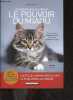
Le chat du dalai lama et le pouvoir du miaou - roman tome 3 - découvrir notre nature profonde et ressentir la paix intérieure - suivez les aventures du chat le plus connu au monde
LEDUC.S. 2018. In-8. Broché. Etat d'usage, Couv. convenable, Dos satisfaisant, Intérieur frais. 238 pages. . . . Classification Dewey : 636.8-Chats
Classification Dewey : 636.8-Chats
Le Droit de la Guerre et de la Paix. Divisé en trois livres, Où il explique le Droit de la Nature, le droit des Gens, & les principaux Points du Droit public, ou qui concerne le gouvernement public d'un Etat. Traduit du Latin en Francois, par Monsie... - [THE FOUNDATION OF INTERNATIONAL LAW]
Paris, Arnould Seneuze, 1687. 4to. Two contemporary uniform full calf bindings with five raised bands to richly gilt spines. Capitals and upper front hinge of volume one worn and boards with a few scrapes. Internally very nice and clean with just the occasional light brownspotting. Engraved frontispiece in vol. 1, engraved title-vignettes, large engraved vignette to verso of title-page of vol. 1, engraved portrait in vol. 1, woodcut vignettes and initials. Printed on good paper and with wide margins. (48), 621, (3) pp. + frontispiece and portrait" (4), 197, (3) pp.
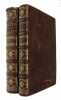
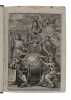
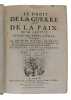
The very rare first edition of the first French translation of Grotius' groundbreaking magnum opus, ""De Jure Belli ac Pacis"", the founding work of international law. The profoundly influential masterpiece - written during the Thirty Years' War, in the hope that rational human beings might be able to agree to legal limits on war's destruction - ""made him famous throughout Europe... [t]he questions which he put forward have come to be the basis of the ultimate view of land and society. This was the first attempt to lay down a principle of right, and a basis for society and government, outside Church or Scripture... Grotius's principle of an immutable law, which God can no more alter than a mathematical axiom, was the first expression of the ""droit naturel"", the natural law which exercised the great political theorists of the eighteenth century, and is the foundation of modern international law."" (PMM 125). This magnum opus of legal philosophy played a tremendous role in French law and politics and in the entire development of international law in general. ""It is on the DIB (De Iure Bellis) that the bulk of Grotius' reputation rests. It consists of an introduction and three books, totaling more than 900 pages in translation. As with DIP, the introduction or ""Prolegomena"" holds the greatest interest for philosophers, for it is here that Grotius articulates and defends the philosophical foundations of the DIB. While philosophers are naturally attracted to the ""Prolegomena,"" the body of the DIB is also redolent with themes of philosophical interest. Book One defines the concept of war, argues for the legitimacy of war, and identifies who may legitimately wage war. Book Two deals with the causes of war, the origins of property, the transfer of rights and more, while Book Three is dedicated primarily to the rightful conduct of belligerents in war. After the initial publication in 1625, Grotius ushered several more editions to press during his life, each time adding more references without substantially changing the arguments."" (SEP).Living in the times of the Eighty Years' War between Spain and the Netherlands and the Thirty Years' War between Catholic and Protestant European nations (Catholic France being in the otherwise Protestant camp), Grotius was deeply concerned with matters of conflicts between nations and religions. His magnum opus was a monumental effort to restrain such conflicts on the basis of a broad moral consensus. It was begun in prison and published during his exile in Paris. ""In the dedication of his great work, ""De Jure Belli ac Pacis"", to Louis XIII of France, Grotius addresses the king as ""everywhere known by the name Just no less than that of Louis ... Just, when you call back to life laws that are on the verge of burial, and with all your strength set yourself against the trend of an age which is rushing headlong to destruction" ... when you offer no violence to souls that hold views different from your own in matter of religion" ... when by the exercise of your authority you lighten the burden of oppressed peoples.""When writing this dedication and the Prolegomena to ""De Jure Belli ac Pacis"" (originally published in Paris in 1625), Grotius was living in exile. Europe was war-torn and depression and suffering from hunger and cold prevailed in many regions, justifying Grotius' description of international law as such: ""in our day, as in former times, there is no lack of men who view this branch of law with contempt as having no reality outside of an empty name."" The treaty of peace, embodying many of the universal and permanent principles which Grotius abstracted ""from every particular fact"" in those dark days of the early part of the Thirty Years' War, was not concluded till 23 years later. The year 1624 was, in the negotiation of the treaty, assumed to be the norm year for restoration of the ""Status quo"".The more than three centuries since Grotius wrote his magnum opus seem to bear witness to his views upon war peace, in spite of the fact that many a state has not yet realized that the state is ""Truly fortunate which has justice for its own boundary line."" In 1625 Grotius famously stated: ""there is no state so powerful that it may not sometime need the help of others outside itself, either for the purposes of trade, or even ward off the forces of many foreign nations united against it.""Grotius's paramount influence upon international law is widely acknowledged worldwide. For instance, since 1999 the American Society of International Law holds an annual series of Grotius Lectures. Because of his theological underpinning of free trade, he is also considered an ""economic theologist"".""To those desirous of understanding the fundamental principles which have motivated some of the greatest statesmen of modern time and the bases upon which a state which is to remain essentially sound must rest, a reading of Grotius' Prolegomena to the ""Law of War and Peace"" is commended."" (George Grafton Wilson: ""Grotius: Law of War and Peace."", p. 1. In: The American Journal of International Law, vol. 35, nr. 2, 1941).
Droit de la Guerre et de la Paix, Divise en Trois Livres. Ou il Explique Le Droit De Nature, Le Droit des Gens, & Les Principaux Points du Droit Public, Ou qui Concerne le Gouvernement Public d'un Etat. Traduit Du Latin En Francois, Par Monsieur de Courtin. En 2 volumes
aris, Arnould Seneuze, 1687, in-4°, sans frontispiece ou portrait du traducteur. Tome 1: 23 ff. + 621 p. (+ 1) + 2 ff. / Tome 2: 2 ff. + 304 p. + 197 p. + 2 p reliure plein veau usée - plat du premier tome rogné au coins, + coiffes accrochées papier correct mais des petites rousseurs ou accrocs velle page de titre illustrée + frontispice (voir détails sur photos)
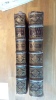
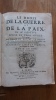
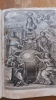
Première édition en langue française. La première expression du droit naturel et fondement du droit international moderne.Le plus important ouvrage de Grotius (en néérlandais: Hugo de Groot), un des érudits les plus éminents en matière de droit et de diplomatie du XVIIe siècle. Grotius est communément appelé "le père du Droit des gens". Cet ouvrage, paru en 1625 sous le titre latin «De jure pacis et belli», est un véritable code de droit international public, où Grotius combat l'esclavage et étudie les moyens de prévenir et de réglementer les guerres. Cet ouvrage lui a fait acquérir une autorité hors de pair en matière internationale
Le Droit de la Guerre et de la Paix. Divisé en trois livres, Où il explique le Droit de la Nature, le droit des Gens, & les principaux Points du Droit public, ou qui concerne le gouvernement public d'un Etat. Traduit dy Latin en Francois, par Monsieu... - [THE FOUNDATION OF INTERNATIONAL LAW]
Paris, Arnould Seneuze, 1687. 4to. Two contemporary uniform full calf bindings with five raised bands to richly gilt spines. All edges of boards gilt. Hinges and capitals worn, with some loss, but still tight. A damp stain to first and last leaves of both volumes (affecting about 17 leaves in all, mostly marginal). Otherwise a nice and clean copy with just the occassional brownspotting. Engraved frontispiece in vol. 1, engraved title-vignettes, large engraved vignette to verso of title-page of vol. 1, engraved portrait in vol. 1, woodcut vignettes and initials. Printed on good paper and with wide margins. (48), 621, (3) pp. + frontispiece and portrait" (4), 197, (3) pp.
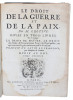
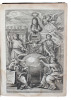
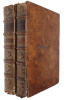
The very rare first edition of the first French translation of Grotius' groundbreaking magnum opus, ""De Jure Belli ac Pacis"", the founding work of international law. The profoundly influential masterpiece - written during the Thirty Years' War, in the hope that rational human beings might be able to agree to legal limits on war's destruction - ""made him famous throughout Europe... [t]he questions which he put forward have come to be the basis of the ultimate view of land and society. This was the first attempt to lay down a principle of right, and a basis for society and government, outside Church or Scripture... Grotius's principle of an immutable law, which God can no more alter than a mathematical axiom, was the first expression of the ""droit naturel"", the natural law which exercised the great political theorists of the eighteenth century, and is the foundation of modern international law."" (PMM 125). This magnum opus of legal philosophy played a tremendous role in French law and politics and in the entire development of international law in general. ""It is on the DIB (De Iure Bellis) that the bulk of Grotius' reputation rests. It consists of an introduction and three books, totaling more than 900 pages in translation. As with DIP, the introduction or ""Prolegomena"" holds the greatest interest for philosophers, for it is here that Grotius articulates and defends the philosophical foundations of the DIB. While philosophers are naturally attracted to the ""Prolegomena,"" the body of the DIB is also redolent with themes of philosophical interest. Book One defines the concept of war, argues for the legitimacy of war, and identifies who may legitimately wage war. Book Two deals with the causes of war, the origins of property, the transfer of rights and more, while Book Three is dedicated primarily to the rightful conduct of belligerents in war. After the initial publication in 1625, Grotius ushered several more editions to press during his life, each time adding more references without substantially changing the arguments."" (SEP).Living in the times of the Eighty Years' War between Spain and the Netherlands and the Thirty Years' War between Catholic and Protestant European nations (Catholic France being in the otherwise Protestant camp), Grotius was deeply concerned with matters of conflicts between nations and religions. His magnum opus was a monumental effort to restrain such conflicts on the basis of a broad moral consensus. It was begun in prison and published during his exile in Paris. ""In the dedication of his great work, ""De Jure Belli ac Pacis"", to Louis XIII of France, Grotius addresses the king as ""everywhere known by the name Just no less than that of Louis ... Just, when you call back to life laws that are on the verge of burial, and with all your strength set yourself against the trend of an age which is rushing headlong to destruction" ... when you offer no violence to souls that hold views different from your own in matter of religion" ... when by the exercise of your authority you lighten the burden of oppressed peoples.""When writing this dedication and the Prolegomena to ""De Jure Belli ac Pacis"" (originally published in Paris in 1625), Grotius was living in exile. Europe was war-torn and depression and suffering from hunger and cold prevailed in many regions, justifying Grotius' description of international law as such: ""in our day, as in former times, there is no lack of men who view this branch of law with contempt as having no reality outside of an empty name."" The treaty of peace, embodying many of the universal and permanent principles which Grotius abstracted ""from every particular fact"" in those dark days of the early part of the Thirty Years' War, was not concluded till 23 years later. The year 1624 was, in the negotiation of the treaty, assumed to be the norm year for restoration of the ""Status quo"".The more than three centuries since Grotius wrote his magnum opus seem to bear witness to his views upon war peace, in spite of the fact that many a state has not yet realized that the state is ""Truly fortunate which has justice for its own boundary line."" In 1625 Grotius famously stated: ""there is no state so powerful that it may not sometime need the help of others outside itself, either for the purposes of trade, or even ward off the forces of many foreign nations united against it.""Grotius's paramount influence upon international law is widely acknowledged worldwide. For instance, since 1999 the American Society of International Law holds an annual series of Grotius Lectures. Because of his theological underpinning of free trade, he is also considered an ""economic theologist"".""To those desirous of understanding the fundamental principles which have motivated some of the greatest statesmen of modern time and the bases upon which a state which is to remain essentially sound must rest, a reading of Grotius' Prolegomena to the ""Law of War and Peace"" is commended."" (George Grafton Wilson: ""Grotius: Law of War and Peace."", p. 1. In: The American Journal of International Law, vol. 35, nr. 2, 1941).
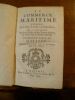
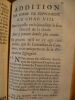
Le commerce maritime fondé sur le Droit de la Nature et des Gens sur l'autorité des Loix civiles et des traités de paix et rétabli dans sa liberté naturelle. Traduit du latin par M. Pattyn. Augmenté et enrichi des notes de l'auteur pour cette édition.Suivi de : Addition par forme de supplément au chap. VIII. Dans laquelle en éclaircissant le sens littéral de la clause sans se pouvoir étendre plus avant. On prouve qu'il ne s'agit rien moins que de l'extension du Commerce, mais uniquement de la Domination espagnole.
A Malines, chez Laurent Vander Elst, sur la place, 1727.Un volume relié in-12 (10 x 16,5 cm) de 5 ff. - 180 - 175 et 16 pp. de table. Reliure plein veau, dos à nerfs, pièce de titre rouge. Reliure légèrement usée, épidermures et coins émoussés, mors légèrement fendu en haut du dos. Intérieur en trés bon état.Traduction française par M. d'Hermanville de l'ouvrage de Ch. Ph. Pattin, Mare Liberum.
Charles-Philippe de Patin , ou Karel-Filip Pattijn ( Ypres , 19 avril 1687 - Gand , 17 juillet 1773 ), appartenant à la famille de Patin , fut président du Conseil de Flandre entre 1742 et 1772 . Il était surtout connu pour son engagement en faveur de la survie de la Compagnie d'Ostende .Charles-Philippe de Patin est né à Ypres , fils aîné de Pierre de Patin, seigneur de Terbeke et échevin de la salle d'Ypres , et de Catherine-Thérèse de Smet. Il avait un diplôme en droit et est devenu avocat de profession. En 1721, il accède au rang de conseiller du Grand Conseil de Malines . En tant qu'avocat et conseiller, il a plaidé pour la survie de la Compagnie d'Ostende et le droit au libre-échange maritime. Il publie ses thèses dans le livre Mare liberum . Malgré ses efforts, il ne put cependant empêcher la fermeture de la société d'Ostende.
PAIX ET NATURE. POEMES
CHEZ L'AUTEUR. 1980. In-8. Broché. Bon état, Couv. convenable, Dos satisfaisant, Intérieur frais. 119 pages. Quelques illustrations en noir et blanc, hors texte. Envoi de l'auteur sur le page de garde. + Deux lettres de l'auteur.. . . . Classification Dewey : 841-Poésie
Classification Dewey : 841-Poésie
LA CONSTITUTION DE L'ANGLETERRE CONSIDERE DANS SES RAPPORTS AVEC LA LOI DE DIEU ET LES COUTUMES DE LA PAIX SOCIALE - PRECEDEE D'APERCUS SOMMAIRES SUR LA NATURE DU SOL ET L'HISTOIRE DE LA RACE EN 2 TOMES (1+2).
ALFRED MAME ET FILS. 1875. In-12. Broché. Etat d'usage, Coins frottés, Dos frotté, Mouillures. 2 TOMES : 1+2 : (LXIII+340) + 437pages. Trace de mouillures sans réelle conséquence sur la lecture. Tampon sur les premiers plats, les pages de titre et les pages 25. Premier plat désolidarisée du tome 1.. . . . Classification Dewey : 942-Angleterre
2 PHOTOS DISPONIBLES. Classification Dewey : 942-Angleterre
LA CONSTITUTION DE L'ANGLETERRE - en 2 VOLUMES (TOMES 1 et 2) / Considérée dans ses rapports avec la Loi de Dieu et les Coutumes de la Paix sociale - precedee d'aperçus sommaires sur la nature du sol et l'histoire de la race-
ALFRED MAME ET FILS. 1875. In-12. Relié demi-cuir. Bon état, Couv. convenable, Dos satisfaisant, Intérieur frais. (LXIII + 340 pages) + 437 pages - Plats et contre-plats jaspés - Coins émoussés - Etiquette collée en coiffes en tete et en pied - Dos à 4 nerfs - Auteur, titre, tomaison, filets et fleurons dorés aux dos - Dos legerement frottés.. . . . Classification Dewey : 942-Angleterre
avec la collaboration de M.A. DELAIRE. Classification Dewey : 942-Angleterre
Le Droit de la Guerre et de la Paix, Divise en Trois Livres. Ou il Explique Le Droit De Nature, Le Droit des Gens, & Les Principaux Points du Droit Public, Ou qui Concerne le Gouvernement Public d'un Etat. Traduit Du Latin En Francois, Par Monsieur de Courtin. En 2 volumes
Paris, Arnould Seneuze, 1687, in-4°, sans frontispiece ou portrait du traducteur. Tome 1: 23 ff. + 621 p. (+ 1) + 2 ff. / Tome 2: 2 ff. + 304 p. + 197 p. + 2 p., galerie de vers dans les marges sup., reliures en plein veau très usées, plat du vol. 1 détaché, ex. a restaurer.
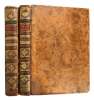
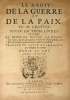
Première édition en langue française. La première expression du droit naturel et fondement du droit international moderne.Le plus important ouvrage de Grotius (en néérlandais: Hugo de Groot), un des érudits les plus éminents en matière de droit et de diplomatie du XVIIe siècle. Grotius est communément appelé "le père du Droit des gens". Cet ouvrage, paru en 1625 sous le titre latin «De jure pacis et belli», est un véritable code de droit international public, où Grotius combat l'esclavage et étudie les moyens de prévenir et de réglementer les guerres. Cet ouvrage lui a fait acquérir une autorité hors de pair en matière internationale.First French-Language Edition of De Jure Belli ac Pacis Grotius, Hugo [1583-1645]. Carter and Muir, Printing and the Mind of Man 125. Ter Muelen and Diermanse, Bibliographie des Ecrits Imprimes de Hugo Grotius 650. Image disp.

(SLACES, NVVA)
Phone number : 41 (0)26 3223808
Recueil desTraités de commerce et de Navigation de la France , avec les Puissances etrangères, depuis la Paix de Westphalie en1648, suivi du recueil des principaux traités de même nature coclus par les puissances etrangères entre elles, depuis la même époque
PARIS, Rey & Gravier, Libraires - 1834, 1835, 1836 & 1937 - 4 volumes In-8 : T. 2, 3, 5, 8 -Reliure toile - Propre
Chaque volume peut-être vendu individuellement au prix de 40 T. II : Amérique, Angleterre, Anhalt-bernbourg Anhalt-Coethen, Abhalt-Dessau, Autriche, Bade Bavière, Blegique, brésil, Brunswick, chine, colombie, Danemark, Cracovie - T. III :Grande-Bretagne, Haïti, Hanovre, Hesse, Lippe-Detmold, Lucques, Maroc, Mecklembourg, Mexique, Nassau-Usingen, Parme, Plaisance, Guatalla, Pays-bas, hollande,Perse - T. V : Italie Sardaigne, Prusse, tunis, tripoli,, Russie, saxe, schwarzbourg, suède, suisse, venezuela, Waldeck, Wurtemberg - T. VIII : hongrie Iles Ioniennes Issembourg equateur lichtenstein Perou, Pologne, Porte-ottomane, Portugal, PrusseRaguse, Reuss, Saintsiège Rome russie, San-Marin, Sardaigne, SaxeSiam, Etats-unis Suede, norvège, suisse, Toscane, Tripoli, tunis, Venezuela, Hašti villes Anséatiques MarocDanemark france Cnformément à nos conditions générales de vente :Les frais de port sont affichés à titre indicatif. Il se peut que nous devions vous contacter pour vous informer du coût de laffranchissement supplémentaire en fonction du poids et du nombre de livres, surtout pour les envois internationaux Cependant vu l'augmentation des tarifs postaux à l'internationale, nous pouvons expédier les ouvrages en point relais MONDIAL RELAY pour les pays suivants : Allemagne, Autriche, Belgique, Espagne, Italie, Luxembourg, Pays-Bas, Pologne, et Portugal. Merci de nous indiquer en retour le point relais choisi ainsi que votre numéro de téléphone mobile & adresse Courriel pour assurer le suivi du colis.N'hésitez pas à nous interroger.In accordance with our general terms and conditions of sale:Shipping costs are displayed for informational purposes only. We may need to contact you to inform you of the additional postage costs depending on the weight and number of books, especially for international shipments.However, given the increase in international postal rates, we can ship books via Mondial Relay to the following countries: Germany, Austria, Belgium, Spain, Italy, Luxembourg, Netherlands, Poland, and Portugal. Please provide us with your chosen Mondial Relay point, as well as your mobile phone number and email address to ensure package tracking.Please feel free to contact us with any questions
La Paix universelle, ou le Mariage philosophique du commerce avec l'agriculture et sa famille entière, Reposant sur l'Empire universel des intimes et légitimes liaisons qui existent naturellement entre la nature, l'homme, l'agriculture, les arts, les sciences, les commerces, les gouvernans, les potentats, les nations, l'ensemble des sociétés civilisées, en un mot, entre les prinicipales et fondamentales bases qui soutiennent, aliementent et perpétuent le majestueux et systématique édifice de la civilisation et du pacte social.
A Tarbes, chez R. Lagarrique, imprimeur de la Préfecture, Août 1830. 95, (1) pp. 8vo. Modern boards, gilt lettering to spine, original printed covers preserved. Goldsmiths 26117; not in Kress; not in Einaudi; not in Mattioli. First edition. The author published a number of tracts on agriculture in 1822. The greater part of the work details the situation after the 'Philosophical mariage between commerce and agriculture': 'Les droits respectifs de ces nouveaux époux', 'Leur langage', 'Leur éducation', 'Leurs lois fondamentales', etc.

(NVVA, )
Phone number : 31 20 698 13 75
la constitution de l'Angleterre considérée dans ses rapports avec la loi de Dieu et les coutumes de la paix sociale précédée d'aperçus sommaires sur La nature du sol et l'histoire de la race
,Tours, Alfred Mame 1875, LXIII-340+437 pp., 2 vol. in 12 reliés demi-basane, dos lisses orné de filets dorés, pièces de titre et de tomaison en maroquin rouge et vert, cachets de bibliothèque, quelques rousseurs