 Write to the booksellers
1414 books for « p p rubens »Edit
-
Type
Book (1410)
Engraving (1)
Magazine (3)
Music sheets (1)
New book (10)
-
Latest
Last 24h (1)
Last 3 days (2)
Last month (9)
Last week (1)
-
Language
Chinese (1)
Dutch (76)
English (10)
French (1276)
German (3)
Italian (9)
Russian (48)
Spanish (1)
Swedish (1)
-
Century
17th (1)
18th (3)
19th (108)
20th (484)
21st (94)
-
Countries
Belgium (657)
Canada (2)
Côte d'Ivoire (1)
Denmark (1)
France (668)
Switzerland (16)
United Kingdom (23)
United States of America (57)
-
Syndicate
ALAC (2)
CLAM (91)
CLAQ (1)
CNE (1)
ILAB (505)
NVVA (2)
SLACES (2)
SLAM (381)
SNCAO (2)
Topics
- Age (5)
- Annals (3)
- Anonymous (2)
- Antwerp (112)
- Architecture (112)
- Artists (3)
- Avermaete roger (6)
- Baudouin frans (16)
- Belgium (263)
- Bibliography (9)
- Bibliophilism (3)
- Biography (28)
- Bosch jérôme (2)
- Boucher françois (3)
- Brussels (9)
- Cabanne pierre (3)
- Charton edouard (5)
- Collaboration (3)
- Collections (23)
- Daudet ernest (4)
- Daye pierre (3)
- Diplomacy (4)
- Drawings (22)
- Early printed books (3)
- Encyclopaedia (3)
- Europe (4)
- Exhibition (5)
- Exhibition catalogue (10)
- Family (3)
- Fashion (6)
- Fin de siècle (17)
- Fine arts (74)
- First edition (7)
- Flanders (46)
- Flemish (69)
- Fleuriot zénaïde (2)
- French literature (3)
- Fromentin eugène (3)
- Genaille robert (11)
- Genealogy (9)
- Germanic languages (7)
- Guide books (4)
- Guittoneau ben (7)
- History (147)
- History of art (4)
- Hourticq louis (9)
- Humanism (4)
- Iconography (3)
- Industrial arts & crafts - fine arts (27)
- Italian (6)
- Jacob (3)
- Journalism (14)
- Lassaigne jacques (3)
- Literature (17)
- Luxembourg (3)
- Magazine (25)
- Marx karl (4)
- Mauclere jean (4)
- Medicine (3)
- Michiels alfred (4)
- Mosaic (12)
- Museums (27)
- Newspaper (2)
- Newspapers press (36)
- Painters (162)
- Painting (117)
- Painting (74)
- Paintings (4)
- Paris (11)
- Pillement georges (3)
- Policy (4)
- Portraits (3)
- Public sale (46)
- Religions (5)
- Review (11)
- Reviews (27)
- Ritter raymond (3)
- Rooses max (4)
- Rubens (406)
- School (46)
- Sciences (88)
- Sculpture (7)
- Shapes & colours (3)
- Sports (4)
- Sportsmen (3)
- Studio (3)
- Sutton (7)
- Tea (15)
- Travel (2)
- Vanzype gustave (4)
- Various (9)
- Verne henri (3)
- War (9)
- Wedgwood (9)
Munuscula amicorum. Contributions on Rubens and his Colleagues in Honour of Hans Vlieghe. 2 vols
Turnhout, Brepols, 2006 Hardback, original editor's jacket, english, german, french, dutch, 19x25 cm., VIII+688 pp., 190 x 250 mm. *fine condition! ISBN 9782503515663.
Pictura Nova PICT 10. Contents : I. A Tribute to Hans Vlieghe. II. Aspects of Rubens? Art. III. A Cabinet of Flemish Baroque Painting. Tabula gratulatoria. Index. Contents: I. A Tribute to Hans Vlieghe 1. Katlijne Van der Stighelen, Preface 2. Justus M ller Hofstede, Ad honorem viri doctissimi optimique collegae Hans Vlieghe 3. Katlijne Van der Stighelen, Bibliography of Hans Vlieghe 1960-2005 4. Prologue: David Freedberg, Why Connoisseurship matters II. Aspects of Rubens? Art II.1. Rubens: the Legend Revisited 1. Christine G ttler, Affectionate Gifts: Rubens?s Small Curiosities on Metallic Supports 2. Nils B ttner, Aristocracy and Noble Business. Some remarks on Rubens's financial affaires 3. Ulrich Heinen, ?con ogni fervore?. Liebe und Begierde in Rubens? Bibliothek, Leben und Werk 4. Elizabeth McGrath, Garlanding the Great Mother: Rubens, Jan Breughel and the celebration of Nature's fertility 5. Karolien De Clippel, ?Bacchanaal? of Vastenavond?: What?s in a name? Receptie en classificatie van Rubens? bacchische voorstellingen in de zeventiende eeuw 6. Carl Van de Velde, Rubens? brieven in het Nederlands 7. Filip Vermeylen, Cleopatra on the move. Rubens paintings sold at auction in Antwerp during the eigthteenth century 8. Frans Baudouin, Architecturale motieven op schilderijen van Rubens: enkele voorbeelden 9. Bernard Aikema, Rubens? ?meraviglia? II.2. Rubens: Paintings at the Easel, Drawings in the Chest 1. Cynthia Lawrence, Rubens and De Rinc n in Valladolid: a reconsideration of the first Spanish sojourn and a new source for the Antwerp ?Raising of the Cross? 2. Anne-Marie Logan, A Noble Genoese Lady: by or attributed to Rubens? 3. Jeremy Wood, Rubens and Raphael: The designs for the tapestries in the Sistine Chapel 4. Justus Muller Hofstede, Rubens? ?Bethlehemitischer Kindermord? von ca 1610 5. Christopher Brown, Rubens' Coronation of Henri IV in Oxford 6. Kristin Lohse Belkin, ?La belle H l ne? and her Beauty Aids: A New Look at ?Het Pelsken? 7. Nora De Poorter, Verloren werk van De Crayer en Rubens van naderbij bekeken. De altaarschilderijen van de Brusselse Lieve-Vrouwebroeders 8. Ursula H rting, A Small Entertainment f r King Charles II im Rubenshaus 9. Barbara Haeger, The Choir Screen at St. Michael?s Abbey in Antwerp: gateway to the heavenly Jerusalem III A Cabinet of Flemish Baroque Painting III.1. The Context of the Genius 1. Bert Timmermans, The Elite as Collectors and Middlemen in the Antwerp Art World of the Seventeenth Century 2. David Howarth, Charles I?s Spaniel? The Relation between Charles I and Anthony van Dyck reconsidered 3. Katlijne Van der Stighelen, Anton van Dyck en Zaventem: een apart verhaal over het ontstaan en nabestaan van twee enigmatische schilderijen 4. Fiona Healy, Vive l'Esprit. Sculpture as the Bearer of Meaning in Willem van Haecht's Art Cabinet 5. Nico Van Hout, Een stijltechnische analyse van de Rozenkransreeks in de Sint-Pauluskerk te Antwerpen 6. Koenraad Jonckheere, Wars van decorum. Het Laatste Avondmaal van Adriaen Thomasz Key: een uitgangspunt voor Rubens? 7. Jeffrey Muller, The Cult of St. Joannes Nepomucenus in the St. Jacob?s Church, Antwerp 8. Leo De Ren, ?Rubens hebben we al?. De Weense selectie uit de schilderijencollectie van Karel Alexander van Lotharingen III.2. The Genius of the Craftsman 1. Rudi Ekkart, Abraham de Vries, een Hollandse portrettist in Frankrijk en de Zuidelijke Nederlanden 2. Jan Muylle, Adriaen Brouwer beroofd op zee. De echo van een kunstenaarsanekdote? 3. Guy Delmarcel, De Antwerpse schilder Pieter van Lint(1609-1690) als ontwerper van wandtapijten. Een bijdrage 4. Joost Vander Auwera, Afgemeten, ingelijst en opgelijst. Kanttekeningen bij enkele aanvullingen op het oeuvre van Artus Wolffort (Antwerpen 1581-1641 ) 5. Arnout Balis, Venus en de Grati n: een mythologisch schilderij van Justus van Egmont 6. Barbara Welzel, David Teniers II and Archduke Leopold Wilhelm 7. Ilja Veldman, Zuid-Nederlandse schilders in het fonds van prentuitgever Crispijn de Passe 8. Walter Liedtke, Toward a New Edition of Flemish Paintings in the Metropolitan Museum of Art Tabula gratulatoria
Munuscula amicorum. Contributions on Rubens and his Colleagues in Honour of Hans Vlieghe. 2 vols.
Turnhout, Brepols, 2006 Hardback, original editor's jacket, english, german, french, dutch, 19x25 cm., VIII+688 pp., 190 x 250 mm. ***library stamps present on title page and spine ISBN 9782503515663.
Pictura Nova PICT 10. Contents : I. A Tribute to Hans Vlieghe. II. Aspects of Rubens Art. III. A Cabinet of Flemish Baroque Painting. Tabula gratulatoria. Index. Contents: I. A Tribute to Hans Vlieghe 1. Katlijne Van der Stighelen, Preface 2. Justus M ller Hofstede, Ad honorem viri doctissimi optimique collegae Hans Vlieghe 3. Katlijne Van der Stighelen, Bibliography of Hans Vlieghe 1960-2005 4. Prologue: David Freedberg, Why Connoisseurship matters II. Aspects of Rubens? Art II.1. Rubens: the Legend Revisited 1. Christine G ttler, Affectionate Gifts: Rubens?s Small Curiosities on Metallic Supports 2. Nils B ttner, Aristocracy and Noble Business. Some remarks on Rubens's financial affaires 3. Ulrich Heinen, ?con ogni fervore?. Liebe und Begierde in Rubens? Bibliothek, Leben und Werk 4. Elizabeth McGrath, Garlanding the Great Mother: Rubens, Jan Breughel and the celebration of Nature's fertility 5. Karolien De Clippel, ?Bacchanaal? of Vastenavond?: What?s in a name? Receptie en classificatie van Rubens? bacchische voorstellingen in de zeventiende eeuw 6. Carl Van de Velde, Rubens? brieven in het Nederlands 7. Filip Vermeylen, Cleopatra on the move. Rubens paintings sold at auction in Antwerp during the eigthteenth century 8. Frans Baudouin, Architecturale motieven op schilderijen van Rubens: enkele voorbeelden 9. Bernard Aikema, Rubens? ?meraviglia? II.2. Rubens: Paintings at the Easel, Drawings in the Chest 1. Cynthia Lawrence, Rubens and De Rinc n in Valladolid: a reconsideration of the first Spanish sojourn and a new source for the Antwerp ?Raising of the Cross? 2. Anne-Marie Logan, A Noble Genoese Lady: by or attributed to Rubens? 3. Jeremy Wood, Rubens and Raphael: The designs for the tapestries in the Sistine Chapel 4. Justus Muller Hofstede, Rubens? ?Bethlehemitischer Kindermord? von ca 1610 5. Christopher Brown, Rubens' Coronation of Henri IV in Oxford 6. Kristin Lohse Belkin, ?La belle H l ne? and her Beauty Aids: A New Look at ?Het Pelsken? 7. Nora De Poorter, Verloren werk van De Crayer en Rubens van naderbij bekeken. De altaarschilderijen van de Brusselse Lieve-Vrouwebroeders 8. Ursula H rting, A Small Entertainment f r King Charles II im Rubenshaus 9. Barbara Haeger, The Choir Screen at St. Michael?s Abbey in Antwerp: gateway to the heavenly Jerusalem III A Cabinet of Flemish Baroque Painting III.1. The Context of the Genius 1. Bert Timmermans, The Elite as Collectors and Middlemen in the Antwerp Art World of the Seventeenth Century 2. David Howarth, Charles I?s Spaniel? The Relation between Charles I and Anthony van Dyck reconsidered 3. Katlijne Van der Stighelen, Anton van Dyck en Zaventem: een apart verhaal over het ontstaan en nabestaan van twee enigmatische schilderijen 4. Fiona Healy, Vive l'Esprit. Sculpture as the Bearer of Meaning in Willem van Haecht's Art Cabinet 5. Nico Van Hout, Een stijltechnische analyse van de Rozenkransreeks in de Sint-Pauluskerk te Antwerpen 6. Koenraad Jonckheere, Wars van decorum. Het Laatste Avondmaal van Adriaen Thomasz Key: een uitgangspunt voor Rubens? 7. Jeffrey Muller, The Cult of St. Joannes Nepomucenus in the St. Jacob?s Church, Antwerp 8. Leo De Ren, ?Rubens hebben we al?. De Weense selectie uit de schilderijencollectie van Karel Alexander van Lotharingen III.2. The Genius of the Craftsman 1. Rudi Ekkart, Abraham de Vries, een Hollandse portrettist in Frankrijk en de Zuidelijke Nederlanden 2. Jan Muylle, Adriaen Brouwer beroofd op zee. De echo van een kunstenaarsanekdote? 3. Guy Delmarcel, De Antwerpse schilder Pieter van Lint(1609-1690) als ontwerper van wandtapijten. Een bijdrage 4. Joost Vander Auwera, Afgemeten, ingelijst en opgelijst. Kanttekeningen bij enkele aanvullingen op het oeuvre van Artus Wolffort (Antwerpen 1581-1641 ) 5. Arnout Balis, Venus en de Grati n: een mythologisch schilderij van Justus van Egmont 6. Barbara Welzel, David Teniers II and Archduke Leopold Wilhelm 7. Ilja Veldman, Zuid-Nederlandse schilders in het fonds van prentuitgever Crispijn de Passe 8. Walter Liedtke, Toward a New Edition of Flemish Paintings in the Metropolitan Museum of Art Tabula gratulatoria
Drawings of Peter Paul Rubens, A Critical Catalogue vols; 1-6, - 6 VOLUMES SET catalogue raisonn of all drawings. * The Drawings of Peter Paul Rubens, A Critical Catalogue, Volume One (1590?1608) 2 vols. * The Drawings of Peter Paul Rubens, A Critical Catalogue, Volume Two (1609?1620) 2 vols. * The Drawings of Peter Paul Rubens, A Critical Catalogue, Volume Three, 1621?1640) 2 vols Part One: Text and Part Two: Plates
, Brepols - Harvey Miller, 2021-2023-2025 6 vols., 536 pages + 732 + 555 pages, 216 x 280 mm , 260 + 291 colour ill., English, Hardcovers, **NEW. ISBN 9782503595702.
This is the 6 -volume catalogue raisonn of all drawings considered by the authors to be by Rubens. It covers the years 1590- 1608, Volumes II and III dealing, respectively, with the periods 1609-20 and 1621- 40 and * The Drawings of Peter Paul Rubens, A Critical Catalogue, Volume One (1590?1608) * The Drawings of Peter Paul Rubens, A Critical Catalogue, Volume Two (1609?1620) * The Drawings of Peter Paul Rubens, A Critical Catalogue, Volume Three, 1621?1640 It is the first publication that presents the artist?s entire drawn oeuvre in chronological order, previous such publications containing only selections of drawings. By leafing through the illustrations, this arrangement provides the user with a quick visual impression of the variety of techniques, media, subject and functions of Rubens?s drawings at an one time. Volume I consists of the drawings of the artist?s childhood, apprenticeship and first years as a master in Antwerp to his formative years in Italy, spent mostly in Mantua and Rome, with an excursion to Spain. These are the years primarily devoted to learning and absorbing the art of the past, from sixteenth-century German and Netherlandish prints to the works of the ancient and Italian Renaissance masters. A large number of these drawings consists of copies after the works of other artists, largely executed as part of the artistic training at the time. For the first time, Rubens's copies and their models are not discussed and illustrated as a separate entity but are fully integrated into the rest of his graphic oeuvre, thus showing copies and original compositions created at the same time side by side. The volume contains 204 entries, including several sheets with drawings on recto and verso. Each entry consists of a detailed physical description of the drawing, provenance, exhibition history, full bibliography and a critical, interpretive discussion. In addition, Volume I contains an essay on the history of the scholarship of Rubens?s drawings, a subject that has not been treated before. All drawings by Rubens and the works by other artists he copied as well as a selection of other comparative images are reproduced in color. This is Volume II in the three-volume catalogue raisonn of the drawings by Rubens covering the years 1609?20. The project is a collaboration between Anne-Marie Logan, to whom belong all the Rubens attributions, and Kristin Lohse Belkin. It is the first publication that presents the artist?s entire drawn oeuvre in chronological order, previous such publications containing only selections of drawings. By leafing through the illustrations, this arrangement offers the user a quick visual impression of the variety of techniques, media, subject matter and functions of Rubens?s drawings at any one time. Accordingly, Volume II consists of the drawings from the time of Rubens?s return from Italy and the establishment of his workshop in Antwerp to the completion of his contribution to the furnishing and decoration of the city?s new Jesuit church, today?s St. Charles Borromeo. The decade is characterized by a broad range of genres and iconography: large altarpieces stand next to cabinet-size pictures, book illustrations next to designs for tapestry, sculpture and architectural reliefs; religious, mythological and historical subjects alternate with allegories, portraits, exotic hunts and scenes from country life. Copies after other artists? works that constitute such a large part of Rubens's early years discussed in Volume I have given way to original inventions in pen and ink and, above all, by life studies in chalk of the human body, naked or dressed. The whole spectrum of Rubens's extraordinary creativity, nowhere presented as directly and immediately as in his drawings, is there to be contemplated in all its astonishing diversity. Each entry consists of a detailed physical description of the drawing, provenance, exhibition history, full bibliography and a critical, interpretive discussion. All drawings by Rubens as well as a selection of comparative images are reproduced in color.
Le siècle de RUBENS.
Paris, Albin Michel et Anvers, Fonds Mercator, 1994. Grand in-4, rel. d’édition pleine toile sous jaq. et étui illustr. 319 pp., nbr. fig. et reproductions photogr. en noir et en couleurs, catalogue de 80 œuvres commentées. Bibliogr., index.
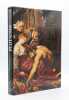
Version française de l'ouvrage publié à l'occasion de l'exposition "The Age of Rubens" au Museum of Fine Arts de Boston puis au Toledo Museum. Bel exemplaire. - Frais de port : -France 12,5 € -U.E. 12 € -Monde (z B : 19 €) (z C : 48 €)


Les chefs-d'oeuvre de Rubens à la cathédrale d'Anvers. La Descente de Croix / L'élévation de la Croix.
P., Journal pour tous, s.d. [XIX]. Portfolio pleine percaline rouge, comportant 2 triptyques cartonnés, composés chacun de 6 superbes gravures de Hébert et Pannemaker. Hommage de Moussy au Baron de Chadenet.
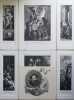
Rubens avait 33 ans lorsqu'il réalise ces deux oeuvres de styles baroques, probablement influencée par les travaux de Daniele da Volterra. La Descente de croix se trouvait initialement dans la cathédrale d'Anvers jusqu'à ce que Napoléon Ier emmène le tableau, ainsi que l'Érection de la croix, à Paris. Finalement, ces deux triptyques furent ramenés à Anvers en 1815. Portfolio fatigué, les triptyques sont en bon état. - Frais de port : -France 8,4 € -U.E. 10 € -Monde (z B : 15 €) (z C : 33 €)
Art, Music and Spectacle in the Age of Rubens
, Brepols - Harvey Miller, 2013 Hardback, VIII 351 p., 203 b/w ill. 35 colour ill., CD, 210 x 280 mm Languages: English, Fine copy. ISBN 9781905375837.
This volume presents an interdisciplinary study of the triumphal entry of the Cardinal-Infante Ferdinand into Antwerp in 1635, and pays special attention to Rubens?s monumental arches and oil sketches that ornamented the entry. This volume deals with the triumphal entry of the Cardinal-Infante Ferdinand, brother of King Philip IV of Spain, into Antwerp in 1635, one of the largest and most spectacular festivals ever mounted in an early modern city. The outdoor festivities in honor of the city?s new governor included a citywide procession, performances, fireworks, music, and political speeches. Along the processional route appeared nine richly ornamented stages and arches designed by Peter Paul Rubens and executed by a group of local painters and sculptors, including Jacob Jordaens, Theodoor van Thulden, and Jan van den Hoecke. To commemorate the event, the city commissioned a lavish festival book, entitled the Pompa Introitus Ferdinandi (1641), which contains learned commentaries by Jan Gaspar Gevaerts, a city official and Latinist, as well as folio engravings by Theodoor van Thulden after Rubens's stages. More than a simple description of the event, Gevaerts? volume offers a rich compilation of references to ancient writers and reproductions of ancient coins.While most literature on the subject has focused on Rubens?s nine monumental arches and his twelve preparatory oil sketches for the designs, this volume will examine the entry and its accompanying festival book as a whole. A group of highly distinguished specialists from different disciplines will discuss the entry and Gevaerts? book from a myriad of viewpoints, including art, architecture, music, theater, history, politics, classical knowledge, and economic and intellectual networks. It is the first time that the entry will be examined from a truly interdisciplinary perspective. The book draws on a wide variety of primary sources, including Rubens?s preparatory oil sketches, Gevaerts? festival book, pamphlets describing the entry, and political songs from the period. Contributors: Jonathan Israel (Princeton), Peter Miller (Bard Graduate Center), Bart Ramakers (Groningen), Louis Grijp (Utrecht), Anne Woollett (Getty), Anna Knaap (Emmanuel College, Boston), Michael Putnam (Brown), Carmen Arnold-Biucchi (Harvard), Frank Fehrenbach (Hamburg), Caroline van Eck (Leiden), Ivan Gaskell (Bard Graduate Center) Table of Contents Introduction: Anna C. Knaap, Emmanuel College, Boston Part I: Historical Background and Intellectual Milieu 1. Rubens, Antwerp, and the Fight for Domination of the World Trade System (1572-1650)? Jonathan Israel, Institute for Advanced Study, Princeton 2. Peiresc, Rubens, and Visual Culture, c. 1620? Peter N. Miller, Bard Graduate Center, New York Part II: Music, Vernacular Theater and Performance 3. Ferdinand?s Triumph and the Vernacular Dramatic Tradition Bart Ramakers, University of Groningen 4. Music Performed in the Triumphal Entry of the Cardinal-Infante Ferdinand into Antwerp (1635)? Louis P. Grijp, Utrecht University Part III: Art and Enlivenment 5. The Unmoved Mover? Frank Fehrenbach, University of Hamburg 6. Animation and Petrifaction in Rubens?s Pompa Introitus Ferdinandi? Caroline van Eck, Leiden University Part IV: Classical Antiquity 7. Virgil and the Pompa Introitus Ferdinand ?Michael C. J. Putnam, Brown University 8. Coins and Classical Imagery in the Time of Rubens: The Stage of Welcome in the Pompa Introitus Ferdinand?Carmen Arnold-Biucchi, Harvard Art Museums Part V: Rubens?s Oil Sketches: Preparation and Display 9. The Burden of Invention: Rubens and the Stage of Welcome ?Anne T. Woollett, J. Paul Getty Museum 10. Being True to Rubens ?Ivan Gaskell, Bard Graduate Center, New York Appendix 1: Track list Audio CD performed by The Imperial Trumpets, La Caccia and Camerata TrajectinaAppendix 2: Explanation of Audio CD? Louis P. Grijp Appendix 3: Song texts of Audio CD with short introductions
Galerie de Rubens, dite du Luxembourg : ouvrage composé de vingt-cinq estampes, soit en couleur, soit en noir, Avec l’explication historique et allégorique de chaque Sujet. Superbe collection de 24 tableaux consacrés par Rubens à la vie de Marie de Médicis et destinés à orner le Palais du Luxembourg.
Bel exemplaire de ce rare recueil orné de 25 superbes planches en vifs coloris de l’époque, conservé dans sa reliure de l’époque en demi-chagrin rouge. Paris, chez Desève, artiste-éditeur et Deterville, libraire, de l’imprimerie de Crapelet, 1809. Grand in-folio de (2) ff. de faux-titre et titre, 2 pp. d’Avertissement, 8 pp., 7 pp. d’explication, 25 planches en couleurs accompagnées chacune de 1 ou 2 ff. de texte explicatif et protégées par des serpentes. Qq. discrètes piqûres. Relié en demi-chagrin rouge à coins, dos à nerf orné de filets dorés. Qq. frottements aux charnières et aux coins, manque à la coiffe supérieure. Reliure de l’époque. 546 x 356 mm.
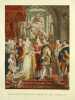
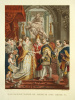
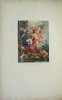
Superbe et rare recueil présentant les tableaux peints par Rubens pour orner le palais du Luxembourg construit pour Marie de Medicis. Graesse, Trésor de livres rares, 12 ; Sander 747 ; Cohen, Guide de l’amateur de livres à gravures, 914 (pour l’édition de 1808) ; Brunet, IV, 1443. « C’est l’histoire allégorique de Marie de Médicis. Les originaux de Rubens, qui ont orné longtemps le Palais du Luxembourg, construit pour cette princesse, sont maintenant au Louvre » (Cohen). Un recueil similaire avait déjà paru en 1710 sous le titre : « La Galerie du Palais du Luxembourg, peinte par Rubens », mais le présent ouvrage, publié presque cent ans plus tard, est entièrement nouveau, avec des gravures différentes, accompagnées d’un texte explicatif. Les bibliographes mentionnent une édition de Paris, 1808 mais nous ne sommes parvenus à en localiser aucun exemplaire. On apprend dans l’Avertissement que : « La Galerie du Luxembourg, cette belle collection des tableaux de Rubens, avait déjà été reproduite par le burin. Mais depuis longtemps le recueil en était devenu rare dans le commerce. L’éditeur actuel s’est flatté qu’en reproduisant de nouveau [cette belle collection des tableaux de Rubens], sous une forme plus commode, accompagnée d’un texte historique et allégorique, elle serait bien reçue du Public. Il a pensé ainsi que Rubens ayant excellé dans le choix et l’éclat des couleurs, ce serait lui faire perdre plus qu’à un autre de se borner à rendre les traits et l’expression. Il a donc mis tous ses soins pour imiter, autant qu’il est possible, le charme du coloris de l’original ». La superbe illustration se compose d’un portrait de Rubens par Le Clerc gravé par Benoist et de 24 planches d’après les tableaux de Rubens gravées par Benoist, Duthé, Gauthier le jeune, Gabriel, Gouyon, Disart et Pierron. Elles représentent : un Portrait de Marie de Médicis en Minerve, un Portrait de François II, un Portrait de Jeanne d’Autriche, les Parques, la Naissance de la reine, l’Education de la reine, Henri IV qui délibère sur son futur mariage, le Mariage de Marie de Médicis avec Henri IV, le Débarquement de la reine à Marseille, la Ville de Lyon qui va au-devant de la reine, l’Accouchement de la reine, Henri IV qui part pour l’Allemagne, le Couronnement de la reine, l’Apothéose de Henri IV, le Gouvernement de la reine, le Voyage de la reine au pont de Cé, l’Echange des deux reines, la Félicité de la régence, la Majorité de Louis XIII, la Reine s’enfuit de Blois, la Reine prend le parti de la paix, Conclusion de la paix, la Paix confirmée dans le ciel, le Tems découvre la vérité. « Les figures existent en noir et imprimées en couleur. En noir, reliure, 350 francs ; en couleurs, reliure, 2 000 francs » (Sander). Précieux exemplaire du tirage de luxe, dont l’ensemble des planches ont été imprimées en couleurs et finement rehaussées à la main à l’époque. Le présent ouvrage étant l’un des premiers à comporter des planches imprimées en couleurs qui reproduisent fidèlement des tableaux d’un grand maitre, il occupe une place importante dans l’étude de l’histoire de l’art. Bel exemplaire de ce rare recueil orné de 25 superbes planches en vifs coloris de l’époque, conservé dans sa reliure de l’époque en demi-chagrin rouge.
Rubens et la musique.
, Brepols - Harvey Miller, 2019 Paperback, 306 pages ., 16 b/w ill. + 141 colour ill., 190 x 290 mm, Languages: French. ISBN 9782503584560.
Ouvrage collectif et interdisciplinaire interrogeant sous divers angles le rapport de Rubens et son oeuvre l'art musical. Quelle tait la culture musicale de Pierre Paul Rubens (1577-1640) Les archives et les t moignages directs restent vasifs et laconiques sur la question. Son oeuvre pictural comporte en revanche de nombreux l ments qui permettent non seulement de restituer l'univers sonore du peintre mais galement d?appr cier sa haute ma trise des codes iconographiques contemporains. Pour la premi re fois, cet ouvrage collectif jette un regard neuf sur la production du doctus pictor, ses sources d'inspirations, ses influences et ses dispositifs iconographiques en mati re de musique et, plus largement, contribue une meilleure connaissance de l?iconographie musicale des xvie et xviie si cles C line Dr ze Musicologue, elle consacre ses recherches la culture musicale des ordres r guliers et des chapitres canoniaux s culiers l? poque moderne et s?int resse galement aux pratiques musicales des confr ries de d votion. Fabien Guilloux Musicologue, ing nieur d? tudes l?Institut de Recherches en Musicologie (CNRS), il consacre une partie de ses travaux l?iconographie et aux pratiques musicales dans les milieux claustraux et canoniaux des XVIe, XVIIe et XVIIIe si cles. Table of Contents introduction (C. Dr ze & F. Guilloux) I. Rubens et l?Europe musicale Dipingere il suono. Repr senter la musique l? poque de Rubens (N. Guidobaldi, Universit di Bologna ) Rubens et les milieux musicaux anversois (C. Dr ze, Universit catholique de Louvain) II. Pr sences musicales Les instruments de musique dans l??uvre de Rubens (N. Lallement, Centre de recherche du ch teau de Versailles) Les repr sentations instrumentales dans les frontispices anversois : l?apport de Rubens (A. Lemmens, Universit catholique de Louvain) La Sainte C cile de Rubens : une enqu te organologique (A.-E. Ceulemans, Universit catholique de Louvain / Mus e des instruments de musique) Deux couvercles de clavecins des ateliers Ruckers peints au si cle de Rubens (F. G treau, Iremus-CNRS) III. l? coute des images L?application des sens dans la culture spirituelle et artistique anversoise du XVIIe si cle (R. Dekoninck, Universit catholique de Louvain) L?exercice spirituel de la musique. Sainte C cile selon Coxcie et Rubens (M. Guggioli, Universit di Firenze) Repr senter l?inaudible. Les anges musiciens de Rubens (F. Guilloux, Iremus-CNRS)
Thinking through Rubens Selected Studies by Arnout Balis.
, Brepols, 2024 Hardcover, Pages: 220 pages,90 x 255mm,Illustrations:18 b/w, 88 col. Language(s):English. ISBN 9781915487285.
Over the course of his life, Arnout Balis (d. 2021) did a lot of thinking about and around Rubens. A principal beneficiary of this was the Corpus Rubenianum, that multi-volume catalogue of the work of the artist to which he devoted so much of his scholarly endeavour ? as author, and, still more, as the most generous of editors. But he also produced wide-ranging, as well as more closely detailed, studies on the artist that were written for a variety of contexts. Arnout Balis was an artist before he was an art historian, and the question of how Rubens channelled his ideas into visual form constantly attracted and intrigued him. He was fascinated, too, by the practicalities of the artist?s method of production, given the enormous output of Rubens?s studio. Not only did he rigorously assemble and analyse every scrap of information about pupils or associates of the master, but he made himself an expert in the work of each of Rubens?s artistic contemporaries. In all his investigations, whether involving the attribution of a painting, an iconographic puzzle or the solution to a historical problem, he took nothing for granted, treating any received idea or initial intuition with due scepticism until it could be shown to stand the test of the evidence, documentary and visual. The present volume shows the Balis method in action. It includes several studies already acclaimed as exemplary, and others which deserve to be more widely known. Five of them are made available here for the first time in English translation. Preface Arnout Balis: A Personal Memoir by Elizabeth McGrath 1 Hippopotamus Rubenii: A Small Chapter in the History of Zoology (1981) 2 Image and Counterimage: On Dissident Rubens Biographies (1985) 3 Picturing Fables in Seventeenth-Century Flemish Painting (1985) 4 ?Fatto da un mio discepolo?: Rubens?s Studio Practices Reviewed (1994) 5 Working it out: Design Tools and Procedures in Sixteenth- and Seventeenth-Century Flemish Art (2000) 6 Rubens and Inventio: The Contribution of his Theoretical Notebook (2001) 7 Rubens and his Studio: Defining the Problem (2007) 8 A Painting by Willem Panneels, an Intriguing Pupil of Rubens (2020) 9 Many Hands in Rubens?s Workshop: an Exploration (2021) 10 A Sheet from Rubens?s Theoretical Notebook (2021)
Ziel van de Meester , The Spirit of the Master , L'Ame du Maitre. Antwerpse tekeningen van Rubens tot Panamarenko , Antwerp drawings from Rubens to Panamarenko , Esquisses anversoises de Rubens a Panamarenko.
, BAI, 2012 Hardback, 240x180mm, 112p, throughout colour illustrations, English/ French/ Dutch (NL) edition . ISBN 9789085866350.
De ziel van de meester. Antwerpse tekeningen van Rubens tot Panamarenko. brengt uitzonderlijke tekeningen en schetsen van grote meesters en hedendaags talent. Elf gastcuratoren zijn aangesproken en stelden de tentoonstelling samen. Ze brengen tekeningen samen van oude meesters met hedendaags werk, leggen verrassende thematische verbanden of zien verwantschap in stijl, compositie of lijnvoering door de eeuwen heen. Buurtbewoners en vrijwilligers met een hart voor het museum kozen hun lievelingswerken. Modeontwerper Dries Van Noten, illustratrice Kaatje Vermeire, galeriehouder Adriaan Raemdonck en illustrator-cartoonist Benoit selecteerden vanuit hun tekenervaring. De specialisten Ger Luijten, professor Katlijne Vander Stighelen en conservator Stefaan Hautekeete maakten een keuze met hun professioneel oog. De tentoonstelling is uitgegroeid tot een boeiende tocht langs eilandjes van persoonlijke smaken en voorkeuren. Voor De Ziel van de Meester. Antwerpse tekeningen van Rubens tot Panamarenko selecteren specialisten, liefhebbers, jonge mensen en gepassioneerde kunstenaars 100 tekeningen uit de collectie van het Prentenkabinet. Niet alleen de hoogtepunten uit de collectie, maar ook verrassende pareltjes zullen te zien zijn. Het wordt een confrontatie en een samenbrengen van werk van meerdere kunstenaars uit verschillende periodes. Tekenen is intiem. Met een tekening zet een kunstenaar een eerste impressie op papier, een vluchtige pose, een momentopname, een emotie. Het is een snelle manier om een gedachtestroom vast te leggen en ideeen te ordenen.-** For The Spirit of the Master. Antwerp drawings from Rubens to Panamarenko, experts, impassioned artists, enthusiasts, locals and young people were allowed to choose a total of 100 drawings from the Prentenkabinet collection. Drawing is an intimate activity. A drawing captures a first impression, a fleeting pose, an emotion. It is a snapshot in time. It is the artist's way of quickly recording his ideas and ordering his thoughts. For The Spirit of the Master. Antwerp drawings from Rubens to Panamarenko, experts, impassioned artists, enthusiasts, locals and young people were allowed to choose a total of 100 drawings from the Prentenkabinet collection. Surprisingly perhaps, rather than just go for the collection's highlights, many chose less familiar works. The resulting exhibition is an encounter between contemporary talent and old masters.**- Pour L'Ame du Maitre. Esquisses anversoises de Rubens a Panamarenko, des specialistes, amateurs, riverains, des jeunes et des artistes passionnes selectionnent 100 esquisses de la collection du Prentenkabinet. Le dessin est intime. Par une esquisse, un artiste immortalise une premiere impression sur papier, une pose sommaire, une image ephemere, une emotion. Soit un moyen rapide de fixer une succession de pensees et de remettre ses idees en place. Pour L'Ame du Maitre. Esquisses anversoises de Rubens a Panamarenko, des specialistes, amateurs, riverains, des jeunes et des artistes passionnes selectionnent 100 esquisses de la collection du Prentenkabinet. L'exposition ne presente pas seulement les pieces maitresses de la collection, mais egalement des ouvres surprenantes qui gagnent a etre connues. L'exposition se mue en rencontre entre talents contemporains et anciens maitres.
Drawings of Peter Paul Rubens, A Critical Catalogue, VOLUME THREE 1621-1640 Part One: Text and Part Two: Plates, 2 vols.
, Brepols - Harvey Miller, 2025 Hardback, 2 vols. 555 Pages: 2 vols, Size:216 x 280 mm, Illustrations:172 b/w, 342 col., Language: English. *new. ISBN 9782503599564.
This is the final volume of the catalogue raisonn of the drawings by Peter Paul Rubens, covering the years 1621-1640. The project is a collaboration between Anne-Marie Logan, to whom belong all the Rubens attributions, and Kristin Lohse Belkin. It is the first publication that presents the artist?s entire drawn oeuvre in chronological order, previous such publications containing only selections of drawings. Accordingly, Volume III consists of the drawings from 1621 to the artist?s death in 1640. The first decade is characterized by Rubens?s first foreign commission, the paintings for the Luxembourg Palace, Marie de? Medici, the Queen Mother?s new residence in Paris, and by the demands of the artist?s diplomatic missions to the courts of Madrid and London. In contrast to the works requested by Rubens?s official duties, especially portraiture, a subject not of primary interest to the artist before, are the paintings and drawings of the second decade, predominantly inspired by the elderly painter?s marriage to the young Helena Fourment and the love and deep affection for his wife and her children. Court portraits are replaced by images of his family trois crayons, Rubens preferred medium in these years. Helena in disguise appears in the artist?s religious, mythological and genre paintings, most gloriously in the series of drawings for The Garden of Love. Commissions for altarpieces continue but unlike the black chalk anatomical studies of the 1610s, preparatory drawings now consist of head studies in black and red chalk, the latter used for the capture and color of skin. At the same time, images of domestic bliss are accompanied by drawings of the Flemish countryside, especially after Rubens?s purchase of the seignorial estate ?Het Steen? in 1635. In addition, Rubens continues to design title-pages and even to make copies after older works of art that constitute such a large part of his earliest output. But the activity of copying the works of his predecessors for the purpose of artistic instruction now has turned into the antiquarian?s pursuit of knowledge and the collector?s desire and delight, as Rubens records ancient gems and cameos in a series of drawings with the aim of a scholarly publication that, however, never materialized. As in previous volumes, each entry consists of a detailed physical description of the drawing, provenance, exhibition history, full bibliography and a critical, interpretive discussion. All drawings by Rubens as well as a selection of comparative images are reproduced in color as far as possible. TABLE OF CONTENTS Part One: Text Introduction to the Catalogue Acknowledgments Peter Paul Rubens (1557?1640): Timeline 1621?1640 Catalogue Entries Appendices I Addenda II Corrigenda III Rejected Attributions Part Two: Plates Catalogue Illustrations Appendices I Addenda II Corrigenda Bibliography Exhibitions List of Illustrations Index to Volumes I-III Photographic Credits
Peter Paul Rubens and His Landscapes: Ideas on Nature and Art
be-, Brepols - Harvey Miller, 2014 Hardback, 300 pages., 38 b/w ill. 12 colour ill., 190 x 250 mm, Languages: English fine! . ISBN 9782503550381.
Painting landscapes was very much a private activity for Peter Paul Rubens. Whilst the majority of his other works were commissioned, the landscapes seem to have been painted for his own pleasure and delight and stayed in the artist?s possession until his death. Most of them were painted in the last decade of his life; a happy period, in which Rubens retired from public duties and spent most of his free time studying the antique and enjoying sojourns on his country estate, castle Het Steen. To grasp this profoundly personal character of Rubens?s landscapes, this book considers the artist?s highly complex method of pictorial invention to illuminate the perception, implementation, dissemination, and posthumous reception of views on nature and landscape as depicted in Rubens?s landscape art. By investigating contemporary notions on the changing perception of nature and landscape in late 16th and early 17th-century southern Netherlandish culture, Rubens?s position within this socio-cultural matrix will be established, thus shedding new light on the artist?s own perception of nature and landscape. The re-assessment of the influence of classical and contemporary ideas about nature and landscape, as well as Rubens?s personal sense of place, will illuminate important characteristics which further define Rubens?s ideas about nature implemented in his landscape art. Also, fresh light will be cast on the sudden promulgation and dissemination of Rubens?s apparently private views on nature and landscape through a novel examination of the print series of the Small and Large Landscapes, reproducing the artist?s landscapes. The final theme in this illuminating book considers the posthumous reception of Rubens?s ?painted ideas of landscape?. The book also contains an updated version of the catalogue raisonne of Rubens?s landscape art, supplemented by a record of the Small and Large Landscapes prints series
Rubens in London. Art and Diplomacy
, Brepols Publishers, 2011 hardcover, 205 p., 68 b/w ill. 22 colour ill., 210 x 280 mm, English. ISBN 9781905375042.
The Flemish artist Peter Paul Rubens is probably the most important foreign artist to have worked in England. The story of how this came to be, of what he did when he was in England and what he painted for King Charles I is the story of this book. Charles and his father, the first Stuart monarchs of Great Britain, led and promoted a great wave of interest in the arts, in particular the visual arts, that culminated in Rubens painting nine large canvases to decorate the ceiling of Inigo Jones?s Banqetting Hall, the ceremonial centre of the Court in Whitehall - a monument that is still intact today. It is this cycle, an hitherto unappreciated masterpiece of Baroque state art, that is the focus of this book. How Rubens came to obtain the commission is a tale of international politics and diplomacy in which the artist himself played a significant role. The author relates these complex political relationships and missions with great insight and clarity, and in doing so also describes the cultural and social setting in which Rubens found himself while in London. The illustrations that accompany the text include not only many of Rubens's own paintings and drawings made when he was in London, but also some of the now well-known works by the Italian and North European Renaissance masters that Rubens would have seen in the magnificent art collections of the King and the English aristocracy. Foremost however among the illustrations are the reproductions of the Banqueting Hall ceiling itself: these are mostly in colour, showing each of the three central scenes both complete and with striking details that would be difficult to see in the Hall itself. Also the corner oval painting as well as the long, celebratory, exuberant processions on either side are reproduced in colour and in detail, so that the reader, guided by the author's full descriptions and interpretations, can experience a unique viewing and understanding of Rubens's masterpiece. The Author, Gregory Martin, has been interested in the ceiling paintings of the Banquetting Hall ever since he worked at the National Gallery in the 1960s, when he wrote the catalogue of the Gallery's Flemish paintings. Towards the end of his subsequent career at Christie's, where he was a director concerned with old master paintings, he was commissioned to write the Corpus Rubenianum volume on the ceiling decoration of the Banquetting Hall which was published in 2005. In the present book he returns to the subject, treating it and the related matter of Rubens in London in a way designed to appeal to a wider readership.
RUBENS & WOMEN
, , PB ,192 pages, ENG edition, 280 x 240 mm, NEW, 65 coloured illustrations, . ISBN 9781898519492.
The art of Peter Paul Rubens (1577-1640) is synonymous with the female nude, with the term 'Rubenesque' first coined in the 19th century to describe a voluptuous female body. Yet remarkably, there has never been a focused study of Rubens' depictions of women, making this book, and the exhibition that it will accompany, a first. Bringing together a diverse range of paintings and drawings from throughout the artist's career and from a range of international lenders, the exhibition at Dulwich Picture Gallery (October 2023 - January 2024) will challenge the popular assumption that Rubens only painted one type of woman. Instead, it will present a more nuanced view of the varied and essential role that women played in the artist's life and work, uniting and contributing to recent scholarly developments in subjects such as the identities of Rubens' sitters, 17th century artistic theory and practice, and Rubens' treatment of the human body. Rubens evidently enjoyed painting the female figure, especially in its sensual and unclothed form. But his women are never mere bodies trapped by the male gaze, on the contrary; they are proud and complex heroines, full of character and gravitas. No other male artist has created such potent images of female power, assurance, determination, commitment, and beauty. Providing a catalogue for the works in the exhibition and featuring three introductory essays that contextualise Rubens' work, this publication will both contribute to the existing corpus of scholarly literature on Rubens and introduce his masterpieces to new audiences, discussing them in the context of current debates around sexuality, power and feminism.
Europe de Rubens.
, Hazan, 2013 softcover, 359pp, ill. Dimensions : 23,2 cm x 28,8 cm x 2,7 cm bon etat ISBN 9782754106948.
Cette exposition et son catalogue, se reclamant d'un nouveau courant d'histoire de l'art, se proposent d'aborder Rubens (1577-1640) dans sa dimension europeenne : un artiste de talent qui, conscient de ses limites, a su s'entourer des meilleurs createurs de son temps mais pour developper une vision a l'echelle de son temps et de l'espace de la chretiente. D'un dynamisme inegale, inspire par les grands maitres de la Renaissance, Rubens est un artiste entrepreneur mais aussi un diplomate, grand voyageur. Le contexte europeen - politique, social, religieux, economique - determine le travail de Rubens, en meme temps que ce dernier vient l'inflechir. Le peintre frequente les cours europeennes et echange avec de nombreux correspondants, dont l'ampleur de vue, les preoccupations et les activites sont d'envergure europeenne : qu'il s'agisse du systeme des Habsbourg aussi bien que la ? republique des lettres ? , des centres du pouvoir ou des foyers de l'esprit : Madrid, Vienne, Bruxelles et Anvers, mais aussi Prague, Mantoue, Londres et Paris. Rome, enfin, occupe une place particuliere : capitale d'une Eglise catholique militante, elle est le berceau d'une vaste campagne artistique a travers l'Europe. De cette esthetique du baroque Rubens va assurer le rayonnement, au service de la foi comme du spectacle, de la pompe, des ceremonies. Toutes les facettes de l'activite de l'artiste obeissent a un sens aigu de son image et des nouvelles possibilites commerciales que peut offrir une entreprise artistique, dans le cadre d'une organisation methodique de portee europeenne. Epris de l'etude de l'Antiquite et de l'anatomie, Rubens est egalement un homme de science. Enfin, a cote du peintre de la predication, du faste et de la mode aristocratique, il existe en meme temps un Rubens plus personnel, un observateur de la vie intime, ainsi qu'en temoignent ses portraits d'enfants, de jeunes femmes, de vieillards, ou la portee meditative de ses paysages, C'est un art total que celui de Rubens. Aucune forme ne lui est etrangere, ce qui justifie de meler a ses ouvres celles d'autres artistes de son epoque : sculpteurs, ciseleurs, orfevres, ornemanistes. Europeen, l'univers de Rubens illustre l'infinie variete des formes artistiques de son temps et donne, par la meme, l'appreciation d'un moment faste de notre histoire.
LE COURRIER-JUIN 1977-RUBENS
40 PAGES-IN 4-EN COUVERTURE "IL Y A QUATRE SIECLES RUBENS", DETAIL DE "SAINT GEORGES ET LE DRAGON"-POUR LE 400e ANNIVERSAIRE DE RUBENS, PAR MAKAMINAN MAKAGIANSAR-RUBENS ARTISTE DE GENIE, IL FAIT DE SON ATELIER D'ANVERS L'UNE DES PLUS PRESTIGIEUSES ECOLES DE PEINTURE DE SON TEMPS, PAR ROGER AVERMAETE-LES LOGIS DE RUBENS-ILLUSTRATEUR CHEZ PLANTIN-L'ETERNEL FEMININ-DES FLAMMES D'ENFER AU VERT PARADIS-HOMMAGE PHILATELIQUE A RUBENS-QUATRE PAGES DE REPRODUCTIONS EN COULEUR-RUBENS QUAND L'ARTISTE SE FAIT DIPLOMATE AU SERVICE DE LA PAIX, PAR FRANS BAUDOUIN-LA PLUS NOBLE CONQUETE DU PEINTRE, PHOTOS-SPINOZA OU LES AUDACES D'UN PHILOSOPHE, PAR BEN REKERS, 6P-VAN LEEUWENHOEK L'EXPLORATEUR DE L'INFINIMENT PETIT, PAR J.W.M.LA RIVIERE, 2P-AUTOPORTRAIT PAR RUBENS EN 4 DE COUVERTURE
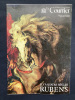
UNESCO COUVERTURE SOUPLE ETAT TRES BON
Rubens's House architecture and sculpture Corpus Rubenianum Ludwig Burchard XXII.2 (Rubens house) 2 volumes.
, Brepols - Harvey Miller, 2022 Hardcover, 704 pages, 2 vols., ENG, 265 x 180 mm, NEW, dustjackets, illustr. 199 b/w, 245 col., . ISBN 9781912554645.
The house that Rubens built a few years after his return to Antwerp from Italy, and where he lived to the end of his life, was for the most part lost during the course of alterations carried out over the years. Two original parts survive, and they attest to the grandeur of the artist?s house: the portico and garden pavilion. When the house came to be reconstructed in 1938?1946 a great many unsolved questions had to be tackled, but eventually the difficult project was concluded successfully, although the result sometimes departs from what is historically correct. The reconstructed house became a popular museum. Undoubtedly the house, which included the family?s living quarters and contained Rubens?s much admired art collection as well as his famous studio, was built according to the master?s own ideas. It is thus part of Rubens?s oeuvre and forms the subject of this catalogue raisonn . Regrettably almost nothing survives of Rubens's designs, which certainly must have existed. The present volume is the result of a quest to gather together and critically assess all authentic architectural elements and written, pictorial, and archaeological sources. This allows us to form an impression of the appearance of Rubens?s unique house as well as the functions of its various parts. In addition, the sources that the pictor doctus Rubens used for inspiration in his design are discussed at length: architectural treatises, ancient art as well as the Renaissance architecture he had come to know during his stay in Italy.
Le Courrier 30e année juin 1977 - Pour le 400 e anniversaire de Rubens - Rubens - les logis de Rubens - illustrateur chez Plantin - l'éternel féminin - des flammes d'enfer au vert paradis - hommage philatelique à Rubens etc.
Unesco. 1977. In-4. Broché. Bon état, Couv. convenable, Dos satisfaisant, Intérieur frais. 38 pages agrafées - nombreuses illustrations en couleurs et en noir et blanc dans et hors texte.. . . . Classification Dewey : 70.49-Presse illustrée, magazines, revues
Sommaire : Pour le 400 e anniversaire de Rubens - Rubens - les logis de Rubens - illustrateur chez Plantin - l'éternel féminin - des flammes d'enfer au vert paradis - hommage philatelique à Rubens - la plus noble conquete du peintre - Spinoza ou les audaces d'un philosophe - Antonie van Leeuwenhoek l'explorateur de l'infiniment petit - médailles pour l'année Rubens etc. Classification Dewey : 70.49-Presse illustrée, magazines, revues
andere Rubens: activiteiten, interesses, leefwereld
, Davidsfonds, 2004 Paperback, 348 pagina's, NL, 240 x 165 mm, in nieuwstaat, met illustraties / foto's in kleur en z/w ISBN 9789058262691.
Heldere antwoorden op frisse vragen over de boeiende figuur van Rubens. Nieuw licht op de merkwaardige persoonlijkheid, de veelzijdige interesse en het meesterschap van Rubens. Op 28 juni 1577 zou Pieter Paul Rubens geboren zijn in het Duitse Siegen, op driehonderd kilometer van Antwerpen: zo staat het meestal vermeld, maar is dat wel zo? Eindelijk dit boek, dat over Rubens' levensloop frisse vragen stelt en nieuwe, genuanceerde antwoorden formuleert, los van bestaande fantasma's. Het richt zich vooral tot wie onbevangen wil kennismaken met het ware verhaal achter de kunstenaar. Ook voor de specialisten verschijnt een andere, onvermoede Rubens. Want de auteur roept omgevingsfactoren op, die waar ook 'onderweg' op de kunstenaar hebben ingewerkt. Een fascinerend beeld van de vermaarde schilder-diplomaat, maar ook van onder meer een verwoed verzamelaar, een 'stadsbouwmeester'-idealist, een theaterbouwer, een tuinarchitect, een merkwaardige persoonlijkheid met zin voor humor... Ruim honderd vierkleurenillustraties zijn evenveel visuele noten bij de analyse. Woord en beeld werpen zo een nieuw licht op de merkwaardige persoonlijkheid, de veelzijdige interesse en het meesterschap van Rubens. Juist daarom is dit boek ook anders dan zomaar een boek over Rubens. Dr. RUTGER TIJS studeerde architectuur aan de Hogeschool Antwerpen en stedenbouw en ruimtelijke ordening aan de K.U.Leuven. Als planoloog is hij verbonden aan het Stadsontwikkelingsbedrijf te Antwerpen.
Rubens's Questions, Religion, Paragone, and the Ontology of Painting
, Brepols - Harvey Miller, 2026 Hardback, Pages: 320 p. Size:190 x 255 mm, Illustrations:176 col., Language :English **NEW. ISBN 9781915487704.
Summary Rubens?s Questions: Religion, Paragone, and the Ontology of Painting explores the pivotal role of doubt in understanding the work of Peter Paul Rubens. Focusing on his easel paintings from the 1610s, this book argues that Rubens engaged with the era?s most pressing intellectual debates without resorting to overt dogma. His works served as open-ended invitations, encouraging viewers to grapple with complex issues of religion, art, and philosophy, offering no definitive answers but instead providing space for personal reflection and recalibration. In contrast to the more direct, polemical writings of his contemporaries, Rubens subtly used his compositional mastery to question the very nature of art?its visual and tactile properties?while navigating the tensions between idolatry and iconoclasm. Rather than aligning with one side of these heated debates, Rubens? paintings proposed a nuanced middle ground, engaging with the ontological questions of his day and affirming the enduring value of painting itself. Additionally, this book addresses a significant gap in Rubens scholarship: the almost total absence of Dutch-language sources in the existing literature. By examining these overlooked materials, it reveals a paradigmatic shift in Rubens' artistic approach, one that was deeply informed by the intellectual climate of the Netherlands. TABLE OF CONTENTS Preface Introduction Chapter One: A Twisted Hand, a Turn of Mind Chapter Two: Questies Chapter Three: A Visual Quaestio Syntax Chapter Four: Confluent Epistemes Chapter Five: Questions in and of Art in Ruben?s Time Chapter Six: The Ontological Question Chapter Seven: Allegory: Thinking Inside the Box Chapter Eight: The Question of Use Chapter Nine: Painting as Ontology Coda: Appearance without Substance, Form without Matter Notes List of Illustrations and Credits Bibliography Index
La Gallerie du Palais du Luxembourg peinte par Rubens.
Paris, Duchange, 1710. In-plano (626 x 462 mm), 27 planches gravées dont 3 sur double-page. Maroquin rouge, importante dentelle florale dorée encadrant les plats, fleur de lys et ornements floraux en écoinçon, armes au centre, dos à nerfs orné, pièce de titre en maroquin brun, roulette dorée sur les coupes et les chasses (reliure de l'époque).
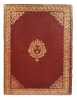
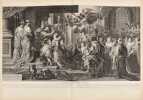
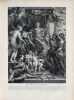
Rubens et le Cycle de Marie de Médicis. En 1621, peu de temps après son retour d'exil à la cour, Marie de Médicis, veuve de Henri IV et mère de Louis XIII, fit venir d'Anvers Pierre Paul Rubens pour qu'il réalise une galerie de peintures consacrées à sa vie pour son Palais du Luxembourg. Composées entre 1622 et 1625, ce Cycle de Marie de Médicis comprend trois portraits, le sien et ceux de ses parents, et vingt-et-un tableaux allégoriques représentant la vie de Marie de Médicis : son enfance, sa vie de Reine, sa Régence, ses gloires et ses luttes. Son portrait la représente ainsi sous la forme de Minerve déesse des Arts. Après avoir longtemps orné le Palais du Luxembourg, les originaux de Rubens sont maintenant au Louvre. Ce superbe ouvrage entièrement gravé restitue la célèbre galerie de tableaux du Palais du Luxembourg. Les peintures de Rubens furent dessinées par les frères Jean-Marc et Jean-Baptiste Nattier, et gravées sur cuivre par Benoit Audran, J. Audran, Duchange, L. de Chastillon, G. Edelinck, Loir, Massé, B. Picart, C. Simonneau aîné, Trouvain et Vermeulen. On y ajouta un portrait de Rubens, gravé par J. Audran d'après Van Dyck, un titre et un avertissement gravés. Exceptionnel exemplaire avec les planches en premières épreuves en reliure de la Bibliothèque du roi. Les planches de cet exemplaire, à l'exception d'une, sont avant les chiffres, signe des premières épreuves. “Ce recueil […] est très bien exécuté, et les bonnes épreuves (avant les chiffres sur les estampes) en sont rares”, Brunet. La reliure est ornée sur les plats de la célèbre "dentelle du Louvre" et fut réalisée à l'atelier de la Bibliothèque du roi. On sait qu'il existait plusieurs degrés dans la hiérarchie de la corporation des relieurs: au-dessus des « relieurs suivant la Cour» nommés par le grand prévôt, se trouvaient les «relieurs ordinaires» désignés par le roi. Un usage s'était établi suivant lequel il n'y avait que deux relieurs ordinaires à la fois. Ex-libris aux armes de la famille Amyot, très probablement celui qui fut avocat au Parlement de Paris et ancien greffier criminel de la Cour. Son Catalogue des livres de feu M. Amyot fut présenté pour une vente aux enchères qui eut lieu du 16 au 18 mai 1757. Somptueux exemplaire en maroquin aux armes de France. Cohen, 914-915. Brunet, IV, 1443. OHR, pl. 2495, fer n°10.
Drawings of Peter Paul Rubens, A Critical Catalogue, VOLUME ONE (1590-1608) 2 VOLS.
, Brepols 2021, 2021 2 vols., 536 pages ., 216 x 280 mm , 260 colour ill., English, Hardcover, . FINE ISBN 9782503595702.
This is Volume I of the three-volume catalogue raisonn of all drawings considered by the authors to be by Rubens. It covers the years 1590- 1608, Volumes II and III dealing, respectively, with the periods 1609?20 and 1621?40. It is the first publication that presents the artist?s entire drawn oeuvre in chronological order, previous such publications containing only selections of drawings. By leafing through the illustrations, this arrangement provides the user with a quick visual impression of the variety of techniques, media, subject and functions of Rubens?s drawings at an one time. Volume I consists of the drawings of the artist?s childhood, apprenticeship and first years as a master in Antwerp to his formative years in Italy, spent mostly in Mantua and Rome, with an excursion to Spain. These are the years primarily devoted to learning and absorbing the art of the past, from sixteenth-century German and Netherlandish prints to the works of the ancient and Italian Renaissance masters. A large number of these drawings consists of copies after the works of other artists, largely executed as part of the artistic training at the time. For the first time, Rubens?s copies and their models are not discussed and illustrated as a separate entity but are fully integrated into the rest of his graphic oeuvre, thus showing copies and original compositions created at the same time side by side. The volume contains 204 entries, including several sheets with drawings on recto and verso. Each entry consists of a detailed physical description of the drawing, provenance, exhibition history, full bibliography and a critical, interpretive discussion. In addition, Volume I contains an essay on the history of the scholarship of Rubens?s drawings, a subject that has not been treated before. All drawings by Rubens and the works by other artists he copied as well as a selection of other comparative images are reproduced in color. Anne-Marie Logan is a specialist in Rubens?s drawings and in those of his Flemish contemporaries, especially Van Dyck's. Kristin Lohse Belkin is a Rubens specialist who has carried out extensive research on the artist.
Drawings of Peter Paul Rubens, A Critical Catalogue, VOLUME TWO (1609-1620) Part One: Text and Part Two: Images
, Brepols - Harvey Miller, 2023 2 vols; Part One: Text and Part Two: Images, 732 pages; Size:216 x 280 mm, Illustrations:291 col. Language(s):English. ISBN 9782503599533.
This is Volume II in the three-volume catalogue raisonn of the drawings by Rubens covering the years 1609-20. The project is a collaboration between Anne-Marie Logan, to whom belong all the Rubens attributions, and Kristin Lohse Belkin. It is the first publication that presents the artist?s entire drawn oeuvre in chronological order, previous such publications containing only selections of drawings. By leafing through the illustrations, this arrangement offers the user a quick visual impression of the variety of techniques, media, subject matter and functions of Rubens?s drawings at any one time. Accordingly, Volume II consists of the drawings from the time of Rubens?s return from Italy and the establishment of his workshop in Antwerp to the completion of his contribution to the furnishing and decoration of the city?s new Jesuit church, today?s St. Charles Borromeo. The decade is characterized by a broad range of genres and iconography: large altarpieces stand next to cabinet-size pictures, book illustrations next to designs for tapestry, sculpture and architectural reliefs; religious, mythological and historical subjects alternate with allegories, portraits, exotic hunts and scenes from country life. Copies after other artists? works that constitute such a large part of Rubens?s early years discussed in Volume I have given way to original inventions in pen and ink and, above all, by life studies in chalk of the human body, naked or dressed. The whole spectrum of Rubens?s extraordinary creativity, nowhere presented as directly and immediately as in his drawings, is there to be contemplated in all its astonishing diversity. Each entry consists of a detailed physical description of the drawing, provenance, exhibition history, full bibliography and a critical, interpretive discussion. All drawings by Rubens as well as a selection of comparative images are reproduced in color.
Rubens e la pittura fiamminga del Seicento nelle collezioni pubbliche Fiorentine / Rubens et la peinture flamande du XVIIÚme siÚcle dans les collection publiques Florentine
Bodart, Didier et al: Rubens e la pittura fiamminga del Seicento nelle collezioni pubbliche Fiorentine / Rubens et la peinture flamande du XVIIÚme siÚcle dans les collection publiques Florentine. Exhibition: Florence, Palazzo Pitti, 1977. 368pp with 16 colour plates and numerous monochrome illustrations. Wrappers. 23x21.5cms. Exhibition of 17th century Flemish paintings from the public collections in Florence organised to celebrate the 400th anniversary of the birth of Rubens. Text in Italian & French.
Exhibition of 17th century Flemish paintings from the public collections in Florence organised to celebrate the 400th anniversary of the birth of Rubens. Text in Italian & French
[Sir Peter Paul Rubens] - BÃŒttner, Nils, and Sandra-Kristin Diefenthaler
Reference : 121411
(2021)
ISBN : 9783954986521
Peter Paul Rubens: Becoming Famous
BÃŒttner, Nils, and Sandra-Kristin Diefenthaler: Peter Paul Rubens: Becoming Famous. Exhibition: Stuttgart, Staatsgalerie, 2021. 344 pages, fully illustrated in colour. Hardback. 31 x 25cms. Departing from the portrait of Geronima Spinola with her granddaughter, the exhibition explores the way Rubens expanded his network of patrons during his Italian period. With a catalogue of 119 works, including 13 pieces that have been newly examined, discussing the results of the technical analysis in the context of Rubens' practice. Text in German.
Departing from the portrait of Geronima Spinola with her granddaughter, the exhibition explores the way Rubens expanded his network of patrons during his Italian period. With a catalogue of 119 works, including 13 pieces that have been newly examined, discussing the results of the technical analysis in the context of Rubens' practice. Text in German

